
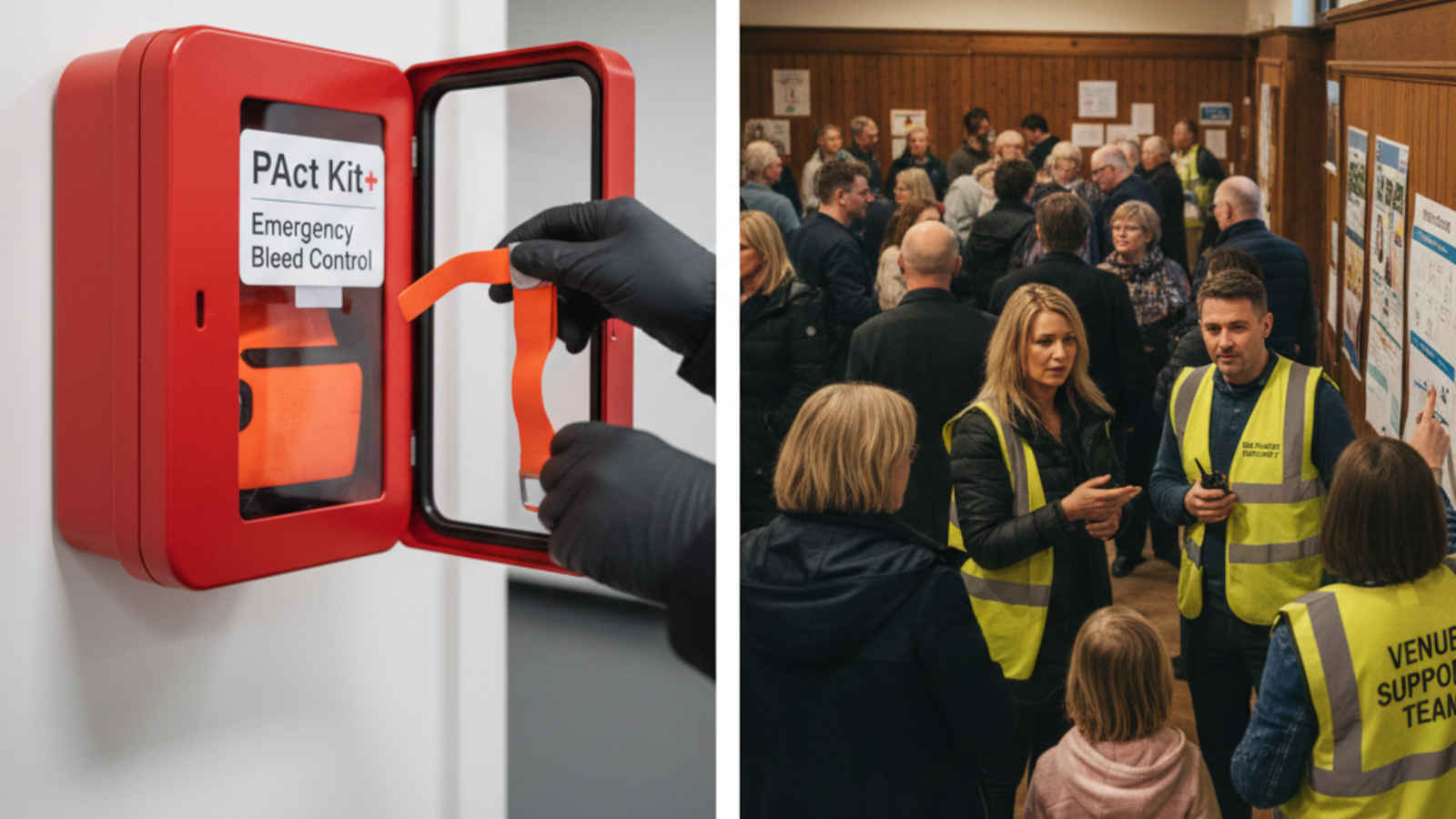
For years, the burden of terrorism preparedness in the UK sat primarily with the police and intelligence services. However, the Terrorism (Protection of Premises) Act 2025, popularly known as Martyn’s Law, has fundamentally shifted that responsibility.
As we move through 2026, we are currently in the critical “implementation period.” By early 2027, thousands of UK venues—from village halls and pubs to stadiums—will be legally required to have a counter-terrorism plan in place. For the practical UK household, this isn’t just about “corporate compliance”; it’s about the safety of the spaces where we live, work, and gather.
What is Martyns Law?
The law is named after Martyn Hett, one of the 22 victims of the 2017 Manchester Arena bombing. His mother, Figen Murray OBE, campaigned for the legislation after it was revealed that the arena had no legal obligation to assess or mitigate terrorism risks.
In short: Martyn’s Law mandates that public premises are better prepared for, and ready to respond to, a terrorist attack. It establishes a minimum security standard across the UK, overseen by the Security Industry Authority (SIA).
The Two-Tier System: Where Do You Stand?
The law doesn’t treat a local primary school the same way it treats Wembley Stadium. It uses a “tiered” approach based on the capacity of the venue.
1. The Standard Tier (200 – 799 people)
This tier covers the majority of our community “safe havens.”
- Venues: Village halls, medium-sized pubs, independent cinemas, and most places of worship.
- Requirements: The focus is on low-cost, simple procedures. This includes having a plan for:
- Evacuation: How to get people out safely.
- Invacuation: Moving people to a safe internal “hard point” (e.g., away from glass windows).
- Lockdown: Securing the premises to prevent an attacker from entering.
- Communication: How to alert everyone on-site that an incident is occurring.
- Key Note: Standard Tier venues are not required to install expensive physical security like bollards or metal detectors.
2. The Enhanced Tier (800+ people)
This tier applies to high-capacity venues where the impact of an attack could be significantly higher.
- Venues: Large music venues, stadiums, major shopping centres, and large-scale festivals.
- Requirements: In addition to the Standard Tier rules, these venues must:
- Conduct a formal Terrorism Risk Assessment.
- Implement “reasonably practicable” physical security measures (CCTV, bag checks, or hostile vehicle mitigation).
- Appoint a Senior Responsible Person to oversee compliance.
Prepper Insight: If you are a member of a local club or committee, checking which tier your venue falls into is your first step. Most village halls sit right on the 200-person boundary—meaning many will need to register with the SIA this year.
Why This Matters for Local Resilience
In the preparedness community, we often focus on the “pantry” and the “grid,” but community infrastructure is the third leg of the stool. Martyn’s Law effectively professionalises local resilience.
- Standardising the “ACT” Mindset: The law encourages staff and volunteers to take the free ACT (Action Counters Terrorism) Awareness training. This training teaches people how to spot “hostile reconnaissance” (attackers scoping out a location) before an incident even begins.
- The Rise of Public Access Trauma (PAcT) Kits: While not strictly mandated for every small hall, the Home Office and ProtectUK are strongly recommending that premises stock PAcT Kits. Unlike a standard first aid kit, these contain tourniquets and trauma dressings designed to stop catastrophic bleeding.
- The “Safe Haven” Effect: During a period of civil unrest or a marauding attack, a local hall that has a tested lockdown procedure becomes a genuine asset to the neighbourhood.
🛠️ The 2026 Compliance Timeline
The clock is ticking for venue owners and community leaders. Here is the roadmap for the next 12 months:
- Now (Early 2026): The Home Office is finalising Statutory Guidance. Venues should be identifying their Tier and reviewing existing fire exit and lockdown protocols.
- Mid-2026: The SIA will launch its Regulatory Portal. Responsible persons must register their premises and start documenting their “Public Protection Procedures.”
- Spring 2027: Full Enforcement Begins. The SIA will have the power to inspect venues and issue fines for those who have failed to implement “reasonably practicable” measures.
Actionable Steps for Households & Committees
If you are involved in your local community, you can help drive this resilience forward today:
- Review the “Reasonably Practicable” Rule: The law is built on common sense. If your village hall has a budget of £500 a year, you aren’t expected to buy a £10,000 CCTV system. You are expected to make sure the door bolts work and the volunteers know the “Run, Hide, Tell” protocol.
- Audit Your Local “First Response”: Check if your local gathering spots have bleed control kits. If they don’t, this is a great community project to fundraise for.
- Sign up for ACT Training: It’s free, online, and takes about an hour. It is arguably the most valuable “civic” prepper skill you can acquire in 2026.
📌 Quick Risk Summary — Martyn’s Law Checklist
- ☑️ Determine Your Tier: Does your local venue (church, hall, club) hold more than 200 people?
- ☑️ Check the PAcT: Does the venue have a Public Access Trauma kit? (Standard “green box” first aid kits are insufficient for trauma).
- ☑️ Identity the “Responsible Person”: Who has control of the building? Under the 2025 Act, they are legally liable for preparedness.
- ☑️ Drill the Procedures: A plan on a shelf is useless. Ask your committee: “If an incident happened at the front door right now, who locks the back door?”
🧠 UK Prepper Hub Tip of the Day
The “Invacuation” Priority: Most people’s instinct in an emergency is to run out. However, in many modern terror scenarios (such as vehicle rammings or marauding attacks), the safest place is often inside, away from the street-facing windows. When reviewing your local hall, look for the “Hard Room”—usually a kitchen or windowless storeroom—and designate it as your invacuation point.
🙋 Frequently Asked Questions: Martyn’s Law for UK Communities
Question: Does Martyn’s Law apply to my local village hall?
Answer: If your village hall has a capacity of 200 people or more (including staff and volunteers), it falls within the Standard Tier. This means the committee must register the venue with the SIA, appoint a responsible person, and have basic procedures for evacuation and lockdown. If your capacity is under 200, the law does not legally apply, but the Home Office still strongly recommends following the same “good practice” guidelines.
Question: We are a charity/volunteer-led group—will we be fined?
Answer: The Security Industry Authority (SIA) has stated that their initial approach from 2027 will be “advisory-first.” Their goal is to help venues achieve compliance rather than to issue immediate fines. However, if a venue consistently ignores the requirements or fails to show “reasonably practicable” efforts to protect the public, the regulator does have the power to issue civil penalties.
Question: Do we need to hire a security consultant to be compliant?
Answer: No. Both the Home Office and the SIA have been very clear: you do not need to spend money on expensive third-party consultants. The government will provide free statutory guidance and templates in mid-2026. Most Standard Tier venues can meet their obligations using free resources like the ProtectUK website and the ACT Awareness e-learning.
Question: What is the difference between “Invacuation” and “Lockdown”?
Answer: These terms are often confused but are both critical:
- Invacuation: This is moving people away from an external threat (like a vehicle attack or a chemical leak) into a safe “hard point” inside the building.
- Lockdown: This is the physical act of securing the building to prevent an intruder from getting in (e.g., locking all doors, pulling shutters, and silencing mobile phones).
Question: Are places of worship treated differently?
Answer: Yes. Under a 2026 update, all places of worship are categorised as Standard Tier, even if their capacity exceeds 800 people. This was decided to prevent a significant financial burden on religious institutions while still ensuring they have basic life-saving procedures in place.
🧠 UK Prepper Hub Tip of the Day
The “Paper Trail” Hack: Compliance isn’t just about having a plan; it’s about proving you have one. Start a “Security Logbook” for your venue today. Even if it’s just a simple folder where you keep records of when you checked the door locks or when a volunteer completed their free ACT training, this “audit trail” will be gold dust when the SIA inspections begin in 2027.
📡 Find Us Everywhere
Daily briefings, prep guides, and real-time updates across every platform. Pick yours.
Free. No commitment. Stay anonymous on WhatsApp & Telegram.
Stay Informed on UK Preparedness
Join our newsletter for UK-specific preparedness tips, product recommendations, and real-world advice for households.
Subscribe to Our Newsletter