
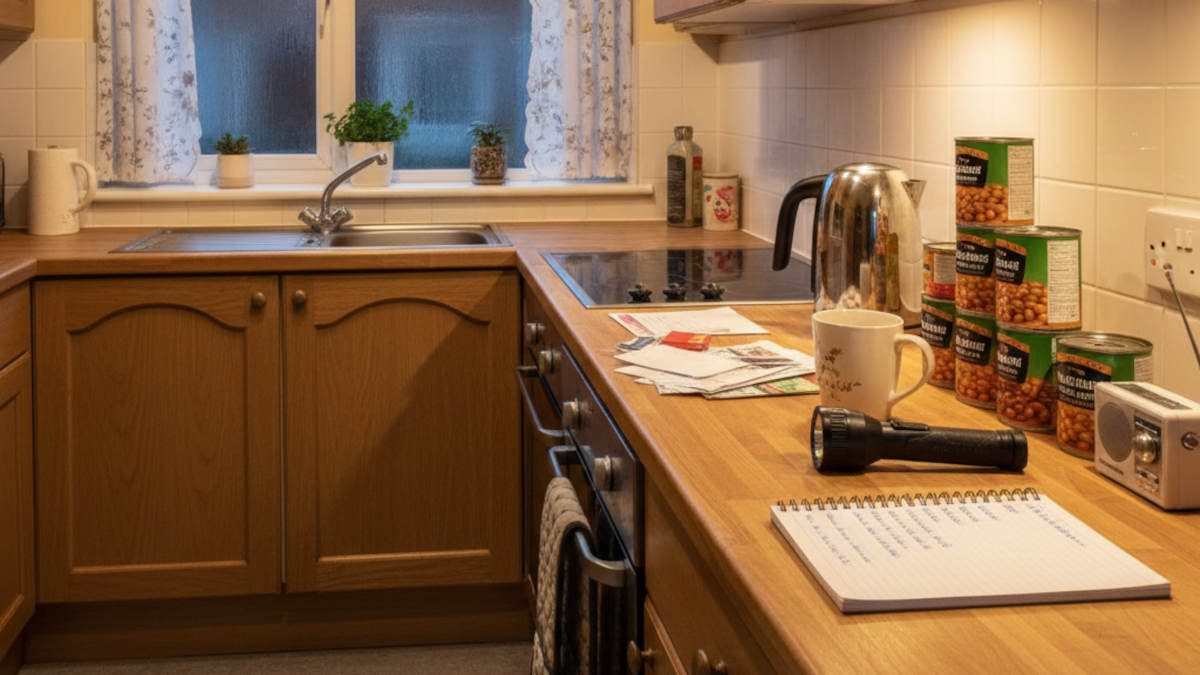
Practical preparedness for realistic UK threats — from someone who lives it.
Let’s Start With An Honest Question
When you think of a “prepper” — what comes to mind?
If the answer involves camouflage face paint, a man in a balaclava talking about WW3, or someone with a bunker full of ammunition — you’re not alone. That image is everywhere online. It’s also almost entirely useless for the average British household facing a power cut, a burst water main, or three days of snow.
There are EIGHT types of prepper you’ll meet on the internet. None of them are particularly helpful.
The Eight Types (And Why None Of Them Are You)
Keith The Prepper
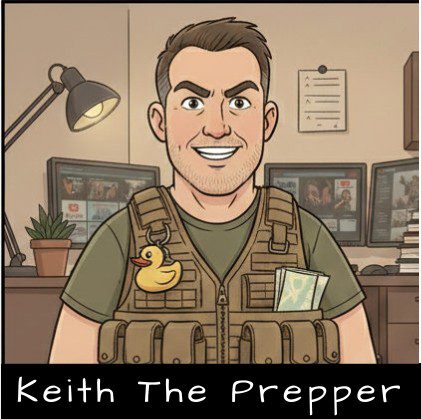
Loves Amazon Prime. Has seventeen torches, none of which are charged. Owns a tactical vest with a rubber duck clipped to it — origin unknown, never explained. Watches every preparedness YouTube video ever made and orders whatever they recommend before the credits roll. Genuinely wants to be prepared. Genuinely missing the point. His wife is not impressed.
Black Panther
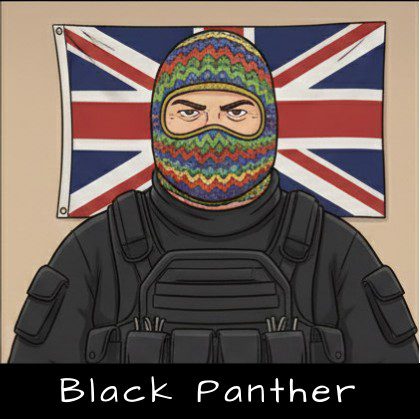
Dreams of bugging out to the hills with his 40kg tactical rucksack and living off the land. Cannot walk to the end of his road without losing his breath. Has not told his wife about the bug out plan. Cannot find a sleeping bag he fits into. Wears a balaclava online to protect his identity. The balaclava was knitted by his Nan in 1974 to keep his ears warm. Hints to everyone he was in the SAS, but the closest he ever got was the Cub Scouts. He also thinks he is a martial arts expert, but he’s more Kung Foo Panda than Bruce Lee.
Camping Clown
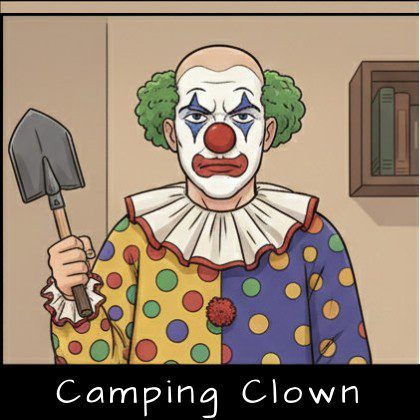
All the gear. Absolutely no idea. Owns a titanium spork because it saves 12 grams. Bought a £300 titanium knife because it looks cool and is lightweight — has never cut anything with it. Cannot boil water without consulting three YouTube videos and a laminated protocol document. Has everything. Can do nothing.
Weekend Warrior
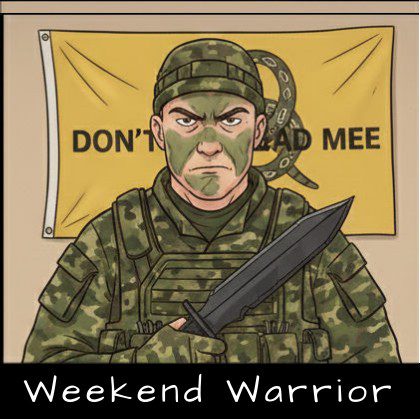
Speaks exclusively in a gruff growl. Every conversation ends with ‘WW3 is coming’. Convinced the primary purpose of preparedness is defending his borders, his rights, and his extensive collection of Gadsden flags. Has camouflage face paint on at all times including the school run. Is prepared for the collapse of civilisation. Is not prepared for a power cut on a Tuesday night at dinner time.
Chicken Licken
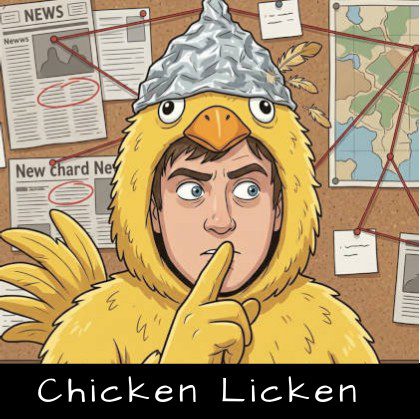
Chicken Licken knows things. Things they don’t want you to know. He can’t tell you who “they” are — not here, anyway — but if you check the cork board he’s been building since 2019, it’s all there. The red string doesn’t lie.
The world is flat. The zombie apocalypse is coming. Aliens are real. Every piece of kit he buys gets checked for government trackers before use. The tin foil hat is his own design. He’s very proud of it.
To be fair to Chicken Licken, he is genuinely prepared for almost every scenario — it’s just that his reasoning for preparing is completely detached from reality.
Surviv’l Gurl
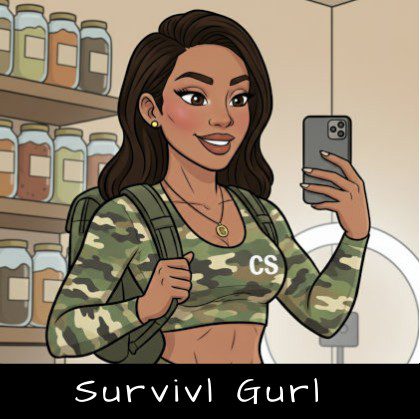
47,000 followers. Zero of them own a charged torch. All of them have saved her mason jar flat lay. Does not prepare for emergencies — she curates them. Full makeup, perfect hair, matching camo lycra from a boutique that also sells jade rollers. Carries a pristine day sack that has never left Zone 2. Her followers believe they’re learning preparedness. They are learning content.
Calm Clarissa
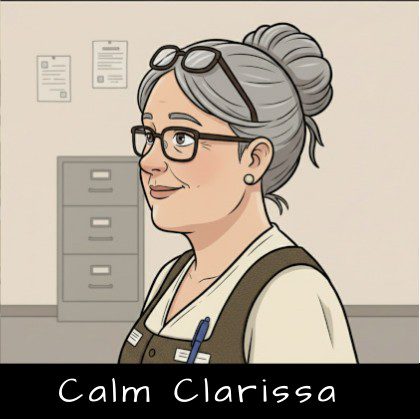
Retired local authority emergency planning. The most practically useful person in a ten mile radius during any crisis. Also the most exhausting person in any room. These facts are directly connected. Clipboard always in hand. Two pens — she has learned this lesson. Has a laminated badge that says “Calm Clarissa — Community Emergency Coordinator.” She made it herself. Secretly called “The Laminator” behind her back by the village hall working committee. Janet is on rota. Don’t ask about Janet.
Aroura

Prepared entirely through vibrational energy, herbal tinctures, and the power of intention. Genuinely kind. Genuinely useless in an actual emergency. Has cleansed her emergency supplies under the new moon. Has a crystal grid. Has a canvas tote containing approximately one cereal bar and a laminated affirmation. The universe will provide. It hasn’t yet. She remains positive. Her ony “energy” crisis is when her chakras are unaligned. Aroura, not Aurora. This is intentional. She chose this spelling herself, possibly at a rebirthing ceremony in 2003. It is a spiritual spelling. Nobody has corrected her. She would not receive the correction well. The universe guided her to those letters.
Then There’s A Ninth Type
This one doesn’t make it into the cartoons very often. It isn’t dramatic enough.
The ninth type quietly checks on the elderly couple down the road. Keeps a week’s worth of food in the cupboard — not forty tins of beans. Knows where the stopcock is. Has a charged torch in the kitchen drawer. Doesn’t own a tactical vest. Doesn’t call themselves a prepper at all.
Historically, during every flood, every storm, every power cut, every supply disruption — it’s the ninth type that keeps communities functioning.
UK Prepper Hub is for the ninth type.
Prepared. Not Panicked.
The UK Reality
This isn’t abstract. It’s been happening — regularly, predictably, and with very little warning.
In February 2026, Somerset had received 184% of its average winter rainfall. The Thames Barrier closed. Seventy-five flood warnings were active across England simultaneously. Thousands of households across Wales and the Midlands woke up to snow warnings with no backup plan for heating, cooking, or water.
None of that was a surprise to anyone paying attention. The UK has been here before:
2018 — Beast from the East. Sub-zero temperatures across the UK for over a week. Roads impassable. Supermarkets unable to restock. Communities cut off in rural Scotland and Northern England.
2020 — COVID-19. Supermarket shelves stripped bare within hours. Rationing introduced. Supply chains stretched to breaking point.
2021 — Petrol and diesel shortages. HGV driver shortages combined with panic buying emptied forecourts across the UK within days. Essential workers couldn’t get to work.
2021–2022 — Storms Arwen, Barra, and Malik. Hundreds of thousands without power for days. Some households without electricity for over a week — in winter.
2025 — Co-op and M&S cyber attacks. Major retailers hit simultaneously. Payment systems failed. A society that had quietly gone almost entirely cashless discovered it couldn’t buy food.
The common thread isn’t disaster — it’s disruption. Short-term failures of systems we rely on daily. The households that struggled most were the ones who had assumed everything would just keep working.
UK Prepping vs What You See Online
Search “prepping” on YouTube and you’ll find Americans building underground bunkers, stockpiling ammunition, and practising wilderness survival in states bigger than the entire UK.
That content is useless here — and worse than useless, because it makes preparedness look extreme, expensive, and slightly unhinged.
UK preparedness is a fundamentally different discipline. Most of us live in high-density housing with limited storage. The relevant threats are infrastructure failures, not societal collapse. UK law restricts many items that appear routinely in US content. Our climate, geography, and social infrastructure are entirely different. And most UK households can’t afford to spend £500 on emergency equipment in one go.
Most real preparedness is boring logistics, not tactical drama. Real resilience looks like food storage, water filtration, backup heating, medical supplies, and knowing your neighbours — not camouflage, combat drills, and secret bunkers.
Sensible UK preparedness starts with a torch, some tinned food, and knowing where your stopcock is. It builds from there — gradually, affordably, practically.
Even The Government Agrees
The UK Government publishes preparedness guidance — it’s just very quietly promoted. Across Europe the picture is clearer: France distributes preparedness information to every household. Germany recommends citizens maintain emergency food and water supplies. Sweden and Finland have comprehensive public preparedness campaigns that treat household resilience as a civic responsibility.
This isn’t fringe thinking. It’s mainstream policy across the developed world. The UK is simply behind in communicating it to ordinary households.
The Person Behind The Site
This site is written by Darren — a late-diagnosed ADHD and autistic adult who started prepping because it works. It quiets the “what if” spiral, reduces anxiety, and means that when something goes wrong, there’s already a plan. If that resonates with you, you’re in the right place.
The background is real. Over 40 years of practical experience — from Cub and Scout through to Scout Association Mountain Form holder, qualified to lead expeditions, climbing, and abseiling in serious terrain. Mountain first aid qualified to Dr Ewan Jones standard, the level required for mountain rescue team work. CPR and First Aid at Work qualified continuously since 1988. Bronze Medallion life saving and Pool Lifeguard Bronze Medallion — two distinct qualifications, the latter covering emergency action plans, normal operating procedures, spinal injury management, and deep water rescue with spinal boards.
Twelve years at management level in local authority leisure, writing and implementing Emergency Action Plans across multiple public facilities — covering flooding, structural failure, gas leaks, bomb threats, power loss, and mass casualty incidents. Not theoretical. Operational. Plans that got used, in real emergencies, with real people.
The cottage he lives in has no central heating, no gas, and no oil. Heat comes from a single wood burner. The small Cambridgeshire village it sits in has no local services — no shop, no pub, no school, nothing. The preparedness advice here is written from that reality, not from a centrally-heated office.
Who This Site Is For
UK Prepper Hub is written for ordinary British households — not hobbyists, not enthusiasts, not people who’ve already decided to dedicate their lives to preparedness.
We specifically write for households in council housing and flats, where storage space is limited and most preparedness advice simply doesn’t apply. For households on tight budgets, where building supplies gradually is the only realistic approach. For neurodivergent households and those managing health conditions — disruption to routine carries extra weight, medication management during power cuts is a genuine concern, and most emergency guidance completely ignores that reality. And for working-class households who want practical, unsensationalised information without being talked down to.
Darren has ADHD and anxiety. He preps because it helps. Not as a cure — as a tool. If you’re in the same boat, that’s understood here, not glossed over.
What We’ve Built
The Resilience Hub contains in-depth guides covering everything from cooking without electricity and managing frozen pipes, to what to pack in a 72-hour grab bag and how to keep emergency supplies dry in a British climate. Every guide is written specifically for UK households — real events, real places, real regulations.
The Gear & Resources section reviews equipment that’s actually been tested, with honest limitations, UK availability, and no affiliate-driven padding. If something isn’t worth buying, we say so.
We post daily news briefings covering genuine UK risk — weather warnings, flood alerts, NHS pressures, infrastructure incidents — sourced from the Met Office, Environment Agency, UKHSA, and other authoritative UK bodies. No conspiracies. No politics.
The Approach
Non-alarmist. We don’t manufacture urgency or catastrophise. UK households face real but manageable risks. We cover those accurately and calmly.
UK-specific. Every piece of content is written through a UK lens — UK threats, UK regulations, UK housing, UK retailers, UK services.
Honest. If something hasn’t been tested, we say so. If a product has limitations, we include them. If the evidence is uncertain, we reflect that.
Inclusive. Council tenants, flat-dwellers, renters, disabled households, neurodivergent households — preparedness guidance should work for everyone, not just homeowners with garages and disposable income.
Practical. The goal is always a specific, achievable action. Not vague advice — real steps that real households can take this week, with what they’ve already got or can afford to buy.
Start Here
If you’re new to preparedness, the Resilience Hub is the right place to start. The guides are written to be read in any order — pick the topic most relevant to where you are right now.
If you’re looking for equipment recommendations, the Gear & Resources page covers everything reviewed, organised by category, with honest assessments of what’s worth your money.
Prepared. Not Panicked.
That’s the whole philosophy. Sensible, calm, affordable preparedness for the disruptions that actually happen in the UK. Nothing more, nothing less.
No politics. No camo. No shelters built from sticks. No rubbing two sticks together for fire. No guns, no crossbows, and absolutely no bugging out to a woodland you don’t own.
Just a torch, some tinned food, and a plan.