
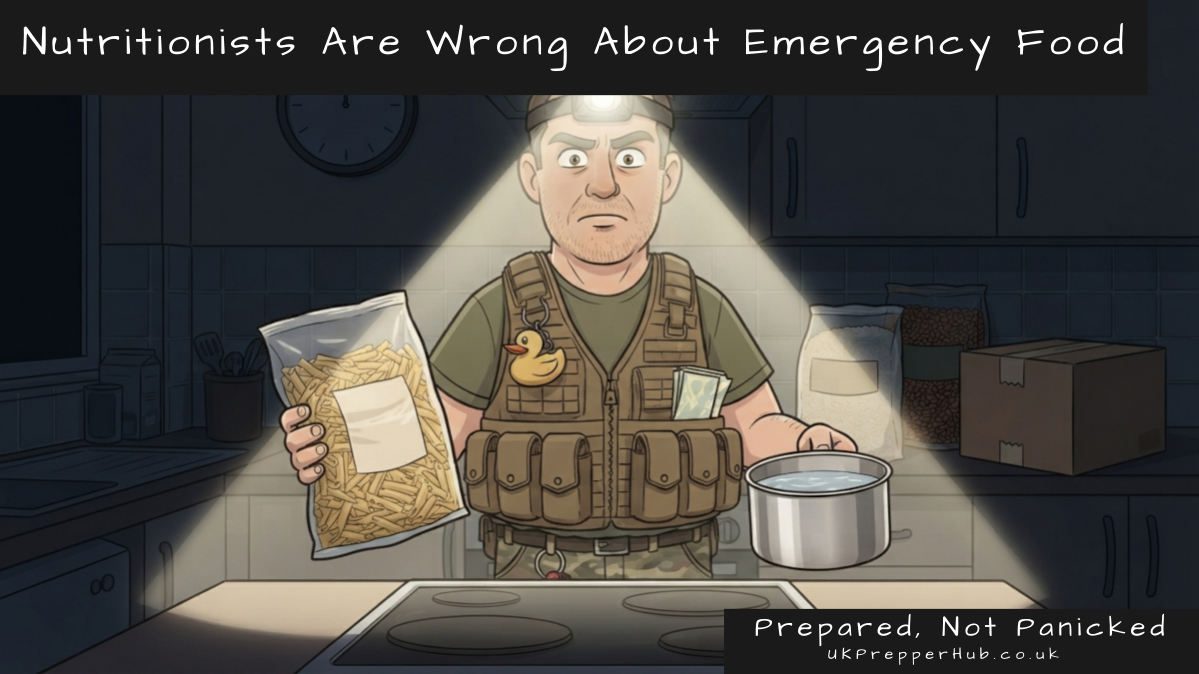
On 21 September 2026 the BBC published a practical explainer on what to stock up on after the government’s advice to add a few more long-life products to your shopping. It quotes a senior nutrition scientist and a consultant dietitian, and it is a perfectly sensible list for anyone wanting to eat well. It is also, for the purpose of building an emergency food supply, the wrong list. Not because the nutrition is bad, but because it answers the wrong question. It asks “what is healthiest to eat?” when the question that matters in an emergency is “what still works when the power is off, the gas is off and the water is a problem?”
Here is what the experts said, where we agree, and where we think the advice would leave your emergency food supply, and you, standing in a dark kitchen holding a bag of dried pasta.
What The Nutritionists Actually Said
Let’s be fair first. We fully support healthy eating, and nothing here is a case against it. The people quoted are qualified and their advice is sound for a normal week. We’ll call them “the nutritionists” as shorthand, though strictly it is a senior nutrition scientist and a consultant dietitian.
Dr Sammie Gill of the British Nutrition Foundation told the BBC to prioritise two groups. Complex carbohydrates: wheat biscuits, wholegrain cereals, crackers and breads, plus oats, rice and pasta. And proteins: canned chickpeas, lentils and kidney beans, unsalted nuts, peanut butter and canned oily fish such as tuna, mackerel and sardines.
Consultant dietitian Rebecca McManamon added tinned fruit (you can drink the juice for fluids, vitamins and fibre) and pickled foods such as vegetables and eggs. Both recommended long-life milk from the non-refrigerated aisle.
On the other side of the ledger, the advice was to avoid items tinned in brine or syrup, instant noodles and tinned soup because of the salt, breakfast cereals and snack bars with added sugar, and tinned meats such as sausages, hot dogs and corned beef. Sweet treats like biscuits and chocolate were to be limited.
One more voice worth noting: Prof Richard Wilding, a supply chain expert, said not to be “overly worried” but to be prepared to buy different products if the usual ones run short. We will come back to that, because it is the most useful sentence in the whole article.
What Your Emergency Food Supply Is Actually For
A healthy-eating plan is judged over months. An emergency food supply is judged over a few days, in the worst conditions your kitchen is ever likely to see. That changes what “good” means. There are three tests, and they come before any nutritional consideration.
Test one: shelf life. Every emergency food supply has to still be good when you need it, which might be next month or next year. A food that is perfect on the day you buy it but needs using in a week is not an emergency food.
Test two: fuel. Every meal that needs heat draws on a fuel supply you may not have. If the mains gas or electricity is off, you are cooking on a camping stove with a finite canister, or not cooking at all. So the real question for every item in your emergency food supply is how much fuel it needs.
Test three: can you eat it cold? If the worst happens and you have no fuel at all, can you still eat this, straight from the packet or tin? The best emergency food passes this test without a fuss.
After those three come the things the nutritionists are quite rightly focused on, but in a different order. In a short emergency you want a full stomach and the energy to get through the day, and a low-salt diet is not the priority. That is not a licence to eat rubbish for a week. It is an acknowledgement that a few days of tinned fish and crackers will not do you harm, while an empty stomach and a pan of water that won’t boil will.

🦆 Keith
Don’t Be Keith
Keith bought six months of dried pasta, rice and lentils for the “big one”, tested it once, and only then discovered he had no way to cook any of it. One mistake, one line.
What The Government’s Own Kit List Says
Here is the part that surprised us. The official GOV.UK emergency kit list does not say “wholegrain pasta and brown rice”. Its wording is: “Non-perishable food that doesn’t need cooking, such as ready-to-eat tinned meat, fruit or vegetables (and a tin opener).”
Read that again. Food that doesn’t need cooking. And the first example is tinned meat, which is the very thing the nutritionist advises against because it is often processed and high in salt and saturated fat.
We are not suggesting either source is wrong. They are answering different questions. The nutritionist is asking what you should be eating for your health. The government list is asking what non-perishable emergency food you can still eat when nothing works. For a real emergency food supply, the second question wins. We covered the full official list in our Special Report “Government Emergency Kit“, first published on 26 August 2026, and we look at what it leaves out in Government Emergency Kit List: What’s Missing and What Else You Need.
The Fuel Test: Eat Cold, Heat, Cook, Or Keep Cool
Heating something up and cooking something are not the same thing, and the difference is the whole game. Warming a tin of beans takes a couple of minutes on a small stove. Boiling dried pasta for ten minutes or more, with a big pan of water to bring to the boil first, is a serious drain on a gas canister. Dried rice is the same, and wholegrain versions generally take longer still.
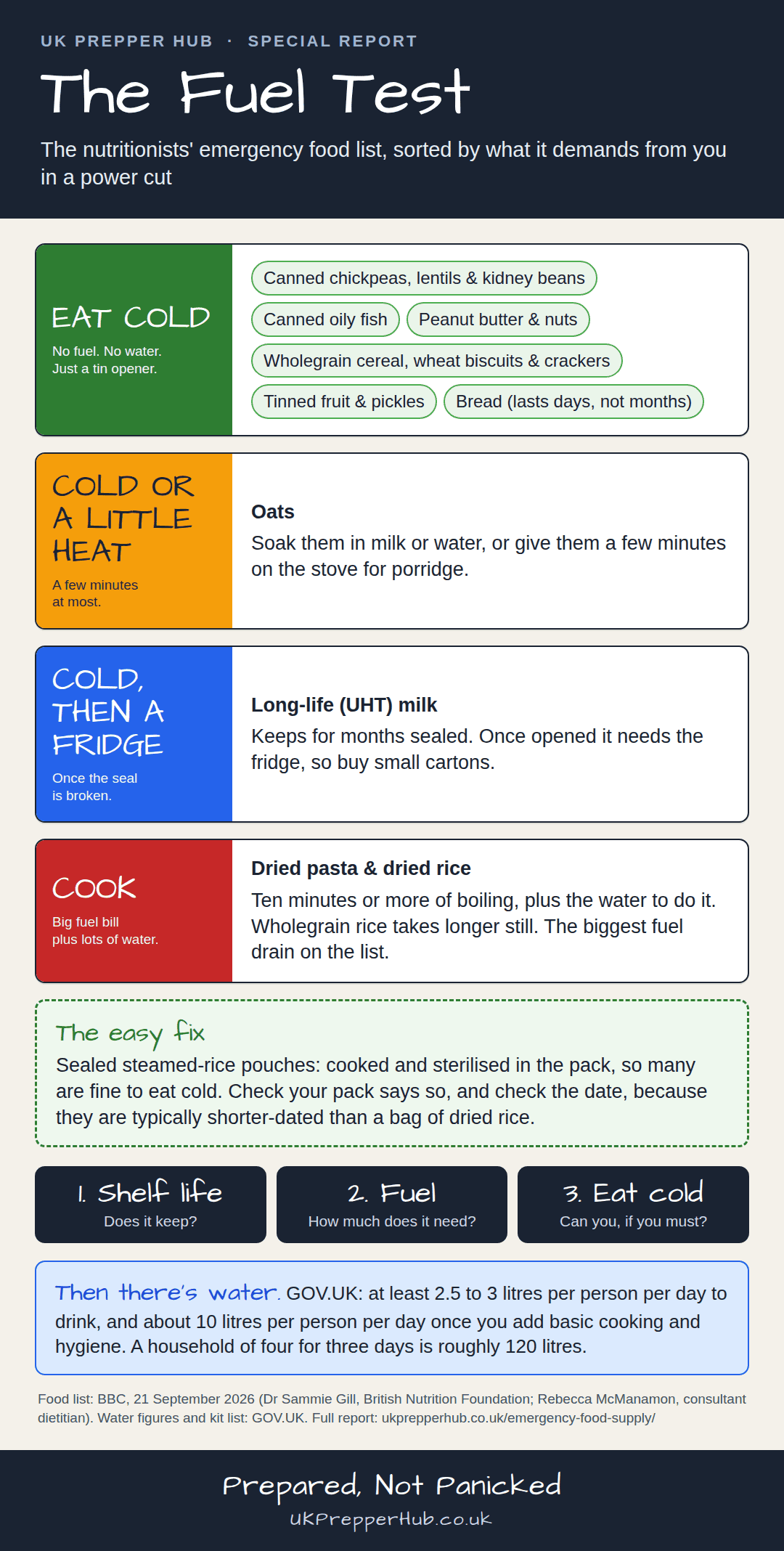
So we’ve taken the nutritionists’ list and sorted it by what each item demands from your emergency food supply in a power cut.
| Food from the nutritionists’ list | In a power cut | What it costs you |
|---|---|---|
| Canned chickpeas, lentils, kidney beans | Eat cold | Already cooked in the tin. Warming is optional. |
| Canned oily fish (tuna, mackerel, sardines) | Eat cold | Nothing but a tin opener. |
| Peanut butter, unsalted nuts | Eat cold | Nothing. Nuts can have a shorter shelf life, as the dietitian herself noted. |
| Wholegrain cereals, wheat biscuits, crackers | Eat cold | Nothing. Good with long-life milk. |
| Tinned fruit, pickled foods | Eat cold | Nothing. The juice counts towards your fluids. |
| Oats | Cold or a little heat | Soak them in milk or water, or a few minutes on a stove for porridge. |
| Long-life (UHT) milk | Cold, then a fridge | Sealed, it keeps for months. Once opened it needs the fridge, so use small cartons. |
| Bread | Eat cold | No fuel, but it lasts days, not months. Crackers do the same job for longer. |
| Dried pasta | Cook | Ten minutes or more of boiling, plus the water. The biggest fuel drain on the list. |
| Dried rice | Cook | A similar fuel and water bill, and wholegrain rice takes longer than white. |
The pattern is obvious once it is laid out. The proteins, the fruit and the cereals are all fine. The two staples that do the heaviest lifting on the carbohydrate side, pasta and rice, are the ones that need the most fuel and the most water.
There is an easy fix for the fuel problem in any emergency food supply, and it costs very little. Buy pre-cooked rice in sealed pouches. Tilda says its steamed basmati is “cooked and sterilised in the pouch (the microwaving is merely a reheating process) so it is fine to eat it cold and straight from the packet”. Once opened it has to be eaten within two days. A pouch typically has a much shorter date than a bag of dried rice, so check the pack and cycle them, which brings us to a habit worth building. But as a no-fuel carbohydrate that fills a plate, it beats a pan of boiling water in a power cut.
Portable Camping Stove with Cary Case & 8 Butane Gas
Will this cooker perform well enough to feed your family when the power goes out?

The Salt And Sugar Question
The nutritionists’ warnings about salt and sugar are correct for everyday eating, and if you have been told to limit salt for a medical reason such as high blood pressure, or you are managing diabetes, follow your own clinician’s advice above anything written here. For the rest of us, salt and sugar are not the thing to lose sleep over when you are building an emergency food supply for a few days.
There is a practical point too. Salt is one of the oldest preservatives there is, and it is often part of what keeps long-life food going. Brines, pickles and cured foods rely on it. In tinned goods it is the sealing and the heat that do most of the preserving, so a lower-salt tin can still last well. But it does show how odd it is to build a store of long-life food while steering people away from the very thing that helps make so much of it long-life.
Notably, one of the two experts agrees. Rebecca McManamon told the BBC to keep dried herbs, spices and salt to hand, because tinned food can be slightly bland. That is good advice for any emergency food supply, and a small thing that makes a tin of beans on day three a lot more bearable.
🐔 Chicken Licken
Did You Know?
Salt is one of the oldest preservatives there is, which is why pickles and cured food last so long. I’ve been saying it for years.
Buy What You Eat, Not What Looks Correct
This is the most important rule in the whole article, and it is the one a “correct” list is most likely to break. An emergency food supply full of food you don’t like is a store you won’t eat. It sits in the cupboard until it goes out of date, and on the day you need it, you’ll discover why nobody ate it.
Buy what your household actually eats, and eat what you buy. Long life food only earns its place if somebody eats it. Rotate it: use the oldest first and replace what you use, so your emergency food supply is simply your normal food with a bigger cupboard behind it, rather than a food stockpile of things nobody likes. That is also how you avoid waste, because nothing in your emergency food supply sits there long enough to expire.
It is Prof Wilding’s point again. “Things that were in supermarkets and seen as relatively abundant may all of a sudden be in shortage,” he said, and the answer is to be flexible. If you eat sardines, put sardines in your emergency food supply. If you can’t stand chickpeas, no dietitian’s list should make you buy a dozen tins.
On tins themselves, Dr Gill was clear that canned food can absolutely be part of a healthy diet. She said there is little nutritional difference between canned and fresh food for the big nutrients such as carbohydrate, protein, fats and fibre, and for vitamins A and E and minerals, though vitamins B and C can be lower because of the canning process. That matches the NHS position, which is that canned and frozen fruit and vegetables count towards your 5 A Day. Tinned and frozen produce is typically processed shortly after picking, which is why the gap to fresh is smaller than most people think, and fresh vegetables that have spent days in transit and on a shelf are not always ahead. Tins are not a compromise. They are a perfectly good food.
Three smaller points that the list skips:
- Special diets. If anyone in your home has an allergy, a medical diet, a baby on formula or a pet, their needs come first in your emergency food supply and no general list covers them. The BBC’s own graphic does mention ready-to-feed baby formula, which is a sensible line to add.
- A little comfort. The advice is to limit sweet treats, and for everyday eating that stands. In a stressful few days, a bar of chocolate is calories and morale in a very small package. It is not a mistake to include some.
- A manual tin opener. Most of this food comes in a tin, and an electric opener is useless in a power cut. A good manual one costs a few pounds. Buy two.
Wholegrain Costs More And Doesn’t Last As Long
The nutritionists list wholegrain cereals and, by implication, wholegrain pasta and rice. There is nothing wrong with them, but there are two catches that matter when you are building an emergency food supply.
They cost more. Take Lidl’s own-brand Baresa fusilli, at the prices we checked on 21 September 2026. The standard 500g bag was around 40p. The wholewheat version was around 75p. That is nearly double the price for the same weight of pasta, and a large store of it adds up.
They don’t keep as long. Wholegrain foods keep their germ and bran, which contain natural oils, and those oils are what go off. The Whole Grains Council says brown rice keeps about six months on a pantry shelf, and wholegrain flours only one to three months, because the oils in the germ are affected by heat, light and moisture. Refined white rice has had the bran and germ removed, which is why it keeps so much longer. We could not find a reliable published figure for dried wholewheat pasta specifically, so we won’t make one up. But the principle is the same, and it costs nothing to check: compare the best-before dates printed on the white and wholewheat packs the next time you are in the shop.
This is not an argument against wholegrain. It is an argument for choosing an emergency food supply based on how long it lasts and what it costs, not on what looks best on a list. If wholegrain is what your household eats every week, buy it, and rotate it. If it isn’t, plain white pasta and rice keep longer and cost less. And if fuel is the concern, neither is the answer.
Water Is The Real Problem For Any Emergency Food Supply
Every dried food on the nutritionists’ list comes with a hidden requirement: water. Pasta, rice, lentils and oats all need it, and they need a lot. Dried food does have a huge shelf life, but it comes with extra needs, and water is the hardest of them to store or find if the supply fails.
The BBC’s graphic makes the point without quite saying it. It recommends 2.5 to 3 litres of drinking water per person per day, plus a further 6 to 7 litres per person per day for basic cooking and hygiene. The official GOV.UK kit list gives the same picture: a minimum of 2.5 to 3 litres of drinking water per person per day, and 10 litres per person per day if you want to cover basic cooking and hygiene as well.
Do the sum for a household of four over three days. Drinking water alone is 30 to 36 litres. At 10 litres per person per day it comes to 120 litres, and 120 litres of water weighs 120 kilograms. That is far more than the weight and bulk of three days of tins, and it is the part of preparing that most households simply never do.
This is the quiet case for an emergency food supply that needs no cooking. Every meal you don’t have to boil is water you keep for drinking. It’s also why fluid-rich tinned foods such as fruit in juice are more useful than they look, as McManamon points out.
Aquatabs 8.5mg Water Purification Tablets
A pack of 100 Aquatabs 8.5mg water purification tablets for emergency drinking water, hiking and camping kits.
Our Full Review: Aquatabs 8.5mg Water Purification Tablets →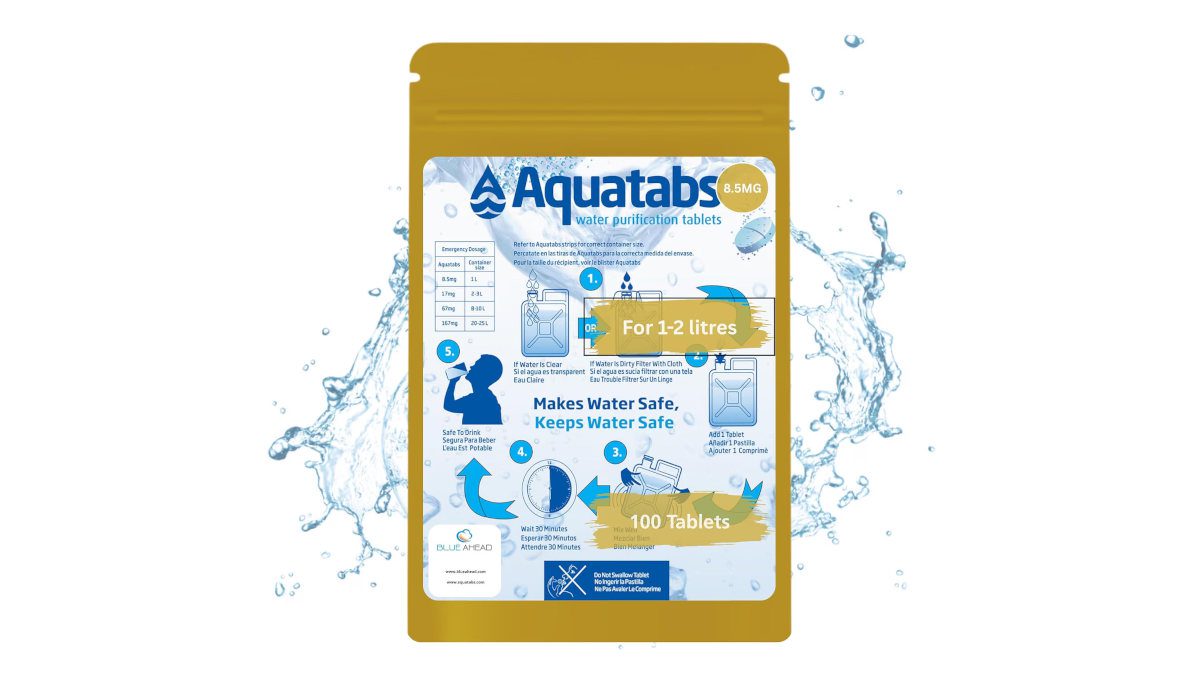
How Big Should Your Emergency Food Supply Be?
The BBC list, as reported, gives no quantities and no timeframe. It tells you what to buy, not how big your emergency food supply should be. The official kit is built for an emergency lasting a few days, and that is the sensible planning figure for most households. Build your emergency food supply for everyone in your home for at least three days to start with, including the water, and expand from there if you want to.
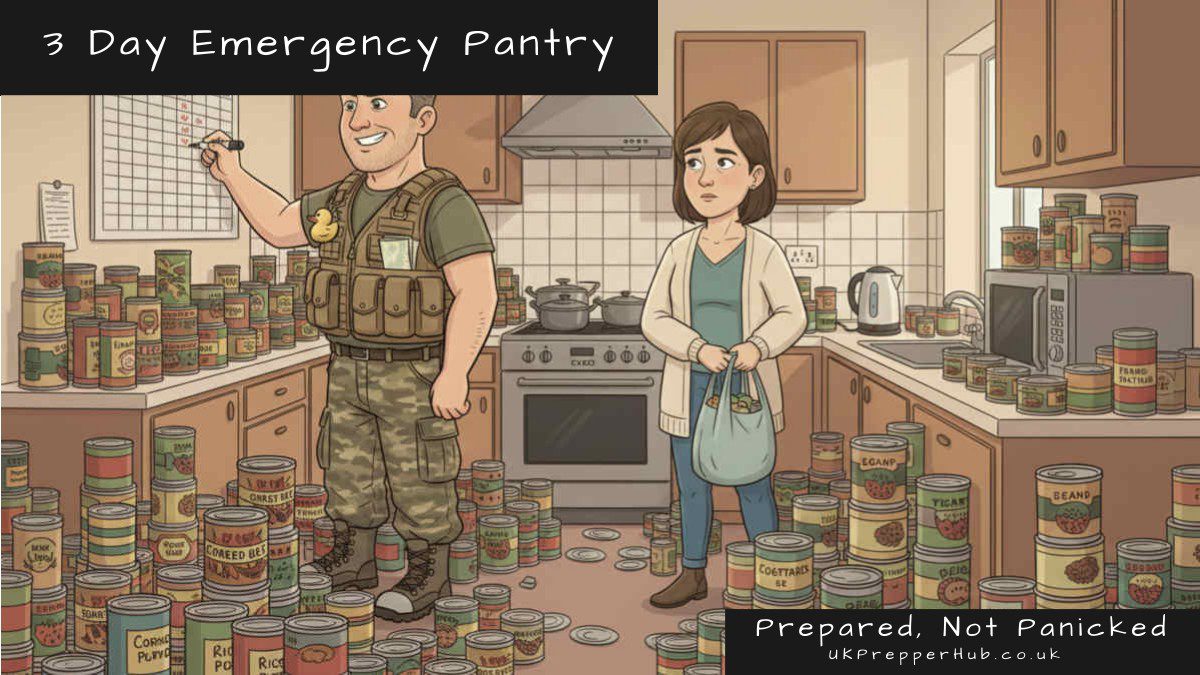
Our 3-Day Emergency Pantry guide works through exactly that, meal by meal, and shows how to expand it into longer-term storage without buying anything you won’t eat.
Complete Guide
3-Day Emergency Pantry
The low-barrier start: A shopping list of shelf-stable meals that require zero refrigeration.
The Bottom Line On Your Emergency Food Supply
The nutritionists are right about nutrition. Pulses, oily fish, oats, nuts and long-life milk are all good food, and we’d happily eat most of the list. Where we part company is on what an emergency food supply is for. It is not for eating well. It is for eating when the usual rules have stopped working.
So run every item through the three tests, because the best foods to stockpile are the ones that pass all of them. Does it keep? Does it need fuel? Can I eat it cold? Buy what you’ll really eat, rotate it, keep a manual tin opener and a lot more water than you think you need, and save the wholegrain and low-salt choices for when the power’s back on and the kitchen works again. Then your emergency food supply does its job, and you can eat as healthily as you like the rest of the time.
Frequently Asked Questions
What is the best long life food for an emergency food supply?
The best long life food passes three tests: it keeps for months, it needs little or no fuel, and you can eat it cold. That points to canned beans and pulses, canned oily fish, peanut butter, crackers, cereals, tinned fruit and long-life milk. Buy what your household will actually eat, and rotate it, so nothing goes out of date unused.
What are the best foods to stockpile if the power is off?
The best foods to stockpile in a power cut are the ones that need no cooking. The official GOV.UK kit list asks for “non-perishable food that doesn’t need cooking, such as ready-to-eat tinned meat, fruit or vegetables (and a tin opener)”. Add plenty of water, because dried foods such as pasta and rice need both fuel and water to prepare.
What counts as non-perishable emergency food?
Non-perishable emergency food keeps without refrigeration for months, such as sealed tins, jars, crackers and dried goods. But non-perishable does not mean no-fuel. Dried pasta and rice keep for a long time, yet they need ten minutes or more of boiling and a lot of water, so tinned foods that can be eaten cold are the safer core of an emergency food supply.
How much water do I need for an emergency food supply?
GOV.UK says a minimum of 2.5 to 3 litres of drinking water per person per day, and around 10 litres per person per day once you include basic cooking and hygiene. For a household of four over three days, that is 30 to 36 litres for drinking alone and about 120 litres in total. Water is usually the hardest part to store.
Is a food stockpile of tinned food still healthy?
Yes. The British Nutrition Foundation’s Dr Sammie Gill says there is little nutritional difference between canned and fresh food for carbohydrates, protein, fats, fibre and minerals, although some B and C vitamins can be lower. The NHS also counts canned fruit and vegetables towards your 5 A Day. If you have been told to limit salt or sugar for a medical reason, follow your clinician’s advice.
Does wholegrain food last as long as white for an emergency food supply?
Generally not. Wholegrain foods keep the germ and bran, whose natural oils can go off. The Whole Grains Council says brown rice keeps about six months on a pantry shelf and wholegrain flours only one to three months, while white rice has had the bran and germ removed and keeps much longer. Wholegrain versions also cost more, so compare the dates printed on the packs.
Build Your Resilience
Further Reading: Related Guides
- The 3-Day Emergency Pantry
- Cooking Without Power
- Emergency Water Storage
- Long-Term Food Storage
- Home Emergency Kit
- Water Purification and Safety Guide
All our guides can be found listed on our resilience hub.
Gear We've Tested & Reviewed
All our reviews can be found on our reviews and resources page.
📡 Find Us Everywhere
Daily briefings, prep guides, and real-time updates across every platform. Pick yours.
Free. No commitment. Stay anonymous on WhatsApp & Telegram.
Stay Informed on UK Preparedness
Join our newsletter for UK-specific preparedness tips, product recommendations, and real-world advice for households.
Subscribe to Our Newsletter