
Introduction: The Kitchen is the Heart of Resilience
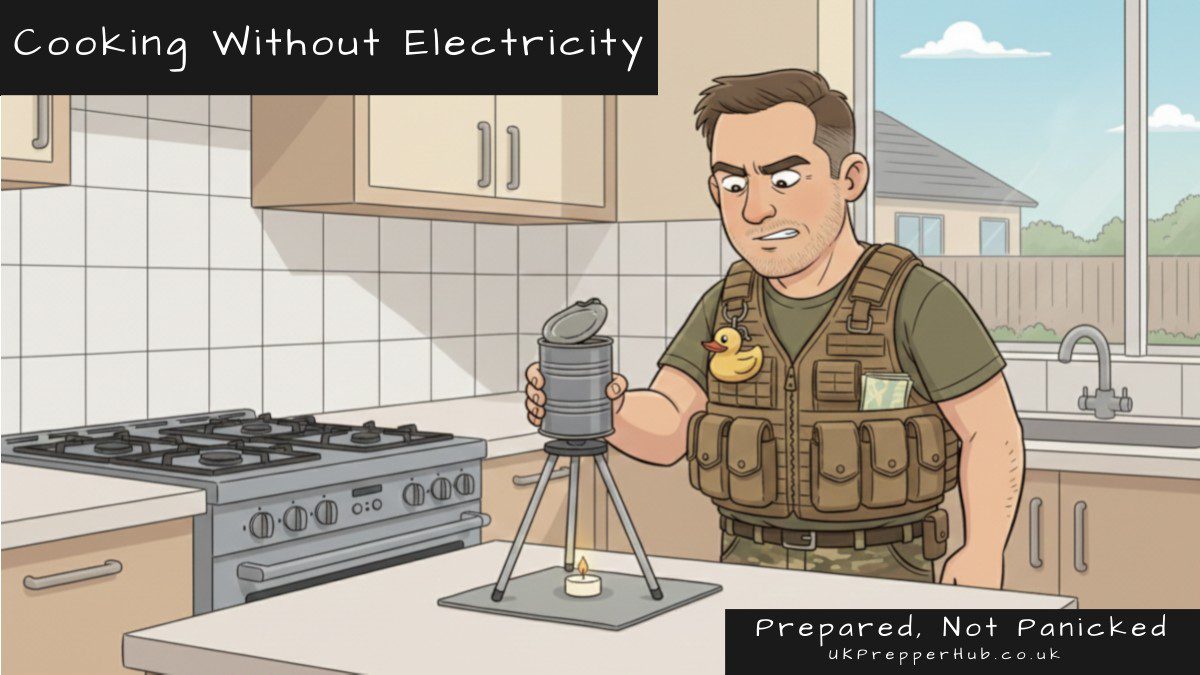
Cooking without electricity is something most UK households never need to think about — until the power fails. Induction hobs, electric ovens, microwaves, and kettles all become useless at once. While many people’s first instinct is to reach for the takeaway menu, delivery services often fail during widespread outages or extreme weather. For a complete overview of power cut resilience, see our power cut survival guide.
Complete Guide
How to Prepare for a Power Cut
The 12 things to sort before the lights go out: lighting, heating, food, water and keeping phones charged, plus what to do in the first few minutes.
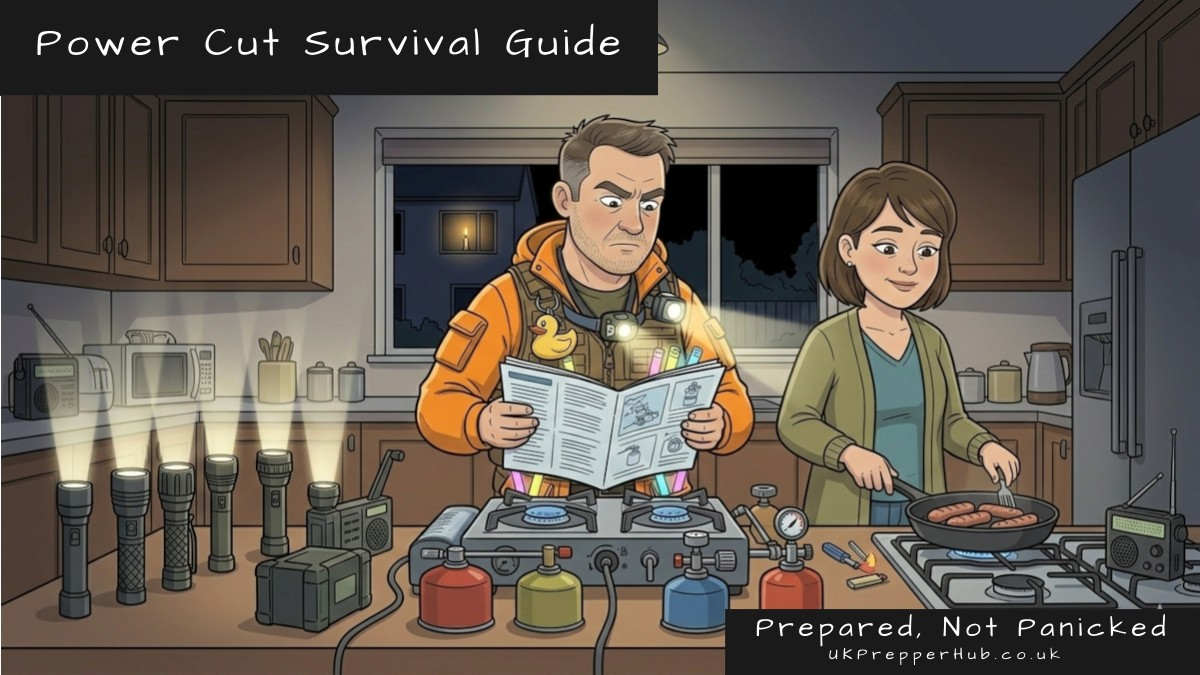
Knowing how to cook without electricity — and safely boil water indoors — is a fundamental survival skill. This guide covers the safe use of emergency stoves, fuel management, and “no-cook” meal strategies.
The Safety First Rule: The Silent Killer
Before discussing equipment, we must address Carbon Monoxide (CO).
- Outdoor Gear Stays Outdoor: Never use a charcoal BBQ, a “Patio Heater,” or a petrol generator inside your home or even in an attached garage. These produce lethal levels of CO.
- Ventilation is Non-Negotiable: Even “indoor-safe” camping stoves (like butane canisters) consume oxygen and release gases. Always crack a window in the kitchen when cooking. Use safe emergency lighting while cooking—never candles or open flames for illumination.
- Detection: Every prepper household must have a battery-operated CO detector. If the alarm sounds, extinguish all flames and exit the property immediately. Carbon monoxide detectors are essential during power cuts when alternative heating is used — especially if you rely on gas, solid fuel, or portable heaters.
FireAngel Combination Smoke and Carbon Monoxide Alarm
One sealed unit covering smoke and CO detection — with a 10-year battery that keeps it running during a power cut, when emergency stoves and heaters are out and a mains-wired alarm would already have gone dark.
Our Full Review: FireAngel Combination Smoke and Carbon Monoxide Alarm →
Cooking Without Electricity: Equipment Options
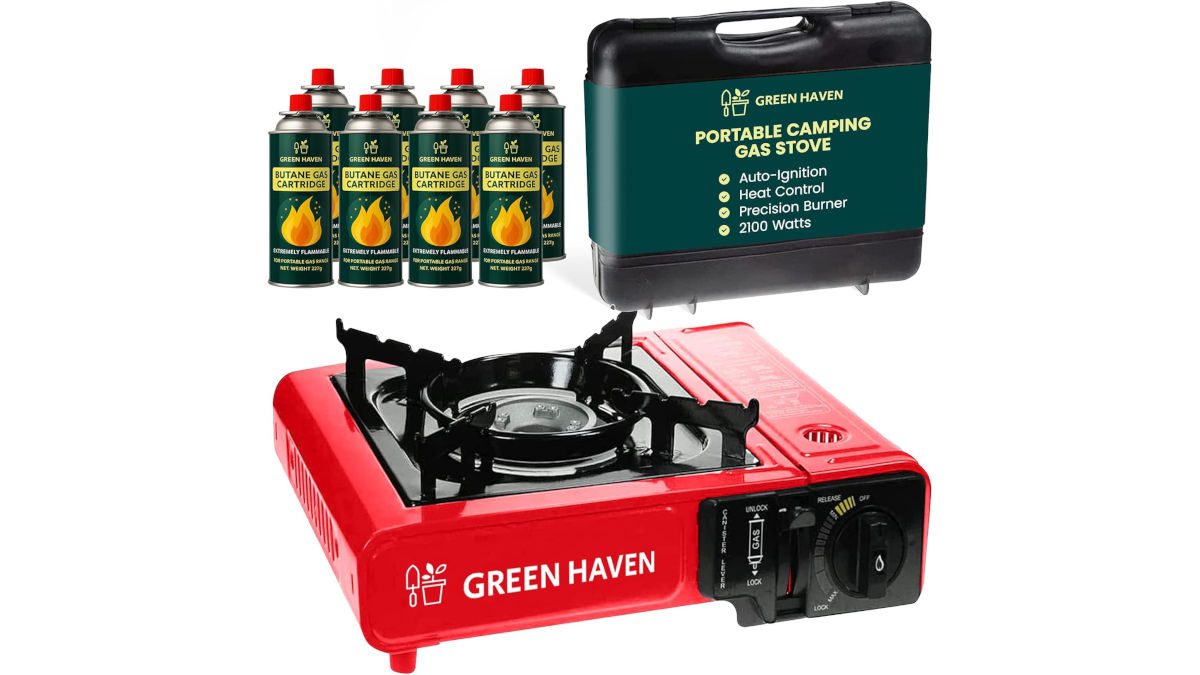
A. The Portable Butane “Bistro” Stove
The most common and affordable option in the UK.
- Pros: Stable, easy to light, inexpensive.
- Cons: Canisters don’t perform well in sub-zero temperatures (the gas won’t vaporize).
- Prepper Tip: Keep your canisters inside the “Core Room” so they stay warm and ready for use.
We tested this bistro/camping stove that comes in its own carry case and 8 gas bottles.
Portable Gas Stove with Carry Case & 8 Butane Cartridges
Boils the kettle and cooks a proper meal on top of your hob when the power goes, with no electricity at all.
B. The Alcohol/Spirit Burner (Trangia style)
A favorite for long-term resilience because the fuel (Methylated Spirits) is shelf-stable and easy to find in hardware stores.
- Pros: No moving parts to break; silent.
- Cons: Slower to boil than gas; the flame can be hard to see in daylight.
C. The Kelly Kettle (Outdoor Only)
If you have a garden, the Kelly Kettle is the gold standard for boiling water using nothing but twigs and dry leaves. It is the most fuel-efficient way to get a hot brew when gas is scarce.
What About Solid Fuel Tablets (Hexamine)?
Solid fuel tablets — hexamine burners — still appear in old survival kits and are occasionally recommended in outdated prep guides. Do not use them indoors, and do not stockpile them.
- Toxic fumes: Hexamine produces formaldehyde and other harmful gases when burned. It was designed for military outdoor use only — never for a kitchen or any enclosed space.
- Hard to source safely: Genuine hexamine fuel is increasingly difficult to buy in the UK. Counterfeit or degraded product is common, making the risk unpredictable.
- Better alternatives exist: A butane camping stove or alcohol burner is safer, cheaper, and far easier to use. There is no good reason to use hexamine for home emergencies.
If you have hexamine tablets in an old kit, treat them as outdated and do not use them indoors.
🦆 Keith
Don’t Be Keith
Keith bought a job lot of hexamine tablets after reading a 2009 survival guide — didn’t realise they produce formaldehyde fumes and should never be used indoors.
Fuel Shelf Life: What to Expect
Emergency cooking fuel degrades slowly. Check and rotate your stocks annually so you’re not relying on something past its best.
- Butane/propane canisters: 2–5 years, stored cool and dry
- Methylated spirits (alcohol fuel): 2–3 years in a sealed container
- Charcoal: Indefinite if kept dry — but it absorbs moisture easily, so store it sealed
- Hexamine tablets: Do not buy or stockpile — see above
“No-Cook” and “Retained Heat” Methods
When cooking without electricity, fuel conservation matters as much as the cooking method itself. Smart prepping involves “Thermal Cooking” — retained heat that stretches every canister further.
- The Wonderbag / Haybox Method (sometimes called a haybox oven or fireless cooker): Bring your rice or pasta to a boil for 2 minutes, then remove it from the heat and wrap the pot in a thick sleeping bag or a dedicated “thermal bag.” The retained heat will finish the cooking process over the next hour without using another drop of gas — the closest thing to an emergency oven you can build with kit you already own.
- The “Tin Can” Buffet: Don’t underestimate the humble tin of custard, rice pudding, or beans. Most canned goods in the UK are pre-cooked during the canning process and can be eaten cold in a true emergency.
- Building a proper 3-day emergency pantry ensures you have the right tinned foods stored and rotated, so when cooking equipment fails, you’re not scrambling to work out what’s safe to eat cold.

🍳 Greasy Gary
From Gary’s Kitchen
Beans cold out the tin? Course you can, love, they’re already cooked. Want them hot? Tip them in a pan first. Never put a tin straight on the flame, and never ever an unopened one, unless you fancy redecorating the ceiling. Then once it’s bubbling, lid on, wrap the pan in a towel and let it sit. Keeps your dinner hot and saves your gas. Everything comes with a tea, mind.
Complete Guide
3-Day Emergency Pantry
The low-barrier start: A shopping list of shelf-stable meals that require zero refrigeration.
Water: Your Most Important Ingredient
Without power, your dishwasher and potentially your taps are offline.
Complete Guide
Emergency Water Storage
How much to store, how to store it in small spaces, and the reality of UK water rotation.
- One-Pot Wonders: Cook meals that only require one pot to minimise washing up. If tap water is suspect during the outage, review our water purification guide before cooking.
- Paper Plates: This is the one time “single-use” is acceptable. Don’t waste your stored drinking water washing dishes.
- The Thermos Strategy: Whenever you have a flame going, boil extra water and store it in a high-quality vacuum flask. This gives you “instant” coffee or porridge later without relighting the stove.
Frequently Asked Questions (FAQ)
Can I use my camping stove on my wooden kitchen worktop?
It is risky. Always place the stove on a stable, non-flammable surface like your (offline) glass induction hob or a large baking tray to catch any heat or spills.
How long does a standard 227g butane canister last?
On a medium-high flame, you can expect roughly 60 to 90 minutes of burn time. This is usually enough for 3-4 days of basic emergency cooking for a small family.
Can I cook on a wood-burning stove?
If you have a flat-top multi-fuel burner, yes. It is one of the best “dual-purpose” resilience tools for both heat and food.
Are hexamine solid fuel tablets safe to use indoors?
No. Hexamine produces toxic fumes including formaldehyde when burned and was designed for military outdoor use only. Do not use hexamine tablets indoors and do not stockpile them — butane camping stoves and alcohol burners are safer, cheaper, and widely available.
How long does emergency cooking fuel last in storage?
Butane and propane canisters typically last 2–5 years stored cool and dry. Methylated spirits last around 2–3 years in a sealed container. Charcoal lasts indefinitely if kept dry and sealed. Check and rotate your fuel stocks annually.
What is the safest way to boil water indoors without electricity?
A portable butane camping stove with a window cracked open is the safest and most practical option for most UK households. Always have a battery-operated CO detector nearby. Never use BBQs, charcoal, or solid fuel burners indoors.
Build Your Resilience
Further Reading: Related Guides
- 3-Day Emergency Pantry
- Long-Term Food Storage
- How to Prepare for a Power Cut
- Emergency Meal Planning
- Home Emergency Kit
- Heating Without Electricity
All our guides can be found listed on our resilience hub.
Gear We’ve Tested & Reviewed
- Camping Gas Stove
- British Army 24-Hour Ration Pack
- FireAngel SCB10-R Smoke & CO Alarm
- The Best Energy Bars
All our reviews can be found on our reviews and resources page.