

Heating without electricity sounds like a problem for people with no gas. It isn’t. When the power goes off in winter, most gas central heating goes off with it, because the boiler needs electricity to light, run its controls and pump hot water round the radiators. A full gas supply and a cold house is a combination that catches people out every winter.
The good news is that the fixes are cheap, well understood and very British: a fire, a paraffin heater, a gas cabinet heater, and a lot of jumpers. This guide covers what still works in a power cut, which emergency heating is safe indoors, what to buy before winter, and the things people try every year that should never come inside.
Does Gas Central Heating Work in a Power Cut?
Almost certainly not. A modern combi or system boiler uses mains electricity for its ignition, its controls and the pump that pushes hot water round the house. Cut the power and the boiler stops, even though the gas is still there. Oil boilers are the same: the burner and pump both need power. Heat pumps, storage heaters and electric heaters obviously go off too.
What does keep going:
- Wood burners, multi-fuel stoves and open fires. No plug, no problem.
- Some gas fires. Older fires with a push-button spark and a gas tap usually work without power. Newer ones with remote controls, electronic ignition or a fan often don’t. Find out which you’ve got on a normal day, not during a power cut.
- Heaters that bring their own fuel. Wick paraffin heaters and indoor gas cabinet heaters, covered below.
Boiler Not Working After a Power Cut?
This one gets searched for a lot, usually with a Worcester, Vaillant or Glow-worm name attached. The answer is nearly always the same: press the reset button on the boiler. Boilers often lock out when the power drops mid-cycle, and the reset clears it. If it still won’t fire up, or the display shows a fault code that won’t clear, call a Gas Safe registered engineer rather than taking the cover off.
Complete Guide
How to Prepare for a Power Cut
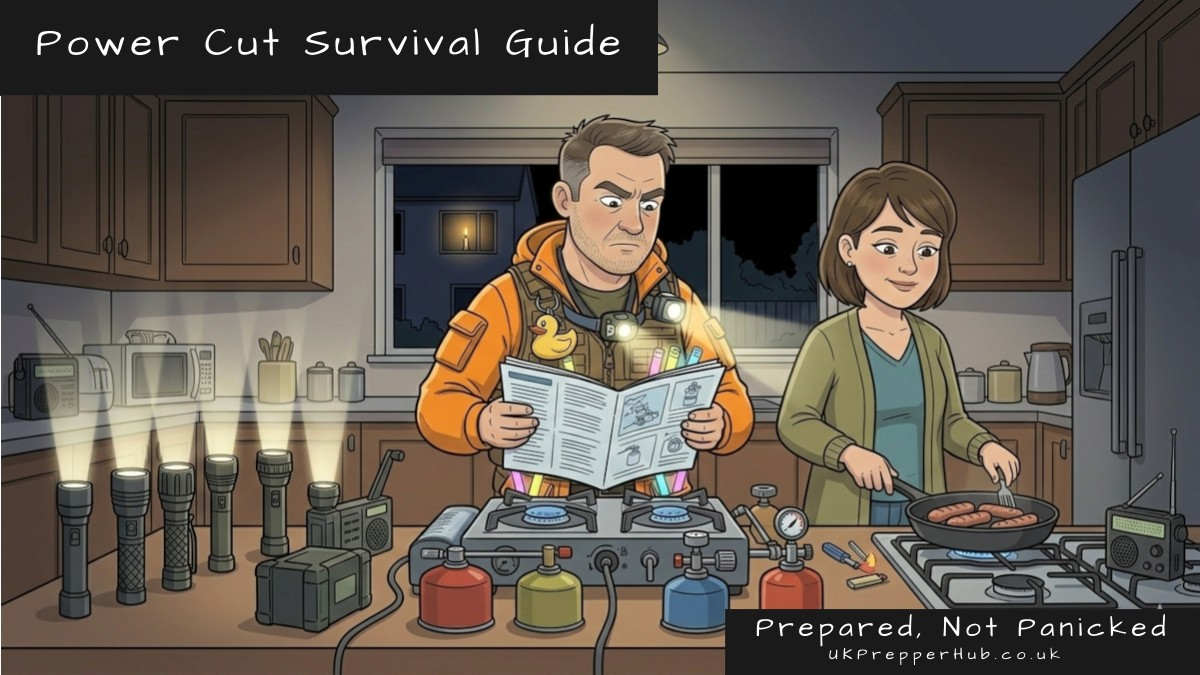
The 12 things to sort before the lights go out: lighting, heating, food, water and keeping phones charged, plus what to do in the first few minutes.
Heating Without Electricity: What Actually Works
Once the boiler’s out, you’re looking for heat that brings its own fuel. In a UK home, heating without electricity comes down to three realistic options.
Wood Burners and Open Fires
If you’ve got one, you already have the best heating without electricity there is. Our house runs on a wood burner and nothing else, and out here the power goes off often enough for that to matter. When the grid drops, the house doesn’t notice.
Ours has a back boiler. Cold water comes out of the bottom of the hot water tank, through the stove, and back into the top of the tank. It circulates on its own because hot water rises, so there’s no pump and no power involved. A heat-dump radiator next to the stove gives spare heat somewhere to go, so the water can’t overheat. We also have an electric pump that sends hot water to a radiator further away, and that one does stop in a power cut. The stove and the gravity circuit carry on regardless.
If your stove has a back boiler, find out how yours works before winter. If it circulates by gravity and has a heat-dump radiator, like ours, a power cut changes nothing. If it relies on an electric pump to move the heat, ask your installer what happens when the pump stops, because the water in the boiler still keeps heating.
Two things to sort now: get the chimney swept before the cold sets in, and keep a decent stack of dry logs under cover. Wet wood burns badly, smokes and tars up the flue.
Paraffin Heaters
A wick paraffin heater is the classic answer to heating without electricity in a house with no fire. You fill the tank, light the wick and it burns. No mains, no batteries. A typical 6 litre heater puts out around 2.8kW, enough for a 10 to 20 square metre room, and the flat top will boil a kettle or warm a pan of soup while it’s at it.
Two things to get right. Buy a wick heater, not an electronic one: paraffin heaters with a digital thermostat, timer or fan need mains power, which defeats the point. And burn C1 paraffin, the clean indoor grade, not C2, which is heating oil for boilers. UK sellers call it paraffin; Americans call it kerosene. Same stuff.
The paraffin heater we reviewed has no tip-over cut-off, which is normal for this type. That means a guard or a sensible spot away from children and pets, a CO alarm in the same room, and never leaving it lit when you go to bed.
Paraffin Heater
No plug, no batteries: a 6 litre paraffin heater that warms a room and boils a kettle, with around 15 hours of heat from a 5 litre bottle.
Our Full Review: Paraffin Heater →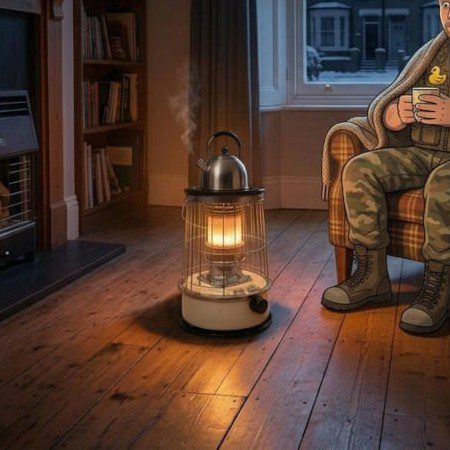
Indoor Gas Cabinet Heaters
The other proper option for heating without electricity indoors is a gas cabinet heater: a heater on wheels with a butane bottle in the back. Look for one with an oxygen depletion sensor, which shuts it off if the air in the room runs short of oxygen, and flame supervision, which cuts the gas if the flame goes out. Most light with a push-button spark that runs on an AA battery, so they don’t need the mains at all.
Indoor cabinet heaters run on butane. Propane is for outdoors: patio heaters, barbecues and caravans, with the bottle kept outside. A propane heater has no business in your living room, whatever the online listing says.
Cabinet heaters need a decent-sized room. Ours are too small for one, which is worth knowing before you buy. They’re not for bedrooms, and the bottle sticks out at the back, so leave space behind it. The one we reviewed is the model Calor and Flogas sell, chosen because a recognised brand matters when it’s gas in your living room.
Manhattan Gas Heater (Calor Gas Heater)
A Calor and Flogas heater with real log-effect flames, an oxygen depletion sensor and flame failure cut-off, and no mains power needed when the lights go out.
Our Full Review: Manhattan Gas Heater →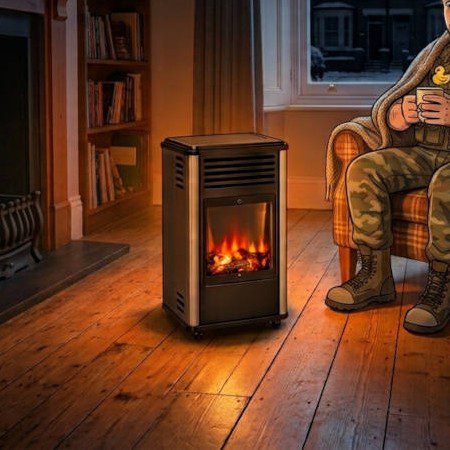

🤡 Camping Clown
He Has The £4,000 Version
My paraffin heater cost more than my first car. Digital thermostat, seven-day timer, a fan so quiet you can hear the price tag. I bought it specially for power cuts. It needs to be plugged in.
Small Cartridge Heaters
You’ll also see little heaters that take the long butane cartridges from a camping stove. Most are labelled for outdoor or well-ventilated use only. We have one, because our rooms are too small for a cabinet heater, and it has been used exactly once: as the last-ditch option after everything else, with a window open and the CO alarm in the room. We wouldn’t tell anyone to go and buy one.
Why Battery Heaters Don’t Really Exist
People search for battery heaters and no-plug heaters every winter, and the maths is unkind. A small electric heater draws about 2,000 watts. A portable power station holding 1,000 watt-hours would run it for roughly half an hour, then sit there flat. Even the big ones won’t heat a room through a cold night. Power stations are brilliant for lights, phones, the router and a laptop. Heating without electricity means heating with fuel.
The same goes for electric blankets. Ours runs off the mains like everyone else’s, so when the power goes it’s a hot water bottle and an extra blanket, which works fine.
Candle Heaters: Why They Don’t Work
The tea light and terracotta flower pot heater turns up on social media every October. A tea light gives off about 30 to 40 watts. A room needs well over a thousand to make a difference. Four tea lights under a flower pot is roughly the heat of one person sitting in the room, plus four naked flames in the dark. Candles are for light, and even then a torch is safer.

🦆 Keith
Don’t Be Keith
Keith built a flower pot heater from a Facebook video, lit four tea lights under it and announced the living room would be toasty by teatime. By teatime the room was exactly as cold, the pots were too hot to touch and his wife had moved the cat.
Safety Rules for Heaters That Don’t Require Electricity
Heating without electricity almost always means burning something, and anything that burns fuel indoors makes carbon monoxide, and you can’t see, smell or taste it. Heaters that don’t require electricity are safe when they’re used properly. These are the rules:
- A CO alarm in the same room. Not in the hall, not in a drawer. Ours is a battery combined smoke and CO alarm on the living room wall, the same one we reviewed below. If you have a wood burner fitted, Building Regulations already require a CO alarm in that room.
- Some fresh air. Crack a window. Fuel heaters need oxygen and they put out moisture, so sealing the room tight is the wrong move.
- Never overnight, never unattended. Warm the room, then turn the heater off before bed and let the duvet take over.
- Keep it clear. Well away from curtains, bedding and furniture, with a guard if there are children or pets about.
- Refuel cold. Let a paraffin heater cool before you fill it, and fill it outside or over something that’ll catch a spill.
- Never bring outdoor kit inside. No barbecues, patio heaters, generators or camping stoves for heating. Every winter someone tries, and some of them don’t wake up.
Headache, dizziness, nausea, tiredness and feeling better when you go outside are the classic signs of CO poisoning. If they appear, or the alarm goes off, turn the heater off and get everyone outside.
FireAngel Combination Smoke and Carbon Monoxide Alarm
One sealed unit covering smoke and CO detection — with a 10-year battery that keeps it running during a power cut, when emergency stoves and heaters are out and a mains-wired alarm would already have gone dark.
Our Full Review: FireAngel Combination Smoke and Carbon Monoxide Alarm →
Combustion Heaters and Damp
This is the part most heating guides skip. Burning paraffin or butane makes water as well as heat: roughly a litre of water for every litre of paraffin, and over 20 litres from a 15kg butane bottle. In a closed room it has nowhere to go, so it runs down the windows, soaks into bedding and makes the room feel colder than the thermometer says.
The fix during the power cut is ventilation: a small gap in a window on the far side of the room from the heater lets the moisture out without losing much heat. Wood burners don’t have this problem, because the flue takes the moisture away. Once the power’s back, a dehumidifier dries out what’s left. A desiccant one is the type that still works in a cold room.
EcoAir DD1 Simple
The rotary-dial desiccant dehumidifier that keeps cold, solid-walled rooms dry where compressor models give up, and switches itself on from a smart plug or a timer.
Our Full Review: EcoAir DD1 Simple →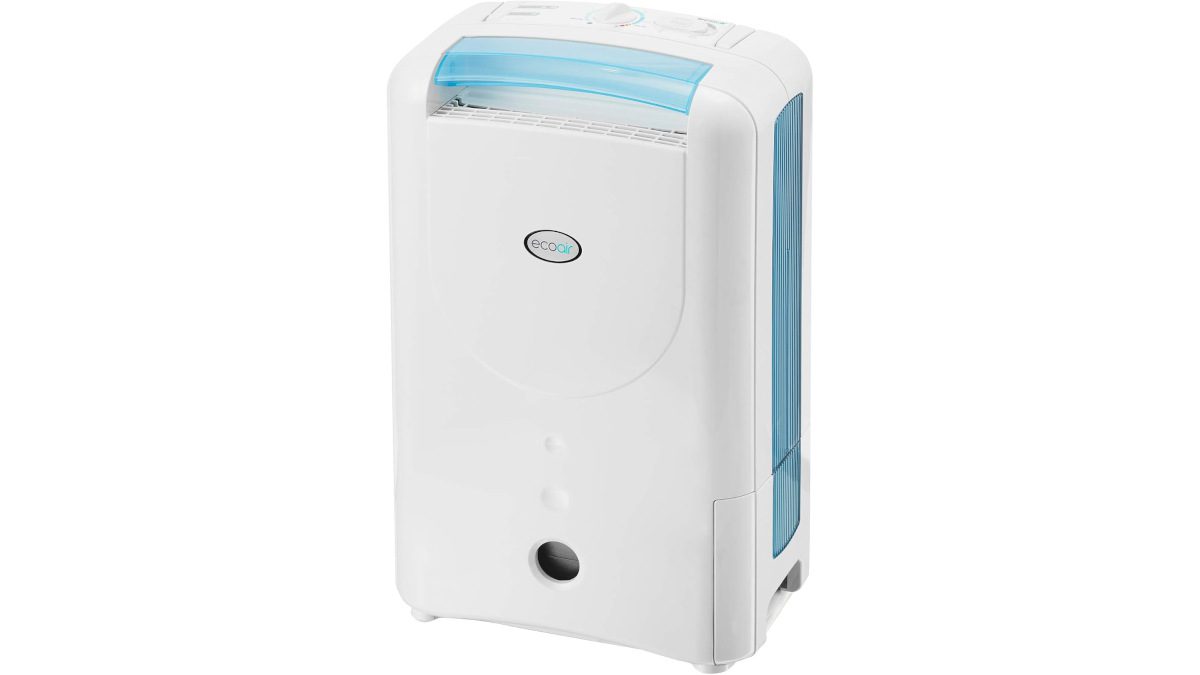
ThermoPro TP50 Digital Hygrometer
A compact, accurate hygrometer that tells you exactly what the humidity is in any room — so you know whether you have a damp problem before mould appears. Under £15 and the easiest first step in managing moisture at home. Now sold on Amazon UK as the TempPro TP50.
Our Full Review: ThermoPro TP50 Digital Hygrometer →
How to Heat a Room Without Electricity, and Keep Yourself Warm
Don’t try to heat the whole house. Pick one room, shut the door, put a draught excluder along the bottom and draw the curtains. A small room with people in it warms up fast and stays warm. Everything else in the house can be cold.
Then heat the people as well as the room: layers, a hat, a hot water bottle and a sleeping bag or a heavy blanket over your legs. Our living room is at 15°C as this is being written and nobody has come to harm, because jumpers. If you need the full approach for a long outage, from the warmest room to choose to keeping older relatives warm, it’s all in our guide to keeping warm without heating.
Complete Guide
Keep Warm Without Heating
When a cold snap hits and the boiler gives up, the house loses heat fast. How to keep warm without heating, fix a frozen condensate pipe, protect your pipes, and spot hypothermia in someone vulnerable before it gets serious.
Read the Full Guide: Keep Warm Without Heating →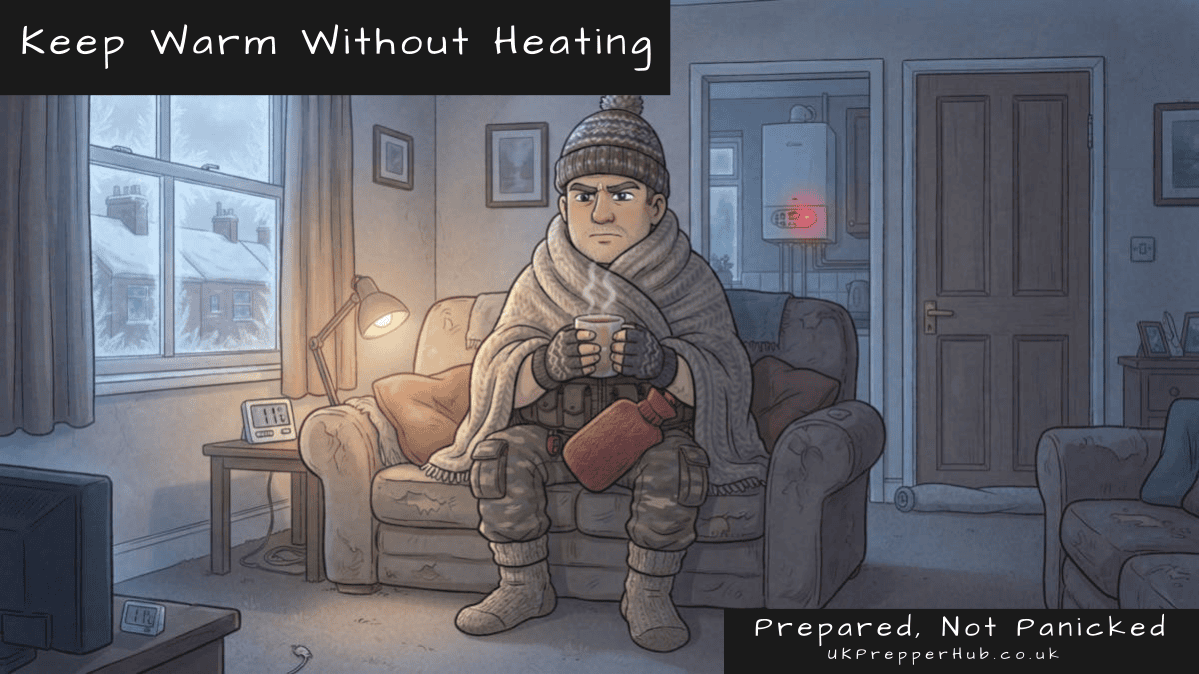
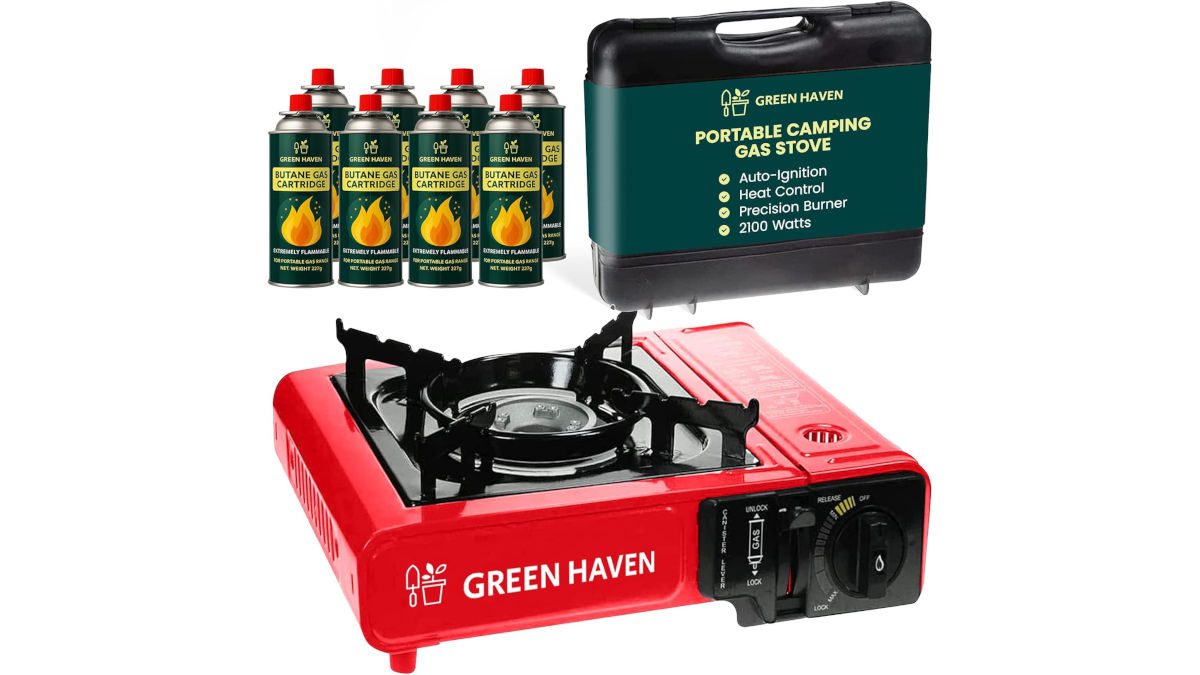
A hot water bottle needs boiling water, so a camping stove earns its place in a winter power cut. Use it for cooking and boiling the kettle only, next to an open window, never as a heater.
Portable Gas Stove with Carry Case & 8 Butane Cartridges
Boils the kettle and cooks a proper meal on top of your hob when the power goes, with no electricity at all.
Silentnight Heat Genie Self Heating Giant Blanket
If you’re looking for a simple way to stay warm without turning the heating up, this is a low-cost option with zero running costs. It’s especially worth considering for cold homes, power cuts, or anyone wanting extra warmth without relying on electricity.
Our Full Review: Silentnight Heat Genie Self Heating Giant Blanket →
What to Have Ready Before Winter
Emergency heating is easy to sort in September and almost impossible to sort in a cold snap, when everyone else wants the same thing at the same time. A short list:
- Fuel for whatever you’ve got. A dry stack of logs, a couple of 5 litre cans of C1 paraffin, or a spare butane bottle, depending on your heater. Store it safely and legally; the fuel storage guide covers how much you can keep and where.
- A working CO alarm in every room with a fuel-burning appliance. Press the test button now.
- The chimney swept, if you have a fire.
- Two hot water bottles per person. One in use, one refilling.
- A sleeping bag or heavy blanket per person, and warm base layers for anyone older or very young.
- Hand warmers. Air-activated ones need nothing charging or fuelling.
- A cheap room thermometer, so you know when the room is actually getting too cold.
Complete Guide
Fuel Storage at Home
Most people have never read the rules on keeping petrol, diesel and gas bottles at home. This guide covers the petrol limit, which containers are legal, how long petrol and diesel last in a can, and where it’s safe to store them.
Read the Full Guide: Fuel Storage at Home →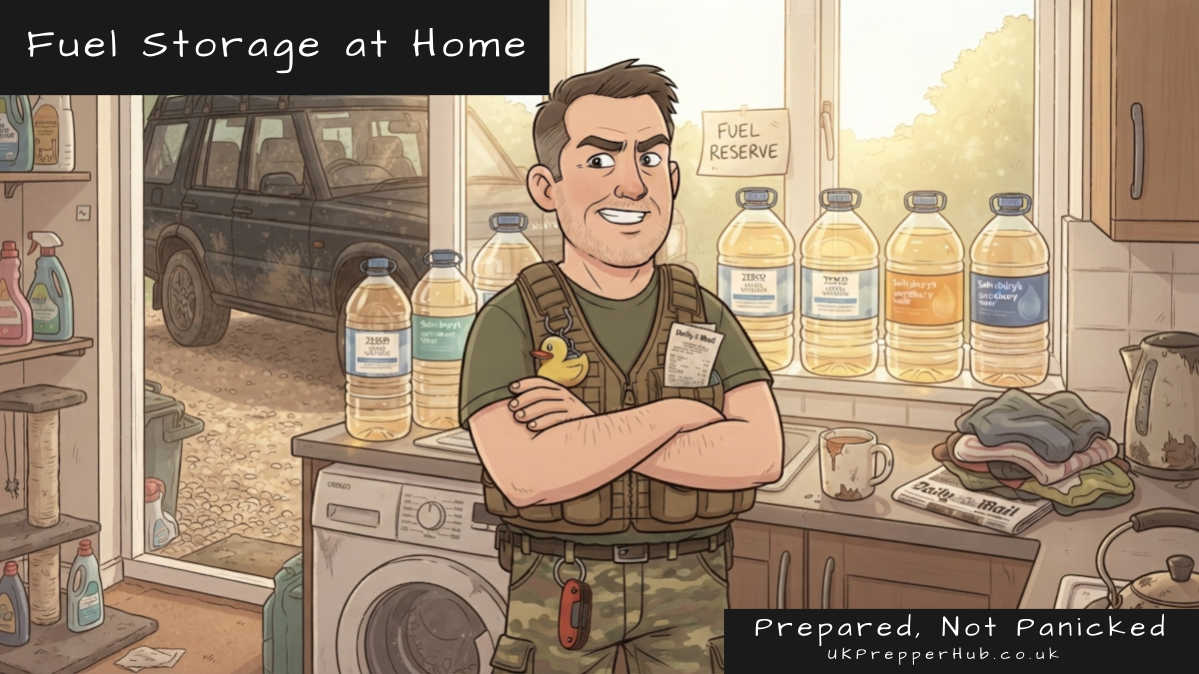
C1 Paraffin
The right paraffin for indoor heaters and lamps: Class 1 C1 paraffin, highly refined for minimal smell and smoke, in four easy-pour 5 litre cans.
Our Full Review: C1 Paraffin →
HotHands Hand Warmers
No batteries, no charging, nothing to go flat: open the packet and get up to 10 hours of heat, wherever the power cut or breakdown catches you.
Our Full Review: HotHands Hand Warmers →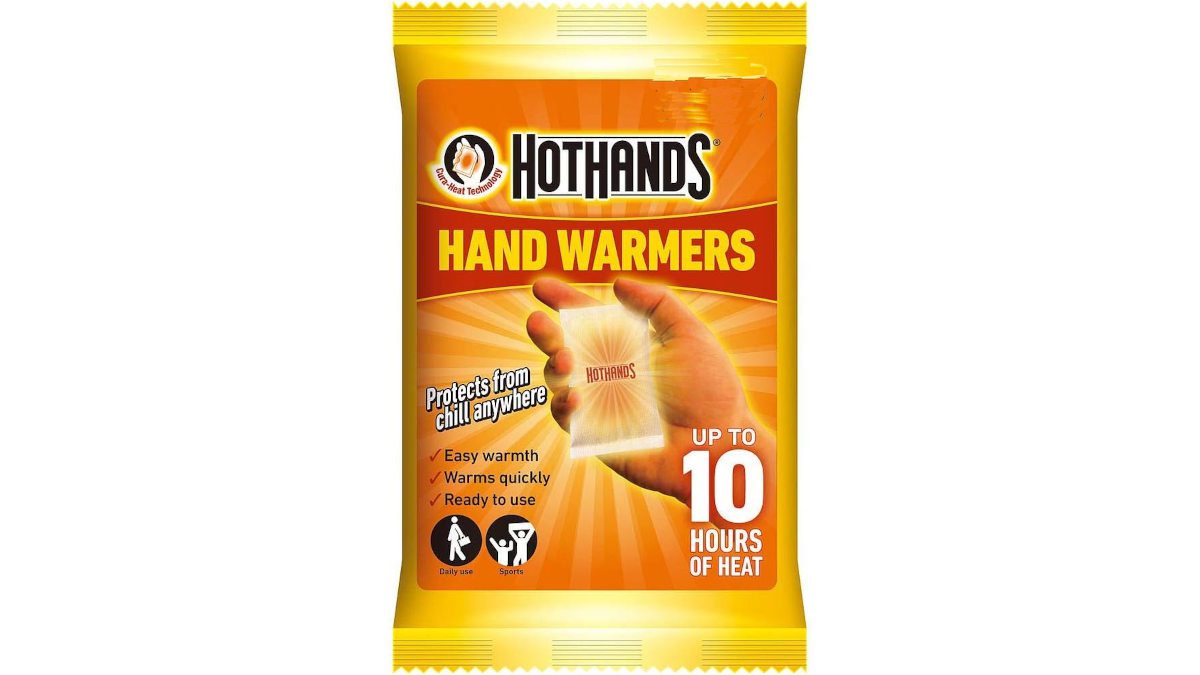
SnuggleSafe Microwave Heat Pad
Ten hours of gentle warmth from a two-minute microwave blast — no electricity, no wires, and nothing that stops working the moment the power does. Essential kit for rabbits, guinea pigs, cats, and small dogs through a British winter power cut.
Our Full Review: SnuggleSafe Microwave Heat Pad →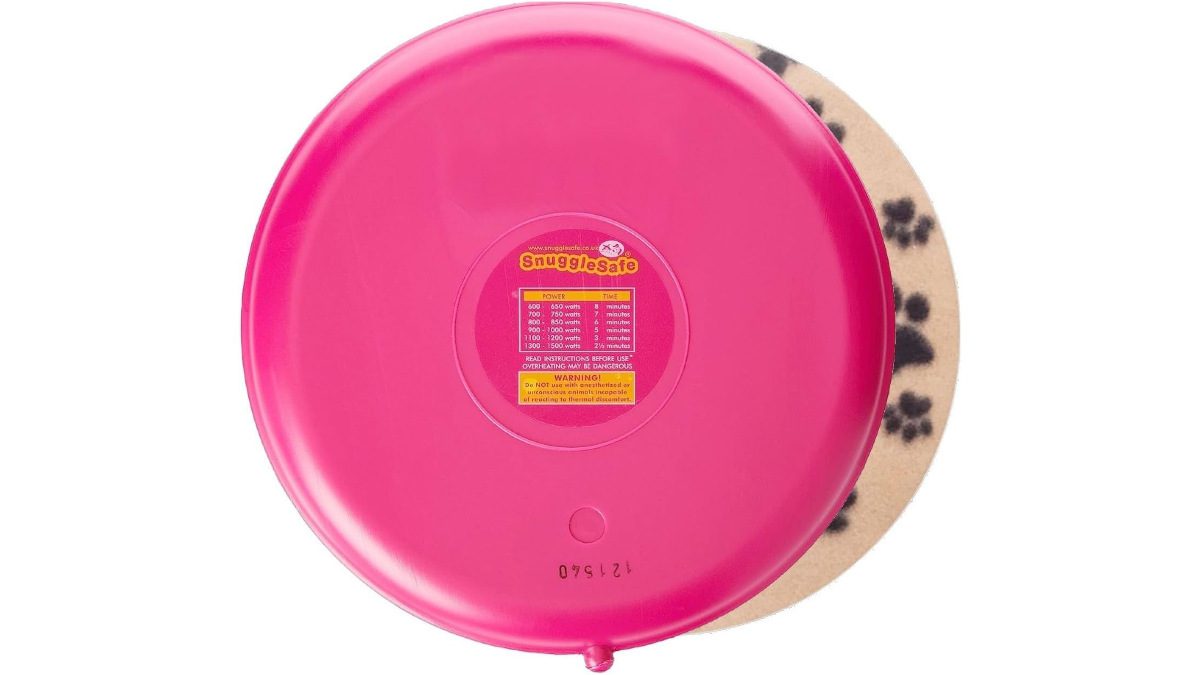

📋 Clarissa
I’ve Made A Checklist
Here’s my power cut checklist. It has a whole warmth section: fuel, a CO alarm with its own battery, blankets and a warm room picked out before you need it. Print it, tick it off before the clocks go back, and you won’t be hunting for any of it in the dark. Free to download, obviously.
Emergency Heating for Flats, Older People and Babies
Flats
Flats keep heat better than houses, because the neighbours are heating your walls for you. Before you buy anything for heating without electricity, though, check your lease or tenancy agreement: many landlords and blocks ban paraffin heaters and bottled gas, and some for good reason in high-rise buildings. If yours does, your plan is layers, one warm room and hot water bottles.
Older and Vulnerable People
Cold is a real health risk for older people. The NHS advises heating your home to at least 18°C if you’re 65 or over, less mobile, or living with a heart or lung condition. Healthy people under 65 can be fine cooler than that, as long as they’re comfortable. If you have an older relative nearby, a power cut in a cold snap is the time to check on them, not the time to assume someone else has.
Babies and Young Children
Babies can’t regulate their temperature well. Keep the room they sleep in at 16°C to 20°C, add layers of clothing rather than loose blankets, and keep any heater well away from the cot and never lit unattended in their room. A room thermometer earns its place in any house with a baby.
Frequently Asked Questions
Does gas central heating work in a power cut?
Almost never. Modern gas boilers need electricity for the ignition, the controls and the pump, so they stop when the power goes, even with gas still in the pipes. A wood burner, an open fire, some older gas fires with a push-button spark, a wick paraffin heater or a gas cabinet heater will still give you heat.
Is it safe to leave an emergency heater on while I sleep?
No. Warm the room, then turn the heater off before bed and rely on the duvet, a hot water bottle and a sleeping bag. Fuel heaters need someone awake and in the room, with a CO alarm nearby.
Which is better, a paraffin heater or a gas heater?
A wick paraffin heater is cheaper to buy, small enough for most rooms and will boil a kettle on top, but it has no tip-over cut-off and needs refuelling by hand. A butane cabinet heater has an oxygen depletion sensor and flame supervision built in and is cleaner to run, but it needs a bigger room and a gas bottle. If your rooms are small, paraffin usually fits better.
What paraffin do I need for an indoor heater?
C1 paraffin, sometimes sold as premium or indoor paraffin. C2 is heating oil for boilers and isn’t meant for flueless indoor heaters. Garages, fuel merchants, hardware shops and online sellers stock C1, usually in 5 litre or 20 litre packs. Buy it before the first cold snap, not during it.
What should I do if my carbon monoxide alarm goes off?
Turn off the heater or appliance if you can do it straight away, open doors and windows and get everyone outside. For a gas appliance, call the National Gas Emergency number on 0800 111 999 (0800 002 001 in Northern Ireland). If anyone has a headache, dizziness, sickness or confusion, call 999. Don’t go back in until it’s been checked.
Can I use a camping stove to heat a room?
No. Camping stoves are for cooking and boiling water, next to an open window. Running one as a heater fills the room with carbon monoxide and moisture. Boil the kettle on it for hot water bottles instead, and let them do the heating.
What temperature should my home be in winter?
The NHS advises at least 18°C if you’re 65 or over, less mobile, or have a heart or lung condition. Healthy people under 65 can keep it cooler if they’re comfortable. A baby’s room should be between 16°C and 20°C.
Build Your Resilience
Further Reading: Related Guides
- How to Prepare for a Power Cut
- Keep Warm Without Heating
- Fuel Storage at Home
- Preventing Indoor Mould & Damp
- Cooking Without Power
- Make a Blackout Box
All our guides can be found listed on our resilience hub.
Gear We've Tested & Reviewed
- Paraffin Heater (MINUS ONE 6L)
- Manhattan Gas Heater
- C1 Paraffin (Clearell Blue Flame)
- FireAngel SCB10-R Smoke and CO Alarm
- Silentnight Heat Genie Self Heating Giant Blanket
- HotHands Hand Warmers
- SnuggleSafe Microwave Heat Pad
- Camping Gas Stove
- EcoAir DD1 Simple Dehumidifier
- ThermoPro TP50 Digital Hygrometer
All our reviews can be found on our reviews and resources page.