
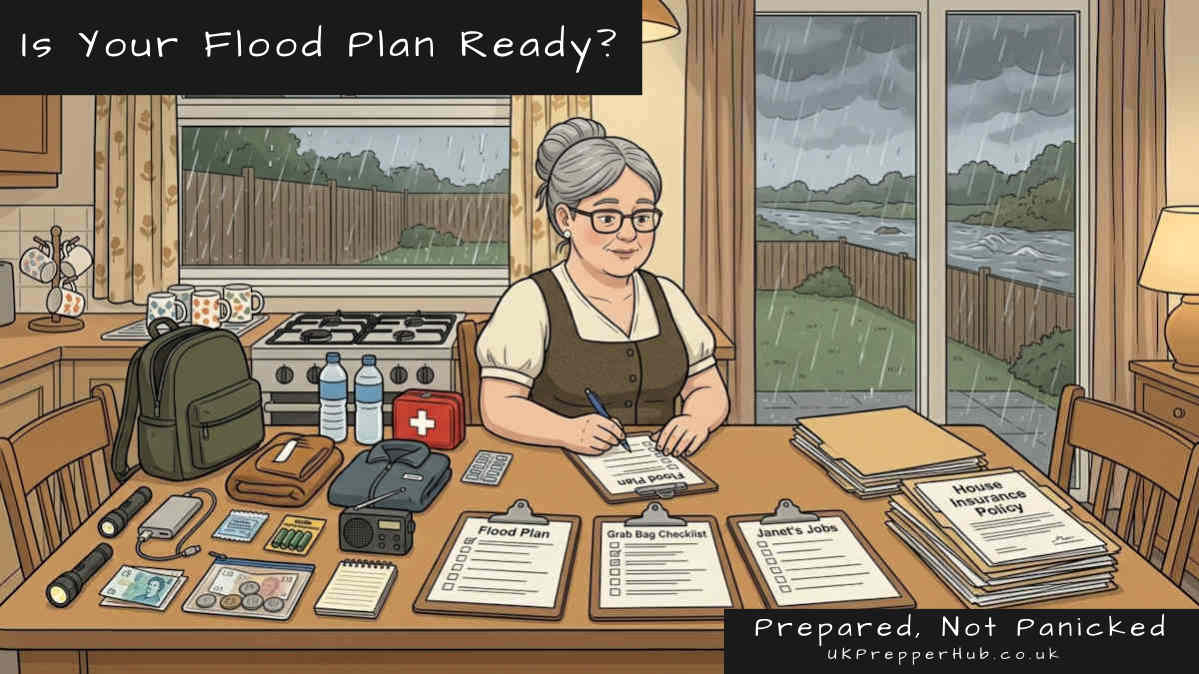
Flood chiefs in England and Wales have spent the past few days telling households the same thing: check your risk, sign up for warnings and get a flood plan in place now, before the wet weather arrives. Natural Resources Wales says long-range forecasts show “an increased likelihood of wetter, windier weather than usual” in the months ahead. The Environment Agency launched a new flood website today. A new government flood and drought taskforce meets for the first time this Wednesday.
None of that means your street is about to go under. Most homes will never flood. But if yours is on the flood risk map, or if you were flooded during last winter’s storms, a flood plan you put together this week is worth far more than one you try to make up at two in the morning with the water coming under the door. This report covers what is happening, and the handful of jobs that make the biggest difference.
Why Flood Chiefs Are Warning Households Now
Three things landed in the same few days.
Natural Resources Wales (NRW) issued its warning. Speaking to BBC Wales, NRW said one in seven properties in Wales is at risk of flooding, more than 274,500 homes and businesses. Its free flood warning service is available to 181,158 properties, but only 48,844 of them have signed up. That is 27%. NRW’s Jeremy Parr was blunt about it: “It is low – 27%.” The Met Office added that long-range forecasts for October to December suggest “a greater chance of weather-related disruption.”
The Environment Agency launched Flood Action Online. It went live today for Flood Action Week. You can check the flood risk for any property in England, sign up for free flood warnings and see the latest Met Office weather alerts in one place. Around 6.3 million homes and businesses in England are in flood risk areas. Floods Minister Emma Hardy urged everyone to “check their flood risk, prepare a flood plan, and follow warnings to protect their home and family.”
A new Flood and Drought Resilience Taskforce meets this week. More than 50 organisations, including the Environment Agency, the Met Office, fire and rescue services and the insurance industry, meet for the first time on Wednesday 14 October to look at winter flood preparedness. The government says £1.4 billion is being spent on building and repairing flood defences in 2026/27, and that every £1 spent on flood defences prevents around £8 of damage.
Defences protect whole towns. A flood plan protects your household. You need both, and only one of them is in your hands.
For the bigger forecast picture, see our Special Report “El Nino UK Winter 2026: The Record Storm Season” first published on 5 September 2026.
Flooded Last Winter? You Already Know Your Home Is at Risk
The 2025-26 storm season was a hard one. In November 2025, Storm Claudia pushed the River Monnow over its banks in Monmouth. A major incident was declared, dozens of people were evacuated and NRW issued severe flood warnings, the highest level, meaning danger to life. Nearly a year on, the town is still recovering. One resident told the BBC that 18 cars on his road were lost to the water.
Then January 2026 brought three storms in quick succession: Goretti, Ingrid and Chandra. The Met Office described Goretti as one of the most impactful storms to hit Cornwall and the Isles of Scilly in 30 to 35 years. Storm Chandra arrived on ground that was already soaked. Somerset declared a major incident as homes flooded, the River Otter in Devon went above its highest recorded level, and Northern Ireland had its wettest January in 149 years. By February, hundreds of homes in England had flooded.
If you were one of them, you don’t need anyone to tell you your home is at risk. What you do need is to be ready faster than last time. If you weren’t flooded but your area was, now is the time to find out how close it came.
Check Flood Risk Today and Sign Up for Flood Warnings
This is the single most useful five minutes in your whole flood plan. Free flood warnings give you hours of notice, sometimes more, to move things upstairs, put defences in place and get the car to higher ground. And in Wales nearly three quarters of the properties that could get them still haven’t signed up.
- England: check flood risk for your address with the Environment Agency’s new Flood Action Online service, and sign up for free flood warnings at gov.uk/get-flood-warnings, or by calling Floodline on 0345 988 1188.
- Wales: check your risk and sign up for free flood warnings with Natural Resources Wales.
- Scotland: register for SEPA’s free Floodline service at myfloodline.sepa.scot. If your home is in an area SEPA monitors, you get a targeted flood warning for your area. If not, you can still get the wider flood alerts.
- Northern Ireland: there is no sign-up warning service for homes, so watch Met Office weather warnings closely. Report flooding to the 24-hour Flooding Incident Line on 0300 2000 100, and call 999 if anyone is in danger.
Warnings come by phone call, text or email. Sign up every number in the house, and add an elderly relative’s address to your own account if they live nearby. Then save the Floodline number in your phone today, not when the power has gone off.
How to Prepare for a Flood: Pack a Go Bag Now
When a flood warning becomes a knock on the door, you might have minutes to leave. That is not the time to find passports, chargers and medication. A packed go bag is the heart of any flood plan. It means you can grab one thing and go, without having to think.
Keep it upstairs or by the door you would leave through. A good flood go bag holds:
- Medication for a few days and a copy of your prescriptions
- Phone charger and a charged power bank
- Torch with spare batteries
- Change of clothes, warm layers and waterproofs for everyone
- Copies of key documents, bank cards and some cash
- Bottled water, snacks and anything a baby or pet needs
- A list of important phone numbers on paper
Complete Guide
72-Hour UK Grab Bag
The ‘get out quick bag’ for rapid home evacuation in the event of fire, flood, or other incidents. Every essential for 3 days away from home in one bag.
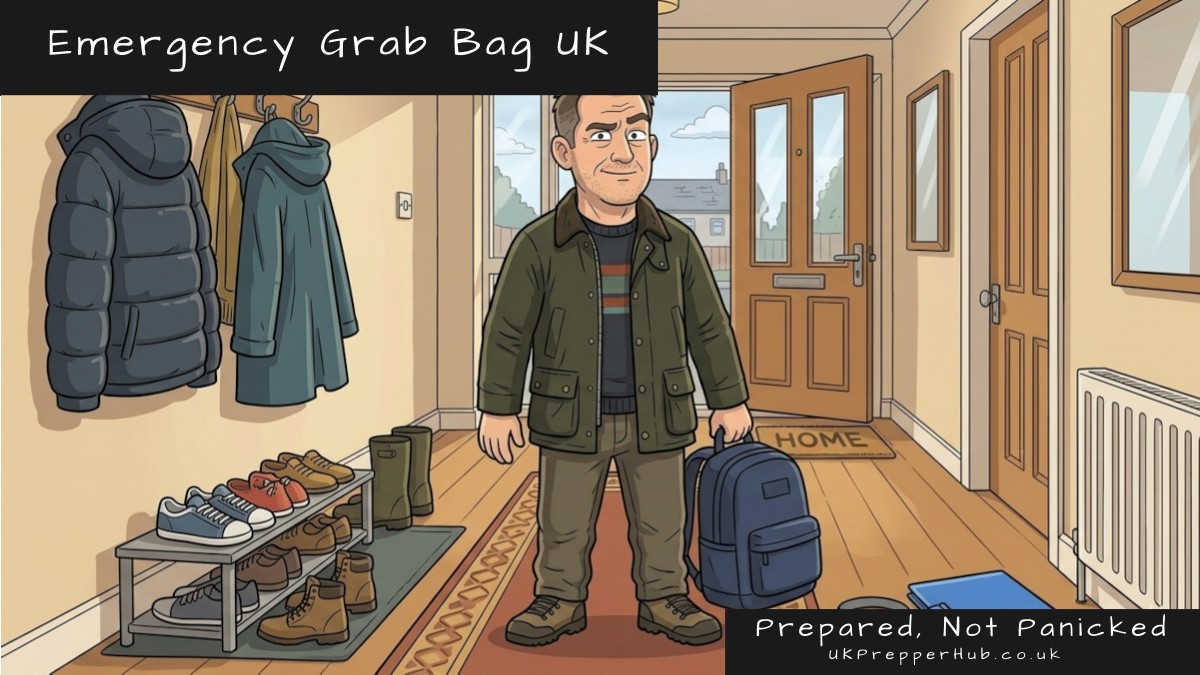
📋 Calm Clarissa
Packing your go bag this week? My printable grab bag checklist puts every item in its own tick box, plus what to do before you leave the house. Tick it off now, while it’s dry, and there’s nothing left to think about when the flood warning comes in. Free to download, obviously.
Download the Free Checklist →Know where you would go as well. A friend or family member on higher ground is better than an emergency rest centre, so ask them this week if you could stay with them at short notice.
Protect the Things You Can’t Replace
Furniture, carpets and kitchens can be claimed for and replaced. Photo albums, certificates and family keepsakes can’t. They tend to live in the worst places for a flood: a cupboard under the stairs, the bottom of a wardrobe or a box in the garage.
Gather them up now, while it’s dry, and keep them in one sealed, waterproof container stored as high in the house as you can. That way they survive even if water gets in, and you can carry them out in one go if you have to leave. Scan documents and old photos to a USB stick and a cloud account as a backup. It is the part of a flood plan people most often forget, and the part they regret most.

🦆 Keith
Don’t Be Keith
Keith kept his precious things in a cardboard box in the garage, the first room in the house to flood
MEIJIA Waterproof Case
An IP67 hard case with a full O-ring seal, made to be submerged, so the photos and papers you can never replace stay dry when floodwater gets in.
Our Full Review: MEIJIA Waterproof Case →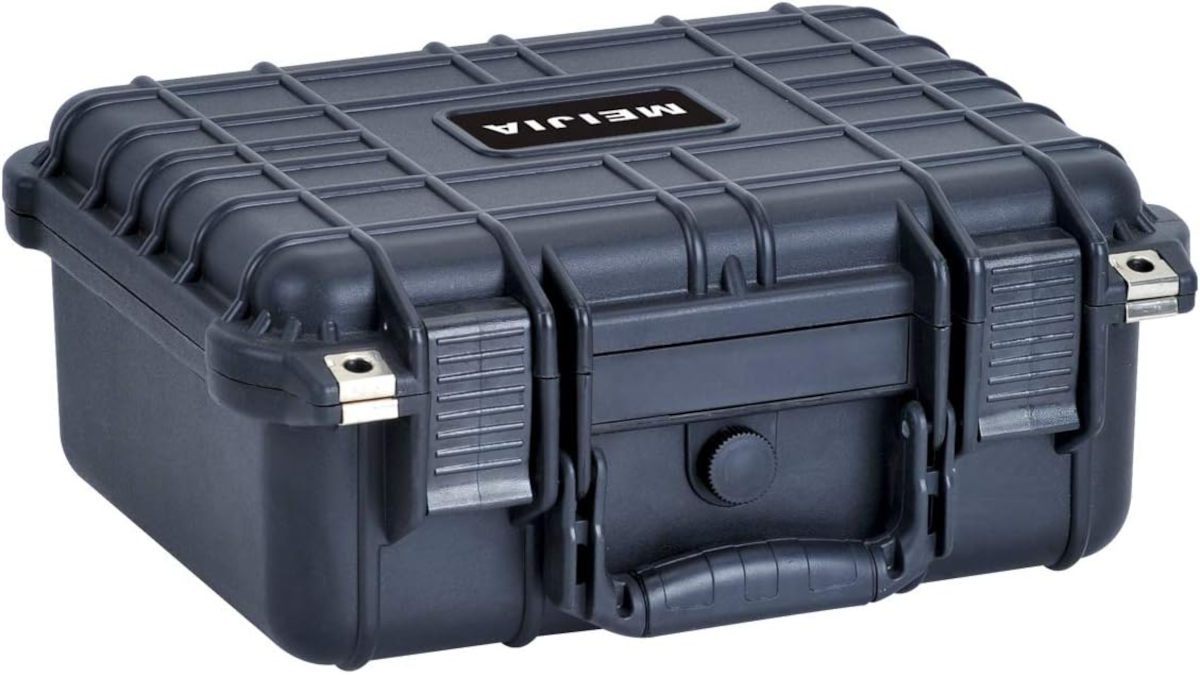
Floods Bring Power Cuts Too
Water and electricity don’t mix, and the network knows it. When floodwater gets into electrical equipment, the power cuts off for safety. Electricity substations and underground cables can flood too, cutting power to whole streets that are nowhere near the water.
So your flood plan needs a power cut plan inside it:
- Keep torches and a charged power bank where you can find them in the dark. Don’t rely on candles.
- Know where your fuse box or isolator switch is. If water is coming in and it is safe to reach, switch the electricity off. Never touch switches, sockets or plugs while you are standing in water.
- Call 105 to report a power cut. If your meter has been underwater, call 105 and have an electrician check everything before you switch back on.
- If anyone in your home relies on powered medical equipment, join the free Priority Services Register with your electricity network operator.
Lepro Power Cut Torch
Two AAA-powered torches with a real SOS mode for £11.87 — the boring, battery-swappable backup that works the one time your rechargeable one doesn’t.
Our Full Review: Lepro Power Cut Torch →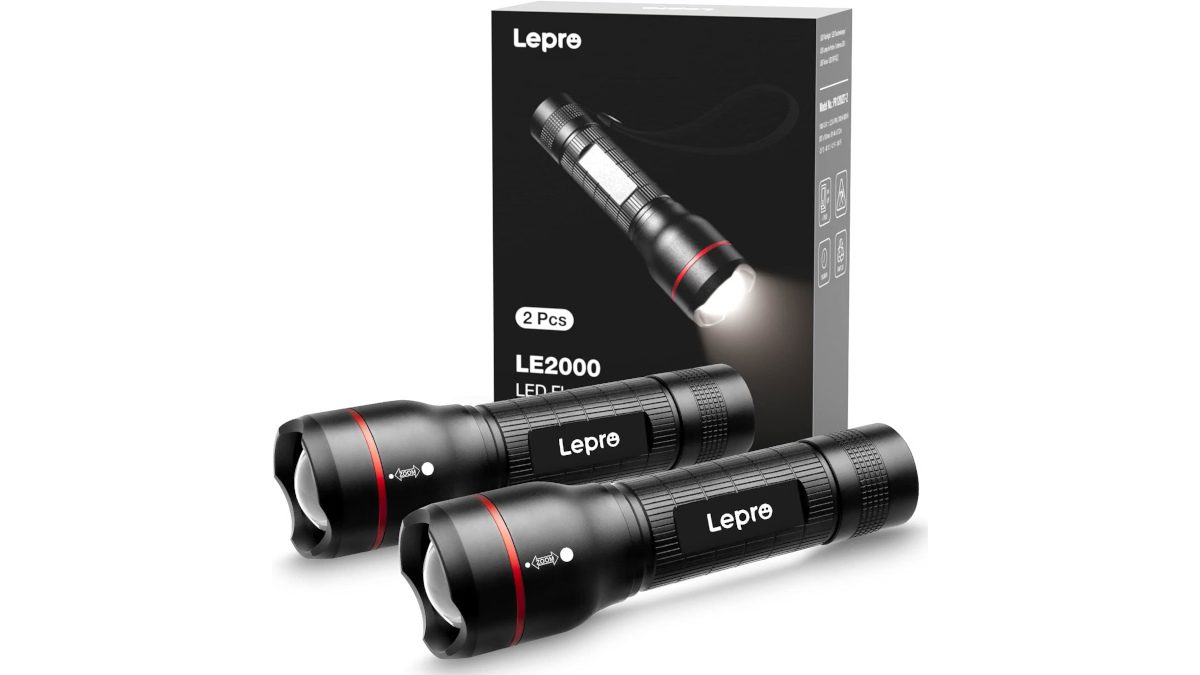
Check Your Insurance and Take “Before” Photos This Week
Your flood plan should include your insurance details. Get out your home insurance policy today and check two things: that it covers flood, and whether you have buildings cover, contents cover or both. If you rent, your landlord insures the building but your belongings are down to you.
If flood cover is hard to find or very expensive because of where you live, look at Flood Re. It is a joint scheme between the government and insurers that helps make flood cover more affordable. You don’t apply to it yourself. Your insurer decides whether to use it, which is why shopping around matters. The key facts:
- It applies to private homes built before 1 January 2009, in council tax bands A to H.
- Businesses and blocks of more than three flats are not covered.
- The price an insurer pays Flood Re is linked to your council tax band, not your flood risk.
- Its Build Back Better scheme lets participating insurers pay up to £10,000 on top of the repairs for flood resilience measures, such as flood doors, raised sockets and self-closing airbricks.
- Flood Re started in 2016 and runs until 2039.
The Flood Re website has a tool to check if your home is eligible and which insurers use the scheme.
Then walk round your home with your phone and record a video of every room. Open cupboards and wardrobes, film the TV, the white goods and the boiler, and say out loud what you’re looking at. Take photos of receipts for anything expensive. Save it all to the cloud or email it to yourself. If you ever have to make a claim, evidence of what was there before the water came in makes the whole process quicker and easier.
Complete Guide
Protecting Your Important Documents
ost fireproof boxes don’t take A4. Most fireproof wallets don’t work. This guide covers what to actually buy, how to add digital backups, and how to waterproof your documents for 20p.
Read the Full Guide: Protecting Your Important Documents →
What to Do in a Flood When the Water Arrives
This is where your flood plan pays off. When a flood warning is issued for your area, work through this in order:
- Move the car to higher ground early, before the roads flood.
- Put flood defences in place: flood sacks or barriers at the doors and covers on airbricks.
- Carry valuables, documents and electricals upstairs, starting with the things you can’t replace.
- Turn off gas, electricity and water at the mains if it is safe to do so.
- Bring pets in and make sure your go bag is by the door.
- If you are told to leave, leave. Don’t wait to see how bad it gets.
And stay out of floodwater, on foot and in the car. According to Natural Resources Wales, just 15cm of fast-flowing water can knock a person off their feet, 30cm of moving water can float the average family car and 60cm will sweep most vehicles away. Water that looks still often isn’t, and you can’t see what’s under it.
Floodshield Flood Sock
A 3m pre-filled flood barrier that lays flat at any doorway — flood water activates it on contact, no prep, no tools, no setup required. Stores flat in a drawer until you need it.
Our Full Review: Floodshield Flood Sock →
Floodwater Is Dirty Water
Floodwater is not rainwater. NRW warns it is often contaminated with raw sewage from overflowing sewers, farm runoff, petrol, oil and chemicals, and can carry bacteria such as E. coli. It also hides sharp objects, broken glass and lifted manhole covers.
- Add gloves and wellies to your flood plan. Wear them if you have to touch floodwater or anything it has been in, and wash your hands well afterwards.
- Throw away any food that has been in contact with floodwater.
- Don’t drink tap water from the mains until your water supplier or council says it is safe. Keep bottled water in your plan for this.
- Clean and disinfect everything the water touched before you use it again.
Complete Guide
Emergency Hygiene Guide
This guide covers water-scarce washing techniques in detail, but for grab bags the focus is having enough supplies to maintain basic hygiene without relying on rest centre provisions.

Your Flood Plan Includes Pets and Neighbours
Pets can’t read flood warnings. Put a carrier, lead, food, bowls and any medication into your flood plan, and keep a recent photo of each animal on your phone in case you get separated. Rest centres may not take animals, which is another reason to arrange somewhere to stay in advance.

🐾 Weekend Warrior
Pet Tip
Pickle’s flood bag, carrier ready by the door, and asking the friend on higher ground if the dog can come too.
Complete Guide
Animals in Extreme Weather
our pets can’t tell you they’re struggling — and by the time the signs are obvious, it’s often already serious. This guide covers dogs, cats, rabbits and guinea pigs in heat and cold: heatstroke signs, the pavement test, frozen Kong treats, breed-specific coats, rock salt risks, and what to do in an emergency.
Read the Full Guide: Animals in Extreme Weather →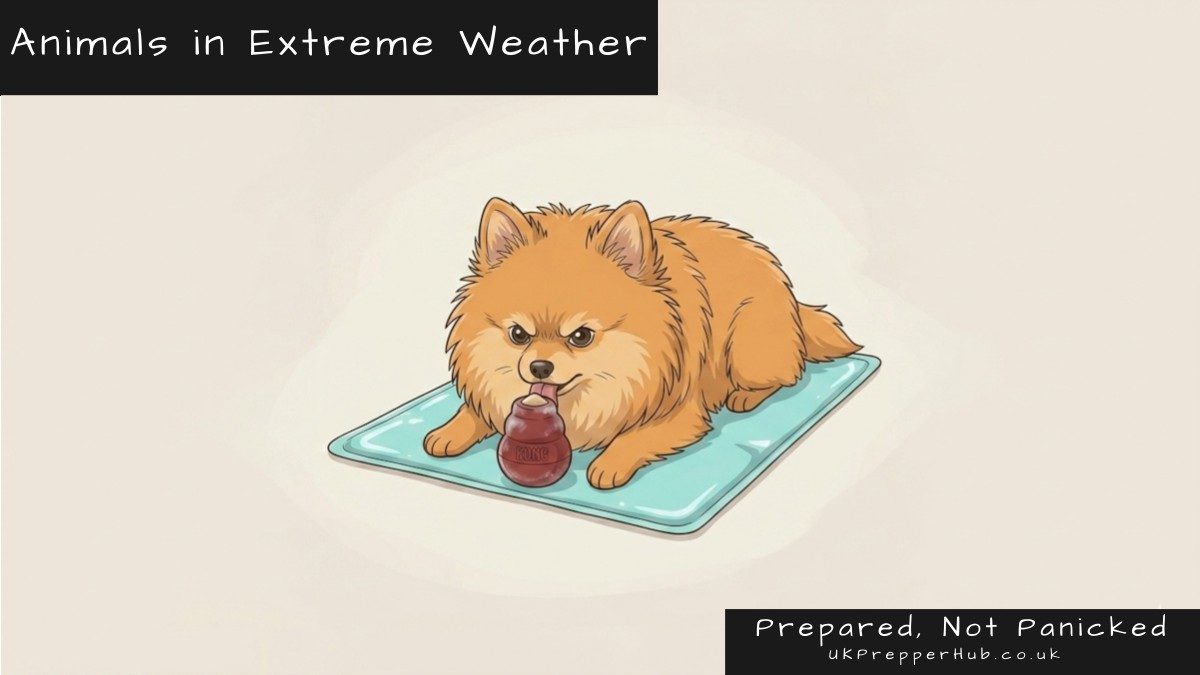
Think about the people around you too. An older neighbour, someone living alone or a family with a new baby may not get the warning or may not be able to move things upstairs alone. Knock on their door this week, swap phone numbers and offer to sign them up for flood warnings. In a flood, the people who help first are usually the ones who live on the same street.
After the Flood: Drying Out and Stopping Mould
The last part of your flood plan is the clean-up. When the water goes down, the work starts. Take photos and video of all the damage before you move or throw anything away, and call your insurer as soon as you can. Don’t switch the electricity back on until it has been checked.
Then dry the house out properly. Open windows when the weather allows and run a dehumidifier. Damp walls and floors that are left to dry slowly turn into mould, which damages the building and is bad for your health. A dehumidifier and a cheap humidity monitor tell you when rooms are genuinely dry, not just dry to the touch.
EcoAir DD1 Simple
The rotary-dial desiccant dehumidifier that keeps cold, solid-walled rooms dry where compressor models give up, and switches itself on from a smart plug or a timer.
Our Full Review: EcoAir DD1 Simple →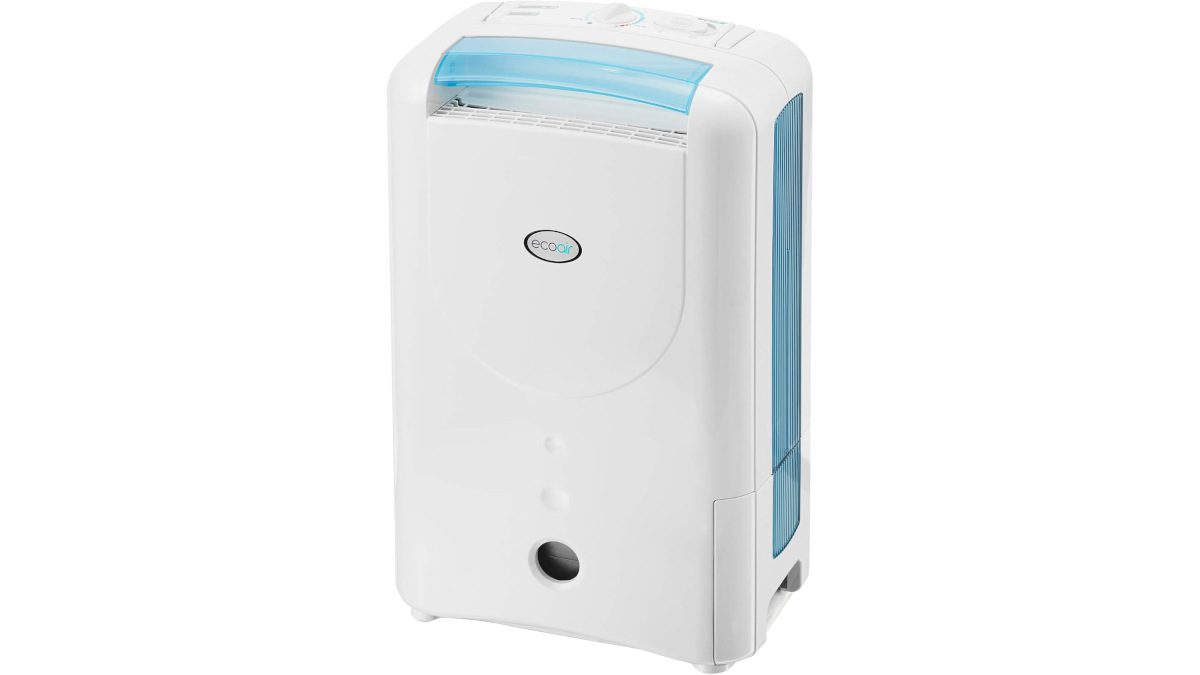
Your Flood Plan This Week: The Short Version
If you only do a few things, do these, and do them this week:
- Today: check flood risk for your address and sign up every phone in the house for free flood warnings.
- This week: pack a go bag and agree where you would stay if you had to leave.
- This week: put photos, documents and keepsakes in a waterproof case and store it high up.
- This week: check your insurance covers flood and film every room for your “before” evidence.
- Before the first storm: buy torches, a power bank and flood barriers or airbrick covers if your home is at risk.
- Now: knock on a neighbour’s door and make sure they’re signed up too.
None of it is expensive and none of it takes long. A flood plan won’t stop the rain, but it does mean that if the water comes, you are the household that is ready instead of the one that is scrambling.
Frequently Asked Questions
What should a flood plan include?
A household flood plan covers how you will get warnings, what you will move upstairs and in what order, how to turn off gas, electricity and water, where you would go if you had to leave, a packed go bag, your insurance details and how you will look after pets and vulnerable neighbours. Write it down and keep a copy in your go bag.
How do I check flood risk for my home?
In England, use the Environment Agency’s Flood Action Online service to check flood risk for any address. In Wales, check with Natural Resources Wales, and in Scotland with SEPA. Your risk can come from rivers, the sea, surface water or groundwater, so look at all of them.
Are flood warnings free?
Yes. Flood warnings from the Environment Agency, Natural Resources Wales and SEPA are free, and come by phone call, text or email. In England you can sign up at gov.uk/get-flood-warnings or by calling Floodline on 0345 988 1188.
What should you do in a flood?
Move the car to higher ground early, put flood defences in place, carry valuables and electricals upstairs, and turn off gas, electricity and water if it is safe. Never walk or drive through floodwater, and leave straight away if you are told to.
How deep does floodwater need to be to be dangerous?
According to Natural Resources Wales, 15cm of fast-flowing water can knock a person off their feet, 30cm of moving water can float the average family car and 60cm will sweep most vehicles away.
What is Flood Re?
Flood Re is a joint scheme between the government and insurers that helps make flood cover more affordable for homes in flood risk areas. You don’t apply to it. Your insurer decides whether to use it. It covers private homes built before 1 January 2009 and runs until 2039.
Is now the right time to make a flood plan?
Yes. Flood chiefs are warning of a wetter, windier season ahead, and a flood plan is much easier to put together while it is dry. Most of it takes an evening, and signing up for flood warnings takes five minutes.
Build Your Resilience
Further Reading: Related Guides
- UK Home Flood Defence
- 72-Hour UK Grab Bag
- Home Evacuation Plan
- Protecting Your Important Documents
- Power Cut Survival Guide
- Emergency Utility Shutdown
- Emergency Hygiene Guide
- Water Purification and Safety
- Animals in Extreme Weather
- Preventing Indoor Mould and Damp
All our guides can be found listed on our resilience hub.
Gear We've Tested & Reviewed
- MEIJIA Waterproof Case
- Floodshield Flood Sock
- Manthorpe Airbrick Flood Defence
- Lepro Power Cut Torch
- EcoAir DD1 Simple Dehumidifier
- ThermoPro TP50 Digital Hygrometer
All our reviews can be found on our reviews and resources page.
📡 Find Us Everywhere
Daily briefings, prep guides, and real-time updates across every platform. Pick yours.
Free. No commitment. Stay anonymous on WhatsApp & Telegram.
Stay Informed on UK Preparedness
Join our newsletter for UK-specific preparedness tips, product recommendations, and real-world advice for households.
Subscribe to Our Newsletter