
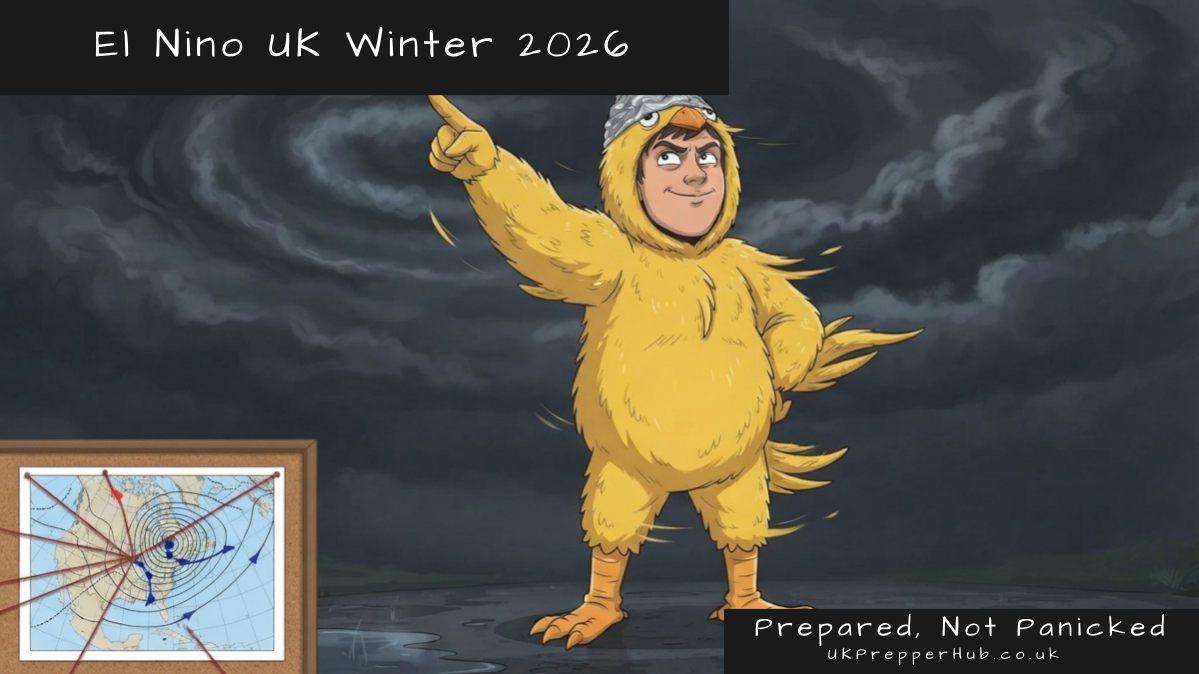
El Nino UK winter 2026 – An important Update 17/10/26
On 17 September 2026 the Government Office for Science published Impacts of El Niño on the UK, a summary of what forecasters and scientists told a government roundtable. It’s the most measured read yet. It tones the storm picture down a notch rather than up, which is why it’s worth showing you.
Its verdict on the weather: from October to December there is a “slightly increased chance” of the stronger westerly winds and low-pressure patterns that bring storms, heavy rain and flooding. In early 2027 there is a “slightly increased risk” of easterly and northerly winds and sudden cold snaps. And the honest caveat is that the impacts on UK weather “are less certain and cannot be confidently predicted”.
So the pattern this report was built around still holds: a wet, windy start and a colder end. The effect is just smaller than some of the headlines suggest. That changes nothing about what to do. Clear gutters and drains, have lighting and power banks ready, and plan for the cold. All of that is worth doing this winter whether the odds are only slightly up or not.
El Nino UK winter 2026 – An important Update 16/09/26
A stronger confirmation than either of the two below: this El Nino has now officially reached “super” (very strong) status. The World Meteorological Organization and the US National Oceanic and Atmospheric Administration are both tracking sea surface temperature anomalies in the central-eastern Pacific that have surged past +3°C, with forecast models now putting a 75% chance on this becoming a historic event exceeding past benchmarks. Peak strength is expected around November and December 2026.
For the UK specifically, the picture hasn’t changed direction, just hardened: forecasters are pointing to an unsettled, wet and stormy autumn and winter, with an elevated risk of heavy downpours and structural storm damage layered on top of a summer that already broke heat records. That’s the same el nino UK storms risk this report was built around — now backed by an even stronger read of the underlying data than when this page was first written.
El Nino UK winter 2026 – An important Update 11/09/26
Two fresh pieces of primary-source evidence landed this week, both confirming the direction this report already flagged. Worth putting in front of you directly rather than waiting on a full rewrite.
On 3 September 2026, the World Meteorological Organization confirmed El Nino is “firmly established” and forecast to strengthen into a very strong event before peaking towards the end of this year, with a near-100% likelihood that conditions persist through February 2027.
Then, on 11 September 2026 — the same day as this update — the Met Office published its own revised three-month outlook. Their verdict: the chances of a warm and wet UK autumn are now around one-and-a-half to two times higher than would normally be expected, with an increased likelihood of windy conditions emerging later in the season, and the increased risk of flooding that comes with it. Met Office Chief Meteorologist Ian Lisk was careful to add the caveat that matters: “While this event may become one of the strongest El Nino events on record, that does not automatically mean more severe impacts for the UK. We will continue to monitor developments closely and update our forecasts as confidence in the outlook evolves.”
That caveat is exactly why we’re not rewriting the headline claims in this El Nino UK winter 2026 report — the practical answer to what does El Nino mean for the UK hasn’t changed, only the confidence behind it. This is no longer just seasonal modelling talking: both the Met Office and the WMO are now on record. The el nino UK storms risk this report was built around is being treated by the people who forecast the weather for a living as a real, live risk for this autumn and winter — not a worst-case tail scenario. Everything below still stands.
Back in May, this site’s original Super El Nino 2026 forecast — Nino, correctly spelt Niño, though good luck finding that accent on a UK keyboard — flagged something most coverage was still ignoring: seasonal models were already projecting sea-temperature anomalies with no modern precedent, and warned the real story for UK households wouldn’t be a hot summer, but a stacked autumn-and-winter storm season. That call has just been confirmed — not by us, by the Met Office. This El Nino UK winter 2026 outlook is now being described as the largest event in living memory, and the practical read for your household hasn’t changed. It’s just got a lot more urgent.
Professor Adam Scaife, the Met Office’s own head of long-range prediction, went on record this week: “I have never seen an El Nino signal this intense in our forecasts.” Sea-surface temperatures in the key Pacific monitoring region are running past +3°C — a strong event is typically +1–2°C — and the Met Office is calling it potentially the largest since the 19th century, peaking this winter.
What the Met Office Actually Confirmed
El Nino needs no introduction after this summer’s headlines: a natural warming of Pacific sea temperatures that reshapes the jet stream and storm tracks a hemisphere away. What’s different about this El Nino UK winter event, according to the Met Office’s own blog published this week, is scale. The event is forecast to peak in winter 2026, and the numbers behind it have Met Office scientists reaching for language they don’t use often. Dr Nick Dunstone notes the ocean heat this event is releasing is significant enough that 2027 is “very likely” to overtake 2024 as the warmest year on record, temporarily exceeding +1.5°C above pre-industrial levels.
🐔 Chicken Licken
Did You Know?
I have been telling anyone who’ll listen since May that this El Nino was going to be the big one, and for once has the Met Office backed me up.
We Don’t Have to Imagine What This Looks Like — It Already Happened This Year
This isn’t a hypothetical. On 8–9 January 2026, Storm Goretti hit the South West under a rare Met Office red “danger to life” warning — winds gusting close to 100mph, heavy snow and significant rainfall in the same multi-hazard event, and flooding across southern and central England and Wales. At the peak, more than 170,000 properties lost power nationally, with up to 44,000 without power in the South West alone. Roads were blocked by fallen trees, roofs were torn off, and thousands of homes in Cornwall went without power or water for days.
A 50-year-old man from Mawgan, near Helston in Cornwall, was killed when a large tree was uprooted by the storm and fell on his static caravan. It’s a stark reminder of what “danger to life” actually means when a warning like that is issued — this wasn’t inconvenience, it was a genuine tragedy for one Cornish family, and a very close call for many more households across the South West.
Then It Happened Again. And Again.
Goretti wasn’t a one-off. Sixteen days later, Storm Ingrid brought further coastal damage and severe flood risk to already-battered communities. Two days after that, Storm Chandra arrived with heavy snow, 80mph gales and flash flood warnings across the UK — a red warning was in force for parts of Devon, more than 200 flood alerts and dozens of flood warnings were live nationwide, and a rail line was forced to close after a sinkhole opened beneath the track. We also found ourselves asking why the Emergency Alert System stayed silent throughout it. The same week, Storm Joseph — the system that went on to batter Portugal and Spain — sent a secondary band of heavy rain back into the UK South West on top of ground that hadn’t finished draining from the previous three.
Four named storms inside three weeks, in a winter before this El Nino UK winter 2026 event had even been confirmed. If that’s what a normal January looks like, it’s worth reading our own storm damage prevention guide for the full breakdown of what amber, red and yellow warnings actually mean for your household — because the Met Office, the Guardian, and the BBC are now all saying the same thing about the season ahead: expect more of that pattern, not less.
Complete Guide
Storm Damage Prevention
Every autumn, the same thing happens. A named storm rolls in off the Atlantic, the Met Office issues an amber warning, and half the country discovers that garden furniture, wheelie bins, and loose roof tiles become projectiles at 70mph.
Read the Full Guide: Storm Damage Prevention →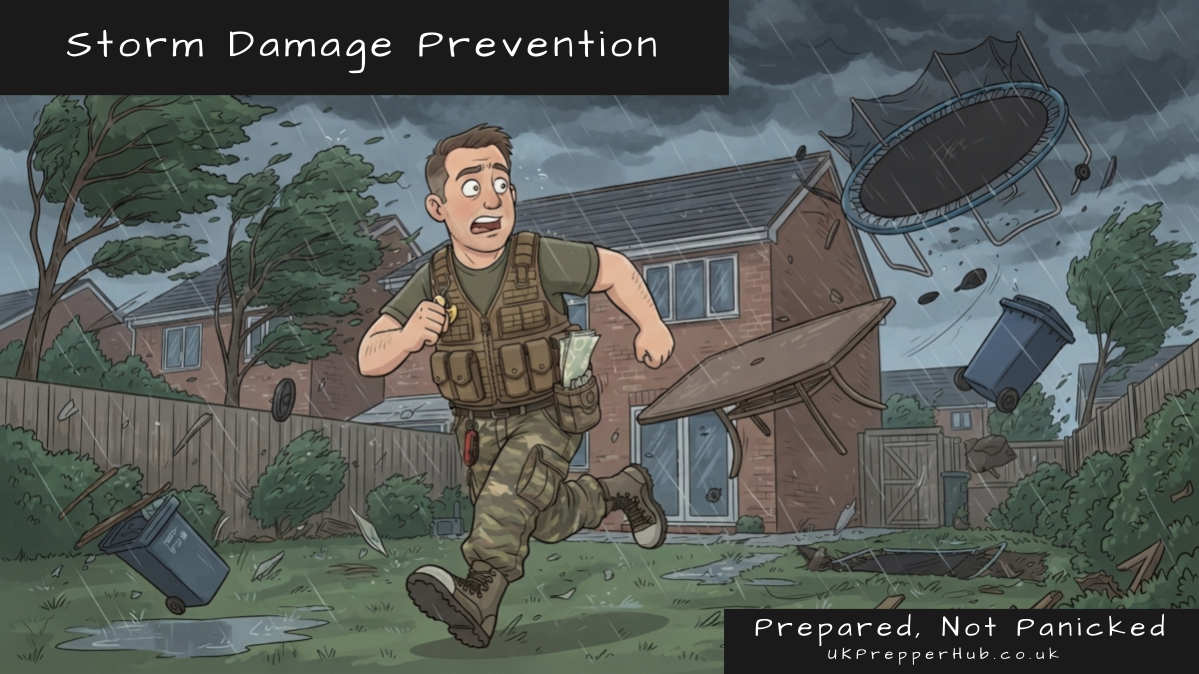
What an El Nino UK Winter Actually Means for Storms and Flooding
The headline detail for UK households sits in one line of the Met Office’s own forecast: increased chances of wetter, stormier conditions across Northwest Europe and the UK, starting this autumn and continuing into early winter. The September–November outlook already shows elevated rainfall prospects. The Guardian’s own coverage put it bluntly — the “biggest El Nino for a century” is forecast to bring the UK more autumn rain and storms. The BBC’s weather team went further, warning that the pattern increases the risk of colder UK winters, and that “storms and downpours will also bring the threat of flooding.” None of that is abstract any more. It’s Goretti, Ingrid, Chandra and Joseph, potentially with the volume turned up.
This El Nino UK winter event isn’t just a UK story either. The same system is forecast to drive drought and wildfire risk across Central America, South East Asia and southern Africa while pushing stronger typhoons into East Asia — and as our original May forecast set out in detail, agricultural disruption on that scale can take roughly seven to thirteen months to reach UK supermarket shelves. That timeline could land some food price pressure in the middle of this same El Nino UK winter, though the government’s own science advisers put low confidence on big rises, and the last El Nino, in 2023, had virtually no discernible effect on UK food prices.
The Named Storm Season Starts Now
Named storm season in the UK typically opens in September, and this is exactly the window this El Nino UK winter event is forecast to sharpen. More El Nino-driven Atlantic disturbance doesn’t guarantee any specific storm, but it does raise the odds of the kind of stacked low-pressure sequence that produced four named storms in three weeks last January — repeated hits, back to back, on drainage, roofs, and grid infrastructure that don’t get a proper recovery window between them.
Complete Guide
UK Home Flood Defense
Even small floods can damage flooring, walls, furniture, and utilities. Knowing how to act fast and prepare your home makes recovery faster and safer.


🦆 Keith
Don’t Be Keith
Keith waits until the first flood warning goes off to go looking for the flood socks he bought two winters ago and never actually used.
When the Water Gets In Anyway
Flood defences buy time, but a determined storm surge or a saturated drain will find the gap eventually — Goretti and Chandra both proved that across the South West this year. A flood sock across a doorway or airbrick is the kind of thing that takes ten minutes to deploy and can be the difference between a wet doormat and a ruined carpet.
Floodshield Flood Sock
A 1.5m flood sock that stores flat in a drawer, then swells into a water-tight seal across your door minutes after you wet it.
Our Full Review: Floodshield Flood Sock →
Storms Mean Power Cuts
Storm-driven power cuts are already the most common cause of multi-day outages in the UK — January’s 170,000-property peak during Goretti alone is proof of how fast that number climbs when a single named storm lands badly. This event raises the odds of more of that, not fewer. If your household has no plan for line failure — no battery lighting, no way to charge a phone, no way to keep food cold — autumn is the window to sort it, not the night the lights actually go out.
Complete Guide
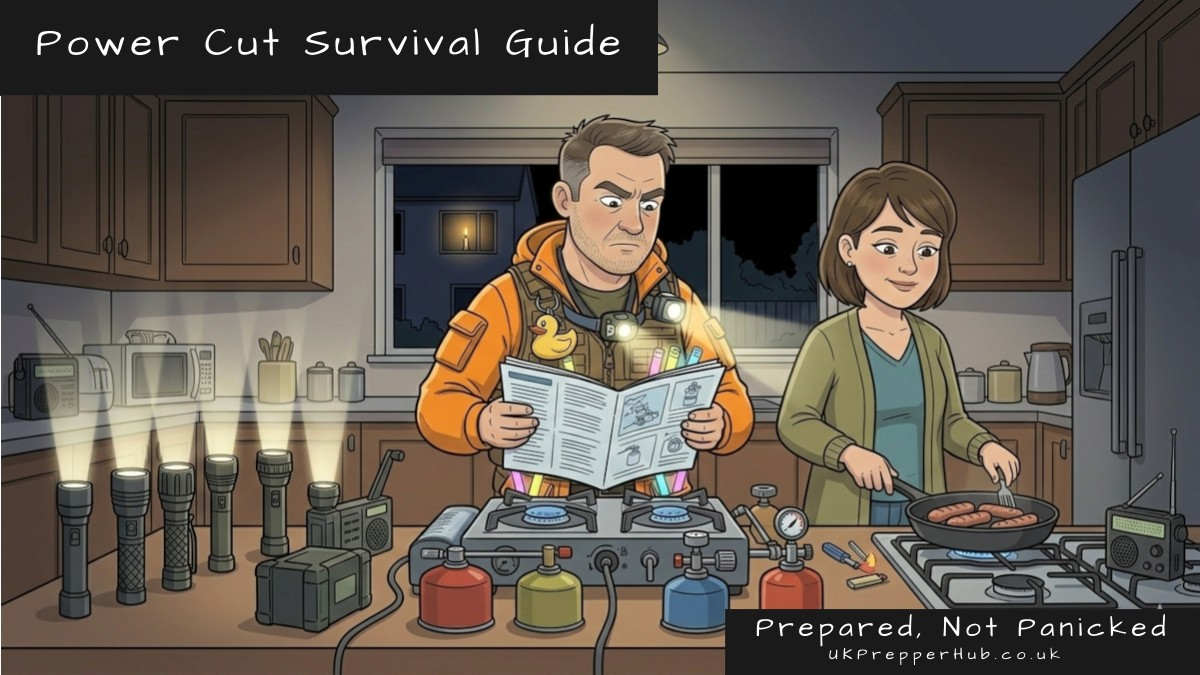
How to Prepare for a Power Cut
The 12 things to sort before the lights go out: lighting, heating, food, water and keeping phones charged, plus what to do in the first few minutes.
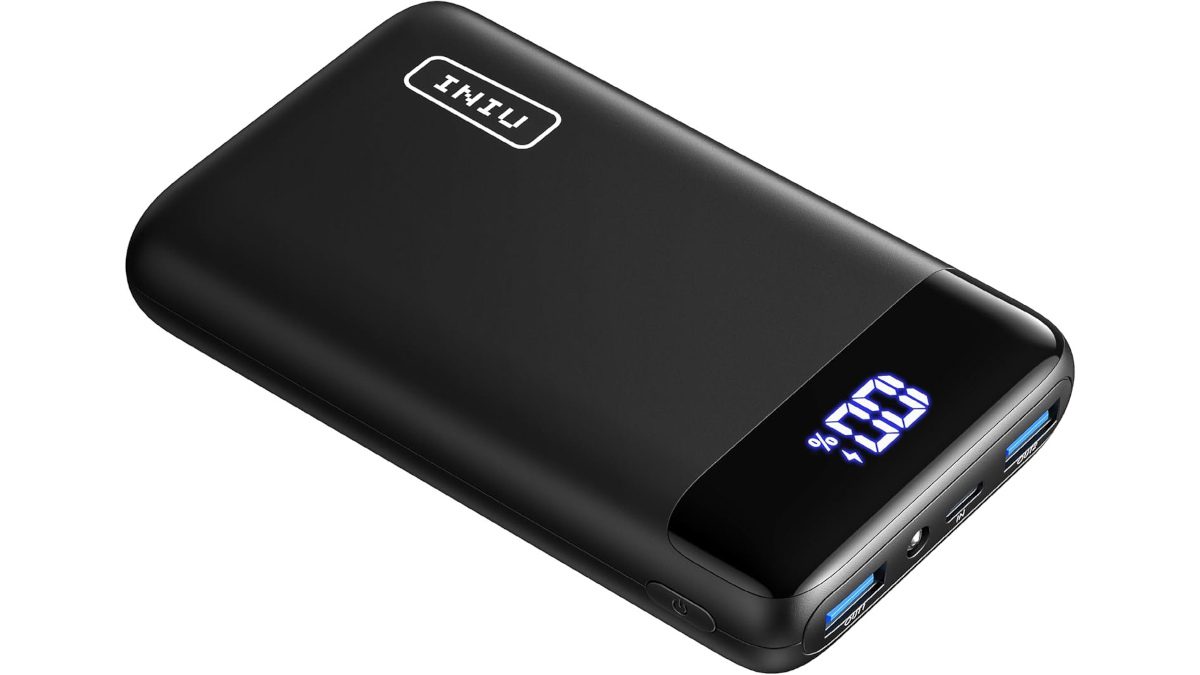
Keeping Devices Charged When the Grid Goes Down
A phone that’s dead is a phone that can’t check the flood warning, call a family member, or find out when power’s expected back. A decent power bank is one of the cheapest, smallest things you can do about that risk, and it’s the kind of item that’s genuinely useful outside a crisis too.
INIU 20,000mAh Power Bank
We tested it so you don’t have to — here’s the one thing most power banks get wrong, and why this one doesn’t.
Mild Start, Cold End
The Met Office’s own seasonal pattern for a strong El Nino winter is a mild, wet start followed by a colder end — which sounds manageable until you look at what that pattern actually delivers in practice. A mild, wet start extends the storm-and-flood exposure window covered above; a cold late-winter snap then lands on top of already-stretched drainage, already-damaged roads, and households who assumed the worst had passed.
The government’s science note backs this up, with a slightly higher risk of cold snaps in early 2027. Energy follows the same split. A mild, windy start means more wind power, but a cold, still end pushes gas demand up just as everyone turns the heating on. NESO expects an 8.8% electricity buffer over peak demand this winter, a bigger margin than during the 2022 energy crisis.
Complete Guide
Keep Warm Without Heating
When a cold snap hits and the boiler gives up, the house loses heat fast. How to keep warm without heating, fix a frozen condensate pipe, protect your pipes, and spot hypothermia in someone vulnerable before it gets serious.
Read the Full Guide: Keep Warm Without Heating →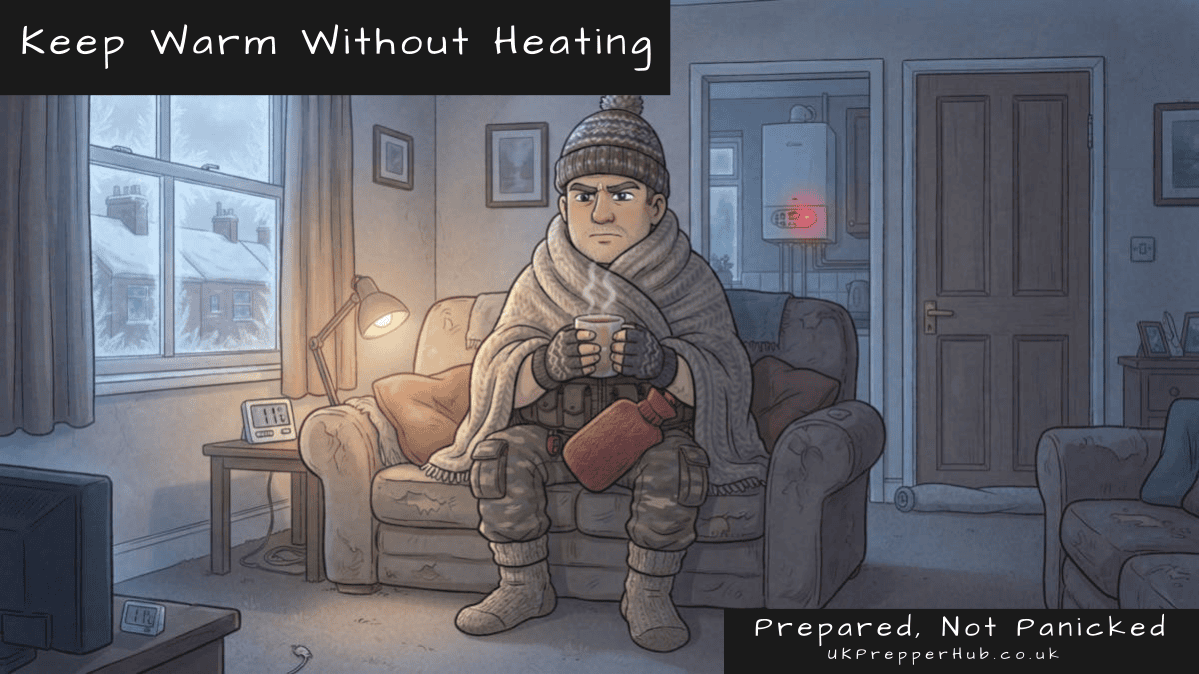
Storm Damage Doesn’t End When the Wind Drops
Storm Goretti and Storm Chandra’s aftermath in the South West wasn’t just the storms themselves — it was days of clean-up, temporary repairs, and households managing without power or water while contractors worked through a backlog. If a fence panel, a fascia board, or a damaged gutter needs a quick fix before a tradesperson can get to you, having basic tools and repair materials in the house already is the difference between a temporary patch and a much bigger bill later.
Complete Guide
Emergency Home Tool Kit
Something goes wrong at home at the worst possible time. This guide covers the tools every UK household actually needs — from a compact starter kit for those starting from scratch, to building a proper cantilever toolbox that grows with you.
Read the Full Guide: Emergency Home Tool Kit →
Are We Prepared for El Nino UK Winter 2026?
We asked around the team. Here’s where everyone actually stands, in their own words.
Keith: El Nino UK Winter Preparedness: I’ve serviced the generator for the third year running. Still haven’t worked out where the fuel for it actually goes.
Black Panther: El Nino UK Winter Preparedness: In my previous role we’d have had contingency plans for contingency plans. This time I’ve got a torch, a tarp, and an actual plan. Carry on.
Camping Clown: El Nino UK Winter Preparedness: Chandra’s flooding got into my garage in January, so I’ve fitted the £80 flood barriers this time, not the £15 ones I definitely should have upgraded years ago.
Chicken Licken: El Nino UK Winter Preparedness: I’ve triple-checked the roof after Chandra took half the neighbour’s fence into my garden. Told you this was coming.
Weekend Warrior: El Nino UK Winter Preparedness: Pickle’s grab bag is packed and my bug-out route is mapped. Still no idea what I’ll actually do the next time the kitchen light flickers.
Clarissa: El Nino UK Winter Preparedness: I’ve prepared a checklist for this. Obviously. Storm kit, flood kit, cold kit — colour-coded.
Aroura: El Nino UK Winter Preparedness: I’ve been drying extra herbs and topping up the log store. The earth gives plenty of warning if you’re paying attention. Namaste 🙏
Survivl Gurl: El Nino UK Winter Preparedness: Ring light’s on solar backup and I’ve got three storm posts pre-scheduled. Priorities. 🚩
This is exactly the backdrop the UK Government had in mind when it quietly told households this autumn to stockpile an emergency kit, citing extreme weather events as one of its stated reasons. If you haven’t seen what’s actually being recommended and why, our breakdown of the government emergency kit advice is worth five minutes — this El Nino UK winter is the extreme weather that advice was written for.
What to Do Now
September is the sorting window, not the panic window. Before the first named storm of the season lands, work through this in order rather than all at once:
- Clear gutters, drains and airbricks so heavy rain has somewhere to go
- Check your property against the government’s long-term flood risk register
- Test any battery lighting and charge every power bank in the house
- Photograph the outside of your property now, for insurance purposes, before any storm damage happens
- Check your buildings and contents insurance actually covers storm and flood damage, and at what excess
- Build or refresh a blackout box before the nights draw in, not after a power cut has already started
None of this is expensive or time-consuming done in September. Done in the forty-eight hours before a red warning, every one of those tasks gets harder, slower, and more expensive.
Complete Guide
How to Make a Blackout Box
Most households aren’t prepared for even a short power cut, and the stress comes from small, avoidable problems like lack of light, heat, or a way to cook. This guide shows you exactly how to fix that with a simple, practical setup so a blackout becomes manageable rather than disruptive.
Read the Full Guide: How to Make a Blackout Box →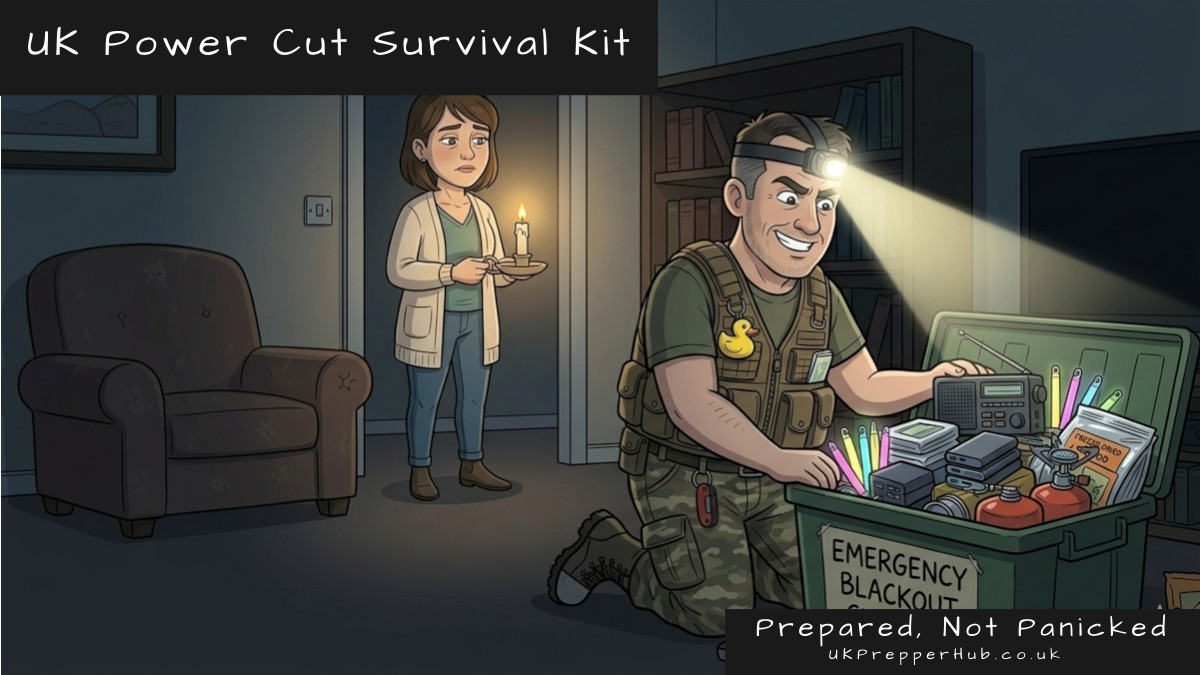
Keep an eye on the cold-end phase later in winter too — the households caught out worst by past El Nino winters weren’t the ones who ignored the forecast, they were the ones who prepared for the wrong half of it. This El Nino UK winter is forecast to be more of both halves, not just one.
The window to act sensibly is right now, while the disruption is still weeks away. This isn’t alarm. It’s timing — and this time, we’ve already seen exactly what the cost of getting the timing wrong looks like.
Frequently Asked Questions
What is a “Super El Nino”?
A Super El Nino is when sea-surface temperature anomalies in the central Pacific exceed +2°C above the long-term average. The Met Office says this El Nino UK winter event is on track to exceed +3°C — potentially the largest since the 19th century.
Will this El Nino definitely bring worse storms to the UK?
It’s not guaranteed, but the Met Office, BBC and Guardian all point the same way: elevated odds of a wetter, stormier El Nino UK winter across the autumn and winter months ahead.
Has anything like this already happened?
Yes. Four named storms hit the UK in three weeks this January — Goretti, Ingrid, Chandra and Joseph — including a fatality in Cornwall and over 170,000 properties losing power at once. That was before this El Nino UK winter event was even confirmed.
Does an El Nino UK winter affect food prices too?
Indirectly, and probably less than you’d think. The government’s science advisers say confidence in big price rises is low, and the last El Nino, in 2023, had virtually no discernible impact on UK food prices. Imported rice and cocoa are the ones to watch. India, Thailand and Vietnam all expect weather hits to their rice crops, and chocolate makes up almost 6% by weight of the ONS food basket, so cocoa prices show up in UK inflation more than in most of Europe.
What should I do right now to prepare?
Check the government’s flood risk register, clear your gutters and drains, test your lighting and power banks, photograph your property for insurance, and check your storm and flood cover — all before the first named storm of the season.
Build Your Resilience
Further Reading: Related Guides
- Winter Vehicle Readiness
- Home Evacuation Plan
- Emergency Radio Guide
- Long-Term Food Storage
- Emergency Lighting Guide
All our guides can be found listed on our resilience hub.
Gear We've Tested & Reviewed
- Manthorpe Airbrick Flood Defence Review
- FosPower Emergency Radio Review
- Silentnight Heat Genie Self Heating Giant Blanket Review
- Self Amalgamating Tape Review
All our reviews can be found on our reviews and resources page.
📡 Find Us Everywhere
Daily briefings, prep guides, and real-time updates across every platform. Pick yours.
Free. No commitment. Stay anonymous on WhatsApp & Telegram.
Stay Informed on UK Preparedness
Join our newsletter for UK-specific preparedness tips, product recommendations, and real-world advice for households.
Subscribe to Our Newsletter