
🕐 Last Updated: February 25, 2026 at 4:52 PM
Introduction: The Fantasy vs the Reality
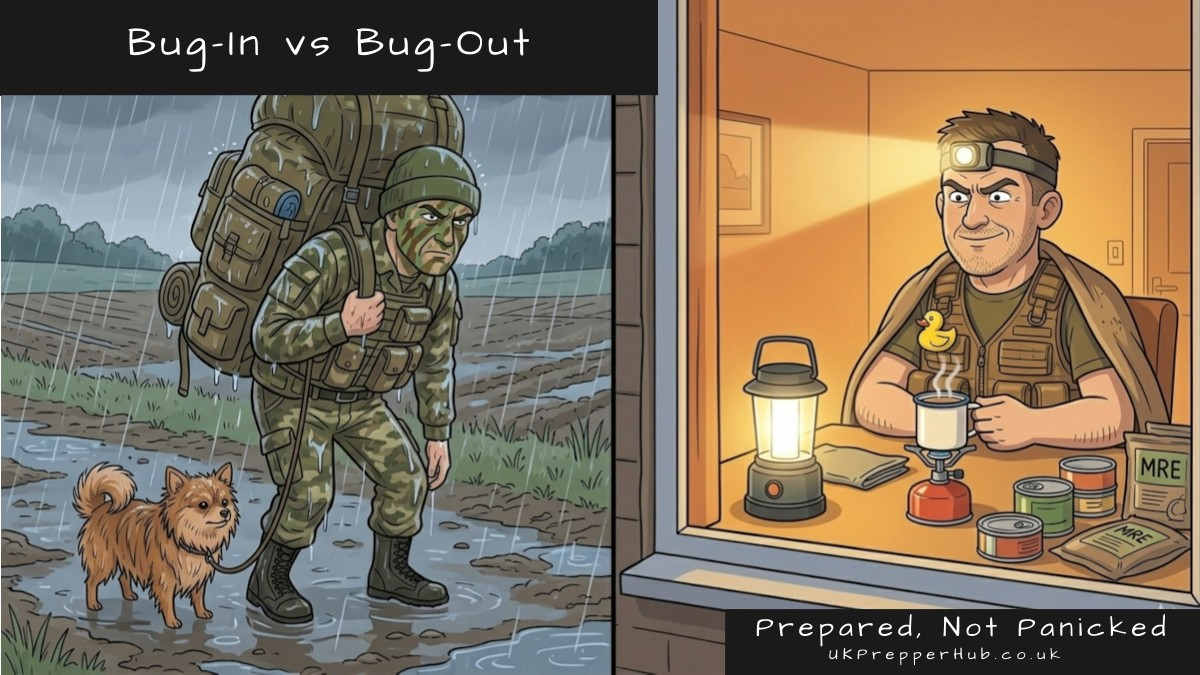
There is a particular type of video that does very well on the internet. A man in multi-cam camouflage, 70-litre tactical rucksack on his back, hatchet strapped to the side, strides purposefully into the treeline. The caption reads something like: “When SHTF, I’m heading for the hills.”
It looks cinematic. It looks decisive. It looks, frankly, quite exciting.
In the United Kingdom, it is also a recipe for getting arrested, getting lost, getting hungry, and — in a genuine emergency — getting yourself into far worse trouble than you were already in.
The debate between “bugging out” (leaving your home during a crisis) and “bugging in” (sheltering in place) is one of the most discussed topics in preparedness circles. In the United States, where the concept originated, it has some legitimate applications — vast wilderness, dispersed populations, genuine off-grid land ownership. In the UK, almost none of those conditions apply.
This guide sets out clearly why bugging in is the correct default for the overwhelming majority of British households, when bugging out might — under very specific circumstances — be appropriate, and what bugging in actually looks like done properly.
Why the UK is Not America
The bug-out fantasy is largely an American export, and it does not travel well.
The United States has approximately 640 million acres of federally owned public land. You can legally camp, forage, and in many states hunt on much of it. A prepared person with wilderness skills can, in principle, disappear into that landscape and sustain themselves. It is still extremely difficult and rarely advisable, but the land is at least there.
The United Kingdom has approximately 60 million acres of land in total, across a population of 67 million people. Of that, roughly 8% is accessible to the public. The rest belongs to someone: the Forestry Commission, the Crown Estate, the Ministry of Defence, private landowners, farmers, water companies, or local authorities. Every square mile of British countryside is managed, monitored, and owned.
The idea that you are going to “disappear into the woods” during a crisis is not a plan. It is a trespass.
Beyond land ownership, consider the climate. The UK does not have a forgiving wilderness. It has wet uplands, exposed moorland, dense managed forestry, and farmland. The notion of living off the land — trapping rabbits, foraging berries, fishing streams — sounds straightforward until you have actually tried it. Trapping and preparing wild game is a skilled, time-consuming, physically demanding activity. Foraging safely requires genuine botanical knowledge. In a real crisis, when you are already stressed, cold, and potentially unwell, these are not skills you will suddenly acquire.
Then there is visibility. In a period of civil disruption or national emergency, a person walking through rural England in camouflage, carrying a large rucksack with bladed tools strapped to the outside, is not going to be seen as a sensible prepared citizen. They are going to be stopped by police, potentially detained, and their equipment may be confiscated. You could spend an actual emergency in a holding cell.
What “Bugging In” Actually Means
Bugging in is not hiding under the duvet hoping it all goes away. It is a deliberate, active choice to shelter in place — in your own home — using the resources and preparations you have already put in place.
Your home has significant advantages over any field, forest, or canal towpath:
It has four walls and a roof. Even a poorly insulated terraced house or a draughty council flat provides vastly better shelter from wind, rain, and cold than any tent or bivouac. In a cold snap, power cut, or storm, this matters enormously. Heat retention in a house — even without central heating — is measured in hours and days. In a tent, it is measured in minutes.
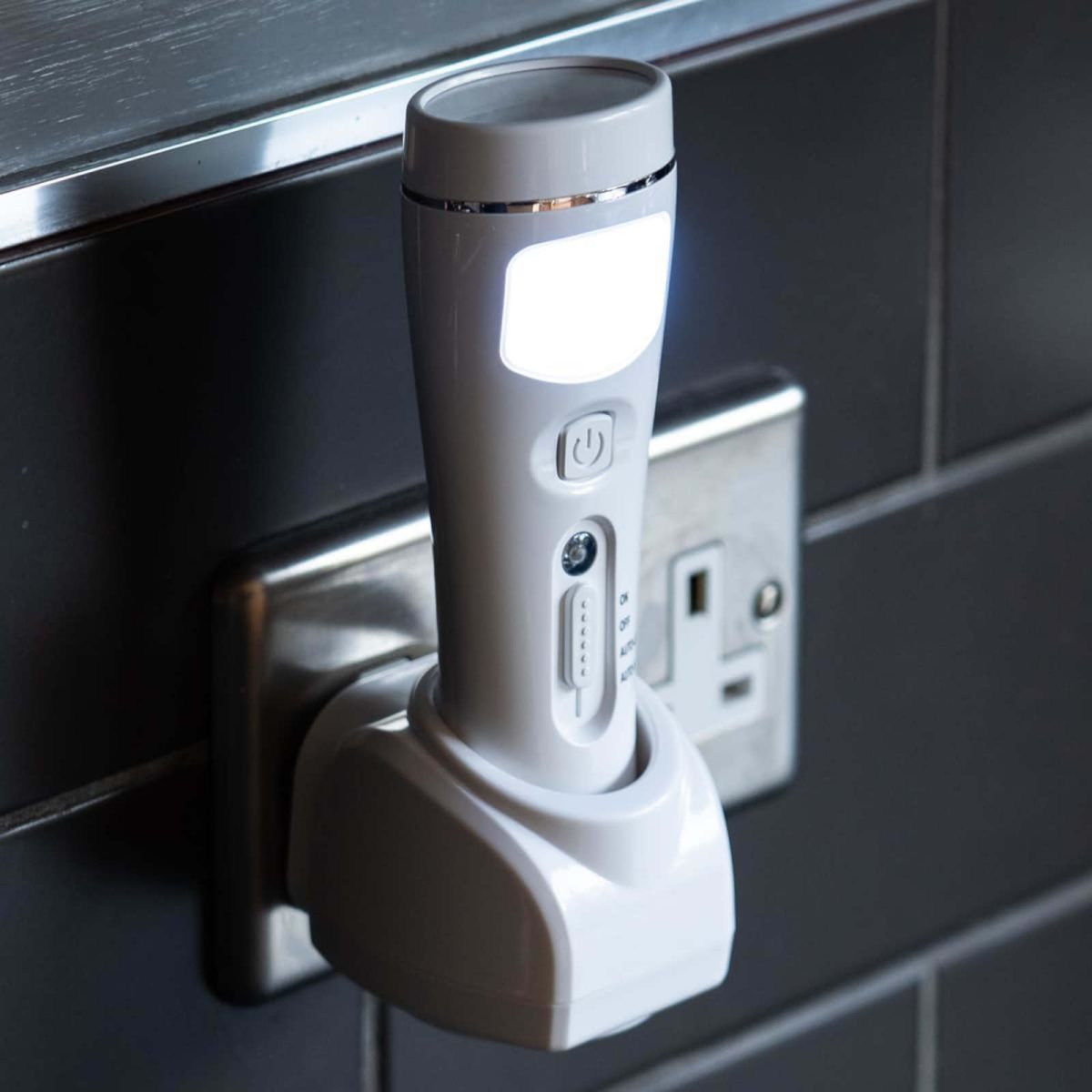
XtraLite NiteSafe
The NiteSafe is a dual-function device that works as both a plug-in nightlight and an emergency torch. It sits in a standard UK plug socket, charges continuously, and the moment mains power fails, it automatically illuminates.
It has your supplies. The food in your cupboards, the water you have stored, the first aid kit, the medication, the torches and batteries — all of it is there. If you leave, you can only carry what fits in a rucksack. Everything else stays behind, and in a real emergency, you may not be coming back to it.
It is your legal right to be there. You cannot be moved on, arrested for trespass, or asked to leave. In a crisis, that security matters.
You know it. You know which taps run cold first, where the stopcock is, how drafty the back bedroom gets, where the spare candles are. Familiarity is an underrated survival asset. Stress degrades decision-making; knowing your environment reduces that cognitive load.
You are part of a community. Your neighbours know you. Local emergency services know the area. Council rest centres, if activated, are likely nearby. If something goes wrong inside your home — a medical emergency, a fire, a structural problem — help is accessible. In a field three miles from the nearest road, it is not.
The UK Emergencies That Actually Happen
It is worth being specific about what British households actually face, because the threat model shapes the correct response.
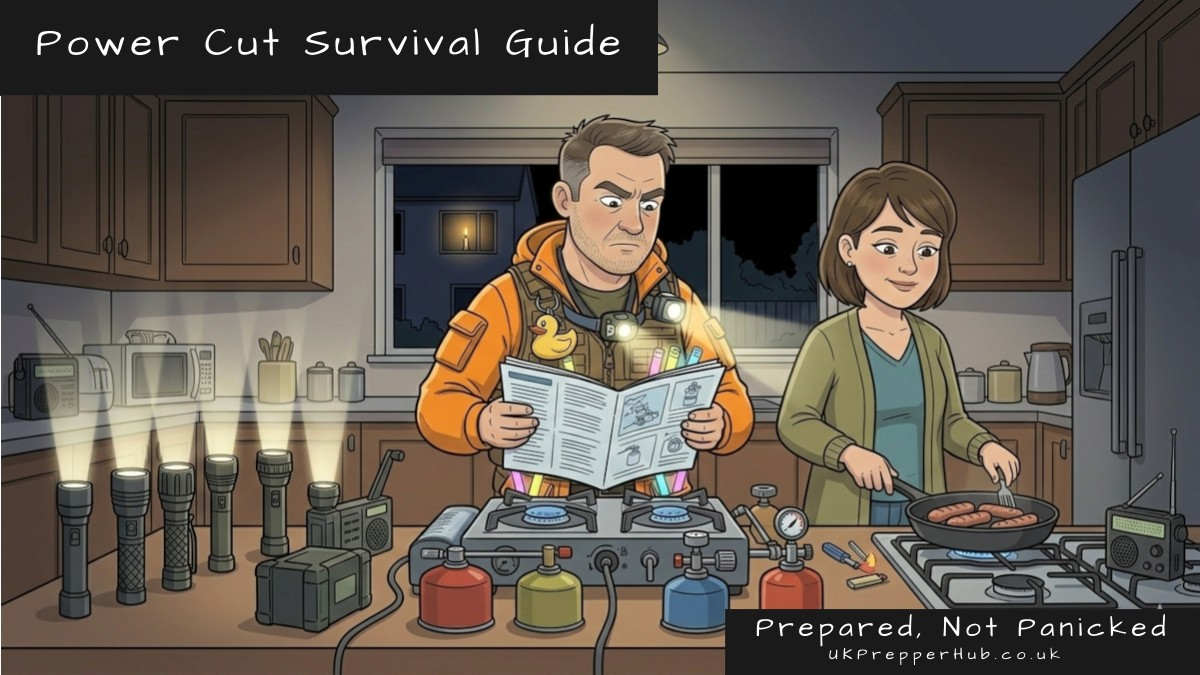
Extended power cuts. The most realistic household disruption in the UK. Whether caused by severe weather, infrastructure failure, or — increasingly — cyber incidents targeting the grid, power cuts can last from hours to days. The correct response is to stay home, manage warmth, preserve food safely, and use your Power Cut Survival Guide preparations. Leaving makes this significantly harder.
Complete Guide
How to Prepare for a Power Cut
The 12 things to sort before the lights go out: lighting, heating, food, water and keeping phones charged, plus what to do in the first few minutes.
Flooding. Flooding is the one scenario in which leaving home may be not just advisable but essential. But even here, the destination is not “the woods” — it is a friend or family member’s home, a local council rest centre, or a hotel. our UK Home Flood Defence guide covers both preparation and the decision to evacuate, including what to take and where to go.
Complete Guide
UK Home Flood Defense
Even small floods can damage flooring, walls, furniture, and utilities. Knowing how to act fast and prepare your home makes recovery faster and safer.

Severe winter weather. The Beast from the East events of 2018 and 2023 cut off communities across the UK. Roads became impassable. The correct response was to stay home with sufficient food, water, heating alternatives, and medication. People who attempted to drive through snowdrifts created problems for themselves and for emergency services.
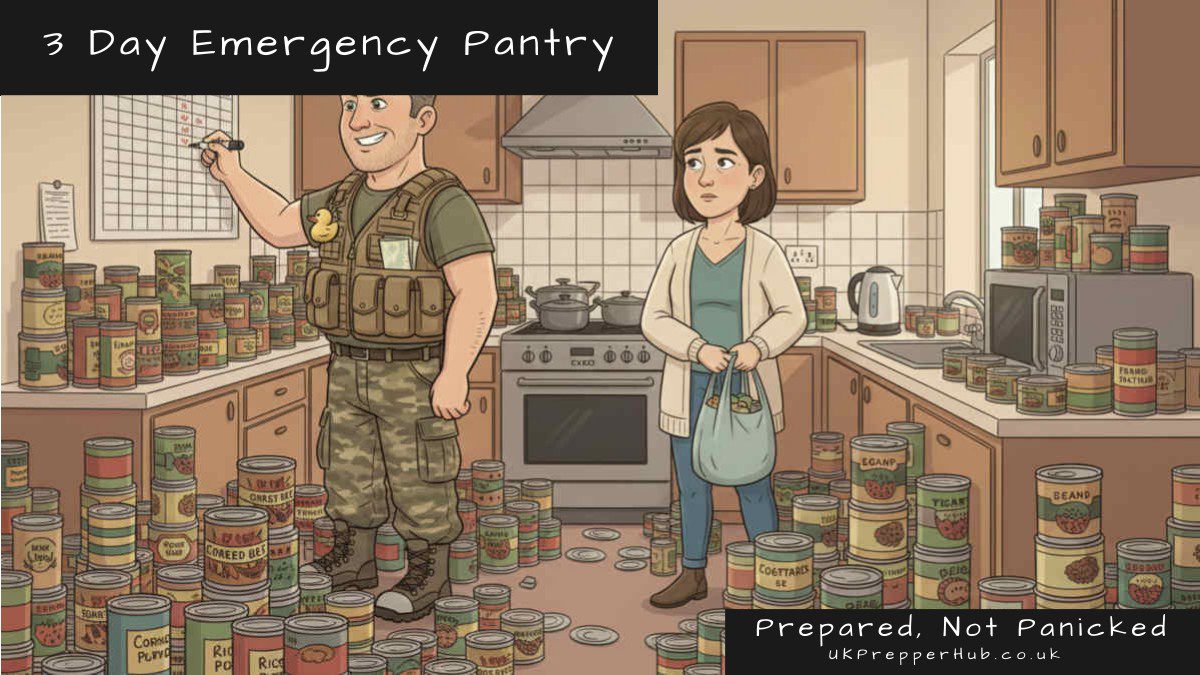
Supply chain disruption. Panic buying, lorry driver shortages, and port disruption can temporarily affect food and fuel availability. None of these situations are improved by leaving home. A well-stocked 3-Day Emergency Pantry and the patience to wait it out is the correct response.
Complete Guide
3-Day Emergency Pantry
The low-barrier start: A shopping list of shelf-stable meals that require zero refrigeration.
Civil unrest. Localised disorder — as seen in the UK in the summer of 2024 — is best navigated by staying home, avoiding affected areas, and monitoring official communications. Carrying a rucksack through a town centre during disorder is not a plan.
Health emergencies. NHS strain, local outbreak, or personal medical crisis. Bugging out to a tent in the rain is not a treatment plan. Your home, with your medication, your records, and access to 111 and 999, is where you need to be.
In almost every realistic UK emergency scenario, staying home is not just the safer option — it is the only sensible one.
When Bugging Out Is the Right Call
Honestly? Rarely. But it does happen, and it is worth being clear about the genuine exceptions.
Structural damage to your home. If an explosion, fire, severe flood, or structural collapse makes your property uninhabitable or dangerous, you leave. This is not “bugging out” in the tactical sense — it is simply evacuating a dangerous building. You go to a neighbour, a rest centre, or a family member. You do not go to a forest.
Gas leak or chemical incident. If authorities issue an evacuation order due to a nearby gas explosion, industrial chemical release, or similar localised hazard, you follow it. Again, this is a short-distance, authority-directed move to a designated safe area — not a wilderness expedition.
Mandatory evacuation order. If the police or local authority issue a formal evacuation notice — for flooding, a major incident, or a structural risk — you comply. You go where you are directed. Our 72-Hour Grab Bag guide covers what to take for exactly this type of managed, short-term evacuation to a UK rest centre. If roads are gridlocked or fuel is unavailable during an evacuation, a folding bike becomes one of the most practical ways to move between points A and B without depending on car or public transport. Our Two-Wheeled Contingency guide covers this specifically for UK evacuation and disruption scenarios.
Complete Guide
Home Evacuation Plan
Most households freeze during an evacuation — not from fear, but from making fifteen decisions simultaneously under pressure for the first time. This guide walks you through the five decisions to make now, calmly, before you ever need them.
Read the Full Guide: Home Evacuation Plan →
Complete Guide
72-Hour UK Grab Bag
The ‘get out quick bag’ for rapid home evacuation in the event of fire, flood, or other incidents. Every essential for 3 days away from home in one bag.
Complete Guide
The Two Wheeled Contingency
This guide makes the case for adding a bike to your resilience planning, covers what to look for if you’re buying one specifically for this purpose, and explains how to set up a bike you already own for emergency use.
Read the Full Guide: The Two Wheeled Contingency →
Domestic safety. If your home is not safe for personal reasons unrelated to external emergencies, that is a different conversation entirely, and one for different support services.

🪖 Black Panther
In My Previous Role…
Military doctrine is “leave immediately when threat exceeds defence capability” — civilian default is the opposite: stay put unless officially ordered out. The simple rule works.
The common thread in all legitimate UK bug-out scenarios is that you have somewhere specific to go, usually directed by authorities or pre-arranged with people you trust. You are not heading into the countryside with an axe. You are moving from point A to a known, safer point B.
What Proper Bugging In Looks Like
Now the practical part. If staying home is the strategy — and it is — then the home needs to be ready. This is not complicated, expensive, or time-consuming. It is what sensible British households have done quietly for generations.
Water
Mains water usually stays on during emergencies. But pipe bursts, contamination events, and supply disruption do occur. Stored water gives you independence from that uncertainty. Two litres per person per day is the baseline; aim for at least 72 hours’ supply. See our Emergency Water Storage guide for practical options that work in flats and small kitchens.
Complete Guide
Emergency Water Storage
How much to store, how to store it in small spaces, and the reality of UK water rotation.
Food
A rotating pantry of shelf-stable food — tins, dried goods, long-life cartons — that you genuinely eat and replace is infinitely more useful than a dramatic “emergency food kit” that sits untouched for five years. The goal is not hoarding; it is having enough to stay comfortable for three to five days if you cannot or should not leave the house.
Heat
This is the variable most people underestimate. If the power goes off in January and your boiler stops, your home will cool significantly within 12 to 24 hours. Knowing which rooms retain heat best, having blankets accessible, and having a safe supplementary heat source — even a well-ventilated indoor-rated camping stove for hot drinks — can make the difference between manageable and miserable. Never use outdoor camping stoves, BBQs, or gas heaters designed for outdoor use inside. Carbon monoxide poisoning kills silently and quickly.
Silentnight Heat Genie Self Heating Giant Blanket
If you’re looking for a simple way to stay warm without turning the heating up, this is a low-cost option with zero running costs. It’s especially worth considering for cold homes, power cuts, or anyone wanting extra warmth without relying on electricity.
Our Full Review: Silentnight Heat Genie Self Heating Giant Blanket →
Light
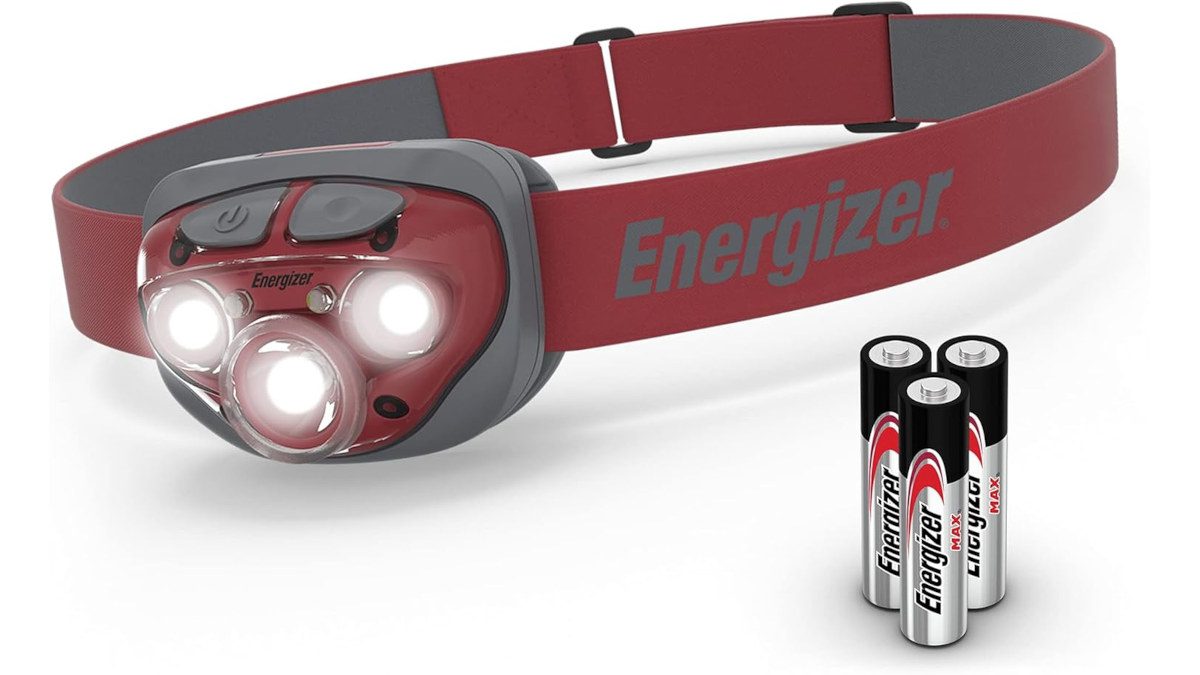
Torches, ideally head torches, with spare batteries (See our Energizer Vision HD+ review for a tried-and-tested AAA option.). Candles if you are careful and have no small children or pets. (I would generally steer people away from candles to the safer, more usable, and higher light output from a LED lantern.) Power banks for phones. Darkness is a psychological as well as a practical problem, and it is one of the easiest to solve in advance.
Energizer Vision HD+ Head Torch
Is this the most versatile head torch for your kit? Does it deliver what it promises? Does it have longevity?
Communication
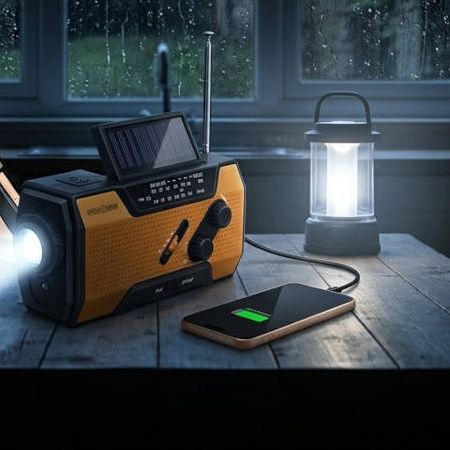
A battery-powered or hand-crank DAB/FM radio lets you receive official emergency broadcasts if internet and phone networks are overloaded. Keep it charged. The Emergency Alert System will send warnings directly to compatible mobile phones in affected areas, but a radio is the backup if that fails.
FosPower Emergency Radio
Most emergency radios have one or two power options. The FosPower has four, and that redundancy is the single most important feature for preparedness use.
Medication
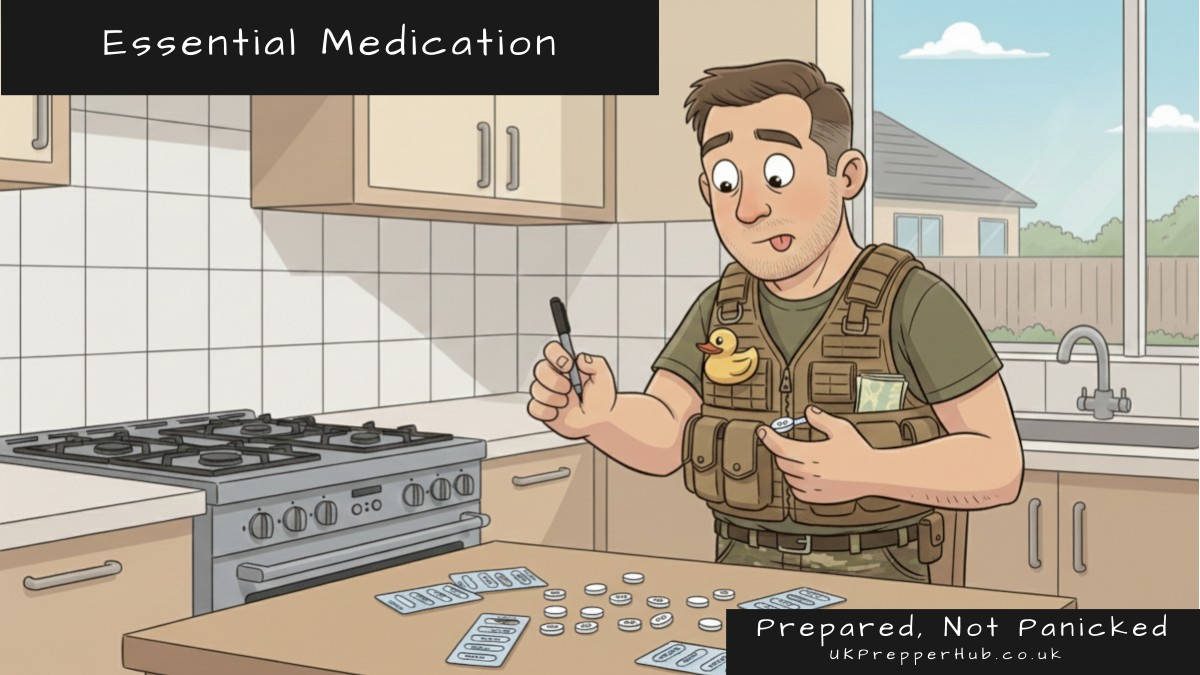
If you or anyone in your household relies on prescription medication, having at least a week’s supply ahead is critical. The NHS repeat prescription system allows you to collect before you run out. Do not wait until you have three days left. Our Managing Essential Medication guide covers cold-chain storage, powered medical equipment, and the Priority Services Register.
Complete Guide
Managing Essential Medication
This guide covers more detail on being prepared with essential medication for all emergency situations.
Security
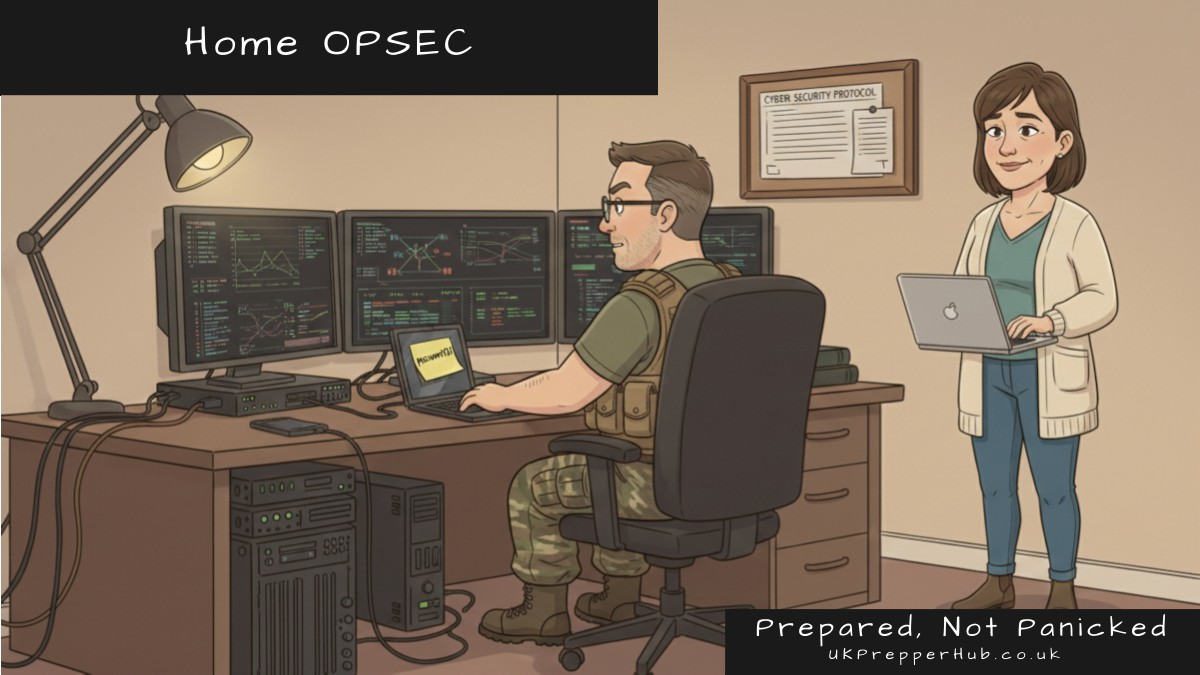
A home that looks occupied is a home that is less likely to be targeted during disruption. Simple measures — keeping lights on timers, not announcing on social media that you are sheltering in place and running low on supplies — matter more than people expect. our Household OPSEC guide covers this in detail, without the paranoia.
Complete Guide
Household OPSEC Guide
OPSEC is a military term that’s filtered down to civilian life. OPSEC is short for “OPerational SECurity”. At its core, it means protecting information that could be used to harm you.
Sanitation
This is the one that gets skipped in most guides and catches people completely off-guard. If water pressure drops or your drains back up during a flood event, flushing the toilet becomes complicated. A basic sanitation backup — a lidded bucket, heavy-duty bags, a small supply of cat litter or chemical toilet powder — takes up very little space and solves a problem that becomes urgent surprisingly quickly. our Emergency Sanitation Guide covers this specifically for UK households, including flats and high-rise buildings where outdoor options do not exist.
Complete Guide
Emergency Sanitation Guide
When flooding, burst mains, or a prolonged power cut takes your toilet out of action, most households aren’t prepared for what comes next. This guide covers practical UK alternatives — chemical toilets, waste bags, disposal methods — and how to stay hygienic when the infrastructure isn’t working.
Read the Full Guide: Emergency Sanitation Guide →
Thetford Porta Potti
One of the most-reviewed portable toilets on Amazon UK: self-contained sanitation that needs no mains, no electricity and no plumber when the flood hits.
Our Full Review: Thetford Porta Potti →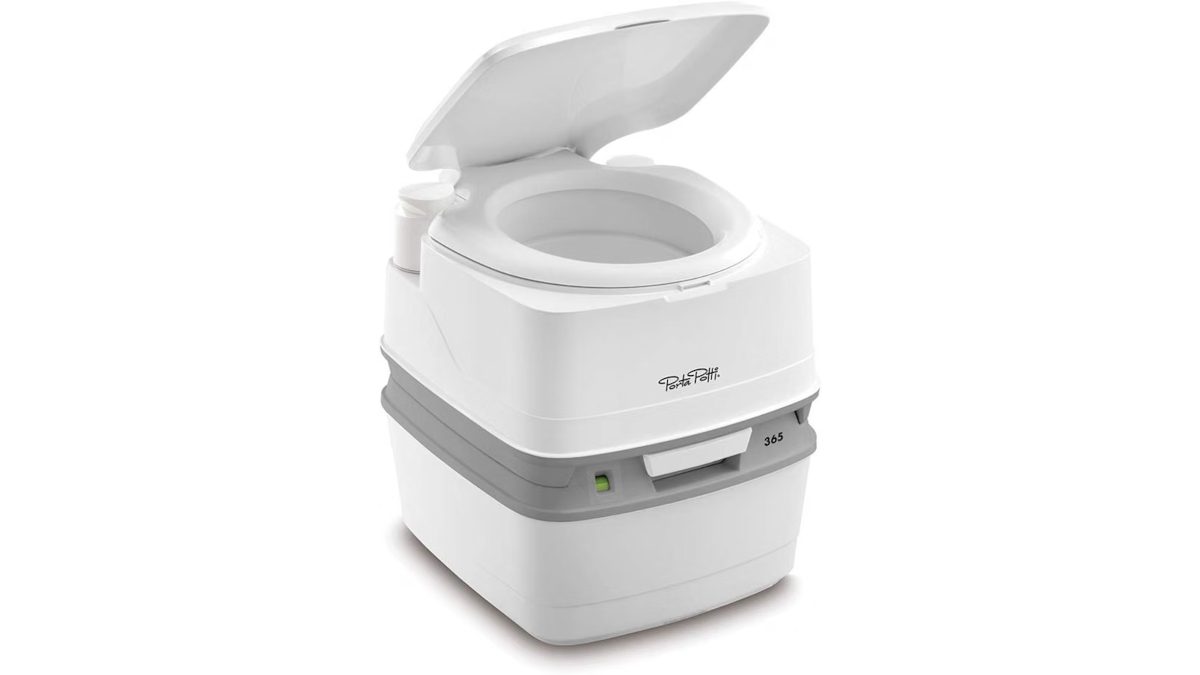
Community
The most underrated bug-in resource is also the one that costs nothing: your neighbours. The UK has a genuine tradition of community resilience during emergencies — from the mutual aid groups that emerged during COVID-19 to the informal networks that form during every significant flood event. Knowing which neighbours are elderly or vulnerable, having a plan to check on each other, and knowing who has a car, who has a generator, who is a nurse — this social knowledge is more valuable than any piece of gear.
It does not require a formal arrangement. It requires knowing your neighbours’ names and having had at least one conversation beyond “morning.” That is all.
Hygiene
Extended disruption — particularly power cuts and water supply issues — can make maintaining normal hygiene much harder than people expect. Handwashing with stored water, managing laundry, keeping wounds clean: none of this is complicated, but all of it requires some forethought. Our Emergency Hygiene Guide is a practical, unglamorous walkthrough of how to stay clean when normal routines are disrupted.
Complete Guide
Emergency Hygiene Guide
This guide covers water-scarce washing techniques in detail, but for grab bags the focus is having enough supplies to maintain basic hygiene without relying on rest centre provisions.

The Mental Side of Sheltering in Place
One thing that almost never gets discussed in preparedness guides is the psychological dimension of bugging in — and it matters, particularly for households where anyone manages anxiety, ADHD, autism, depression, or similar conditions.
Disruption to routine is not just inconvenient. For many people, it is genuinely destabilising. When the lights go out, the internet goes down, normal schedules collapse, and uncertainty fills the space where structure used to be, the mental load of an emergency can become the hardest part to manage.
This is worth acknowledging before an emergency happens, not during it.
A few things that help:
Have a written plan. Not a complicated one. A single sheet of paper that says: if the power goes out, we do X. If we cannot leave, we do Y. If one of us is unwell, we call Z. Having the plan written down means you do not have to construct it under stress. You just follow it.
Maintain small rituals. Boiling a kettle, eating at a normal time, keeping lights on in the evening — these small acts of normality have a disproportionate calming effect during disruption. This is not weakness; it is sensible psychological management.
Limit information intake. The urge to constantly refresh news feeds during an emergency is understandable and counterproductive. Set specific times to check for updates — twice a day is enough for most situations — and use a radio rather than a phone if possible. The infinite scroll of social media during a crisis is rarely informative and reliably anxiety-inducing.
Know who to call. Have a short list of contacts — family, friends, your GP’s out-of-hours number, 111, 999 — written down and accessible without needing to unlock a phone or remember a password. This sounds very basic. It is. It is also the kind of thing that becomes difficult to recall under genuine stress.
For households managing neurodivergent conditions or disability, our Emergency Carer Backup Plan goes into considerably more depth on managing disruption when routine is not just a preference but a genuine need.
Complete Guide
Emergency Backup Plan for Carers
If you’re caring for someone with additional needs—whether that’s an autistic child, a partner with severe anxiety, an adult with learning disabilities, or someone recovering from a stroke—you already know that routine is everything. You need a plan.
Read the Full Guide: Emergency Backup Plan for Carers →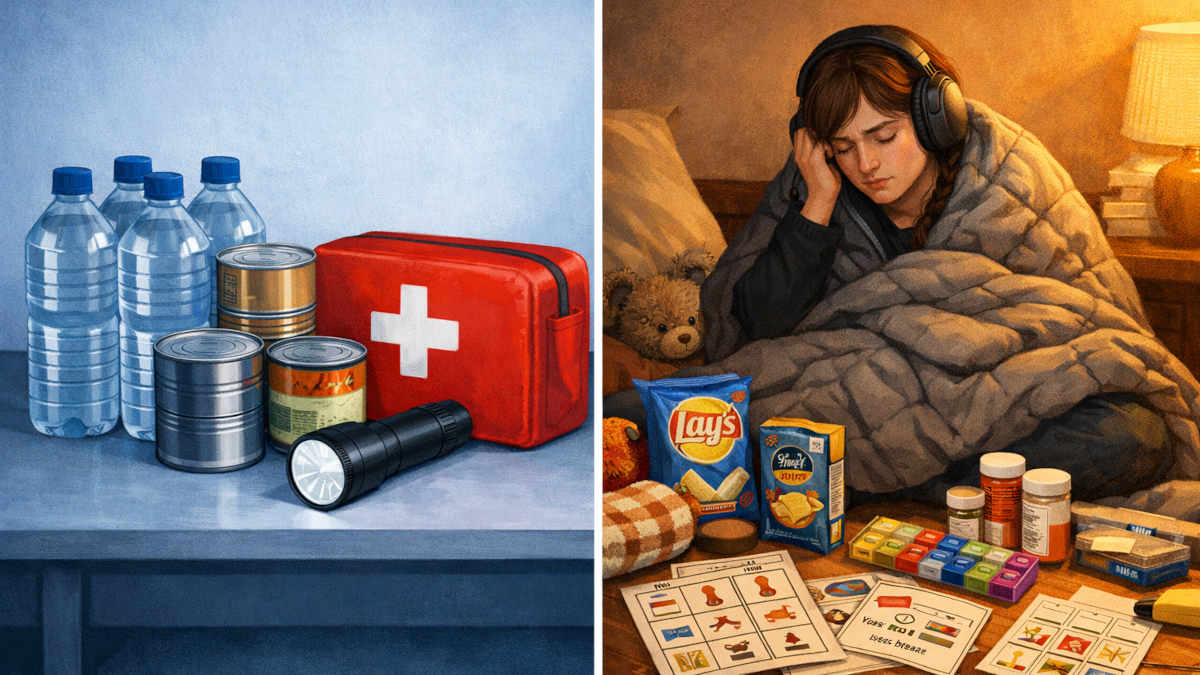
There is a useful benchmark here that cuts through all the noise.
Think about the generation of British people who lived through the Second World War, post-war rationing, the power cuts of the 1970s, and the severe winters of 1947 and 1963. They did not have tactical rucksacks or bug-out locations. They had full larders, good neighbours, coal in the bunker, and the common sense to stay put and wait it out.
They were, by any reasonable measure, more resilient than most people currently buying survival gear on the internet.
The “Gran standard” for preparedness is not glamorous. It does not look good on social media. But it works: enough food, a way to stay warm, a way to stay clean, enough water, your medication, and a community around you. That is it. That is the whole thing.
The next time you see a video of someone packing a 70-litre bug-out bag with tactical tools and military rations, ask yourself one question: would your Gran have done it that way? If the answer is no, that is probably your answer too.
Three Checklists
🦆 Keith
Don’t Be Keith
Keith built a colour-coded decision matrix with laminated cards and three trigger levels for deciding when to bug out. The rule is: stay home unless someone in authority tells you to leave.
✅ Immediate Actions (Do This Week)
- [ ] Check you have at least 6 litres of water stored per person (3 days’ supply)
- [ ] Check your torch works and has spare batteries
- [ ] Locate your stopcock — know how to turn the water off at the mains
- [ ] Check you have at least 3 days of food you would actually eat
- [ ] Confirm you have at least 7 days of any essential prescription medication
- [ ] Check you have a battery or hand-crank radio (or know where to get one)
- [ ] Register for the Priority Services Register if you or a household member has additional needs
✅ Short-Term Actions (Do This Month)
- [ ] Extend food stores to 5–7 days (add tins and dried goods gradually during normal shopping)
- [ ] Identify your warmest room — the one you would retreat to during an extended cold snap
- [ ] Locate and note the number for your electricity network operator (dial 105 free for power cuts)
- [ ] Write a one-page household emergency information sheet (contacts, medication, utilities)
- [ ] Talk to at least one neighbour about mutual support if something goes wrong
- [ ] Bookmark the Environment Agency flood map and know your local risk
✅ Longer-Term Actions (Build Over Time)
- [ ] Build a full 72-Hour Grab Bag — not for wilderness, for UK rest centres
- [ ] Review home insurance and document valuables with photographs
- [ ] Consider a home security review for power-cut vulnerabilities
- [ ] Identify your household’s specific vulnerabilities (medical, mobility, dependants) and plan around them
- [ ] If flooding is a risk: read our UK Home Flood Defence guide and consider a flood kit
This guide is part of the UK Prepper Hub Resilience Hub — practical, UK-specific preparedness for ordinary households. No wilderness skills required.
Build Your Resilience
Further Reading: Related Guides
All our guides can be found listed on our resilience hub.
Gear We’ve Tested & Reviewed
All our reviews can be found on our reviews and resources page.