
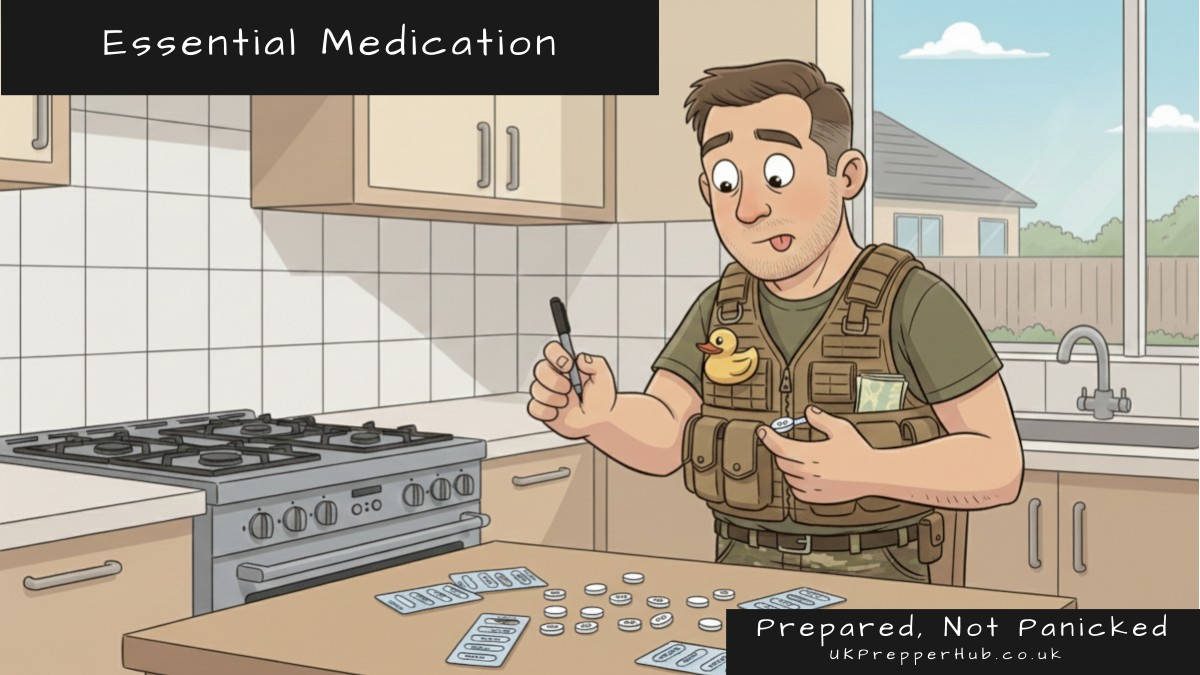
Most emergency preparedness guides focus on food, water, and warmth. They rarely mention the one thing that, for a significant proportion of UK households, is genuinely life-critical: prescription medication.
Around 15 million people in England alone have at least one long-term condition requiring regular medication. Many of those medications have specific storage requirements, strict dosing schedules, and — in some cases — no tolerance for interruption. Missing two days of antiepileptics can trigger a seizure. Insulin left unrefrigerated becomes ineffective within days. Blood thinners require consistent dosing to prevent stroke.
Emergency disruptions don’t care about your prescription schedule. A Beast from the East cold snap, a prolonged power cut, or flooding that cuts off road access to your pharmacy can each create a gap between you and your medication that has serious consequences.
This guide covers how to manage essential medications before, during, and after an emergency — within the UK’s NHS and pharmacy framework.
Step One: Know Exactly What You’re Managing
Before any planning, you need a clear picture of every medication in your household, its requirements, and its criticality.
Create a Medication Inventory
Write down — or print and laminate — the following for each medication in your household:
- Name (generic and brand where relevant)
- Dose and frequency (e.g. 10mg twice daily)
- What it treats (e.g. type 1 diabetes, epilepsy, hypertension)
- What happens if a dose is missed — this varies enormously. Missing a single antihistamine is irrelevant; missing a dose of warfarin has measurable clinical consequences
- Storage requirements (room temperature, refrigerated, away from light)
- Prescribing GP surgery and pharmacy name and phone number
- Whether there’s an emergency or alternative supply protocol
This list should be stored physically — a printed sheet in your grab bag and your emergency supplies box — not only on a phone that may run out of battery. It should also be shared with any carer or household member who may need to act on your behalf.
Complete Guide
72-Hour UK Grab Bag
The ‘get out quick bag’ for rapid home evacuation in the event of fire, flood, or other incidents. Every essential for 3 days away from home in one bag.
🦆 Keith
Don’t Be Keith
Keith ordered a six-month supply of blood pressure tablets in one go. He was very pleased with his emergency preparedness. His GP phoned the pharmacy to check he was alright.
Classify by Criticality
Not all medications are equal in an emergency. A rough classification:
Critical — do not miss doses:
- Insulin and other diabetes medications
- Antiepileptic drugs (AEDs)
- Anticoagulants (warfarin, rivaroxaban, apixaban)
- Heart medications (digoxin, amiodarone, beta-blockers for heart conditions)
- Immunosuppressants (transplant patients, severe autoimmune conditions)
- Mental health medications where abrupt discontinuation causes crisis (lithium, some antidepressants, antipsychotics)
- Steroids where long-term use means adrenal suppression
Important — disruption requires clinical advice:
- Thyroid medication (levothyroxine)
- Inhalers and respiratory medications
- Blood pressure medications
- Hormone therapies
Manageable — short gaps tolerable:
- Most topical treatments
- Vitamins and supplements
- Many antihistamines
- Most pain relief
This classification helps you prioritise when storage space, ice supply, or access to a pharmacy is limited.
Medication Storage: Getting It Right
Many medications are stored incorrectly in ordinary households — let alone during emergencies. Temperature excursions degrade effectiveness, sometimes without any visible change to the medication itself.
Room Temperature Medications
Most oral medications (tablets, capsules) are labelled “store below 25°C.” In a normal UK home, this is rarely a problem. During a summer heatwave, particularly in a flat or loft conversion, ambient temperatures can exceed this.
Complete Guide
Heatwave Power Cut Guide
A summer power cut is more dangerous than a winter one — heat builds fast and food spoils faster. This guide covers staying cool, protecting medications, keeping food safe, and knowing when to get out.
During a winter emergency with no heating, most room-temperature medications are fine provided they don’t freeze. Check individual labels — some liquid formulations, eye drops, and certain injectables should not be frozen.
Keep medications in a cool, dry location away from direct sunlight. A bathroom cabinet is actually one of the worst places to store medication in normal use — humidity from showers degrades some formulations over time. A bedroom drawer or kitchen cupboard (away from the cooker) is better.
Refrigerated Medications
This is the critical category for emergency planning. Medications requiring refrigeration (2–8°C) include:
- Insulin (all types)
- Some biologics (adalimumab/Humira, etanercept/Enbrel, and others used for rheumatoid arthritis, psoriasis, Crohn’s)
- Some eye drops (check individual labels)
- Some liquid antibiotics (typically once reconstituted)
- Growth hormone injections
- Certain vaccines (if you’re storing travel vaccines — less common for home use)
An opened insulin pen can typically be kept at room temperature (below 25°C) for 28 days — check your specific insulin’s patient information leaflet as this varies. Unopened insulin must be refrigerated.
🐔 Chicken Licken
Did You Know?
An opened insulin pen can be kept at room temperature — below 25°C — for up to 28 days. Most people assume refrigerated means refrigerated always. I’ve been saying this for years.
Biologics and other injectables vary significantly. Check your patient information leaflet or ask your pharmacist for your specific medication’s out-of-refrigeration tolerance.
Cold-Chain Medications: Power Cut Planning
A power cut that lasts more than a few hours creates a real risk for refrigerated medications. Planning for this is straightforward and inexpensive.
Monitoring Temperature
A basic fridge thermometer (£5–10 from most supermarkets) lets you know where your fridge actually sits — many domestic fridges run warmer than expected, particularly older models. During a power cut, a fridge that starts at 3°C will typically stay within the safe 2–8°C range for 4–6 hours if unopened. Opening the door repeatedly accelerates temperature rise.
Short Power Cuts (Under 4 Hours)
Keep the fridge closed. Do not open it to check unless necessary. A full fridge retains cold better than a half-empty one — if you’re in an area prone to outages, keep it reasonably stocked.
Extended Power Cuts (4–24 Hours)
Move refrigerated medications to a cool box with ice packs. Medical-grade cool boxes are available but a standard cool box works well provided you have sufficient ice. Frozen gel packs maintain a lower temperature more consistently than loose ice and don’t create water as they melt.
Target 2–8°C. A thermometer in the cool box is essential — too cold (below 0°C) damages insulin and most biologics as badly as too warm.
Complete Guide
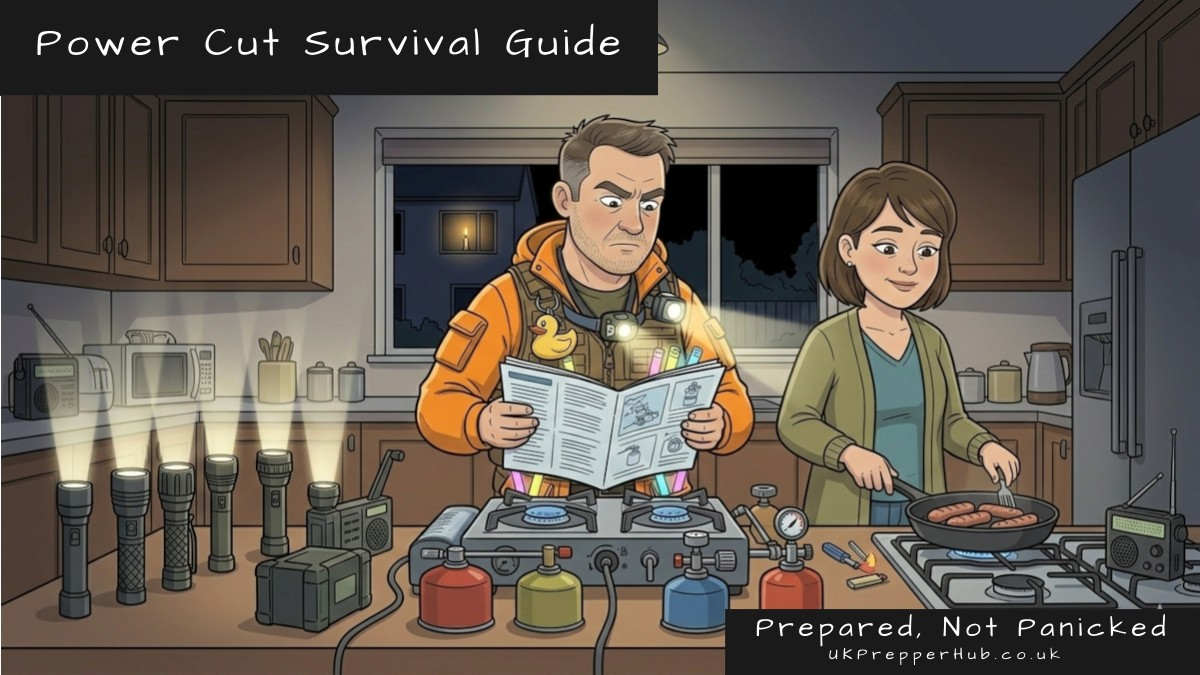
How to Prepare for a Power Cut
The 12 things to sort before the lights go out: lighting, heating, food, water and keeping phones charged, plus what to do in the first few minutes.
Beyond 24 Hours
Contact your GP or pharmacist. NHS guidance for insulin users, in particular, is clear: if you’re uncertain whether insulin has been compromised, treat it as compromised and contact your diabetes team or 111 for emergency supply.
Many GP surgeries and hospital diabetes teams have emergency protocols for exactly this scenario. Knowing the number and having it written down before an emergency is far better than searching for it during one.
Practical Cold-Chain Emergency Kit
For anyone managing cold-chain medication, keep the following available:
- A small dedicated cool bag (the insulated bags from online food deliveries work well)
- Two or three reusable gel ice packs (keep them permanently in the freezer)
- A small thermometer for the cool bag
- Printed copy of your medication’s storage tolerance (from the patient information leaflet or your pharmacist)
Total cost: approximately £15–25. The alternative is a potentially compromised course of medication worth many times that.
FRIO Insulin Cooling Wallet
Keeps insulin at safe temperature for 45 hours using only water — no electricity, no ice, no power required. Tested by the British Medication Devices Evaluation Unit and recommended by UK hospitals.
Our Full Review: FRIO Insulin Cooling Wallet →
Legally Building a Buffer Stock in the UK
This is the question most people want answered: can you stockpile prescription medication?
The short answer for most medications is: yes, within limits, and the approach is to work with rather than around the system.
How the NHS Repeat Prescription System Works
Most long-term medications are issued on a 28-day or 56-day repeat prescription cycle. Your GP surgery or pharmacist will typically issue the next prescription when you have around 7 days of medication remaining — not before.
This is intentional. The NHS manages medication waste (a significant cost) and prevents excessive stockpiling of controlled drugs. It also means that in normal operation, most patients have around a week’s supply at any given time — not enough buffer for a prolonged disruption.
Building a Legitimate Buffer
The approach that works within NHS rules:
Order consistently and on time. If your repeat prescription is due every 28 days, order it on day 21 — not day 27. Over several months, this creates a small rolling buffer without requiring any special request.
Talk to your GP or pharmacist. Many GPs will support a slightly larger supply for patients who raise emergency preparedness explicitly, particularly those in rural areas prone to access problems, or those managing complex conditions. Framing it as “I’d like a 56-day prescription rather than 28-day” is often successful.
Managed repeats via pharmacy. If you’re on a managed repeat service through a pharmacy, discuss the timing with your pharmacist. They understand the system and can often help optimise timing.
Controlled Drugs
Controlled drugs (Schedule 2 and 3, including certain opioids, some ADHD medications, and some sleeping tablets) have strict supply limits that cannot be exceeded. Maximum 30-day supply is standard. This is a legal limit, not a pharmacy policy — GPs cannot prescribe more.
For controlled drug users, the emergency planning focus shifts to knowing the emergency supply process (see below) rather than stockpiling.
Over-the-Counter Equivalents
Some prescription medications have OTC equivalents at lower doses. Antihistamines, some pain relief, low-dose hydrocortisone, and others can be purchased without prescription. Discuss with your pharmacist whether OTC versions are appropriate for your situation as a backup.
Getting Medication During an Emergency
If disruption hits and you’re running low, the NHS has specific provisions.
Emergency Supply from a Pharmacist
Any UK pharmacist can provide an emergency supply of most prescription medications without a prescription in a genuine emergency. They will typically supply up to 5 days’ worth (30 days for some oral contraceptives) and will charge prescription charge equivalents. You must have previously been prescribed the medication.
This provision exists for exactly the situations described in this guide. If you’re cut off from your GP, your pharmacy is your first call.
111
NHS 111 can issue emergency prescriptions for medications where running out poses an immediate health risk. They can also connect you with an out-of-hours GP. For critical medications (insulin, antiepileptics, anticoagulants), 111 will treat this as urgent.
NHS App and Online Prescriptions
The NHS App allows you to view your prescriptions, order repeats, and nominate a different pharmacy. If your usual pharmacy is inaccessible, you can nominate any open pharmacy to dispense your prescription. Having the app set up before an emergency makes this seamless.
During Declared Emergencies
During major incidents (significant flooding, civil emergencies), NHS England activates community pharmacy protocols that allow increased flexibility in dispensing. Local chemists will typically have guidance from their local area team. This doesn’t mean unlimited supply — it means the system becomes more responsive to genuine clinical need.
Travelling With Medications During Evacuation
If you need to leave home in a hurry — whether due to flooding, fire, or any scenario requiring rapid evacuation — your medications need to come with you. This sounds obvious, but in a genuine emergency situation people regularly leave critical medication behind.
The Grab Bag Rule
A minimum 7-day supply of all critical medications should be pre-packed in or immediately alongside your grab bag, rotated on the same schedule as your repeat prescription. If evacuation happens at 2am, you should not have to think about where your medication is.
For cold-chain medications, this means your cool bag with ice packs should be within arm’s reach of your grab bag — not in the garage.
📋 Calm Clarissa
My printable grab bag checklist has a whole medication section: the seven-day supply, prescription copies and a waterproof case to keep them in. Free to download, obviously.
Download the Free Checklist →Complete Guide
72-Hour UK Grab Bag
The ‘get out quick bag’ for rapid home evacuation in the event of fire, flood, or other incidents. Every essential for 3 days away from home in one bag.
Documentation
If you’re evacuated and end up at a rest centre, emergency shelter, or hospital, having your medication information in writing dramatically speeds up any clinical assessment. Pack:
- Printed medication list (names, doses, frequency, conditions treated)
- A copy of your most recent prescription or repeat prescription slip
- Contact details for your GP and pharmacy
- For controlled drugs: carry original pharmacy-labelled packaging where possible — this helps verify your prescription legitimately
Crossing Borders
This is less relevant to domestic emergencies but worth noting for anyone planning travel: many countries have strict rules about importing controlled drugs. ADHD medications (methylphenidate, lisdexamfetamine), some opioids, and some anxiety medications require documentation. The Home Office issues licences for bringing controlled drugs abroad — apply at least two weeks before travel.
Complete Guide
Home Evacuation Plan
Most households freeze during an evacuation — not from fear, but from making fifteen decisions simultaneously under pressure for the first time. This guide walks you through the five decisions to make now, calmly, before you ever need them.
Read the Full Guide: Home Evacuation Plan →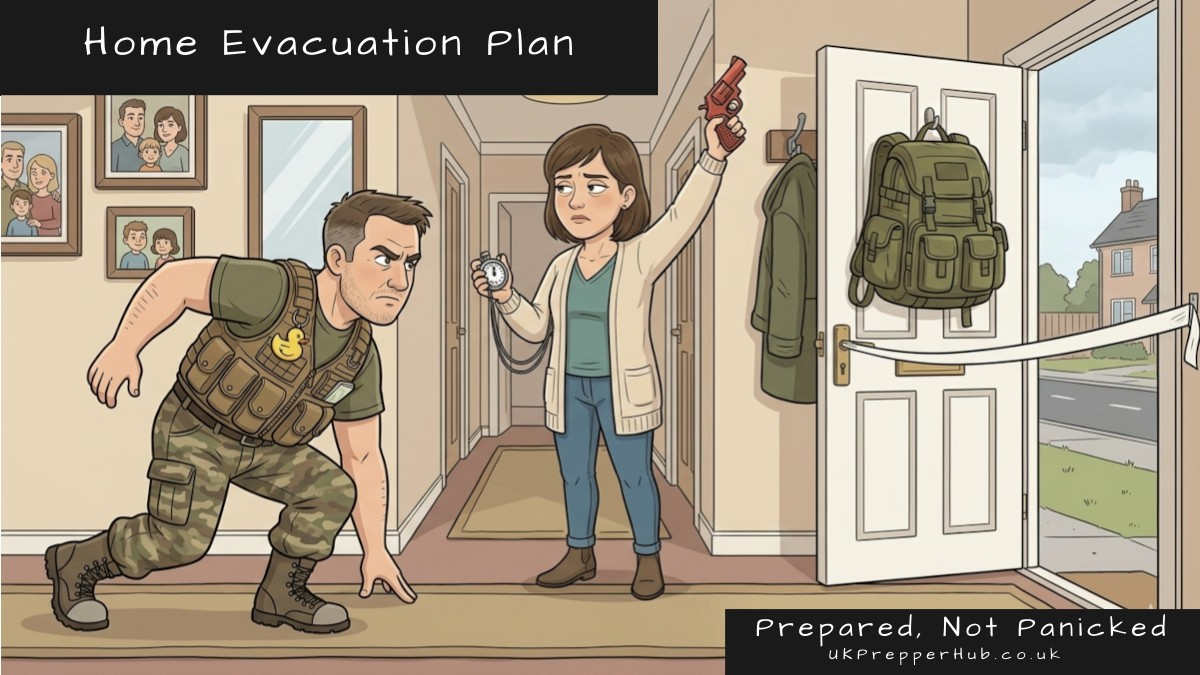
Mental Health Medications: Special Considerations
Mental health medications deserve specific attention because abrupt discontinuation is often more dangerous than the disruption itself, and because the stress of an emergency can interact badly with both the underlying condition and the medication.
Medications Where Stopping Suddenly Is Dangerous
Lithium — used for bipolar disorder. Missing doses can trigger rebound mania or depression. Lithium also has a narrow therapeutic window; if you’ve been unable to access your medication and resume, discuss restarting with your prescriber rather than simply resuming your normal dose.
Antipsychotics — abrupt discontinuation can cause rebound psychosis. This is a medical emergency. If supply is interrupted, 111 should be contacted immediately.
Some antidepressants — particularly venlafaxine (Effexor), paroxetine, and duloxetine. Discontinuation syndrome causes flu-like symptoms, dizziness, and sensory disturbances. Not life-threatening but genuinely distressing. If supply runs out, contact 111 rather than stopping abruptly.
Benzodiazepines — if prescribed long-term (diazepam, lorazepam, clonazepam), abrupt withdrawal carries a risk of seizures. This is a medical emergency requiring 111.
Planning Ahead for Mental Health Medications
If your mental health medication is on the critical list, the buffer stock strategy matters even more. Additionally:
- Discuss emergency supply explicitly with your prescriber — many will provide a small emergency supply or a letter confirming your medication for use at any pharmacy
- Know your crisis team or community mental health team contact number and have it written down
- Tell a trusted household member what to do if you’re unable to advocate for yourself — who to call, what to tell them
Emergency stress is precisely the context in which mental health conditions can destabilise. Having a plan in place is a meaningful protective factor, not a worst-case contingency.
Power-Dependent Medical Equipment
Medication is half the picture for many households. Medical equipment requiring power includes:
- CPAP and BiPAP machines (sleep apnoea)
- Home oxygen concentrators
- Nebulisers
- Electric wheelchairs and powered mobility aids
- Insulin pumps
- Home dialysis equipment
- Powered stairlifts
Monitoring Your Condition
Anyone managing a chronic condition — particularly cardiac or respiratory — should have a way to monitor their own observations during a disruption. A pulse oximeter gives you blood oxygen saturation and heart rate at a glance: the kind of reading that tells you whether things are stable or whether you need to call 111.
OxiPro OX2 Pulse Oximeter
Clips to a fingertip and tells you blood oxygen and pulse rate in seconds. Useful during any illness where breathing is a concern — and the reading that matters is below 92%..
Our Full Review: OxiPro OX2 Pulse Oximeter →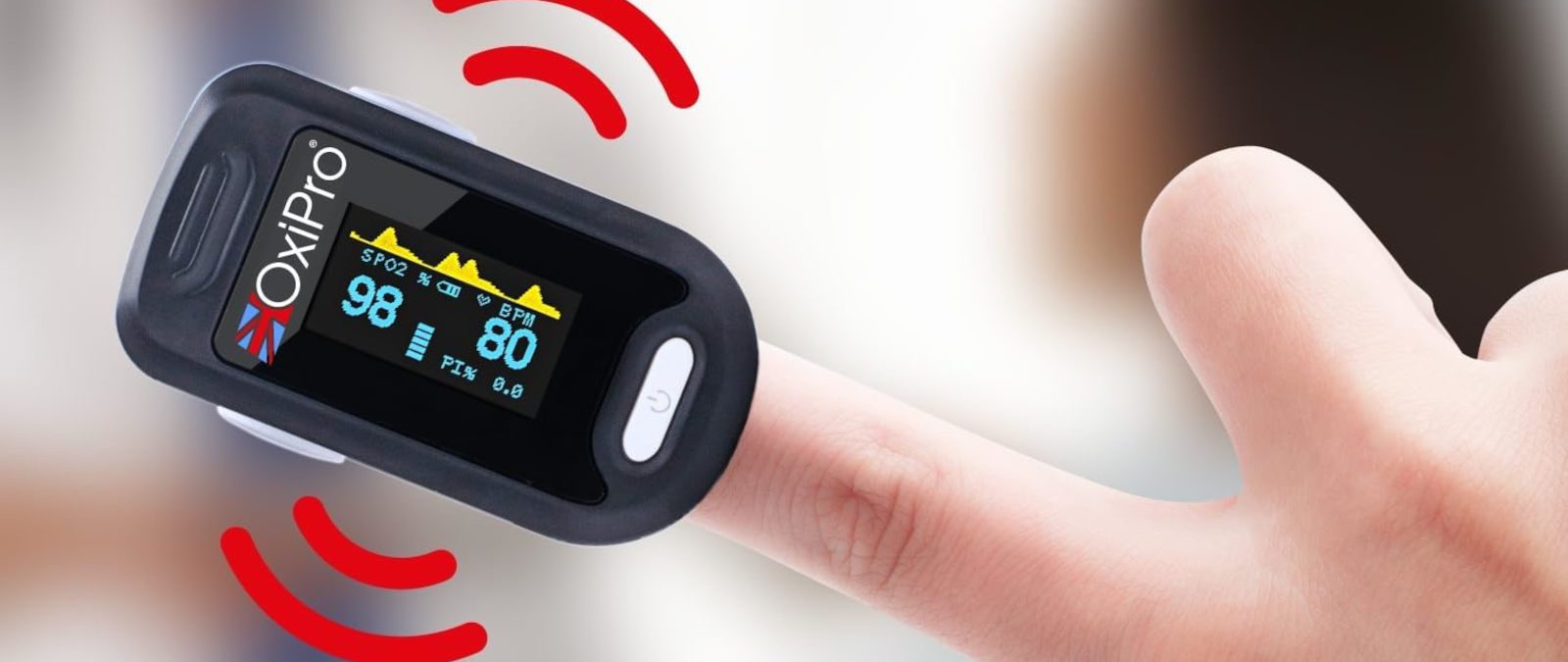
Register With Your Supplier
UK Power Networks, Northern Powergrid, Western Power Distribution, and other Distribution Network Operators (DNOs) all maintain a Priority Services Register. If you or a household member depends on power-dependent medical equipment, register now — it’s free and means you’ll be prioritised during outages and contacted in advance of planned interruptions.
Register via your DNO’s website (find yours via Ofgem) or by calling them directly.
Backup Power Options
For CPAP users, dedicated CPAP battery packs are available — most modern CPAP machines are 12V compatible and can run from a car battery or portable power station for several nights. This is a worthwhile investment for anyone who can’t sleep safely without their machine.
Nebulisers can often be replaced with pressurised inhalers (with a spacer) for short-term use — discuss this with your respiratory team before an emergency, not during one.
Home oxygen concentrators require significant power. Anyone on home oxygen should have a cylinder backup as standard — if you don’t, contact your supplier.
Carers and Household Planning
If you’re caring for someone else who depends on medication, the planning burden falls largely on you. Key steps:
- Ensure you have written authority to collect prescriptions on their behalf (most GP surgeries require a brief authorisation)
- Know the medication names, doses, and storage requirements independently of the person you care for — if they’re incapacitated, you need to be able to act
- Have a written list of their clinical contacts: GP, any specialists, the prescribing pharmacist
- Know what to do if they miss critical doses — this should be discussed in advance with their clinical team, not discovered during a crisis
Complete Guide
Emergency Backup Plan for Carers
If you’re caring for someone with additional needs—whether that’s an autistic child, a partner with severe anxiety, an adult with learning disabilities, or someone recovering from a stroke—you already know that routine is everything. You need a plan.
Read the Full Guide: Emergency Backup Plan for Carers →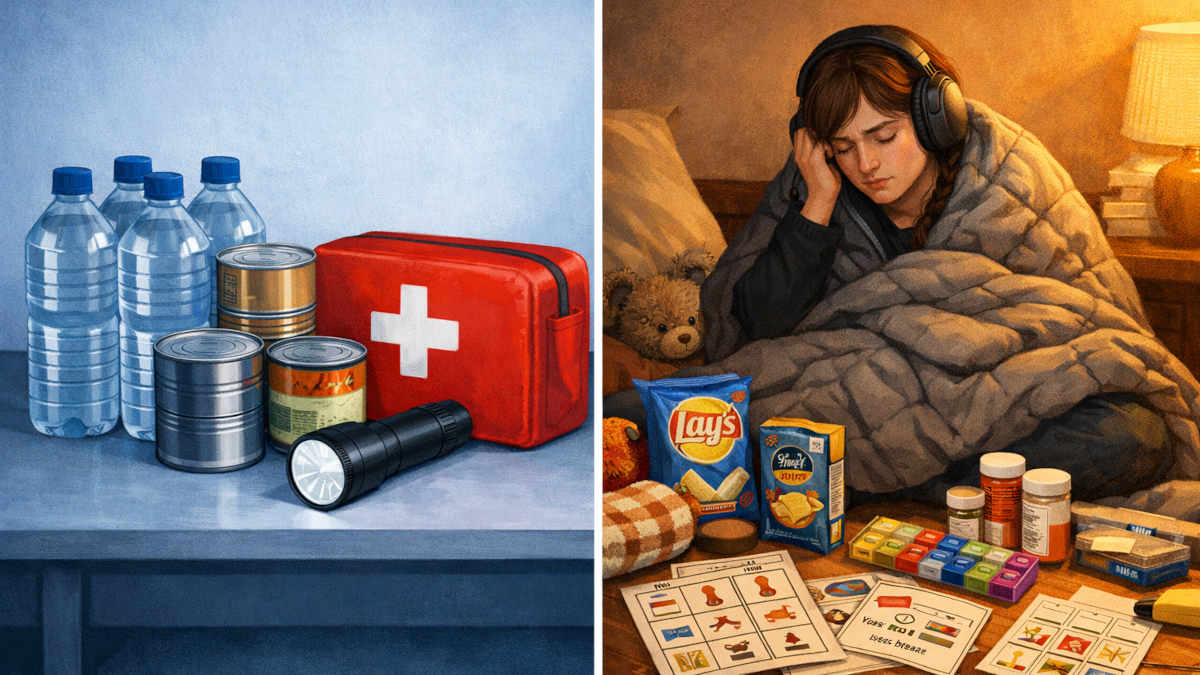
Three Action Checklists
Checklist 1: Do This Week
- Write a medication inventory for every household member
- Check storage conditions for all medications — are refrigerated medications actually being kept cold?
- Identify which medications are critical (cannot miss doses)
- Register with the Priority Services Register if anyone depends on powered medical equipment
- Download the NHS App and set up repeat prescription ordering if not already done
- Find your pharmacist’s number and save it in your phone and on paper
Checklist 2: Build Over the Next Month
- Establish a consistent early ordering habit to build a small buffer stock
- Purchase cool bag + gel ice packs + thermometer for any cold-chain medications
- Ask your GP or pharmacist about 56-day prescriptions if currently on 28-day cycles
- Print and laminate your medication list — one copy in grab bag, one in emergency supplies
- Note out-of-refrigeration tolerance for any cold-chain medications (from PIL or pharmacist)
- Discuss emergency supply protocols with your pharmacist in advance
Checklist 3: During a Disruption
- Check cold-chain medications immediately — how long has the fridge been off?
- Move refrigerated medications to cool bag with ice packs if power cut exceeds 2 hours
- Monitor cool bag temperature — target 2–8°C, never below 0°C
- If running low on critical medication, call pharmacist first, then 111
- Do not ration critical medications without medical advice — contact 111 before adjusting doses
- Keep medication list accessible for any emergency services or medical personnel
Frequently Asked Questions
Can I stockpile NHS prescription medication?
Yes, within limits. The approach is to work with the system — order on day 21 of a 28-day cycle rather than day 27, and ask your GP about switching to 56-day prescriptions. Controlled drugs (Schedule 2 and 3) have a legal maximum of 30 days’ supply that cannot be exceeded.
What happens to insulin during a power cut?
An unopened insulin pen must stay refrigerated (2–8°C). An opened pen can typically be kept at room temperature (below 25°C) for up to 28 days — check your specific insulin’s patient information leaflet. During a power cut, move insulin to a cool bag with gel ice packs and monitor the temperature. Never let it freeze.
Can a pharmacist give me medication without a prescription in an emergency?
Yes. Any UK pharmacist can provide an emergency supply of most prescription medications in a genuine emergency — typically up to 5 days’ worth. You must have previously been prescribed the medication. If your pharmacy is inaccessible, call 111.
What is the Priority Services Register?
A free register maintained by your local Distribution Network Operator (DNO) for households with power-dependent medical equipment. Registering means you’ll be prioritised during outages and contacted in advance of planned interruptions. Find your DNO via Ofgem and register directly.
Should I keep my medication in the bathroom cabinet?
It’s actually one of the worst places — humidity from showers can degrade some formulations over time. A bedroom drawer or kitchen cupboard away from the cooker is better for most medications.
Build Your Resilience
Further Reading: Related Guides
- UK Home First Aid Kit
- 72-Hour Grab Bag
- How to Prepare for a Power Cut
- Emergency Carer Backup Plan
- Protecting Your Important Documents
All our guides can be found listed on our resilience hub.
Gear We’ve Tested & Reviewed
All our reviews can be found on our reviews and resources page.