
This post contains affiliate links. Learn more
When your child spikes a fever at 2am, or your elderly parent is struggling with a chest infection, the question is always the same: do we need hospital, or can we manage at home? That’s the gap a pulse oximeter fills—and it’s why every UK household should have one in their first aid kit.
The OxiPro OX2 has been sitting in my first aid drawer since October 2025. It’s been used for everything from monitoring family members during winter flu to checking baseline oxygen levels for an elderly relative with COPD. It’s become one of those purchases I’m genuinely glad I made before we needed it urgently.
This review covers what the OxiPro pulse oximeter (model OX2) actually does in a UK household, who benefits most, and whether it’s worth having on hand before the next winter respiratory season hits.
OxiPro OX2 Oximeter
A simple to use, reliable, British made, oxygen level and pulse rate monitor
What a Pulse Oximeter Actually Does (And Why UK Households Need One)
A pulse oximeter clips onto your fingertip and measures two things: blood oxygen saturation (SpO2) and heart rate. Within 10 seconds, you have objective data about whether someone’s breathing is working properly.
Normal SpO2 levels sit between 95-100%. If someone drops below 92%, that’s when NHS guidance suggests seeking medical advice. Below 90%, you’re looking at potential hospital admission. The oximeter gives you numbers, not guesswork.
During COVID, these devices sold out across the UK. People realised that “feeling short of breath” is subjective, but oxygen saturation below 90% is objective evidence you need help. The principle applies to any respiratory illness—flu, chest infections, pneumonia, asthma attacks, COPD flare-ups.
For UK households, especially those with young children, elderly relatives, or anyone with existing respiratory conditions, having an oximeter means you can monitor deterioration at home and make informed decisions about when to call 111 or head to A&E.
The OxiPro Difference: A British Medical Device Company
OxiPro Medical Ltd is based in Maidenhead, Berkshire. They’re not a faceless Chinese import seller—they’re a UK medical device company with UK-based customer support and a proper 2-year warranty. That matters when you’re buying something you might need to rely on during a medical crisis.
The OX2 model won “Medical Device Brand of the Year – UK” in both the 2024 and 2025 Global Health & Pharma Awards. It’s CE certified and tested to BS-EN-ISO-80601-2-61 standards (the medical standard for pulse oximeter equipment). This isn’t a wellness gadget—it’s registered as an actual medical device.
The difference shows in reliability. I’ve used cheap no-name oximeters from Amazon before. They give wildly different readings depending on which finger you use, struggle with cold hands, and often stop working after a few months. The OxiPro costs twice as much but actually works consistently, which is the entire point of having one.
Real-World UK Household Use
Scenario 1: Child with winter flu My daughter caught flu in January 2026. High fever, cough, lethargic—the usual winter misery. The oximeter showed 97% oxygen saturation despite her looking awful. That single number gave us confidence to manage at home with fluids and paracetamol rather than panicking and calling 111 at midnight. We checked her SpO2 twice daily until she recovered. Never dropped below 96%.
Scenario 2: Elderly parent with chest infection My father-in-law has COPD and caught a chest infection in December 2025. His baseline SpO2 is typically 94-95% due to his condition. When he felt worse, we checked: 91%. That’s below his normal but not emergency level. We called his GP, who prescribed antibiotics and asked us to monitor oxygen levels twice daily and report back if they dropped further. They didn’t—the antibiotics worked. But without the oximeter, we wouldn’t have known whether his worsening breathlessness was serious or just the infection making him feel rough.
Scenario 3: Checking myself during a heavy cold January 2026, I had a bad cold with a persistent cough. Felt short of breath walking upstairs. Checked my SpO2: 98%. The breathlessness was just general illness making me feel weak, not actual oxygen deprivation. Knowing that stopped me from worrying unnecessarily.
These aren’t dramatic life-or-death scenarios. They’re the everyday situations where having objective data helps UK households make sensible decisions about when to worry and when to rest and recover.
How the OxiPro OX2 Actually Works
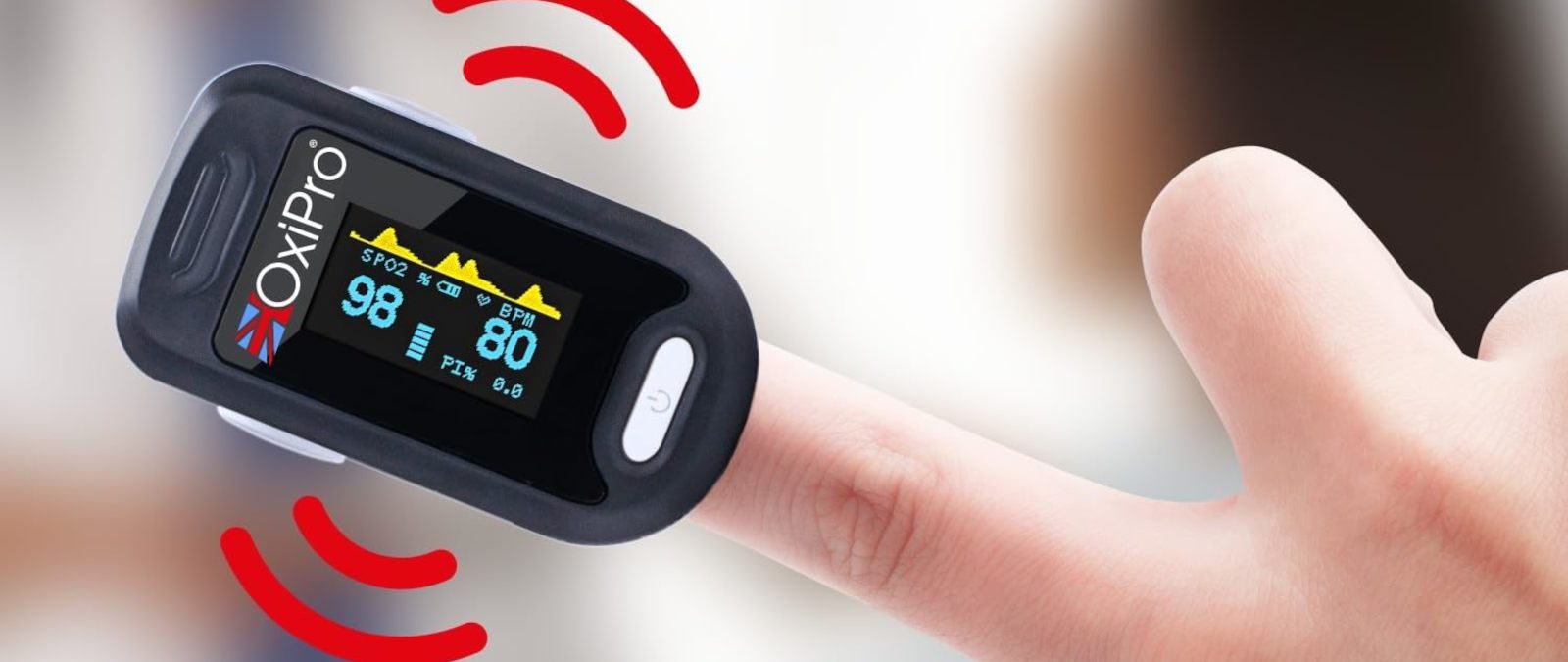
Using it is genuinely simple: clip it onto your fingertip (usually index or middle finger works best), press the button, wait 10 seconds. The colour OLED display shows your SpO2 percentage and heart rate in large, clear numbers. The screen rotates so you can read it from any angle.
The Perfusion Index (PI) reading is particularly useful. This shows pulse strength at the sensor site—basically, how good the blood flow is in that finger. If the PI reading is low, try a different finger or warm your hands up. Cold fingers give unreliable readings on any oximeter, and the PI indicator helps you know when to trust the result.
The low SpO2 alarm triggers if your oxygen drops below 93% (adjustable in settings). It beeps audibly, which is helpful if you’re monitoring someone overnight and don’t want to stare at the device constantly. I’ve set it to 91% for my father-in-law since his COPD means 93% would trigger false alarms.
Battery life is excellent. Two AAA batteries (included) last roughly a year according to the specs. I’ve had mine since October 2025 and haven’t needed to change them yet despite regular use. The device auto-powers off after a few seconds of non-use, which conserves battery.
The display is genuinely easy to read. Six-colour TFT screen with large numbers. Even when I’m tired or checking someone at night with minimal light, the readings are clear. Some cheaper oximeters have dim screens or tiny numbers that are impossible to read quickly—the OxiPro doesn’t have that problem.
What Works Well
Consistent readings. I’ve tested this against readings taken at my GP surgery and at hospital during a relative’s admission. The OxiPro matched within 1% on SpO2 and within 2-3 bpm on heart rate. That’s the level of accuracy you need for home monitoring.
Warm hands = reliable results. Once you learn to use it properly (warm hands, finger positioned correctly, staying still for 10 seconds), it works first time, every time. The PI indicator helps you know when you’ve got a good signal.
Build quality feels solid. It’s not a flimsy plastic toy. The hinge mechanism is firm, the clip pressure is consistent, and the display hasn’t scratched despite being thrown in a first aid drawer repeatedly.
UK support matters. One UK reviewer reported theirs stopped working after 6 months and OxiPro replaced it under warranty without hassle. Having actual UK-based support rather than dealing with a Chinese seller who vanishes after the sale is worth the extra cost.
The lanyard attachment seems pointless until you’re actually using it during an emergency. Keeping it around your neck while monitoring someone prevents you from putting it down and losing it in the chaos.
Limitations and Practical Issues
Cold fingers are the enemy. If your hands are cold—and in UK winter homes without adequate heating, hands are often cold—the readings take longer to stabilise or fluctuate. Warm your hands first or the device struggles. This isn’t specific to the OxiPro; it’s how all oximeters work, but it’s worth knowing.
Nail varnish interferes with readings. Dark nail polish or gel nails block the sensor. Remove polish or use a different finger without polish. This particularly affects women and anyone who gets manicures.
Not suitable for continuous overnight monitoring. I tried clipping it on overnight to monitor continuous oxygen levels during sleep. It either falls off, shifts position and triggers false alarms, or gives unstable readings because you move during sleep. The OxiPro is designed for spot checks, not continuous monitoring.
The alarm can be startling. The low SpO2 beep is loud. That’s good for alerting you to problems, but if you’re monitoring someone at 3am and they shift position triggering a false reading, the beep wakes everyone in the house. You can adjust alarm thresholds or turn it off if needed.
Movement affects accuracy. You need to stay still for 10 seconds while it takes readings. Trying to use it on a wriggling toddler or someone who can’t keep still is frustrating. For young children under about 5 years old, getting reliable readings requires patience and distraction.
Who Benefits Most From Having One
Households with children during winter respiratory season. Kids get ill fast, and knowing their oxygen levels are fine stops you from panicking every time they spike a fever.
Anyone caring for elderly relatives with existing respiratory conditions (COPD, asthma, heart conditions). You can monitor their baseline levels and catch deterioration early before it becomes an emergency.
People with chronic health conditions who need to monitor their own oxygen levels regularly. Much cheaper than GP appointments just to check SpO2.
Households in areas with poor NHS access. If your nearest A&E is an hour away or getting a GP appointment takes weeks, having objective data about whether someone’s oxygen levels are dangerously low helps you decide whether to make the journey.
Anyone who panics during illness. If you’re the type who googles symptoms at 2am and convinces yourself every cough is pneumonia, an oximeter provides reassurance. SpO2 at 98% means you’re not dying, even if you feel awful.
UK Customer Experience: What Other Buyers Report
UK Amazon reviews for the OxiPro OX2 are overwhelmingly positive, with most buyers praising ease of use and reliability.
Marcello (December 2025): “The OxyPro OX2 is a great little device. It’s extremely simple to use, just press the button, pop it onto your finger, and it gives clear readings for oxygen levels and heart rate. The display is easy to read, and the overall fit on the finger is comfortable and secure. Build quality feels solid, and it’s easy to wipe clean if needed. The battery life has been excellent; I haven’t had to change it once since getting it.”
Danny Herlihy (October 2025): “I bought the OxiPro OX2 because I wanted to keep an eye on my oxygen levels at home — especially during cold and flu season — and I’m so glad I did. Using it is really straightforward: just clip it on my finger, press a button, and within seconds I can see my oxygen saturation and pulse clearly. No guessing, no fuss. Knowing that it’s CE certified and MHRA registered makes me trust it even more — it feels like a proper medical device, not a gimmick.”
Stephen S. (February 2026): “Simple to use, does what its supposed to do. I tried another brand first and was not impressed. This one is perfect, works first time everytime. Great handy to have at home product for someone with copd.”
Shahrukh (January 2026): “Nice little unit, some handy features like inverted display, brightness etc but most importantly it’s reliable. Accurate results every time, compared with the Shiller patient monitor and it’s spot on so well worth the money.”
The negative reviews primarily mention two issues: some units failing after a few months (though covered by the 2-year warranty), and accuracy concerns when users have cold hands or poor circulation. These are consistent with any oximeter limitations rather than specific OxiPro problems.
Pricing and Value Assessment
The OxiPro OX2 sits in the middle of the pulse oximeter market—well below professional medical-grade devices, but a step up from the basic cheap import units.
For context: a single NHS 111 call that results in an unnecessary A&E visit costs you hours of time, potential ambulance charges if you’re advised to attend immediately, and parking fees at hospital. One avoided panic trip pays for the oximeter. Having it on hand before you need it means you’re not making decisions based on fear during a medical crisis.
The 2-year warranty and UK-based support justify the premium over cheaper alternatives. When you need a medical device to work reliably, spending a little extra for a reputable company matters.
Practical Limitations: What This Device Doesn’t Do
It doesn’t diagnose illness. Normal oxygen levels don’t mean someone isn’t seriously ill—they just mean their lungs are working adequately. You can have normal SpO2 and still need antibiotics for a chest infection, or have serious symptoms requiring medical attention.
It doesn’t replace medical advice. If you’re worried, call 111 or your GP regardless of what the oximeter says. The device provides data to inform conversations with healthcare professionals, not replace them.
It doesn’t work well on everyone. People with very poor circulation, Raynaud’s disease, very dark nail beds, or certain medical conditions may get unreliable readings. If you suspect the readings are wrong, try different fingers or seek medical assessment.
It’s not suitable for babies and very young children. The clip is designed for adult fingers. Paediatric pulse oximeters exist with smaller sensors, but the OxiPro isn’t one of them. For children under 2-3 years old, getting reliable readings is difficult.
The Verdict: Worth Having Before You Need It
Rating: 4.5/5 stars
The OxiPro OX2 sits in that category of household items you hope you never urgently need but are grateful to have when the situation arises. It provides objective medical data during illness that helps UK households make informed decisions about when to seek emergency care and when to manage symptoms at home.
Buy if: You have children, care for elderly relatives, have existing respiratory conditions, or just want peace of mind during winter respiratory season. The device pays for itself the first time it prevents an unnecessary 111 call or A&E visit because you have actual data showing someone’s oxygen levels are fine.
Skip if: You never worry about illness, have no vulnerable household members, live next door to a hospital where checking SpO2 is trivial, or already have a pulse oximeter that works reliably.
The British company behind it, the 2-year warranty, and the consistent accuracy make this a better choice than cheaper import alternatives. When you’re monitoring someone’s oxygen levels at 2am trying to decide if they need hospital, you want a device you can trust to give you correct information.
- Batteries included: Yes (2x AAA, lasts ~1 year)
- Warranty: 2 years with UK-based support
For UK household preparedness, a pulse oximeter ranks alongside thermometers and first aid kits as basic medical equipment worth having before winter respiratory season hits. The OxiPro OX2 is a reliable, affordable option that actually works when you need it.
OxiPro OX2 Oximeter
A simple to use, reliable, British made, oxygen level and pulse rate monitor
What the Rest of the Team Think

Keith

Black Panther

Camping Clown

Weekend Warrior

Pickle
Translation: “Weekend Warrior put something on my paw that flashed red. It was undignified. I removed it promptly. He appeared disappointed. The reading was apparently inconclusive.”

Chicken Licken

Calm Clarissa

Surviv’l Gurl

Aroura
Frequently Asked Questions
Can this device be included in a home first aid kit?
Yes, it’s small and lightweight, making it easy to store alongside thermometers, bandages, and other emergency medical supplies.
Is there UK customer support available if it fails?
Yes, the manufacturer provides UK-based support and warranty service.
Is it portable enough for travel or emergency kits?
Absolutely. Its compact design and included lanyard make it easy to carry in a bag or travel first aid kit.
Are replacement batteries easy to find?
Yes, it uses standard AAA batteries available in UK stores and online.
Related Resources
For comprehensive first aid kit contents including where pulse oximeters fit in your medical supplies, see our UK Home First Aid Kit guide.
Managing medications and medical supplies during power cuts and emergencies is covered in our Managing Essential Medication guide.
The broader context of household preparedness for winter illness and respiratory season appears in our Emergency Hygiene Guide.
For families preparing grab bags for evacuations, our 72-Hour Grab Bag guide covers which medical supplies should come with you if you need to leave home.
Build Your Resilience
Further Reading: Related Guides
All our guides can be found listed on our resilience hub.
📡 Find Us Everywhere
Daily briefings, prep guides, and real-time updates across every platform. Pick yours.
Free. No commitment. Stay anonymous on WhatsApp & Telegram.
Stay Informed on UK Preparedness
Join our newsletter for UK-specific preparedness tips, product recommendations, and real-world advice for households.
Subscribe to Our NewsletterOxiPro OX2 Oximeter
OX2 Oximeter - Health & Pharma Awards Winner 2025 - Fingertip Pulse Oximeter/Blood Oxygen Monitor - Finger Oxygen Saturation/SATS Monitor to measure SpO2 / Medical Device for Adults
Product SKU: B09NQPMRKQ
Product Brand: OxiPro
Product Currency: GBP
Product Price: 17.99
Product In-Stock: InStock
4.49
Pros
- Consistent readings
- Fast readings
- Easy to use
- Accurate so can be trusted
- Build quality feels solid
- UK support
Cons
- Cold fingers affect readings
- Not for overnight monitoring
- Movement affects accuracy on toddlers
- Nail varnish interferes with readings