
This post contains affiliate links. Learn more
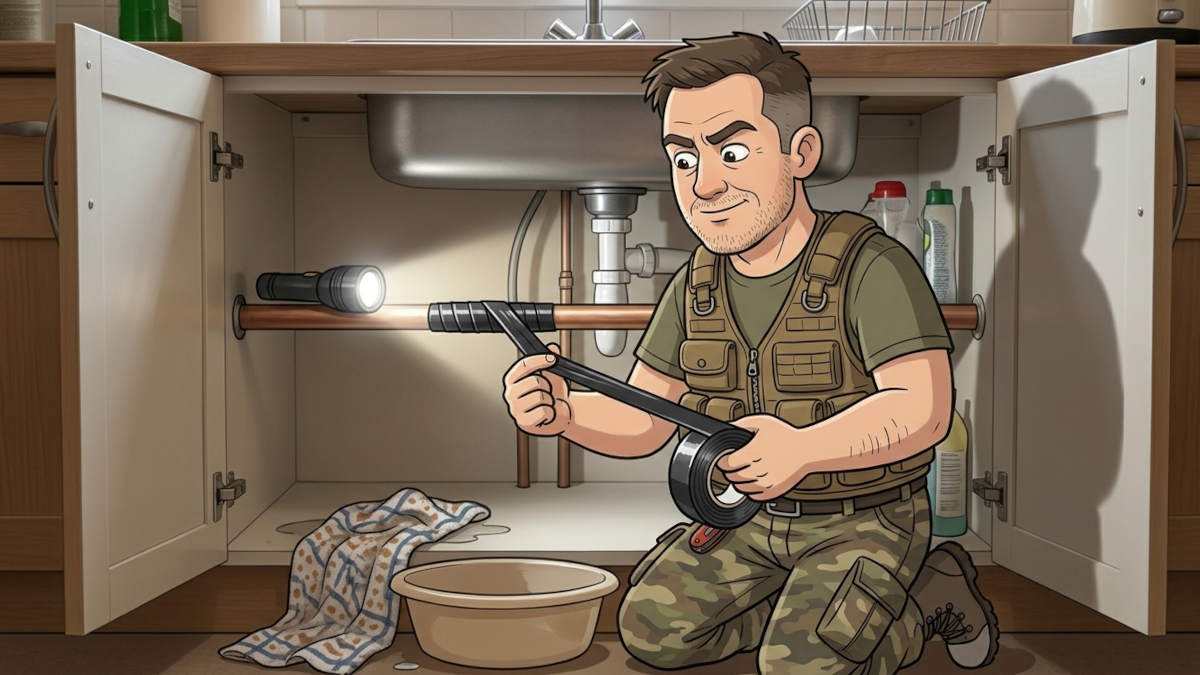
Self amalgamating tape is the roll I reach for when something needs to be watertight now and fixed properly later. I’ve used it for years to waterproof electrical cable joints and glands, and for temporary fixes on leaking pipes. There’s no glue on it at all. You stretch it as you wrap, and the layers fuse into one solid sleeve of rubber.
This self amalgamating tape review covers what it is, how to wrap a leak so it actually seals, and why the YoiYee roll, 25mm wide, 3m long and black, is the one worth keeping in the drawer by the stop tap. Pipes never leak at ten on a Tuesday morning when the plumber’s free. They wait for Christmas Eve.
YoiYee Self Amalgamating Tape
A roll of black silicone tape that fuses to itself into solid rubber: stop a leaking pipe tonight, waterproof a cable gland tomorrow.
Current Price at time of writing: £6.99
Rated: 4.1/5 ⭐ from 751 reviews
What Is Self Amalgamating Tape?
Self amalgamating tape, also sold as self fusing tape, is a stretchy silicone or rubber tape with no adhesive on it. It bonds only to itself. Wrap it under tension and each layer fuses into the one below, so a few turns become one seamless rubber sleeve that’s airtight and watertight.
Because it doesn’t rely on glue, it leaves no sticky residue, and it moulds around awkward shapes: pipe joints, bends, fittings and cable splices. It’s the tape electricians reach for to waterproof a joint, and the one a plumber would rather you’d used than the parcel tape they usually find.
It isn’t PTFE tape (the thin white tape for pipe threads) and it isn’t insulating tape (PVC with glue on the back). Neither of those is made for sealing a leak on the outside of a pipe.
How I Use Self Amalgamating Tape
I’ve used self amalgamating tape for two jobs more than any other.
The first is waterproofing electrical cable joints and glands: where a cable goes into a junction box, an outside light or a garden socket, a few stretched wraps over the gland keep the weather out. Power off before you start.
The second is temporary fixes on leaking pipes, to stop the drip and buy time until the pipe can be repaired properly. That’s the job that earns it a place in an emergency kit. If you want one tape for water leaks in the house, this is it.
How to Wrap a Leaking Pipe With Self Amalgamating Tape
- Turn the water off at the stop tap.
- Dry the pipe as well as you can.
- Start a few centimetres before the leak.
- Stretch the tape as you wrap. The stretch is what makes it fuse.
- Overlap each turn by about half the tape’s width.
- Carry on a few centimetres past the leak, building up several layers over the leak itself.
- Press the whole wrap firmly together when you finish.
Done properly, you can’t see where one turn ends and the next begins. It looks like a rubber sleeve, not a bandage.
Then ring a plumber. Self amalgamating tape is pipe repair tape for the gap between the leak and the repair, which is exactly when the damage to ceilings, floors and the box of Christmas decorations under the stairs happens.
Why Self Fusing Tape Sometimes Doesn’t Seal
When self fusing tape lets a leak through, it’s nearly always down to how it went on:
- Not stretched. Wrapped slack like insulating tape, it won’t fuse.
- Gaps between turns. Every gap is a path for the water.
- Wet pipe. Dry it first, even if that’s just a tea towel.
- Water still on. Wrap with the water off, so the layers fuse before the pressure comes back.
Get those four right and it does the job. Most of the one-star reviews you’ll find for any brand are somebody who wrapped it like a bandage.
Self Amalgamating Tape for Electrical Joints and Glands
Away from plumbing, this is where self amalgamating tape earns its keep all year. The YoiYee roll is rated for electrical insulation up to 8,000V, and it’s made for insulating exposed outdoor wiring, terminals and heavy-duty cable splices.
It goes over a properly made joint to keep water out. A shed supply, an outside light or a garden socket that’s let the rain in after a wet winter storm is exactly the sort of small job a roll in the drawer sorts out.
Why the YoiYee Self Amalgamating Tape
Plenty of rolls do this job. The YoiYee self amalgamating tape is a sensible all-rounder for a house:
- 25mm wide and 3m long, wide enough for household pipes, hoses and cables.
- Silicone that bonds only to itself, with no adhesive and no sticky residue.
- Stretches up to 3.5 times its resting length, so it moulds over joints, bends and fittings.
- Works from -54°C to 260°C, from frozen outdoor plumbing to hot engine hoses.
- Electrical insulation rated up to 8,000V.
- Black, so it doesn’t look like a first aid job on the outside light.
The cold end of that range matters most. A pipe that splits in a freeze needs wrapping while it’s still cold outside, not when the weather’s turned nice again.
Where to Keep a Roll
Somewhere you can find it in the dark, with water on the floor:
- In the drawer or box nearest the stop tap, with a torch.
- In the car kit, for a split hose.
- In the tool box, for outdoor cable jobs.
If you’ve got a lot of exposed pipework, in a loft or an outbuilding, keep two rolls.
YoiYee Self Amalgamating Tape
A roll of black silicone tape that fuses to itself into solid rubber: stop a leaking pipe tonight, waterproof a cable gland tomorrow.
Current Price at time of writing: £6.99
Rated: 4.1/5 ⭐ from 751 reviews
What the Rest of the Team Think

🦆 Keith the Prepper
I bought three rolls. One by the stop tap, one in the Discovery and one in my grab bag. I practised on an old length of hose and wrapped it so well I couldn’t get it off again. My wife says that’s the point. I’m not sure she meant it kindly.
⭐⭐⭐⭐⭐

🪖 Black Panther
In my previous role we carried proper field repair kits for this. A household needs one roll and the sense to turn the water off first. Stretch it. Overlap it. Done. Carry on.
⭐⭐⭐⭐⭐

🤡 Camping Clown
I own a marine-grade leak repair kit with clamps, epoxy putty and its own waterproof case. It weighs more than the boiler. This roll does the same job and fits in a coat pocket. I’m not entirely sure why I have the kit.
⭐⭐⭐⭐

🐾 Weekend Warrior
Bro, the American channels call this rescue tape and it goes in every bug-out bag. Mine lives in my tactical vest. I wrapped a garden hose at 0600 for practice and Pickle watched the whole thing. She was not impressed by the operational tempo. Solid kit though.
⭐⭐⭐⭐⭐

🐕 Pickle
Snorgle!
⭐⭐⭐ (It is black, it is rubbery and I am not allowed to chew it.)

🐔 Chicken Licken
Did you know self amalgamating tape has no glue on it at all? The layers fuse to each other, not to the pipe. I’ve been telling people this for years and they still reach for the parcel tape.
⭐⭐⭐⭐⭐

📋 Calm Clarissa
One roll by the stop tap, labelled. One in the car. Taped to the roll, a card: water off, dry it, stretch, overlap by half. I didn’t need the card. Janet did.
✅✅✅✅✅

💄 Survivl Gurl
The stretch-and-fuse bit is so satisfying on camera. Twelve seconds of me wrapping a pipe got more views than my whole bug-out bag haul. Small, black, goes with everything. Approved.
⭐⭐⭐⭐

🌿 Aroura
A tape that holds by joining with itself. It asks for patience and a steady hand, and then it keeps the water where it belongs. Namaste 🙏
⭐⭐⭐⭐⭐
Pros and Cons
Pros
- Self amalgamating tape bonds only to itself, so no adhesive and no sticky residue
- Stretched layers fuse into one watertight, airtight seal
- One roll covers pipes, hoses, cable joints and glands
- Works from -54°C to 260°C
- Electrical insulation rated up to 8,000V
- Small enough for a kitchen drawer, car kit or tool box
Cons
- It has to be stretched as you wrap, or it won’t fuse
- Pipes need the water off and drying before you wrap
- On water pipes it’s a stop-gap until a proper repair
- Once it’s fused it has to be cut off
- Worth keeping a second roll if you have a lot of exposed pipework
Frequently Asked Questions
What is self amalgamating tape used for?
Self amalgamating tape is used to seal leaks on pipes and hoses as a temporary fix, and to waterproof and insulate electrical cable joints, glands, terminals and splices. It bonds only to itself, so it seals without glue.
Is self fusing tape the same as self amalgamating tape?
Yes. Self fusing tape and self amalgamating tape are two names for the same thing: a stretchy silicone or rubber tape with no adhesive that fuses to itself when wrapped under tension.
Does self amalgamating tape work on a wet pipe?
Turn the water off and dry the pipe first. The layers need to touch each other to fuse, and water between them gets in the way. A tea towel is usually enough.
Is self amalgamating tape a permanent repair?
On a water pipe, treat it as a temporary fix that stops the leak until the pipe is repaired properly. Over a cable joint or gland, it’s used as waterproofing in its own right.
How do you remove self amalgamating tape?
Once the layers have fused, it won’t unwind. Cut along the wrap carefully with a sharp knife and peel it off. There’s no adhesive, so it doesn’t leave sticky residue behind.
Can you use self amalgamating tape on electrical cables?
Yes. The YoiYee roll is rated for electrical insulation up to 8,000V and is made for insulating outdoor wiring, terminals and cable splices. Turn the power off first and wrap over a properly made joint.
Build Your Resilience
Further Reading: Related Guides
- Emergency Utility Shutdown
- How to Unfreeze Pipes
- Water Coming Through the Ceiling
- Emergency Home Tool Kit
All our guides can be found listed on our resilience hub.
📡 Find Us Everywhere
Daily briefings, prep guides, and real-time updates across every platform. Pick yours.
Free. No commitment. Stay anonymous on WhatsApp & Telegram.
Stay Informed on UK Preparedness
Join our newsletter for UK-specific preparedness tips, product recommendations, and real-world advice for households.
Subscribe to Our Newsletter