
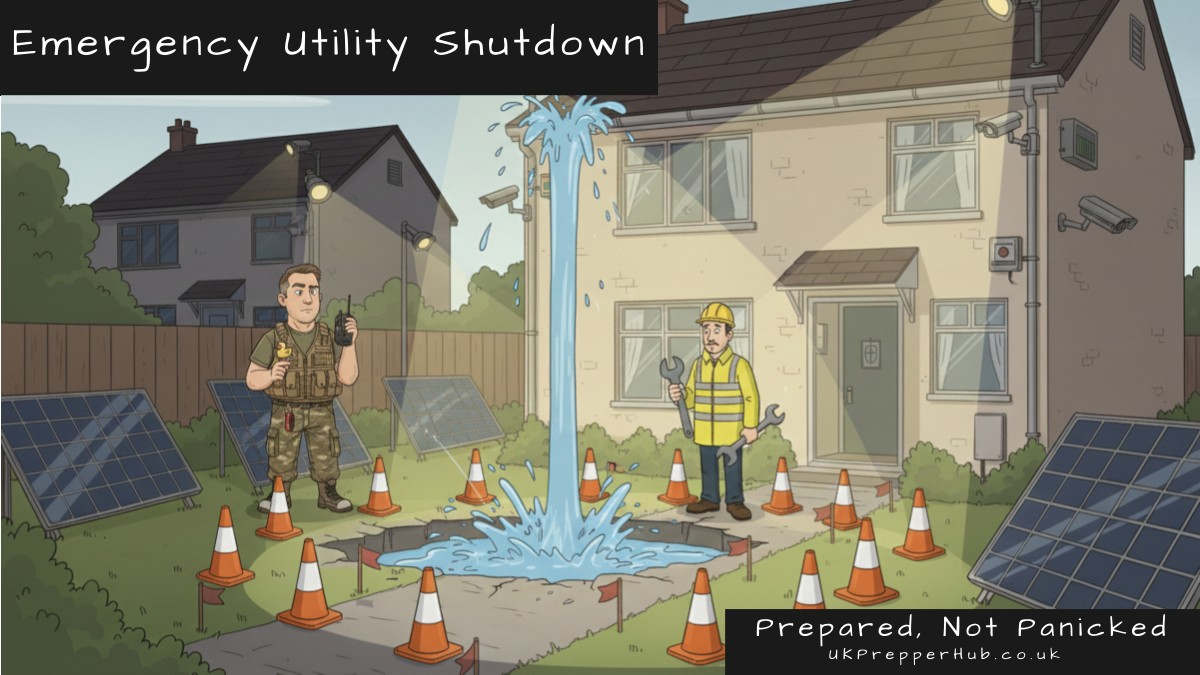
The only sensible time to find your stop tap is not when water is coming through the kitchen ceiling.
Most households have never located their internal stop tap, opened the consumer unit, or turned the gas isolation valve. There is no reason to in normal life — those things sit in cupboards and under sinks for years, untouched. The problem is that emergencies don’t give you time to search. When floodwater is approaching the sockets, or you can smell gas, the minutes you spend looking for the right valve are minutes you didn’t have.
This guide covers three things: where your shut-off points are (go and find them now, before you need them), when to use them, and exactly how to do it safely for each utility. Ten minutes with this guide and a walk around your home is worth more than any amount of reading in an emergency.
Find Your Shut-Off Points Before You Need Them
This is a drill, not a guide. Do it now. Put the kettle on afterwards.
What you’re looking for
- Internal stop tap — controls your water supply. Usually under the kitchen sink. Sometimes in an airing cupboard, under the stairs, or near the boiler. Turn it clockwise to close. Check it moves freely — a seized stop tap during a burst pipe is a serious problem.
- External stopcock — controls your water supply at the point it enters the property from the mains. Located in a small covered access pit in the pavement, path, or front garden, usually close to your boundary. The cover is often stiff or jammed — you’ll need something to lever it open. The valve itself sits 75–100cm down and requires a stopcock key to operate. This is your backup if the internal stop tap is seized, inaccessible, or has failed. Many households don’t know it exists. Find yours now, before you need it.
- Consumer unit (fuse box) — controls your electricity. Usually in the hallway, under the stairs, or in the kitchen. The main isolator is the large switch at the top or side. Note where it is and make sure you can reach it safely in the dark.
- Gas emergency control valve — a quarter-turn valve next to your gas meter. The meter is often in a cupboard near the front door, in a kitchen, or in an external meter box. The valve handle runs along the pipe when open and across it when closed. Know what it looks like open before you need to close it.
Write the locations down. Put it somewhere useful — inside a kitchen cupboard door, on the inside cover of your emergency folder, wherever you’d actually look. Then tell everyone in the household.

🦆 Keith
Don’t Be Keith
Keith bought a stopcock key, announced he was prepared, never once located his external stopcock — discovered during an actual burst pipe that it was seized solid; his wife called the plumber while Keith stood in the hall holding the stopcock key waiting for his moment.
When to Shut Off — and When Not To
Shut off immediately if
- Floodwater is approaching sockets, appliances, or the consumer unit — even shallow water can energise electrics
- You can smell gas or hear hissing near pipework or the meter
- Fire or severe smoke damage has occurred — heat weakens pipes and wiring even after the fire appears out
- A burst pipe or uncontrolled leak is running water into walls, ceilings, or near electrical fittings
- Storm damage has affected where services enter the building — fallen trees, cables under tension, or visible damage to the meter
Complete Guide
UK Home Flood Defense
Even small floods can damage flooring, walls, furniture, and utilities. Knowing how to act fast and prepare your home makes recovery faster and safer.

Do not shut off blindly if
- You depend on powered medical equipment — oxygen concentrators, powered hoists, refrigerated medication. Shutting off electricity removes your safety net. Call emergency services first and ask for guidance before touching the consumer unit.
- You live in a flat with shared services — isolating a communal supply affects your neighbours. Find your isolation points only (see the section on flats below).
- You cannot safely reach the shut-off point — standing water, active fire, smoke, or structural instability between you and the valve. Never put yourself at risk to reach a switch. Call emergency services instead.
Gas — How to Shut It Off Safely
Shut off gas if you
- Can smell sulphur or “rotten egg” — the odorant added so leaks are detectable
- Hear hissing near the meter or pipework
- Feel dizzy or lightheaded without another explanation
- Have had fire or significant structural damage that could have affected the pipework
How to do it
- Open windows and doors immediately — ventilate the space
- Do not touch any electrical switches, sockets, or devices — not even to turn them off
- Do not use a naked flame
- Locate the gas meter and find the emergency control valve — the quarter-turn handle next to the meter
- Turn it a quarter turn so the handle sits across the pipe (horizontal) — this closes it
- If the smell persists or you feel unwell, leave immediately
📞 National Gas Emergency Service: 0800 111 999 — free, 24 hours. Call from outside the property if possible.
Do not turn the gas back on yourself. This must be done by a Gas Safe registered engineer after the property has been checked. This is not optional — reinstating gas without inspection after a suspected leak is dangerous and potentially illegal.

🐔 Chicken Licken
Did You Know?
Most people’s instinct when they smell gas in the dark is to reach for the light switch — a light switch can spark on the way up AND the way down, which is enough to ignite a gas atmosphere; I have been saying this for years and people look at me like I’m making it up
Electricity — How to Shut It Off Safely
Shut off electricity if you have
- Floodwater near sockets, appliances, or the consumer unit
- Water leaking through the ceiling into light fittings or running down walls with cables
- Unexplained burning smells, sparking, or buzzing from the consumer unit or sockets
- Structural damage after a storm that may have affected wiring
How to do it
- Check you can safely reach the consumer unit — it must be dry and there must be no standing water between you and it
- Open the consumer unit cover if it has one
- Switch the main isolator to OFF — this is usually the large switch at the top right of the unit, sometimes labelled “Main Switch” or “Isolator”
- This cuts power to everything in the property
If you cannot safely reach the consumer unit — because of water, fire, or smoke — do not attempt it. Call 999. The Fire Service can advise on safe isolation or do it for you.
A note on smart meters: they don’t change the process. The consumer unit is still your isolation point. The smart meter’s in-home display going dark is not the same as the power being off.
Complete Guide
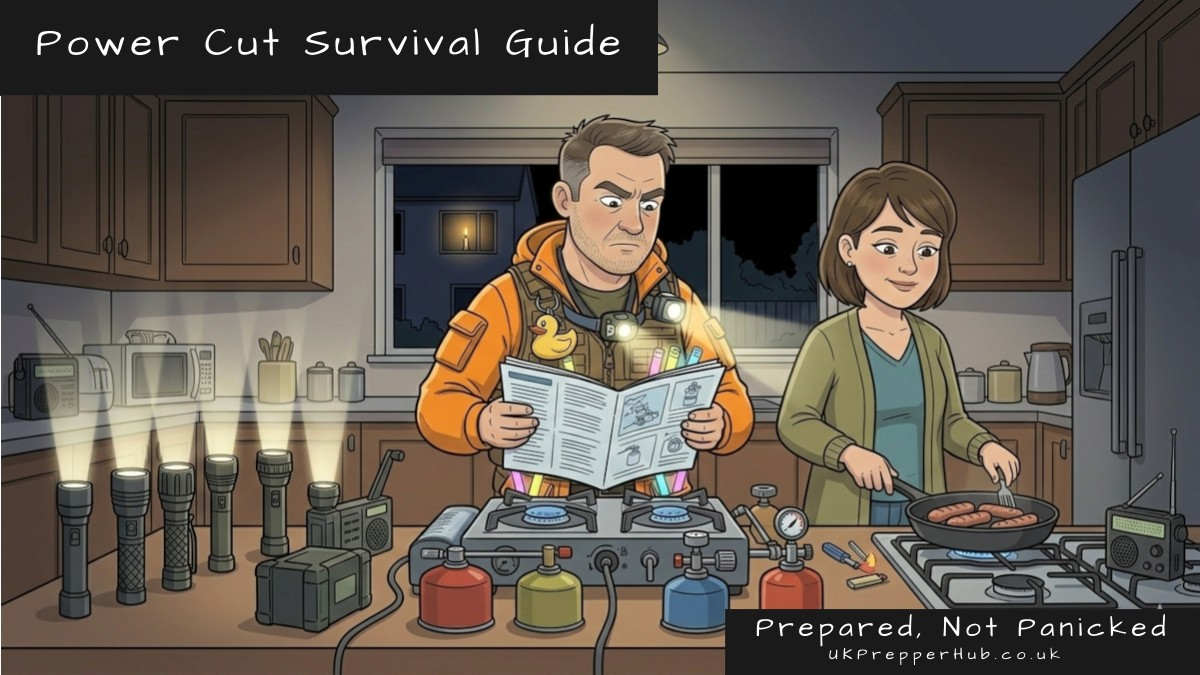
How to Prepare for a Power Cut
The 12 things to sort before the lights go out: lighting, heating, food, water and keeping phones charged, plus what to do in the first few minutes.
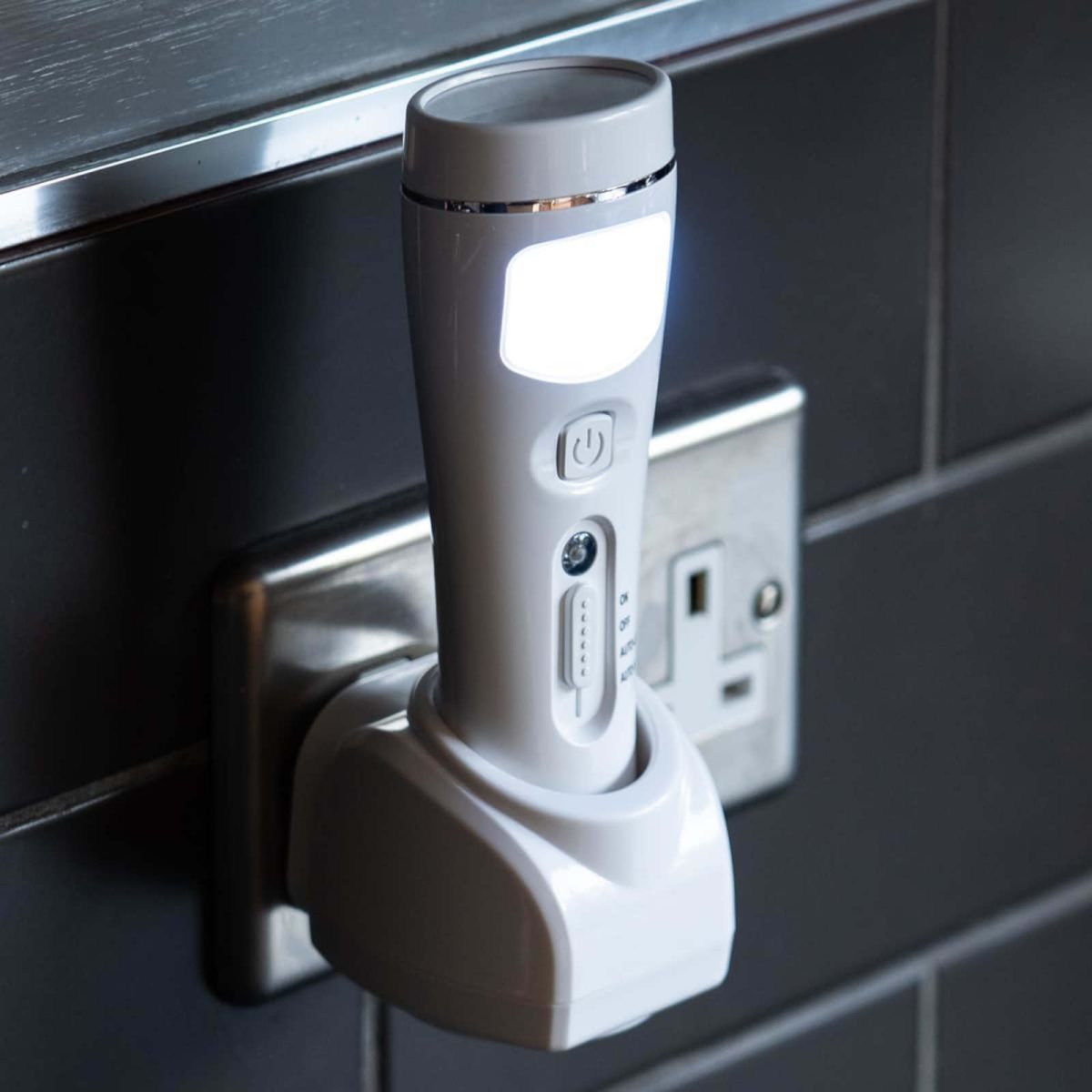
XtraLite NiteSafe
The NiteSafe is a dual-function device that works as both a plug-in nightlight and an emergency torch. It sits in a standard UK plug socket, charges continuously, and the moment mains power fails, it automatically illuminates.
Water — How to Shut It Off Safely
Shut off water if you have
- A burst pipe or fitting spraying or flowing water uncontrollably
- Water running through a ceiling, particularly near electrical fittings
- A severe internal leak that is causing structural damage or approaching the consumer unit
- Floodwater entering the property via the plumbing or drains backing up
How to do it
- Find the internal stop tap — usually under the kitchen sink, sometimes in the airing cupboard or under the stairs
- Turn it clockwise until it stops — this closes the valve and cuts the mains supply into the property
- Open the lowest cold tap in the house to drain any remaining pressure
If the internal stop tap is seized or inaccessible
Painted over, rusted solid, or simply impossible to reach in an emergency — it happens more often than it should. The backup is the external stop tap, located in a small covered pit in the pavement or path outside your property (sometimes shared with a neighbour).
The external stop tap requires a stopcock key — a long T-bar tool designed to reach valves buried up to a metre underground. Standard UK valves use a crutch head fitting. Without the right tool, you cannot close the external stop tap by hand.
This is one of those items worth owning before you need it — not after you’re standing in the street watching water run under your front door.
1-Meter Universal Outdoor Stopcock Key Tool
Brief description of why this product is worth considering. ‘teaste’tpyetext like “is this the best?”.
Our Full Review: Universal Outdoor Stopcock Key →
Flats, Rented Properties, and Council Homes
The isolation rules above assume you have direct access to your own services. In shared buildings, it is more complicated.
What is usually yours
- Electricity: Most flats have an individual consumer unit inside the property — this is yours to isolate. There may also be a communal supply for shared areas (lighting, lifts, entry systems) — leave that alone.
- Gas: Individual gas meters per flat are common in older blocks. In newer buildings, gas is sometimes communal. Know which yours is — check your utility bills if unsure.
- Water: Your flat may have an isolation valve under the kitchen sink for the internal supply, but the building’s main stopcock is typically in a communal cupboard or plantroom — controlled by the building manager, not you.
Complete Guide
Water Coming Through the Ceiling? 5 Steps to Take and Who Pays
A burst pipe, an overflowing bath or a leak from the flat above can bring a ceiling down in hours. The five steps to take straight away, how to find where the water is coming from, and who pays for the damage.
Read the Full Guide: Water Coming Through the Ceiling →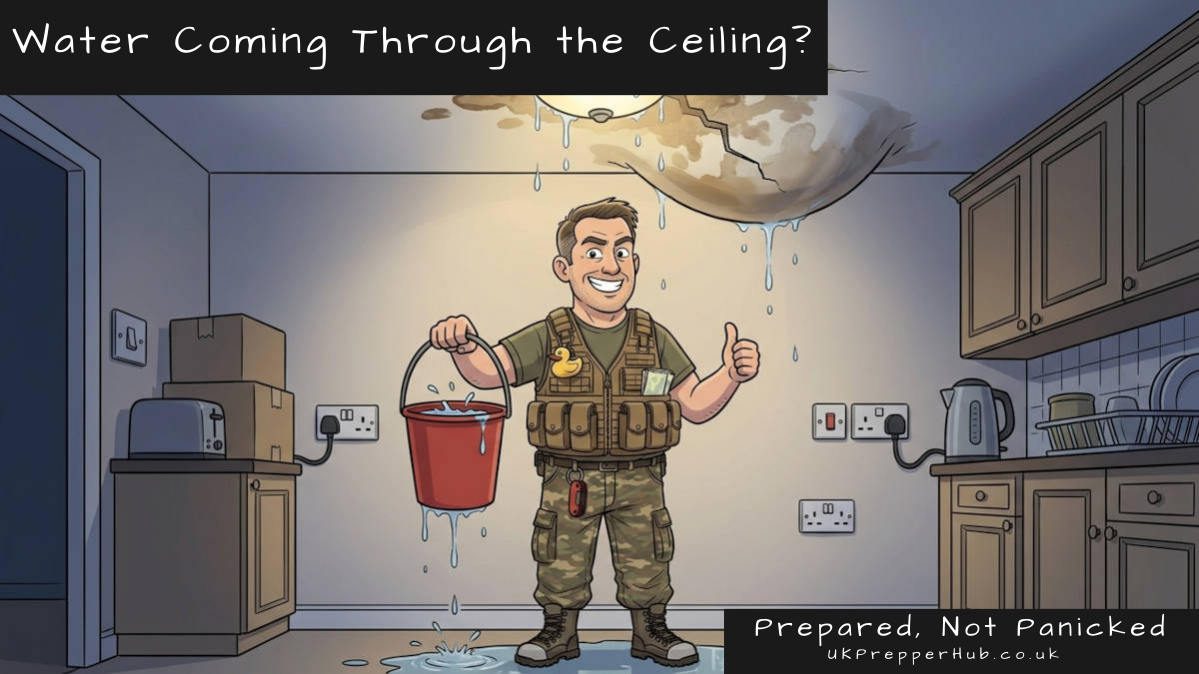
What to do in a water emergency in a flat
- Use your internal isolation valve if you have one
- Call your housing provider, managing agent, or building manager immediately — they control the communal supply and have out-of-hours emergency lines
- Keep those numbers somewhere accessible, not just saved in your phone
📱 Survivl Gurl
Link is in the BIO
I located what I thought was my isolation valve in the communal services cupboard, filmed myself turning it off for a utility prep reel, cut the water supply to twelve flats and hashtagged it #PreparedNotPanicked. The managing agent was prepared. The not-panicking was not mutual.
After You’ve Shut Off — What Comes Next
Isolating a utility is step one. Depending on what you’ve shut off and why, you may now be managing without power, gas, or running water for hours or days while repairs are assessed or engineers attend.
- No electricity — you’re in a power cut scenario. Lighting, heating, cooking, and any powered medical equipment all need a plan.
- No gas — central heating and gas cooking are offline. Alternative heat sources become important quickly, particularly for households with young children or elderly residents.
- No water — stored water becomes immediately relevant. Three litres per person per day as a minimum. Don’t forget pets.
Before anything else: photograph the damage. Every room affected, every fitting, every visible cause. Before you move anything, before anyone starts cleaning up. Your insurer will need it.
Complete Guide
Emergency Lighting Guide
From LED lanterns to child-safe glow sticks. Strategic ways to illuminate your home without the fire risks of candles.
Frequently Asked Questions
Where is the stop tap in a typical UK home?
Most commonly under the kitchen sink. If it’s not there, check the airing cupboard, under the stairs, or near the boiler. In some older properties it’s inside a small cupboard near the front door. If you genuinely can’t find it, your water supplier can usually advise — call them before you need to know in a hurry.
Can I turn the gas back on myself after shutting it off for a suspected leak?
No. Gas must be reinstated by a Gas Safe registered engineer after the property has been checked and confirmed safe. This isn’t bureaucracy — it’s because a partial leak that wasn’t obvious before could still be present, and re-pressurising the supply without checking is genuinely dangerous.
What if my internal stop tap is seized and won’t turn?
Don’t force it — you risk breaking the valve or the pipe. Your backup is the external stop tap in the pavement outside your property. This requires a stopcock key (a long T-bar tool) to reach. If you don’t have one, call your water supplier’s emergency line — they can attend and isolate the supply from the street.
Do I need to shut off gas and electricity during a power cut?
Not automatically. A power cut alone is not a reason to isolate gas or electricity — the consumer unit is simply off. If the power cut was caused by storm damage or a fault that also affects your property physically, assess for any of the shut-off triggers (water ingress, visible damage, burning smells) and act accordingly.
My flat has a communal water supply — who do I call in an emergency?
Your managing agent or housing provider — they control the building’s main stopcock and should have a 24-hour emergency line. Keep that number somewhere accessible. A burst pipe at 2am is not the time to be searching for the number in your welcome pack.
What is the difference between the internal stop tap and the external one?
The internal stop tap is inside your property and cuts the supply just to your home. The external stop tap is in the pavement or path outside and isolates the supply at the point it enters from the main. If your internal stop tap is inaccessible or seized, the external one is the fallback — but it requires a stopcock key to operate.
Should I do a utility shut-off drill with the whole household?
Yes — especially if you have children old enough to act independently, or if you live alone. The drill is simple: find all three shut-off points, check they’re accessible and operational, and make sure everyone knows where they are. Write the locations down. That’s the whole drill.
Build Your Resilience
Further Reading: Related Guides
- How to Prepare for a Power Cut
- Emergency Lighting Guide
- Water Purification Methods
- UK Home Flood Defence
- Emergency Water Storage
- Water Coming Through the Ceiling
All our guides can be found listed on our resilience hub.
Gear We’ve Tested & Reviewed
All our reviews can be found on our reviews and resources page.