
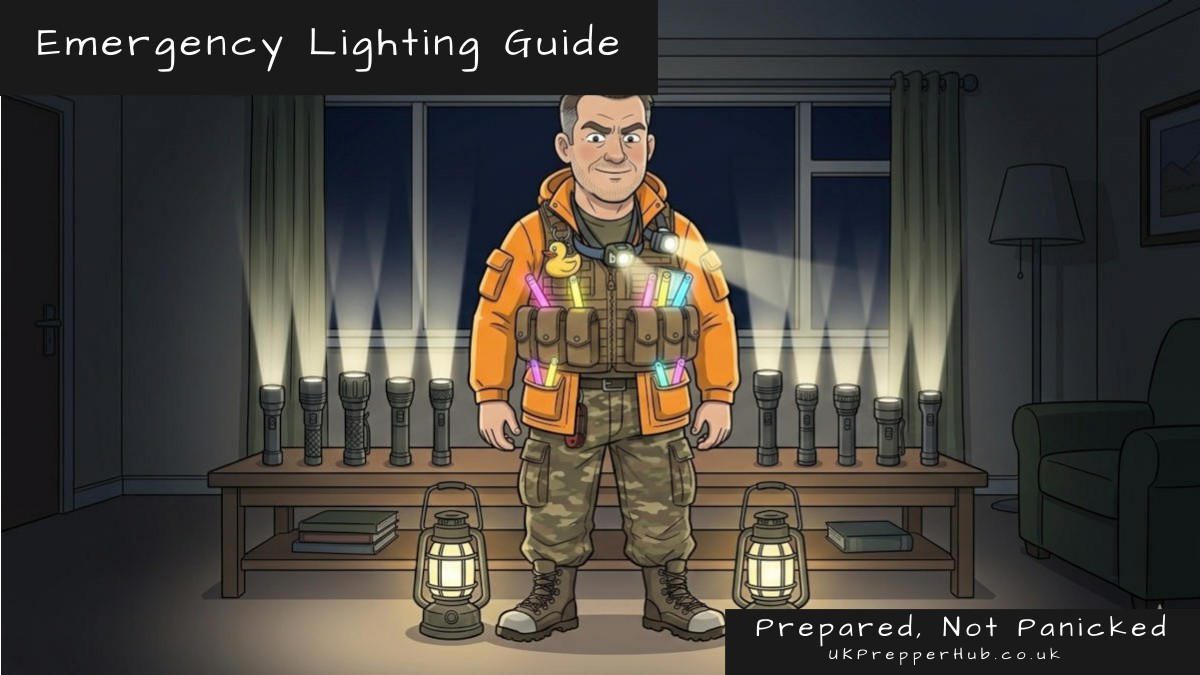
During a UK power cut, the psychological impact of a pitch-black home is often underestimated. Darkness increases the risk of domestic accidents, hinders emergency tasks like cooking or first aid, and can significantly lower family morale — especially for children. Lighting is just one element of power cut resilience — see our complete power cut survival guide for the full picture.
Complete Guide
How to Prepare for a Power Cut
The 12 things to sort before the lights go out: lighting, heating, food, water and keeping phones charged, plus what to do in the first few minutes.
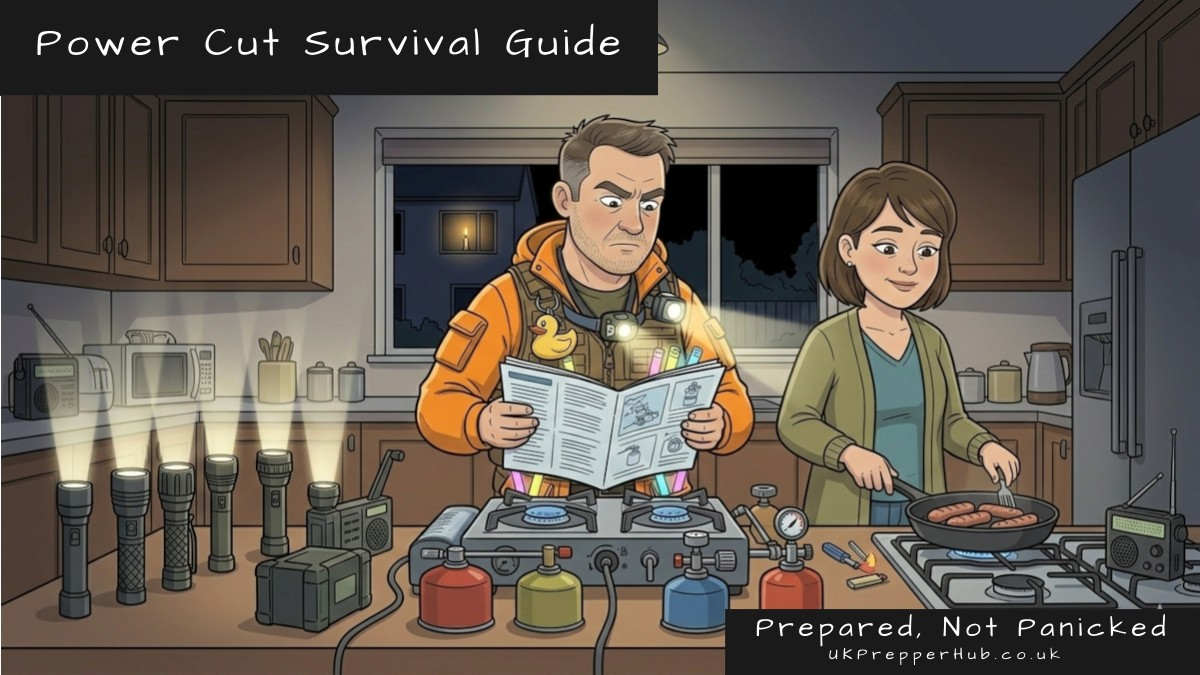
Modern LED technology has rendered the traditional emergency candle obsolete. Today, for the cost of a few packs of wax candles, you can equip a UK terraced home with a professional lighting array that is safer, brighter, and longer-lasting. The key is knowing which battery format to build around — and why getting that decision right matters more than the lights themselves.
Why AAA Batteries Should Be the Backbone of Your Lighting Kit
Before choosing any torch, lantern, or headlamp, decide which battery format you’re standardising on. This decision affects every piece of kit you buy from this point forward.
The case for AAA is straightforward. They are the most widely available battery size in the UK — found in every supermarket, corner shop, and petrol station. In a prolonged power cut, when rechargeable devices have run flat and power banks are depleted, the ability to walk to the nearest open shop and buy fresh batteries is a genuine resilience advantage that lithium-ion simply cannot replicate. See our Power Bank & Battery Strategy guide.
AAA batteries also have a shelf life of up to 10 years when stored correctly in a cool, dry location. Stock a supply, rotate it annually, and you have a lighting system that requires no charging, no cables, and no grid dependency whatsoever. That is a fundamentally different proposition to a rechargeable setup, which is only as good as your last charge.
The one honest trade-off: rechargeable devices perform well for the first 24 hours of an outage. For short, predictable power cuts — which are the majority of UK events — a charged lantern is convenient. But convenience is not resilience. A device that is dead because you forgot to charge it last week is useless. A device with fresh AAA batteries inside is always ready.
Our recommendation: build your entire lighting kit around AAA batteries. Treat rechargeable kit as a convenience layer, not your primary system.

🦆 Keith
Don’t Be Keith
Keith spent three weeks researching a solar-powered smart home lighting system with voice control and an app for power cut preparedness — a head torch and a pack of AAA batteries from the corner shop would have done the same job at 2% of the cost.
The Four-Layer Lighting Strategy
To light a home effectively during a power cut, you need a tiered approach — not a single torch. Each layer serves a different purpose, and together they cover everything from whole-room illumination to personal navigation to child safety.
Layer 1: Ambient (Area) Lighting
- Purpose: To illuminate a whole room so you can move safely without holding a light.
- The Tool: Battery-powered LED lanterns. Look for models that run on AA or AAA batteries with a frosted globe to prevent glare and a warm white setting to keep the atmosphere calm. Avoid rechargeable-only models — when the internal battery dies, the lantern becomes a paperweight.
- Placement: High surfaces — mantelpieces, tops of cupboards — to allow light to drop across the room rather than creating harsh shadows.
- Battery note: A quality AAA lantern on low mode will typically run for 40–80 hours on a single set of batteries. That covers most UK power cut scenarios many times over.
Lepro 2000lm Rechargeable Camping Lantern
Charges by USB, then runs on AA batteries when the power’s been off too long. Up to 2,000 lumens, warm white and red modes, IPX4.
Our Full Review: Lepro 2000lm Rechargeable Camping Lantern →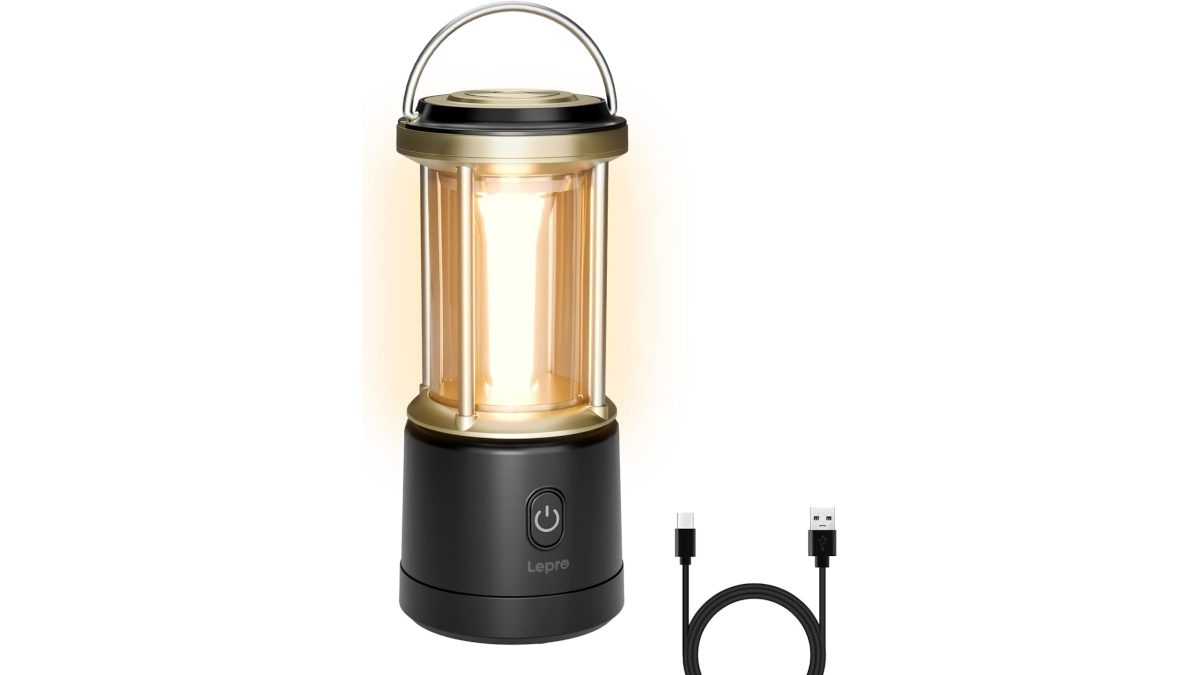

🤡 Camping Clown
He Has The £4,000 Version
I’ve got a military-spec expedition lantern rated to -40°C with integrated solar panel, 1,200 lumens and a 96-hour runtime. A £12 AAA lantern from the supermarket runs for 80 hours and produces the same amount of light in my living room. I’m not sure why I bought it, if I’m honest
Layer 2: Task Lighting
- Purpose: Focused, hands-free light for specific jobs — reading a map, cooking on a camping stove, administering first aid, or changing a nappy in the dark.
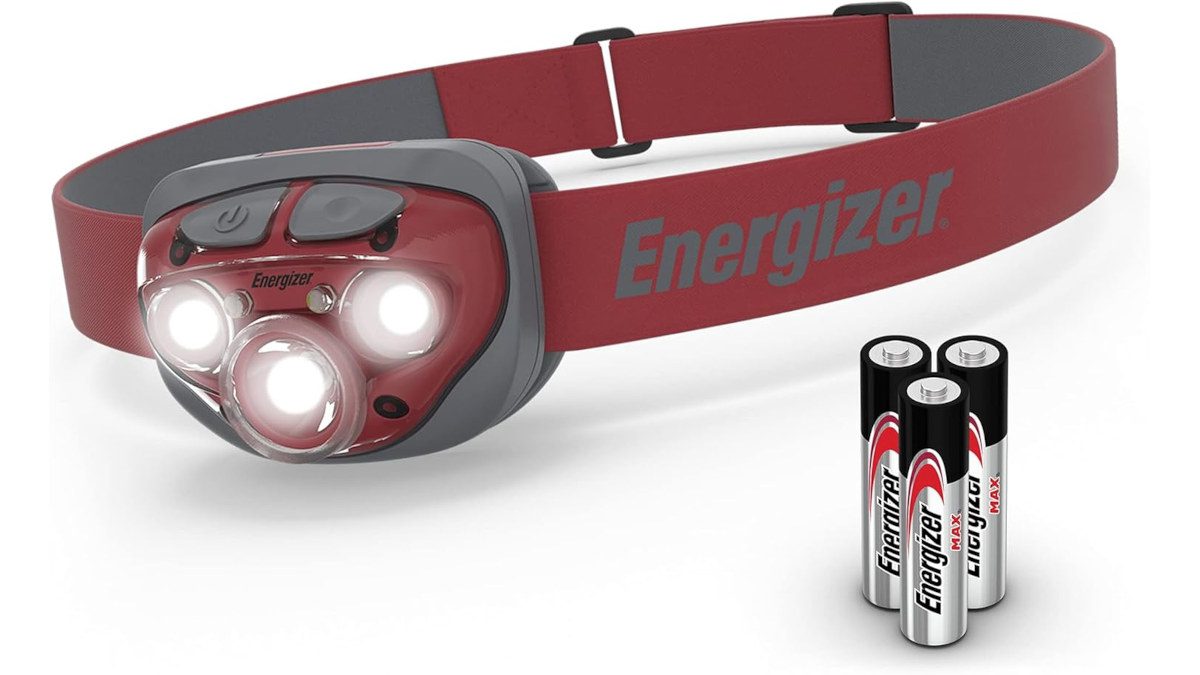
- The Tool: A AAA head torch. A headlamp is the single most important individual lighting tool for a UK household because it keeps both hands completely free for work. It is also the one item every adult in the house should have assigned to them personally — not a shared family resource. (We’ve tested and reviewed the Energizer Vision HD+ as our primary AAA head torch pick — worth reading if you’re deciding what to buy.)
- Not a head torch person? A clip-on reading light does the same hands-free job for close work. Clip it to a shelf above the camping stove, a headboard or your own collar, and its softer, adjustable light is easier on the eyes for reading or first aid. Keep it as a rechargeable extra alongside your AAA kit, not a replacement for it.
Energizer Vision HD+ Head Torch
Is this the most versatile head torch for your kit? Does it deliver what it promises? Does it have longevity?
Gritin Book Light
A clip-on reading light with soft, dial-in brightness and colour, up to 160 hours on low and a torch in the base: the power cut light hiding in plain sight.
Our Full Review: Gritin Book Light →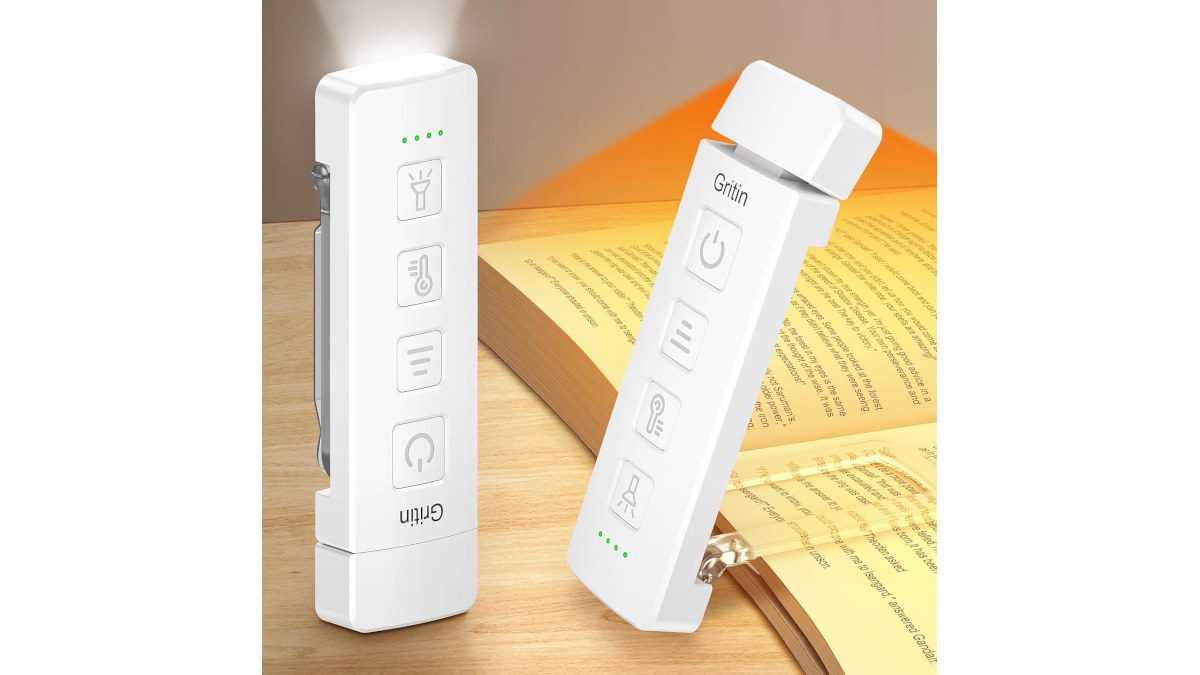
- The Red Light Rule: Always choose a headlamp with a red-light mode. Red light preserves your night vision — meaning your eyes remain adjusted to the dark, which matters enormously when moving around a partially-lit home. It is also less visible from outside, which is relevant from an OPSEC perspective during extended outages.
- Battery note: AAA head torches are ideal because spare batteries are small, light, and easy to store alongside the torch itself. A small clip-seal bag with two spare sets per torch costs almost nothing and extends your operational window indefinitely.
Layer 3: Navigation Lighting
- Purpose: Moving between rooms, checking the garden perimeter, or dealing with anything that requires a directional beam rather than ambient light.
- The Tool: A high-lumen AAA or AA torch. For navigation purposes, you want at least 200–300 lumens and a reliable momentary-on switch. Again, AAA or AA battery compatibility is non-negotiable for the same reasons as above.
- Battery commonality: If your head torch runs on AAA and your navigation torch also runs on AAA, a single stock of spare batteries covers both. Avoid building a kit where different items use AA, AAA, C, and D — the complexity increases the chance of being caught short.
Layer 4: Passive & Child-Safe Lighting — The Glow Stick Strategy
While battery-powered LEDs are your workhorses, chemical glow sticks offer unique advantages that no battery-powered device can match. They require no batteries, no switches, and no maintenance. They are 100% spark-proof, heat-free, and waterproof.
- Navigation markers: Crack a 6-inch glow stick and hang it on door handles, the toilet flush, or at the top of the stairs. This provides a waypoint for family members moving around at night without needing to locate a torch in the dark.
- Child safety: If a child is scared of the dark, a glow stick is a safe nightlight they can take into their duvet or sleeping bag. Unlike a torch, there is no risk of them accidentally switching it off, running the battery flat, or burning anything.
- The lanyard method: In a high-stress evacuation or a very dark house, have children wear a glow stick on a break-away lanyard. It makes them instantly visible to you at all times without requiring them to hold anything.
- Shelf life: Quality industrial-grade glow sticks (Cyalume is the benchmark brand) have a 4-year shelf life and provide usable light for 8–12 hours once activated. A tube of 25 costs a few pounds and takes up almost no space in your emergency kit.
Cyalume SnapLights – 6 Colour Pack – 12 sticks
Six colours of fire-free, battery-free emergency light, individually wrapped and ready to use for up to five years.
Our Full Review: Cyalume SnapLights – 6 Colour Pack – 12 sticks →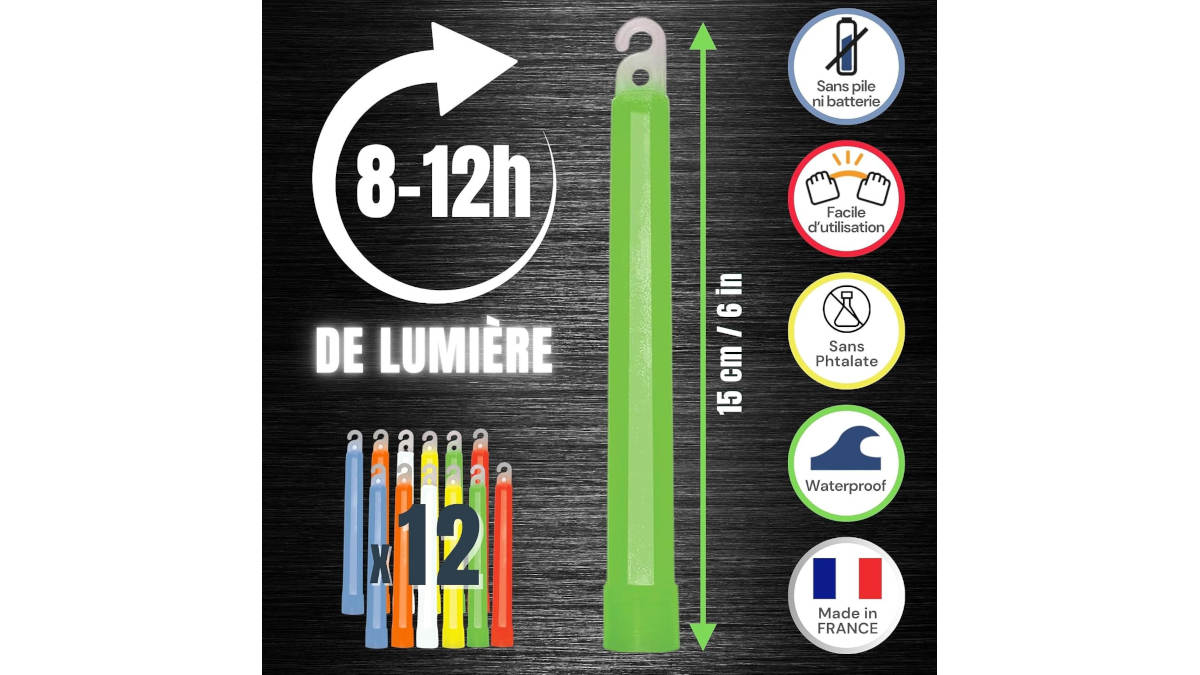
Avoiding the Cave: Strategic Placement
Having the right equipment is only half the problem. If your torches are scattered in different drawers across the house, you will spend the first minutes of a power cut bumping into furniture trying to find them. Placement and accessibility matter as much as the kit itself.
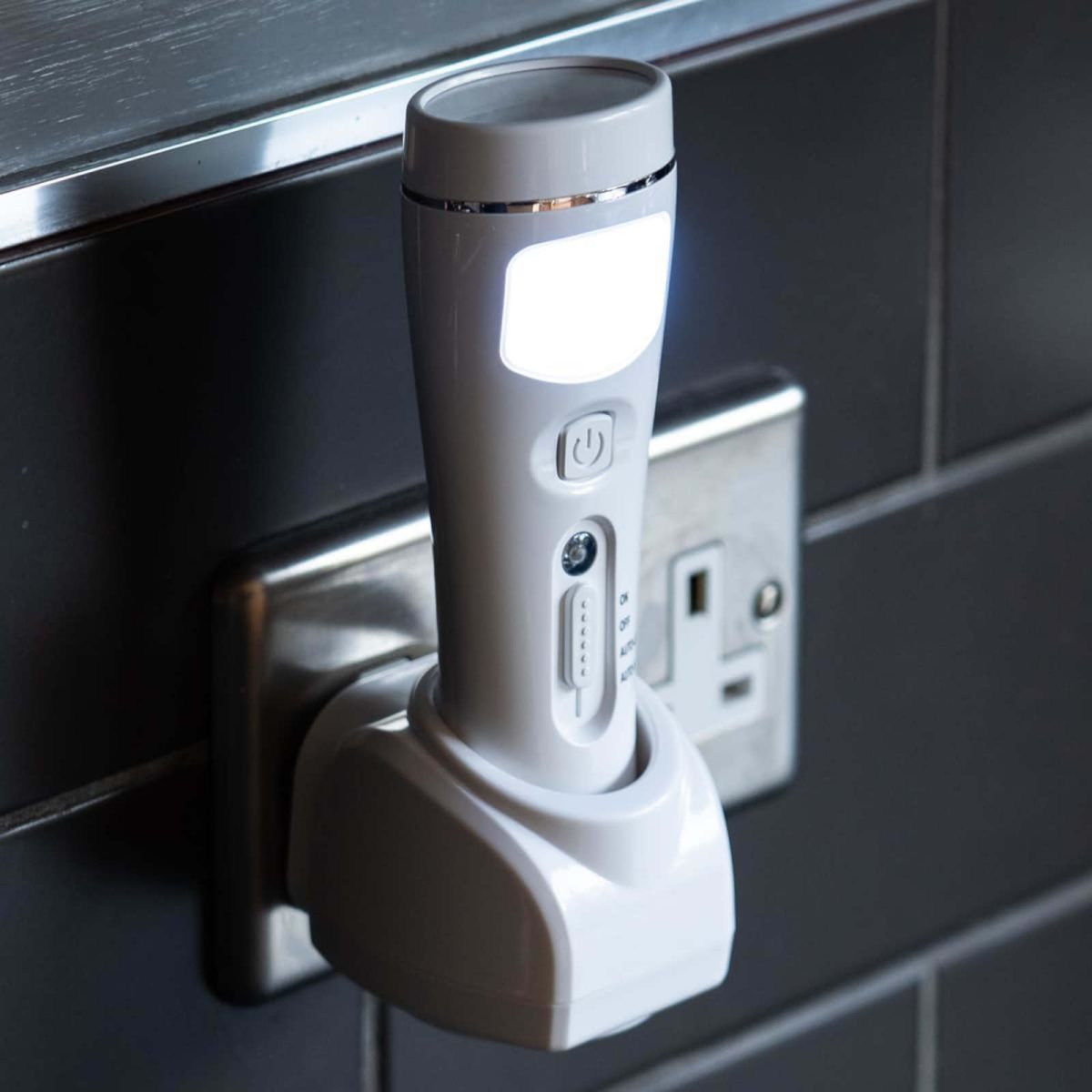
- The landing and stairs: This is the highest-risk area in a sudden blackout. A plug-in emergency light that activates automatically when mains power fails prevents falls in the first chaotic seconds of an outage. It charges passively at all times and requires zero action from you.
- The bathroom: A small battery-powered motion-sensor light or a glow stick taped to the wall removes the need to fumble for a torch in the dark when nature calls at 3am during a winter outage.
- The kitchen: Your head torch lives here during a power cut — on the worktop or hanging on the back of the kitchen door. This is where you will need hands-free task lighting most. Don’t have it somewhere you have to search for it.
- The mirror hack: Place a lantern directly in front of a mirror. The reflection doubles the effective light output for the room without consuming any additional battery power. A bathroom or hallway mirror works particularly well.
XtraLite NiteSafe
The NiteSafe is a dual-function device that works as both a plug-in nightlight and an emergency torch. It sits in a standard UK plug socket, charges continuously, and the moment mains power fails, it automatically illuminates.

🐔 Chicken Licken
Did You Know?
Placing a lantern directly in front of a mirror doubles the effective light for that room without using a single extra battery — I’ve been doing this for years. I have seventeen mirrors. My wife has questions.
Battery Management: Stocking, Storing, and Rotating
A battery-first lighting strategy only works if your batteries are actually ready to use. This section covers what to buy, how to store it, and how to make sure you’re never caught with a flat torch. For a full run-down on battery management and power bank strategy, see the dedicated guide.
Complete Guide
Rechargeable vs Alkaline Batteries
Rechargeable batteries seem like the sensible choice — until you can’t charge them. This guide makes the case for alkaline AA and AAA as the backbone of any emergency kit.
Read the Full Guide: Rechargeable vs Alkaline Batteries →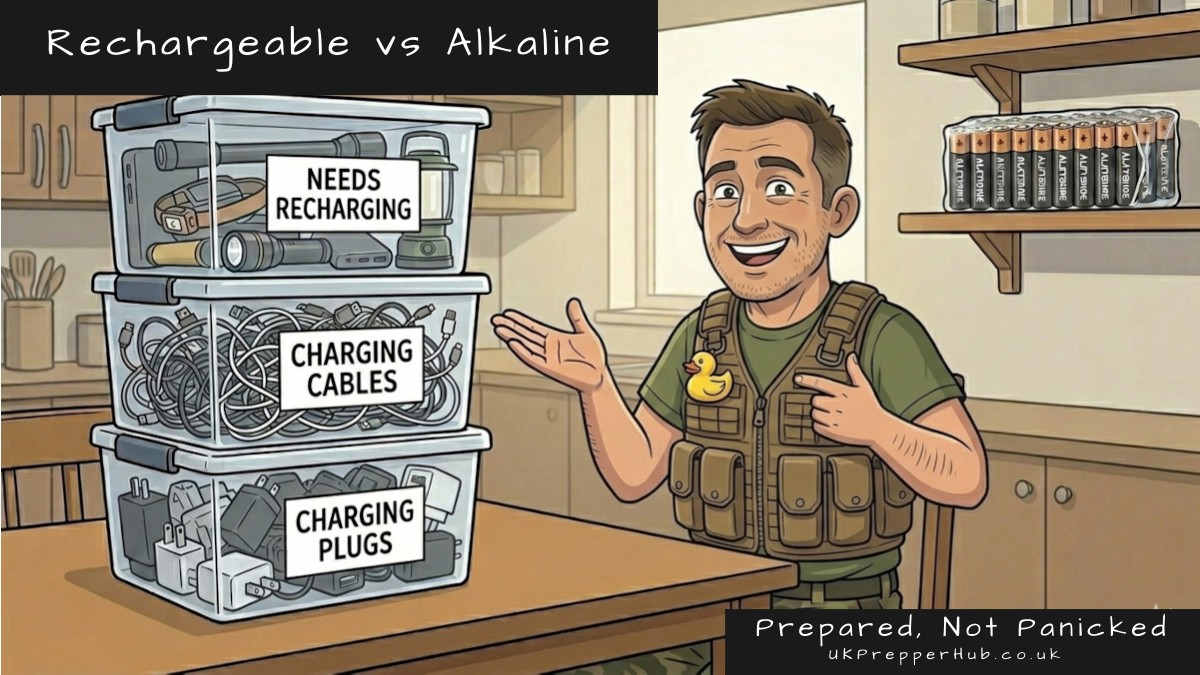
What to Stock
Buy AAA batteries in bulk — industrial or trade packs rather than retail-carded singles. Amazon Basics, Duracell, and Energizer all manufacture reliable alkaline AAA batteries with 10-year shelf lives. Industrial packs work out significantly cheaper per battery and come in quantities that make sense for an emergency stock.
As a minimum, keep at least four full sets of spare AAA batteries per device in your kit. For a household of four — each with their own head torch — that means keeping 16 spare AAAs as a baseline. This sounds like a lot until you consider that a pack of 20 AAA batteries costs under £5 and will sit untouched for a decade if you never need them.
How to Store Them
Store batteries in a cool, dry location away from direct sunlight. Extreme heat and moisture are the primary causes of early degradation and, in the worst cases, leakage that can destroy the devices they’re stored in. A kitchen or bedroom drawer is fine. A damp garage shelf is not.
Keep batteries separate from the devices they power for long-term storage. A battery left installed in a torch for 18 months can leak and corrode the contacts. For torches stored in grab bags or car kits, check the batteries every six months .
Rotation
Mark new batteries with their purchase date when you bring them home. Use older stock first and replace it from the back of the pack. A simple rotation habit means you never unknowingly reach for a battery that expired three years ago. The clocks changing in October is a useful annual prompt to check and replace the batteries in your emergency lighting kit.
The D-Cell Warning
Many large camping lanterns use D-cell batteries. These are expensive, bulky, and significantly harder to source at short notice than AAA or AA. If you already own D-cell lanterns, AA-to-D adapters allow you to run them on AA batteries, bringing them into your standard battery ecosystem. Otherwise, avoid buying new D-cell kit going forward.
📋 Calm Clarissa
My printable power cut checklist has every torch, lantern and battery from this guide, with a monthly check for the use-by dates. Free to download, obviously.
Download the Free Checklist →Frequently Asked Questions
What about rechargeable torches and lanterns — are they useless?
Not useless, but not your primary system. A fully charged rechargeable lantern is convenient for the first 24 hours of an outage. The problem is that it requires the discipline to keep it charged — and most people don’t remember to charge kit they never use. AAA battery-powered devices are ready the moment you need them, regardless of when you last thought about them. Use rechargeable as a convenience supplement, not a resilience foundation.
Should I buy a wind-up (crank) torch?
Wind-up torches work as a last resort backup, but they are frequently cheaply made and produce poor light for significant physical effort. A high-quality AAA LED torch with fresh batteries is a far more reliable primary choice. If you want a crank device, a crank radio with a built-in torch — such as our reviewed FosPower Emergency Radio — is a better investment than a crank torch alone.
Are glow sticks toxic if they leak?
Most modern, high-quality glow sticks are non-toxic and phthalate-free. However, the liquid can sting eyes and skin, and will stain furniture. Always supervise young children and pets when glow sticks are in use.
Can I use outdoor solar lights inside?
Yes, with limitations. Outdoor solar stake lights left in the garden or on a windowsill during the day can be brought inside at night and placed in a jar or vase for low-level ambient light. It’s a useful free supplement, particularly in summer. In winter, UK daylight hours and overcast skies limit their charge significantly — don’t rely on them as a primary source.
How many head torches does a family need?
One per adult, minimum. Children old enough to move around independently should also have their own. Shared torches create a single point of failure — the moment two people need light at the same time in different rooms, the shared model breaks down. Head torches won’t break the bank, and having several dotted around the house (and one in a car) means you’re never far from one when the lights go out. Add one to your Grab Bag and one to your Get Home Bag. Head torches are valuable everywhere.
Build Your Resilience
Further Reading: Related Guides
- How to Prepare for a Power Cut
- Power Bank & Battery Strategy
- Emergency Radio Guide
- 72-Hour Grab Bag
- Make a Blackout Box
- Home Emergency Kit
- Portable Power Station With Solar Panel
All our guides can be found listed on our resilience hub.
Gear We’ve Tested & Reviewed
- Energizer Vision HD+ Head Torch
- Lepro 2000lm Rechargeable Camping Lantern Review
- XtraLite NiteSafe
- Cyalume SnapLight Glow Sticks
- Gritin Book Light
- FosPower Emergency Radio
- Kuulaa Magnetic Charging Cable
All our reviews can be found on our reviews and resources page.