
This post contains affiliate links. Learn more
The rechargeable vs alkaline batteries debate looks obvious — until the power goes out. Before you buy rechargeable AA batteries for your emergency kit, read this first. You may be making a mistake.
In everyday life, rechargeable batteries make perfect sense. In a power cut, they’re the wrong choice. You can’t recharge anything when the grid is down — and if that rechargeable lantern hasn’t been topped up in the past few months, it won’t come on when you need it most. No power means no recharge.
This guide makes the case for alkaline AA and AAA batteries as the backbone of your emergency kit — why they outlast rechargeables for preparedness use, how to build a simple system around them, and where to find more when you run out. Your local corner shop stocks alkaline AAA batteries. You cannot say the same for a replacement lithium-ion cell.
Rechargeable vs Alkaline Batteries: The Emergency Case for Alkaline
Rechargeable devices look attractive on the surface. No batteries to buy, no waste, just plug in and charge. For everyday household use — TV remotes, wireless keyboards, children’s toys — that logic holds up fine.
For emergency preparedness kit, it falls apart. Here’s why.
You’re Paying for a Battery You Don’t Need to Buy
Every rechargeable device — lantern, head torch, radio — has a built-in lithium-ion cell included in the purchase price. That cell is the reason rechargeable devices cost more than their battery-powered equivalents. When you buy battery-powered kit instead, you’re not paying for that cell. The device is cheaper. For a household equipping multiple rooms with emergency lighting, that saving multiplies — you can buy more kit for the same budget, and power all of it from a single shared battery stock.
Built-In Batteries Have a Lifespan. Alkaline AAA Batteries Don’t.
This is the argument that matters most for preparedness. Lithium-ion cells — the kind soldered into rechargeable devices — degrade in two distinct ways that alkaline batteries do not.
The first is cycle degradation. Every time a lithium-ion cell is charged and discharged, it loses a small amount of capacity. A typical lithium-ion cell is noticeably degraded after 300–500 charge cycles — often within two to three years of regular use. A rechargeable lantern that’s three years old may only hold 60–70% of its original charge. You won’t know until you need it.
The second is calendar aging. Lithium-ion chemistry degrades over time regardless of use. A rechargeable device stored for five years — which is exactly what preparedness kit often is — will have a meaningfully compromised battery even if it was never heavily used. The degradation happens whether you use it or not.
Quality alkaline AAA batteries stored correctly degrade at approximately 2–3% per year in storage — and they don’t degrade through use at all, because you simply replace the cells. A pack of AAA batteries bought today and stored in a cool, dry place will be essentially full-capacity in year ten. The device they power will be identical to the day you bought it.
There is also a device longevity point worth making. When the built-in lithium-ion battery in a rechargeable device fails — and it will eventually fail — the device is usually effectively dead. Replacing a soldered-in cell requires specialist knowledge and is often uneconomical. A battery-powered device has no such end-of-life cliff. Replace the batteries and it works. There is no obsolescence built into the product.
No Charger Juggling. No Scheduling. No Surprises.
A rechargeable kit requires ongoing management. Devices need to be charged before they’re needed, rotated between chargers, and checked periodically to ensure they’re holding capacity. Emergency kit that sits in a cupboard between uses is precisely the kit most likely to be uncharged when you reach for it.
Battery-powered kit requires none of this. Install fresh batteries, store the device, and it is ready. Not approximately ready. Not ready-if-you-charged-it-last-month ready. Ready. That is a fundamentally different reliability proposition — and for equipment you hope never to need, it’s the one that matters.
AAA Batteries Are Available Everywhere, Always
AAA batteries are stocked by every supermarket, corner shop, and petrol station in the UK. In a prolonged outage when online shopping is off the table, the ability to walk to the nearest open shop and buy fresh batteries is a genuine resilience advantage. You cannot walk into a corner shop and buy a replacement lithium-ion cell for a rechargeable lantern.
Why AAA Specifically — Not Not D
AA batteries share most of the advantages above and are a perfectly reasonable secondary standard. The argument for AAA over AA comes down to storage density and kit weight. AAA batteries are smaller and lighter — relevant when storing spares for multiple devices, or when carrying kit in a grab bag or car kit where space and weight matter.
D-cell batteries are the format to avoid for new purchases. They are bulkier, significantly more expensive per cell, and harder to source at short notice than AAA or AA. Many large camping lanterns use D cells — a good reason not to buy large camping lanterns as your primary emergency lighting. If you already own D-cell devices, AA-to-D adapters can bring them into a more manageable ecosystem.
Lepro 2000lm Rechargeable Camping Lantern
Charges by USB, then runs on AA batteries when the power’s been off too long. Up to 2,000 lumens, warm white and red modes, IPX4.
Our Full Review: Lepro 2000lm Rechargeable Camping Lantern →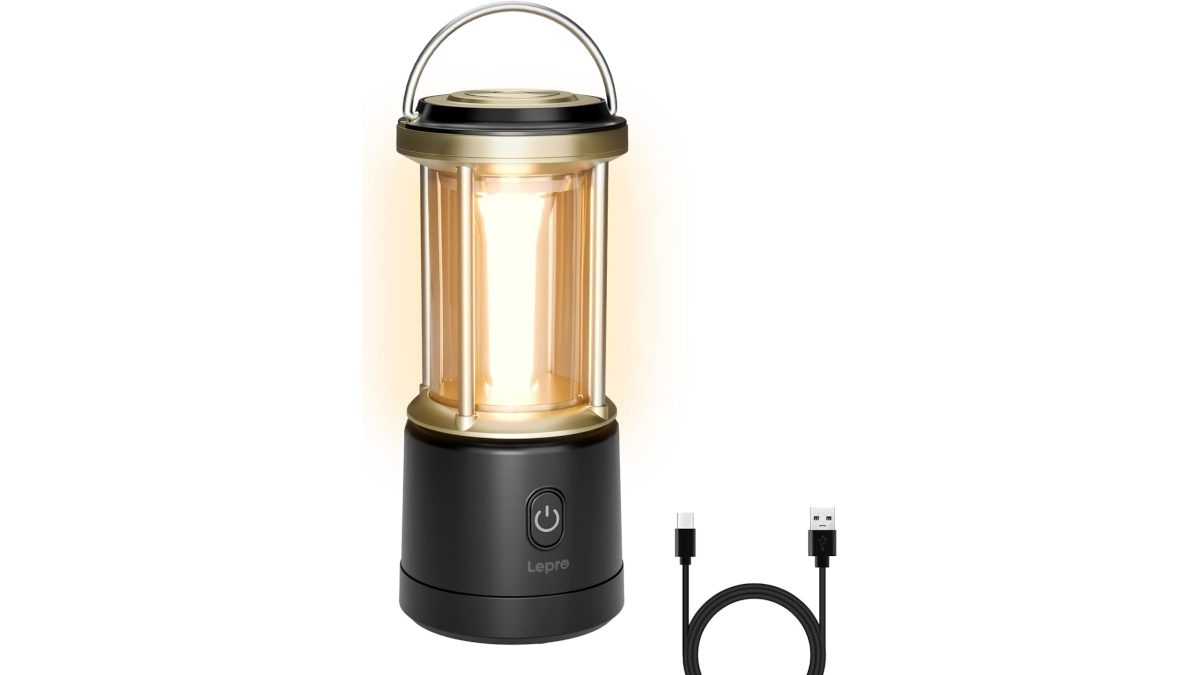
Building the AAA-First Kit
Building around AAA means actively choosing AAA-compatible devices when buying new emergency kit. The most important of these is your head torch — the single most useful piece of emergency lighting equipment you can own, because it keeps both hands free for work.
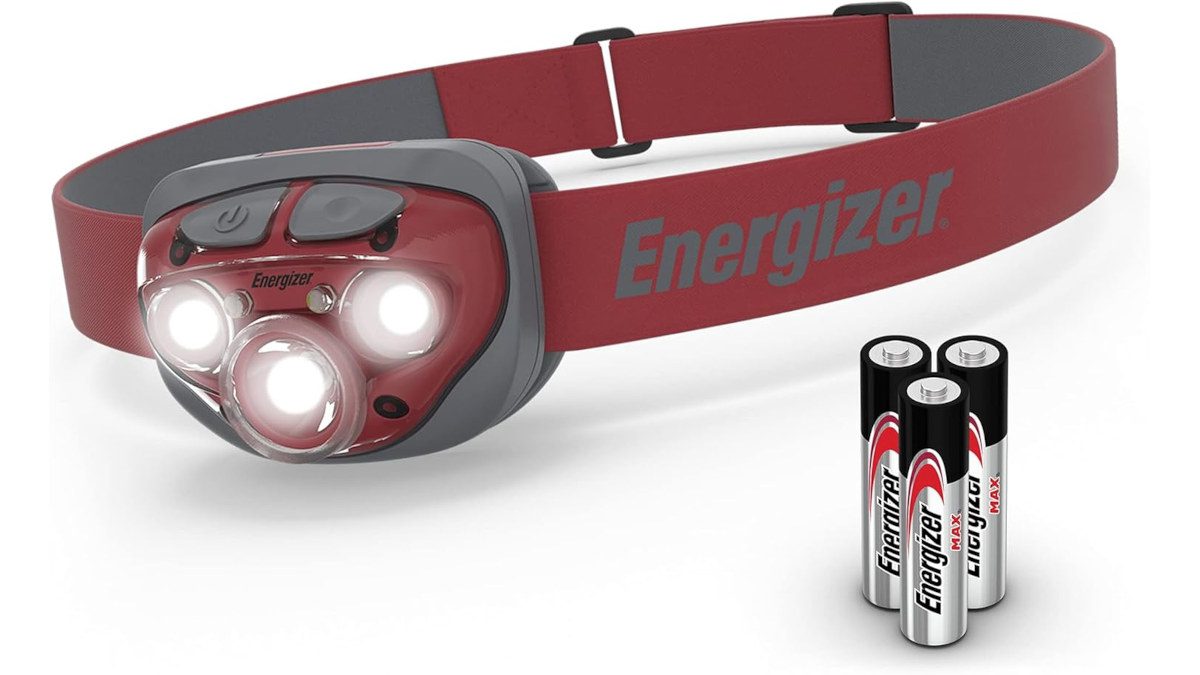
We’ve tested and reviewed the Energizer Vision HD+ as our primary AAA head torch recommendation — 315 lumens, red light mode, IPX4 water resistance, and 35 hours of runtime on low mode from three AAA batteries. It’s the anchor product of a AAA-first kit, and at under £13 it’s the kind of product you can buy several of — one per adult, one in the car, one in the grab bag — without it hurting.
Energizer Vision HD+ Head Torch
Is this the most versatile head torch for your kit? Does it deliver what it promises? Does it have longevity?
Beyond the head torch, look for AAA compatibility when choosing radios, small torches, and any other battery-powered emergency kit. The more devices that share the same battery format, the simpler your spare battery stock becomes — and the less likely you are to find yourself with the right batteries for the wrong device.
The AAA-to-AA Adapter: Extending the Standard
Not everything runs on AAA. Lanterns in particular tend to use AA cells, and you probably already own AA devices that work well and don’t need replacing.
The solution is a AAA-to-AA battery adapter — a simple plastic sleeve that holds a AAA battery in an AA-sized slot. It costs almost nothing, takes up almost no space, and means a single stock of AAA batteries powers both your AAA head torch and your AA lantern. No second format to buy. No second drawer to manage. No arriving at the lantern to find you only have AAA batteries left.
One honest caveat: AAA batteries have lower capacity than AA, so runtime in an AA device will be reduced compared to running genuine AA cells. For a lantern used on low or medium brightness during a power cut, this is rarely a practical problem — you’re not running it continuously at full brightness for 48 hours. But it’s worth knowing, and worth testing with your specific device before relying on it.
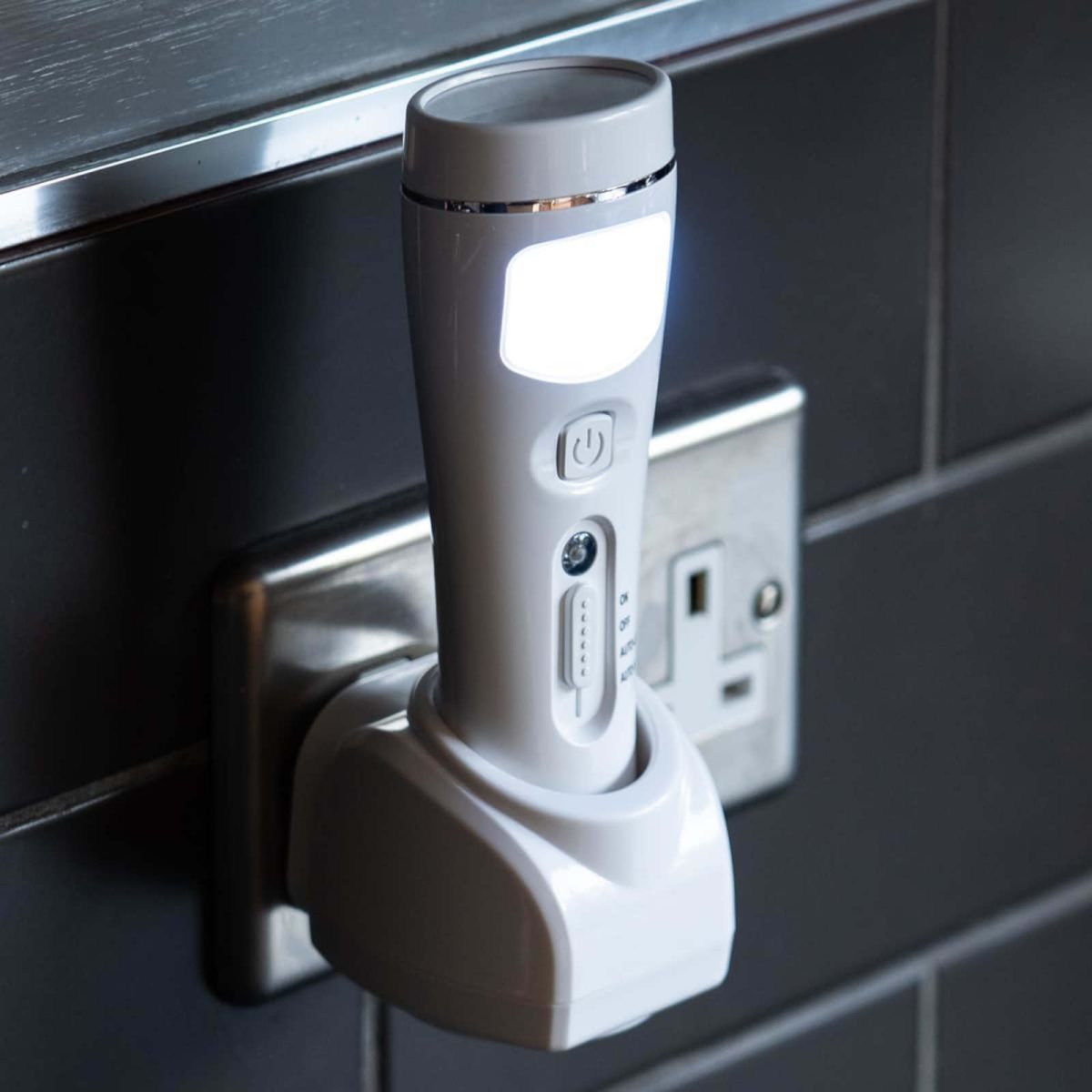
XtraLite NiteSafe
The NiteSafe is a dual-function device that works as both a plug-in nightlight and an emergency torch. It sits in a standard UK plug socket, charges continuously, and the moment mains power fails, it automatically illuminates.
Avoid using adapters in high-drain devices — anything that draws significant continuous current. For lighting, radios, and similar low-drain emergency kit, adapters work reliably.
The Combo Pack: Storage and Adapters Together
Several manufacturers sell combined packs that include AAA battery storage cases (typically holding 4 batteries each) and AAA-to-AA adapters in the same purchase. For a preparedness kit this is close to ideal — organised storage and format flexibility in one low-cost buy. Keep a set in your grab bag, one in the kitchen drawer, and one in the car kit. At the price these sell for, there’s no reason not to have several.
Bulk AAA Batteries: What to Buy and How Much to Keep
Once you’ve committed to a AAA-first system, buy in bulk. Retail-carded batteries from a supermarket shelf are the most expensive way to stock up — industrial and trade packs work out significantly cheaper per battery and come in quantities that make sense for an emergency stock.
Amazon Essentials AAA batteries are a strong bulk option — low cost per battery, reliable performance, and a 10-year shelf life. Duracell and Energizer are worth paying slightly more for if you want brand assurance — both manufacture reliable alkaline AAA cells with equivalent shelf lives. For pure stockpiling value, Amazon Essentials is hard to argue with.

Amazon Basics 36-Pack AAA Alkaline
High-Performance Batteries, 1.5 Volt, 10-Year Shelf Life
Price: £9.65
Amazon review rating: 4.5/5 (1,723,429 sold)
As a minimum stock level, aim for four complete sets of spare batteries per device. For a household of four adults, each with a head torch using three AAA batteries, that means keeping at least 48 spare AAAs as a baseline — before accounting for a lantern, a radio, or any other AAA devices. A pack of 50 AAA batteries costs under £10 and will sit untouched for a decade if you never need them. That is extremely cheap insurance.
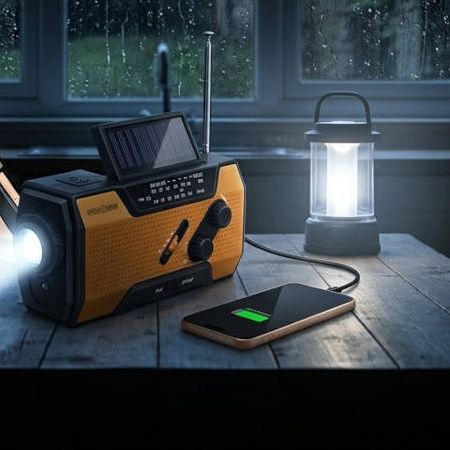
FosPower Emergency Radio
Most emergency radios have one or two power options. The FosPower has four, and that redundancy is the single most important feature for preparedness use.
Storage and Rotation
Store batteries in a cool, dry location away from direct sunlight and heat sources. A kitchen or bedroom drawer is fine. A garage shelf subject to temperature swings is not — heat accelerates degradation and increases the risk of leakage that can destroy the devices stored alongside them.
Mark new batteries with their purchase date and rotate older stock to the front. Use the clocks changing in October as an annual prompt to check your battery stock, replace anything approaching five years old, and top up to your target level. It takes ten minutes and costs very little.
For devices stored in grab bags or car kits, remove batteries for long-term storage and keep them in a labelled case alongside the device. A battery left installed in a torch for 18 months can leak and corrode the contacts, destroying the device. Ten seconds to install batteries in an emergency is a small price for knowing your kit is intact.

🦆 Keith
Don’t Be Keith
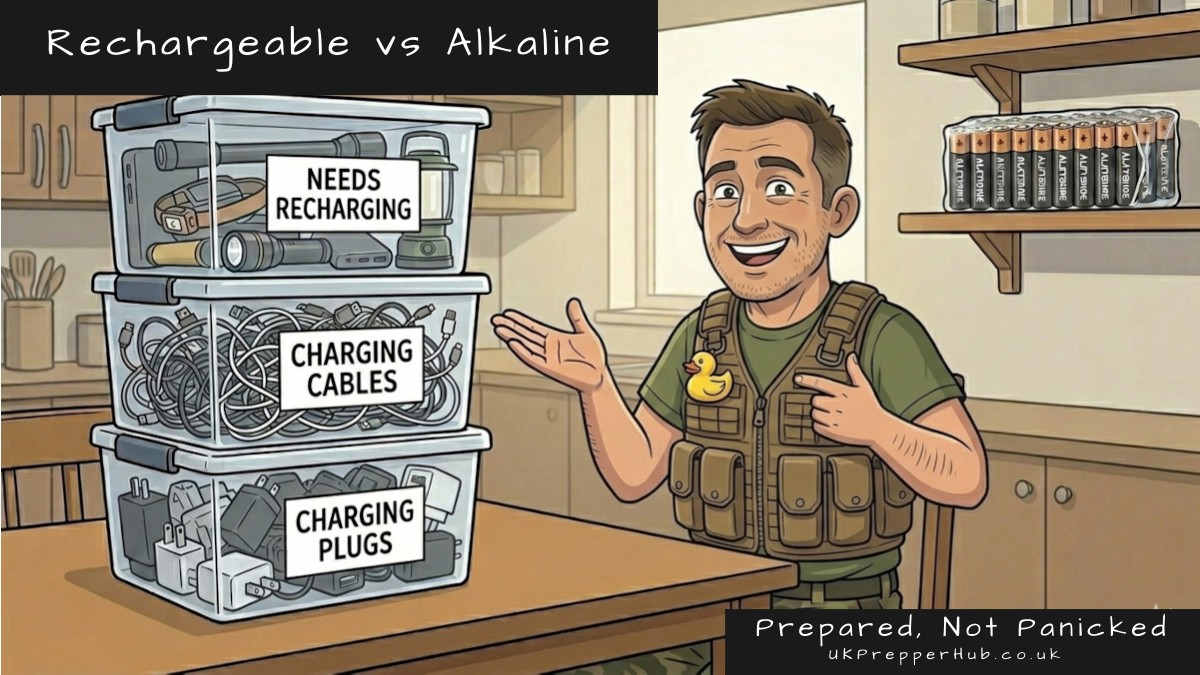
Keith bought rechargeable batteries for his emergency torch but had no power to charge them when the power cut happened!
Battery Organisation: Cases and Stations
Loose batteries in a drawer is not a system. It makes it impossible to know what’s charged, what’s dead, and what size you actually have. In a power cut, rooting through a drawer of mixed batteries by torchlight is exactly the kind of friction you want to eliminate.
Small battery cases — typically holding 4 or 8 batteries per case — are the minimum. Label each case with the battery size and purchase date. Keep one loaded case per device in your kit, ready to go. The combo packs mentioned above cover this well for a few pounds.
Battery organisers and stations — larger units that store AA, AAA, C, D, and 9V batteries in labelled compartments — are worth considering once your battery stock grows. A good organiser makes it immediately obvious what you have, what format it is, and roughly how much stock remains. It also makes rotation easier because you can see everything at a glance. These sit in the £15–25 range — a considered rather than impulse purchase, but for a serious household preparedness setup they earn their place.
The One Exception: Power Banks for Charging Phones
There is one category where rechargeable wins cleanly: smartphones. You cannot power a phone from AAA batteries — a 20,000mAh power bank is the right tool for that job, kept charged between uses and ready when the grid fails. For a full guide to choosing and maintaining one, see our dedicated power bank guide.
Complete Guide
Power Bank for Power Cuts
Your small electronic devices, like your phone, are your lifeline in a power cut — but only if they’re charged. This guide covers how much capacity you actually need, what size works in a grab bag, and the one habit that stops your power bank being useless when you need it most.
Read the Full Guide: Power Bank for Power Cuts →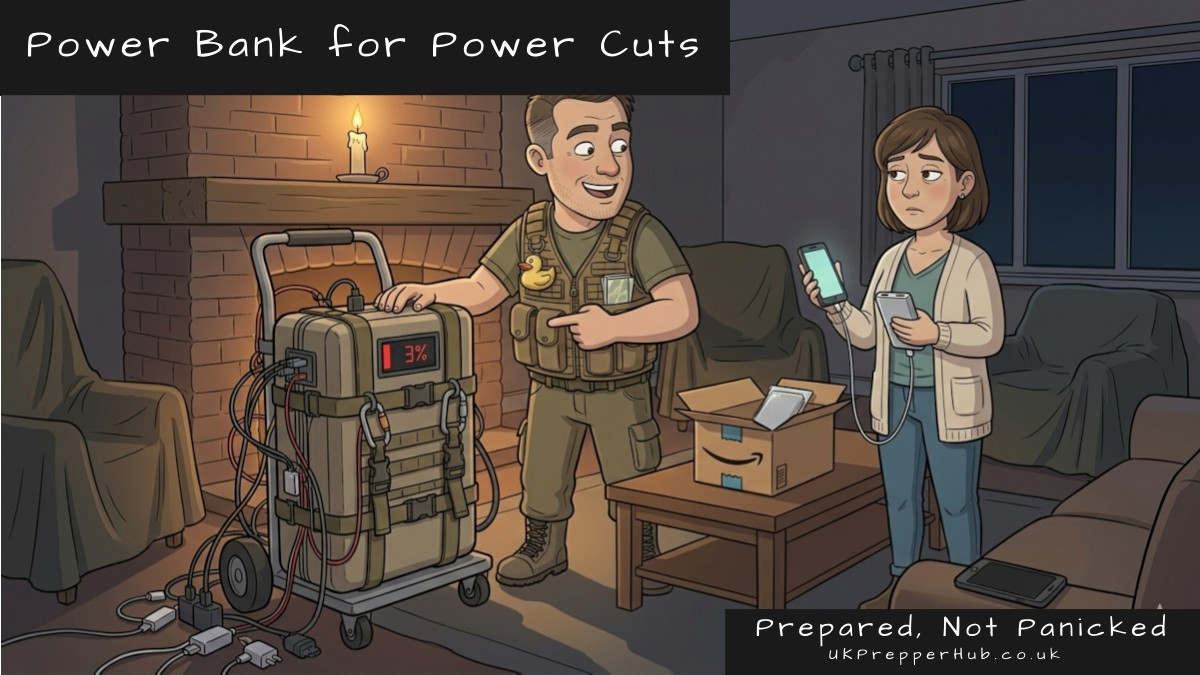
The Complete Battery Strategy at a Glance
- Primary standard: AAA. All new emergency kit should be AAA-compatible where possible. Battery-powered devices cost less to buy than rechargeable equivalents — use that saving to buy more kit.
- AA devices: use adapters. Don’t replace working AA kit. AAA-to-AA adapters maintain one battery format across everything. Combo packs with cases and adapters together are ideal.
- Stock in bulk. Industrial or trade packs. Minimum four full sets of spares per device. Label with purchase date and rotate annually in October.
- Organise properly. Labelled cases per device for grab bags and car kits. A battery station for home stock once it grows beyond a single drawer.
- One rechargeable exception: power banks for phones. You cannot run a smartphone on AAA batteries — see our dedicated power bank guide for what to look for.
- Avoid D cells for new purchases. Expensive, bulky, hard to source. If you own D-cell devices, AA-to-D adapters bring them into a more manageable ecosystem.
Frequently Asked Questions
Are rechargeable AA or AAA batteries worth keeping as well?
For everyday household use — remotes, keyboards, toys — rechargeable AA and AAA batteries make sense. For emergency preparedness kit specifically, disposable alkaline is more reliable. A rechargeable left uncharged for six months may not perform when you need it. A disposable alkaline bought today and stored correctly will be at full capacity in ten years. For emergency kit, disposable alkaline is the right choice.
Do AAA-to-AA adapters actually work?
Yes, reliably for low and medium drain devices — lighting, radios, clocks. Runtime will be reduced compared to genuine AA cells because AAA batteries have lower capacity. For emergency lighting on low or medium brightness, this is rarely a practical issue. Avoid adapters in high-drain devices.
How do I know if my stored batteries are still good?
A basic battery tester costs a few pounds and removes all guesswork. Test your emergency stock at your annual rotation check. Any AAA or AA alkaline reading below 1.4V is worth replacing rather than relying on for emergency use.
What about lithium AAA batteries — are they worth paying more for?
Lithium AAA batteries (not rechargeable lithium-ion — disposable lithium primary cells) offer better cold weather performance and a shelf life of up to 20 years. Worth considering for kit stored in vehicles or outbuildings where temperatures drop significantly in winter. For indoor home storage, quality alkaline AAA performs well and costs considerably less.
Why shouldn’t I just buy one good rechargeable lantern and keep it charged?
Because “keep it charged” is the problem. Emergency kit sits unused for months or years between events — it’s precisely the kit most likely to be uncharged when you need it. Beyond that, the built-in lithium cell will degrade over time regardless of whether you use the device, and when it fails the lantern is effectively dead. A battery-powered lantern bought today will work identically in ten years. Replace the batteries and it works. There is no obsolescence built in.
How should I dispose of old batteries?
Most UK supermarkets have battery recycling collection points near the entrance. All portable batteries must be recycled rather than put in general waste under UK regulations. Never put batteries in a bin fire or attempt to puncture or dismantle them.
Build Your Resilience
Further Reading: Related Guides
- How to Prepare for a Power Cut
- Blackout Box
- Emergency Lighting Guide
- Home Emergency Kit
- Power Bank for Power Cuts
All our guides can be found listed on our resilience hub.
Gear We’ve Tested & Reviewed
- Energizer Vision HD+ Head Torch
- Lepro 2000lm Rechargeable Camping Lantern
- Gritin Book Light
- FosPower Emergency Radio
- INIU 20,000mAh Power Bank
All our reviews can be found on our reviews and resources page.