
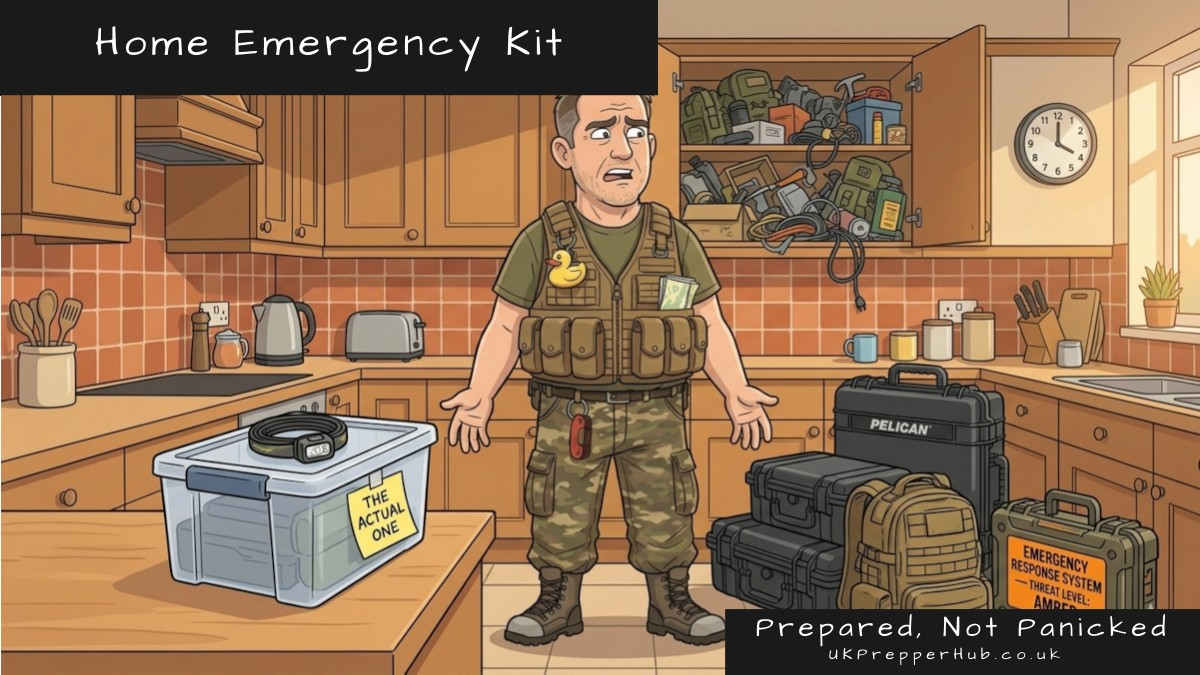
The government’s own Prepare campaign recommends a minimum three-day household kit — we agree, and this guide covers exactly that.
Somewhere in most UK homes there’s a drawer — or possibly a cupboard under the stairs — containing a torch that hasn’t worked since 2021, three partially used candles, and a packet of matches from a restaurant that closed down. That’s the nation’s emergency preparedness, right there.
A proper home emergency kit is not complicated, not expensive, and does not require a Pelican case or a degree in logistics. It’s a collection of practical items, kept somewhere accessible, that help your household stay comfortable and functional if something goes wrong for a few days. Power cut, burst pipe, flooding nearby, supply disruption — most UK household emergencies fall into this category. This guide covers what a home emergency kit actually needs, what it costs, and what you can confidently ignore.
What a Home Emergency Kit Is Actually For
The point of a home emergency kit is not to survive the end of civilisation. It’s to handle the scenarios that actually happen in the UK: a 48-hour power cut after a storm, a burst main leaving you without water for a day, a week of heavy snow that makes getting to the shops difficult, or a local flood that means you’re staying put while the roads are closed.
These events are not rare. The UK experiences around 100,000 power cuts each year. Burst mains affect thousands of households every winter. Storm disruption to food supply chains is increasingly common. None of this requires a survival bunker — it requires being a bit more prepared than the average household, which is a low bar to clear.
This is also explicitly a stay-put kit. If you need to leave your home, that’s a different scenario covered by the 72-Hour Grab Bag. This kit is for situations where you’re staying where you are and need to be self-sufficient for a few days.
Complete Guide
Bug-In vs Bug-Out
The debate between “bugging out” (leaving your home during a crisis) and “bugging in” (sheltering in place) is one of the most discussed topics in preparedness circles.
Read the Full Guide: Bug-In vs Bug-Out →
Your Home Emergency Kit Essentials
Eight categories. Every household needs all eight. Some you might already have. Start with the gaps.
1. Water
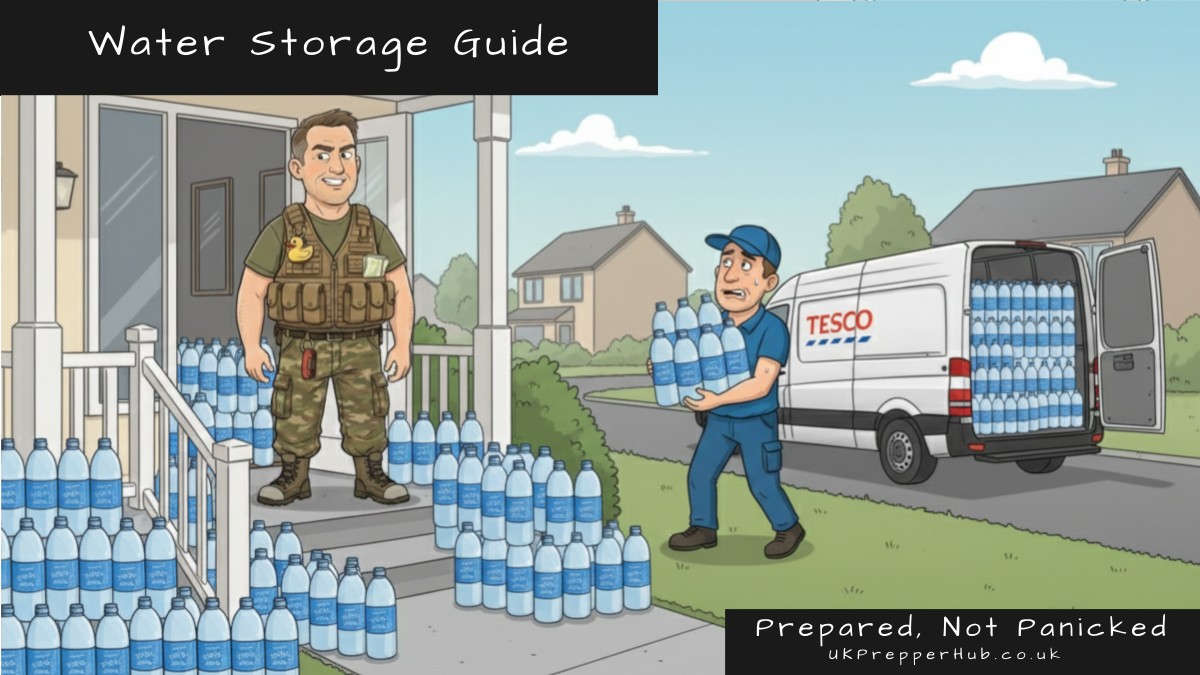
Aim for three litres of drinking water per person per day, for at least three days. For a household of two, that’s 18 litres minimum — roughly nine standard 2-litre bottles from any supermarket. Keep them somewhere cool and dark, check them every six months, and replace them when the use-by date approaches.
If you want to think bigger, collapsible water containers that can be filled from the tap before a known emergency (like an incoming storm) are worth having. But the bottles are the starting point — cheap, readily available, and genuinely useful.

🐔 Chicken Licken
Did You Know?
The most common UK water emergency is a burst main lasting 12-24 hours, not a total supply failure — three 2-litre bottles is more than enough for a day for two people, but most people buy 50-litre barrels
Complete Guide
Emergency Water Storage
How much to store, how to store it in small spaces, and the reality of UK water rotation.
2. Light
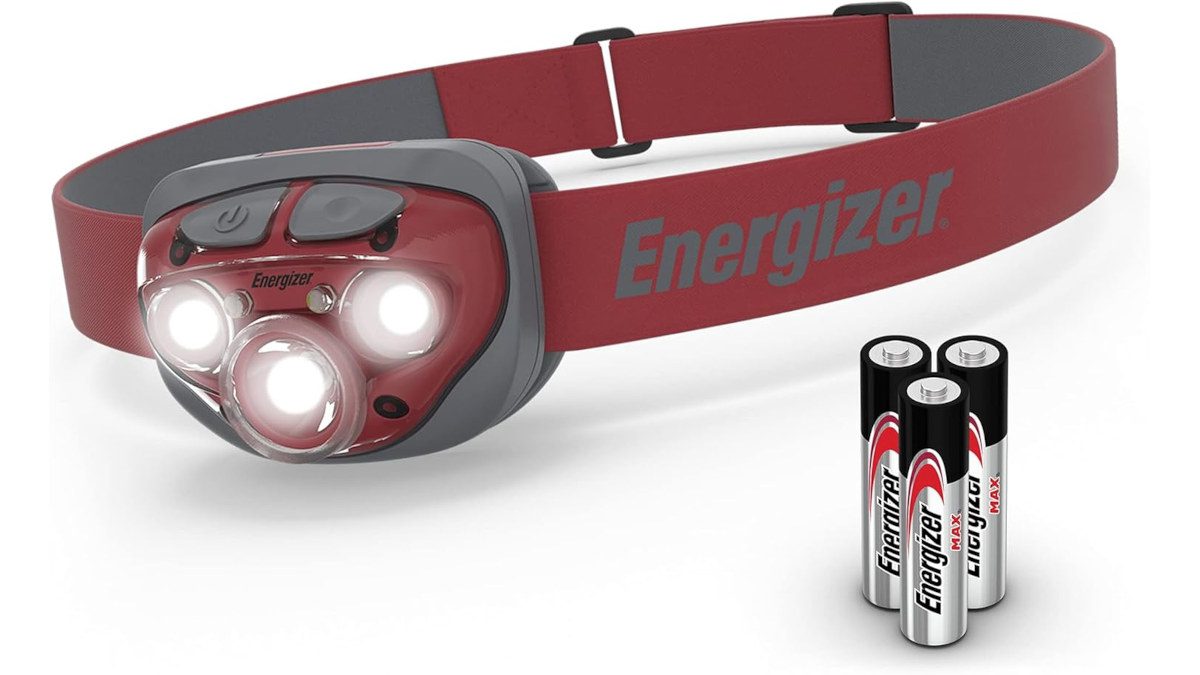
A head torch is the single most useful piece of kit in a power cut. Not a hand torch — a head torch. You need both hands free to check the fuse box, find the stopcock, calm down a child, or make a cup of tea in the dark. Budget options from Amazon work fine. A decent head torch costs under £20 and will last years.
Put one in the kitchen — not the attic, not the garage. In the kitchen, where someone can find it in the dark without having to navigate the house first.
Energizer Vision HD+ Head Torch
Is this the most versatile head torch for your kit? Does it deliver what it promises? Does it have longevity?
3. An Emergency Radio
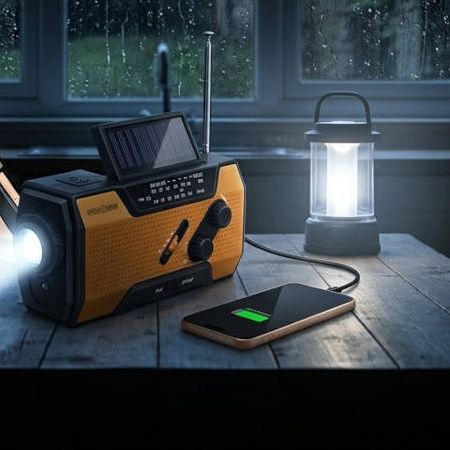
When the internet is down and your phone battery is dying, a battery-powered or hand-crank radio is how you find out what’s happening. BBC local radio broadcasts emergency information during major incidents. A decent emergency radio with solar charging, a USB charging port, and a hand crank costs around £30–£40 and covers every scenario where normal communications fail.
FosPower Emergency Radio
Most emergency radios have one or two power options. The FosPower has four, and that redundancy is the single most important feature for preparedness use.
4. Warmth
In winter, heating failure is the most immediately dangerous part of a power cut. Layers work, but a self-heating throw or a good fleece blanket is the practical solution for an evening or two without central heating. If you have elderly relatives in the household, this is not optional — it’s the first thing to sort.
Electric blankets do not belong in an emergency kit. They need mains power. A self-heating throw that generates warmth from body heat alone is what you need.
Silentnight Heat Genie Self Heating Giant Blanket
If you’re looking for a simple way to stay warm without turning the heating up, this is a low-cost option with zero running costs. It’s especially worth considering for cold homes, power cuts, or anyone wanting extra warmth without relying on electricity.
Our Full Review: Silentnight Heat Genie Self Heating Giant Blanket →
5. Food
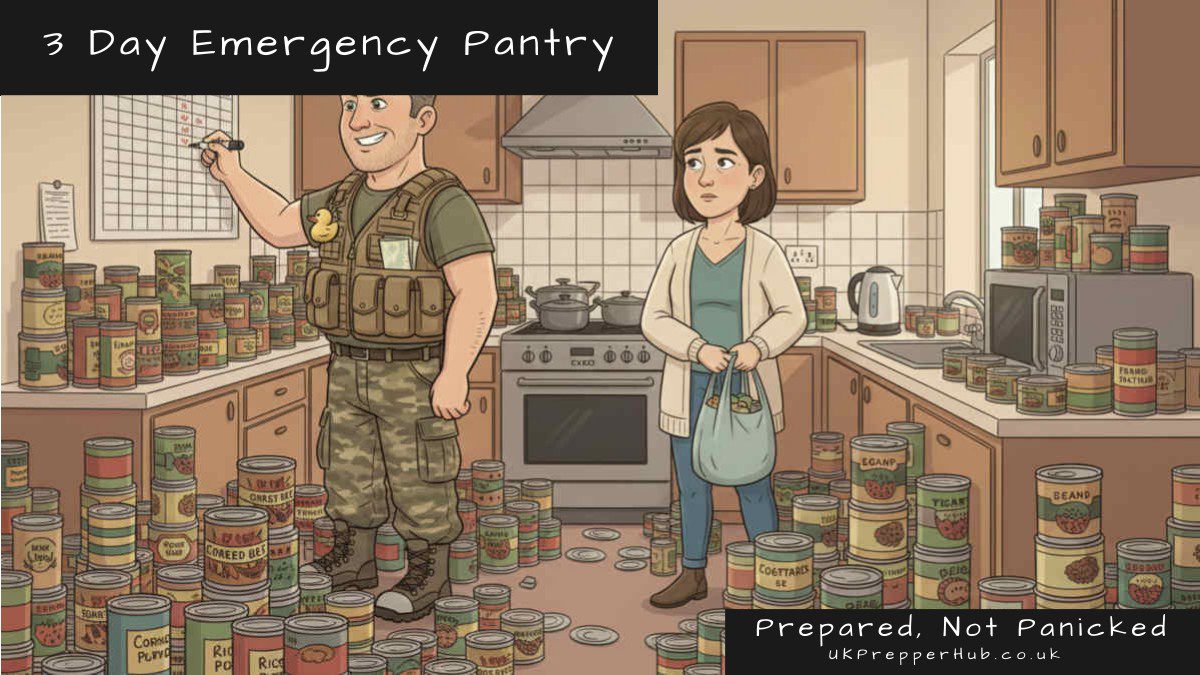
Three days of food that doesn’t need cooking — or can be cooked on a camping stove. Tinned goods, crackers, dried fruit, nut butter, UHT milk, instant oats. Comfortable, familiar food that your household will actually eat, not military rations you’re hoarding in a cupboard for twelve years.
A manual tin opener is not optional. An electric one is useless in a power cut, which is precisely when you’ll need it most.
Complete Guide
3-Day Emergency Pantry
The low-barrier start: A shopping list of shelf-stable meals that require zero refrigeration.
6. First Aid
A proper first aid kit — not the travel-size one you got free with something in 2018. Plasters in multiple sizes, bandages, antiseptic, tweezers, a digital thermometer, sterile dressings, and nitrile gloves. If anyone in your household takes regular medication, a three-day supply kept alongside the kit is essential. More on this in the medication guide listed in the “Build Your Resilience” links below.
General Medi First Aid Kit
309 pieces, ISO 13485 certified, with a cold pack, emergency blanket, moleskin pad and CPR mask included — the first aid kit that actually covers the scenarios a cheap chemist kit doesn’t.
Our Full Review: General Medi First Aid Kit →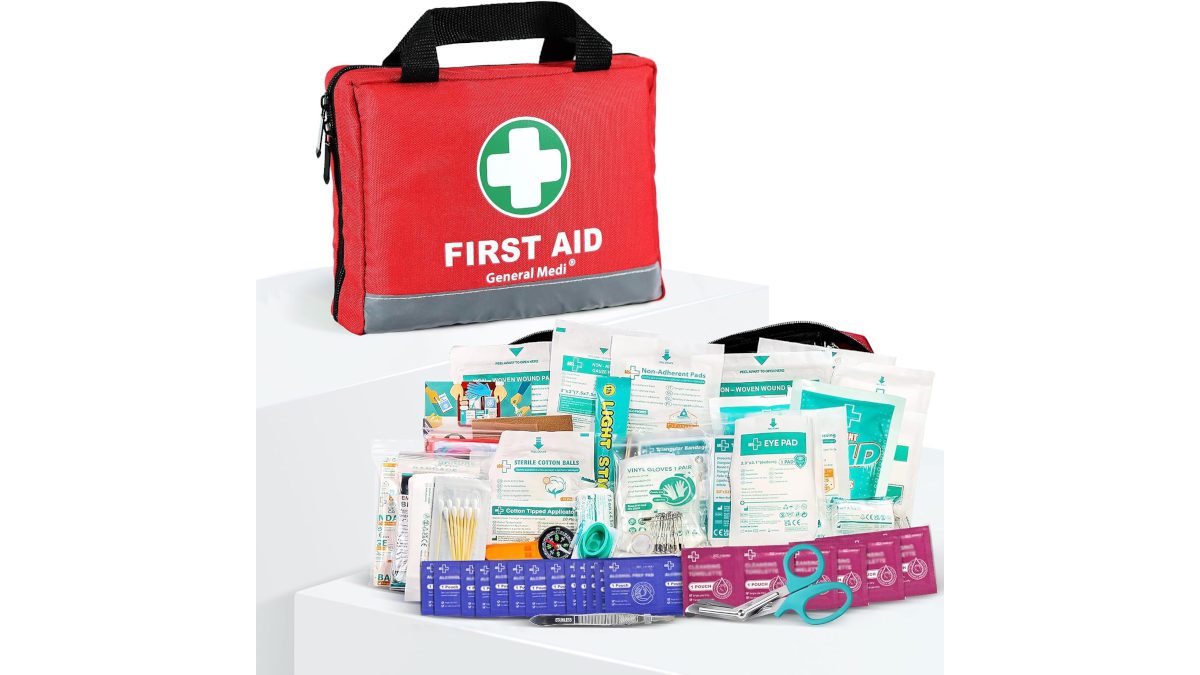
Complete Guide
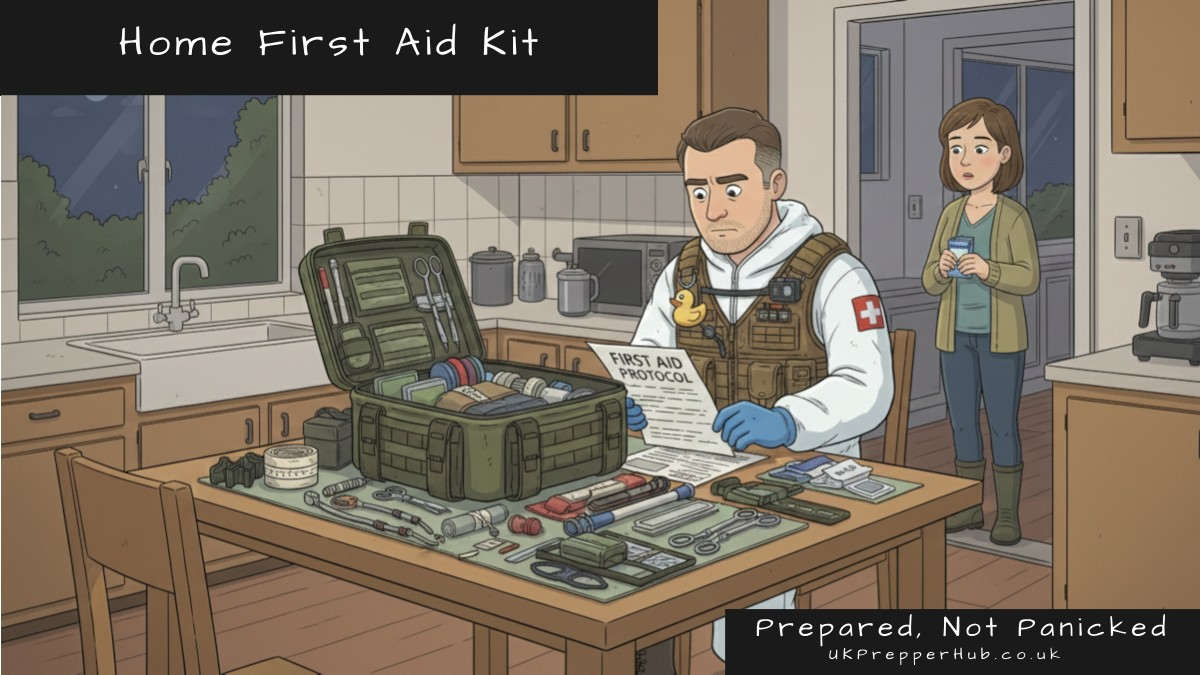
UK Home First Aid Kit
This guide covers comprehensive first aid supplies needed in the home to cover almost all emergencies.
7. Power for Your Devices
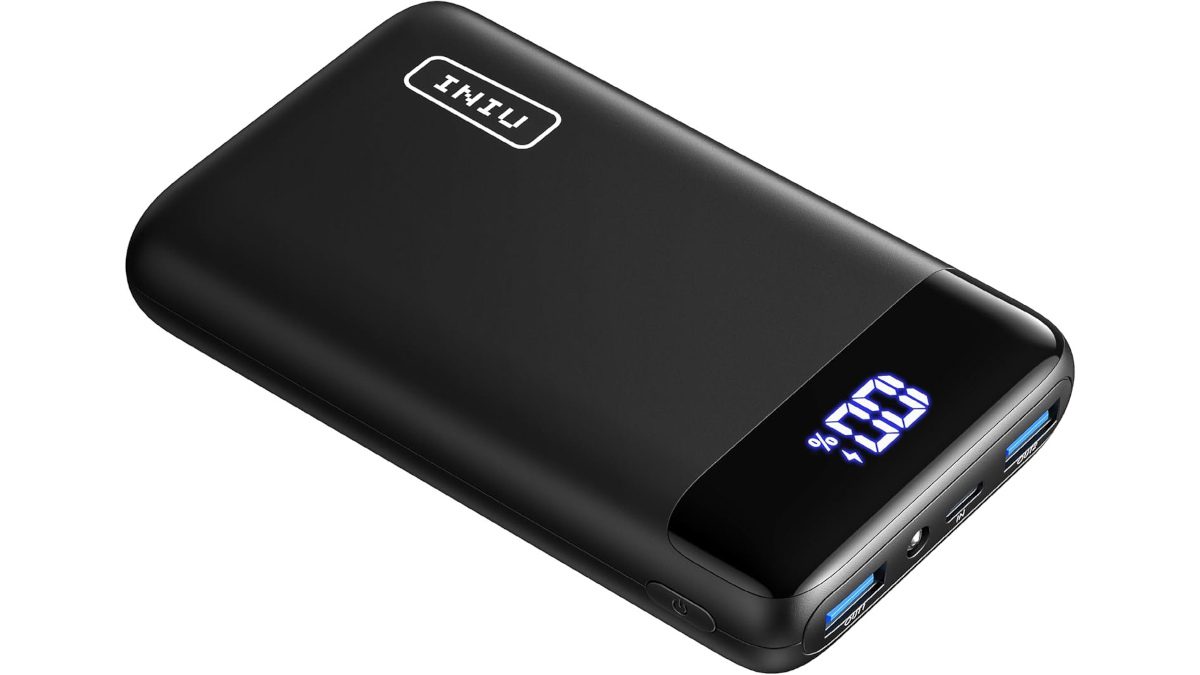
Your phone is your connection to everything during an emergency: emergency services, family, local alerts, the power cut reporting line (105 in England, Scotland, and Wales). A fully charged power bank — kept charged — means your phone stays useful even after a day without mains power. A 20,000mAh bank will charge most smartphones four to five times.
INIU 20,000mAh Power Bank
We tested it so you don’t have to — here’s the one thing most power banks get wrong, and why this one doesn’t.
8. Documents, Cash, and Key Information
Keep a paper copy of the following somewhere in or near your kit:
- Emergency contact numbers — family, GP, any carers
- The power cut reporting number: 105
- Your insurance policy reference numbers
- A list of any regular medications and dosages
- Copies (or photos on a USB stick) of key documents: passports, birth certificates, insurance documents
Cash in small denominations. Card payments fail in a power cut. ATMs run out during disruptions. £50 in tens and fives covers most immediate practical needs and costs nothing to keep in an envelope.
Complete Guide
Protecting Your Important Documents
ost fireproof boxes don’t take A4. Most fireproof wallets don’t work. This guide covers what to actually buy, how to add digital backups, and how to waterproof your documents for 20p.
Read the Full Guide: Protecting Your Important Documents →

🦆 Keith
Don’t Be Keith
Keith assembled a comprehensive emergency preparedness system — itemised Pelican cases, laminated inventory sheets, colour-coded severity ratings. It lives in the attic. During the January power cut his wife found the kitchen torch dead, charged her phone from her own power bank to text him, then used the power company app (which requires signal) to report the outage. Keith’s strategic resilience infrastructure was unavailable for comment.
What Your Home Emergency Kit Should NOT Contain
Skip anything you wouldn’t realistically use, anything that requires specialist knowledge, and anything marketed specifically at “preppers” that exists nowhere in ordinary life. A gas mask is not a home emergency kit item for a UK household. Nor are MREs from a US army surplus store, a hand-powered grain mill, or a waterproof map of your local area laminated to a carabiner.
The test is simple: would you use it if the power went out tonight? If the answer is “probably not in that context,” it doesn’t belong in the kit.
What Does It Cost?
Built from scratch, a solid home emergency kit for a household of two costs between £60 and £90. That’s assuming you buy a head torch, emergency radio, power bank, self-heating throw, and first aid kit. Water and food you’re buying anyway — you’re just buying a bit more and rotating it.
Spread over a few weeks, it’s not a significant outlay. And unlike the Netflix subscription it costs roughly the same as, it works when the power goes out.
Where to Keep It
One accessible location. Not the attic, not the garage, not anywhere that requires navigating the house in the dark. The cupboard under the stairs, a kitchen cupboard, or a large box in a bedroom works well. Everyone in the household needs to know where it is — including children old enough to understand.
Label the box clearly. Keep the head torch on top or somewhere easy to grab in the first thirty seconds of a power cut — before you’ve opened anything else.
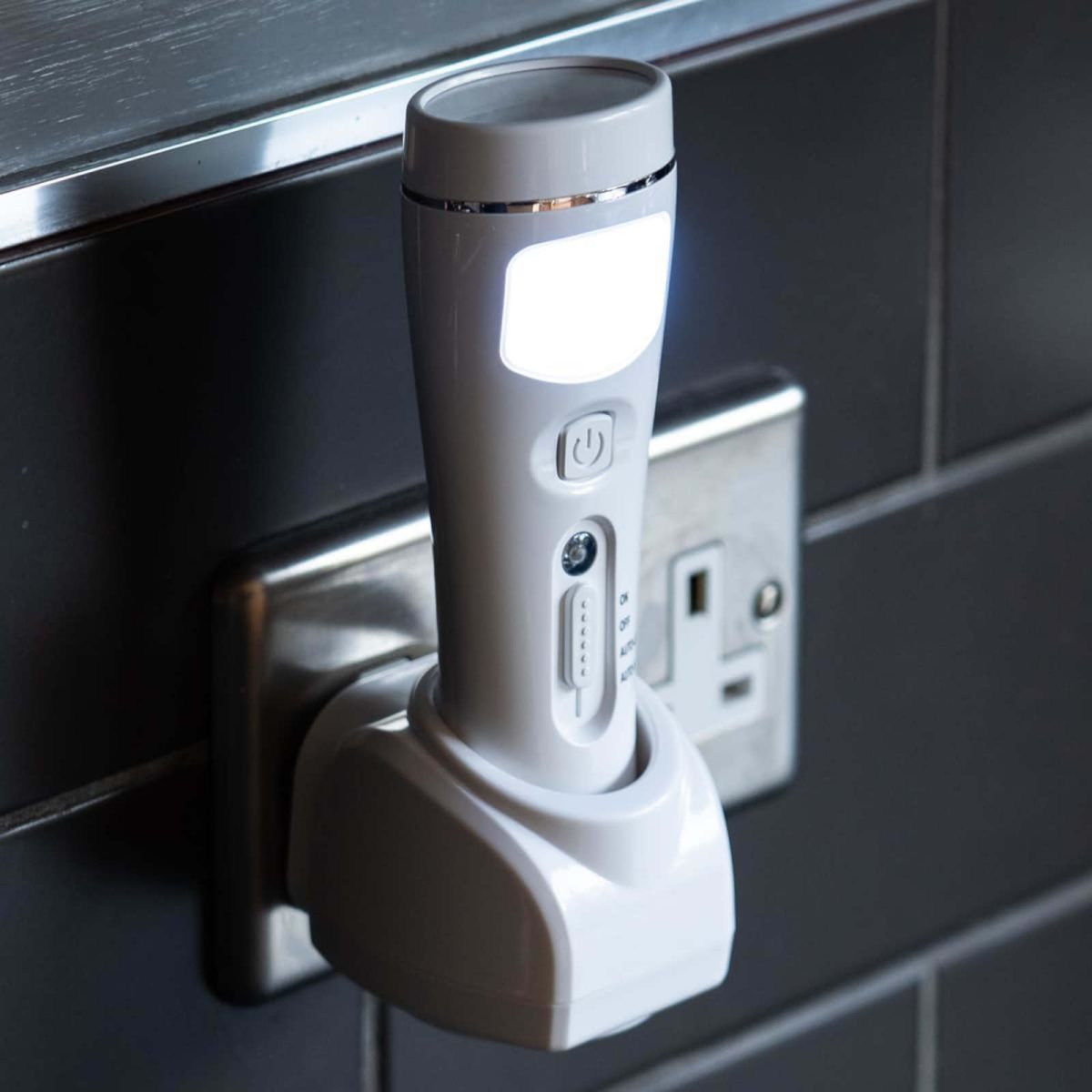
XtraLite NiteSafe
The NiteSafe is a dual-function device that works as both a plug-in nightlight and an emergency torch. It sits in a standard UK plug socket, charges continuously, and the moment mains power fails, it automatically illuminates.
Keeping It Ready
Check your kit twice a year — the same dates you test your smoke alarms works well as a prompt. Replace any food or water that’s approaching its use-by date. Charge the power bank. Replace batteries in the head torch. This is fifteen minutes, twice a year. The kit that isn’t maintained is the kit that fails when you need it.
Frequently Asked Questions
How much water should a home emergency kit contain?
Three litres of drinking water per person per day, for a minimum of three days. For two people, that’s 18 litres — nine standard 2-litre bottles. This covers drinking and basic food preparation. It does not cover washing, which you can manage with wet wipes and hand sanitiser during a short disruption.
Does a home emergency kit need to be expensive?
No. A functional kit for a household of two costs £60–90 for the items you don’t already own. The food and water are things you’d buy anyway — you’re simply rotating stock. The head torch, radio, and power bank are the main purchases, and none need to be specialist or expensive to be reliable.
Should I keep my home emergency kit in a grab bag?
Only if you’re planning for evacuation as well as staying put — and in that case, you’d want two separate setups. A stay-put kit lives in a fixed location in the home; a grab bag lives by the door and is designed to be picked up and taken. Mixing the two means neither is optimised for its purpose.
How often should I check my home emergency kit?
Twice a year at minimum. The easiest way to remember is to tie it to the same dates you test your smoke and carbon monoxide alarms — many people do this at the clocks changing in March and October. Check food and water dates, charge the power bank, and test the torch.
What’s the most important item in a home emergency kit?
A head torch, kept accessible. It’s the item you need in the first thirty seconds of a power cut — before you’ve opened anything else, before you’ve found anything else. Everything else in the kit is easier to access once you can see what you’re doing.
Does my home emergency kit need to cover my pets?
Yes, if you have pets. Include food, water, any medication, and — in winter — some means of keeping them warm. A pet first aid kit is worth having if you have animals. See the Animals in Extreme Weather guide for a full breakdown of pet-specific preparation.
Build Your Resilience
Further Reading: Related Guides
- How to Prepare for a Power Cut
- Blackout Box
- 72-Hour Grab Bag
- Heating Without Electricity
- Managing Essential Medication
All our guides can be found listed on our resilience hub.
Gear We’ve Tested & Reviewed
- Energizer Vision HD+ Head Torch
- FosPower Emergency Radio
- Silentnight Heat Genie Self Heating Giant Blanket
- INIU 20,000mAh Power Bank
- General Medi First Aid Kit
- HotHands Hand Warmers
All our reviews can be found on our reviews and resources page.