
So you’ve bought a portable power station — an Anker SOLIX C300X, a Jackery Explorer 1000 v2, an EcoFlow Delta 2, or an EcoFlow Delta 3 Max — and mains charging has kept it topped up so far. But mains is exactly what disappears in the scenarios these things are meant for. Turning it into a solar portable power station is what makes it useful during a multi-day power cut, at a rural property with no hookup, or anywhere else the wall socket isn’t an option.
The catch is that every brand handles solar input differently, and the wrong panel either charges at a crawl or doesn’t charge at all. Here’s exactly which Renogy panel matches each unit, and why.
Why Matching a Portable Power Station With Solar Panel Charging Isn’t One Size Fits All
Every power station has a maximum solar input — a wattage ceiling built into the charging circuit that it will not exceed, no matter how big a panel you connect. Go over it and the unit simply caps the input at its own limit; you haven’t broken anything, you’ve just paid for solar capacity you can never use. Go too far under it and you’re waiting far longer than you need to for a full charge.
The four units in this guide have wildly different ceilings — from 100W up to 500W — because they’re built for different jobs. The C300X is a phone-and-lights unit. The Delta 2 and Delta 3 Max are built to run a fridge through a multi-day outage. The panel that’s right for one is either laughably undersized or a waste of money on another.
One practical note before the per-unit breakdown: Renogy panels ship with standard MC4 connectors. Whether that plugs straight into your power station’s solar input or needs an adapter cable depends on the unit — check what’s included with the panel, or what your power station’s port actually takes, before you order.

🦆 Keith
Don’t Be Keith
Keith wires two panels in series without checking his power station’s maximum input voltage, pushes the combined voltage past the ceiling, and the unit refuses to charge at all — he spends twenty minutes convinced the panels are faulty before it occurs to him to read the spec sheet.
Anker SOLIX C300X: The Right Renogy Solar Panel
The C300X tops out at 100W solar input — sensible for a 288Wh unit that’s designed to keep phones charged and a light running, not a fridge. There’s no point buying anything bigger; the unit simply won’t take it.
The match here is the Renogy 100W Portable Solar Panel — a folding panel with a built-in kickstand that lands almost exactly on the C300X’s ceiling. It’s the same size and weight as the panel Anker sell for their own units, at a lower price, and it packs down small enough to live in a grab bag rather than a shed.
Renogy 100W Portable Solar Panel
A 100W folding solar panel sized exactly to entry-level power stations like the Anker SOLIX C300X — no wasted capacity, kickstand included
Our Full Review: Renogy 100W Portable Solar Panel →
Anker SOLIX C300X
Two proper plug sockets, 288Wh of long-life LiFePO4 and 80% recharged in 50 minutes: the essentials kept running through a power cut.
Our Full Review: Anker SOLIX C300X →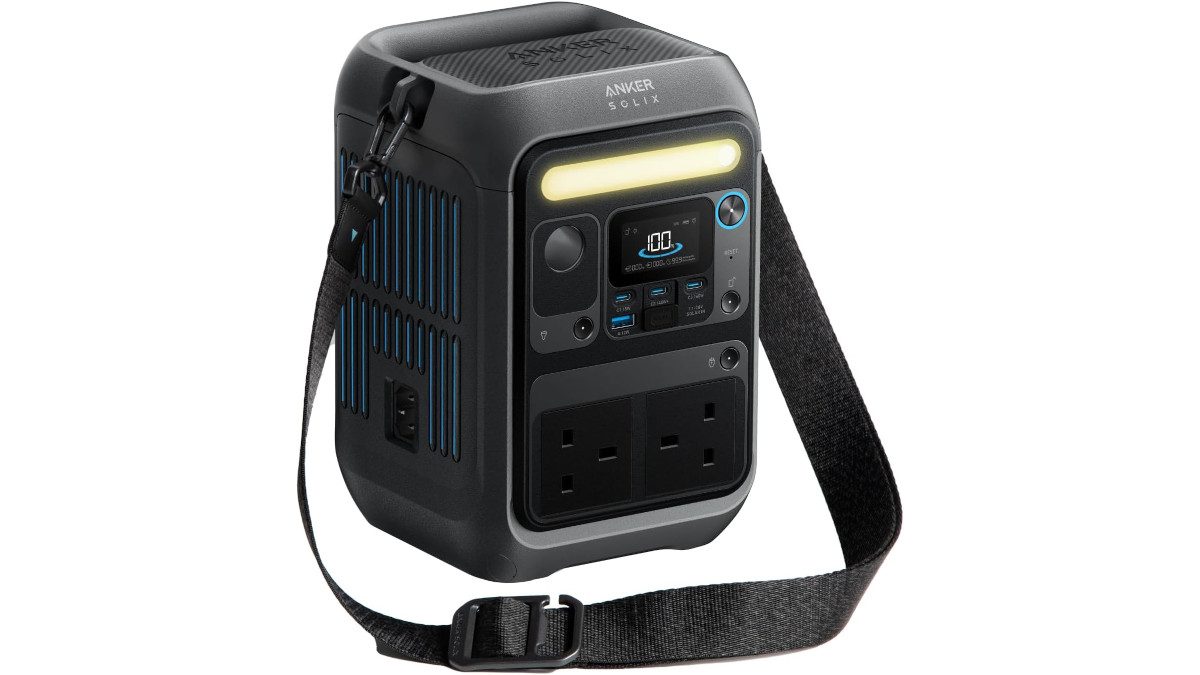
Jackery Explorer 1000 v2: The Right Renogy Solar Panel
The Jackery Explorer 1000 v2 has a genuinely generous 400W max solar input, split across two DC ports that combine to take the full 400W when both are used. The right Jackery solar panel for this unit needs to land close to that ceiling without going past it, and Renogy happen to sell exactly the panel for the job.
The Renogy N-Type Lightweight Suitcase — 400W variant (£399.99) is a single folding panel that sits right at the Explorer 1000 v2’s limit. One panel, one connection, no series-versus-parallel wiring decision to make — you get the full 400W the unit can accept from a single piece of kit.
Renogy 400W Lightweight Portable Solar Suitcase
One Renogy panel that lands exactly on the Jackery Explorer 1000 v2’s 400W solar ceiling — no pairing, no wiring decisions.
Our Full Review: Renogy 400W Lightweight Portable Solar Suitcase →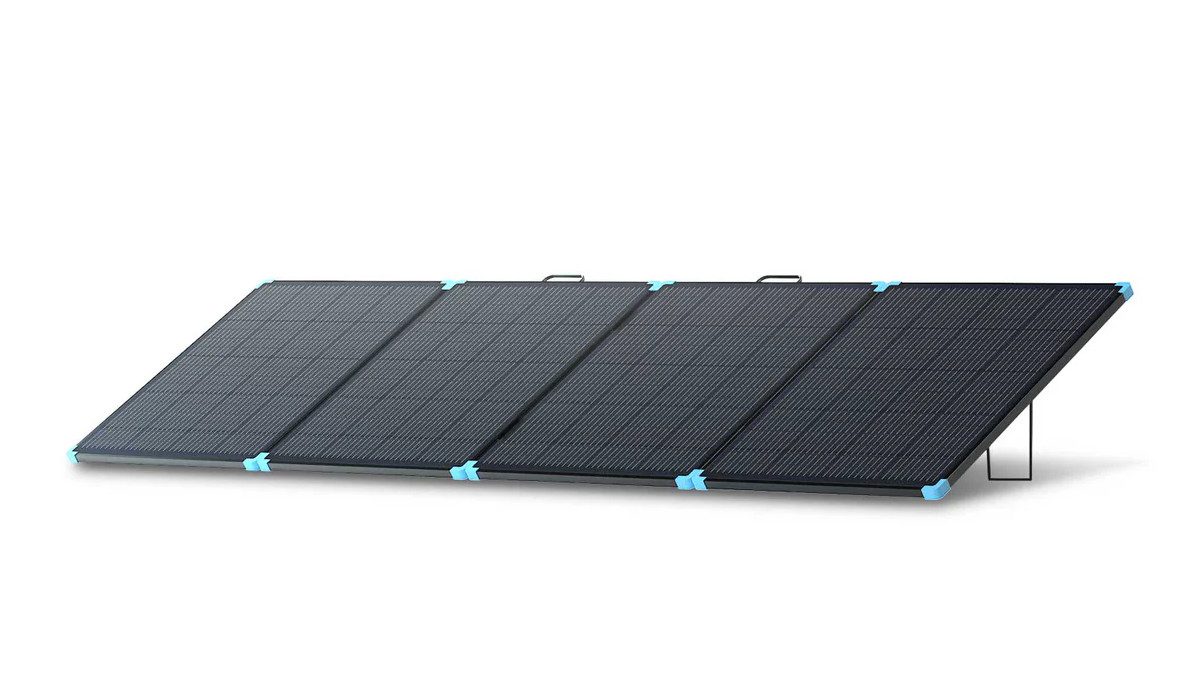
Jackery Explorer 1000 v2
1070Wh LiFePO4 power station that runs the fridge, CPAP machine, and kitchen essentials through a UK power cut — silently, and with a 10-year battery lifespan.
Our Full Review: Jackery Explorer 1000 v2 →
EcoFlow Delta 2: The Right Renogy Solar Panel
The Delta 2 accepts up to 500W solar input, and EcoFlow’s own official setup uses two 220W panels wired in parallel to get there. The best EcoFlow solar panel pairing for the Delta 2 follows that same logic rather than reinventing it.
Two Renogy N-Type Lightweight Suitcase panels in the 220W variant (£219.99 each, ~£440 for the pair) wired in parallel gets you close to the 500W ceiling with headroom to spare, using the exact configuration EcoFlow themselves recommend — just at a lower price than the branded equivalent.
Renogy 220W Lightweight Portable Solar Suitcase
The exact panel pairing EcoFlow themselves recommend for the Delta 2 — two 220W panels in parallel.
Our Full Review: Renogy 220W Lightweight Portable Solar Suitcase →
EcoFlow DELTA 2 Portable Power Station
1024Wh LFP power station that runs standard UK kettles, expands to 3kWh with extra battery packs, and switches to battery power in under 30 milliseconds .
Our Full Review: EcoFlow DELTA 2 Portable Power Station →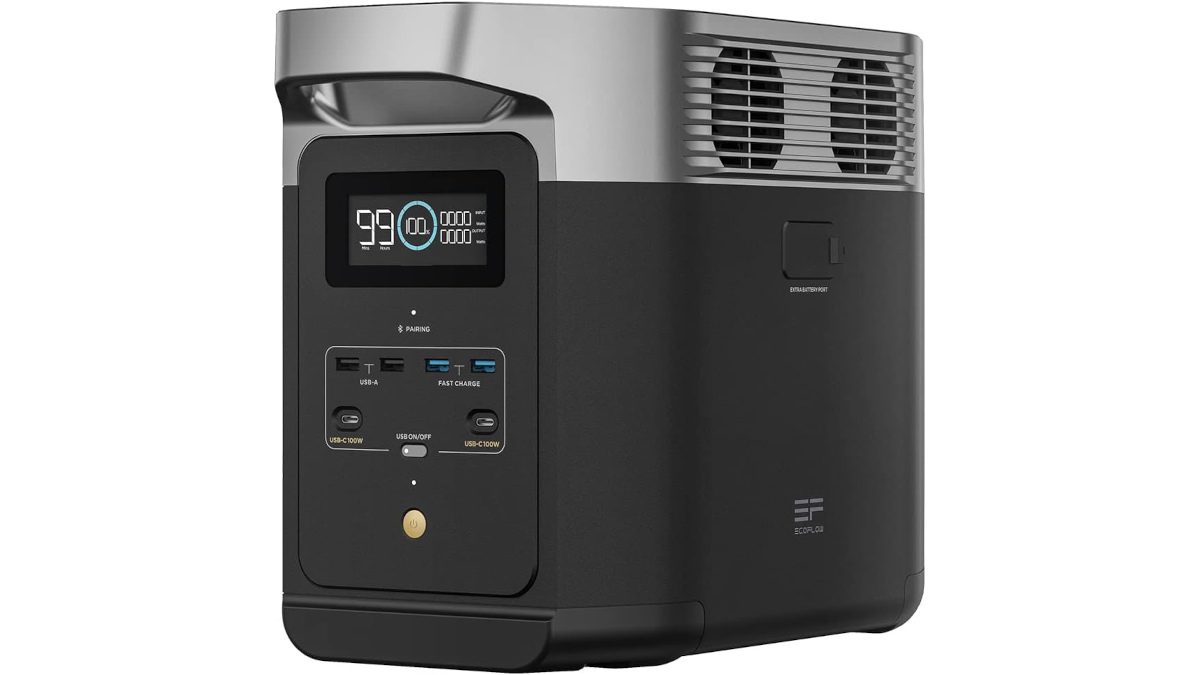

🤡 Camping Clown
He Has The £4,000 Version
I own a rigid 320W solar panel pair, a 500W MPPT controller, and enough cabling to wire a shed — all of it deployed, every single time, to charge a power bank the size of a paperback book.
EcoFlow Delta 3 Max: The Right Renogy Solar Panel
The base Delta 3 Max (not the Plus) shares the Delta 2’s 500W solar input ceiling, but if you’re setting this one up as a semi-permanent fixture — shed roof, static caravan, summer house — a rigid panel makes more sense than a foldable one you’re putting away every night.
The Renogy N-Type 320W Monocrystalline 2-Pack (£319.99 for two panels, 640W nominal) is the rigid option. Wired to stay within the Delta 3 Max’s 500W input cap, it still gives you a genuinely mounted, weatherproof setup rather than something you’re folding up and carrying indoors after every use.
Renogy N-Type 320W Monocrystalline Solar Panel 2-Pack
Two rigid 320W Renogy panels, permanently mounted and rated well above the EcoFlow Delta 3 Max’s input cap — because real-world UK sun never hits the spec sheet number.
Our Full Review: Renogy N-Type 320W Monocrystalline Solar Panel 2-Pack →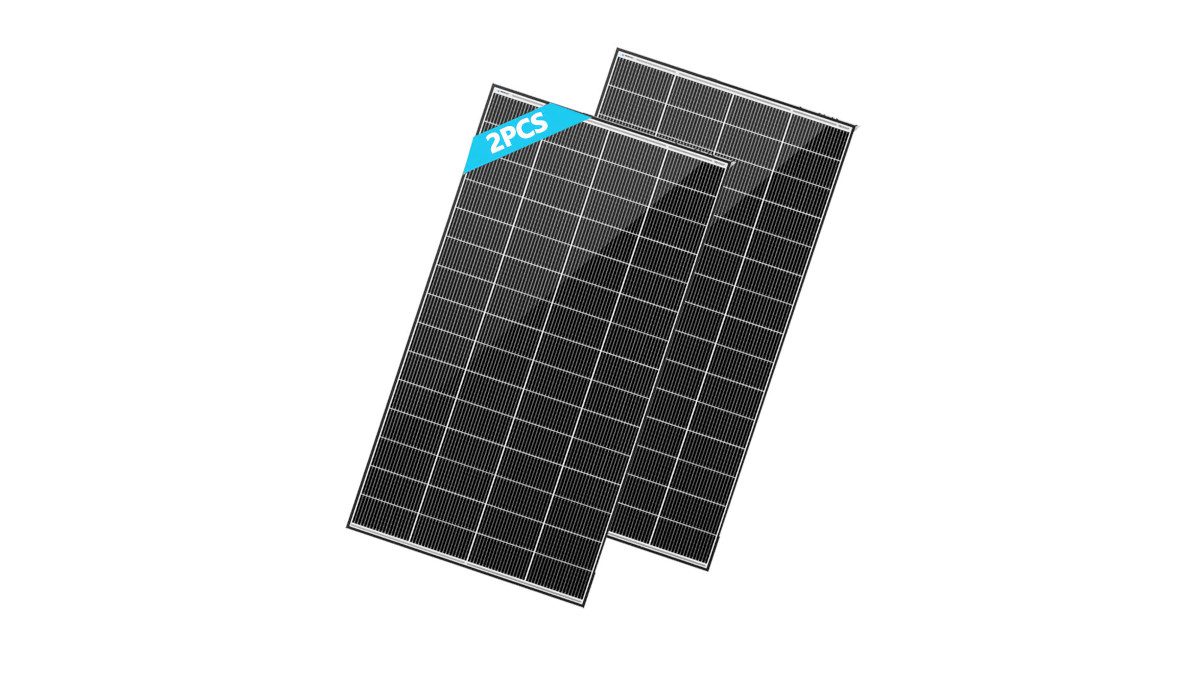
EcoFlow Delta 3 Max
The 2kWh EcoFlow Delta 3 Max charges to 80% in 51 minutes, runs every UK appliance via its 3,200W X-Boost, and switches to battery in under 10ms — the step up for households where 1kWh was never quite enough.
Our Full Review: EcoFlow Delta 3 Max →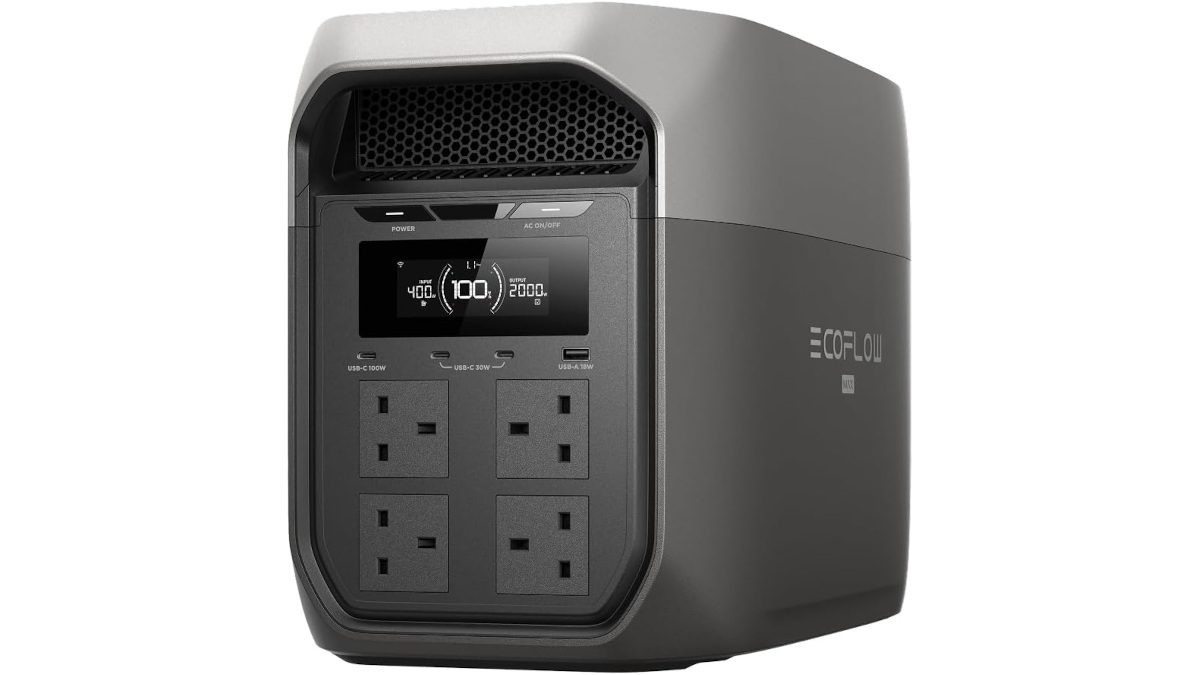
Rigid, Flexible, or Portable: Which Renogy Solar Panels Suit Your Setup
The recommendations above cover the two most common cases — portable panels for a grab-and-go setup, rigid for something permanently mounted — but Renogy’s range covers a third style worth knowing about.
- Portable/foldable — built-in stand, folds flat, lives in a cupboard between uses. Right for anyone who wants solar charging as an occasional backup rather than a permanent installation.
- Rigid — glass-fronted, aluminium-framed, bolts down and stays down. Right for a shed roof, a static caravan, or anywhere the panel can be left in place permanently.
- Flexible — thin, bendable, and light enough to curve over a campervan roof or a narrowboat cabin where a rigid frame won’t sit flat. The Renogy 200W Flexible Monocrystalline (£169.99) is the pick if your mounting surface isn’t flat, though it’s less durable long-term than a rigid panel and worth treating as the specialist option rather than the default.
If you’re not mounting to a curved surface, portable or rigid will serve you better and last longer than flexible.
Connecting Your Renogy Panel: The Basics
Setting one of these up isn’t complicated, but it helps to know the order of operations before you’re stood in the garden working it out. Unfold the panel and prop it up on its kickstand, angled roughly towards the sun. Locate the solar input port on your power station — usually labelled DC IN or Solar, and separate from the port used for mains or car charging. Connect the panel’s cable, using an adapter if the connector doesn’t match.
Most units show a charging icon or wattage reading on the display within a few seconds; if nothing happens, check the connection before assuming a fault. From there, running a portable power station with a solar panel connected is just a case of leaving it in the sun and repositioning it every hour or two if you want to squeeze out the maximum output.
Getting the Most Out of UK Solar Charging
Every wattage figure in this guide is the panel’s rated maximum under laboratory test conditions — direct overhead sun, no cloud, panel at the optimum angle. A UK summer day with reasonable sun will get you most of the way there. A UK winter day, realistically, won’t. Plan for solar to top up a power station over the course of a day rather than fully recharge it in a couple of hours, especially outside summer months.
A few things that make a genuine difference to how much you actually get out of any of these panels:
As a rough real-world guide: a 100W panel in decent UK summer sun might realistically deliver 60–70W once you account for angle and cloud, dropping to a fraction of that in winter. Scale that logic up across the bigger panels in this guide and it’s clear why the Delta 2 and Delta 3 Max pairings are sized with headroom rather than an exact match — a portable power station with solar panel charging that’s only ever hitting 70% of its rated output still needs to comfortably clear the wattage you actually need, not just the spec-sheet figure.
- Angle the panel towards the sun rather than laying it flat — even a rough tilt adds noticeably more output than flat-on-the-ground.
- Move it through the day if you can. A panel that catches morning shade and afternoon sun does far better than one left in one fixed spot.
- Keep the panel clean. Dust and grime cut output more than most people expect, and it costs nothing to wipe it down.
- Don’t write off cloudy days entirely — panels still generate meaningful output through cloud cover, just at a reduced rate, so it’s still worth deploying rather than waiting for full sun.
A Portable Power Station With Solar Panel vs a Full DIY Solar System
Everything in this guide assumes you’ve already got a power station and want to add solar to it — a portable power station with a solar panel bolted on, not a permanent installation. If what you’re actually after is a proper off-grid solar setup for a shed, static caravan, or whole-property backup — built from individual panels, a charge controller, and a standalone battery bank rather than an all-in-one unit — that’s a bigger project with its own sizing rules, and we’ll be covering it in a separate guide. This one is specifically for making the power station you already own work without mains.
Frequently Asked Questions
Can I use any solar panel with my portable power station, or does it have to be the same brand?
No — most power stations accept third-party panels as long as the voltage and connector are compatible. Renogy panels use standard MC4 connectors; check whether your unit’s port takes MC4 directly or needs an adapter.
What happens if I connect a solar panel rated higher than my power station’s max solar input?
Nothing breaks — the unit simply caps input at its own limit. You’ve just paid for capacity you can’t use.
How much slower is solar charging than mains, realistically, in the UK?
Expect hours rather than the 1–2 hours mains charging typically takes, and outside summer, plan for solar to top up over a full day rather than fully recharge in one sitting.
Do I need a separate MPPT charge controller?
No — all four units in this guide have MPPT charging built in. A panel connects straight to the solar input port.
Rigid, flexible, or portable — which should I actually buy?
Portable if you want occasional backup you can store away; rigid if it’s going on a shed roof or static caravan permanently; flexible only if you’re mounting to a curved surface like a campervan or narrowboat roof.
Can I use two panels together to charge faster?
Yes, as long as the combined wattage stays under your unit’s solar input ceiling — that’s exactly how the EcoFlow Delta 2 and Delta 3 Max recommendations in this guide work.
Build Your Resilience
Further Reading: Related Guides
All our guides can be found listed on our resilience hub.