
A power cut that lasts four hours is a minor inconvenience. One that lasts four days is something else entirely — and the UK has come uncomfortably close to finding out what that looks like more than once. The question most households eventually reach is: how do I keep something running when the grid doesn’t?
Portable power stations have become the answer a lot of people land on. They are not power banks. They are not petrol generators. They sit somewhere between the two — and understanding exactly where will save you either buying something too small to be useful, or spending several hundred pounds on something that turns out to be overkill for a flat in Coventry.
What a Portable Power Station Actually Is
A portable power station is essentially a large rechargeable battery in a box, with a proper inverter built in. That inverter is what matters: it converts the DC power stored in the battery into 230V AC mains power — the same electricity that comes out of your wall sockets.
That makes it fundamentally different from a power bank, which outputs USB voltages only. Useful for phones and tablets. Useless for a mini-fridge, a CPAP machine, or a fan. And fundamentally different from a petrol generator, which burns fuel, produces exhaust, and cannot be used indoors under any circumstances. A portable power station runs silently, inside, with no fumes, no carbon monoxide, and no need to explain yourself to the neighbours.
The trade-off is capacity. A petrol generator can run indefinitely as long as you have fuel. A portable power station has a fixed amount of energy stored — once empty, you recharge it from the mains, from solar, or from a car socket. For most UK power cuts — which last hours, not weeks — that is not a problem. For extended grid-down scenarios, it is something to plan around.
What Can It Actually Run? Watts and Watt-Hours Explained
Two numbers matter on a portable power station, and they are easy to confuse.
Watts (W) tells you how much power the unit can supply at any one moment — the maximum load it can handle. A 300W power station cannot run a 2,000W kettle. A 1,800W unit can handle most UK household appliances except the heaviest hitters.
Watt-hours (Wh) tells you how much total energy is stored — how long it can sustain a given load. A 1,000Wh unit running a 100W mini-fridge will keep it going for roughly ten hours. Running a 500W appliance, about two hours.
Some real-world numbers for a UK household:
- Smartphone charge: ~20Wh — a 288Wh unit gives you roughly 14 full charges
- Laptop charge: ~60–80Wh — a 288Wh unit covers 3–4 full charges
- LED lamp (10W): runs for 28 hours on a 288Wh unit
- Mini-fridge (100–150W): 7–10 hours on a 1,000Wh unit
- CPAP machine (30–60W): 17–33 hours on a 1,000Wh unit
- Electric fan (50W): roughly 20 hours on a 1,000Wh unit
- Kettle (2,000–3,000W): most portable power stations simply cannot run one. Even those with sufficient wattage will drain hundreds of watt-hours in minutes. Plan on a camping gas stove for hot drinks.
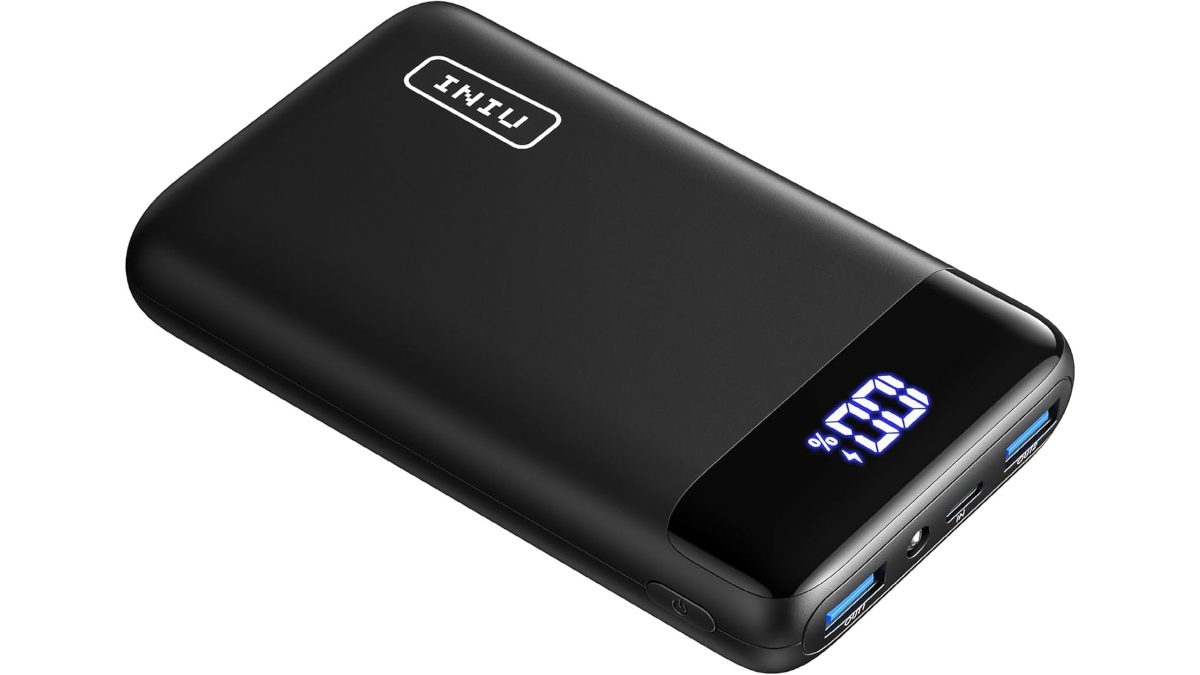
If your main concern is keeping phones charged and having some light, a power bank is genuinely all you need. Our review covers the best option for that job.
INIU 20,000mAh Power Bank
We tested it so you don’t have to — here’s the one thing most power banks get wrong, and why this one doesn’t.
The Entry Level: 200–300Wh — The Sensible Starting Point
The first rung on the power station ladder sits in the 200–300Wh range. Compact enough to carry comfortably, affordable enough to buy without a lengthy internal debate, and capable enough to handle the core use case: keeping phones, tablets, and laptops charged through a power cut — with something left over for a lamp and a radio.
These units are not going to run a fridge. But for a household that needs light, communication, and device charging during a 12–24 hour outage, this tier does the job cleanly. A 300W output handles most small appliances — a CPAP machine, a small fan, a camera charger, a router. The limiting factor is total stored energy, not output rate.
At this price point, LiFePO4 battery chemistry (more on that below) is increasingly standard rather than a premium feature. Look for it on the spec sheet.
Anker SOLIX C300
The entry-level portable power station with LiFePO4 chemistry — 288Wh and 300W pure sine wave in something you can actually carry.
Our Full Review: Anker SOLIX C300 →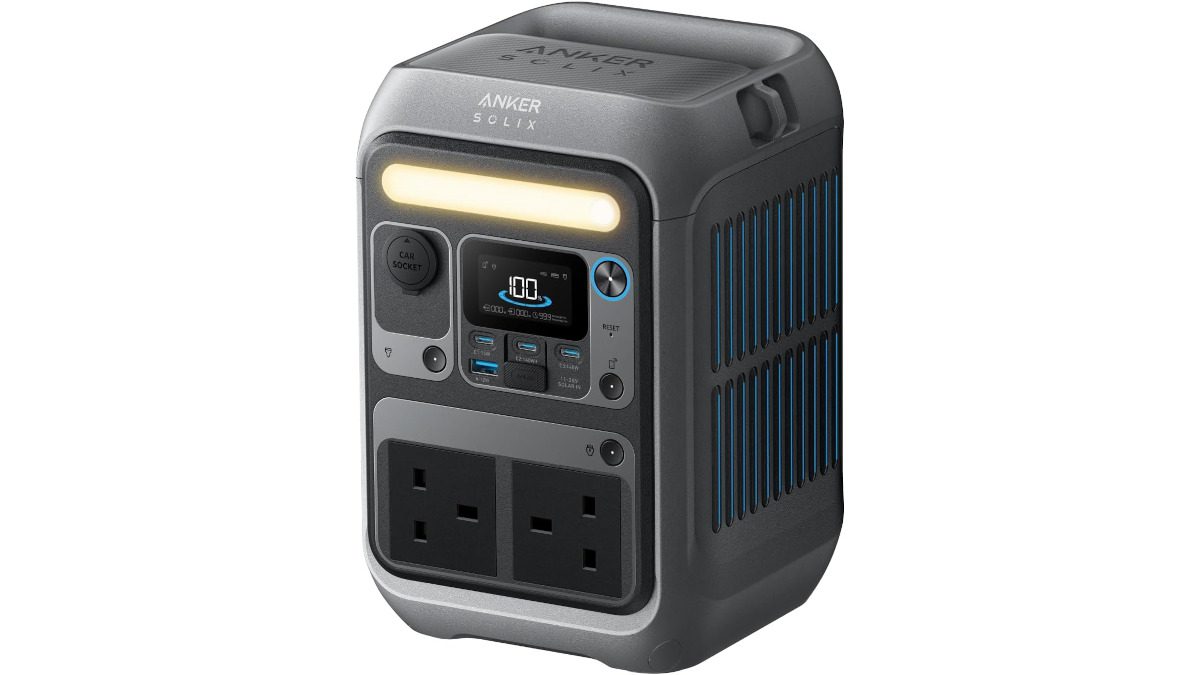

🤡 Camping Clown
He Has The £4,000 Version
I bought a 3,000Wh unit with the matching 200W solar briefcase for my one-bedroom flat in Coventry. The panels don’t fit on my balcony. The unit lives in my wardrobe. I’m genuinely unsure why I didn’t start with the £179 option.
Mid-Range: 1kWh and Up — When You Want to Run Actual Appliances
Once you move into the 1,000Wh range, a portable power station stops being a large phone charger and starts being a genuine household backup. This is the tier where you can run a mini-fridge overnight, keep a CPAP going for several nights without a recharge, run a fan through a summer power cut, or maintain lights and a router for two days.
These units typically output 1,500W or more — enough for most UK household appliances short of the heaviest draws (electric shower, tumble dryer, induction hob). They weigh 8–12kg and cost significantly more, but the jump in practical capability is real.
A 1kWh unit is not twice as useful as a 300Wh unit for most households. It is ten times more useful for anyone managing medication that needs refrigerating, running medical equipment overnight, or trying to maintain any semblance of normality during an extended outage. Pure sine wave output is standard at this tier — essential for CPAP machines, oxygen concentrators, and anything with a compressor motor.
Jackery Explorer 1000 v2
1070Wh LiFePO4 power station that runs the fridge, CPAP machine, and kitchen essentials through a UK power cut — silently, and with a 10-year battery lifespan.
Our Full Review: Jackery Explorer 1000 v2 →
Battery Chemistry: LiFePO4 vs Lithium-Ion
Most consumer electronics use lithium-ion batteries — specifically NMC (nickel manganese cobalt). They are energy-dense, well understood, and cost-effective to produce. They are also the chemistry that occasionally makes the news when things go wrong. For a device sitting in your living room containing a kilowatt-hour of stored energy, that is worth knowing about.
LiFePO4 (lithium iron phosphate) is a different lithium chemistry. It is inherently more thermally stable — significantly less prone to the thermal runaway that causes battery fires under stress, overcharging, or physical damage. It also lasts considerably longer: 3,000–5,000 charge cycles compared to 500–1,000 for NMC. For a power station you charge a few times a month in storm season and less often the rest of the year, a longer cycle life translates directly into a better long-term purchase.
The trade-off is marginally lower energy density — a LiFePO4 unit is slightly heavier for the same capacity. In something that is already sitting on the floor rather than in your pocket, this barely registers.

🐔 Chicken Licken
Did You Know?
LiFePO4 batteries are rated for three to five thousand charge cycles. Regular lithium-ion manages five hundred if you’re lucky. I’ve been saying this for years. Everyone kept buying the cheaper option. Now they’re on their third unit and I’m still on my first.
The EcoFlow Delta 2 is worth noting here for one additional reason: it is expandable. External battery packs can push the total capacity well beyond the base unit — useful if your needs grow over time or if you want extended runtime without replacing the unit entirely.
EcoFlow DELTA 2 Portable Power Station
1024Wh LFP power station that runs standard UK kettles, expands to 3kWh with extra battery packs, and switches to battery power in under 30 milliseconds .
Our Full Review: EcoFlow DELTA 2 Portable Power Station →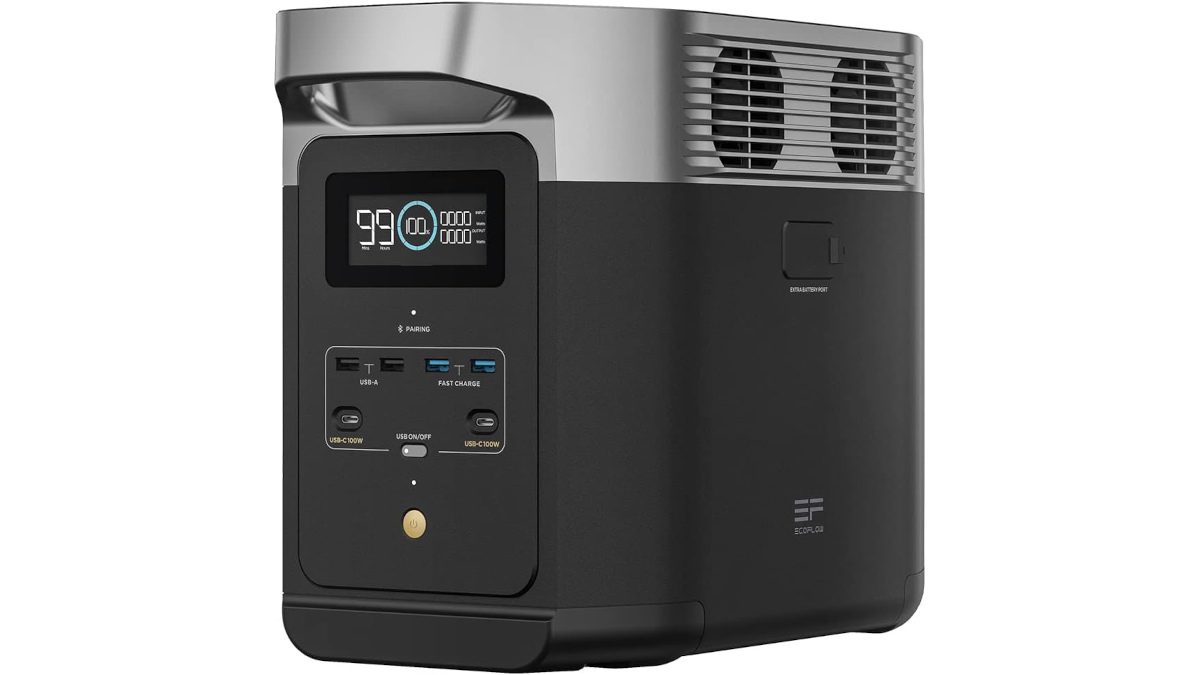
If the Delta 2’s 1,024Wh leaves you doing mental arithmetic every time an outage stretches past six hours, the Delta 3 Max doubles the capacity to 2,048Wh — enough to run a fridge and freezer simultaneously for 15–20 hours, or virtually any UK appliance via its 3,200W X-Boost. It also charges to 80% in 51 minutes, which means a brief generator run is enough to restore useful capacity.
EcoFlow Delta 3 Max
The 2kWh EcoFlow Delta 3 Max charges to 80% in 51 minutes, runs every UK appliance via its 3,200W X-Boost, and switches to battery in under 10ms — the step up for households where 1kWh was never quite enough.
Our Full Review: EcoFlow Delta 3 Max →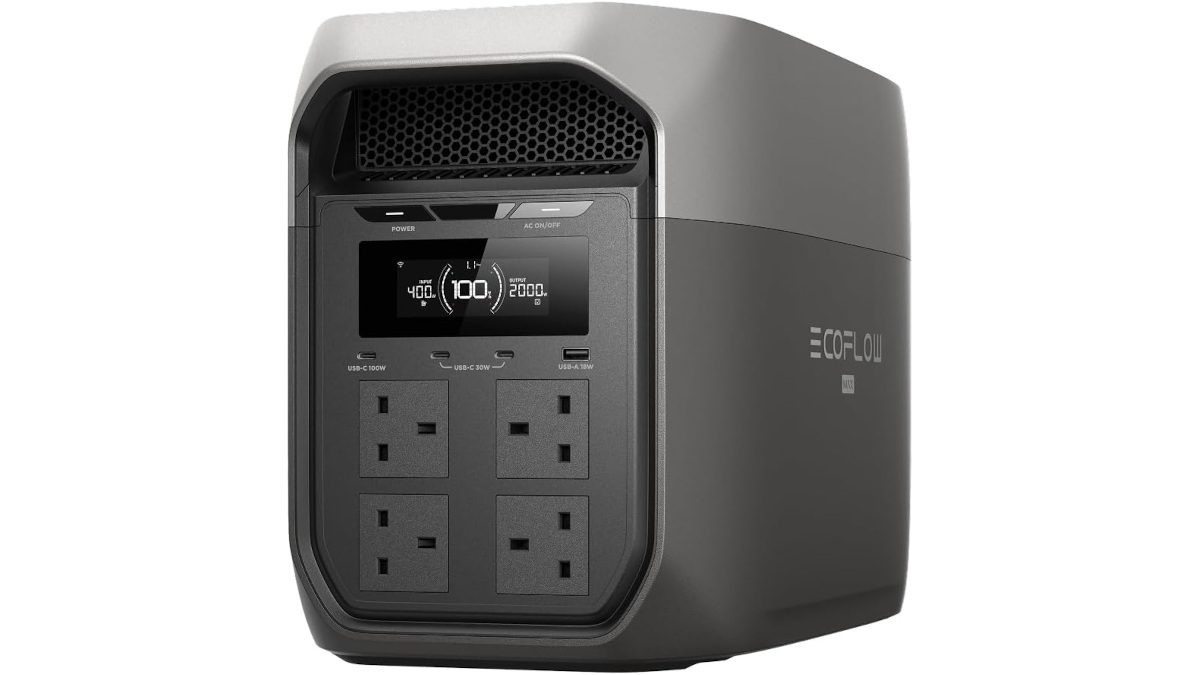
Solar Charging in the UK — The Honest Version
Most portable power stations include a solar input, and the marketing shots usually show them next to a fold-out panel in glorious sunshine. The UK version of that scenario involves considerably more cloud.
What solar input actually delivers in practice:
- Summer, clear day: a 100W panel generates close to its rated output for 5–7 hours — roughly 500–700Wh per day. Enough to keep a 1kWh unit reasonably topped up between uses.
- Winter, overcast (which is most of it): the same panel might generate 30–60Wh all day. Enough for phone charging. Not enough to meaningfully replenish a 1kWh unit.
- The honest summary: solar is a useful top-up, particularly in summer. It is not a reliable standalone charging source for UK winters. Treat a portable power station as a grid-charged emergency reserve that solar helps maintain between uses — not as an off-grid solution.
If solar input matters to you, look for a unit rated for 200W or more of solar input, and budget for two panels rather than one. Panel quality and cable length matter too — a long run of thin cable loses meaningful output before it reaches the unit.
What to Look For When Buying
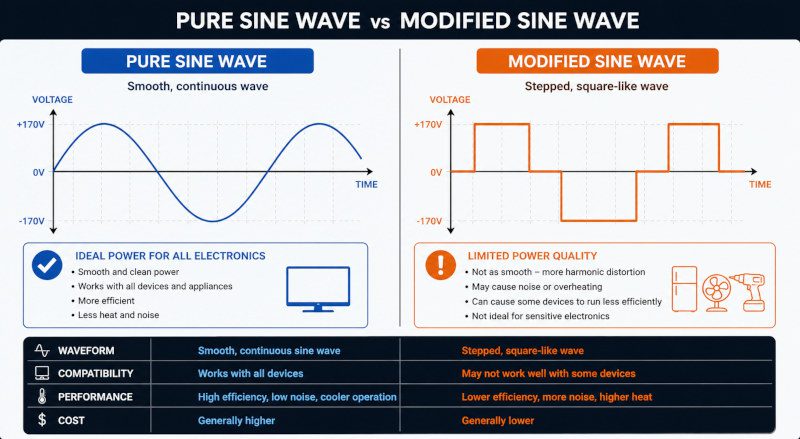
Pure sine wave output. Non-negotiable if you are running a CPAP machine, oxygen concentrator, insulin pump charger, or anything with a motor or compressor. Modified sine wave costs less to produce but can damage sensitive electronics and void warranties on medical equipment. Every unit in this guide outputs pure sine wave.
LiFePO4 battery chemistry. If the listing does not say LiFePO4 explicitly, assume it is NMC. The spec sheet should state it clearly.
Output wattage matching your appliances. Check the wattage of whatever you plan to run and make sure the unit’s continuous output rating exceeds it — not just the surge rating. Surge wattage is for motor start-up; continuous is what sustains it.
Pass-through charging. The ability to charge the unit from the mains while simultaneously powering devices. Useful for running it permanently plugged in so it is always full when you need it. Not all units handle this efficiently — some charge more slowly in pass-through mode.
Weight and handles. A 1kWh unit weighs 9–12kg. If you need to move it, handles matter more than you might expect. Check they exist before you buy.
Warranty. Established brands — Jackery, EcoFlow, Anker — offer 2–5 year warranties. For something at this price point that you are counting on in an emergency, that matters. No-name units from marketplace sellers are a gamble you do not want to be losing during a January power cut.
Build Your Resilience
Further Reading: Related Guides
Gear We've Tested & Reviewed
- INIU 20,000mAh Power Bank Review
- Anker SOLIX C300 Portable Power Station Review
- Jackery Explorer 1000 v2 Portable Power Station Review
- EcoFlow Delta 2 Portable Power Station Review
- EcoFlow Delta 3 Max Portable Power Station Review
- Renogy 100W Portable Solar Panel Review
- Renogy 400W Solar Suitcase Review
- Renogy 220W Solar Suitcase Review
- Renogy N-Type 320W Solar Panel 2-Pack Review