
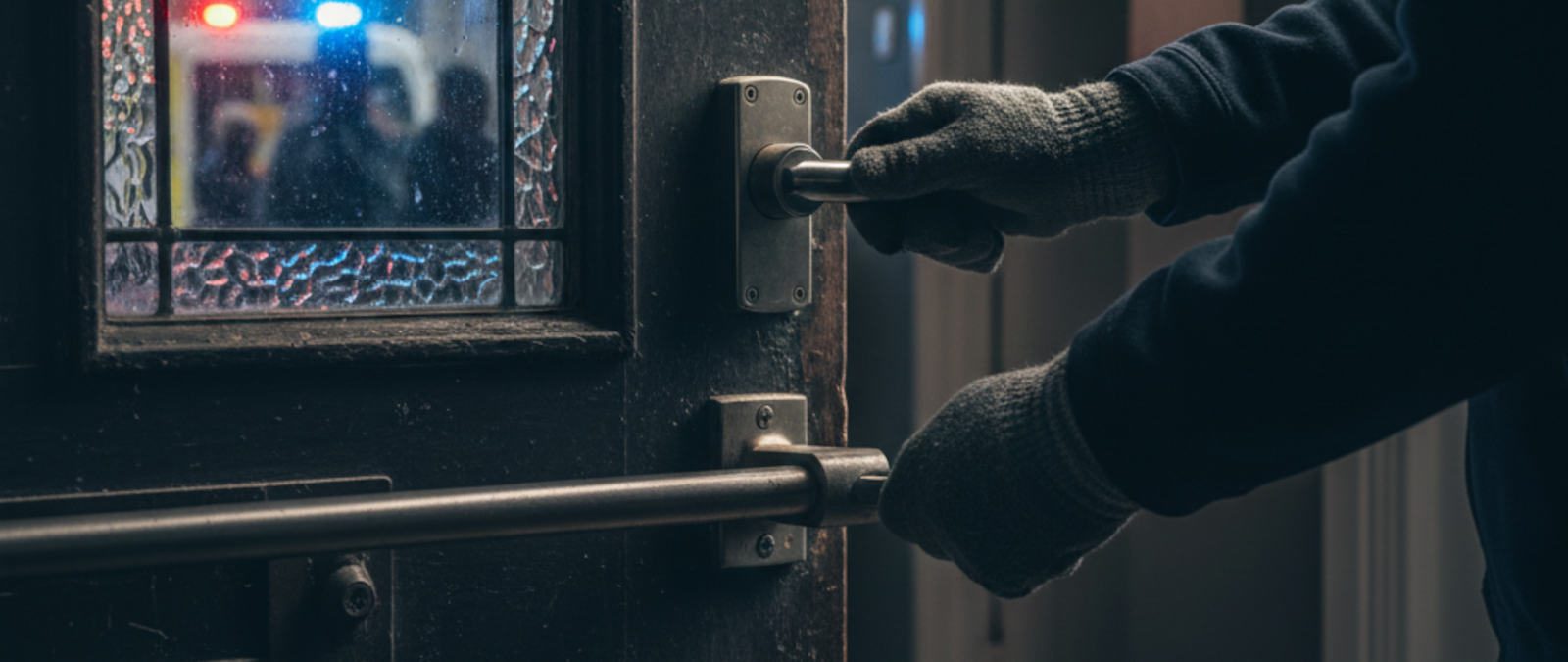
When Storm Arwen knocked out power to 240,000 UK homes in November 2021, some households went without electricity for over nine days. While most people focused on staying warm and finding food, police forces across Northumberland and Durham reported a 34% spike in burglaries during the outage period.
The pattern was predictable: homes went dark, security systems failed, streets turned pitch black, and opportunistic criminals moved through neighbourhoods that suddenly had no CCTV, no alarms, and no police presence—because officers were dealing with storm damage and traffic chaos.
Your home security during normal times probably relies on electronic systems: smart doorbells, alarm systems, motion-sensor lights, maybe CCTV cameras. During power cuts, floods, or other widespread disruption, all of that stops working. What’s left is basic physical security and common sense—two things most UK households haven’t thought about in years.
This guide covers practical steps to secure your property when infrastructure fails, whether you’re sheltering at home during a power cut or evacuating during flooding. No expensive security systems required—just locks, lights, and a clear understanding of what criminals look for when emergency services are stretched thin.
Why Emergencies Increase Home Security Risks
Crime doesn’t stop during disasters. In some cases, it increases because conditions favour criminals and hinder law enforcement.
During the August 2011 riots, Metropolitan Police recorded over 3,100 crimes in London alone—primarily looting and burglary. The pattern spread to Birmingham, Manchester, and Liverpool not because of coordinated political action, but because word spread quickly that police were overwhelmed and response times had collapsed.
In normal circumstances, police aim to respond to burglaries in progress within 10-15 minutes in urban areas. During widespread emergencies, that response time can stretch to hours, days, or not come at all if officers are prioritising life-threatening situations.
Power cuts eliminate your electronic security infrastructure in seconds. Ring doorbells go offline. Smart locks fail. CCTV cameras stop recording. Burglar alarms might work briefly on battery backup, but if nobody can hear them over the noise of a storm—or if police can’t respond anyway—they’re useless.
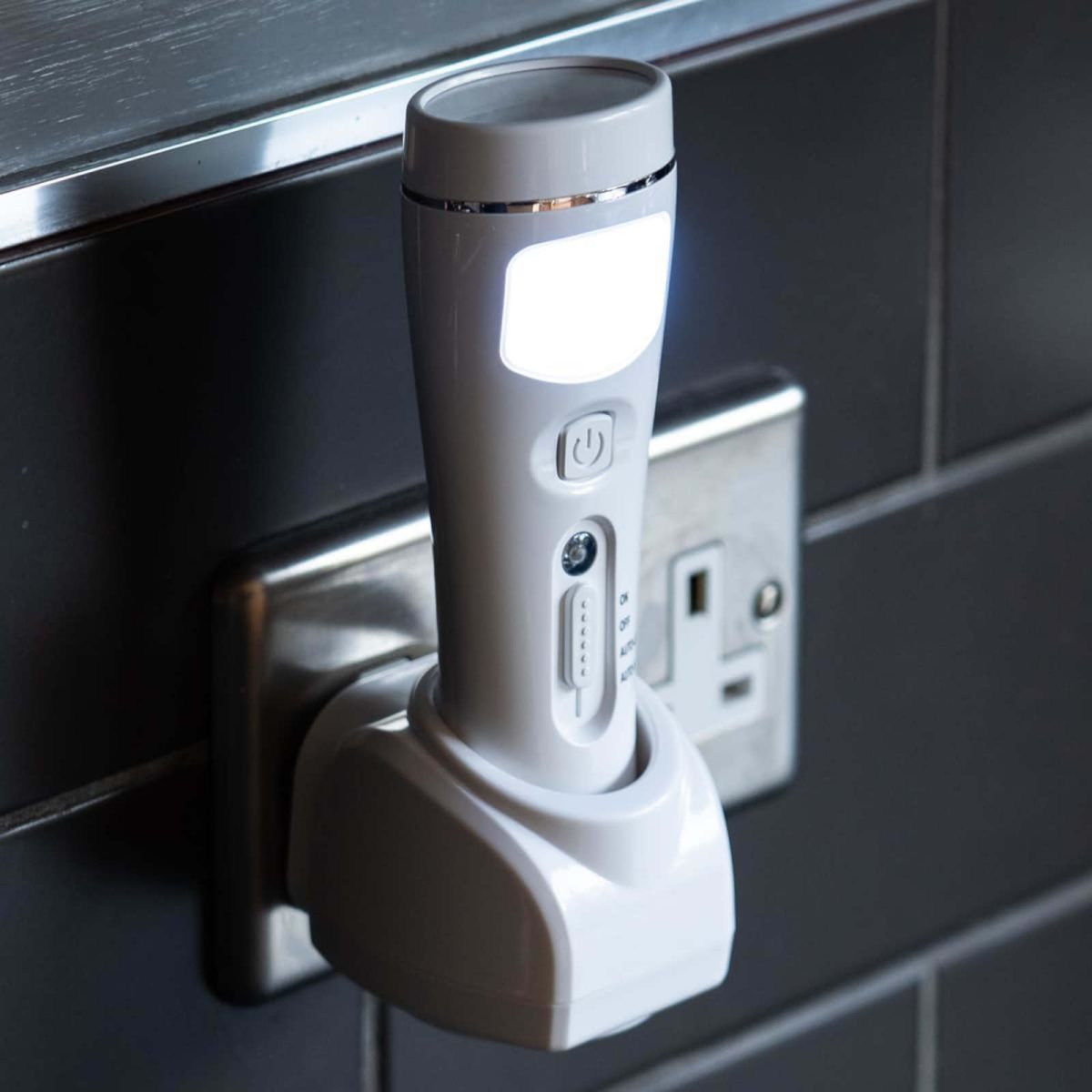
XtraLite NiteSafe
The NiteSafe is a dual-function device that works as both a plug-in nightlight and an emergency torch. It sits in a standard UK plug socket, charges continuously, and the moment mains power fails, it automatically illuminates.
Street lighting failures create dark corridors through residential areas. Natural surveillance—neighbours glancing out windows, people walking dogs, cars driving past—drops to nearly zero when everyone’s inside trying to stay warm or manage without power.
During Storm Christoph in January 2021, Greater Manchester Police reported that burglaries increased by 18% in evacuated flood zones. Criminals knew which streets were empty because council evacuation notices had been posted publicly, and they had hours to work without interruption.
This isn’t paranoia—it’s documented reality. UK police forces publish crime statistics after every major incident, and the pattern is consistent: emergencies create opportunities for crime because the systems that normally prevent it stop functioning.
Security Vulnerabilities During Power Cuts
Modern home security depends almost entirely on mains electricity. When power fails, your security infrastructure collapses faster than most people realise.
Electronic security systems offline: Ring doorbells, Nest cameras, and smart locks all require power and Wi-Fi. During outages, they disconnect immediately unless you have battery or generator backup. Your smartphone app might still show them as “connected” for several minutes before updating to reflect the outage, giving you false confidence that your property is monitored when it isn’t.
Street lighting failures: Council-maintained street lights fail during power cuts, plunging entire residential streets into darkness. This creates perfect conditions for burglars who no longer risk being seen by passing cars or pedestrians. In rural areas, the darkness is total. In urban areas, some ambient light from neighbouring powered areas might provide minimal visibility, but it’s not enough to deter determined criminals.
Neighbours distracted or evacuated: Natural surveillance—the informal watching that happens when people are home and aware—disappears during emergencies. Neighbours are dealing with their own problems: managing frozen pipes, cooking without electricity, or evacuating to rest centres. Nobody’s watching the street, and criminals know it.
Alarms without power or battery backup: Traditional burglar alarms work on mains power with battery backup that typically lasts 4-8 hours. After that, the system goes silent. Even if the alarm sounds, response times from monitoring companies or police collapse during widespread emergencies when hundreds of alarms are triggering simultaneously.
Automatic systems fail: Electric gates, garage door openers, and automatic bollards all require power. If you normally rely on these for access control, you might find your property easier to enter during an outage than during normal times—especially if manual override systems haven’t been tested in years.
Timer switches stop working: Many households use timer switches to create a “lived-in look” by turning lights on and off at set times. During power cuts, these stop functioning, and your home goes completely dark while everyone else’s does the same—removing the deterrent effect of appearing occupied.
Physical Security Basics (Works Without Power)
The most reliable security measures are mechanical, not electronic. Locks, bolts, and physical barriers work regardless of power availability, and they’re what you should default to when infrastructure fails.
Deadbolts on all external doors: Standard Yale-type locks can be slipped or forced relatively easily. A five-lever mortice deadlock (British Standard BS3621) provides significantly better security and requires no power. Most insurance policies insist on them. Fit them to front and back doors, and actually use them—many households have deadbolts fitted but never lock them because the Yale lock seems “good enough”. During emergencies, good enough isn’t good enough.
Window locks on ground floor and accessible windows: Ground floor windows and any upper windows accessible via flat roofs, drainpipes, or balconies need locks. Key-operated window locks cost £5-£15 per window and take minutes to fit. Keep the keys nearby (but not visible from outside) so you can escape in a fire, but ensure windows are locked when you’re out or asleep.
Sash jammers for sliding windows and patio doors: Sliding sash windows and patio doors are common entry points because they can be forced open even when “locked” if the lock is weak. Sash jammers are surface-mounted bolts that physically prevent the window or door from sliding, and they’re nearly impossible to defeat without significant noise and effort.
Door chains or limiters: During emergencies, you might get unexpected visitors claiming to be utility workers, council staff, or neighbours checking on you. A door chain lets you partially open the door to verify identity without giving someone the opportunity to force entry. As covered in the Household OPSEC Guide, always verify unexpected visitors by calling their company directly before letting them inside.
Hinge bolts on outward-opening doors: If your external doors open outward (common in flats and some older properties), the hinges are on the outside and can theoretically be removed to bypass locks entirely. Hinge bolts are metal pins that engage between the door and frame, preventing removal even if hinges are compromised.
Reinforced strike plates: The strike plate is the metal plate on the door frame that the lock bolt slides into. Standard strike plates are held by short screws that pull out easily under force. Upgrading to a reinforced strike plate with 75mm screws that anchor into the wall stud makes doors significantly harder to kick in.
The Lived-In Look Without Power
Burglars look for signs that nobody’s home: all lights off, post piling up, bins not moved, no car in the driveway. During power cuts, creating a lived-in appearance requires battery-powered solutions and a bit of planning.
Battery-operated timer candles in windows: Flickering LED candles with timers cost £2-£5 each and run for weeks on a couple of AA batteries. Place them in front windows set to turn on at dusk. From the street, they create the impression someone’s home and using candles during the power cut—which is exactly what most people do.
Ask a neighbour to move bins or curtains: If you’re evacuated, one visible sign is that your routines stop. Bins stay out past collection day, curtains remain in the same position for days, and nothing visibly changes. Ask a trusted neighbour to open your curtains in the morning and close them at night, move your bins on collection day, and generally make your home look occupied. Pay them back in kind when they need the same.
Don’t let post pile up: Visible post stacking behind a letterbox or newspapers accumulating outside signals an empty property. Arrange for a trusted neighbour, friend, or family member to collect post daily if you’re away for more than 24 hours. Don’t use Royal Mail redirection if it’s a short-term evacuation—it creates a data trail showing you’re not home, as discussed in our OPSEC guide.
Car in driveway signals occupancy: If you evacuate using public transport or a friend’s car, consider leaving your own vehicle in the driveway if you can’t take it with you. An occupied driveway suggests someone’s home, especially if the car is moved slightly every few days (again, arrange with a neighbour).
Avoid complete blackout: During power cuts, resist the urge to seal every curtain and turn off every light to conserve battery power. One battery-powered torch or LED lantern visible through a front window suggests occupancy without draining resources. Position it in a living room or hallway where it’s clearly visible from the street.
Lepro 2000lm Rechargeable Camping Lantern
Charges by USB, then runs on AA batteries when the power’s been off too long. Up to 2,000 lumens, warm white and red modes, IPX4.
Our Full Review: Lepro 2000lm Rechargeable Camping Lantern →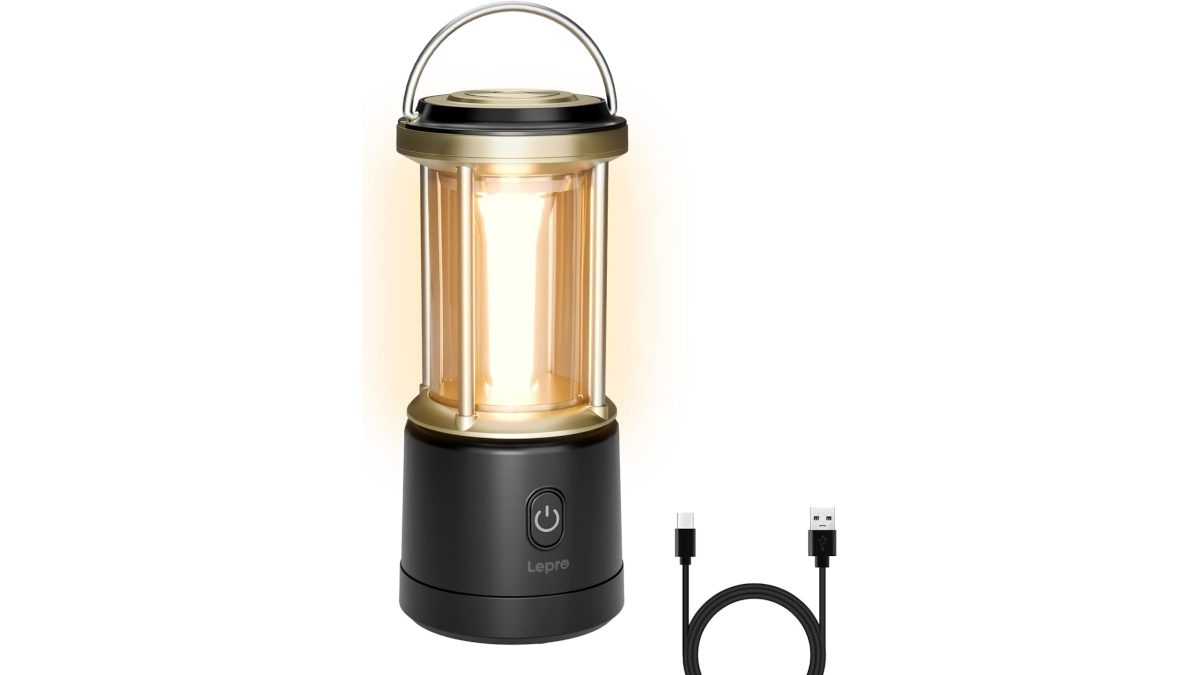
Social media silence during evacuation: Don’t post “We’ve been evacuated to the leisure centre” or “Day 3 without power!” on Facebook while you’re away. Wait until you’re back home to share your experience. Broadcasting your absence is the digital equivalent of leaving a note on your door saying “Nobody home, help yourself”.
Securing Your Home During Evacuation
If you’re ordered to evacuate due to flooding, fire risk, or other immediate danger, you’ll have limited time to secure your property. Ten to fifteen minutes is typical between “You need to leave now” and actually departing. Use that time efficiently.
Lock all windows AND draw curtains: Closed curtains prevent anyone outside from seeing what’s inside, making it harder to identify valuable targets. Lock every accessible window, including upstairs windows if you have time. If floodwater is rising and you’re on the ground floor, lock windows even if they’ll be submerged—it prevents opportunistic entry via boat once water levels stabilise.
Move valuables out of sight from windows: If you have time, shift laptops, tablets, TVs, and other visible electronics away from windows. Put them in cupboards, upstairs rooms, or anywhere not immediately visible from outside. This reduces the “smash and grab” appeal even if someone breaks a window.
Turn off gas and water if time permits: As covered in the Emergency Utility Shutdown guide, turning off gas and water mains before evacuating prevents secondary damage from leaks or flooding. It also means your property is less likely to suffer catastrophic damage that makes it easier for criminals to access—a flooded home with a broken door is easier to enter than a secure dry one.
Complete Guide
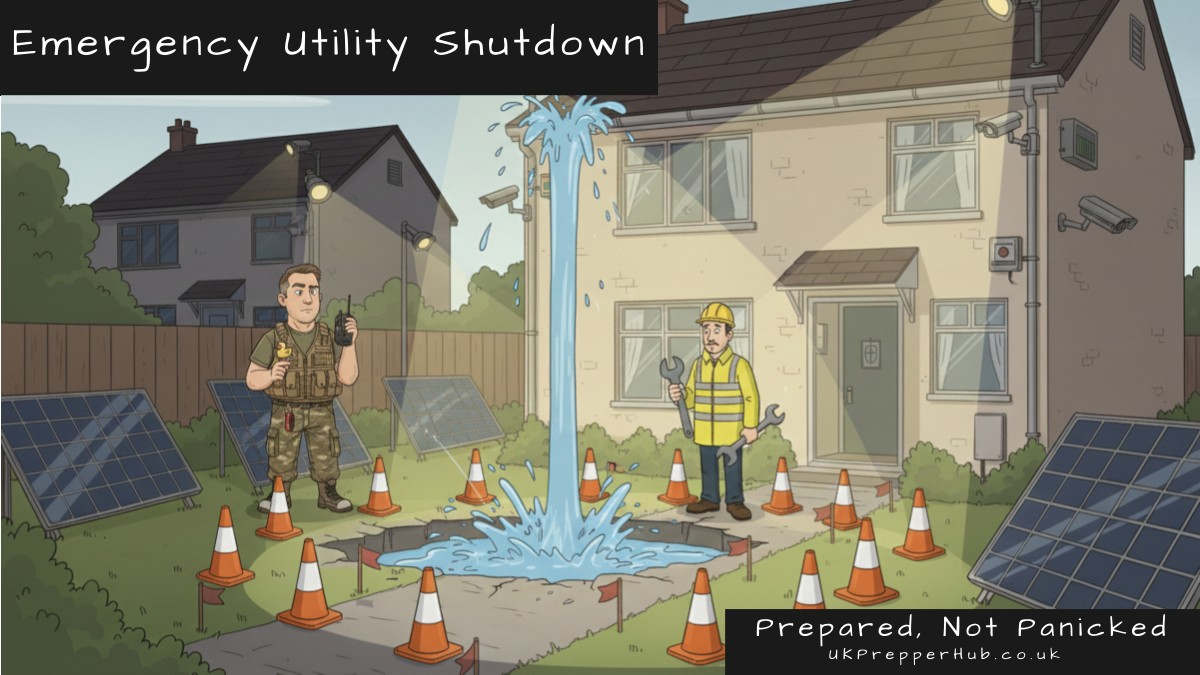
Emergency Utility Shutdown
When something goes wrong in the home — flooding, fire risk, storm damage, or a major leak — knowing when to shut off your utilities is just as important as knowing how.
Photograph your home’s condition before leaving: Use your phone to take quick photos of each room, focusing on valuable items and overall condition. If you return to find damage or theft, these photos provide evidence for insurance claims and police reports. Include photos of serial numbers on electronics, jewellery in drawers (before you remove it to take with you), and the general state of each room.
Tell ONE trusted neighbour you’re leaving: Don’t announce your evacuation to the street, the local Facebook group, or anyone who doesn’t need to know. Tell one reliable neighbour so they can keep an eye on your property and contact you if something looks wrong. Give them your mobile number and ask them to call immediately if they see anyone attempting entry.
Don’t leave notes on your door: Never leave messages like “Gone to Oak Road Rest Centre” or “Back Monday” on your front door. It’s an invitation to criminals and tells them exactly how long they have to work undisturbed.
Ground Floor and Accessible Window Protection
Ground floor windows are the most common entry point for burglars, followed by windows accessible via flat roofs, drainpipes, or adjoining structures. Council housing and terraced properties often have rear windows backing onto alleys or shared access areas with minimal visibility—perfect conditions for forced entry.
Laminate film for glass: Security film applied to window glass won’t stop someone breaking the window, but it holds the glass together after impact, making it significantly harder to create an opening large enough to climb through. The film costs £10-£20 per square metre and can be DIY-installed, though professional fitting ensures better adhesion. It’s particularly useful for ground floor windows facing alleys or low-traffic areas.
Doweling in sliding window tracks: Cut a piece of wooden doweling or broom handle to fit the track of sliding windows (sash windows or patio doors). When the window is closed, place the doweling in the track behind it. Even if someone defeats the lock, the window physically can’t slide open because the doweling blocks the track. Cost: essentially free if you have scrap wood.
Thorny plants under windows: Planting roses, pyracantha, or other thorny shrubs directly beneath ground floor windows creates a natural deterrent. Criminals avoid painful obstacles, and dense thorny plants make accessing windows significantly less appealing. This won’t stop a determined professional, but it’s enough to send an opportunistic burglar to an easier target.
External sensor lights with battery backup: Motion-activated security lights are excellent deterrents when they work, but most fail during power cuts. Battery-backup sensor lights (or solar-powered versions) continue functioning even when mains power is down. Position them to illuminate vulnerable access points like side gates, rear doors, and ground floor windows.
Window grilles for high-risk properties: If you’re in a ground floor council flat in a high-crime area, removable or hinged window grilles provide serious security without making your home feel like a prison. Modern grilles can be decorative as well as functional, and emergency-release mechanisms mean you can still escape through windows in a fire. They’re not cheap (£100-£300 per window including fitting), but they’re sometimes the only realistic solution for properties with repeated break-in attempts.
Door Security When Power Fails
Your front and back doors are the most common points of forced entry after windows. Electronic locks and smart doorbells fail during power cuts, leaving you dependent on mechanical security.
Door braces or barricades: Portable door security bars wedge between the door handle and the floor, making it nearly impossible to force the door open from outside. They require no installation, work on any inward-opening door, and cost £15-£30. Keep one near your front door for use during power cuts or if you hear someone trying to force entry. They’re particularly useful in flats where you can’t modify the door itself due to lease restrictions.
Door security bars for inward-opening doors: These mount to the floor or door and swing up to barricade the door when you’re home. They’re more permanent than portable braces but provide better security for long-term use during extended outages.
Peephole or door viewer: If your door doesn’t have one, fit a wide-angle peephole (£5-£10, ten-minute installation). During emergencies when unexpected visitors are common (utility workers checking lines, council staff, neighbours), you need to see who’s outside before opening the door. Never open without looking first.
Chain locks: A properly fitted chain lock lets you open the door a few inches to speak with someone while maintaining physical security. This is essential during power cuts when you might get bogus utility workers or scammers, as detailed in the OPSEC guide. Speak through the gap, ask for ID, and verify their identity by calling the company before removing the chain.
Never open door to unexpected “utility workers”: During power cuts, scammers in high-vis jackets knock on doors claiming to be from the electricity company, gas network, or council. Real utility workers carry photographic ID, can provide work order numbers, and arrive in branded vehicles. If someone unexpected turns up claiming to need access, keep the door chain on, ask for their ID and company phone number, and call that company directly (using a number you find yourself, not one they provide). Wait for confirmation before letting anyone inside.
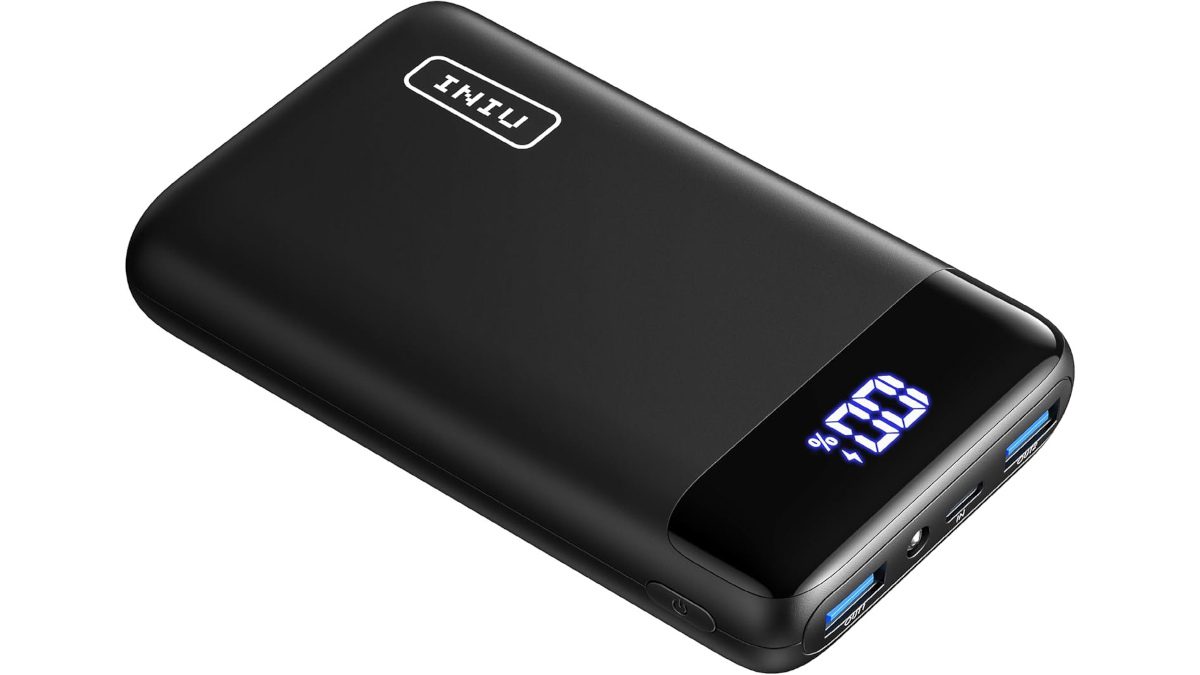
Keep mobile phone charged to call 999: During power cuts, maintain a charged phone specifically for emergencies. As covered in the power cut guide, a 20,000mAh power bank can keep your phone charged for days. If you feel threatened or hear someone attempting entry, call 999 immediately. Even if police response times are slow during widespread disruption, a logged emergency call creates an official record and prioritises your property if officers become available.
INIU 20,000mAh Power Bank
We tested it so you don’t have to — here’s the one thing most power banks get wrong, and why this one doesn’t.
What to Do If You Hear Someone Outside
During power cuts, it’s common to hear unusual noises outside—wind rattling fences, bins blowing over, trees creaking. Most of it is harmless. Sometimes it isn’t.
Don’t investigate alone in darkness: If you hear someone trying door handles, breaking glass, or moving around your property, do not go outside to confront them. Criminals working during emergencies know police response is slow, and they may be armed or working in groups. Your priority is staying safe inside, not protecting property.
Call 999 immediately if the threat seems real: If you believe someone is attempting to break in, call 999 and report a burglary in progress. Give your address clearly, describe what you’ve heard, and mention that you’re inside the property. Stay on the line with the operator if possible, and follow their instructions.
Make noise: Shout loudly—”I’m calling the police!” or “Get away from my property!”—so anyone outside knows you’re aware of them and taking action. Many opportunistic burglars will abandon an attempt if they realise the property is occupied and the occupant is alert.
Turn on battery torches inside: If you have battery-powered torches or lanterns, turn them on in multiple rooms to signal occupancy. Movement of light inside the property suggests someone’s awake and aware, which can deter criminals who assumed the house was empty.
Don’t go outside to confront: Even if you’re certain someone’s on your property, do not go outside to challenge them. Property can be replaced. Your safety cannot. Stay inside, stay on the phone with police, and wait for officers to arrive.
Collect evidence if safe: If you can do so without exposing yourself to danger, use your phone to take photos or video through windows. Capturing images of suspects, vehicles, or the direction they leave in can help police later. But only if it’s safe—don’t open doors or windows to get a better shot.
Community Watch During Disruption
Neighbourhood cooperation is one of the most effective security measures during emergencies, but it has to be organised before the crisis hits—not during it.
Coordinate with 2-3 immediate neighbours before emergencies: Build relationships with the households directly next to you and across the street. Exchange mobile numbers, agree to watch each other’s properties during absences, and establish a communication plan that doesn’t rely on public social media.
WhatsApp group for quick alerts: A private WhatsApp group with your immediate neighbours allows quick sharing of alerts (“Someone’s knocking on doors claiming to be from the council—has anyone else had this?”) without broadcasting to the wider area. Keep the group small (under 10 households) and trusted.
Check on each other without broadcasting on social media: During power cuts or evacuations, check on neighbours in person or via text, not by posting “Is everyone on Oak Road okay?” in public Facebook groups. Public posts alert criminals to which streets are being monitored and which aren’t.
Share landline numbers if you have them: Mobile networks can fail during widespread emergencies due to tower damage or power failures. If you have a corded landline (not cordless—those need mains power), share that number with neighbours as a backup communication method.
Report suspicious activity to police, not just each other: If you see someone attempting to break into a neighbour’s evacuated property, call 999 immediately. Don’t just tell other neighbours and assume someone else will report it—make the call yourself and ensure police have the information.
Balance between helping neighbours and OPSEC: Be generous with help during emergencies, but don’t advertise your full preparedness. Offer specific items to specific people (“I can lend you a torch”) rather than announcing “I’ve got loads of emergency supplies” to the street. This balance between community support and operational security is covered in detail in the OPSEC guide.
Complete Guide
Household OPSEC Guide
OPSEC is a military term that’s filtered down to civilian life. OPSEC is short for “OPerational SECurity”. At its core, it means protecting information that could be used to harm you.
Vehicle Security During Emergencies
Cars, vans, and motorcycles become targets during fuel shortages, power cuts, and other disruptions when specific resources become scarce.
Fuel theft during shortages: The 2021 fuel crisis saw a significant spike in fuel siphoning from parked vehicles. Locking fuel caps (if your vehicle has one) and parking in well-lit, visible areas reduces risk but doesn’t eliminate it. If you have a full tank during a shortage, consider parking off-street if possible, or at least where you can see your vehicle from your windows.
Battery theft from parked cars: Car batteries become valuable during extended power cuts as people try to charge phones, run inverters, or jump-start vehicles. Thieves target older cars with easy-to-access batteries.
Generator theft from driveways and gardens: Portable generators are prime targets during power cuts. Never leave a generator running unattended outside, even in a locked garden. If you must use one outdoors (for ventilation), chain it to a fixed structure and stay within earshot. When not in use, store generators inside your property, not in sheds or outbuildings that can be easily accessed.
Don’t advertise expensive equipment: Posting photos of your new generator, full fuel cans, or well-stocked vehicle on social media broadcasts what’s worth stealing and where to find it. Share your preparedness stories after the emergency passes, not during it.
Park close to house if possible: During power cuts or storms, park vehicles as close to your property as possible, ideally where you can see them from windows. Natural surveillance from your own home is one of the best deterrents to vehicle crime.
Remove valuables from view inside car: Sat navs, phone chargers, and visible electronics in cars attract smash-and-grab thefts during normal times. During emergencies when police response is slow, the risk increases. Clear everything from view, or remove valuables entirely if you’re evacuating.
Insurance and Evidence Collection
If your property is burgled or damaged during an emergency, you’ll need evidence to support insurance claims and police reports. Collect this information before anything happens, not after.
Photograph property condition before evacuating: When you leave your home during flooding, storms, or other emergencies, take comprehensive photos of every room showing the condition you left it in. Focus on valuable items, appliances, furniture, and general tidiness. If you return to find theft or damage, these “before” photos prove what was present and its condition.
Document serial numbers of valuables: Photograph or write down serial numbers for electronics (TVs, laptops, tablets), appliances, bicycles, and power tools. Store this information separately from the items themselves—either in your document firebox or encrypted on a USB stick in your grab bag. Serial numbers make it possible to prove ownership if stolen items are recovered and significantly strengthen insurance claims.
SentrySafe Fireproof Safe Box with Key Lock
UL-tested at 843°C, takes A4 flat, and ETL verified for USB backups — the fireproof document safe that actually fits your birth certificate.
Our Full Review: SentrySafe Fireproof Safe Box with Key Lock →
Keep insurance policy in grab bag: Your home insurance policy document should be in your grab bag along with other critical documents. If you’re evacuated and then burgled, you’ll need the policy number and insurer contact details to file a claim. Don’t rely on being able to access email or online accounts during widespread infrastructure failure.
Report theft or damage immediately: As soon as you discover burglary or damage, report it to both police and your insurance company. Most policies require reporting within 24-48 hours. Get a crime reference number from police—insurers need this to process claims related to theft or criminal damage.
Don’t exaggerate claims: Tempting as it might be to inflate values or invent items that weren’t actually stolen, insurance fraud invalidates your entire policy and can result in prosecution. Be honest about what was taken and its value. If you don’t have receipts, provide reasonable estimates based on when you bought items and their condition.
CCTV footage from neighbours: If your own security cameras were offline during a power cut but your neighbour’s had battery backup or generator power, ask if their footage captured anything useful. Many modern doorbell cameras upload clips to cloud storage in real-time, so even if the device went offline later, earlier footage might still be available.
High-Rise and Flat-Specific Challenges
Council flats, tower blocks, and any shared-access property face unique security challenges during emergencies. You have less control over building security and more potential access points for criminals.
Communal doors propped open during evacuations: During fire evacuations or when lifts fail during power cuts, residents often prop open communal entrance doors to allow emergency services access or to make carrying supplies upstairs easier. This removes the first layer of building security and allows anyone to enter. If you’re evacuating, ensure communal doors close and lock behind you. If you return to find them propped open, close them and report the issue to your landlord or building management.
Shared access equals higher risk: Multiple households sharing entry points (stairwells, corridors) means you can’t control who enters the building. During emergencies when people are distracted or evacuated, opportunistic criminals can enter the building posing as residents and work through individual flats checking for unlocked doors or easy access.
Balcony security: Balconies on upper floors might be accessible from neighbouring balconies, especially in older buildings where balconies are continuous or separated only by low dividers. During evacuations when neighbouring flats are empty, criminals can access your balcony from next door. Lock balcony doors with the same care you’d lock ground-floor windows, and consider additional security like bars or grilles if the risk is high.
No garden means no external sensor lights: If you’re in a flat without external walls facing public areas, you can’t install motion sensor lights or other external security measures. Your security relies entirely on door locks, window locks, and the building’s overall security. Ensure your flat door has a five-lever deadlock and a door chain at minimum.
Limited control over building security: You can’t fix broken communal door locks, install CCTV in stairwells, or improve lighting in corridors—that’s your landlord’s or building management’s responsibility. During emergencies, report security issues (broken locks, propped doors, non-functioning lighting) immediately in writing (email, text) so there’s a record. If something happens later, that record shows you raised concerns and requested action.
Coordinate with other residents on same floor: Build relationships with immediate neighbours on your floor. During power cuts or evacuations, having 2-3 trusted residents who watch each other’s flats is more effective than relying on building-wide security that nobody controls.
When to Shelter in Place vs Evacuate
Sometimes you’ll have to choose between staying home to protect your property or evacuating to stay safe. The answer should always prioritise life over property, but understanding the decision helps you prepare appropriately.
Official evacuation orders trump security concerns: If police, fire service, or council officials order evacuation, you leave. Don’t delay to secure valuables or improve locks. Life safety is non-negotiable, and emergency services have information you don’t about imminent risks (rising floodwater, gas leaks, building structural damage).
Life safety over property protection: No possession is worth dying for. If there’s immediate danger (fire, flood, structural collapse), evacuate immediately and deal with security concerns later. You can replace electronics, furniture, and even sentimental items through insurance or recovery efforts. You cannot replace your life.
Secure what you can in 10-15 minutes, then leave: If you have a brief window before evacuation becomes essential, use it for quick security measures: lock all windows and doors, draw curtains, move valuables out of window view, turn off utilities using the steps in the Utility Shutdown guide, and photograph your home’s condition. Don’t exceed the time you have available—if officials say “Leave now,” that means now.
Don’t delay evacuation to move valuables: Packing your laptop, TV, and jewellery into your car might seem sensible, but if it delays your evacuation by 20 minutes and floodwater is rising, you’re taking a potentially fatal risk. Grab your pre-packed grab bag, secure your property quickly, and leave. Everything else can be dealt with later.
Lock up, photograph, go: The three-step evacuation security protocol: lock all accessible entry points, take quick photos of each room showing condition and contents, and leave. This takes 10-15 minutes maximum and provides basic security plus evidence for insurance claims.
Report evacuation to police non-emergency line if time: If you have a spare two minutes after securing your property and before departing, call 101 (non-emergency police line) and report that you’re evacuating, provide your address, and mention it will be unoccupied for an unknown duration. This creates an official record and may result in additional patrol presence if resources allow. However, only do this if time permits—don’t delay evacuation to make the call.
Three Practical Security Checklists
Pre-Emergency Security Audit (30 Minutes)
Test all window and door locks:
- Lock and unlock every external door—identify any stiff locks that need lubrication
- Check all window locks function properly—replace any broken mechanisms
- Test deadbolts engage fully and keys work smoothly
- Verify door chains and limiters are securely fitted
Identify weak points:
- Walk around your property looking for access points a burglar might use
- Check for broken fences, gaps in hedges, or easy climbing points (bins, furniture against walls)
- Identify windows accessible from flat roofs, extensions, or drainpipes
- Note any external doors with weak frames or poorly-fitted locks
Buy and install basics:
- Five-lever deadlocks for front and back doors (£15-£30 each)
- Window locks for all accessible windows (£5-£15 per window)
- Door chain or limiter (£5-£10)
- Battery-operated timer candles for windows (£2-£5 each, buy 3-4)
- Portable door security bar (£15-£30)
Establish neighbour trust network:
- Introduce yourself to immediate neighbours if you haven’t already
- Exchange mobile numbers with 2-3 trusted nearby households
- Discuss basic mutual assistance during emergencies (post collection, visual checks)
- Create private WhatsApp group for quick alerts
Store emergency numbers in phone:
- Local police non-emergency: 101
- Your home insurance company claims line
- Utility companies (gas, electric, water) emergency numbers
- Trusted neighbour contacts clearly labelled
Power Cut Security Response (15 Minutes)
Lock all accessible windows:
- Ground floor windows first priority
- Upper floor windows accessible via roofs, drainpipes, or balconies
- Basement windows if you have a cellar
- Verify locks are engaged, don’t just close windows
Deploy battery timer lights:
- Place battery candles in front windows set to turn on at dusk
- Position one battery torch or lantern in main living room visible from street
- Keep additional torches near front and back doors for visitor verification
Charge mobile phone:
- Connect phone to power bank immediately
- Preserve charge by reducing screen brightness and closing unnecessary apps
- Keep phone within reach to call 999 if needed
Check doors are deadbolted:
- Verify front and back doors are deadlocked, not just on Yale lock
- Ensure door chains are in place if you’re home
- Position portable door security bar near front door for easy deployment
Brief household on not answering door:
- Remind everyone to verify visitors through peephole before opening
- Establish that nobody opens the door without checking with an adult first
- Review what to do if someone claims to be from utilities (verify via phone call first)
Text trusted neighbour you’re home:
- Quick message to immediate neighbour: “We’re home and okay, power out here too?”
- Establishes communication and confirms you’re in residence
- Neighbour can watch for suspicious activity around your property
Evacuation Security Protocol (10 Minutes)
Lock all windows, draw curtains:
- Start upstairs, work downstairs (or top floor to bottom in flats)
- Lock every window and draw curtains to hide interior
- Close internal doors to slow potential intruders moving through property
Move valuables out of window view:
- Shift laptops, tablets, TVs away from windows into cupboards or back rooms
- Don’t waste time packing everything—just remove from immediate view
- Focus on small high-value items (jewellery, cash, electronics)
Photograph home condition:
- Quick photo of each room showing general condition and contents
- Focus on valuable items with serial numbers visible if possible
- Photo of front and back doors locked from inside
- These photos go straight into your insurance claim if you’re burgled
Turn off utilities if safe:
- Gas: Turn off at meter using shutdown procedures
- Water: Close stopcock to prevent leak damage
- Electricity: Switch off at consumer unit if flooding expected
- Only if time permits—don’t delay evacuation for this step
Grab insurance documents:
- Insurance policy from document box or grab bag
- Recent photos of valuables if stored digitally
- Any receipts for expensive items purchased recently
Inform one trusted neighbour only:
- Quick text or knock on door: “We’re being evacuated, can you keep an eye on our place?”
- Give your mobile number if they don’t have it
- Ask them to call if they see anyone attempting entry
- Don’t announce evacuation publicly or on social media
Final Thoughts
Security during emergencies comes down to three principles: mechanical locks that work without power, neighbours you trust before crisis hits, and realistic expectations about what you can protect versus what you should just insure and photograph.
You can’t turn your council flat into Fort Knox, and you shouldn’t try. What you can do is ensure basic physical security (decent locks, secured windows), maintain a lived-in appearance when you’re away (battery lights, neighbour assistance), and avoid advertising your absence or your valuables on social media.
Most burglaries during emergencies are opportunistic, not professional. Criminals aren’t planning sophisticated heists—they’re checking door handles in the dark and moving on when they encounter resistance. A locked deadbolt, a visible battery candle, and a neighbour who knows you’re gone is often enough to send them to an easier target.
The goal isn’t to make your property impregnable. It’s to make it slightly less appealing than the house next door, while maintaining the relationships and documentation you’ll need if the worst happens anyway. Lock up, charge your phone, trust your neighbours, and know when to prioritise your safety over your possessions.
That’s security during disruption—practical, achievable, and focused on what actually works when the power goes out.

🪖 Black Panther
In My Previous Role…
we were aware that cameras and smart locks are reassuring but criminals don’t care — deterrence is about reducing opportunity, not displaying technology
Build Your Resilience
Further Reading: Related Guides
- Household OPSEC Guide
- Emergency Utility Shutdown
- How to Prepare for a Power Cut
- Home Evacuation Plan
- Bug-In vs Bug-Out
- Protecting Your Important Documents
- 72-Hour Grab Bag Checklist
- Off Grid Communications
All our guides can be found listed on our resilience hub.
Gear We've Tested & Reviewed
- INIU 20,000mAh Power Bank
- SentrySafe Fireproof Safe Box
- Lepro 2000lm Rechargeable Camping Lantern
- XtraLite NiteSafe
All our reviews can be found on our reviews and resources page.