
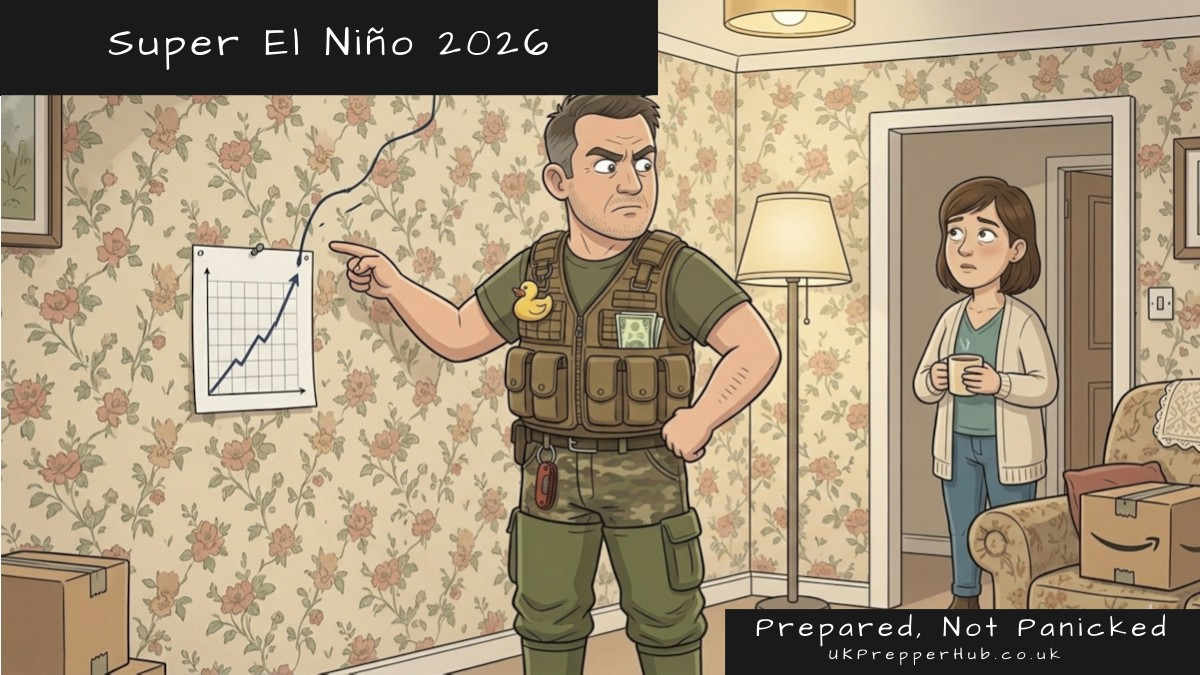
Update — 5 September 2026: The Met Office has now confirmed this as a record-breaking El Niño, potentially the strongest since the 19th century, peaking this winter. Read the latest forecast and what it means for UK storms this winter →
The La Niña pattern that shaped global weather since mid-2024 has officially ended. NOAA now forecasts El Niño beginning between May and July — and the European Centre for Medium-Range Weather Forecasts, NOAA, and Australia’s Bureau of Meteorology are all aligned on the same trajectory. The BBC updated its El Niño explainer last month with the emerging picture. A specialist long-range analysis published this week by Severe Weather Europe goes further: this event could become the strongest El Niño in modern history, potentially surpassing the record of 1877–78.
What the climate coverage doesn’t tend to cover is what any of this means for your household. Here’s the practical read.
What makes this one different
El Niño is a natural warming of Pacific sea surface temperatures that shifts global weather patterns — more storms in some regions, drought in others, jet streams displaced, seasons disrupted. A “Super El Niño” is scientifically defined when sea temperatures in the key monitoring region exceed +2°C above the long-term average. The 2015–16 event hit that threshold. Current ECMWF seasonal forecasts are projecting anomalies beyond +4.5°C at peak — well beyond the Super threshold, with no modern precedent at that intensity.
El Niño’s effects on UK weather operate indirectly, through changes to the Atlantic jet stream and storm tracks. Indirect doesn’t mean insignificant — and with an event of this potential magnitude, the knock-on effects are worth understanding now, while there’s still time to act.
The summer picture
The honest position on UK summers and El Niño is complicated. Past events have produced both heatwaves and cool, unsettled summers — there’s no simple rule. What forecasters are saying about 2026 is not “it will definitely be a scorcher.” It’s that the probability of sharp heat extremes is elevated, particularly where El Niño combines with an already-elevated baseline from long-term climate change.
If a heat spike arrives, it will arrive quickly and run hotter than the last one. Air conditioning remains rare in UK homes. Most households have no cooling plan at all. Having something ready before the forecast appears — not after — is the difference between coping and scrambling.
OCOOPA USB Rechargeable Desk Fan
Battery-powered desk fan with up to 15 hours runtime and airflow strong enough to feel 8 feet away — no plug socket needed.
Our Full Review: OCOOPA USB Rechargeable Desk Fan →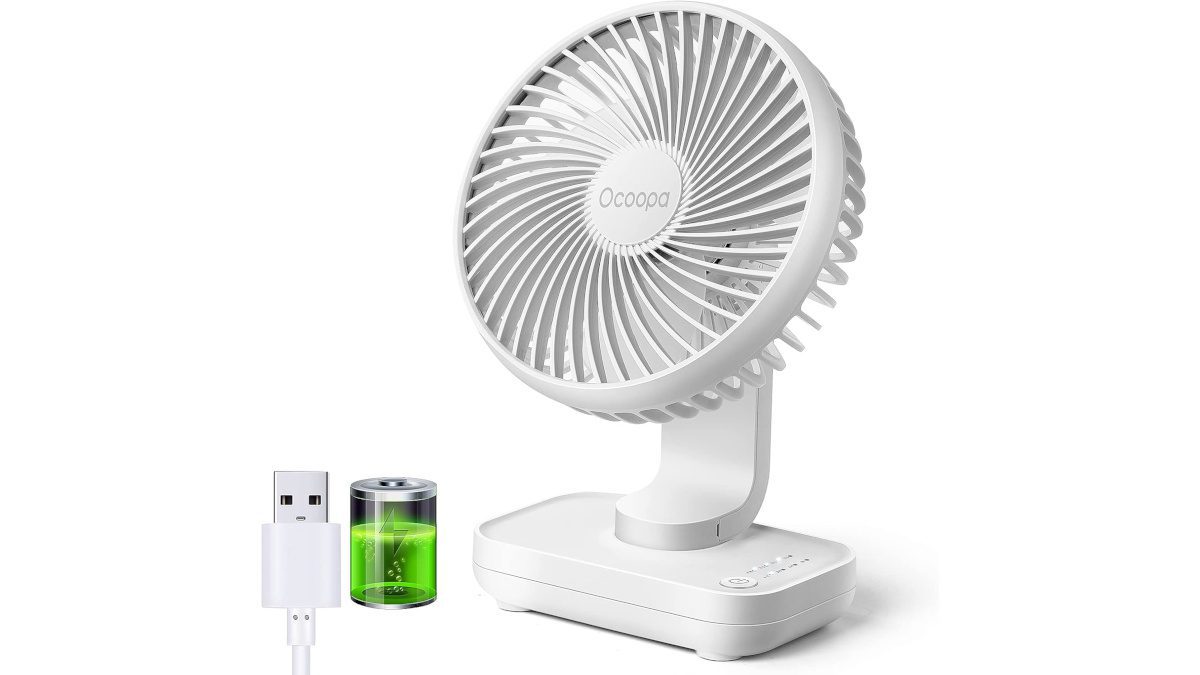
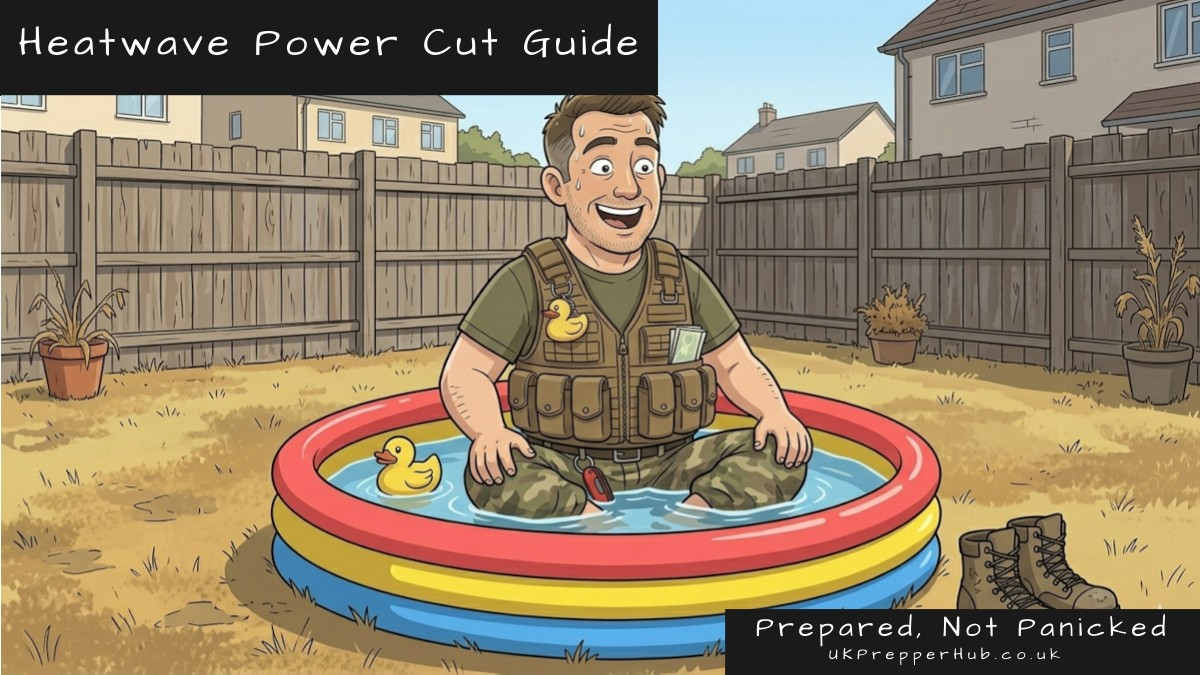
Complete Guide
Heatwave Power Cut Guide
A summer power cut is more dangerous than a winter one — heat builds fast and food spoils faster. This guide covers staying cool, protecting medications, keeping food safe, and knowing when to get out.
The bigger risk: autumn and winter
El Niño’s impact on UK weather historically peaks not in summer but across the autumn and winter storm season. Strong events alter Atlantic storm tracks — more deep low-pressure systems, more named storms, more extended power cuts. The peak of this event is forecast for winter 2026/27.
The Met Office notes that strong El Niño winters tend to bring a mild start and a cold end — which sounds manageable until you consider what that pattern actually delivers in practice: the kind of storm sequence the UK saw with Eowyn and Goretti, but with elevated probability of more of them. Ageing drainage infrastructure, an overstretched grid, and storm-damaged roads don’t need encouragement.
Complete Guide
UK Home Flood Defense
Even small floods can damage flooring, walls, furniture, and utilities. Knowing how to act fast and prepare your home makes recovery faster and safer.

The supply chain story — and why it’s worse than it looks
Right now, your food bill is being pushed up by one thing: fuel. The Middle East crisis drove UK motor fuel up 8.7% in a single month in March. That cost is already embedded in the price of transporting food, running cold stores, and powering farms. You’re already feeling the first wave.
El Niño’s agricultural effects — crop disruption, drought, flooding across the major producing regions — haven’t entered the supply chain yet. They’re coming. The ONS estimates it takes seven to thirteen months for upstream food production costs to reach supermarket shelves. El Niño begins May–July. Its food price effects arrive roughly winter 2026/27 — landing on top of fuel costs that will already be baked into the baseline by then.
Two separate shocks, converging on the same point in the year.

🐔 Chicken Licken
Did You Know?
El Niño hasn’t touched your food bill yet — the cost hit is still 7–13 months away, and it’s going to land on top of fuel prices already baked into everything on the shelf
Complete Guide
Long-term food storage
Most households have a few days of food at best, but real disruptions in the UK can last far longer and quickly expose that gap. This guide shows you how to build a practical, affordable food reserve that actually works in the real world—not just on paper.
Read the Full Guide: Long-term food storage →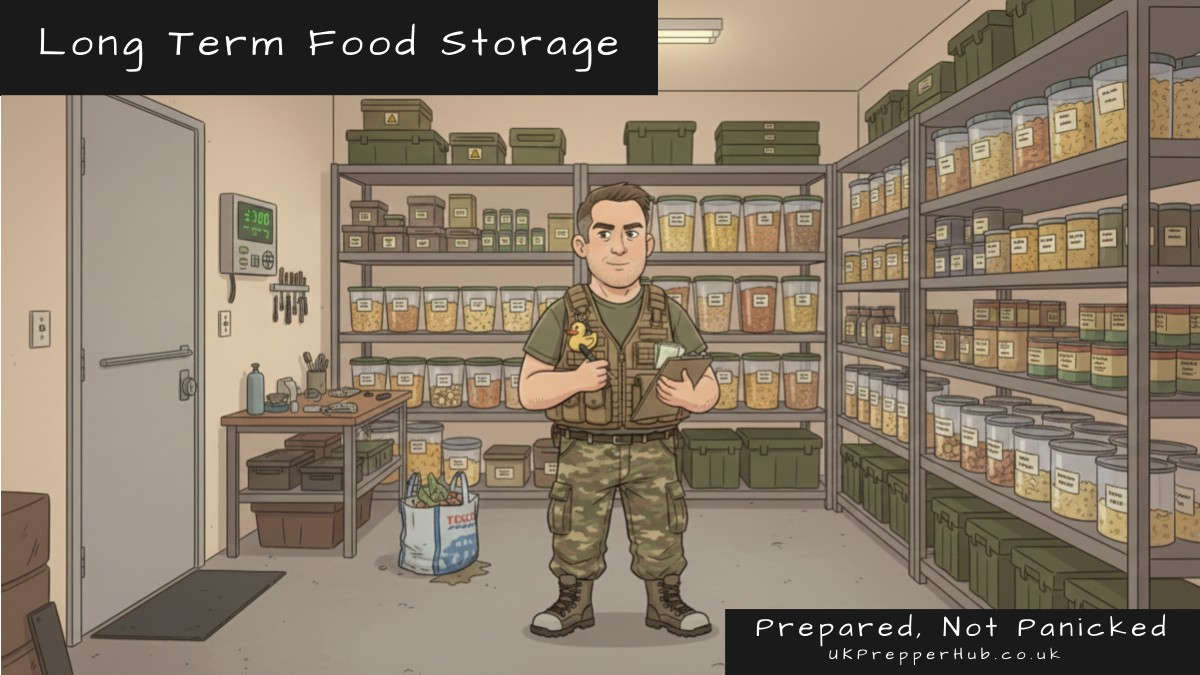
What to do — and when
The window to act sensibly is right now, while the disruption is still months ahead.
Summer is the preparation window. Sort a cooling plan, check your property against the government flood risk register, and start building a two-week pantry buffer — incrementally, alongside normal shopping, not a panic buy.
Autumn is when the named storm season starts, typically from September. It’s also when engineer availability tightens and emergency kit starts disappearing from shelves. Sort what you need now.
Winter 2026/27 is the peak exposure window. If you’ve done the groundwork, it’s unremarkable. If you haven’t, this is shaping up to be the kind of winter that catches unprepared households out.
This isn’t alarm. It’s timing.
📡 Find Us Everywhere
Daily briefings, prep guides, and real-time updates across every platform. Pick yours.
Free. No commitment. Stay anonymous on WhatsApp & Telegram.
Stay Informed on UK Preparedness
Join our newsletter for UK-specific preparedness tips, product recommendations, and real-world advice for households.
Subscribe to Our Newsletter