
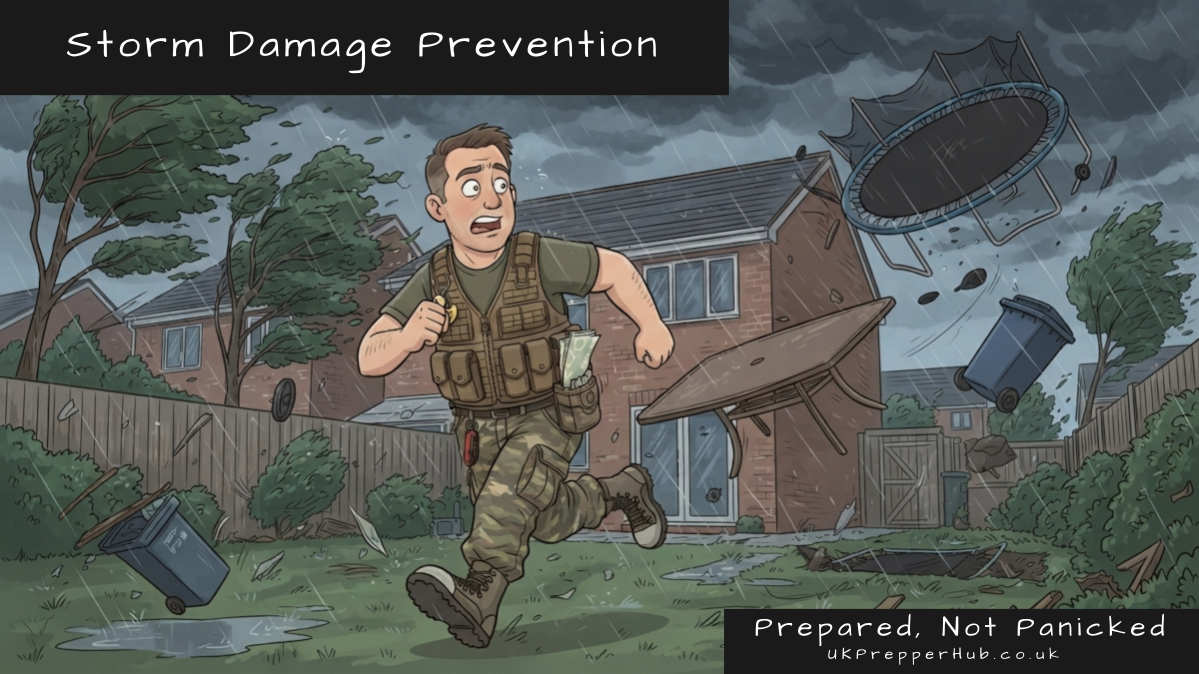
Every autumn, the same thing happens. A named storm rolls in off the Atlantic, the Met Office issues an amber warning, and half the country discovers that garden furniture, wheelie bins, and loose roof tiles become projectiles at 70mph.
Storm damage prevention isn’t complicated, but it has to happen before the forecast, not during it. Most storm damage happens to people who knew the storm was coming and did nothing about it. This guide covers what actually protects your home from storm damage — the maintenance that matters every autumn, the final 24 hours before a storm hits, what to do while it’s happening, and what to check once it’s passed.
What a Named Storm Actually Means
The Met Office names a storm when it’s expected to cause “medium” or “high” impact — not every windy day gets a name. Once a storm has one, it comes with a colour-coded warning: yellow (be aware), amber (be prepared, real risk to life and property), red (danger to life, act now). That’s what named storm preparation really comes down to — treating an amber warning as a deadline, not a suggestion.
Storm names are agreed jointly by the Met Office, Met Éireann, and the Dutch national forecaster KNMI, and run alphabetically through a new list each storm season, which starts in September and resets every year. Q, U, X, Y, and Z are skipped, matching the convention used for Atlantic hurricanes. Some years bring more named storms than others; either way, the preparation is identical.
This Season’s Named Storm List
The current storm season (September 2026 to August 2027) already has its full list of 21 names agreed by the Met Office, Met Éireann, and KNMI. If one of these turns up in a forecast, it’s not random — it’s already on this list:
- Austen
- Boelo
- Chloe
- Dano
- Evelyn
- Finn
- Gwendolyn
- Heather
- Ivy
- Jade
- Kilian
- Laoise
- Miriam
- Nicola
- Olaf
- Phelim
- Ruban
- Shaun
- Theo
- Vesna
- Wende
Yes, that includes Shaun — voted onto the list by the public in a tie-up with Aardman. Make of that what you will.
What Different Wind Speeds Actually Look Like
Weather warnings talk in mph, but the Beaufort scale is what forecasters actually use to describe what wind is doing to the world around you at each stage. Here’s roughly what that looks like in practice — and why “Storm Force” isn’t just a dramatic name for a slightly breezy day.


Storm Damage Prevention Starts Long Before the Forecast
Some of this isn’t about the storm at all — it’s about the state of your home going into winter. These are worth checking every autumn, regardless of whether a named storm is forecast.
Gutters and downpipes. Blocked gutters overflow during heavy rain and direct water towards your foundations and walls. Clear them of leaves and debris in October/November. If they’re already sagging or pulling away from the fascia, fix them before they come down in a storm.
Roof tiles. A tile that’s already loose is a tile waiting for a storm to remove it. If you can safely see your roof from ground level, look for any that are visibly lifted or displaced. Get a roofer to inspect if you have any doubt — a missing tile during a storm causes interior water damage that costs far more to fix than the tile itself.
Chimneys and aerials. A chimney stack that needs repointing is a genuine storm risk — loose brickwork and cracked pots can come down onto a roof or into a garden in high wind. Aerials and satellite dishes should be checked for corroded brackets; a dish that’s been slowly working loose for two years will finish the job in one storm.
Fences and gates. A fence panel that wobbles on a calm day will be in your neighbour’s garden by morning in a storm. Loose posts, rotting timber, and unsecured gates are routine autumn maintenance items. Do them before the wind does them for you.
Trees and large shrubs. Overhanging branches near windows, power lines, or the house itself are a storm hazard. Have a tree surgeon assess anything you’re not sure about.
Drains and gullies. Clear leaves and debris from external drains regularly through autumn. A blocked drain turns a heavy downpour into a surface flooding event within minutes.
How to Prepare for a Storm in the Final 24 Hours
When the Met Office issues a weather warning — check the forecast at metoffice.gov.uk — there are specific things to do before the wind picks up.
Bring in or secure garden furniture. Chairs, tables, parasols, and pot plants all become airborne hazards in high winds. Bring lightweight items inside. For heavier furniture that can’t easily be moved, use ratchet straps or bungee cords to secure it to a fixed point.
🦆 Keith
Don’t Be Keith
Keith left his garden furniture out because the forecast said winds of 45mph and he didn’t think that was “that bad” — woke up to find his parasol through next door’s cold frame and his metal table on the other side of the garden with a dent in it.
The trampoline problem. Every neighbourhood has one. Trampolines in high winds have been known to travel significant distances — through fences, into cars, and occasionally through windows. If you have one, either disassemble it before the storm or use purpose-made anchor kits to peg it down. If your neighbour has one and hasn’t dealt with it, a friendly word before the storm is considerably more pleasant than an argument about their trampoline being embedded in your greenhouse afterwards.
Secure or store wheelie bins. Wheelie bins in a storm are a nuisance at best and a road hazard at worst. If you can’t bring them inside, lay them on their side or secure them against a wall.
Move vehicles away from trees. Park in the open or in a garage rather than under large trees or near overhead cables. Falling branches and downed lines are the most common causes of vehicle damage in storms.
Check on elderly or vulnerable neighbours. A named storm warning is a reasonable prompt to check that anyone nearby who lives alone, particularly someone relying on home care visits or powered medical equipment, knows the storm is coming and has a way to reach you if something goes wrong overnight.
Check your emergency supplies. If the storm is forecast to be severe, confirm your torch is working, a power bank is charged, and your emergency kit is accessible. Extended power cuts after storms are not unusual in rural areas, and increasingly common in urban areas with overhead lines.
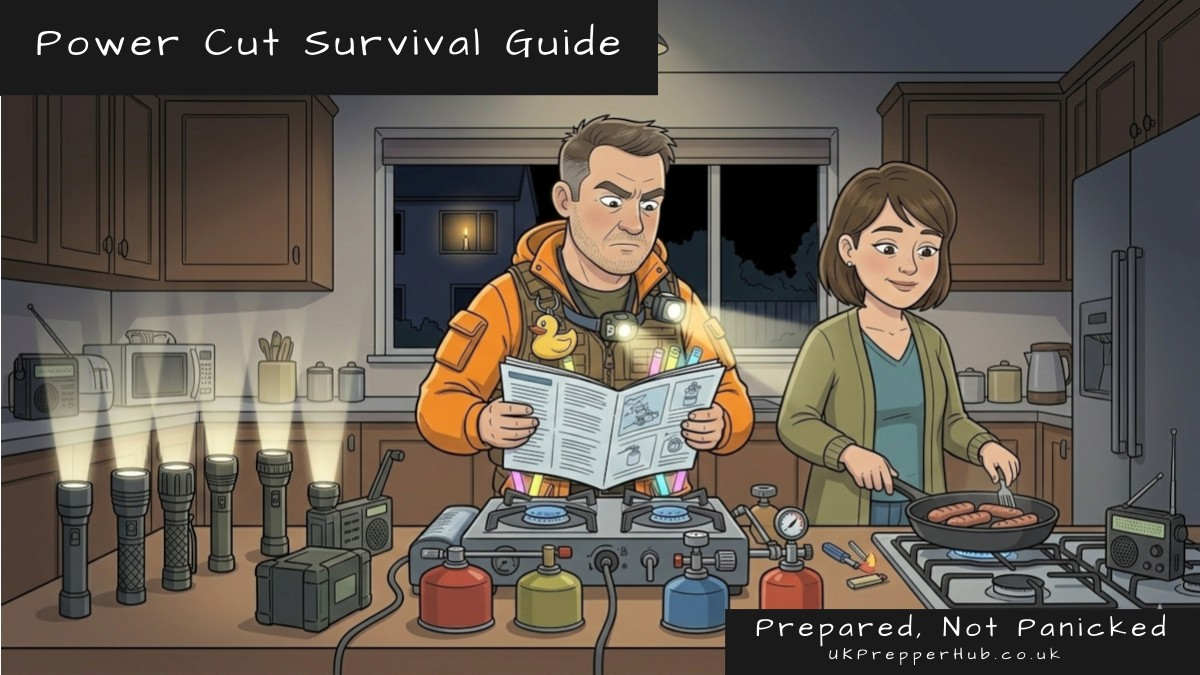
Complete Guide
Power Cut Survival Guide
The master 72-hour blueprint. Vital steps for staying warm, connected, and safe when the UK grid fails during extreme weather.
Fill the bath. If there’s a risk of water supply disruption — common after severe flooding upstream — fill the bath and any large containers before the storm hits. Easier to do before than during.
Complete Guide
Emergency Water Storage
How much to store, how to store it in small spaces, and the reality of UK water rotation.
If You Might Need to Leave in a Hurry
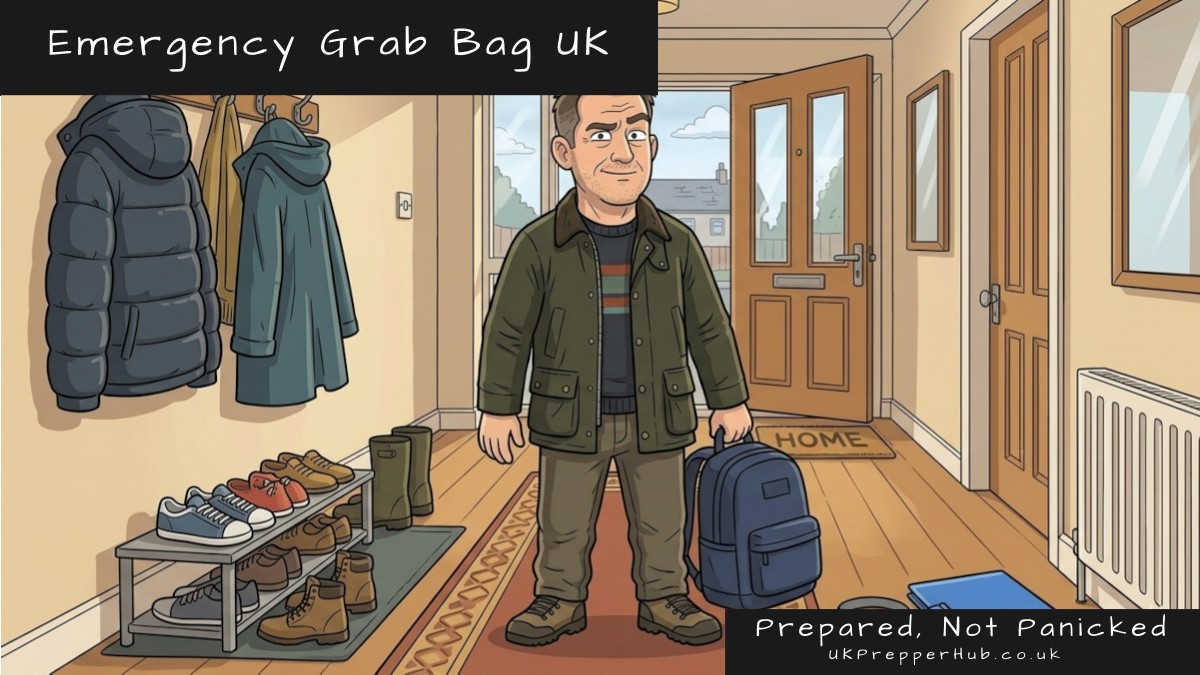
Most storms don’t force anyone out of their home. Occasionally, one does — a badly damaged roof, a compromised chimney, or flooding that’s made a downstairs room unsafe overnight. If that happens, you don’t want to be hunting for torches and phone chargers in the dark while the wind’s still up. A grab bag packed and left somewhere accessible means that if you do need to leave in a hurry, everything you actually need is already in one place.
Complete Guide
72-Hour UK Grab Bag
The ‘get out quick bag’ for rapid home evacuation in the event of fire, flood, or other incidents. Every essential for 3 days away from home in one bag.
Protecting Windows and Doors
For most UK households in most storms, standard double-glazed windows and well-fitted external doors are adequate. The risk increases if you have older single-glazed windows, poorly fitting frames, or skylights.
If you have known weak points — a skylight that’s always leaked, a back door that doesn’t seal properly — address them before storm season. Temporary measures like gaffer tape across skylights don’t do much; the long-term fix is the only real solution.
In an extreme forecast (rare for the UK, but amber and red warnings do happen), keep curtains and blinds closed. If a window breaks, the fabric helps contain glass.
During the Storm, Stay Inside
This should go without saying, but the emergency services deal with injuries every storm season caused by people who went outside to “just check on” something that could have waited. Once the wind has picked up, stay inside. The fence, the car, the garden furniture — none of it is worth a trip to A&E.
Keep away from windows. Don’t use open fires or log burners if your chimney hasn’t been checked — high winds can cause downdraught and push smoke back into the room.
Wind speed during a named storm is rarely constant — gusts well above the sustained average are normal, and a brief lull doesn’t mean the storm has passed. Treat any pause as temporary until the Met Office warning period has actually ended, not as a signal it’s safe to go outside.
If power goes out, treat it as you would any other power cut.
Complete Guide
How to Make a Blackout Box
Most households aren’t prepared for even a short power cut, and the stress comes from small, avoidable problems like lack of light, heat, or a way to cook. This guide shows you exactly how to fix that with a simple, practical setup so a blackout becomes manageable rather than disruptive.
Read the Full Guide: How to Make a Blackout Box →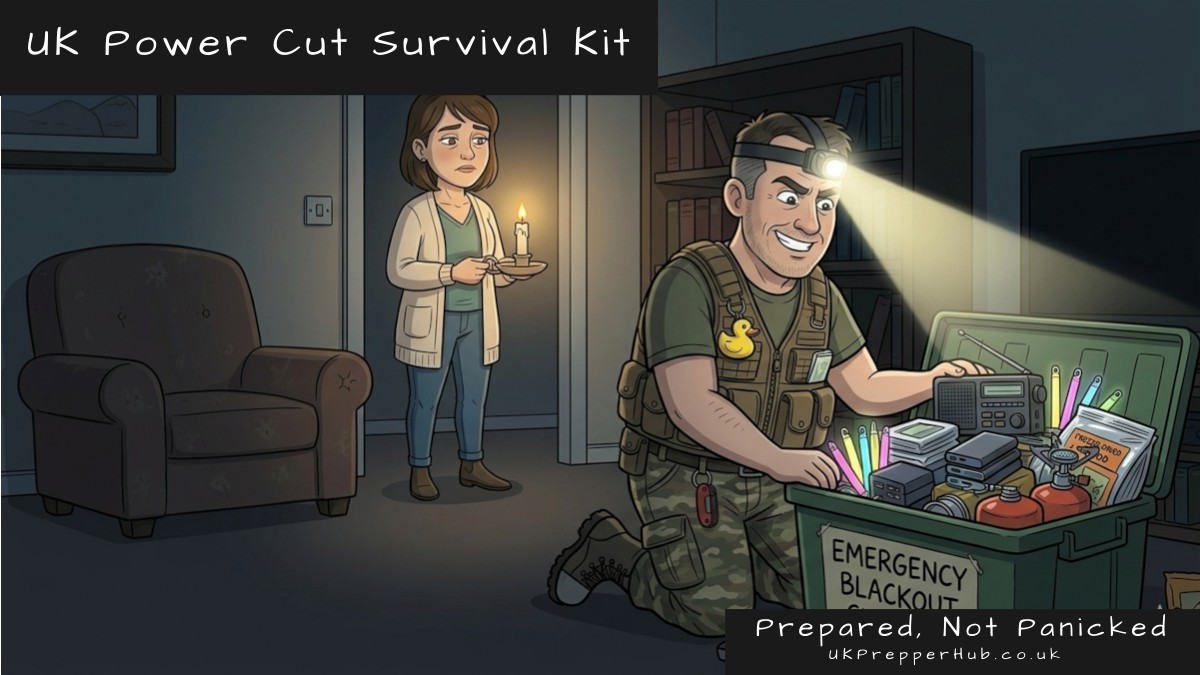
What to Do After a Storm
Once conditions have improved, a methodical check of the property saves problems later.
Roof and gutters. Look for missing or displaced tiles, blocked or hanging gutters, and damage to any chimney stacks or aerials. Binoculars from the garden are safer than getting on a ladder immediately after a storm.
External walls. Check for any cracking around windows and doors that wasn’t there before. Minor render damage is cosmetic; larger cracks in masonry should be assessed by a professional.
Fences and outbuildings. Assess what’s still standing and what needs repair. Temporary repairs — screwing a loose panel back, propping a damaged gate — can prevent further damage before permanent repair is possible.
Flooding. Check gullies, drains, and airbricks for debris. If any water has entered the property, deal with it quickly — water left in wall cavities or under floors causes mould and structural damage.
Complete Guide
Preventing Indoor Mould & Damp
Mould needs moisture to grow — remove the moisture and you remove the problem. This guide covers ventilation, heating patterns, dehumidifiers, humidity monitoring, and keeping stored supplies dry.
Read the Full Guide: Preventing Indoor Mould & Damp →
Emergency Repairs You Can Do Yourself
Some post-storm repairs are straightforward and don’t need a tradesperson. Temporary fixes to prevent further damage — sealing a cracked pipe joint, patching a leak, securing a loose fitting — are within reach of any household with basic tools and the right materials.
A split pipe, a leaking outdoor fitting, or a damaged hose can be sealed watertight with a self-amalgamating tape, which bonds to itself under tension rather than relying on adhesive — it holds up far better than ordinary tape in wet, cold conditions.
YoiYee Self-Amalgamating Repair Tape
It’s one of those cheap bits of kit that quietly saves you from expensive disasters—able to instantly seal leaks, insulate cables, and hold things together without tools when something fails. In a real-world emergency, that can mean the difference between a minor inconvenience and a flooded room, cold house, or costly call-out—making it one of the highest-value “just in case” items you can own.
Our Full Review: YoiYee Self-Amalgamating Repair Tape →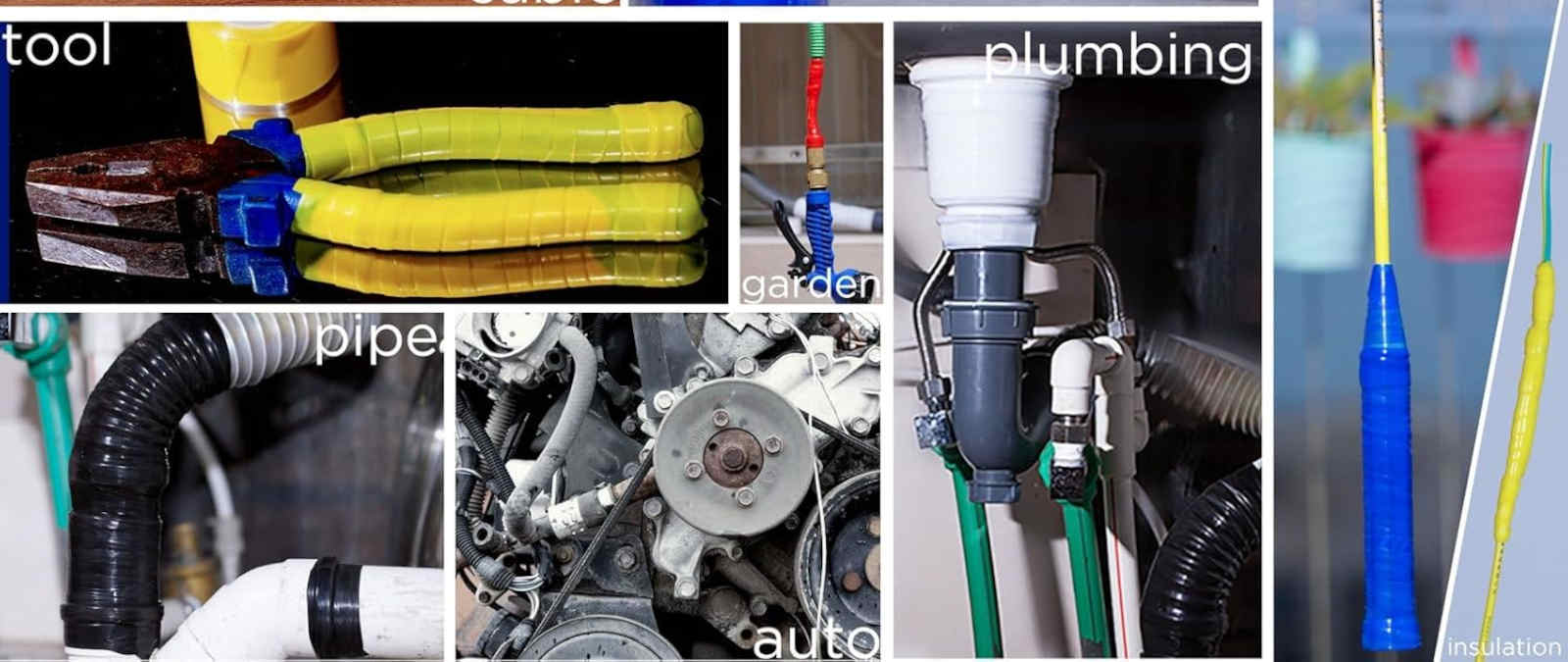
Beyond tape, most temporary storm repairs need nothing more exotic than a decent household tool kit — a claw hammer, a set of screwdrivers, pliers, and a spirit level cover the majority of “screw the fence panel back,” “secure the loose gutter bracket,” and “board a broken pane until the glazier arrives” jobs.
Hi-Spec 24-Piece Tool Kit Review
Equip yourself with the essential tool kit set designed for first homes, new apartments, and dorm rooms; tackle everyday tasks and complete simple repairs, emergency fixes, basic maintenance, and weekend chores with ease.
Our Full Review: Hi-Spec 24-Piece Tool Kit Review →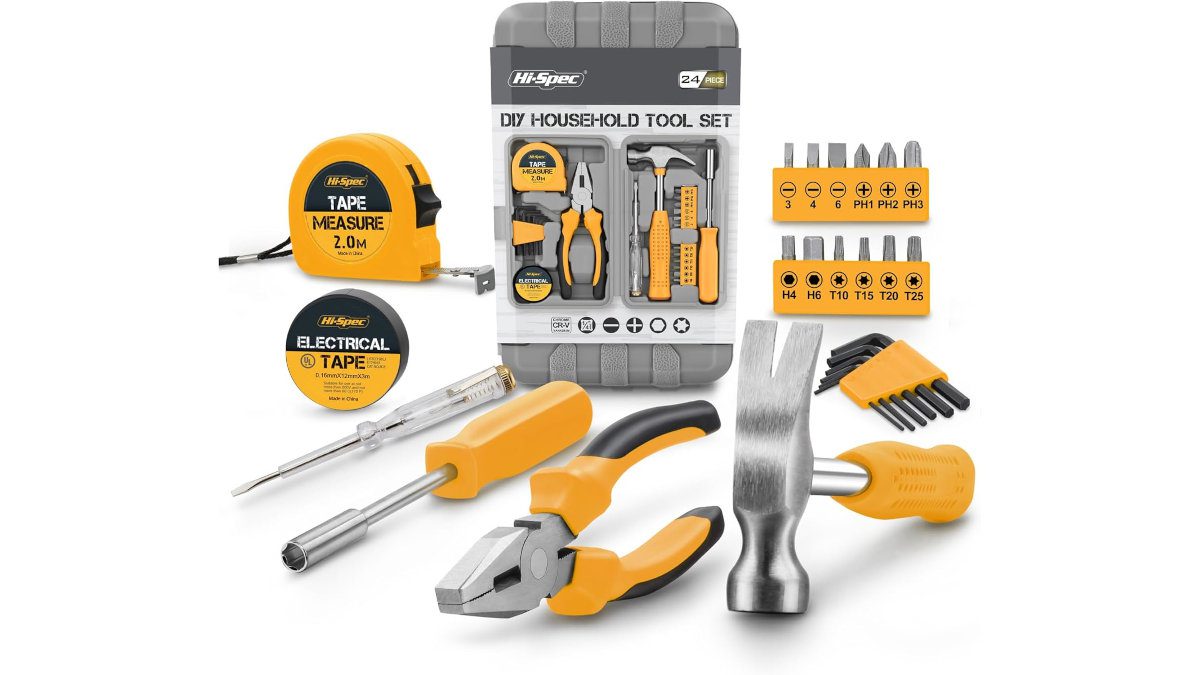
Complete Guide
Emergency Home Tool Kit
Something goes wrong at home at the worst possible time. This guide covers the tools every UK household actually needs — from a compact starter kit for those starting from scratch, to building a proper cantilever toolbox that grows with you.
Read the Full Guide: Emergency Home Tool Kit →

🐔 Chicken Licken
Did You Know?
Storm damage costs UK households over £500 million a year in insurance claims — and most of it is from unfastened garden items, blocked gutters, and deferred maintenance that should have been sorted in October.
Storm Insurance: Check Cover Before You Need It
Most home insurance policies cover storm damage, but policies vary significantly on what counts as a “storm” and what maintenance-related damage they will and won’t cover. Read your policy before you need it — specifically the sections on weather damage exclusions and, separately, fences and outbuildings, which many insurers exclude entirely or cap at a much lower limit.
Photograph anything you’re already unsure about — the fence panel that wobbles, the shed roof that’s seen better days — before a storm, not just after. Then photograph any damage immediately once it’s happened. A “before” photo taken on a calm afternoon in September is far more useful to an insurer than one taken after the event, when you’re also trying to remember what it looked like beforehand.
Most insurers also expect storm damage to be reported within a set window, often around 30 days, so don’t sit on a claim while you decide whether it’s worth the hassle. Keep receipts for any emergency repair costs — these are typically claimable as part of the same claim as the original damage.
Complete Guide
UK Home Flood Defense
Even small floods can damage flooring, walls, furniture, and utilities. Knowing how to act fast and prepare your home makes recovery faster and safer.

Frequently Asked Questions
What wind speed counts as a storm for insurance purposes?
There is no universal definition — it varies by insurer. Most policies use language like “violent wind” or reference a Beaufort scale level rather than a specific mph figure. In practice, most insurers consider wind speeds above 48mph (Storm Force, Beaufort 9) to qualify. If your claim is borderline, ask for the Met Office weather data for your postcode on the date in question — this is publicly available and can confirm the recorded conditions.
My fence blew down in a storm — is it covered by home insurance?
Often not. Many home insurance policies explicitly exclude fences, gates, and hedges from storm damage cover, or have a separate (lower) limit for them. Check your policy documents specifically for outbuildings and boundary structures. If fences are excluded, the cost of replacement falls on you — which makes maintaining them before a storm considerably more financially sensible than replacing them after.
Should I board up my windows before a UK storm?
For the vast majority of UK storms, no — modern double glazing is considerably more robust than the films and social media posts suggest. Boarding up is relevant for very severe, localised events (amber or red warnings, coastal exposure) where flying debris is a genuine risk. For most named UK storms, keeping windows closed, keeping curtains drawn, and staying away from glass is adequate.
How do I stop my trampoline blowing away?
Purpose-made trampoline anchor kits are available and work by driving stakes into the ground and attaching the frame with straps. They’re adequate for most UK storm conditions. The more reliable solution for a forecast severe storm is to disassemble the trampoline and store the frame sections flat or in an outbuilding. A trampoline that’s been properly pegged down is less likely to travel than an unsecured one; a dismantled one stays put entirely.
What do I do if a tree falls on my house during a storm?
Ensure everyone is safe and away from any structural risk first. Call the emergency services if there is structural collapse, electrical contact, or anyone is injured. Contact your home insurer as soon as conditions allow — most have 24-hour emergency lines. Do not attempt to remove the tree yourself; get a qualified tree surgeon. Document everything with photographs before any clearance work starts.
Build Your Resilience
Further Reading: Related Guides
- Power Cut Survival Guide
- UK Home Flood Defence
- Emergency Home Tool Kit
- Preventing Indoor Mould & Damp
All our guides can be found listed on our resilience hub.
Gear We've Tested & Reviewed
All our reviews can be found on our reviews and resources page.