

Mould doesn’t announce itself. It starts in a corner, behind a wardrobe, under a windowsill — somewhere you’re not looking. By the time you notice the black patches or the musty smell, it’s been there for weeks.
The good news: mould needs three things to grow — moisture, warmth, and a surface. Remove the moisture and you remove the problem. This guide covers how to do exactly that, without expensive building work or specialist contractors.
Why Damp and Mould Matter More Than You Think
The health angle
Mould spores are airborne. In a damp home, you’re breathing them constantly. For most adults this means a persistent cough, irritated eyes, and that vague feeling of never quite being well. For children, the elderly, or anyone with asthma or a respiratory condition, it’s considerably more serious. The NHS links indoor mould exposure to respiratory infections, allergic reactions, and worsened asthma symptoms.
The structural angle
Moisture damages plaster, rots timber, corrodes fixings, and works its way into walls. What starts as a surface problem becomes a structural one if left long enough. Damp patches on walls are often visible evidence of a problem that’s been building for months.
The resilience angle
This is the one most guides miss. A damp home destroys stored supplies. Emergency food in cardboard packaging goes soft and mouldy. Documents warp and stick together. Medications degrade faster. Kit stored in bags or boxes absorbs moisture and rusts. If you’re building household resilience, damp is the quiet enemy that undermines everything else.
What’s a Normal Humidity Level?
The target range for a UK home is 40–60% relative humidity. Below 40% and the air is uncomfortably dry — skin cracks, eyes itch, timber shrinks. Above 60% and conditions start to favour dust mites and mould spores. Above 70% and mould growth becomes likely.
The problem is that UK homes fluctuate dramatically. A bathroom during a shower can spike above 90% humidity. A bedroom overnight — two people breathing for eight hours — generates significant moisture. A kitchen during cooking does the same. You need to know what your humidity levels actually are before you can manage them.
Where Moisture Comes From
Most household moisture isn’t dramatic — it’s cumulative. The main sources in a typical UK home:
- Cooking — boiling, frying, and steaming all release significant moisture. A pot of pasta on the hob without a lid releases as much moisture as a short shower.
- Breathing and perspiration — two people sleeping in a bedroom generate roughly a litre of moisture overnight.
- Showering and bathing — steam travels further than you think if the bathroom door is left open.
- Drying clothes indoors — this one surprises people every time.
- Poor ventilation — moisture that can’t escape accumulates. Rooms that aren’t regularly used, wardrobes against external walls, spaces behind furniture.
- Rising damp and penetrating damp — structural issues requiring professional assessment. If damp patches appear at ground level or after heavy rain, the cause is external, not internal.

🐔 Chicken Licken
Did You Know?
Drying one load of washing indoors releases approximately 2 litres of moisture into the air — most people assume it’s far less
Ventilation — The Free Fix
Before spending anything, get the ventilation right. In most homes, improving airflow costs nothing and makes a significant difference.
Trickle vents and extractor fans
Modern windows have trickle vents at the top — the small slotted openings that many people keep closed because they assume they let cold in. They’re designed to allow continuous low-level air exchange. Keep them open, particularly in bedrooms and kitchens.
Extractor fans in kitchens and bathrooms should run during cooking and bathing, and for at least 15 minutes afterwards. If yours are old or underperforming, replacing them is one of the highest-value small upgrades in a damp home.
The German method — Stoßlüften
This is one of the most effective ventilation techniques available, it costs nothing, and in Germany it’s standard household practice. In the UK, barely anyone has heard of it.
The principle: instead of leaving windows cracked open all day (which achieves relatively little air exchange), open windows fully — ideally on opposite sides of the house — for five to ten minutes, then close them completely.
Cold outside air holds far less moisture than warm indoor air. When you flush the room with cold air and close it back up, the new air warms to room temperature — and because it started cold and dry, the relative humidity drops significantly. You’ve exchanged moist indoor air for dry outdoor air without meaningfully cooling the room, because the thermal mass of the walls, floor, and furniture doesn’t change in ten minutes.
Do this after cooking, after showering, and when you get up in the morning. It’s the single most effective free intervention for a damp home.
Heating Patterns That Prevent Damp
The instinct in a cold house is to save money by turning the heating off. For damp, this is counterproductive.
A consistently warm home — even at a low background temperature — keeps the air drier than a cold home that gets periodically blasted with heat. Cold surfaces attract condensation: warm moist air hits a cold wall or window and the moisture drops out. This is why condensation appears on windows first thing in the morning.
Maintain a low background temperature throughout the day rather than large temperature swings. 16–18°C in unused rooms is sufficient to prevent condensation on cold surfaces. Allowing rooms to drop to 14°C or below creates conditions that actively encourage mould — and costs more to recover from than the heating you saved.
This is particularly relevant for bedrooms, hallways, and rooms that aren’t used regularly — the cold corner of the house is usually where mould starts.
Dehumidifiers — When You Actually Need One
Ventilation and heating go a long way. But in some homes — older properties, basement flats, homes in high-rainfall areas, or rooms without adequate airflow — a dehumidifier is the right tool.
Desiccant vs compressor — why it matters in the UK
There are two types of domestic dehumidifier and the difference matters in a UK climate.
Compressor dehumidifiers work by cooling air over refrigerant coils to condense moisture out. They’re efficient in warm conditions (above 15°C) but become significantly less effective in cold rooms — they can struggle in a UK winter, particularly in unheated spaces.
Desiccant dehumidifiers use a moisture-absorbing material that works effectively across a much wider temperature range, including cold rooms and garages. For year-round use in the UK, desiccant is almost always the better choice.

🤡 Camping Clown
He Has The £4,000 Version
Camping Clown owns a commercial-grade industrial dehumidifier typically used in flood restoration. It removes 50 litres of moisture per day. His spare room is technically a desert. A domestic desiccant dehumidifier removes 7–10 litres per day and costs considerably less to run
EcoAir DD1 Simple
The rotary-dial desiccant dehumidifier that keeps cold, solid-walled rooms dry where compressor models give up, and switches itself on from a smart plug or a timer.
Our Full Review: EcoAir DD1 Simple →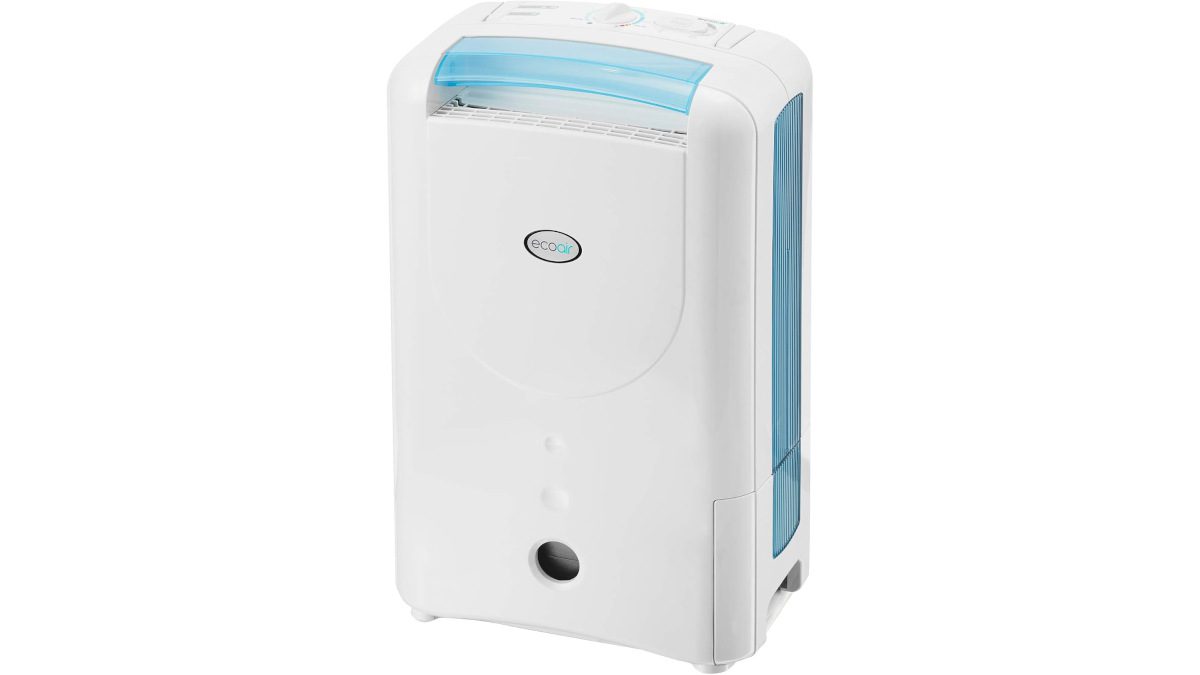
Monitoring Your Humidity Levels
A dehumidifier without a hygrometer is guesswork. You don’t know whether you’re running it enough, too much, or whether the problem room is actually the bedroom and not the kitchen.
A decent hygrometer costs around £10–15 and gives you a continuous read of temperature and humidity. Place one in any room you’re concerned about, leave it for 24 hours, and you’ll have a far clearer picture of where the moisture is coming from and when.
ThermoPro TP50 Digital Hygrometer
A compact, accurate hygrometer that tells you exactly what the humidity is in any room — so you know whether you have a damp problem before mould appears. Under £15 and the easiest first step in managing moisture at home. Now sold on Amazon UK as the TempPro TP50.
Our Full Review: ThermoPro TP50 Digital Hygrometer →
Protecting Stored Supplies from Damp
If you’re building household resilience — storing food, medications, documents, or emergency kit — damp is the enemy you may not have accounted for.
Airtight storage containers
Cardboard boxes are shop packaging. They’re not designed for long-term storage and they absorb moisture readily. Transfer anything you’re storing for more than a few weeks into airtight containers with proper seals.
Really Useful Boxes
Really Useful Boxes are actually waterproof, they seal properly, and they’re engineered well. Built to last and protect anything stored in them.

Silica gel — cheap insurance
Silica gel packets are inexpensive and available in bulk. Drop a couple into any sealed storage box to absorb residual moisture. Particularly useful in boxes containing metal items, electronics, or medications that degrade faster in humid conditions.

🦆 Keith
Don’t Be Keith
Keith manages his storage box moisture with forty-seven individually catalogued silica gel packets, a dedicated humidity log, and a rotation schedule printed and laminated in a ring binder. He sourced the packets individually from eBay over six months. A desiccant dehumidifier running in the storage room does the same job permanently. Don’t be Keith.
One critical rule: make sure everything is completely dry before sealing it away. A damp boot sealed in an airtight box stays damp indefinitely — and creates ideal conditions for mould to grow on everything else inside. Air kit out fully, allow it to dry completely, then store it.
Food packaging and damp
Dried foods — rice, pasta, oats, cereals, flour — are typically sold in cardboard boxes or thin paper packaging that offers no protection against moisture. In a damp kitchen or storage area, these absorb moisture gradually, clump together, and eventually go mouldy.
Transfer dried staples into airtight containers. Clip-top glass jars, food-grade plastic tubs with rubber seals, or sealed storage containers all work. Label with the contents and the date you transferred them. This is one of the most overlooked aspects of building an emergency food store — the packaging your food came in is rarely adequate for anything beyond the shop shelf.
If Mould Is Already Present
Prevention is the priority — but if mould has already established itself, here’s how to approach it.
Surface mould — the black patches that appear on tile grout, window frames, and painted surfaces — can usually be tackled with a fungicidal spray. Apply, leave to work, then clean off. Address the underlying moisture problem or it will return within weeks.
Mould on soft furnishings — mattresses, sofas, curtains — is harder to treat and often means the item needs replacing. Spores penetrate the material and are difficult to eliminate completely.
Structural mould — large patches behind plasterboard, under flooring, or inside walls — requires professional assessment. Signs include persistent musty smells despite visible mould being cleaned, damp patches that return within days of drying, or mould appearing on multiple surfaces simultaneously.
A note on bleach: bleach kills surface mould but doesn’t address the moisture problem, and it doesn’t kill mould roots in porous materials like plaster or grout. Fungicidal products specifically designed for mould are more effective.
Frequently Asked Questions
What’s the ideal humidity level for a UK home?
40–60% relative humidity is the target range. Below 40% and the air becomes uncomfortably dry. Above 60% and conditions favour dust mites and mould. A hygrometer will tell you exactly where you are.
Is condensation on windows a sign of a damp problem?
Is condensation on windows a sign of a damp problem?
Condensation on windows is normal — glass is a cold surface and moisture condenses there first. It becomes a concern when it’s happening consistently and not drying out during the day, or when you start seeing it on walls and ceilings rather than just glass. If condensation is persistent, the ventilation and heating advice above should be your first steps.
Do I need an extractor fan in every room?
No — kitchens and bathrooms are the priority. These are where most household moisture is generated. A decent extractor fan running during and after cooking or bathing makes a significant difference. Bedroom and living room ventilation is managed through trickle vents and regular full ventilation.
How long should I run a dehumidifier?
Until your hygrometer reads in the 40–55% range, then stop. Running one indefinitely in an already-dry room wastes electricity and makes the air uncomfortably dry. Use your hygrometer readings to run it only when needed.
Can I use a dehumidifier in a cold room or garage?
If you’re using a compressor dehumidifier, it will struggle below about 15°C. A desiccant dehumidifier works effectively in cold spaces and is the better choice for garages, outbuildings, and unheated rooms.
Does mould pose a serious health risk?
For most healthy adults, mould exposure causes irritation rather than serious illness — coughing, sneezing, itchy eyes, worsened hay fever symptoms. For children, the elderly, and anyone with asthma, respiratory conditions, or a compromised immune system, the risk is significantly higher. If anyone in the household is experiencing persistent respiratory symptoms, mould exposure should be considered as a potential factor.
Will fixing the mould fix the smell?
Once mould is eliminated and the moisture source is addressed, the musty smell should dissipate — but it takes time. Airing the room thoroughly (the Stoßlüften method above) after treatment will speed this up.
Build Your Resilience
Further Reading: Related Guides
- How to Prepare for a Power Cut
- Emergency Water Storage
- Long-Term Food Storage
- Protecting Your Important Documents
- Heating Without Electricity
All our guides can be found listed on our resilience hub.
Gear We’ve Tested & Reviewed
All our reviews can be found on our reviews and resources page.