
Most UK drivers think about winter driving the morning they find their car under a sheet of ice, or the evening they’re sliding gently towards a roundabout they can’t stop for. These winter driving tips are for the bit before that: how to drive in snow and on ice, what to do if you get stuck or break down, and the winter car checks that stop most of it happening in the first place.
This is a UK guide. That means A-roads and motorways, not mountain passes. Council gritters, not snowploughs. The kind of conditions that catch British drivers out every single year, because we assume it won’t happen to us, and then it does. Every one of the winter driving tips below is written for those roads.
It doesn’t take extreme weather. During the Beast from the East in March 2018, around 1,000 vehicles were brought to a standstill on the M80 near Glasgow, some for up to 13 hours. When Storm Arwen hit in November 2021, more than 120 lorries were stuck in snow on the M62 and the motorway had to be closed. And a single overnight freeze on an untreated B-road is enough to strand a car with a flat battery or a puncture for hours, in temperatures well below zero.
Winter Driving Tips for Snow and Ice
The first of our winter driving tips is the one nobody likes: if the Met Office has an amber or red warning out for snow or ice where you’re going, ask whether the journey really needs to happen today. If it does, these are the habits that get you there.
Before You Set Off
- Clear the whole car, not a porthole. Windscreen, every window, mirrors, lights and the roof. Snow left on the roof slides onto the windscreen the first time you brake, and blows off onto the car behind. Driving without a clear view is an offence, and police do stop people for it.
- Check the warnings and the roads. The Met Office app and website carry the weather warnings. National Highways, Traffic Scotland and Traffic Wales show live road conditions and closures. Don’t assume a road has been gritted, especially minor roads and estates.
- Tell someone your route and when you’ll arrive on any longer or rural journey. If you don’t turn up, someone knows where to start looking.
- Keep the fuel above a quarter of a tank. If you end up stuck in a queue for hours, the engine is your heater.
- Charge your phone, and have the What3Words app installed so you can give an exact location on a road you don’t know.
Driving in Snow
Driving in snow is all about being gentle: gentle on the accelerator, gentle on the brake, gentle on the steering. The Highway Code says stopping distances can be up to ten times longer in icy conditions, so leave a far bigger gap to the car in front than feels natural.
- Pull away gently. In a manual car, pull away in second gear with very little throttle to stop the wheels spinning. Many automatics have a snow or winter mode that does a similar job.
- Drive in as high a gear as you sensibly can, so the wheels are less likely to spin.
- Brake early and gently. Slow down well before bends and junctions, not on them.
- Keep moving on hills if you can. Wait at the bottom until the road is clear so you don’t have to stop halfway up.
- Use dipped headlights when visibility drops. Front and rear fog lights are only for when you can’t see more than 100 metres; switch them off again when it clears so you don’t dazzle other drivers.
Driving on Ice and Black Ice
Black ice is a thin, clear layer that looks like a wet road. It forms first on bridges, flyovers, shaded stretches under trees, and dips where water collects. If the tyre noise suddenly goes quiet and the steering feels light, you’re probably on it.
The most important of all winter driving tips applies here: smooth inputs. Don’t brake hard and don’t make sudden steering movements. Ease off the accelerator and keep the wheel steady until you’re through it. If the back of the car starts to slide, take your foot off the accelerator and steer gently in the same direction as the slide to bring it back in line. Stamping on the brake is the instinct, and it’s the thing that makes it worse.
Winter Tyres and All-Season Tyres
Most UK cars run on summer tyres, which harden and lose grip as the temperature drops towards freezing. All-season and winter tyres use a softer compound and deeper tread for cold, wet and snowy roads. Look for the three-peak mountain snowflake symbol on the sidewall, which means the tyre has passed a snow performance test; M+S on its own is a manufacturer’s marking with no test behind it. They’re not a legal requirement in the UK, but if you live somewhere rural or hilly, they’re the single biggest upgrade you can make to how your car copes with winter.
If You Get Stuck in Snow
Most winter driving tips are about avoiding this moment, but driving in snow long enough means it happens to most of us eventually. Don’t keep spinning the wheels. All it does is polish the snow into ice and dig you in deeper. Instead:
- Straighten the front wheels if you can.
- Clear the snow from in front of and around the drive wheels with a shovel.
- Put something under the drive wheels for grip: traction mats, grit, or a bag of cat litter.
- Pull away very gently in second gear. If it won’t go, a little reverse-then-forward rocking can sometimes get you over the lip.
If the car won’t move and the weather’s getting worse, stay with it. Your car is shelter, it’s visible, and walking along a road in snow and darkness is far more dangerous than waiting. Run the engine for short spells to warm up, not continuously, and before you do, check the exhaust pipe isn’t blocked by snow. A blocked exhaust can fill a stationary car with carbon monoxide. Opening a window slightly while the engine runs helps too.
Between those spells, the car gets cold quickly. Layers, a hat, gloves and a proper blanket make the difference between an uncomfortable wait and a miserable one.
Silentnight Heat Genie Self Heating Giant Blanket
If you’re looking for a simple way to stay warm without turning the heating up, this is a low-cost option with zero running costs. It’s especially worth considering for cold homes, power cuts, or anyone wanting extra warmth without relying on electricity.
Our Full Review: Silentnight Heat Genie Self Heating Giant Blanket →
If You Break Down in Winter
On a Motorway
Get onto the hard shoulder or into an emergency area if you can, as far to the left as possible, with hazard lights on. Get everyone out through the passenger-side doors, over the barrier and well up the bank, then call your breakdown service. Don’t stand between the car and the traffic, and don’t put out a warning triangle on a motorway. If you’ve stopped in a live lane and can’t get out safely, stay in the car with your seatbelt on and hazard lights on, and call 999. You can also call National Highways on 0300 123 5000.
On Other Roads
Hazard lights on. If it’s safe, put your warning triangle at least 45 metres behind the car. Wear a hi-vis vest if you have to get out at all, especially in the dark. Then get back in the car, wrap up, and call your breakdown service with your exact location, using What3Words if you’re not sure which road you’re on.
Portwest C474 Hi-Vis Vest
Under £6, fits over a coat, and makes you visible to drivers from 100 metres. The one item in the bag most likely to stop you getting hit by a car. Available up to 5XL — it’ll fit over whatever you’re wearing, however many layers that is.
Our Full Review: Portwest C474 Hi-Vis Vest →
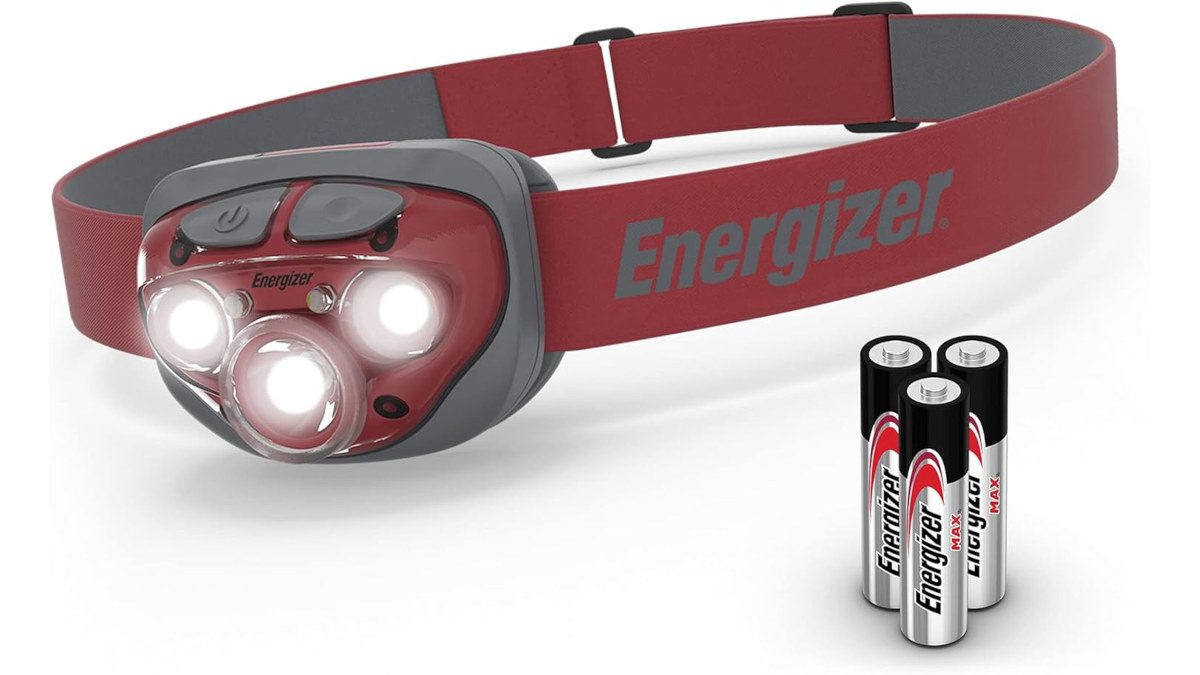
A head torch is far better than a handheld torch at the roadside. You need both hands to fit a spare, connect jump leads, or read the small print on your breakdown card, and your phone’s battery is for phone calls, not lighting.
Energizer Vision HD+ Head Torch
Is this the most versatile head torch for your kit? Does it deliver what it promises? Does it have longevity?
Children and Vulnerable Passengers
A winter breakdown with young children or elderly passengers changes the priority. Staying warm stops being a comfort and becomes the main job. On any longer winter journey with dependants, carry a blanket per person, a change of warm clothes for the children, a flask with a hot drink, and any regular medication they need. Keep them in the car with the doors shut on ordinary roads, and only follow the get-out-behind-the-barrier rule on motorways.
If you’re close to home when it all goes wrong and conditions are safe, having another way to get there helps. A folding bike in the boot is one option.
Complete Guide
The Two Wheeled Contingency
This guide makes the case for adding a bike to your resilience planning, covers what to look for if you’re buying one specifically for this purpose, and explains how to set up a bike you already own for emergency use.
Read the Full Guide: The Two Wheeled Contingency →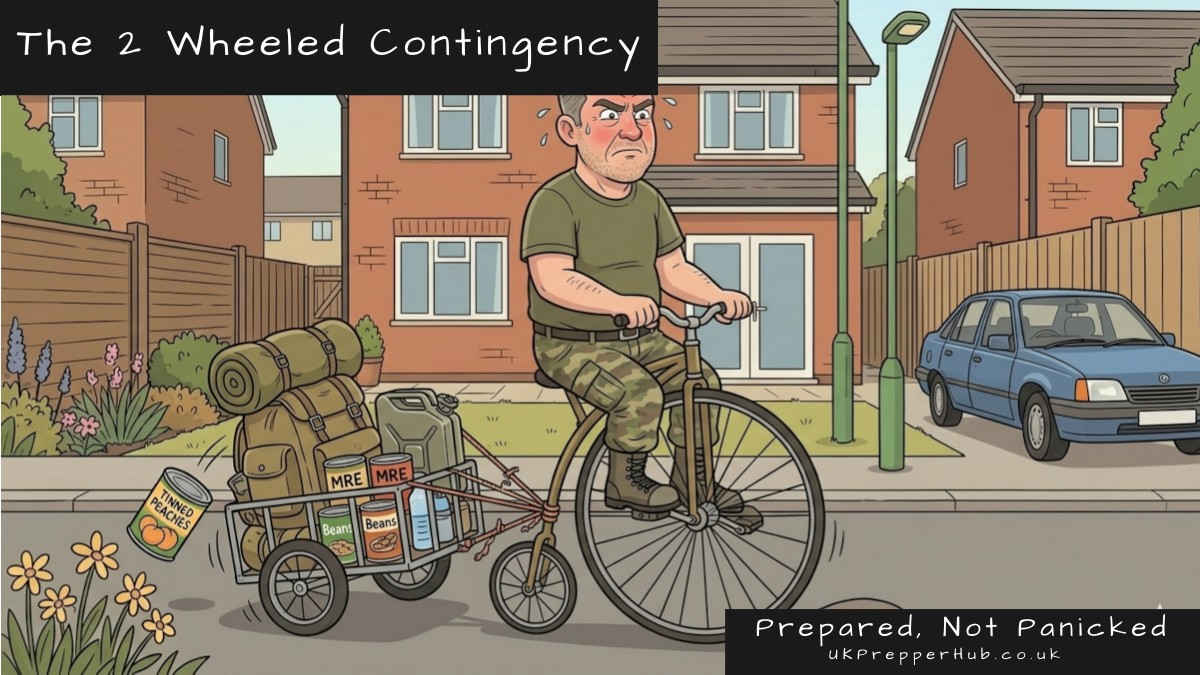
Winter Car Checks Before the First Freeze
If you’re wondering how to prepare your car for winter, start here. Most winter breakdowns are preventable, and these winter car checks are basic winter car maintenance worth doing every autumn, before the first proper cold snap. Most take twenty minutes on the driveway; a couple need a garage.
Battery
The battery is the most common cause of winter breakdowns. Cold reduces its capacity, so a battery that copes in September can refuse to start on a frosty January morning. If yours is three or more years old, get it tested before winter; many garages and battery centres do it free. Watch for slow cranking, flickering dashboard lights or headlights that dim at idle. A portable jump starter in the car means a flat battery doesn’t have to mean waiting for someone else.
NOCO Boost GB40 Jump Starter
The lithium jump starter that starts your dead battery alone, without another car — 1000A peak output, spark-proof clamps, and 126,668 reviews to back it up.
Our Full Review: NOCO Boost GB40 Jump Starter →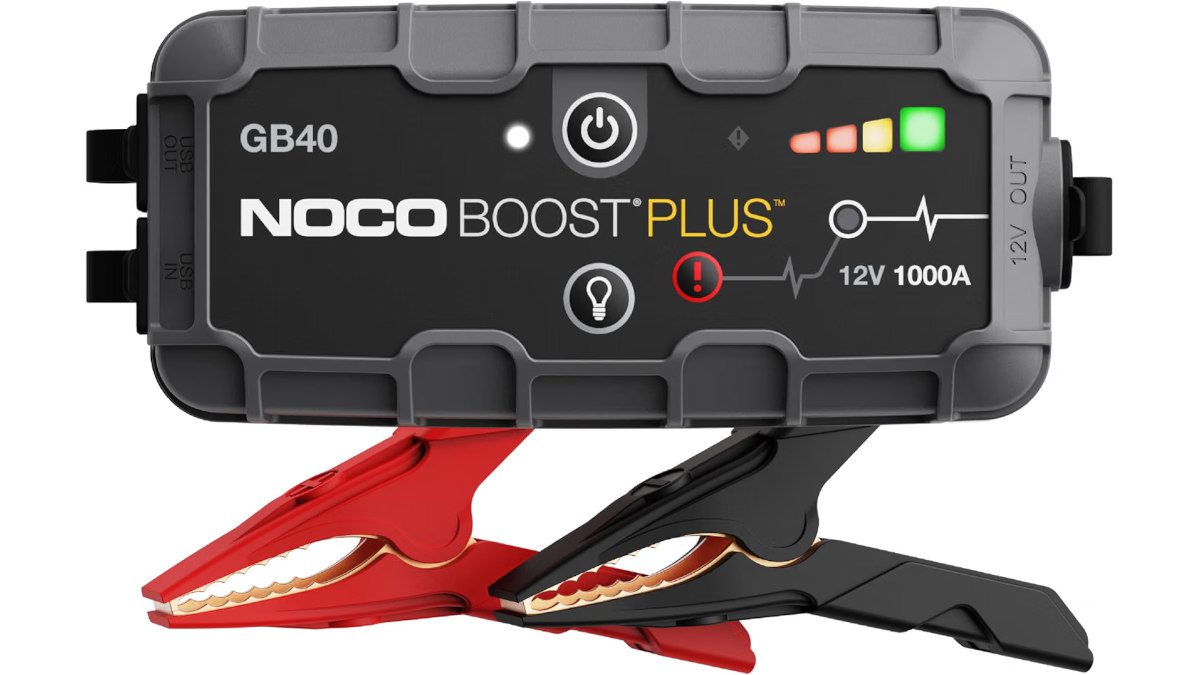
Tyres
Check the tread depth, pressure and condition of all four tyres, plus the spare if you have one. The legal minimum is 1.6mm across the central three-quarters of the tread, but most tyre safety organisations recommend replacing at 3mm for winter. Pressure drops as it gets colder, roughly 1 PSI for every 5 to 6°C, so check them cold and set them to the figures on the door-pillar sticker or in the handbook. Cracks, bulges or uneven wear mean a new tyre now, not after winter.
Windscreen and Wipers
Get chips repaired before the cold arrives, because freezing nights make them spread into cracks. Replace wiper blades that smear rather than clear. Never run the wipers on a frozen screen; you’ll tear the rubber. A windscreen frost cover saves you ten minutes of scraping on frosty mornings and costs very little.
Screenwash
Fill the reservoir with a winter screenwash concentrate rated to at least -15°C, mixed as the bottle says. Plain water freezes in the reservoir and the jets overnight, and washing-up liquid smears and can damage seals. Keep a spare bottle in the car; on a motorway in slush and spray, you can empty a reservoir in a day.
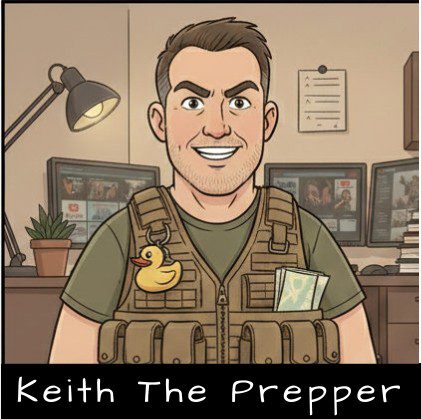
🦆 Keith
Don’t Be Keith
Keith used washing-up liquid in the screenwash reservoir because it was already out from the washing up — sealed it up, very pleased with himself, and discovered why that was wrong on the M1 in January when his windscreen failed to wash because the reservoir was frozen solid.
Coolant and Antifreeze
Coolant stops the water in your engine’s cooling system from freezing. Most modern cars use a pre-mixed coolant that’s good to around -35°C, but older cars, or ones that have been topped up with water, may not be. A cheap antifreeze tester from any motor factor checks the freeze point in seconds. If it isn’t protected well below -15°C, get it sorted now.
Lights
Walk round the car and check every light: dipped and full beam, sidelights, brake lights, indicators and fog lights. Winter means far more driving in the dark, and a dead bulb that’s a minor annoyance in June is a real problem at 6am on an unlit road in December.
Brakes, Oil and Diesel
If the brakes squeal, grind, pull to one side or feel longer to stop, have them checked before winter. Check the oil on the dipstick and top it up if needed. Diesel drivers: UK pump diesel is winter-treated, but in a prolonged hard freeze it can still start to wax and block the fuel filter. An anti-gel additive in the tank before a long cold spell is cheap insurance, especially in rural areas.
Breakdown Cover
The last of the winter car maintenance jobs isn’t mechanical at all. Make sure your breakdown cover is current and covers you at home as well as on the road. Write the membership number and phone number on paper and keep it in the glovebox. If your phone dies, that bit of paper is how you get help.
What to Keep in Your Car This Winter
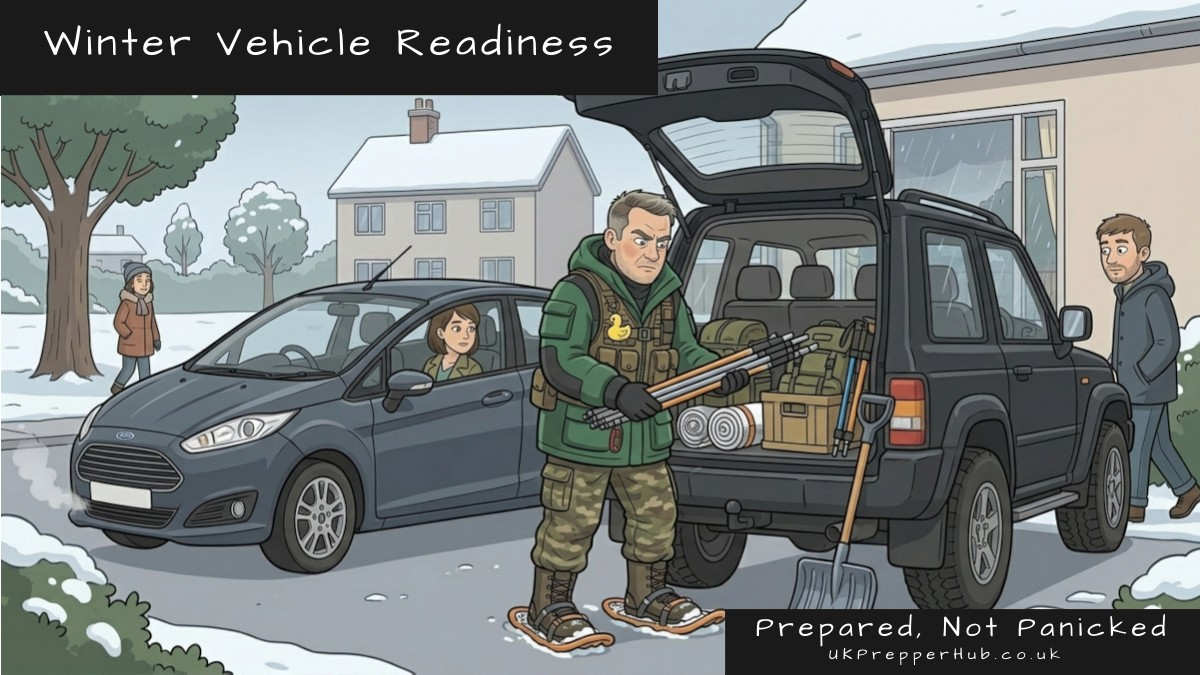
The best winter driving tips in the world don’t help if the kit you need is out of reach. Where you keep things matters as much as what you keep. If the car is half-buried or you’ve slid into a verge, the boot may be the last thing you can safely reach, so the items you need first live in the car itself.
- In the cabin: ice scraper, de-icer, warm waterproof gloves, a hi-vis vest, ice grips for your shoes, a phone charging cable, your breakdown number on paper, and a window breaker and seatbelt cutter.
- In the boot: a folding shovel, jump leads or a jump starter, a head torch, a warning triangle, traction mats, a blanket and warm layers, water and some snacks, and a charged power bank.
A pair of disposable hand warmers in the glovebox earns its place too. There’s nothing to charge, so they’re ready whenever the car isn’t.
HotHands Hand Warmers
No batteries, no charging, nothing to go flat: open the packet and get up to 10 hours of heat, wherever the power cut or breakdown catches you.
Our Full Review: HotHands Hand Warmers →
The window breaker deserves a mention of its own. It’s a small tool that breaks a side window and cuts a jammed seatbelt if you ever need to get out of the car fast. It belongs within reach of the driver’s seat, not in the boot or the bottom of the glovebox.

🪖 Black Panther
In My Previous Role…
In my previous role we carried a vehicle egress tool as standard — used it once, in circumstances I won’t go into. The civilian version costs a few quid. Keep it clipped to the sun visor, not in the glovebox. Carry on.
Build Your Own Winter Car Kit
Our Winter Car Essentials list goes through every item worth keeping in the car this winter, from the shovel and jump starter to the scraper, ice grips and first aid kit. It’s split into minimal basics and suggested extras, so you can choose the quality of each piece and build it up over a few paydays.
Winter Driving Checklists
Here are the winter driving tips and winter car checks from this guide as quick checklists. Work through the first list once in autumn, the second before any journey in bad weather, and keep the third in the car until spring. That’s how to prepare your car for winter without having to remember any of it.
📋 Calm Clarissa
I’ve turned these checks and the full winter car kit into a printable checklist: autumn checks, cabin, boot and before every journey, each with a box to tick. Free to download, obviously.
Download the Free Checklist →Autumn Winter Car Checks (Once, Before the First Freeze)
- Battery tested, and replaced if it’s borderline or 3+ years old
- All four tyres checked: tread (3mm+ for winter), pressure and condition, plus the spare
- Windscreen chips repaired
- Wiper blades replaced if they smear
- Screenwash filled with -15°C rated concentrate, spare bottle in the car
- Coolant freeze point checked
- All lights working
- Oil checked and topped up
- Brakes checked if anything feels or sounds wrong
- Breakdown cover current, number written down in the glovebox
Before Every Winter Journey
- Whole car cleared: roof, windscreen, all windows, mirrors and lights
- Met Office warnings checked
- Route checked for closures
- Someone knows your route and arrival time
- Phone charged
- Fuel above a quarter of a tank
- What3Words app installed
In the Car All Winter
- Ice scraper and de-icer within reach
- Gloves, hi-vis and ice grips in the cabin
- Shovel, jump leads or jump starter, head torch and warning triangle in the boot
- Blanket, warm layers, water and snacks
- Phone cable and a charged power bank
Frequently Asked Questions
What are the most important winter driving tips?
Clear the whole car before you set off, check the Met Office warnings and your route, and leave a much bigger gap to the car in front. Stopping distances can be up to ten times longer on ice. Accelerate, brake and steer gently, and slow down well before bends and junctions. Most winter driving tips come down to one rule: smooth, early, gentle inputs.
How should I drive in snow?
Pull away gently in second gear (or use your car’s snow mode), drive in as high a gear as you sensibly can, and brake early and softly. On hills, wait at the bottom until the road is clear so you don’t have to stop halfway up.
What should I do if my car skids on ice?
Take your foot off the accelerator, don’t stamp on the brake, and steer gently in the same direction as the slide to bring the car back in line. Black ice forms first on bridges, shaded stretches and dips in the road, so take extra care there.
What winter car checks should I do before the first freeze?
Have the battery tested if it’s three or more years old, and check tyre tread (3mm or more for winter), pressures and condition. Fill the screenwash with a -15°C rated concentrate, check the coolant freeze point, and make sure every light works. Check your breakdown cover is current, with the number written down in the glovebox.
What should I do if I get stuck in snow?
Stop spinning the wheels, clear the snow from around the drive wheels, put traction mats, grit or cat litter underneath, and pull away very gently in second gear. If the car won’t move and the weather is getting worse, stay with it. Run the engine in short spells for warmth, and only after checking the exhaust isn’t blocked by snow.
What should I keep in my car in winter?
In the cabin: an ice scraper, de-icer, gloves, a hi-vis vest, ice grips for your shoes, a phone cable and your breakdown number on paper. In the boot: a folding shovel, jump leads or a jump starter, a head torch, a warning triangle, traction mats, a blanket and warm layers, water and snacks. Our Winter Car Essentials list covers the full kit.
Do I need winter tyres in the UK?
They aren’t a legal requirement, but if you live somewhere rural or hilly, winter or all-season tyres with the three-peak mountain snowflake symbol are the biggest single upgrade you can make. Along with the other winter driving tips in this guide, they make a real difference to how your car copes with cold, wet and snowy roads.
Build Your Resilience
Further Reading: Related Guides
- Winter Car Essentials: The Kit to Build Yourself
- Surviving Extreme Cold
- Get Home Bag
- The Two-Wheeled Contingency
All our guides can be found listed on our resilience hub.
Gear We've Tested & Reviewed
- NOCO Boost GB40 Jump Starter
- Energizer Vision HD+ Head Torch
- Portwest C474 Hi-Vis Vest
- Silentnight Heat Genie Self Heating Blanket
- Cyalume SnapLight Glow Sticks
- AA Emergency Winter Car Kit
- HotHands Hand Warmers
All our reviews can be found on our reviews and resources page.