
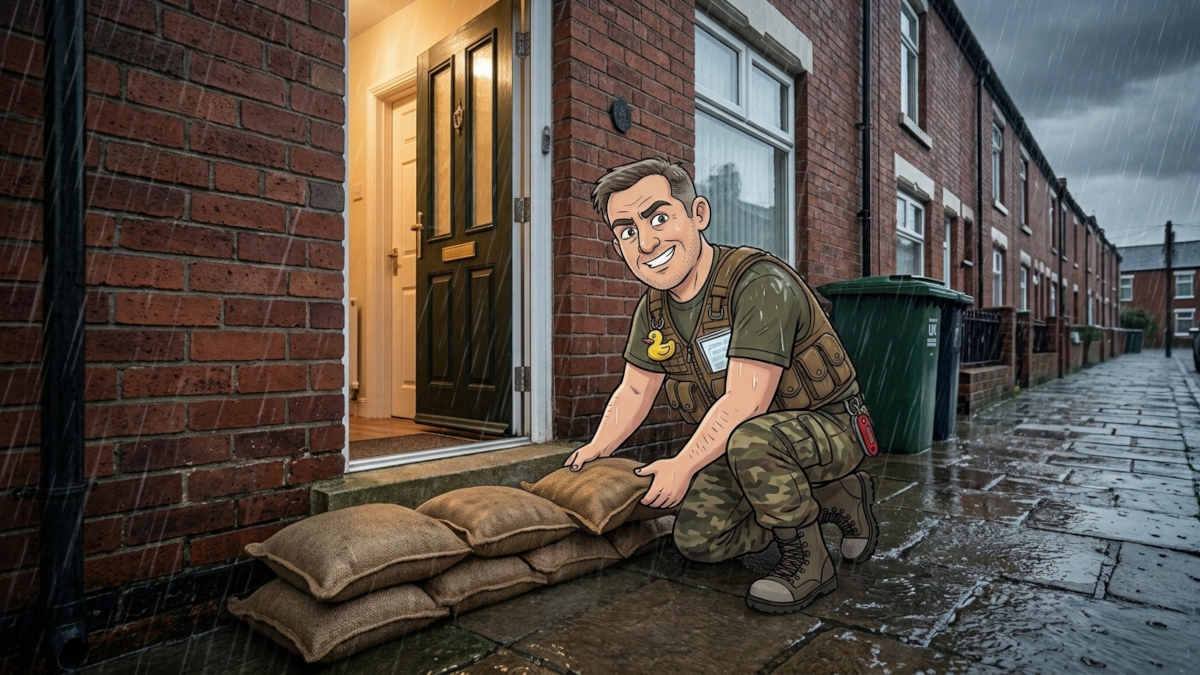
Most of the emergencies UK households actually face happen at home: a burst pipe, a flooded street, a storm that takes half the fence, a power cut that knocks the burglar alarm off, a pan that catches light. The way to protect your home is to have a plan before any of them happen, so you’re working through steps you already know instead of guessing in the dark.
This part of the Resilience Hub brings together every guide on planning, protecting the building and keeping your household safe. Start with the plan, then work through whichever risk is closest to home for you.
Start With a Household Emergency Plan
A plan is the cheapest bit of preparation there is. It answers the questions nobody wants to work out at 2am: do we stay or go, where do we meet, who checks on whom, and where are the passports. For most UK households the answer is to stay put, so the plan starts there, with a kit at home and a bag by the door for the rare time you do need to leave.
Complete Guide
Bug-In vs Bug-Out
The debate between “bugging out” (leaving your home during a crisis) and “bugging in” (sheltering in place) is one of the most discussed topics in preparedness circles.
Read the Full Guide: Bug-In vs Bug-Out →
Complete Guide
Home Emergency Kit
The no-nonsense guide to building a home emergency kit that actually works — eight essentials, realistic costs, and a clear steer on what you don’t need.
Read the Full Guide: Home Emergency Kit →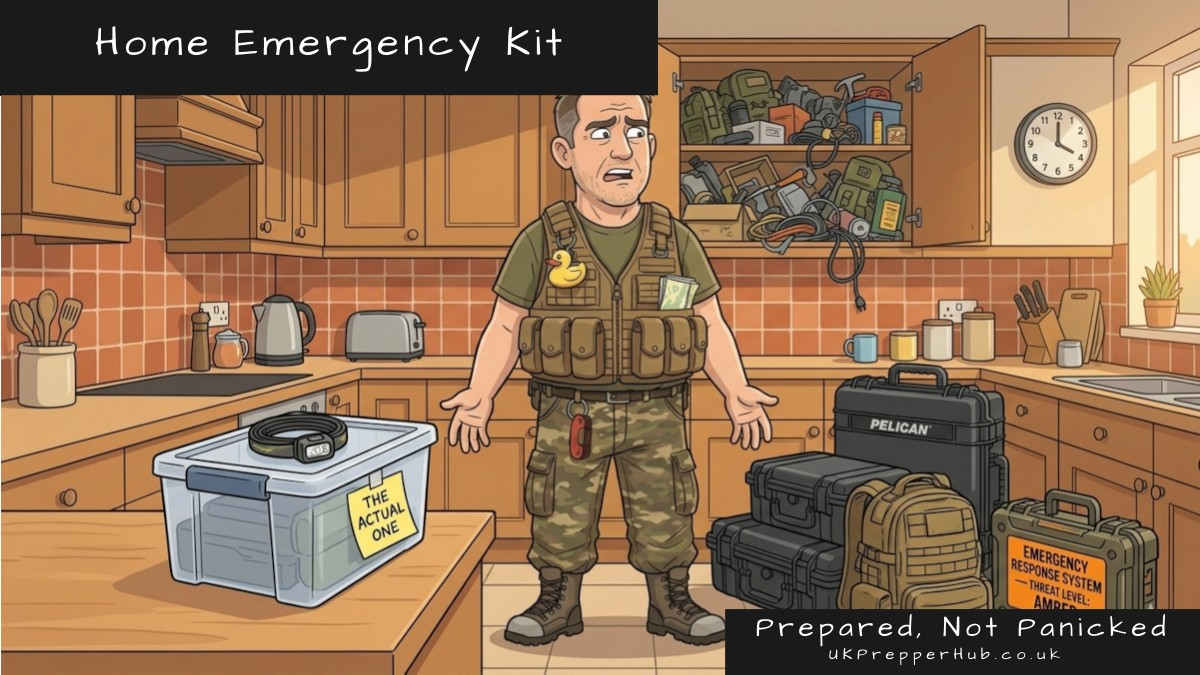
Complete Guide
Home Evacuation Plan
Most households freeze during an evacuation — not from fear, but from making fifteen decisions simultaneously under pressure for the first time. This guide walks you through the five decisions to make now, calmly, before you ever need them.
Read the Full Guide: Home Evacuation Plan →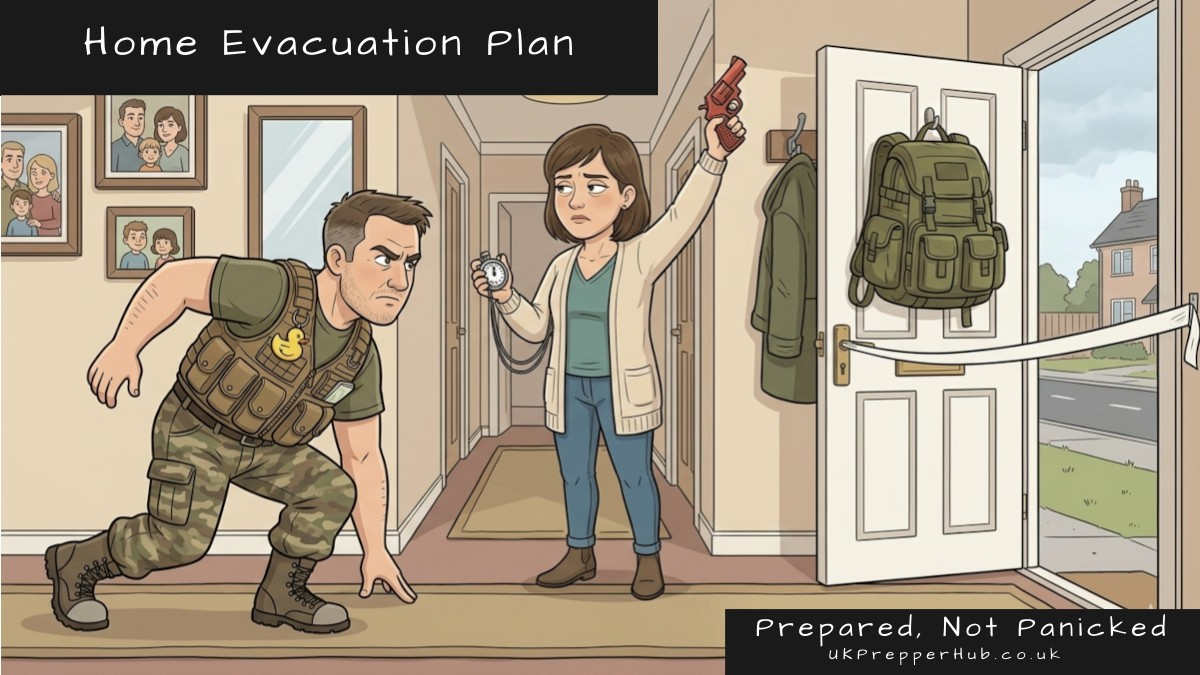
Complete Guide
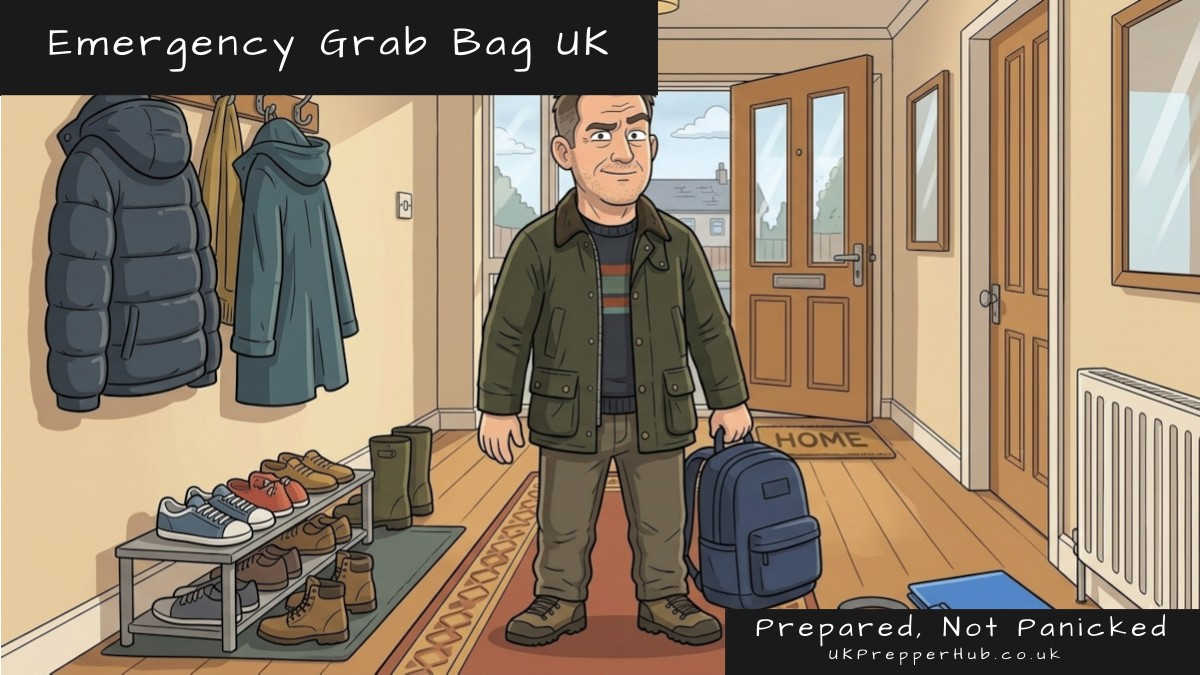
72-Hour UK Grab Bag
The ‘get out quick bag’ for rapid home evacuation in the event of fire, flood, or other incidents. Every essential for 3 days away from home in one bag.
Complete Guide
Protecting Your Important Documents
ost fireproof boxes don’t take A4. Most fireproof wallets don’t work. This guide covers what to actually buy, how to add digital backups, and how to waterproof your documents for 20p.
Read the Full Guide: Protecting Your Important Documents →

📋 Clarissa
I’ve Made A Checklist
Here’s my checklist for the whole household plan: contacts, meeting points, where the stopcock and fuse box are, and who needs what. Fill it in on screen or print it, then stick it on the fridge where everyone can find it.
Download: Household Emergency Plan →Protect Your Home From Water, Weather and Cold
Water does more damage to British homes than anything else, whether it comes up from a flooded street, down through the ceiling or out of a frozen pipe. Storms and damp follow close behind. These guides cover what to do before the weather turns, what to do while it’s happening, and the basic tools that let you make a safe temporary repair until help arrives.
Complete Guide
UK Home Flood Defense
Even small floods can damage flooring, walls, furniture, and utilities. Knowing how to act fast and prepare your home makes recovery faster and safer.

Complete Guide
Storm Damage Prevention
Every autumn, the same thing happens. A named storm rolls in off the Atlantic, the Met Office issues an amber warning, and half the country discovers that garden furniture, wheelie bins, and loose roof tiles become projectiles at 70mph.
Read the Full Guide: Storm Damage Prevention →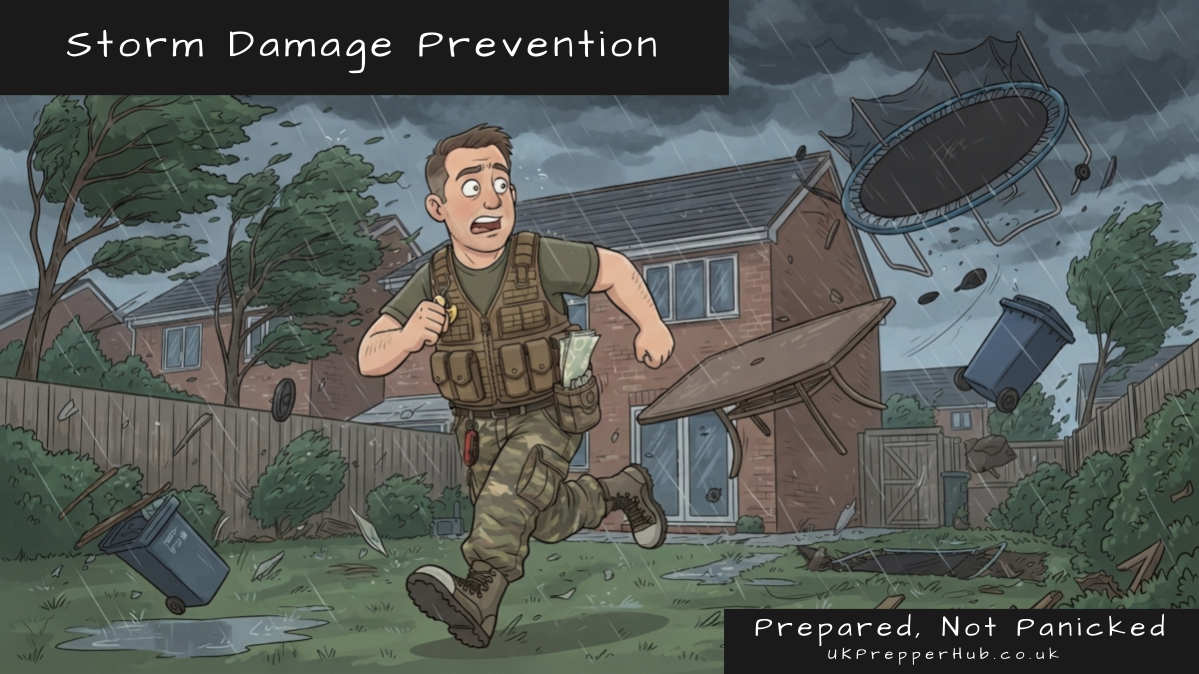
Complete Guide
Water Coming Through the Ceiling? 5 Steps to Take and Who Pays
A burst pipe, an overflowing bath or a leak from the flat above can bring a ceiling down in hours. The five steps to take straight away, how to find where the water is coming from, and who pays for the damage.
Read the Full Guide: Water Coming Through the Ceiling →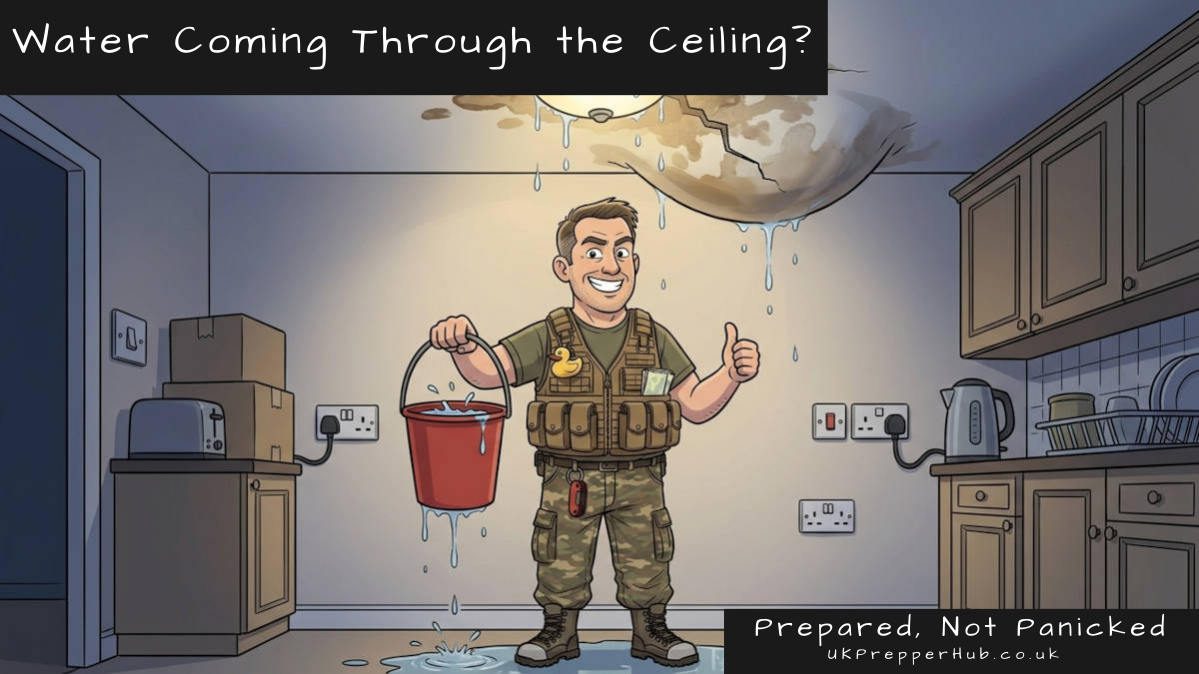
Complete Guide
How to Unfreeze Pipes
Frozen pipes rarely burst during the freeze — the damage happens when the thaw starts. Covers safe thawing methods step by step, emergency response if a pipe bursts, and how to protect vulnerable pipes before the next cold snap.
Read the Full Guide: How to Unfreeze Pipes →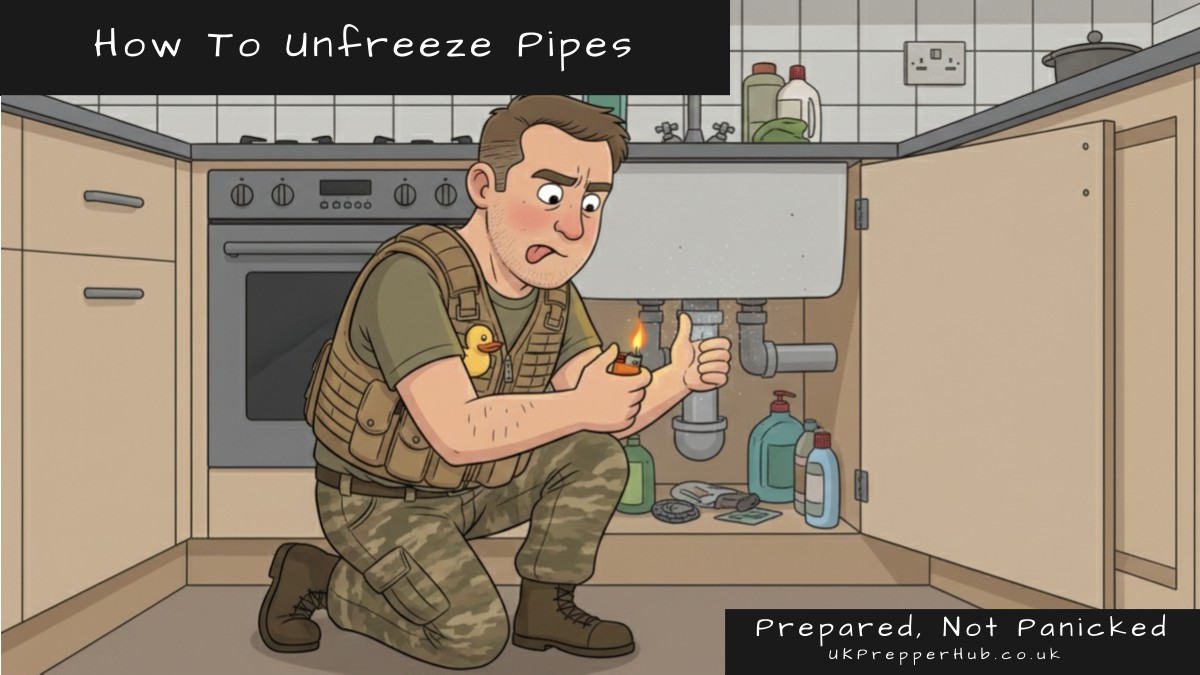
Complete Guide
Preventing Indoor Mould & Damp
Mould needs moisture to grow — remove the moisture and you remove the problem. This guide covers ventilation, heating patterns, dehumidifiers, humidity monitoring, and keeping stored supplies dry.
Read the Full Guide: Preventing Indoor Mould & Damp →
Complete Guide
Damp Storage
Ordinary British damp ruins more stored supplies than most emergencies do. Where to keep tins, batteries and documents, what works in cupboards, garages, sheds and lofts, and whether damp traps and dehumidifiers are worth it.
Read the Full Guide: Damp Storage →
Complete Guide
Emergency Home Tool Kit
Something goes wrong at home at the worst possible time. This guide covers the tools every UK household actually needs — from a compact starter kit for those starting from scratch, to building a proper cantilever toolbox that grows with you.
Read the Full Guide: Emergency Home Tool Kit →
Fire Safety at Home
Fire is the emergency that gives you the least time to think. Working smoke alarms, a heat alarm in the kitchen and an escape plan everyone has walked through will do more than any amount of kit, and your local fire service will check your home for free.
Complete Guide
Home Fire Safety
How many smoke alarms you need and where they go, a fire escape plan that works in the dark, when it’s safe to tackle a small fire, chip pans, e-bike batteries, and the free home fire safety check your fire service will do.
Read the Full Guide: Home Fire Safety →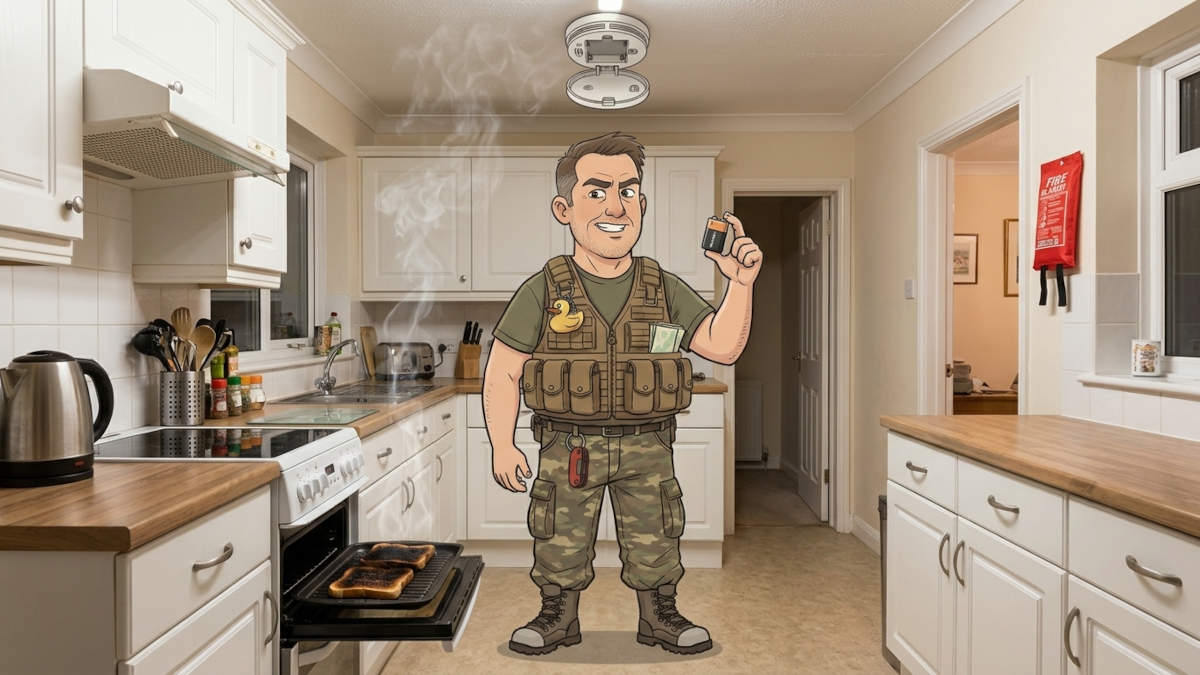
Complete Guide
Chimney Fire
What to do if your chimney catches fire, the warning signs, how often to get it swept, why house coal and wet logs wreck a flue, and the carbon monoxide alarm that belongs in every room with a stove.
Read the Full Guide: Chimney Fire →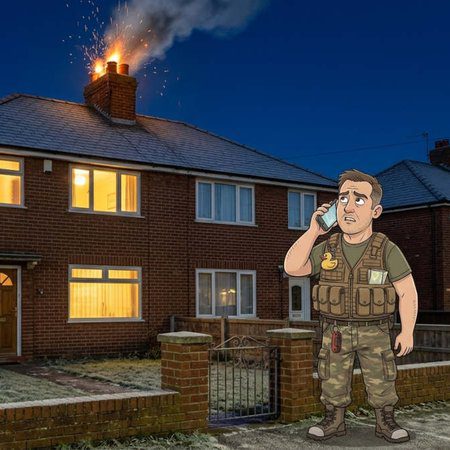
Home Security
Good home security is mostly about what you don’t advertise: what’s on your doorstep, what’s on social media, and what a passer-by can see through the window. It also means knowing what happens to your alarm and cameras when the power goes off.
Complete Guide
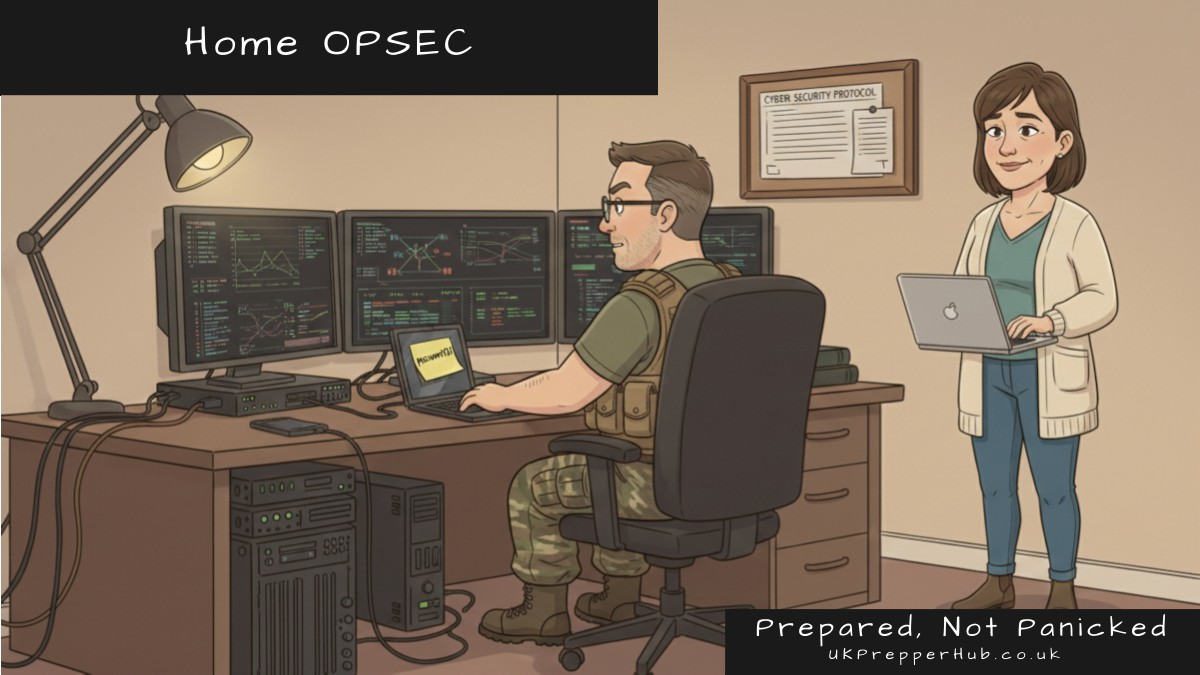
Household OPSEC Guide
OPSEC is a military term that’s filtered down to civilian life. OPSEC is short for “OPerational SECurity”. At its core, it means protecting information that could be used to harm you.
Complete Guide
Burglar Alarm Power Cut
What your burglar alarm, video doorbell and smart lock actually do when the power goes, how to stop the beeping, and the home security that works with no electricity at all: locks, light, scams and what to do if you have to leave.
Read the Full Guide: Burglar Alarm Power Cut →
More From the Resilience Hub
- Power, Heat and Light: power cuts, backup power and keeping warm
- Stay Informed: emergency radio and off-grid communications
- Water and Food: water storage, emergency pantry and cooking without power
- Health, Hygiene and Pets: first aid, medication, sanitation and pets
- On the Road: winter car, get home bag and backup transport
- Back to the Resilience Hub: every topic in one place


