
Emergencies don’t pause anyone’s health needs. Prescriptions still run out, babies still need feeding, cuts still need cleaning and the dog still needs walking. The households that cope best are the ones that have thought about the people and animals who rely on them, before the trouble starts.
This part of the Resilience Hub covers first aid and medication, caring for vulnerable people, staying healthy, keeping clean when the water is off and looking after your pets.
First Aid and Medication
A well-stocked first aid kit and a few days of spare medication are the two health preparations that matter most. Both are cheap and easy to sort out now.
Complete Guide
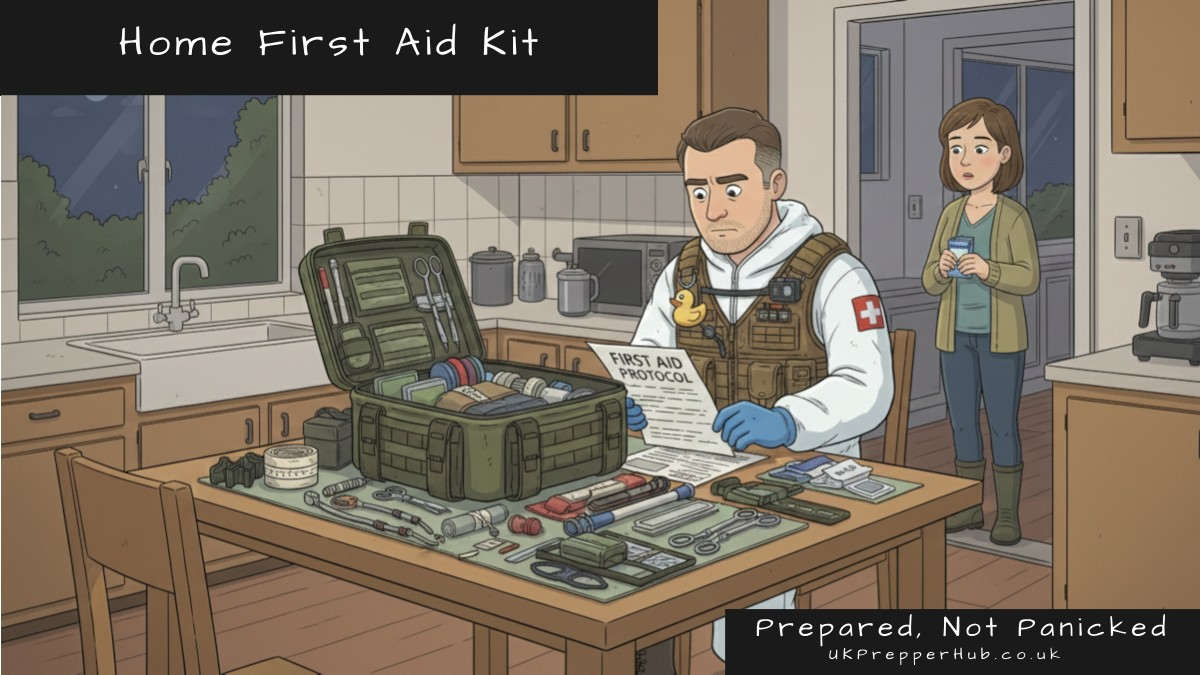
UK Home First Aid Kit
This guide covers comprehensive first aid supplies needed in the home to cover almost all emergencies.
Complete Guide
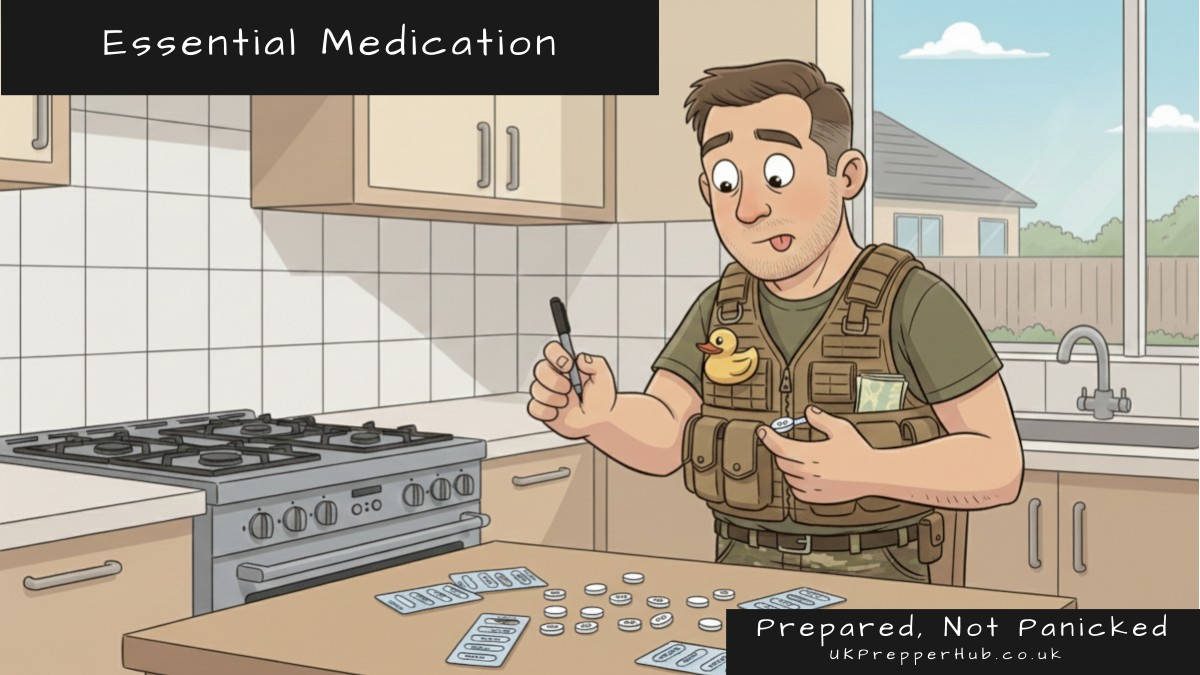
Managing Essential Medication
This guide covers more detail on being prepared with essential medication for all emergency situations.
Caring for Others
If someone depends on you, or you depend on a carer, equipment or support, your plan needs to cover them first.
Complete Guide
Emergency Backup Plan for Carers
If you’re caring for someone with additional needs—whether that’s an autistic child, a partner with severe anxiety, an adult with learning disabilities, or someone recovering from a stroke—you already know that routine is everything. You need a plan.
Read the Full Guide: Emergency Backup Plan for Carers →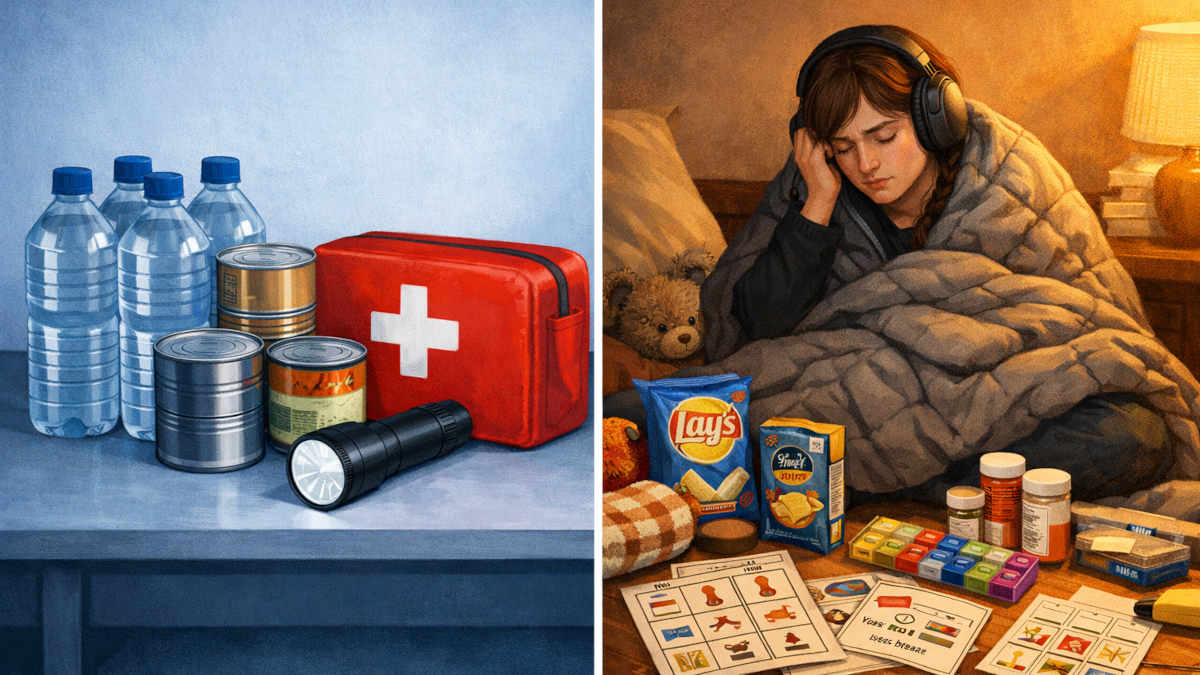
Complete Guide
Emergency Planning for Disabled People
Standard emergency planning advice assumes a household of able-bodied adults who can read a leaflet, hear a smoke alarm, grab a bag, and walk to the end of the road. For a significant proportion of UK households, one or more of those assumptions is wrong.
Read the Full Guide: Emergency Planning for Disabled People →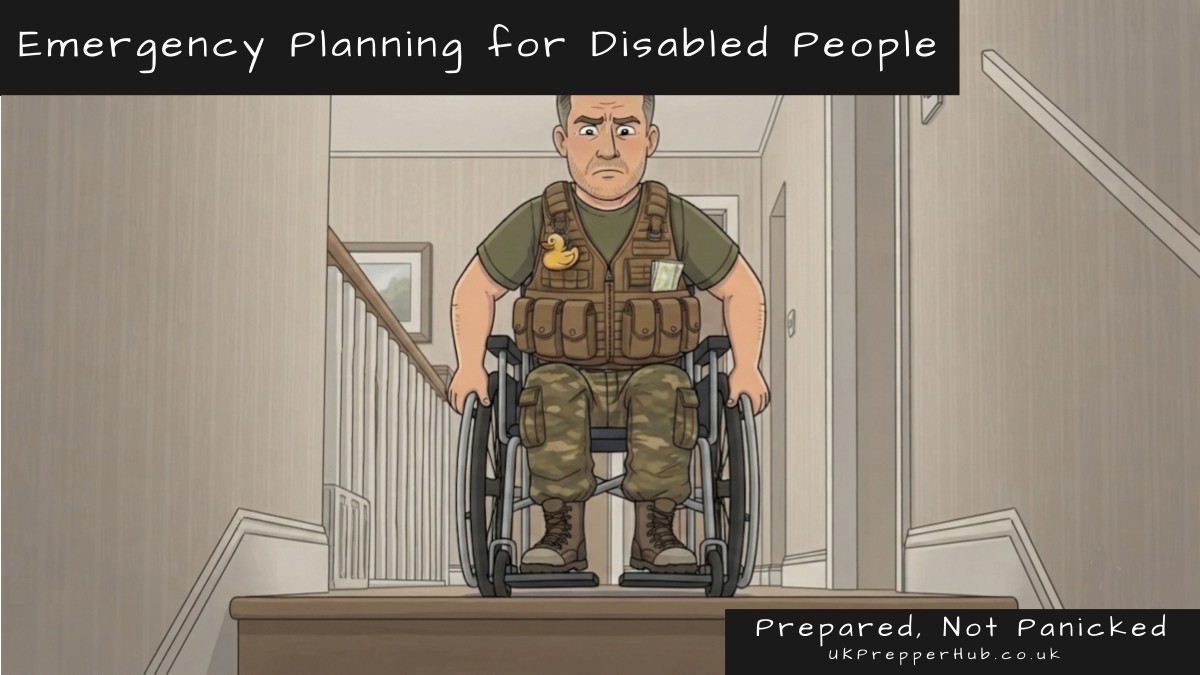
Complete Guide
Emergency Preparedness with a Baby
Babies create specific vulnerabilities in a household emergency — they can’t wait and they can’t tell you. This guide covers formula in a power cut, sterilising without electricity, keeping infants warm, and what goes in a baby grab bag.
Read the Full Guide: Emergency Preparedness with a Baby →
Staying Healthy
From a pandemic to a tick bite on a country walk, these guides cover the health risks UK households face and the simple steps that cut them.
Complete Guide
Pandemic Preparedness
Covers everything a UK household needs to prepare before the official advice goes public — medication stockpiles, hygiene supplies, food, and how to stay informed when supply chains come under pressure.
Read the Full Guide: Pandemic Preparedness →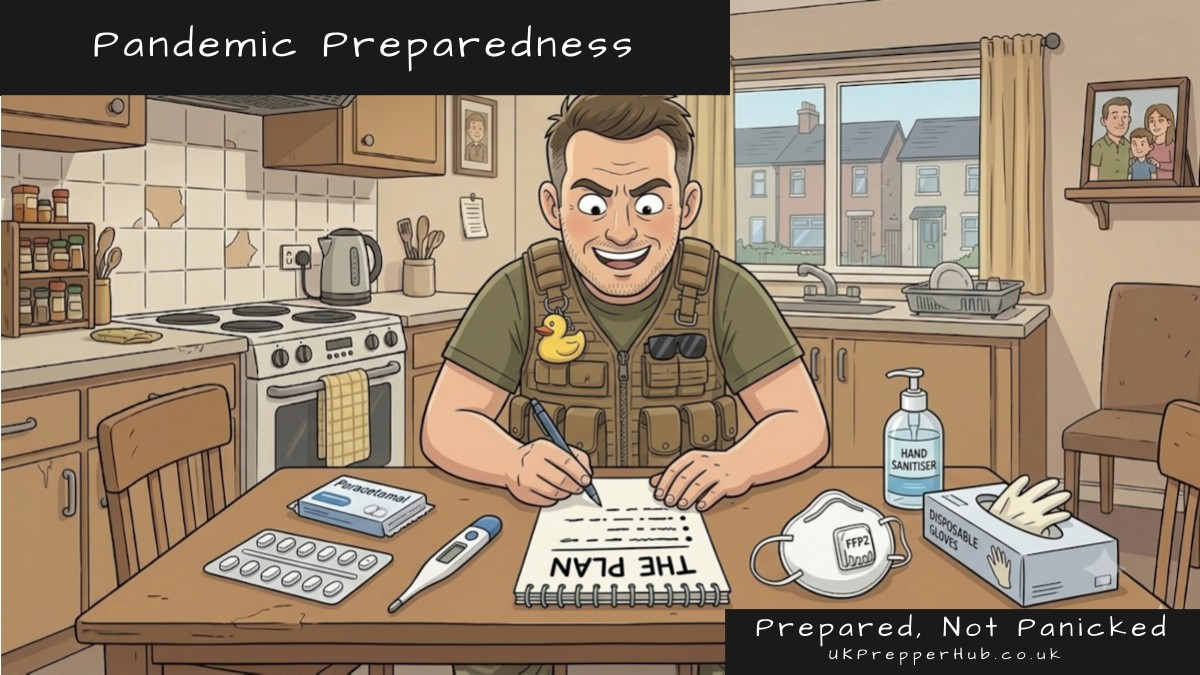
Complete Guide
Tick Bites & Safe Removal
What a tick bite actually looks like, how to remove one safely without leaving the head behind, and the exact symptoms that mean it’s time to call a doctor.
Read the Full Guide: Tick Bites & Safe Removal →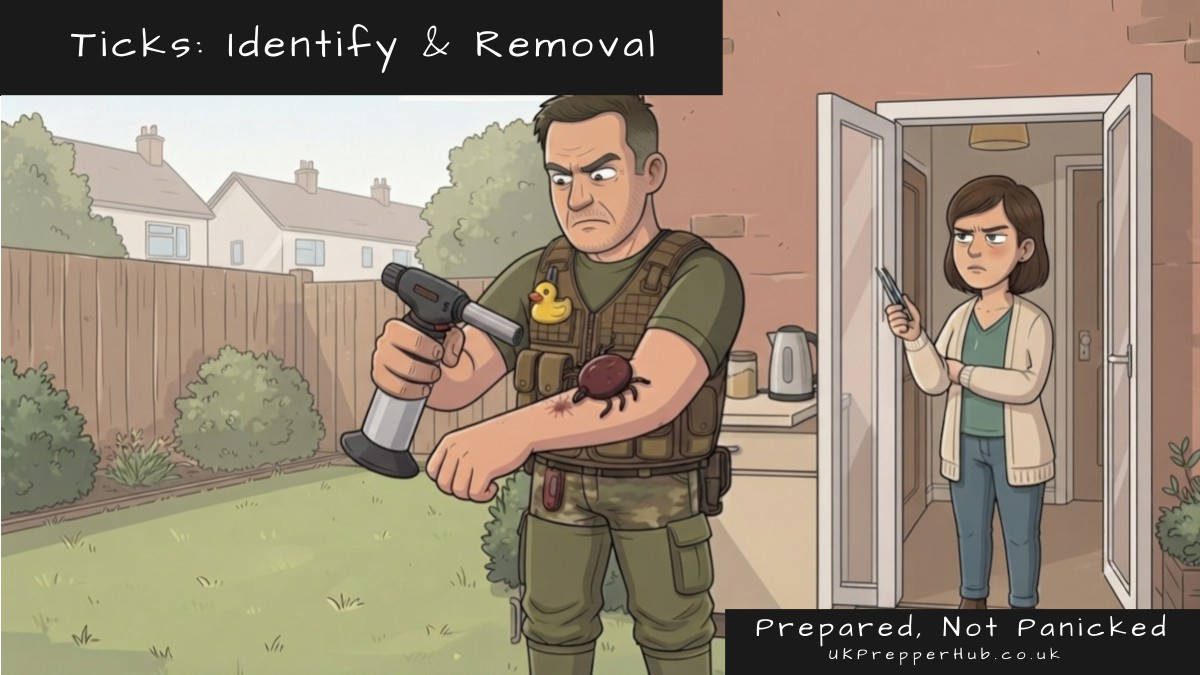
Complete Guide
Protect Your Skin From the Sun
Everything UV does to your skin happens before you feel it. Here’s how to actually stop it.
Read the Full Guide: Protect Your Skin From the Sun →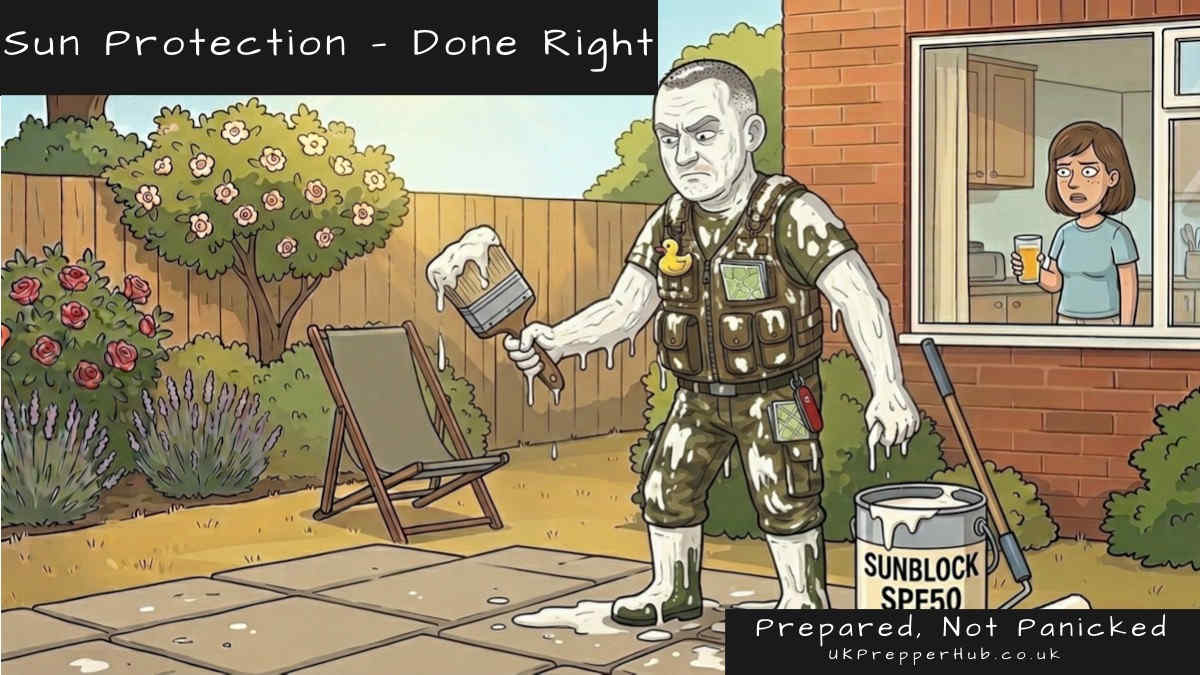
Complete Guide
Hantavirus and the UK
One or two sentences on what this guide covers and why it’s worth reading from this context. Keep it specific to the topic being discussed on this page.
Read the Full Guide: Hantavirus and the UK →
Hygiene and Sanitation
When the water or the toilets stop working, keeping clean is how you stop a bad week turning into an illness. It’s also the part of prepping people forget most.
Complete Guide
Emergency Hygiene Guide
This guide covers water-scarce washing techniques in detail, but for grab bags the focus is having enough supplies to maintain basic hygiene without relying on rest centre provisions.

Complete Guide
Emergency Sanitation Guide
When flooding, burst mains, or a prolonged power cut takes your toilet out of action, most households aren’t prepared for what comes next. This guide covers practical UK alternatives — chemical toilets, waste bags, disposal methods — and how to stay hygienic when the infrastructure isn’t working.
Read the Full Guide: Emergency Sanitation Guide →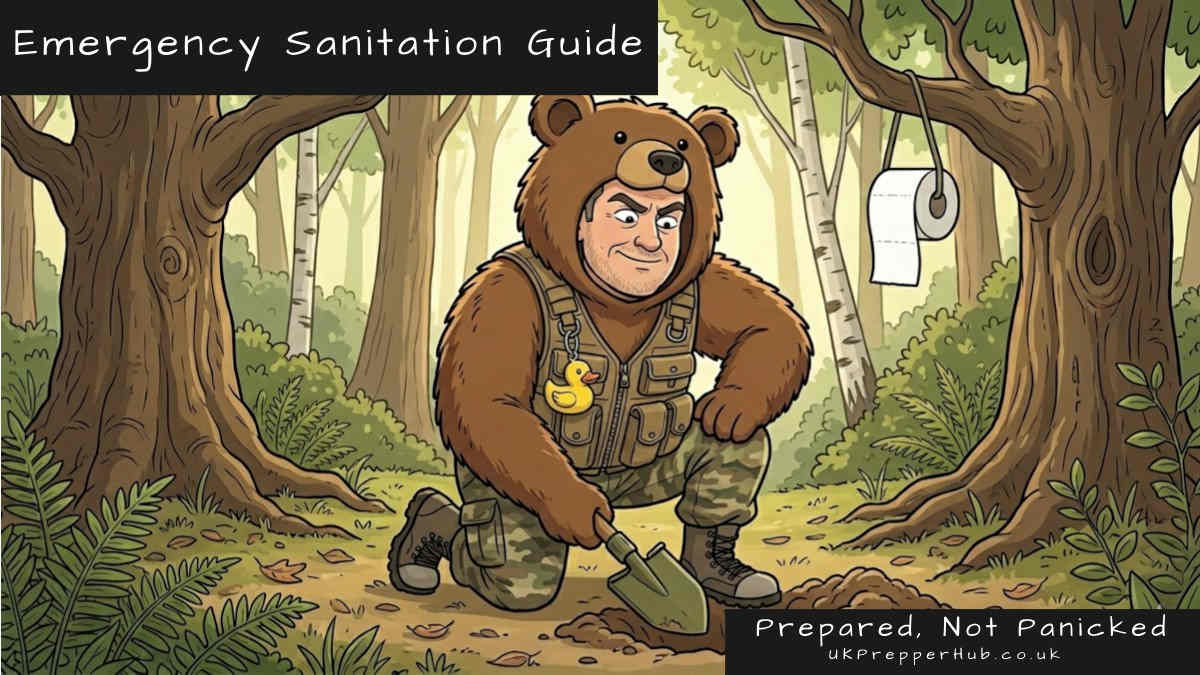
📋 Clarissa
I’ve Made A Checklist
Here’s my checklist for keeping the whole household clean when the water’s off, including the bits everyone forgets until day two.
Download: Hygiene Checklist →Pets and Animals
Pets rely on you completely in an emergency. They need their own food, water, medication and a plan for where they go if you have to leave.
Complete Guide
The UK Pet Emergency Guide
Emergency rest centres aren’t set up for pets. This guide covers what evacuation means for your animals, what goes in a pet grab bag, how to look after them if you’re staying put, and a plan for small furries and birds.
Read the Full Guide: The UK Pet Emergency Guide →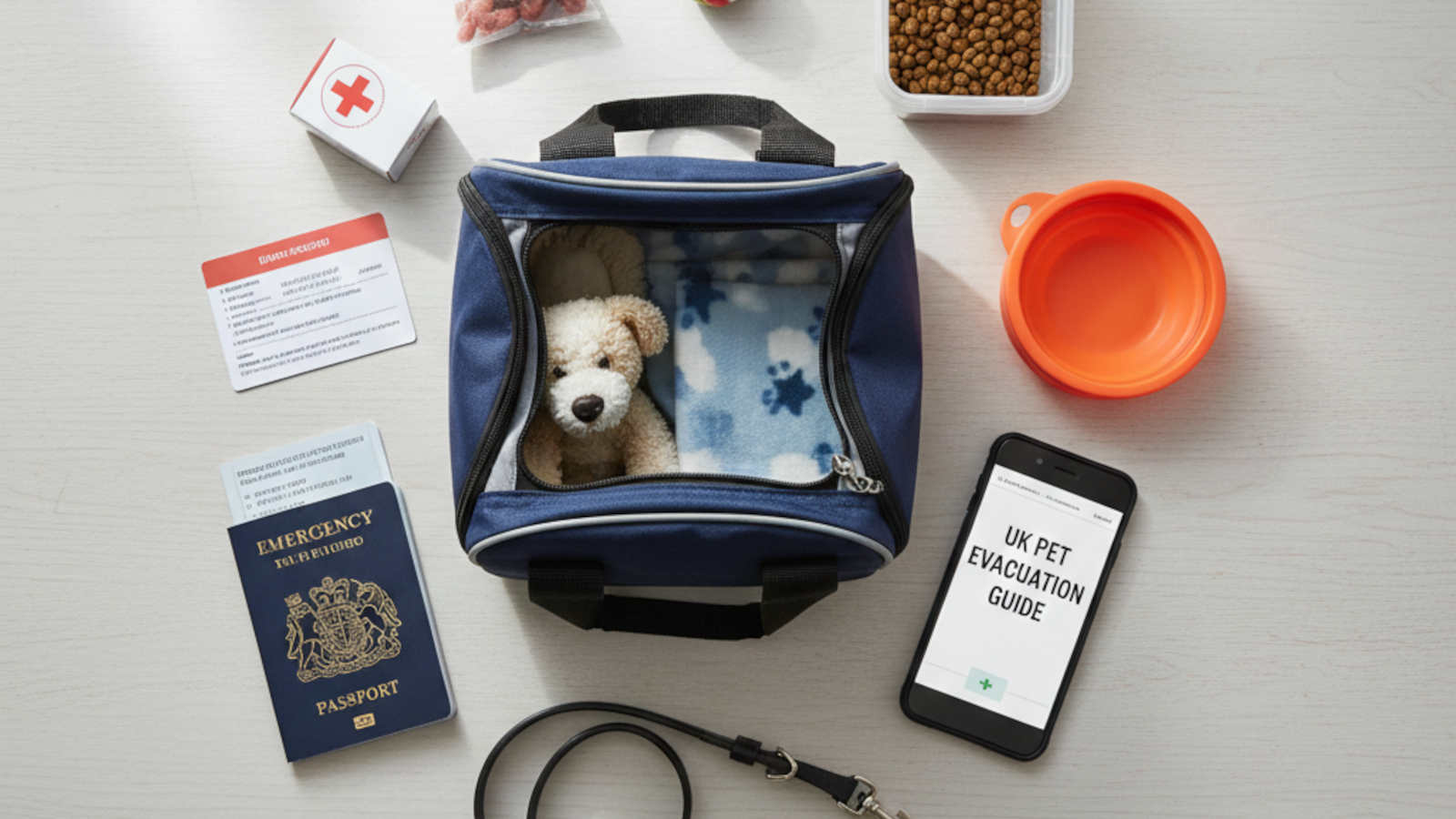
Complete Guide
Animals in Extreme Weather
Your pets can’t tell you they’re struggling — and by the time the signs are obvious, it’s often already serious. This guide covers dogs, cats, rabbits and guinea pigs in heat and cold: heatstroke signs, the pavement test, frozen Kong treats, breed-specific coats, rock salt risks, and what to do in an emergency.
Read the Full Guide: Animals in Extreme Weather →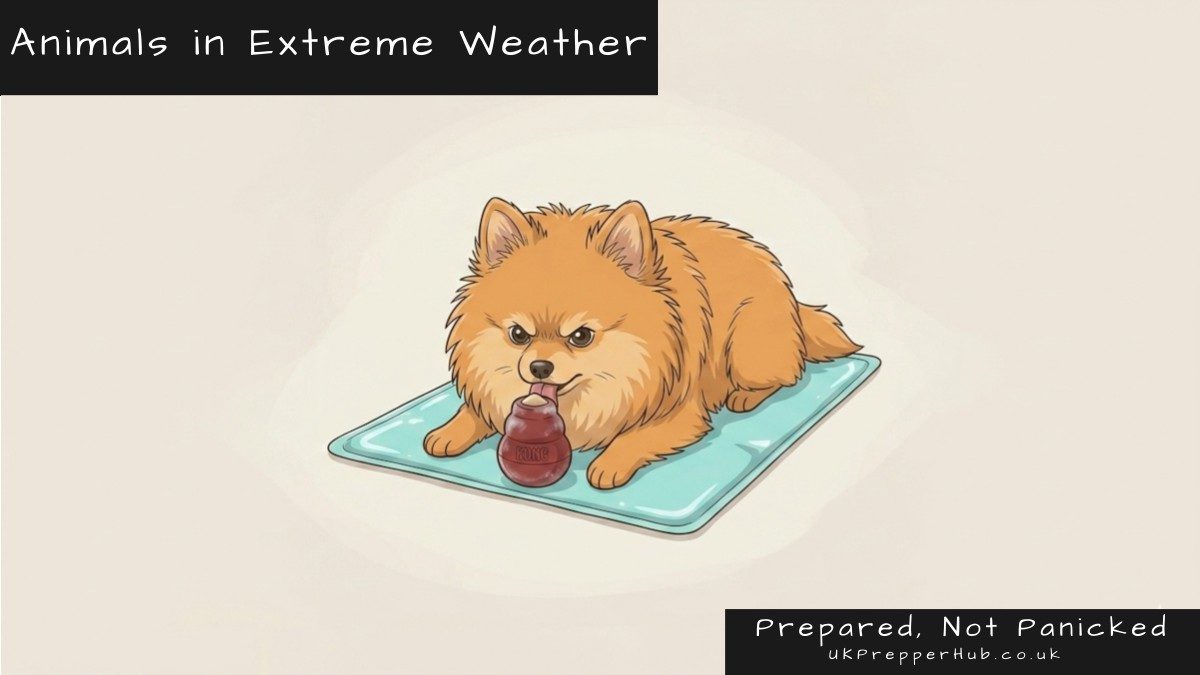
More From the Resilience Hub
- Protect Your Home: planning, flood, storm, fire and security
- Power, Heat and Light: power cuts, backup power and keeping warm
- Stay Informed: emergency radio and off-grid communications
- Water and Food: water storage, emergency pantry and cooking without power
- On the Road: winter car, get home bag and backup transport
- Back to the Resilience Hub: every topic in one place


