
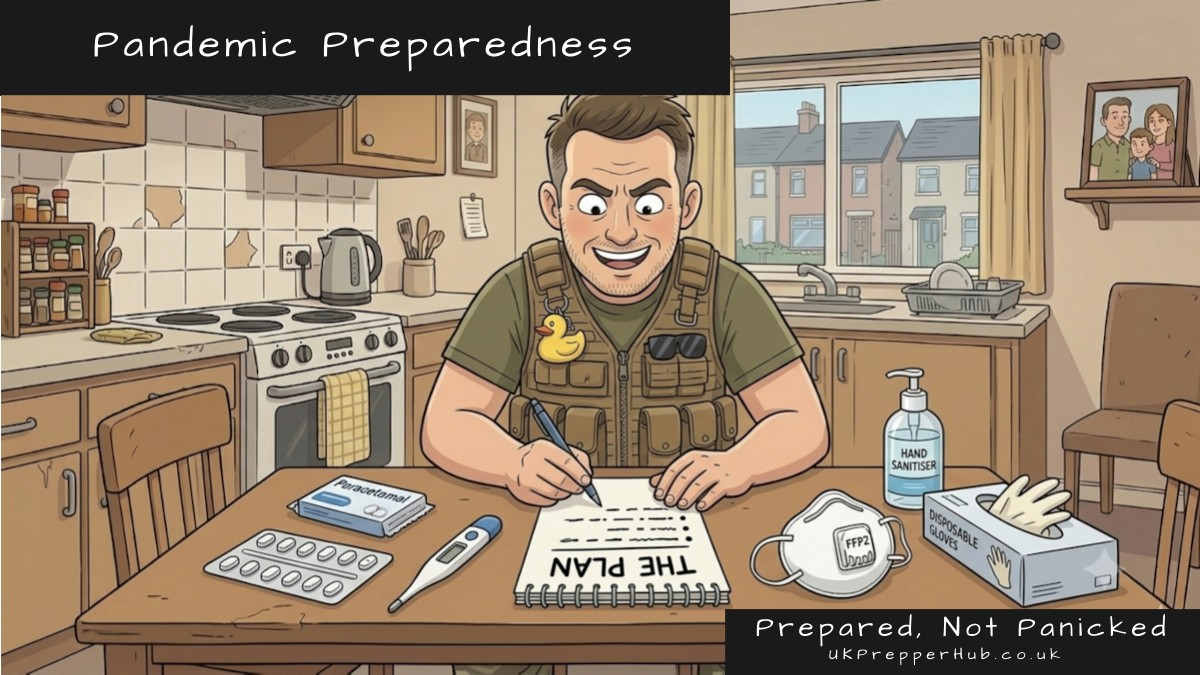
The next pandemic is not a matter of if. Epidemiologists will tell you it is a matter of when — and given that the global early warning systems that caught COVID-19 in its early stages have since been significantly scaled back, the when might arrive with less warning than last time. Pandemic preparedness, the dull and unglamorous business of being ready before the chaos starts, genuinely changes how your household weathers the next one.
This guide is not about hoarding 400 tins of beans or converting the spare bedroom into a decontamination suite. It is about understanding what a pandemic actually does to a UK household, what breaks first, and how to be the family that handles it with relative calm rather than the one panic-buying Calpol on day five.
What a pandemic actually looks like for a UK household
The film version involves empty streets, military checkpoints, and someone coughing dramatically in a supermarket car park. The reality, as anyone who lived through 2020 can confirm, is considerably more mundane — and in some ways harder to prepare for precisely because it does not announce itself with a dramatic score.
A respiratory pandemic in a UK context typically means:
- GPs switching to telephone-only or remote consultations within days of a surge being declared
- A&E becoming a last resort rather than a first option, with separate pathways for respiratory cases
- Specific shortages in chemists — paracetamol, certain antibiotics, hand sanitiser, masks — not a total collapse, but enough to cause real difficulty if you have no buffer
- Instructions to stay home if symptomatic, potentially for 10 days or more
- Schools closing and childcare arrangements falling apart on short notice
- Supply chain delays on prescription medication — not failure, but friction at exactly the wrong moment
- Information overload mixed with genuinely bad advice spreading faster than the pathogen
The households that struggled most during COVID were not the ones that panicked and bought too much. They were the ones that assumed the system would keep working normally right up until it did not. Two weeks of reasonable preparation changes that picture entirely.
🐔 Chicken Licken
Did You Know?
I’ve been telling anyone who will listen that we are statistically overdue a 1918-scale respiratory event — and that the infrastructure designed to catch the next one early has just been quietly scaled back
Medicines: managing without normal NHS access
In a pandemic, GP access is the first thing that changes. Within days of a serious outbreak, surgeries move to triage-only remote consultations. Repeat prescriptions can be delayed or require extra steps. Pharmacies — which during COVID saw queues stretching down the street — can run short of specific medications within a week of a surge being announced.
The goal is not to stockpile for six months. It is to have a two-week buffer so that a disrupted supply chain does not immediately become a health crisis for your household.
Repeat prescriptions
If you or anyone in your household takes regular medication, speak to your GP about ordering slightly early — when you have around two weeks remaining rather than waiting until you run out. Most GPs will accommodate this. Over a few months, this builds a meaningful buffer without taking medication away from anyone else. Do this now, when there is no urgency, not when a pandemic is three weeks in and your GP is not taking non-emergency calls.
Complete Guide
Managing Essential Medication
This guide covers more detail on being prepared with essential medication for all emergency situations.
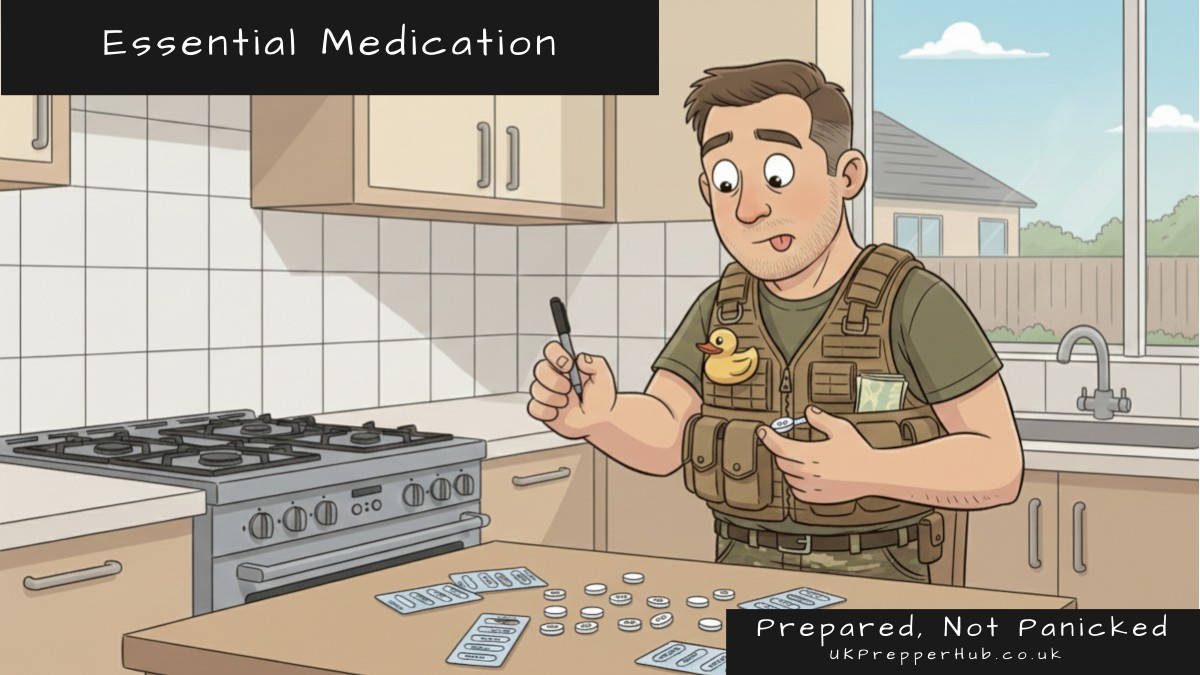
Over-the-counter essentials to stock
- Paracetamol — buy a few boxes now; this was the first thing to vanish from shelves in 2020
- Ibuprofen — useful alongside paracetamol for managing fever
- Oral rehydration sachets — for anyone with fever, vomiting, or diarrhoea
- Antihistamines — often useful as a sleep aid during feverish nights
- Throat lozenges and a bottle of linctus cough mixture
- A clinical thermometer — not the cheap ear-wobble-and-hope variety
On thermometers: the difference between a £5 device and a clinical-grade one becomes very apparent when you are trying to determine whether someone’s temperature is 38.2°C or 39.4°C and whether that means paracetamol and rest or a call to 111.
Braun PRT2000 – Age Precision Digital Thermometer
Brief description of why this product is worth considering. ‘teaste’tpyetext like “is this the best?”.
Our Full Review: Braun PRT2000 – Age Precision Digital Thermometer →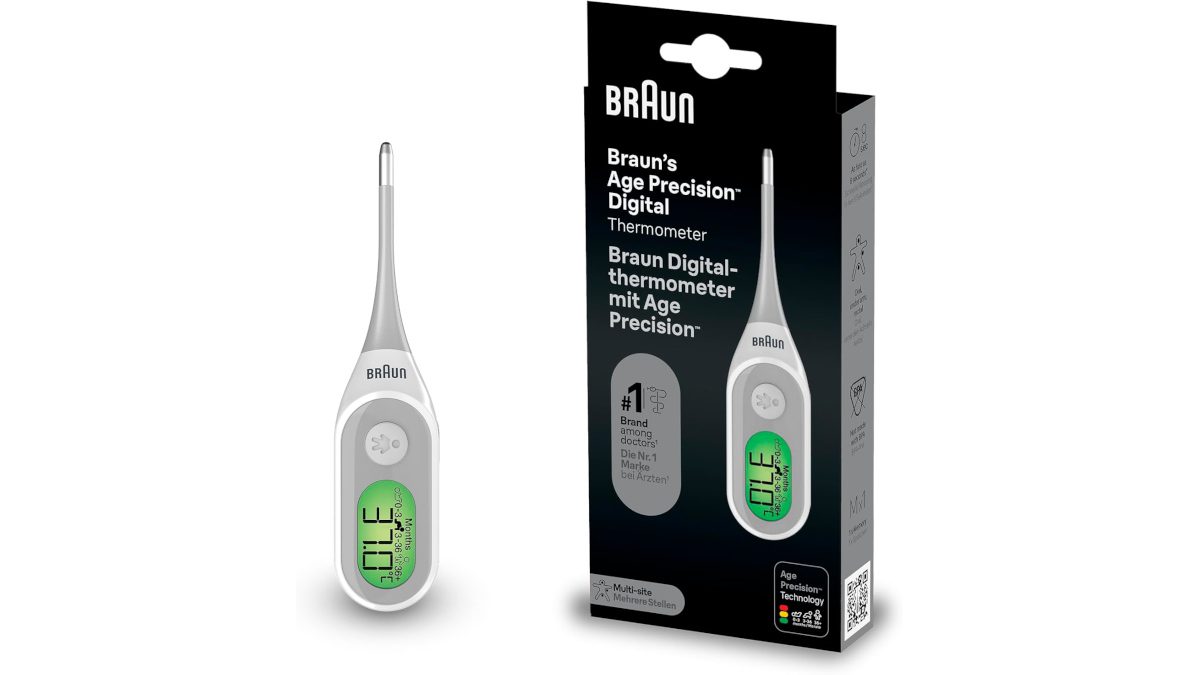
Cold-chain and temperature-sensitive medication
If anyone in your household relies on medication that requires refrigeration — insulin being the most common, but also some biologics, certain eye drops, and hormone therapies — a power cut or a period of disruption becomes a compound problem. A non-electric cooling wallet maintains the correct storage temperature for 45 hours or more using nothing but water activation. Worth having before you need it.
FRIO Insulin Cooling Wallet
Keeps insulin at safe temperature for 45 hours using only water — no electricity, no ice, no power required. Tested by the British Medication Devices Evaluation Unit and recommended by UK hospitals.
Our Full Review: FRIO Insulin Cooling Wallet →
The pandemic pantry: two weeks, not two years
The goal is not a nuclear bunker stocked for the end of days. It is two to three weeks of shelf-stable food your household will actually eat, rotated regularly so nothing expires unnoticed at the back of a cupboard.
During a pandemic, the supply chain usually bends rather than breaks — but specific categories go quickly, and being feverish and exhausted is not the moment to be working out what you have in the kitchen. The households that managed best in 2020 were the ones quietly maintaining a reasonable buffer for ordinary reasons, who simply did not need to go to the supermarket in week one.
Priorities for a pandemic pantry:
- Foods that require no cooking or minimal preparation — if you are ill, you are not making a lasagne
- Energy-dense foods for small portions: soups, tinned fish, nut butter, crackers, porridge
- Long-life milk and UHT alternatives, especially if there are children in the household
- Electrolyte drinks or squash — staying hydrated when ill is harder than it sounds
- A fortnight of anything specific to your household: infant formula, dietary requirements, pet food
Make sure your first aid kit is restocked before a crisis makes it difficult. Pharmacies clear out quickly when a health emergency is declared.
General Medi First Aid Kit
210 pieces, ISO 13485 certified, with a cold pack, emergency blanket, and moleskin pad included — the first aid kit that actually covers the scenarios a cheap chemist kit doesn’t.
Our Full Review: General Medi First Aid Kit →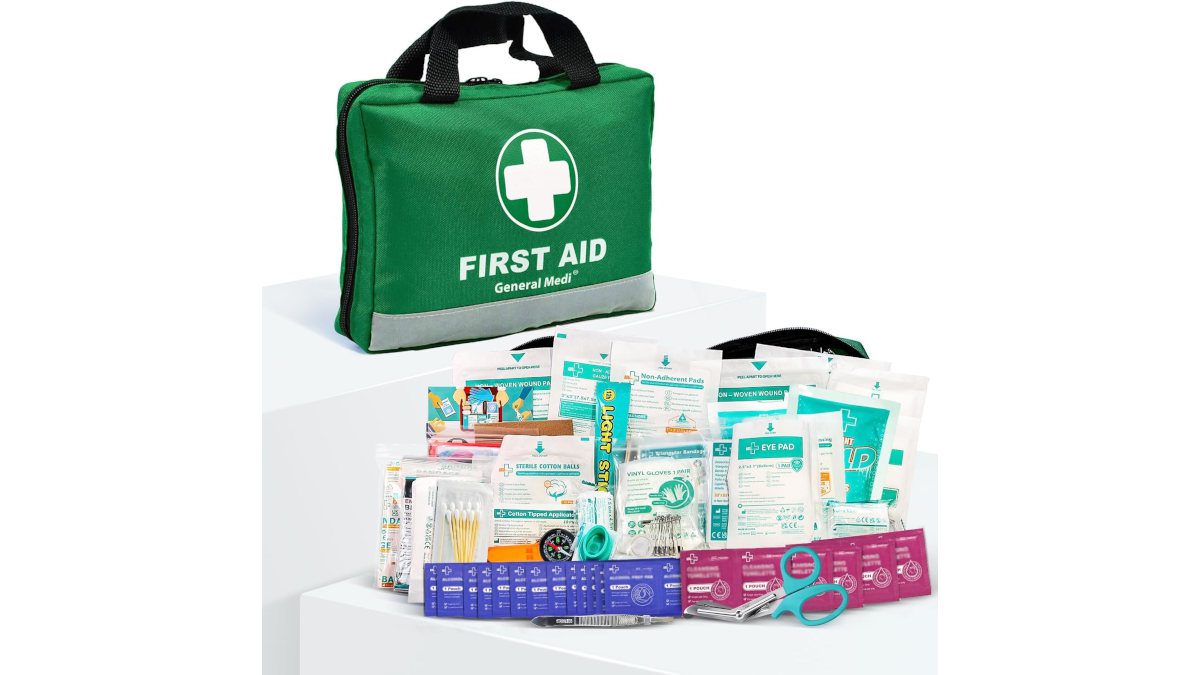
Complete Guide
3-Day Emergency Pantry
The low-barrier start: A shopping list of shelf-stable meals that require zero refrigeration.
Pandemic preparedness for PPE and hygiene
The mask debate of 2020 generated considerably more heat than light. The evidence since then is reasonably clear: a well-fitted FFP2 or FFP3 respirator provides meaningful protection against airborne respiratory pathogens. A surgical mask offers some source control. A cloth mask does very little in high-risk settings. Knowing the difference before you need to buy one in a panic matters.
FFP2 is the right standard for household stockpiling: more effective than surgical masks, widely available, and practical for the scenarios most households actually face — a necessary trip to a chemist or GP surgery, caring for an ill family member at home, or using public transport when there is no alternative.
🦆 Keith
Don’t Be Keith
Keith bought 300 military-grade NBC respirators from an American tactical website at 2am in March 2020 — they arrived four months later and turned out to be perfectly good for sanding down the shed
ADESTE – FFP2 Masks – UKCA Certified
BSI-certified FFP2 protection at 28p a mask — 50 individually sealed, long-term storage ready, and exactly what disappeared from shelves in March 2020.
Our Full Review: ADESTE – FFP2 Masks →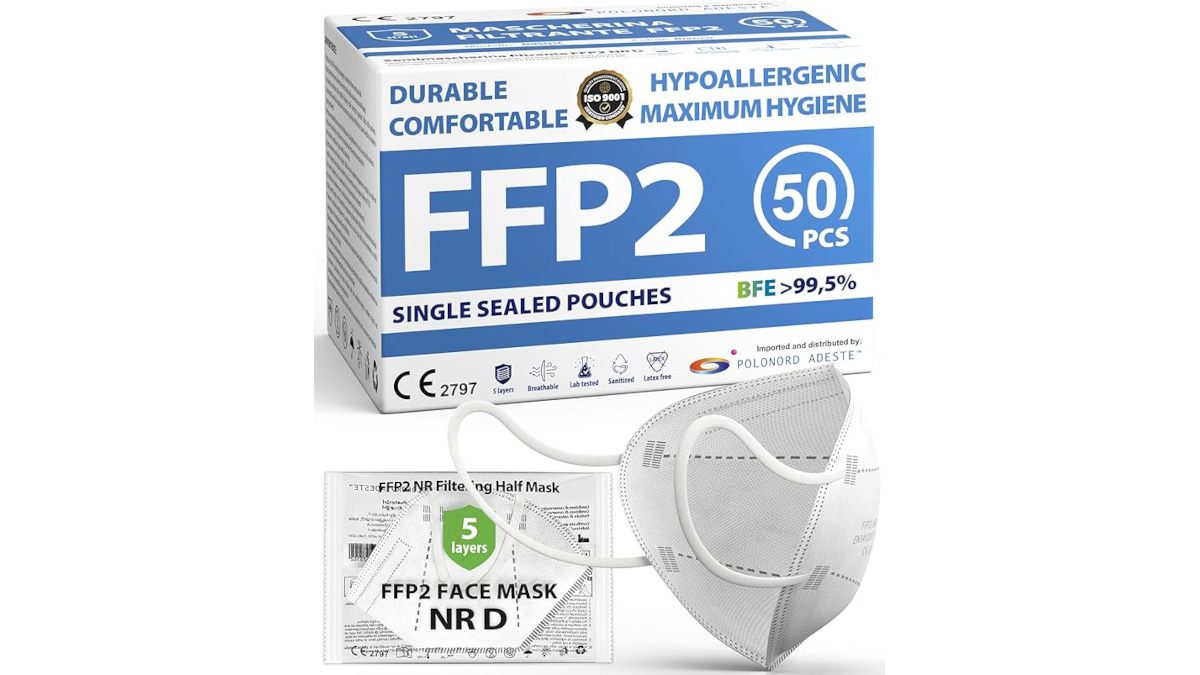
Hygiene
Hand hygiene is not glamorous but it works. Stock hand sanitiser that is at least 60% alcohol, and enough of it that you are not rationing drops per use. Surface cleaning — particularly high-touch surfaces like door handles, light switches, taps, and shared devices — matters most in a household where one person is ill and others are trying not to be.
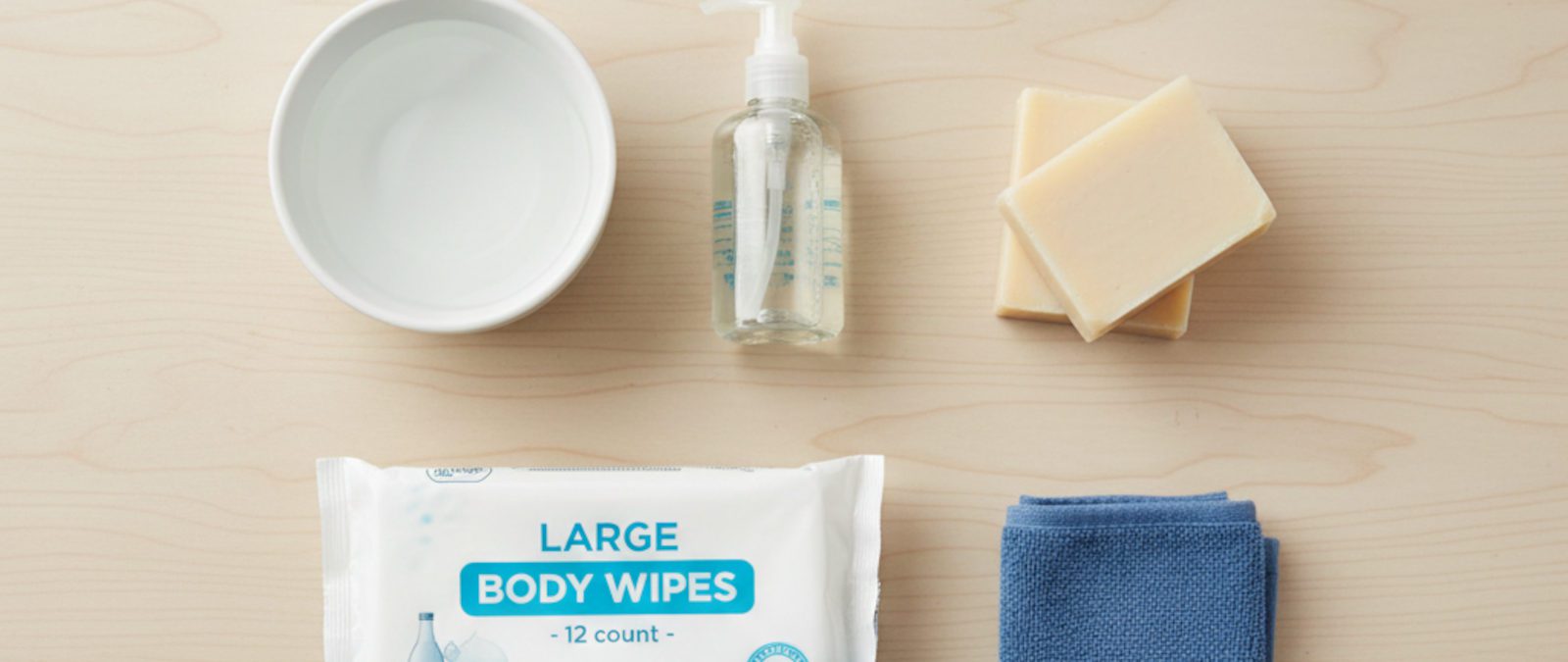
If water supply becomes disrupted during a period of infrastructure strain, waterless hygiene options become relevant.
Complete Guide
Emergency Hygiene Guide
This guide covers water-scarce washing techniques in detail, but for grab bags the focus is having enough supplies to maintain basic hygiene without relying on rest centre provisions.
Staying informed without losing your mind
Information management is as important as physical supplies in a pandemic. The 2020 experience demonstrated that most people had more information than they could process, and considerably less ability to distinguish reliable sources from unreliable ones than they believed.
The trusted sources in a UK context:
- UK Health Security Agency (UKHSA) at ukhsa.gov.uk — the primary source for outbreak data, guidance, and risk assessments. Not always first, but reliable and accountable.
- NHS 111 online — the correct first step for symptom checking, not social media or a neighbour’s interpretation of something they read
- BBC News — not perfect, but editorially accountable in a way that anonymous Telegram channels are not
Treat with appropriate scepticism: anonymous social media accounts with high engagement and no named source, anything described as information “they do not want you to know”, and any headline using the word “exclusive” about something the government would have had to officially announce.
One practical point: during 2020, mobile networks experienced significant congestion as data usage spiked. An emergency radio that operates independently of internet connectivity is the fallback that keeps working when everything else is overloaded.
Complete Guide
Emergency Radio Guide
When the power fails, your phone signal goes with it. This guide covers which radio frequencies actually matter in a UK emergency, what to look for before you buy, and how to make sure it works when you need it.
Read the Full Guide: Emergency Radio Guide →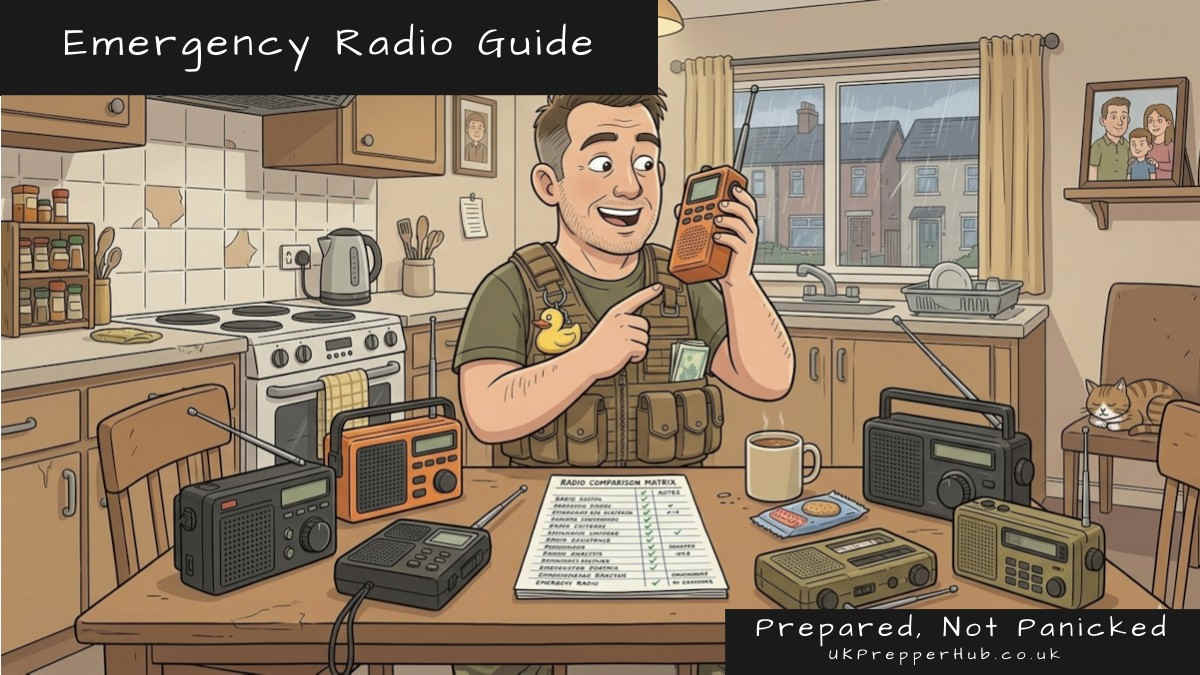
If you have to isolate: making 10 days at home work
Isolation is the scenario that catches most households genuinely unprepared. Not because they lack supplies, but because they have never thought through what 10 days of not leaving the house actually involves in practice.
The practical checklist for an isolation period:
- Food for the duration — covered above, but confirm you actually have it before you are already unwell and cannot go out
- Medication for the full period — including anything that normally requires a same-day chemist trip
- Charged devices — phone, laptop, tablet. A power bank matters if you are isolating in one room and the household’s only charger is somewhere else
- Pet care — a dog still needs walking during isolation. If you live alone, this needs a plan before day one, not on day four when you are too ill to think clearly
- Neighbours and support network — who knows you are isolating and can leave things at the door if needed
- Mental health — ten days is a long time to be alone and unwell. A short list of people to call, something to watch that does not require the internet, and a deliberate daily reason to get out of bed other than checking health updates
Complete Guide
Power Bank for Power Cuts
Your small electronic devices, like your phone, are your lifeline in a power cut — but only if they’re charged. This guide covers how much capacity you actually need, what size works in a grab bag, and the one habit that stops your power bank being useless when you need it most.
Read the Full Guide: Power Bank for Power Cuts →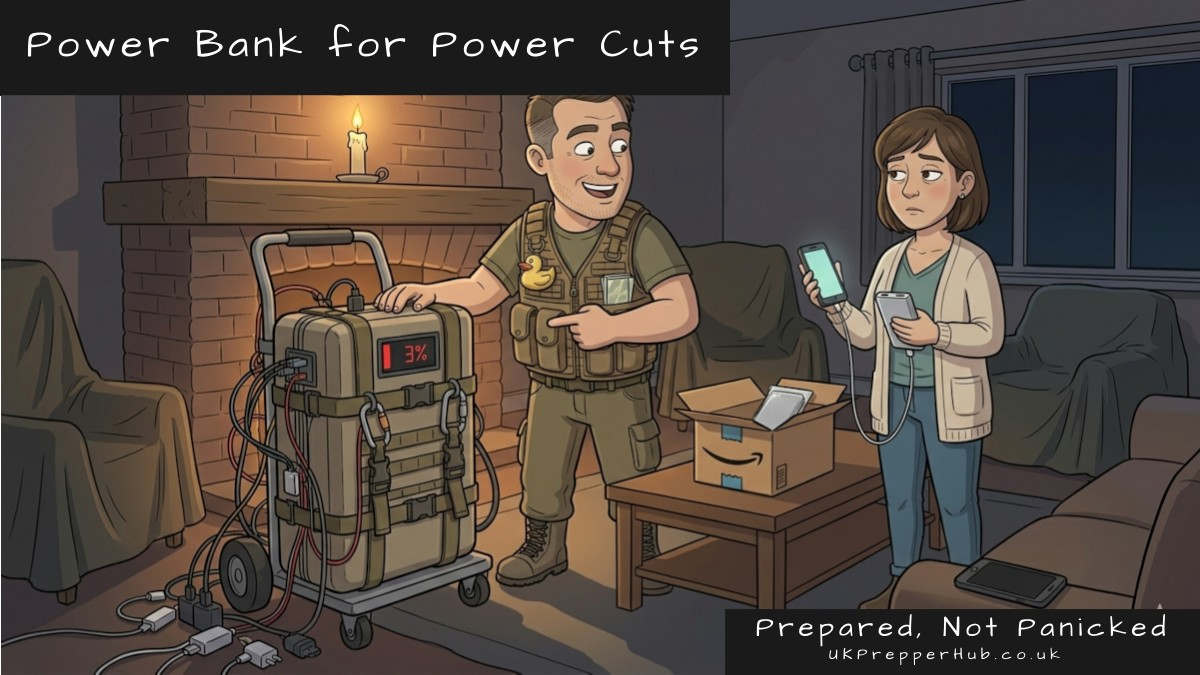
Your household pandemic plan
A household pandemic plan does not need to be a ring binder with laminated emergency cards. It needs to answer three questions, agreed in advance while everyone is calm and well.
Who has what medical needs, and what does disruption to those look like? Write down every regular medication, the prescribing GP, and what happens if it runs out or cannot be collected. This is the most important thing to know and almost nobody writes it down until there is a crisis.
What triggers calling 999? During a pandemic, distinguishing between “this person is very ill” and “this person needs emergency help right now” is genuinely difficult, especially if you are also unwell. The thresholds worth knowing in advance: oxygen saturation below 92%, breathing that is difficult at rest, confusion or inability to stay awake, lips or fingertips turning blue.
OxiPro OX2 Pulse Oximeter
Clips to a fingertip and tells you blood oxygen and pulse rate in seconds. Useful during any illness where breathing is a concern — and the reading that matters is below 92%..
Our Full Review: OxiPro OX2 Pulse Oximeter →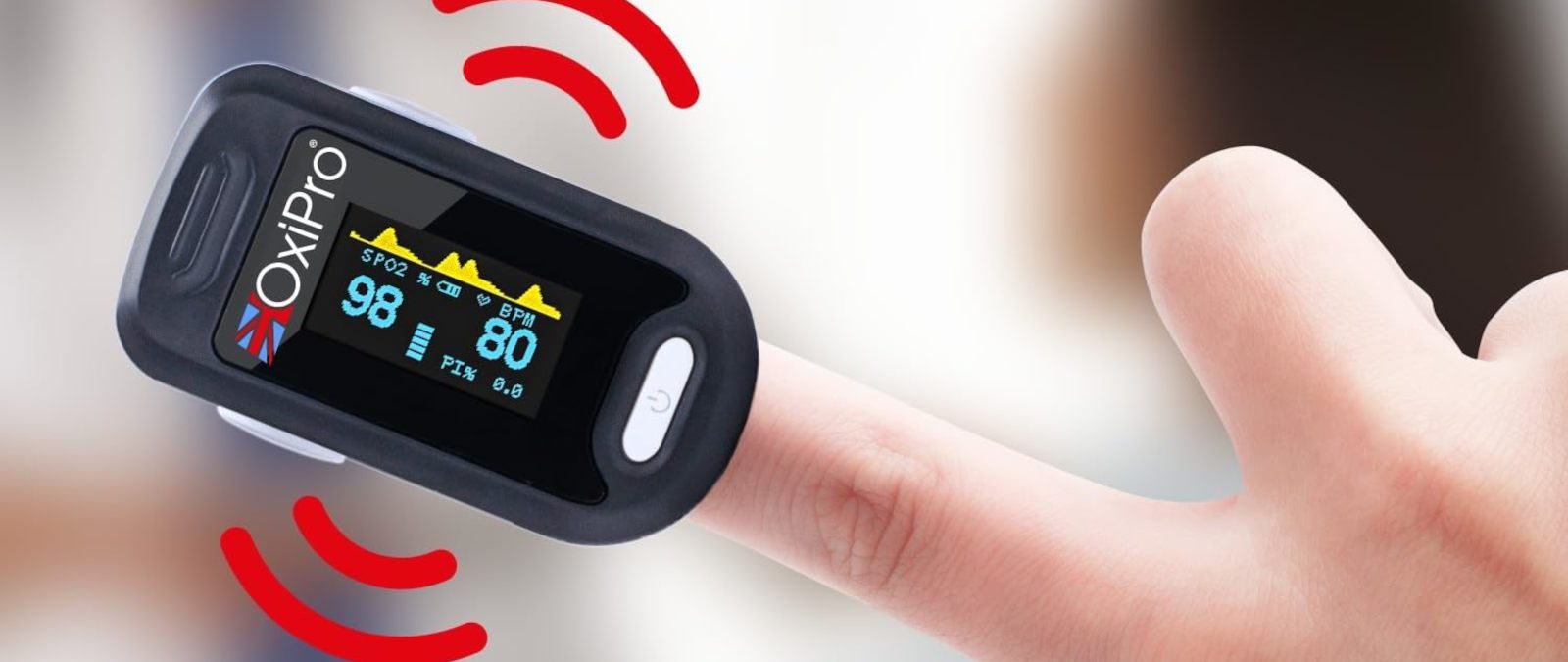
Who do you check on? Elderly neighbours, family members who live alone, anyone who might not manage well in isolation without support. A short list of two or three people to contact in week one is worth more than an ambitious community resilience plan that never gets executed.
Complete Guide
Emergency Backup Plan for Carers
If you’re caring for someone with additional needs—whether that’s an autistic child, a partner with severe anxiety, an adult with learning disabilities, or someone recovering from a stroke—you already know that routine is everything. You need a plan.
Read the Full Guide: Emergency Backup Plan for Carers →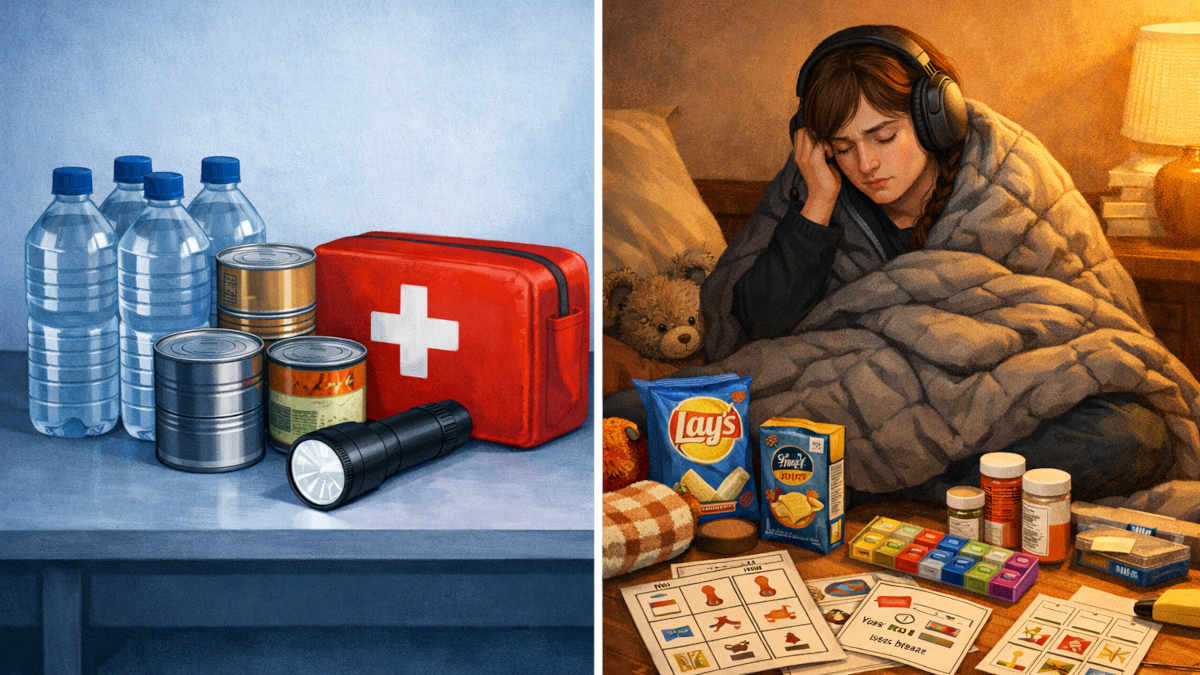
Frequently Asked Questions
How much paracetamol should I stock for pandemic preparedness?
Two to four boxes per adult is a sensible buffer — enough to manage a fever for the duration of an isolation period without taking medication away from others. Rotate your stock so it does not expire.
Do I need an FFP3 mask or is FFP2 sufficient?
For household-level pandemic preparedness, FFP2 is the right standard. FFP3 offers marginally better filtration but is harder to find, more expensive, and demands more precise fitting. A well-fitted FFP2 is more effective than a poorly fitted FFP3.
Should I stockpile antibiotics?
No. Most pandemic pathogens are viral, and antibiotics have no effect on viruses. Stockpiling antibiotics also contributes to antimicrobial resistance, which is a serious and separate public health problem. The things worth having are paracetamol, oral rehydration sachets, and a clinical thermometer.
How long should I prepare to isolate for?
Plan for a minimum of 10 to 14 days. During COVID this was the standard isolation period; a different pathogen could require longer. Two weeks of food and medication is the target.
What should I do if someone in my household needs hospital during a pandemic?
Call 111 first for guidance on whether to attend and which entrance to use. During a pandemic, hospitals typically operate separate pathways for respiratory illness. Your household grab bag — medication list, ID, phone charger, water — should be ready to go at short notice.
Is there official government guidance I should follow?
The UK Health Security Agency publishes pandemic preparedness guidance at ukhsa.gov.uk. The official position is that households should maintain a reasonable supply of food and medication and follow guidance when issued. The gap between that advice and what practically helps in the first fortnight is what this guide is designed to fill.
Build Your Resilience
Further Reading: Related Guides
- Managing Essential Medication
- The 3-Day Emergency Pantry
- Emergency Hygiene Guide
- Emergency Radio Guide
- Power Bank for Power Cuts
- Emergency Carer Backup Plan
- Home Emergency Kit
- UK Home First Aid Kit
All our guides can be found listed on our resilience hub.
Gear We’ve Tested & Reviewed
- ADESTE FFP2 NR D Masks (50 Pack)
- FRIO Insulin Cooling Wallet
- General Medi First Aid Kit
- Braun PRT2000 Age Precision Digital Thermometer
- OxiPro OX2 Pulse Oximeter
All our reviews can be found on our reviews and resources page.