
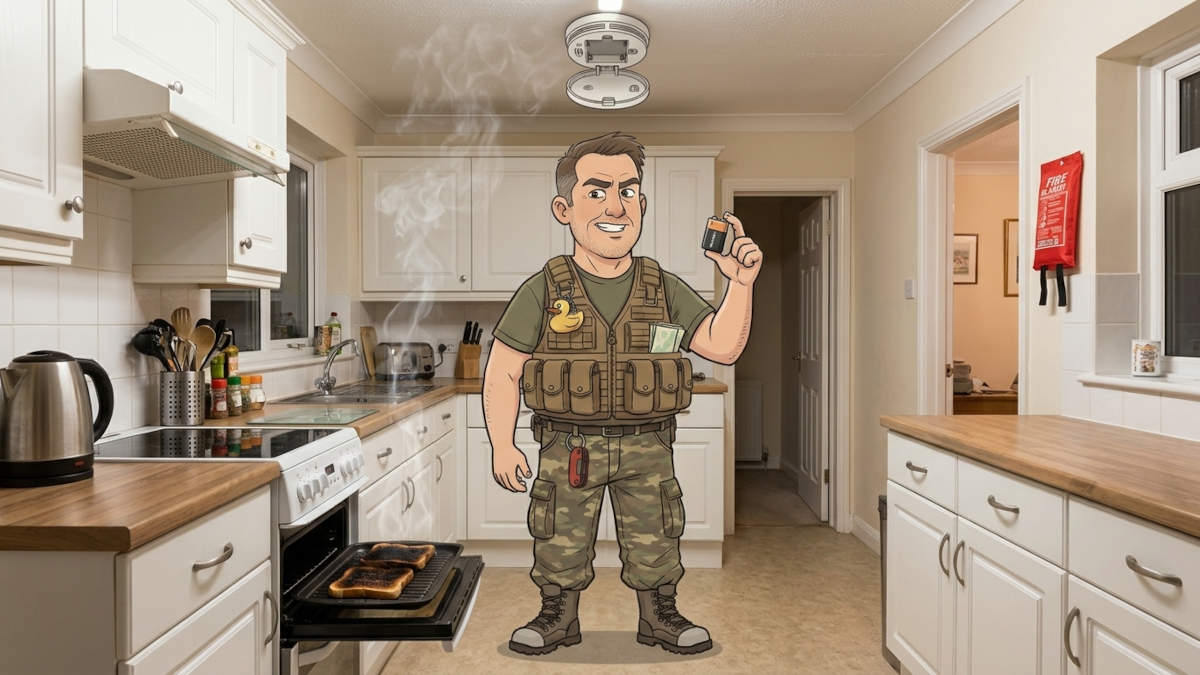
Home fire safety is one of those things everyone assumes they’ve sorted. There’s a smoke alarm on the landing, it beeped once in 2019, and someone pressed the button until it stopped. This guide covers what actually keeps a UK household safe from fire: how many smoke alarms you need and where they go, a fire escape plan that works in the dark, what to do if a fire starts, when it’s sensible to tackle a small one yourself, and the free home fire safety check your local fire service will do for you.
None of it is expensive and most of it takes an evening. That’s the good news. The bad news is that the fires that kill people tend to start at night, while everyone’s asleep, which is exactly when nobody is in a position to work it out on the spot.
Home Fire Safety: The Numbers That Matter
Fire and rescue services in England attend around 25,000 fires in people’s homes every year. In the year to March 2025, 208 people died in them, up from 182 the year before. Scotland, Wales and Northern Ireland add their own figures on top.
Two facts shape everything else in this guide:
- Smoke kills more people than flames. Burning furniture gives off thick, toxic smoke that can knock a sleeping person out before the fire ever reaches their room.
- The kitchen is where most house fires start. Fire services say the same thing every year: cooking left unattended, pans of oil, and grills and toasters too close to something that burns.
So the job is simple to describe. Get woken up early, know how you’re getting out, and stop the most common fires starting in the first place.
Smoke Alarms: How Many Do I Need, and Where?
If you’ve ever searched “how many smoke alarms do I need”, you’ll have found that the legal answer and the sensible answer are different. In England, owner-occupiers have no legal requirement at all, and landlords only have to fit one smoke alarm per storey. In Scotland, every home has needed interlinked alarms since February 2022. One alarm on the landing is the bare minimum, not a plan.
A sensible setup for most homes:
- Hallway and landing: a smoke alarm on every floor, on the ceiling, on your escape route.
- Living room: a smoke alarm in the room you use most, where the telly, chargers and sofa are.
- Bedrooms: worth adding, especially if anyone sleeps with the door shut or has electrics in the room (heaters, electric blankets, chargers).
- Kitchen: a heat alarm, not a smoke alarm. A smoke alarm in a kitchen goes off every time someone makes toast, and an alarm that keeps going off ends up with its battery out.
- Any room with a boiler, open fire, wood burner or gas fire: a carbon monoxide alarm as well. That’s a separate job, covered further down.
On types: optical alarms are better at spotting slow, smouldering fires (a sofa, a cigarette, wiring), which makes them the usual choice for hallways and living rooms. Ionisation alarms react faster to fast, flaming fires but are prone to false alarms near kitchens. Combined smoke and carbon monoxide alarms cover two jobs with one box, which suits a hallway outside a boiler cupboard.
FireAngel Combination Smoke and Carbon Monoxide Alarm
One sealed unit covering smoke and CO detection — with a 10-year battery that keeps it running during a power cut, when emergency stoves and heaters are out and a mains-wired alarm would already have gone dark.
Our Full Review: FireAngel Combination Smoke and Carbon Monoxide Alarm →
Interlinked Smoke Alarms: Are They Worth It?
Interlinked smoke alarms talk to each other, so when one goes off, they all go off. A fire in the kitchen at 3am sets off the alarm in your bedroom, not just the one at the bottom of the stairs that you might not hear through a closed door. That’s why Scotland made them compulsory for every home, and why Wales requires them in rented homes.
You don’t need an electrician. Wireless interlinked alarms with sealed ten-year batteries link to each other by radio and go up with two screws. In an older house with thick walls, check that the signal reaches every alarm by pressing the test button on one and listening for the rest.
If anyone in the house is deaf or hard of hearing, standard alarms won’t wake them. Alarms with a vibrating pad that goes under the pillow and a strobe light are made for exactly this, and many fire services can fit them as part of a home visit.
Smoke Alarm Beeping? What It Means
A single chirp every minute or so almost always means one of two things: the battery is low, or the alarm has reached the end of its life. Look at the back. Most alarms have a “replace by” date, and most need replacing after about ten years whatever the battery is doing, because the sensor wears out. If it’s a sealed ten-year alarm that’s started chirping, the whole alarm needs replacing.
Whatever you do, don’t take the battery out and “sort it at the weekend”. Test every alarm once a month by pressing the button. It takes thirty seconds and it’s the only way to know.
The Free Home Fire Safety Check
This is the part most people don’t know about. Your local fire and rescue service will do a free home fire safety check, often called a home fire safety visit or a Safe and Well visit. A firefighter or advisor comes round, looks at the risks in your home, helps you plan your escape, and can fit free smoke alarms where they’re needed.
- In England and Wales, in-person visits are usually offered to people at higher risk: older people, people living alone, people with disabilities or health conditions, smokers, and households with young children. Search for your county or city fire service and “home fire safety visit”.
- Many services also have an online home fire safety check. You answer questions about your home, it gives you advice, and if you need a visit, it books one. London Fire Brigade’s is called the Home Fire Safety Checker.
- In Scotland, the Scottish Fire and Rescue Service offers free home fire safety visits to everyone.
If you’ve got an older parent or a neighbour who lives alone, booking a home fire safety check for them is one of the most useful things you can do this winter. It costs nothing and it’s a firefighter’s time, not yours.
Your Fire Escape Plan
Most households don’t have a fire escape plan. They assume they’ll work it out on the night. A house fire at 2am means thick smoke, no lights, a loud alarm and a few minutes to get everyone out. Nobody works anything out in those conditions. You do whatever you’ve already decided to do.
A fire escape plan has three parts:
- Your main way out: usually the front door and the stairs. Keep it clear. Shoes, bags, bikes and the recycling don’t belong on an escape route.
- A second way out: for when the stairs or hallway are full of smoke. Think about which window, from which room, and how you’d get down. For upper floors in a house with no other way out, a home fire escape ladder is worth considering. Knotted bedsheets are a film thing.
- A meeting point: one specific place outside, like the neighbour’s gate or the lamp post, so you know everyone’s out and nobody goes back in looking for someone who’s already in the street.
Two small habits make a big difference:
- Keys on a hook. Door and window keys live in the same place, near the door, every night. In smoke and darkness you won’t find a key that’s in a coat pocket.
- Doors shut at night. London Fire Brigade’s bedtime checks start with closing internal doors, because a shut door holds back smoke and fire and buys you time to get out.
Then walk it through. Do it in daylight with children, then talk about how it would feel in the dark. Ten minutes is enough, and it’s the difference between a plan and a hope.
🦆 Keith
Don’t Be Keith
Keith spent three evenings on a colour-coded, laminated, fourteen-step fire escape plan, with a copy on every floor and one in the shed. When his wife pressed the test button at 11pm, he got as far as step three (“collect front door key from Key Station Alpha”) before discovering the key was in his other coat. In the garage. Your plan needs two ways out, one meeting point and the key on a hook by the door. It does not need a laminator.
Complete Guide
Home Evacuation Plan
Most households freeze during an evacuation — not from fear, but from making fifteen decisions simultaneously under pressure for the first time. This guide walks you through the five decisions to make now, calmly, before you ever need them.
Read the Full Guide: Home Evacuation Plan →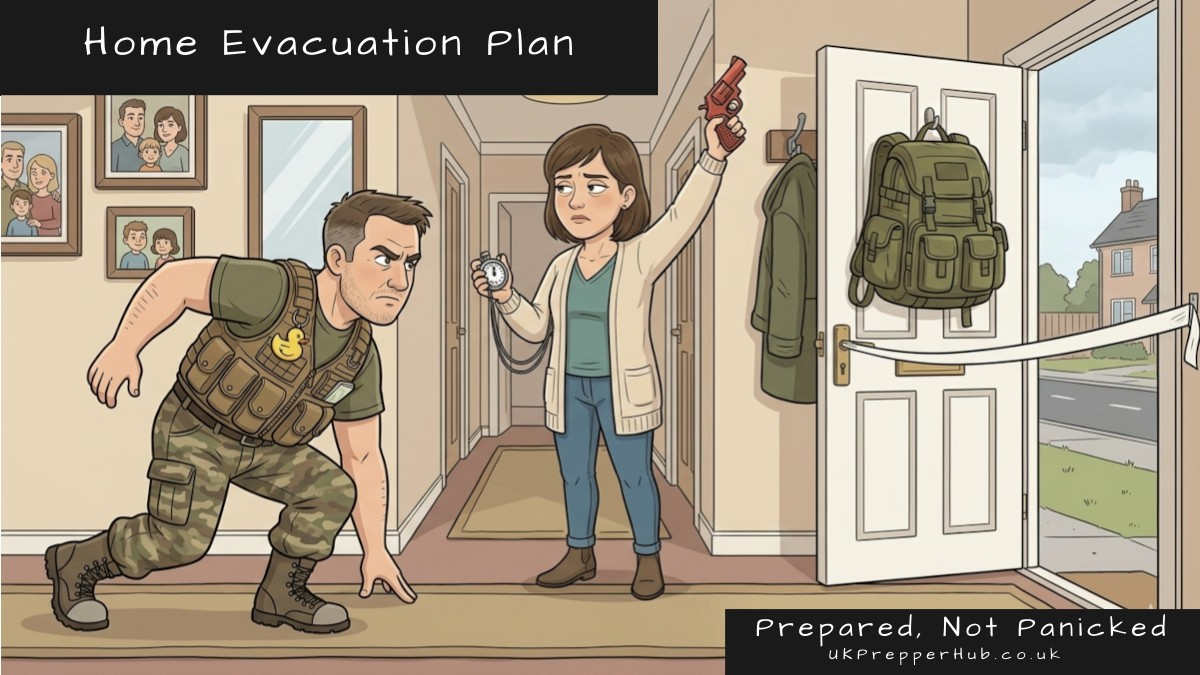
If a Fire Starts: Get Out, Stay Out, Call 999
This is the fire service’s message and it’s the right one for any fire that’s taken hold. Things can be replaced. People can’t.
- Shout and wake everyone. Don’t stop to get dressed or pick things up.
- Get low if there’s smoke. The cleaner air is near the floor. Crawl if you have to.
- Check doors before you open them. Touch the door with the back of your hand. If it’s warm, don’t open it. Fire is on the other side.
- Close doors behind you as you go, to slow the fire down.
- Call 999 once you’re out, from your meeting point or a neighbour’s house.
- Never go back in. Not for the dog, not for the laptop, not for the person you think might still be inside. Tell the firefighters. They have breathing apparatus and you don’t.
If you’re trapped in a room, close the door and push bedding or towels along the bottom to keep the smoke out. Go to the window, open it, shout for help and call 999. Tell them exactly which room and which floor you’re in. If you’re on the ground or first floor and the fire is coming into the room, you may have to get out of the window: lower yourself down feet first, holding the sill, before you drop.
🐾 Weekend Warrior
Pet Tip
Pickle has a full extraction plan. Primary route, secondary route, rally point by the wheelie bins. But the hardest drill was the one for me: if the house is on fire and she’s not with me, I do not go back in. I get out and I tell the firefighters there’s a small dog inside and exactly where she hides (under the spare bed, every time). They’ve got breathing apparatus. I’ve got a fleece and a lot of feelings. Keep her lead by the front door so you can grab it on the way out, and tell everyone in the house the same rule.
When It’s Worth Tackling a Small Fire
Get out, stay out is right for a fire that’s spreading. But plenty of fires start small: a kitchen bin, a tea towel that’s caught on the hob, a toaster that’s gone up, a pan that’s just flared. In the first few seconds, the right kit on the wall can stop a small fire becoming a house fire. That’s what fire extinguishers and fire blankets are for.
Only tackle a fire if all of these are true:
- It’s small, in one place, and has only just started.
- Your way out is behind you, so the fire is never between you and the door.
- Everyone else is already on their way out, and someone is ringing 999.
- You’ve got the right extinguisher or a fire blanket within reach.
If it isn’t out in about thirty seconds, if it’s growing, or if the room is filling with smoke, put the extinguisher down and leave. Close the door behind you.
Which tool for which fire:
- Fire blanket: the first choice for anything on the hob, and handy for a small bin fire or a person whose clothes have caught. Keep it on the kitchen wall, not in a drawer, and away from the cooker so you can reach it without leaning over the flames.
- Water mist: a good all-round home extinguisher, and many are tested for use near electrical equipment. Check the label.
- Foam: fine for paper, wood, fabric and most liquids. Not for a chip pan.
- Dry powder: works on a wide range of fires, but it fills the room with a choking cloud that makes it hard to see or breathe. Use short bursts, then get out and let the room clear. Better suited to the car, the garage or the caravan than as your only extinguisher in a living room.
- CO2: for electrical equipment. The horn gets extremely cold, and in a small room the gas can make you feel faint.
- Water: never on burning oil or anything plugged in.
If you can, switch off or unplug an appliance before tackling it. And once the fire is out, still call 999. Firefighters can check it hasn’t spread into the wall, the ceiling or the wiring, which is how a fire you thought you’d dealt with comes back at 4am.
FireShield Home Fire Safety Pack
A 600g aerosol extinguisher and a 1m fire blanket on one wall mount — the two tools that cover almost every domestic fire scenario, for under £25.
Our Full Review: FireShield Home Fire Safety Pack →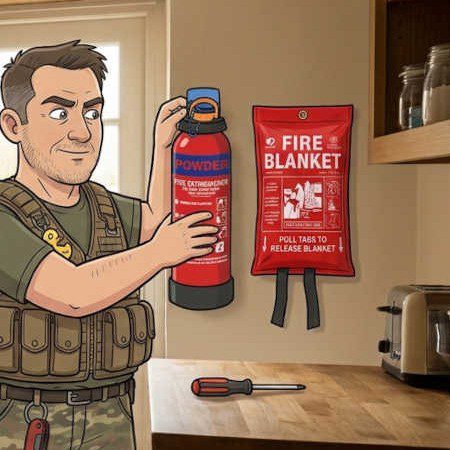
Kitchen Fires and Chip Pans
The kitchen is where most house fires start, and nearly all of them are avoidable.
- Don’t leave cooking unattended. If the doorbell or the phone goes, turn the heat off. A pan of oil can go from shimmering to flames in the time it takes to sign for a parcel.
- Chip pans: never more than a third full of oil, never left alone, and never cooked in after a few drinks or when you’re half asleep. A thermostat-controlled deep fat fryer or an air fryer removes the chip pan risk altogether.
- If a pan catches fire: never throw water on it, because it turns into a fireball. Turn the heat off if you can do it safely, and don’t try to carry the pan outside. If it’s small and you have a fire blanket on the wall, lay the blanket over the pan and leave it for at least half an hour while the oil cools. If the flames are bigger than the pan, get out, shut the kitchen door and call 999.
- Toasters and grills: empty the crumb tray, keep them clear of curtains, kitchen roll and wall cupboards, and don’t use the grill as a plate warmer for the oven gloves.
- Microwaves: no foil, no metal-rimmed mugs, and never “dry” a tea towel in one.

🍳 Greasy Gary
From Gary’s Kitchen
Listen, love. I’ve been frying chips since before air fryers were a twinkle in Argos’s eye, and I’ve only had one pan go up. Here’s what I did: heat off, fire blanket off the wall, laid it over the pan, walked away and put the kettle on. Half an hour, minimum, before you even look at it. What I did NOT do was chuck a mug of water at it, because water on burning oil is how you redecorate a kitchen in one second flat. And if it’s ever bigger than the pan, you’re out the door and ringing 999, mate. The chips are already ruined.
E-Bikes, Chargers and Electrics
The fastest-growing fire risk in UK homes isn’t the chip pan. It’s the lithium-ion battery. London Fire Brigade dealt with a record number of e-bike and e-scooter fires in 2025, and since 2023 it has averaged one every other day. These fires are fast, ferocious and give off toxic smoke, and they often start in a hallway, which is the escape route.
- Use the charger that came with it, or a replacement from the same maker. Mismatched chargers are a common cause.
- Don’t charge an e-bike, e-scooter or mobility scooter overnight or while you’re out, and unplug it once it’s full.
- Store and charge it in a garage or shed if you can. If it has to live indoors, never in the hallway or on the stairs.
- Avoid cheap conversion kits and replacement batteries from online marketplaces that don’t meet UK safety standards.
- Don’t charge phones, laptops or vapes on the bed or under a pillow, where the heat can’t escape.
The older electrical risks haven’t gone away either. Don’t overload extension leads (a four-way lead doesn’t mean four of anything), don’t run tumble dryers or washing machines overnight or while you’re out, clean the tumble dryer filter every time, and replace any plug or cable that’s scorched, cracked or warm to the touch.
Winter Fire Risks: Candles, Heaters and Electric Blankets
Winter brings its own fire risks, and several of them show up in power cuts, when people reach for whatever gives light and heat.
- Candles: never left in an empty room, never near curtains or anything on a shelf above, and always on a heat-proof holder. In a power cut, a torch or a plug-in emergency light is far safer than a dozen tea lights, especially with children or pets about.
- Portable heaters: keep them at least a metre from furniture, curtains and bedding, never dry washing on them, and switch them off before bed.
- Electric blankets: check for worn fabric, scorch marks and damaged wires before each winter, don’t fold them while they’re on, don’t use one with a hot water bottle, and replace them every ten years or so.
- Christmas lights and trees: switch the lights off at bedtime and when you go out, and keep a real tree watered and away from heaters and the fire.
- Wood burners and open fires: chimney fires start in a dirty or blocked flue. Get the chimney swept before you light the first fire of the season, check for nests if it’s been unused all summer, use a fireguard, and empty ashes into a metal bucket, never the wheelie bin. If you ever hear roaring or crackling from the flue, shut the stove’s air controls, get everyone out and call 999.
Complete Guide
Chimney Fire
What to do if your chimney catches fire, the warning signs, how often to get it swept, why house coal and wet logs wreck a flue, and the carbon monoxide alarm that belongs in every room with a stove.
Read the Full Guide: Chimney Fire →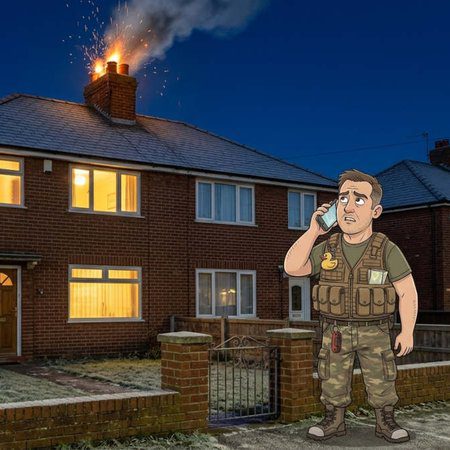
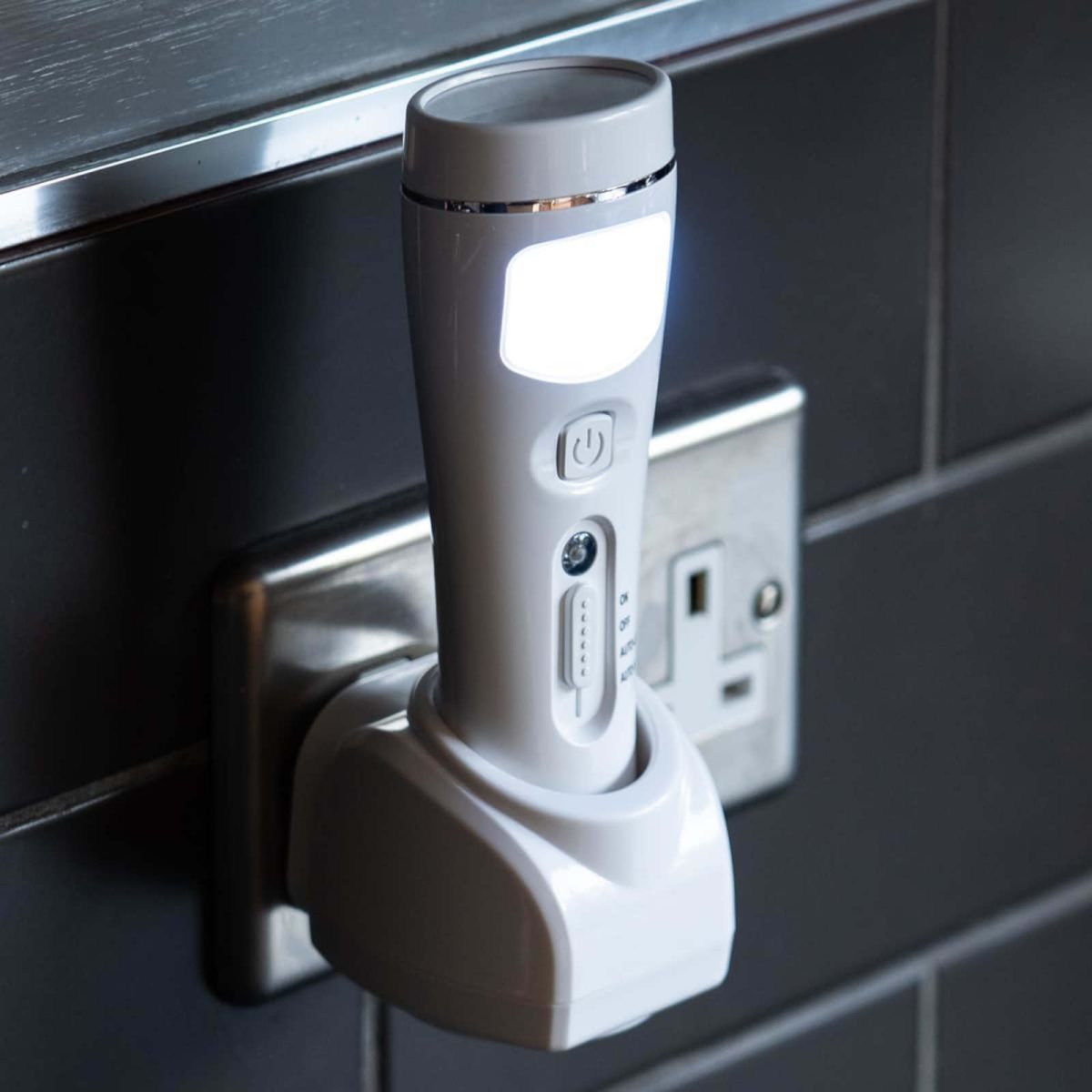
XtraLite NiteSafe
The NiteSafe is a dual-function device that works as both a plug-in nightlight and an emergency torch. It sits in a standard UK plug socket, charges continuously, and the moment mains power fails, it automatically illuminates.
Carbon Monoxide: The Other Alarm You Need
Carbon monoxide (CO) has no colour, smell or taste, and it’s made by anything that burns gas, oil, coal or wood: boilers, gas fires, wood burners, and the camping stoves and portable heaters that come out in a winter power cut. A smoke alarm won’t detect it. You need a separate carbon monoxide alarm in every room with a fuel-burning appliance.
Headaches, dizziness, sickness or confusion, especially when several people (or the pets) feel ill at once and feel better outside, should make you think CO. Get everyone into fresh air, call the National Gas Emergency Service on 0800 111 999 if you have gas, and call 999 if anyone is unwell. We cover which alarm to buy and where it goes in our carbon monoxide alarm guide.
Protecting What Can’t Be Replaced
A house fire gives you no time to gather anything. Passports, birth certificates, deeds, wills and insurance papers are the documents that turn a terrible week into a terrible year of paperwork if they’re lost. A fireproof document box keeps them safe through a typical house fire, and a photo of each one stored online means you have a copy even if the box doesn’t survive. The rest is stuff, and stuff can be replaced.
SentrySafe Fireproof Safe Box with Key Lock
UL-tested at 843°C, takes A4 flat, and ETL verified for USB backups — the fireproof document safe that actually fits your birth certificate.
Our Full Review: SentrySafe Fireproof Safe Box with Key Lock →
Renting? What Your Landlord Must Provide
The rules on smoke and carbon monoxide alarms in rented homes differ across the UK:
- England: private and social landlords must fit a smoke alarm on every storey with living space, and a carbon monoxide alarm in any room with a fixed fuel-burning appliance such as a boiler or wood burner (gas cookers are excluded). Alarms must be checked at the start of each tenancy and repaired or replaced once you report a fault. The council can fine a landlord up to £5,000 for not complying.
- Wales: since December 2022, rented homes need a smoke alarm on every storey that is wired to the home’s electricity supply and linked to the others, plus a carbon monoxide alarm in every room with a gas, oil or solid fuel appliance.
- Scotland: the rules apply to every home, rented or owned: a smoke alarm in the room you use most, one in every hallway and landing, and a heat alarm in the kitchen, all on the ceiling and interlinked, plus a carbon monoxide alarm in any room with a boiler, open fire or wood burner.
- Northern Ireland: since 2024, private landlords must fit interlinked smoke and heat alarms and carbon monoxide alarms where they’re needed.
If your alarms are missing or faulty, tell your landlord in writing (a text or email gives you a record). If nothing happens, contact your council’s private housing or environmental health team.
Frequently Asked Questions
How many smoke alarms do I need?
At least one on every floor, in the hallway or on the landing. For proper protection, add one in the living room and in bedrooms, a heat alarm in the kitchen, and a carbon monoxide alarm in any room with a boiler, gas fire or wood burner. In Scotland the minimum for every home is a smoke alarm in the main living room, one in every hallway and landing and a heat alarm in the kitchen, all interlinked.
Why is my smoke alarm beeping?
A single chirp every minute or so usually means the battery is low or the alarm has reached the end of its life. Check the date on the back: most alarms need replacing after about ten years. If it’s a sealed battery alarm, replace the whole alarm. Don’t leave it with the battery out.
Are interlinked smoke alarms worth it?
Yes. When one alarm detects smoke, every alarm in the house sounds, so a fire downstairs wakes you upstairs behind a closed door. Wireless interlinked alarms with sealed batteries don’t need an electrician, and they’re compulsory in every home in Scotland.
How do I get a free home fire safety check?
Contact your local fire and rescue service. Most offer free home fire safety visits to people at higher risk, such as older people, people living alone and people with disabilities, and many can fit free smoke alarms. Many also have an online home fire safety check. In Scotland the visits are open to everyone.
Should I use a fire extinguisher at home?
Only on a small fire that has just started, with your way out behind you and everyone else already leaving. If it isn’t out in about thirty seconds, leave, close the door and call 999. Call 999 even if you do put it out, so firefighters can check it hasn’t spread.
What should I do if a chip pan catches fire?
Never throw water on it. Turn off the heat if it’s safe to reach, and don’t move the pan. If it’s small, lay a fire blanket over it and leave it for at least half an hour. If the flames are bigger than the pan, get out, close the door and call 999.
Does my landlord have to fit smoke alarms?
Yes, in every part of the UK. In England it’s a smoke alarm on every storey and a carbon monoxide alarm in rooms with a fixed fuel-burning appliance. Wales, Scotland and Northern Ireland go further and require interlinked alarms. Report missing or faulty alarms in writing, and contact the council if nothing is done.
Build Your Resilience
The whole plan, in one book
Prepared, Not Panicked (2026 edition) pulls our guides together into one plan for UK households. PDF, £4.99.
See inside the book →Further Reading: Related Guides
- Your Home Evacuation Plan
- Protecting Your Important Documents
- Emergency Planning for Disabled People
- Heating Without Electricity
- How to Prepare for a Power Cut
All our guides can be found listed on our resilience hub.
Gear We've Tested & Reviewed
- FireAngel SCB10-R Smoke and Carbon Monoxide Alarm
- FireShield Fire Extinguisher and Fire Blanket
- SentrySafe 1160 Fireproof Safe Box
- Xtralite NiteSafe Emergency Light
All our reviews can be found on our reviews and resources page.


