
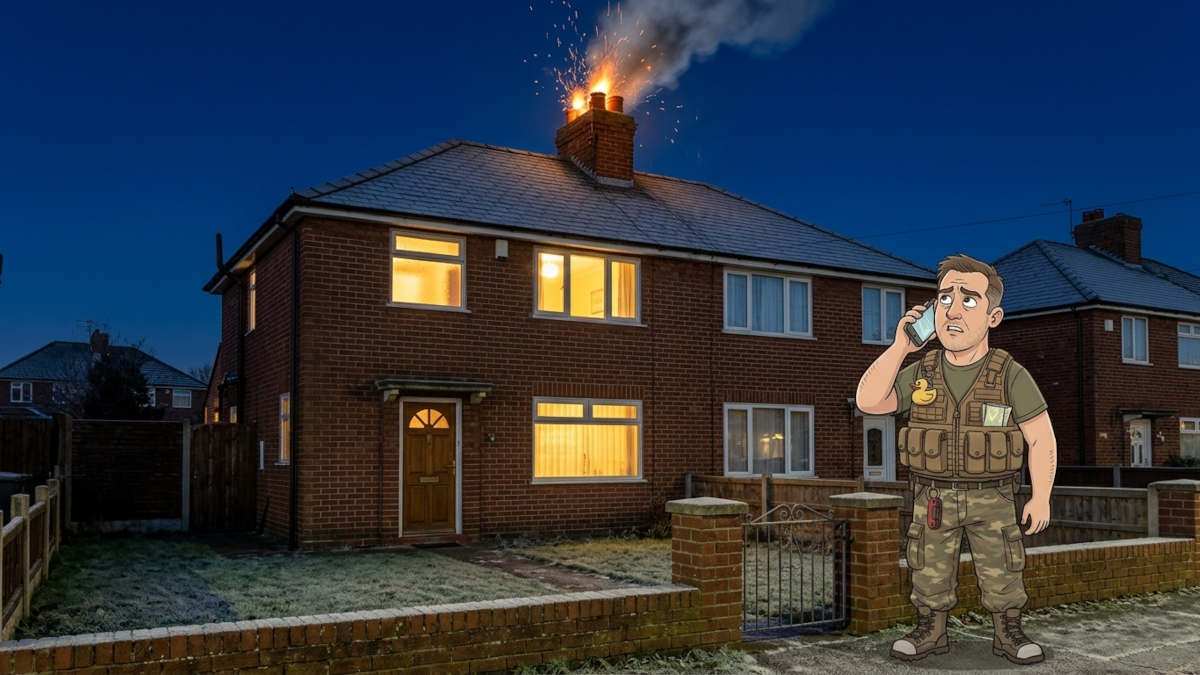
A chimney fire is one of those things most people with a log burner or open fire assume happens to someone else. It happened to me last winter, in my own living room, and a few years before that the same chimney nearly filled the room with carbon monoxide. Both times I was lucky, and both times the luck came from things you can do too. This guide covers what to do if your chimney catches fire, the warning signs, and the boring, cheap jobs that stop one starting in the first place.
Two Things That Happened in My House
The hornets’ nest
Last winter I lit the log burner for the first time after the summer. Hornets had built a nest in the flue while the stove sat unused, and once the fire got going the nest caught light inside the flue. The first thing I did was shut every air control on the stove, which was the right move. But the heat was enough to pull apart the joint where the flue pipe meets the top of the stove, and there was now an open gap with fire behind it.
I used a small aerosol extinguisher I keep in the room, first on the gap to cool it, then into the fire bed to try to put the fire out. Then I closed the burner back up, got out of the house and called 999. The fire brigade went up into the loft with a thermal camera, checked the chimney all the way up for hot spots, found none, and told me I’d done everything right. Even so, the advice from fire services is clearer than my instincts were on the night, and it’s what the “what to do” section below follows: shut it down, get out, call 999, and leave the fire to the brigade.
The flue that rotted from the inside
When I moved in, the stove was a multifuel burner, and the person who lived here before me had been burning ordinary house coal in it. Multifuel doesn’t mean “any fuel”. House coal is high in sulphur, and over the years the acidic deposits ate through the flue. Not long after I moved in, it collapsed into the chimney space and carbon monoxide started building up in the room.
I’d already fitted a carbon monoxide alarm. It went off before there was any smoke to see, which is the whole point of having one: carbon monoxide has no smell, no colour and no taste, so without the alarm the first sign would have been a headache, or nothing at all. The flue was replaced afterwards. If you take one thing from this guide, make it that alarm.
Chimney Fire: What to Do
A chimney fire can spread into the rest of your home in minutes, through cracks in the chimney, into the loft or through a failed joint like mine. Every UK fire service gives the same core advice:
- Call 999 and ask for the fire service. Do it straight away, even if the fire seems to be dying down. There’s no charge for the fire service attending a fire.
- Shut the stove down. If it’s safe, close the stove door and shut all the air vents and any flue damper. This starves the fire of oxygen. Don’t open the door again to check on it: a rush of fresh air can make it flare up.
- Don’t throw water into the stove or down the chimney. The sudden cooling can crack the stove, the glass or the flue, and the steam can make things worse. Don’t aim an extinguisher into the stove either. The fire service has the right kit for this.
- Move things away from the fireplace. Rugs, chairs, logs and anything else that could catch from the heat or a falling ember.
- Check the chimney breast in other rooms, if you can do it quickly. Feel the wall upstairs and look in the loft for smoke or heat, so you can tell the crew where the fire has got to. Make sure they’ll be able to get into the loft.
- Get everyone out and close the doors behind you. Stay out, and have someone wait outside to meet the fire engine.
After a chimney fire, don’t light the stove again until a qualified sweep or a HETAS-registered installer has swept and checked the chimney and flue. A chimney fire burns hot enough to crack the liner or the brickwork, and the damage isn’t always visible from the room.
The warning signs of a chimney fire
- A loud roaring or rumbling noise from the chimney, like a train or a low-flying plane.
- Cracking and popping sounds from the flue.
- Thick smoke, sparks or flames coming out of the chimney pot. Neighbours often spot this first.
- A chimney breast that’s too hot to keep your hand on, in the room or upstairs.
- A strong, hot, tarry smell, or smoke coming back into the room.
- A stove pipe glowing red.
Chimney fires don’t always roar. Some burn slowly for a long time without anyone noticing, which is why the sweep and the carbon monoxide alarm matter more than spotting the signs.
A fire extinguisher or fire blanket in the room is for a small fire in the room itself, such as a rug smouldering from a spitting ember, not for the chimney. If you’d like one by the fireplace, this is the pack we reviewed:
FireShield Home Fire Safety Pack
A 600g aerosol extinguisher and a 1m fire blanket on one wall mount — the two tools that cover almost every domestic fire scenario, for under £25.
Our Full Review: FireShield Home Fire Safety Pack →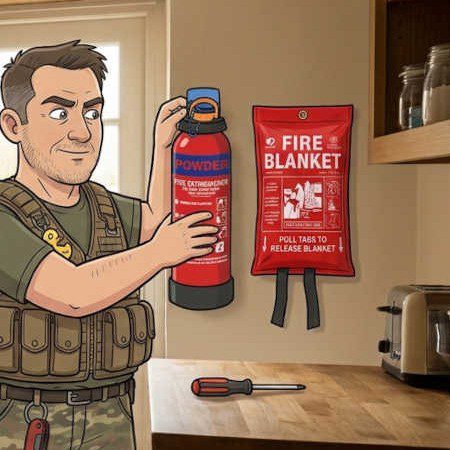
What Causes a Chimney Fire
Almost every chimney fire starts with something in the flue that shouldn’t be there:
- Tar and soot. Burning wood leaves a sticky, flammable deposit called creosote on the inside of the flue. Wet wood, a fire kept smouldering on low, and a stove that’s never allowed to burn hot all make far more of it.
- Nests and debris. Birds, wasps and hornets love an unused chimney over the summer, and a nest is a ready-made bundle of kindling sitting in the flue.
- The wrong fuel. House coal in a stove not made for it, painted or treated wood, and rubbish all leave deposits or damage the flue.
- A flue that’s never been swept. The deposits build up a bit at a time until one hot fire sets them going.
None of this is expensive to fix, and every one of these is a chimney fire waiting for the right night. Most of it is a visit from the sweep, and a bit of care about what you burn.
How Often Should a Chimney Be Swept?
HETAS, the official body for solid fuel heating, recommends having a chimney swept at least twice a year if you burn wood, and at least once a year for smokeless fuel. If you use the stove every day through the winter, more often is better, and some fire services suggest every three months while it’s in regular use. There’s no legal requirement to have your chimney swept, but your home insurance may expect it, and if you ever need to claim after a fire, a sweep’s certificate is the easiest way to show the chimney was looked after.
Whatever your schedule, always have it swept before the first fire of the autumn. That’s the time a summer’s worth of nests and debris is sitting in the flue, and it’s exactly when my hornets’ nest went up.
If you’ve just moved into a house with a stove or an open fire, have it swept and the flue inspected before you light it at all. You don’t know what the last owner burned in it, or when it was last swept, and I can tell you from experience that the answer isn’t always reassuring.
Birds nest in chimney? Wait until they’ve fledged
Jackdaws are the usual culprits, and they’ll fill a chimney with sticks remarkably quickly. Nests in use are protected under the Wildlife and Countryside Act 1981, so you can’t remove one while there are eggs or chicks in it. The breeding season runs roughly from April to July: if you hear chicks or see birds going in and out, leave it and have a sweep remove the nest once they’ve gone. Don’t light a fire to smoke them out, which is cruel and is a good way to start a chimney fire. Once the chimney is clear, a sweep can fit a bird guard or cowl to stop it happening again.
Wasp and hornet nests aren’t protected, but they’re still not a DIY job inside a flue. A sweep or a pest controller will deal with it, and it’s far better found in September than when you light the first fire.
Burn the Right Fuel
What you burn makes more difference to your chimney than almost anything else.
Wood: dry or don’t bother
Wet wood is the main cause of tar in the flue. It hisses, smokes, gives out far less heat and coats the chimney with creosote. Look for the Ready to Burn logo, which means the wood has a moisture content of 20% or less. In England, wood sold in quantities under two cubic metres has to carry it. If you season your own logs, split them, stack them off the ground under cover with the sides open to the air, and give them at least a year, often two for hardwoods. A cheap moisture meter will tell you when they’re ready.
🦆 Keith
Don’t Be Keith
Keith cut down the willow at the bottom of the garden in October and had it in the log burner by November, because “free fuel is free fuel”. It hissed like a kettle, gave out the heat of a tea light and steamed up the glass so badly his wife thought the stove had gone out. He turned it down to slumber overnight to make it last. By February the sweep pulled out enough tar to resurface the Defender’s parking spot. Logs need a year or two to dry. Keith’s needed about eighteen months more than he gave them.
Coal: not in a stove that isn’t made for it
A multifuel stove can burn wood and approved smokeless fuels. It isn’t made for ordinary house coal, and neither, usually, is the flue. House coal burns with a lot of sulphur, and the deposits it leaves turn acidic and eat into the metal. That’s what destroyed the flue in my house before I moved in.
It has been illegal to sell traditional house coal for burning at home in England since 1 May 2023, but it’s still out there, and it’s usually cheaper than the smokeless alternatives. Don’t buy it because it’s cheaper. The saving is a few pounds a bag; the cost can be a new flue, a chimney fire or a room full of carbon monoxide. Check your stove’s manual for the fuels it’s approved for, and if you live in a smoke control area, check what’s allowed there too.
Never burn
- Painted, varnished or treated wood, including old pallets, fence panels and furniture.
- Rubbish, plastic, cardboard boxes, wrapping paper and the Christmas tree.
- Anything with glue in it, like chipboard and MDF.
A wood burner is one of the few ways to heat a room when the power goes off, which is exactly why it’s worth keeping it in good order. We cover using one in a power cut, alongside the other options, in our heating guide:
Complete Guide
Heating Without Electricity
A power cut usually takes the gas boiler down too. What still works, which emergency heaters are safe indoors, and what to have ready before winter.

Log Burner Carbon Monoxide: The Alarm That Saved Us
Every log burner, multifuel stove and open fire makes carbon monoxide, and a damaged flue, a blocked chimney or a stove with a poor draw can send it into the room instead of up the chimney. It has no smell, colour or taste. The early symptoms are headaches, dizziness, sickness, tiredness and confusion, often mistaken for flu, and they tend to ease when you leave the house. If several people, or the pets, feel ill at the same time in the room with the stove, think carbon monoxide.
- Fit a carbon monoxide alarm in the same room as the stove or fire. Follow the alarm’s instructions, but usually that means on the ceiling at least 30cm from any wall, or high on a wall above head height, and between one and three metres from the stove.
- Choose an alarm marked BS EN 50291, and test it monthly.
- It’s the law in some cases. In England and Wales, a carbon monoxide alarm has to be fitted when a new or replacement stove is installed, and landlords in England must fit one in any room with a fixed fuel-burning appliance. In Scotland, every home with a fuel-burning appliance or a flue needs one.
- If it goes off: let the fire die down with the stove door shut, open the windows, get everyone outside into fresh air and don’t use the stove again until it’s been checked. If anyone feels unwell, call 999 or NHS 111. If you have gas in the house as well, call the National Gas Emergency Service on 0800 111 999.
A smoke alarm won’t detect carbon monoxide, but you can get one alarm that does both, which is handy in a living room with a stove in it. This is the one we reviewed:
FireAngel Combination Smoke and Carbon Monoxide Alarm
One sealed unit covering smoke and CO detection — with a 10-year battery that keeps it running during a power cut, when emergency stoves and heaters are out and a mains-wired alarm would already have gone dark.
Our Full Review: FireAngel Combination Smoke and Carbon Monoxide Alarm →
We cover choosing and positioning carbon monoxide alarms in more detail in our carbon monoxide alarm guide.
Day-to-Day Habits That Keep Your Chimney Safe
- Burn it hot, then let it die down. A fire kept smouldering overnight on its lowest setting makes the most tar. Bring a new fire up to temperature quickly, and if you have one, a stove thermometer on the flue pipe shows you when it’s in the right range.
- Use a fireguard with an open fire, and with a stove if there are children, older relatives or pets in the house.
- Keep logs, kindling and newspaper well back from the stove, not stacked against it to dry.
- Empty the ash into a metal bucket with a lid and leave it outside to cool for a few days. Ash can stay hot enough to melt a plastic bin for days.
- Look at the stove door and flue joints now and then. Smoke stains or a smell of smoke in the room mean something isn’t sealing.
- Use it. A stove that sits cold for months is where the nests move in, so check before that first autumn fire.
Choosing a Chimney Sweep
We don’t recommend individual sweeps, but we can tell you what a good one looks like:
- A member of a trade body, and you’ve checked that on the trade body’s own website, not just a logo on a van or a flyer.
- Insured, and happy to show you.
- Gives you a certificate of sweeping afterwards, recording what they found. Keep it with your house insurance papers.
- Checks the chimney, not just sweeps it: a smoke test or a camera inspection where it’s needed, and tells you about any damage or blockages.
- Won’t push a full chimney rebuild on the doorstep. If they find a serious problem, it’s reasonable to get a second opinion.
To find one near you, these trade bodies all have searchable lists of members:
- National Association of Chimney Sweeps (NACS)
- The Guild of Master Chimney Sweeps
- Association of Professional and Independent Chimney Sweeps (APICS)
- HETAS (approved sweeps and registered stove installers)
Chimney fires are one part of keeping a home safe from fire. Smoke alarms, an escape plan and the other winter fire risks are all in our home fire safety guide:
Complete Guide
Home Fire Safety
How many smoke alarms you need and where they go, a fire escape plan that works in the dark, when it’s safe to tackle a small fire, chip pans, e-bike batteries, and the free home fire safety check your fire service will do.
Read the Full Guide: Home Fire Safety →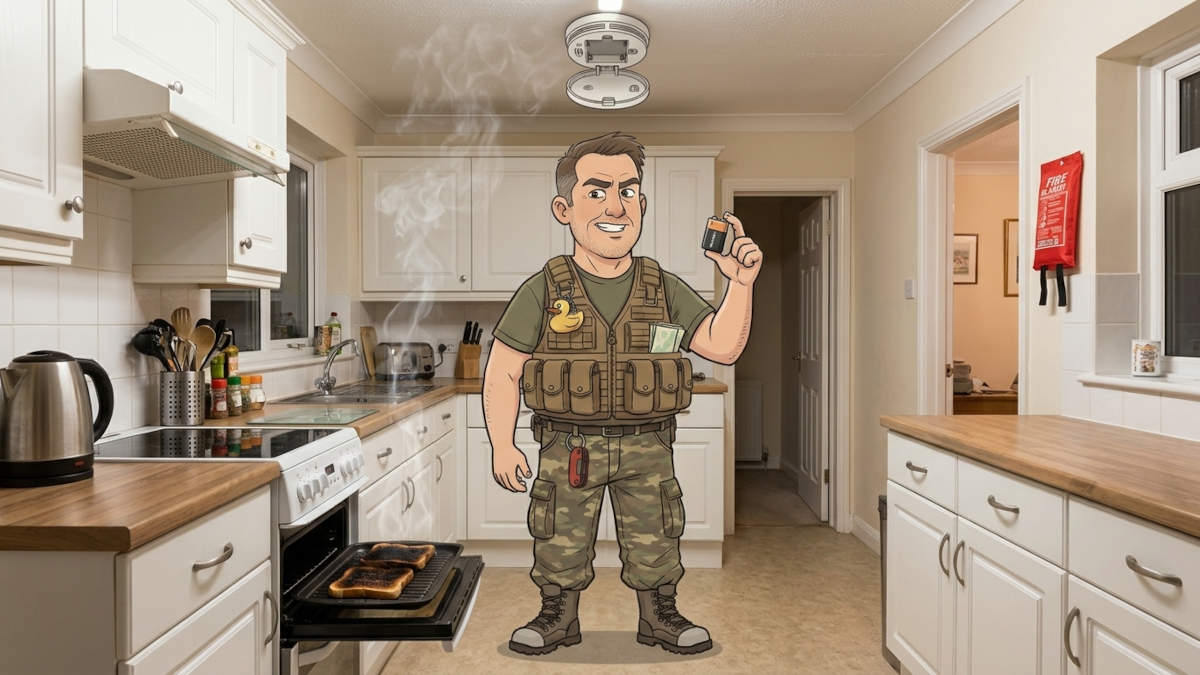
Frequently Asked Questions
Can a chimney fire go out on its own?
Sometimes, but you can’t tell from inside the room whether it has, or whether it has spread into the loft or the walls. Always call 999. The fire service will check the whole chimney, often with a thermal camera, and there’s no charge for attending a fire.
Should I put water on a chimney fire?
No. Don’t pour water into a log burner or down the chimney. The sudden cooling can crack the stove, the glass or the flue, and the steam can make things worse. Shut the stove door and air vents, get out and call 999.
How often should a chimney be swept with a log burner?
HETAS recommends at least twice a year for wood and at least once a year for smokeless fuel, and more often if the stove is in daily use. Always have it swept before the first fire after the summer.
Can I burn coal in a multifuel stove?
Only approved smokeless fuels, not ordinary house coal. House coal is high in sulphur and the deposits it leaves can eat through a flue. It has been illegal to sell it for burning at home in England since May 2023. Check your stove’s manual for the fuels it’s approved for.
Can I remove a birds nest from my chimney?
Not while it’s in use. Nests with eggs or chicks are protected by law. Wait until the birds have fledged, usually by the end of July, then have a sweep remove the nest and fit a bird guard so it doesn’t happen again.
Where should a carbon monoxide alarm go with a log burner?
In the same room as the stove, usually on the ceiling at least 30cm from a wall, or high on a wall, and between one and three metres from the stove. Always follow the alarm’s own instructions.
Build Your Resilience
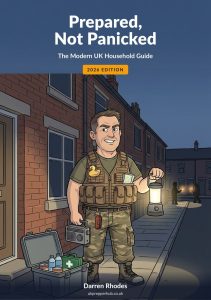
The whole plan, in one book
Prepared, Not Panicked (2026 edition) pulls our guides together into one plan for UK households. PDF, £4.99.
See inside the book →Further Reading: Related Guides
All our guides can be found listed on our resilience hub.
Gear We've Tested & Reviewed
All our reviews can be found on our reviews and resources page.


