
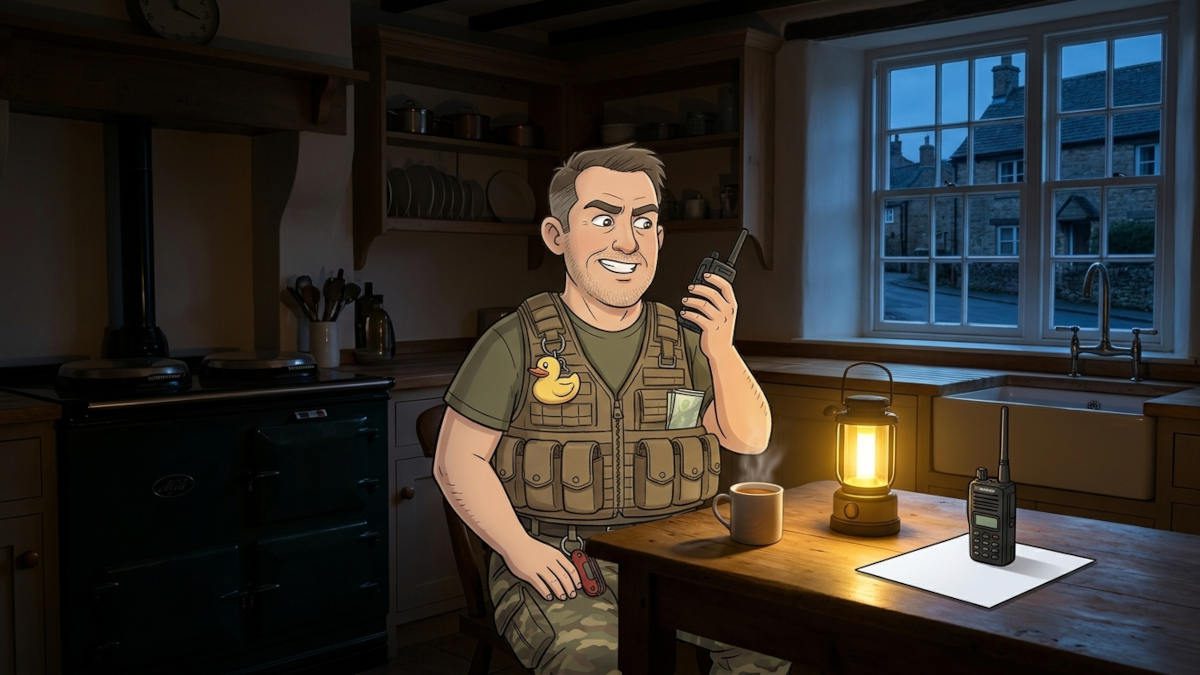
Picture a long power cut. The mobile network has gone quiet, the internet is down, and the only person you can reach is whoever is standing in your kitchen. Now picture having a cheap PMR446 radio in the drawer and knowing that someone two streets away listens on channel 3 most evenings. That second picture is what PMRMap, a free PMR446 map for the whole UK, is built to make possible.
PMRMap.co.uk is a free map of PMR446 radio users and local radio nets across the UK. It was set up by Lee and Clare, who got in touch with us recently, and we liked the idea so much that we asked them to tell us about it in their own words.
What Is PMRMap, the UK PMR446 Map?
PMR446 is the licence-free walkie-talkie band anyone in the UK can use. You buy a pair of radios, switch them on and talk. The problem has always been finding other people using it. Plenty of folk listen in every evening, but unless you happen to belong to the right local Facebook group you’d never know they were there.
PMRMap fixes that by putting everyone on one map. You find your town, see who is nearby, and add your own station. There is no complicated registration and no fee. Each listing can show:
- Your radio name (callsign)
- The channels you usually use
- When you transmit and when you listen
- A little about yourself
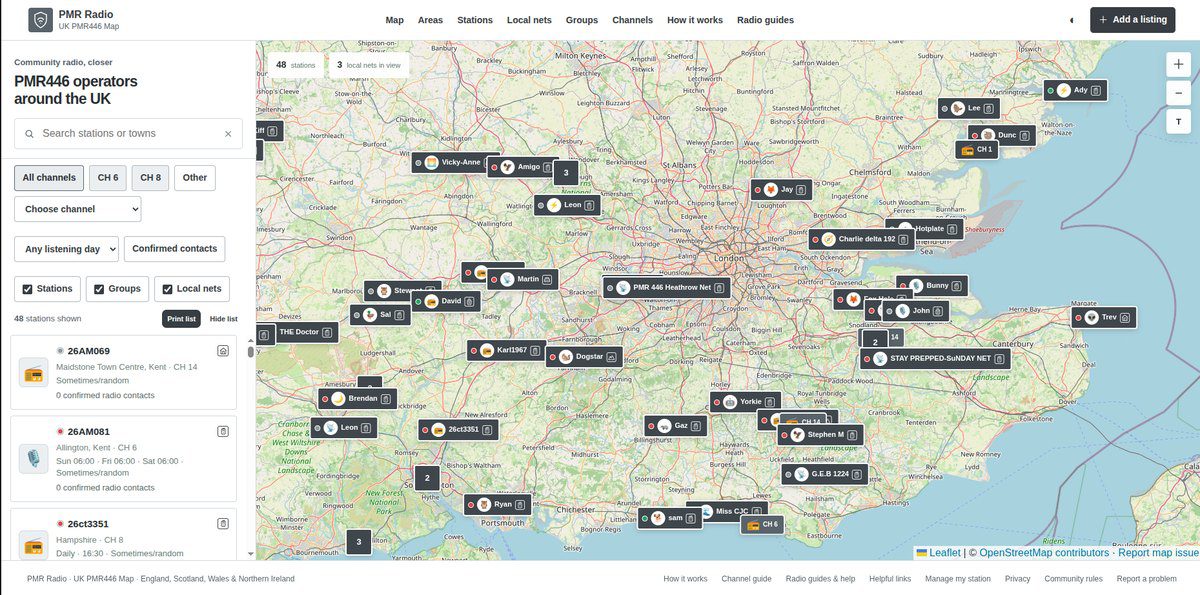
Existing radio groups and local nets can list themselves too, so newcomers can find a friendly group to join rather than calling into silence. Within days of launching, the map already had 150 stations listed.
Motorola T42 PMR446 Twin Pack
A twin pack of Motorola PMR446 radios that run on AAA batteries — licence-free, instant pair, and the easiest first step in a household emergency comms setup.
Our Full Review: Motorola T42 Twin Pack →
Why Lee and Clare Built It
Lee has been into radio since the CB days of the 1980s. After years away from it, world events nudged him back on the air:
“With everything going on in the world these days, I thought it might be a good idea to have another way of communicating with people, should we ever need it. After getting myself a couple of radios and joining some Facebook groups, I soon realised there were quite a few people out there doing the same thing. The problem was finding them! So I thought, why not put everyone on a map?”
There are already a few radio maps around, and Lee is quick to say they’ve served the community well. PMRMap’s aim is to be up to date, easy to use on a phone or tablet, and completely free. Lee and Clare are also keen not to tread on anyone’s toes:
“There are already some fantastic radio communities out there, and I’d much rather support them and help bring more people into the hobby.”
They’re preppers themselves, too. As Lee puts it, “during Covid I was one of the families that did not run out of toilet rolls.”
Why It Matters When Things Go Wrong
Most of us lean on our mobile phones for everything. When the power goes off for long enough, mobile masts run out of backup power, home broadband dies with the router, and suddenly there’s no easy way to check on a neighbour or an elderly relative down the road. Lee sums it up well:
“If a few households in the same village already had PMR446 radios and knew which channels their neighbours monitored, at least they’d have another way of keeping in touch.”
The key word there is already. The map needs the internet, and PMR446 radios only reach so far (think a few hundred metres in a built-up area, further from high ground). So the time to find your nearest radio users is now, while everything is working, not once the lights have gone out.
Complete Guide
PMR446 Walkie Talkies
PMR446 walkie talkies need no licence, no subscription, and no infrastructure — they work when mobile networks don’t. This guide covers realistic range, how to use them in a UK emergency, what to look for when buying, and why the “privacy codes” on the box aren’t what you think.
Read the Full Guide: PMR446 Walkie Talkies →
The Printable Contacts List
This is the feature that got our attention most. PMRMap lets you print a list of PMR446 users in your area, with their channels and the times they’re usually on air. Fold it up and keep it with your radios, your torch and your emergency plan, and you’ll still have those details if the internet goes down.
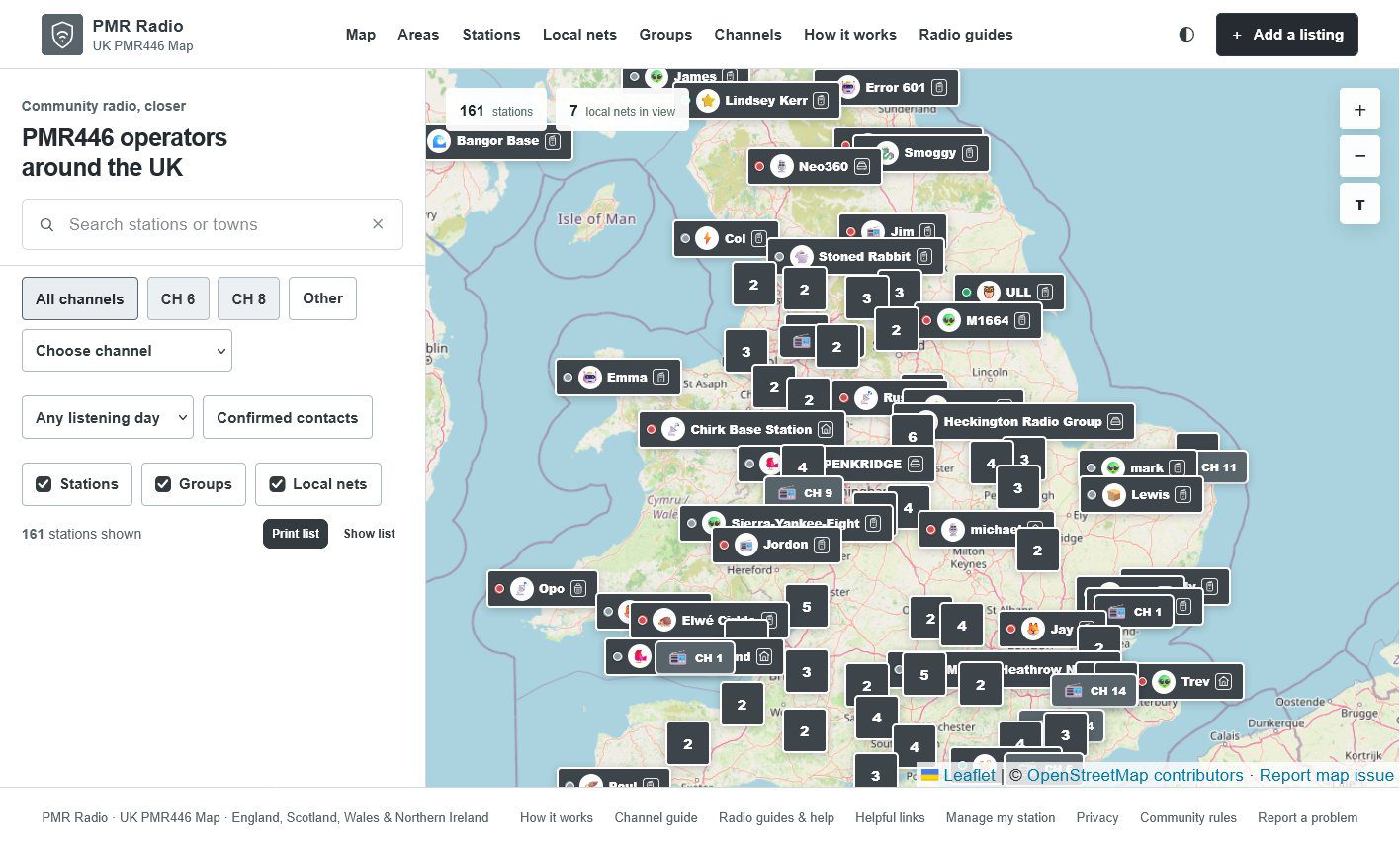
If you’re putting together a household emergency plan, it’s a natural fit. Our free fillable plan is on Clarissa’s Checklists page, and a printed PMRMap list slots right in behind it.
What’s Coming Next
The site is brand new and Lee and Clare are improving it almost daily, taking suggestions from the people using it. They plan to build up the emergency preparedness side of PMRMap over time, alongside the everyday radio community:
“I think the two go together really well, and there’s plenty of useful information we could add over time. I’d love to encourage more people to think about having a simple backup means of communication, even if they never actually need it for an emergency.”
And, as Lee says, “we might even get a few people digging their old CB radios out of the loft again!”
Complete Guide
CB Radio: The Licence-Free Step Up
CB radio is the licence-free step up from PMR446 walkie talkies — more power, greater range, and access to Channel 19 where lorry drivers broadcast real-time road intelligence before any official source catches up. No licence, no registration, and it runs from a leisure battery when the grid goes down.
Read the Full Guide: CB Radio: The Licence-Free Step Up →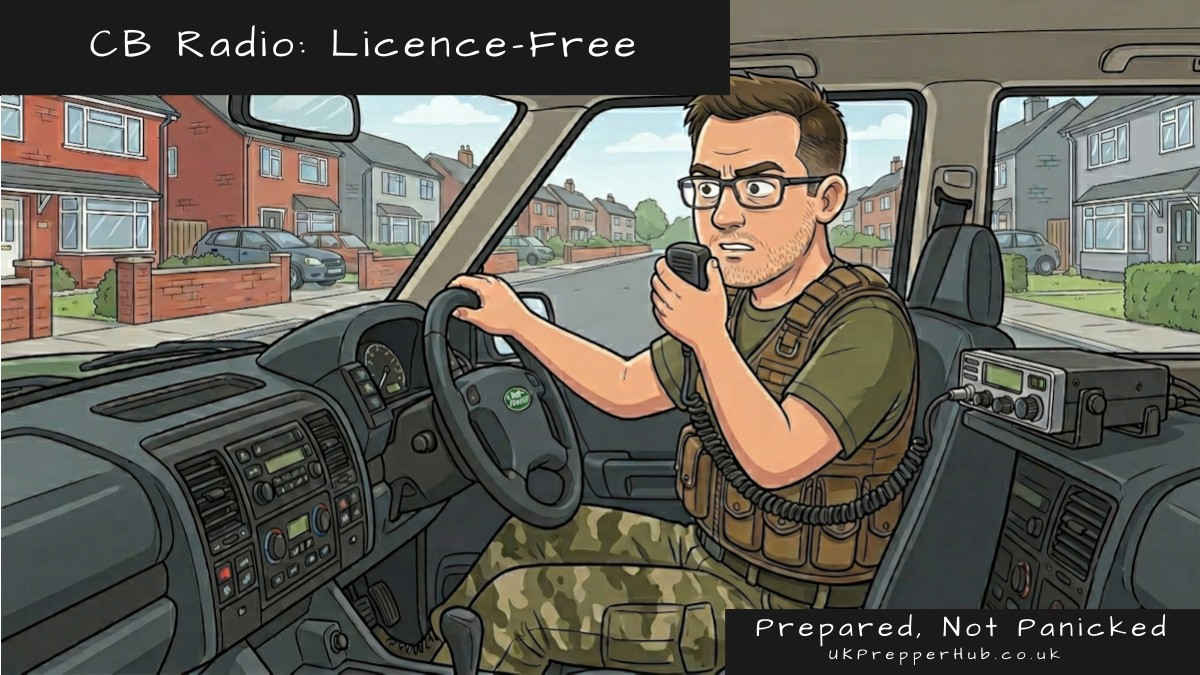
How to Get Started
- Get a pair of PMR446 radios. You don’t need to spend much, and there’s no licence to buy.
- Visit PMRMap.co.uk and look up your town.
- Add your own station, with your channels and the times you’re usually listening.
- Have a go at calling the people near you. A quick chat now means you’ll know who’s out there later.
- Print your local contacts list and keep it with your radios and your emergency plan.
We think it’s a cracking idea, simple, free and built on kit anyone can afford. Go and put yourself on the map.
Frequently Asked Questions
Is PMRMap free to use?
Yes. There’s no registration fee or subscription. You visit the website, find your town and add your station.
Do I need a licence to use PMR446 radios?
No. PMR446 is licence-free in the UK, so anyone can buy a pair of radios and start talking straight away.
How far will a PMR446 radio reach?
It depends on where you are. In a built-up area expect a few hundred metres to a mile or so, while from high ground with a clear view you can reach a lot further. That’s why knowing who’s nearby matters.
Will PMRMap work if the internet goes down?
The map itself needs the internet, but you can print a list of the PMR446 users in your area, with their channels and times, and keep a paper copy for when it doesn’t.
Can radio groups and local nets be listed?
Yes. PMRMap welcomes existing radio groups and local nets, so people can find what’s already happening in their area.
Build Your Resilience
The whole plan, in one book
Prepared, Not Panicked (2026 edition) pulls our guides together into one plan for UK households. PDF, £4.99.
See inside the book →Further Reading: Related Guides
- PMR446 Walkie Talkie Guide
- Off Grid Communications
- CB Radio Guide
- Emergency Radio Guide
- LoRa Radio Guide
All our guides can be found listed on our resilience hub.
Gear We've Tested & Reviewed
All our reviews can be found on our reviews and resources page.


📡 Find Us Everywhere
Daily briefings, prep guides, and real-time updates across every platform. Pick yours.
Free. No commitment. Stay anonymous on WhatsApp & Telegram.
Stay Informed on UK Preparedness
Join our newsletter for UK-specific preparedness tips, product recommendations, and real-world advice for households.
Subscribe to Our Newsletter