
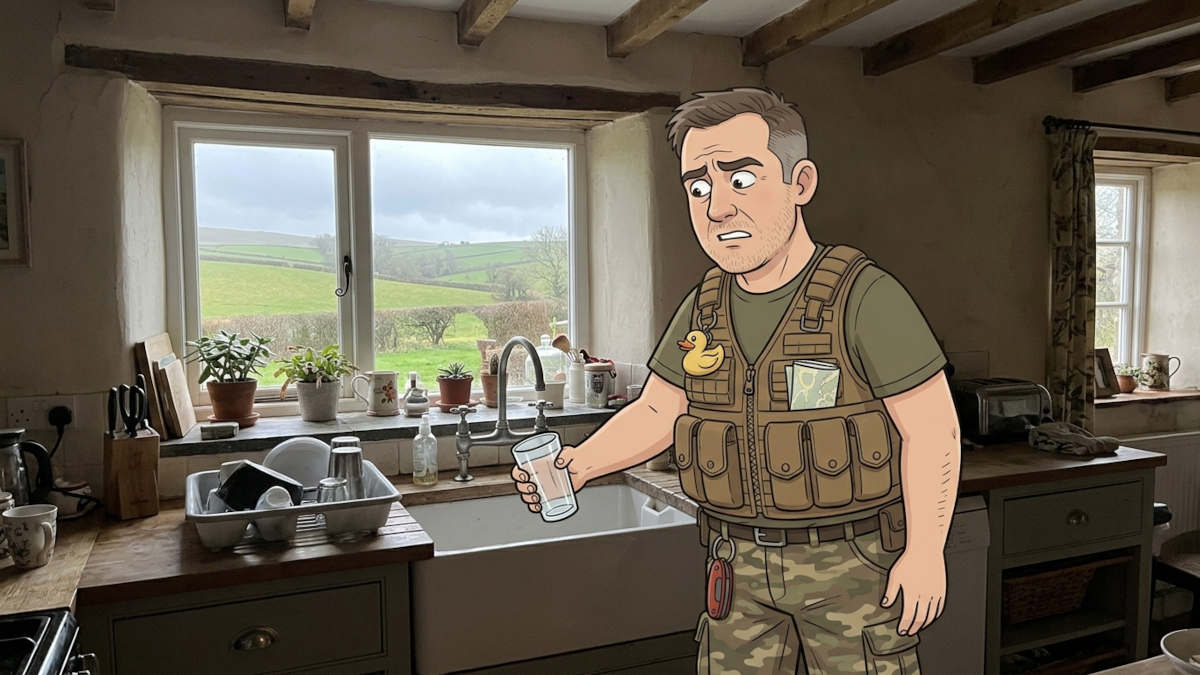
Devon is planning for water cuts. Around 60 organisations, including the county’s councils and emergency services, have been drawing up contingency plans for a “stage four severe drought”, in which tap water to homes and businesses could be switched off for up to three days at a time, GB News reports. The plans are a last resort and nobody’s taps are being turned off this winter. But they show how close parts of the South West are to the edge, and what three days with no running water would actually mean.
This special report covers what’s being planned, what your water company has to give you if the taps go off, who should join the water Priority Services Register, and how much water to store now, wherever you live.
The Devon Water Cuts Plan
The county’s chief executive told Devon County Council’s cabinet about the preparations on 10 November. Under South West Water’s contingency plans, supplies would be available on a rota, with areas potentially facing three days with water switched on and three days off, The Telegraph reports.
The council’s cabinet member for adult services said he was worried about care homes and “the 33,000 vulnerable people we have in our care whom we would have to supply with water”, Yahoo News reports. The council agreed to promote saving water and to encourage vulnerable customers to join South West Water’s Priority Services Register.
The pressure behind the water cuts plan is real. Wimbleball reservoir, which supplies drinking water to about 400,000 people in Devon, was at 13% in October and around 20% since. On 17 November the National Drought Group said England needs at least 120% of its average rainfall over the next five months to get out of drought by spring, with Devon, Cornwall and East Anglia most at risk.
Will There Be Water Rationing This Winter?
Probably not. South West Water says the water cuts “will not be needed this winter” and that Defra requires it to have contingency plans as a last resort. Defra says there are no plans for water rationing and it does not anticipate any impact on public water supplies. Recent rain, customers using less, and leak repairs are all helping.
The honest reading is this: water rationing is a plan on paper, not a date in the diary. The time to worry is spring, if the winter turns out dry. And the time to get ready is now, while the shops are full and nobody’s queuing.
What Three Days With No Running Water Actually Means
Most of us never think about how much we use until it stops. With no running water you can’t:
- Drink or cook from the tap
- Flush the toilet more than once (the cistern won’t refill)
- Wash your hands, have a shower or run the washing machine
- Wash up after meals
- Make up baby formula or look after someone who needs water for care or medication
Three days of that is a big ask for any household. For an older person living alone, a family with a baby, or someone caring for a relative at home, water cuts are a genuine emergency.
Complete Guide
Emergency Sanitation Guide
When flooding, burst mains, or a prolonged power cut takes your toilet out of action, most households aren’t prepared for what comes next. This guide covers practical UK alternatives — chemical toilets, waste bags, disposal methods — and how to stay hygienic when the infrastructure isn’t working.
Read the Full Guide: Emergency Sanitation Guide →
What Your Water Company Has to Give You During Water Cuts
If your piped supply fails, whether through water cuts or a burst main, Ofwat says the water company must provide at least 10 litres of water per person per day within the first 24 hours, and keep it up until the supply is back. That can be bottled water, bowsers or standpipes.
Two things to know about that. First, it’s a minimum, and you usually have to go and collect it from a bottled water station or a bowser down the road. Second, 10 litres has to cover drinking, cooking, washing and flushing. It goes much faster than you’d think.
The Water Priority Services Register
Every water company runs a free Priority Services Register for customers who need extra help. During water cuts, people on it are first in line for bottled water deliveries to their door. In Devon, that’s South West Water’s Priority Services Register.
Join the water Priority Services Register if you, or someone you care for:
- Has a disability, a medical condition or limited mobility
- Is over 65
- Has very young children
- Needs water for medical or personal care
- Would struggle to carry water home from a collection point
It takes a few minutes online. Do it before any water cuts are announced, not after. If you have an older parent or neighbour in Devon, Cornwall or East Anglia, sign them up this week.
How Much Water to Store
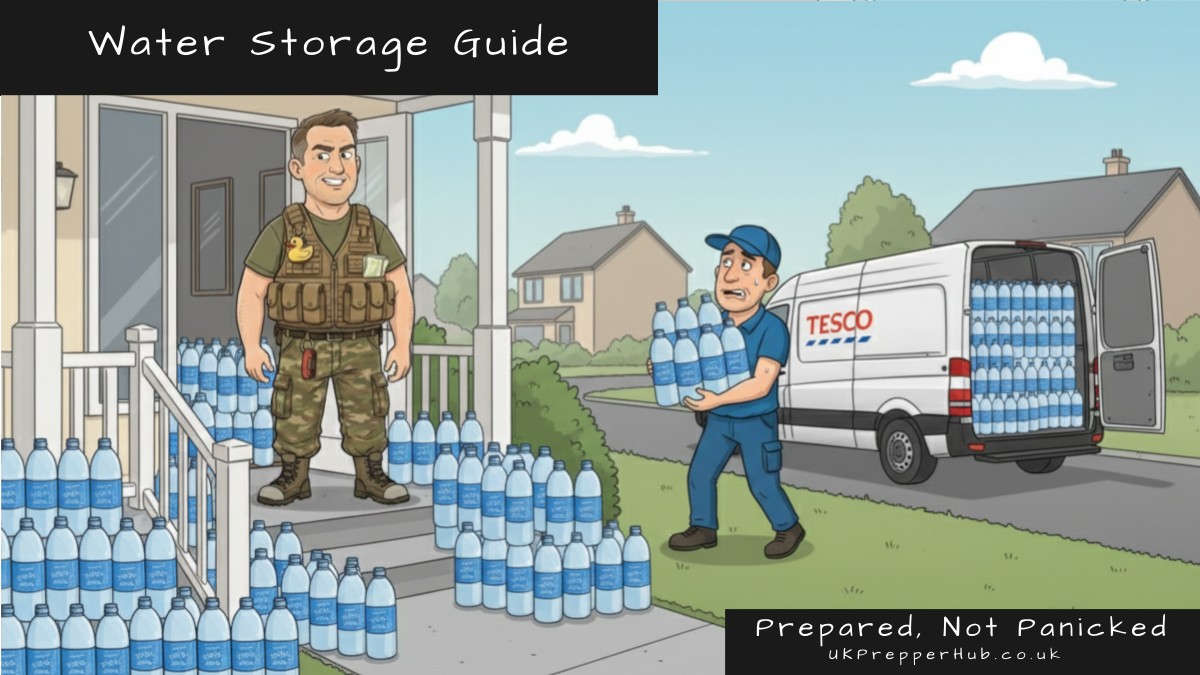
The UK’s Be Ready advice is at least 3 litres of drinking water per person per day. For three days, that’s 9 litres each, so one 10-litre container per person covers it with a litre to spare.
That’s drinking and cooking water. For flushing and washing, fill the bath or a few spare containers if water cuts are ever announced, and keep a pack of body wipes in the cupboard so you’re not using drinking water to wash.
Unibos 10 Litre Water Jerry Can
Ten litres of drinking water in food-grade, BPA-free plastic: fill it from the tap, put it under the stairs, and the next time the water goes off you’re sorted.
Our Full Review: Unibos Jerry Can →
Store it properly: clean, food-grade containers, filled from the tap, sealed, dated and kept somewhere cool and dark.
Complete Guide
Emergency Water Storage
How much to store, how to store it in small spaces, and the reality of UK water rotation.
📋 Clarissa
I’ve Made A Checklist
Here’s my water checklist: how much to store, what to store it in, how to keep it fresh and what to do when the taps go off. Print it, stick it inside the cupboard door, and you’ll never have to think about it in a hurry.
Download: Water Checklist →Water Cuts Don’t Need a Drought: This Week’s Burst Mains
Drought isn’t the only way taps run dry. This week a burst main cut water to homes, schools and businesses across Stourbridge in the West Midlands, three schools closed early, and supermarkets sold out of still bottled water within hours. Homes in Kings Heath, Worfield and near Norwich also lost their supply, some for the second time in a week.
A few days of stored water covers you for any kind of water cuts: a drought rota in Devon, a burst main in the Midlands, or a cold snap that freezes and splits pipes.

🐔 Chicken Licken
Did You Know?
Did you know that when a main burst in Stourbridge this week, the supermarkets had sold out of still bottled water by the afternoon? Not after a week. The same afternoon. If the water’s already off when you go shopping for it, you’re too late. I’ve been saying this for years.
See our Special Report “Why Is There a Hosepipe Ban?” first published on 8 August 2026.
What to Do Now
- Store water: 3 litres per person per day, for at least three days
- Join the water Priority Services Register if anyone in your home needs extra help, and sign up older relatives too
- Use water carefully: shorter showers and full loads in the washing machine all help reservoirs recover
- Follow your water company for updates on water cuts, especially in Devon, Cornwall and East Anglia
- Keep body wipes and bin bags in, for washing and toilet use if the taps go off
Frequently Asked Questions
Is Devon going to have water cuts?
Not at the moment. South West Water has drawn up rota cut plans as a last resort for a Stage 4 severe drought, but says the measures will not be needed this winter, and Defra says there are no plans for water rationing. The risk is what happens next spring if the winter is dry.
What would three days on, three days off mean?
Under the contingency plans, supplies would be switched on and off in rotation, with areas potentially going three days with water and three days without. Homes, schools, care homes and businesses could all be affected.
What does my water company have to give me if the water goes off?
Ofwat says that if the piped supply fails, the water company must provide at least 10 litres of water per person per day within the first 24 hours, through bottled water, bowsers or standpipes, until the supply is back.
Who should join the water Priority Services Register?
Anyone who would struggle without running water: people with a disability, medical condition or limited mobility, people over 65, families with very young children, and anyone who needs water for medical or personal care. It’s free, and in a supply failure it puts you first in line for bottled water deliveries.
How much water should I store?
At least 3 litres per person per day for three days, which is the UK’s Be Ready advice. One 10-litre container per person covers that with a litre to spare. Keep extra non-drinking water for flushing the toilet and washing.
How long can I store tap water?
Fill clean, food-grade containers from the tap, seal them, label them with the date and keep them somewhere cool and dark. Change the water regularly, and follow your container maker’s guidance on how often.
Build Your Resilience
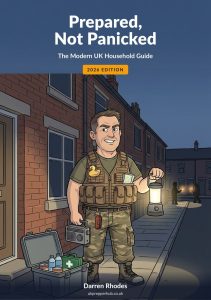
The whole plan, in one book
Prepared, Not Panicked (2026 edition) pulls our guides together into one plan for UK households. PDF, £4.99.
See inside the book →Further Reading: Related Guides
- Emergency Water Storage
- Emergency Sanitation Guide
- Emergency Hygiene Guide
- Water Purification and Safety Guide
- Emergency Planning for Disabled People
All our guides can be found listed on our resilience hub.
Gear We've Tested & Reviewed


📡 Find Us Everywhere
Daily briefings, prep guides, and real-time updates across every platform. Pick yours.
Free. No commitment. Stay anonymous on WhatsApp & Telegram.
Stay Informed on UK Preparedness
Join our newsletter for UK-specific preparedness tips, product recommendations, and real-world advice for households.
Subscribe to Our Newsletter