
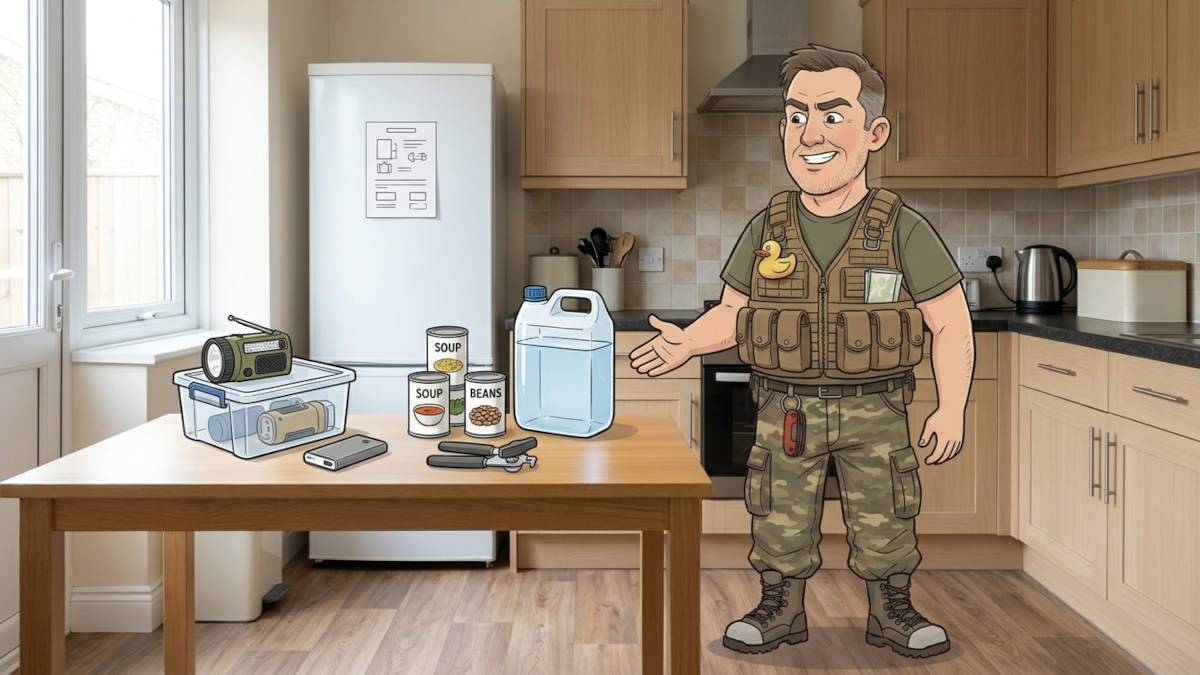
If you needed a reminder of why UK household preparedness matters—without a single bunker, zombie, or camouflage jacket in sight—this past week in Britain delivered two of them back-to-back.
First, on Friday 13 November, a global Microsoft 365 outage NHS and public-sector teams relied upon knocked out Outlook, Teams, SharePoint, and OneDrive across the country. In England, hundreds of hospitals, GP surgeries, and community health services faced widespread disruption. Doctors and nurses couldn’t access digital schedules, send urgent referrals, or view electronic files—forcing frontline staff to fall back on pen, paper, and telephone switchboards just to keep clinics moving.
At the exact same time, the government’s newly launched UK Be Ready campaign has been dominating national headlines and supermarket aisles. Encouraging households in England and Wales to keep enough supplies to cope independently for three days, the UK Be Ready campaign has sparked fierce public debate. High-street retailers have reported spikes in sales of wind-up radios, torches, and tinned food, while critics have warned that struggling families cannot easily afford to buy extra groceries all at once.
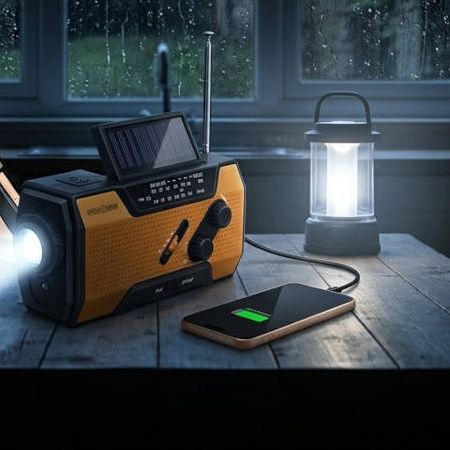
FosPower Emergency Radio
Most emergency radios have one or two power options. The FosPower has four, and that redundancy is the single most important feature for preparedness use.
Strip away the media noise and political point-scoring, and both stories point to the exact same truth: modern British life runs on fragile, interconnected systems, and the smartest approach to practical prepping UK families can take is boring, affordable, and grounded in common sense.
1. What the Microsoft Outage Revealed About Digital Fragility
When Microsoft’s servers stumbled late on Thursday evening, it wasn’t a cyber-attack or a rogue AI. It was a routine technical fault. Yet for roughly 18 hours, a single vendor glitch rippled through GP surgeries, hospital wards, police forces, and local businesses across Britain.
For ordinary households, a back-office IT crash might seem like someone else’s problem—until you are the patient trying to confirm whether a hospital appointment is still going ahead, waiting on an urgent referral, or trying to reach a local council service that has quietly replaced its reception desk with an online contact form.
How to Bulletproof Your Home Against IT and Comms Outages
You don’t need specialist radio equipment to handle a digital wobble, just a few old-fashioned backups that work without cloud logins or mobile signal:
- Write out an offline emergency contacts list: Keep a printed or handwritten sheet on the fridge with the phone numbers for your GP surgery, NHS 111, utility emergency lines, home insurer, and immediate family. If your phone battery dies or cloud contacts fail to sync, you aren’t locked out of basic help.
- Print critical appointment letters and prescriptions: When NHS services enact emergency continuity plans and revert to paper records, turning up at reception with a physical appointment letter and your repeat prescription slip saves hours of confusion.
- Keep a small cash buffer at home: Whenever card terminals, banking apps, or telecom networks go down, £30 to £50 in small notes and coins tucked safely away—plus a £10 note in your wallet—keeps you moving for milk, bread, fuel, or a bus fare.
- Save key documents locally on your phone: Download PDF copies of insurance policies, ID, and local offline maps directly onto your handset rather than relying solely on cloud storage.
Complete Guide
CB Radio: The Licence-Free Step Up
CB radio is the licence-free step up from PMR446 walkie talkies — more power, greater range, and access to Channel 19 where lorry drivers broadcast real-time road intelligence before any official source catches up. No licence, no registration, and it runs from a leisure battery when the grid goes down.
Read the Full Guide: CB Radio: The Licence-Free Step Up →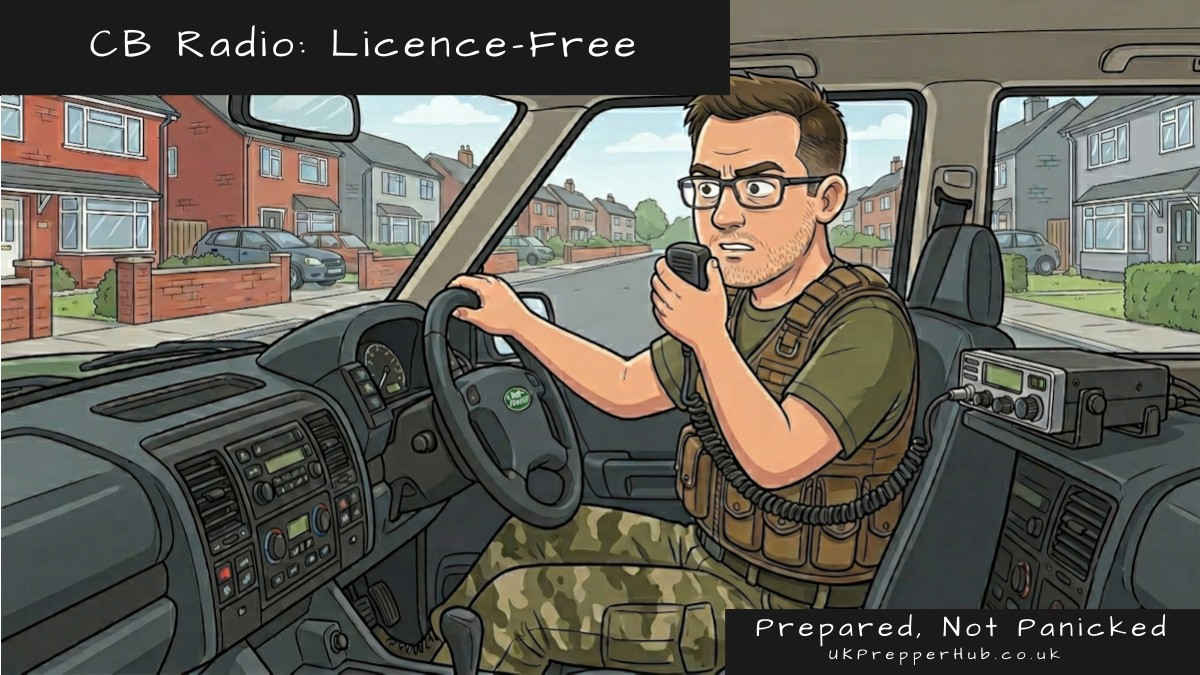
2. Cutting Through the Noise on the UK Be Ready Campaign
With Cabinet Office ministers urging the public to take sensible precautions and supermarkets seeing brisk sales of torches and tinned soup, it is easy to see why some people misread the headlines.
Let’s be crystal clear: the UK Be Ready campaign is not telling you to panic-buy pallets of baked beans or brace for the apocalypse. Instead, the UK Be Ready campaign simply brings Britain in line with European neighbours like France, Ireland, the Netherlands, and Sweden. Whether it is a winter storm bringing down overhead cables, a burst water main leaving a postcode dry for 48 hours, or localized flooding, emergency services cannot knock on every door simultaneously.
The core goal behind the UK Be Ready campaign is straightforward: if households that can manage independently for three days do so, local responders and utility crews can focus their resources on elderly, disabled, and vulnerable residents who genuinely cannot cope alone.

Why Budget Habits Beat Expensive Kits
One of the sharpest criticisms aimed at the UK Be Ready campaign this week is entirely fair: telling families already watching every penny to go out and buy an expensive pre-packed 72 hour emergency kit UK retailers sell online is unrealistic.
The good news is that proper UK household preparedness shouldn’t require a big shopping spree. It works best when built gradually through ordinary weekly habits:
- Shop your own cupboards first: You almost certainly already own 48 hours’ worth of food—pasta, rice, oats, tinned tomatoes, beans, tea bags, and crackers. Simply tossing one or two extra tins into your normal weekly shop builds your emergency food and water storage UK reserve for pennies and avoids waste.
- Fill clean containers from the kitchen tap: Rather than lugging home expensive multipacks of supermarket bottled water, buy a couple of food-grade 5-litre or 10-litre water carriers and fill them from your cold tap. The official guidance recommends roughly 3 litres of drinking water per person per day.
- Know how to prepare for a power cut UK style: Before buying tactical gear, gather the battery-powered camping lanterns, bike lights, power banks, and spare AA/AAA batteries already scattered across your house into one designated drawer. During a winter outage, thermal layers, wool jumpers, and closing off unused rooms keep you warm without spending a penny.
- Sign up for free utility support now: One of the most practical—and completely free—steps highlighted by the UK Be Ready campaign is joining your electricity, gas, and water suppliers’ Priority Services Register UK scheme. If you have young children, medical needs, or are of pensionable age, registering ensures network operators prioritise your household during an outage. (Internal Link: Read our full guide on how to sign up for the Priority Services Register).
Complete Guide
How to Make a Blackout Box
Most households aren’t prepared for even a short power cut, and the stress comes from small, avoidable problems like lack of light, heat, or a way to cook. This guide shows you exactly how to fix that with a simple, practical setup so a blackout becomes manageable rather than disruptive.
Read the Full Guide: How to Make a Blackout Box →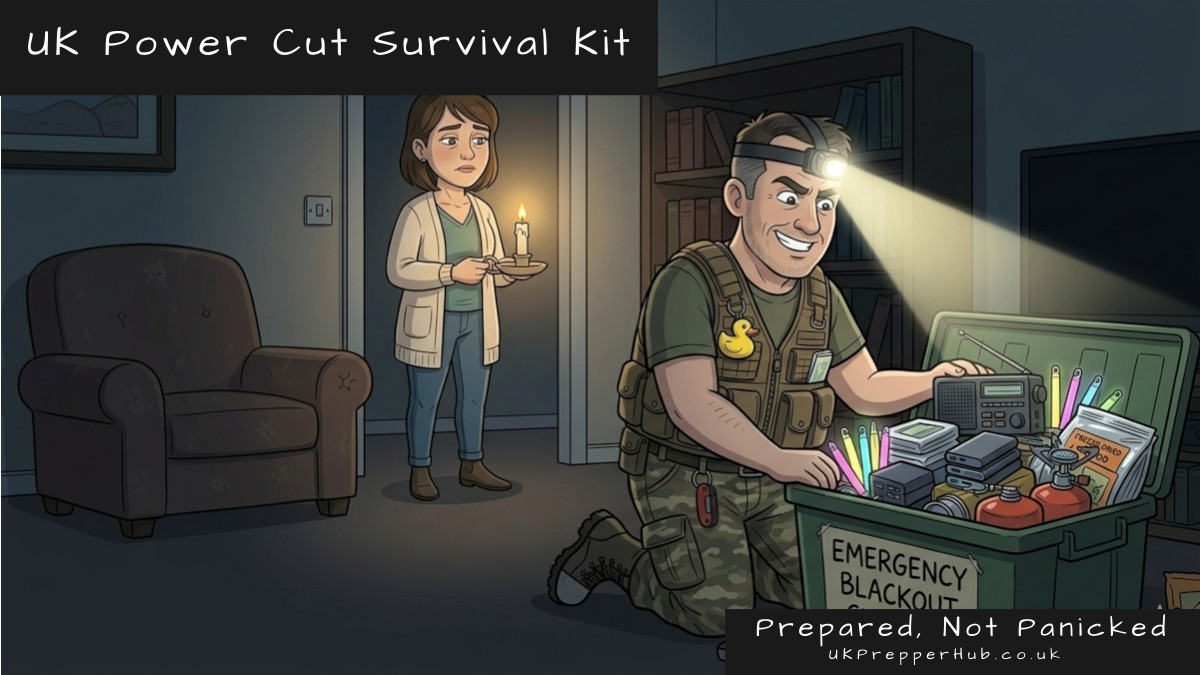
3. Your 15-Minute UK Emergency Preparedness Checklist
Rather than getting swept up in dramatic headlines or emptying supermarket shelves, take 15 minutes this weekend to run through a quiet, practical UK emergency preparedness checklist at home:
- Test your torches and battery radio: Check that batteries haven’t corroded since last winter and keep a spare pack taped alongside them.
- Top up your phone power bank: A fully charged 10,000mAh power bank gives you two to three full phone charges if the mains supply trips.
- Check your manual tin opener: It sounds trivial until the power goes out and you realize your only tin opener is electric or broken.
- Review your medicine cabinet: Make sure you aren’t down to your last two days of repeat prescriptions heading into a weekend, and keep basic painkillers, plasters, and antiseptic wipes stocked.
- Keep a dedicated household grab box: Store your torches, power bank, cash buffer, and offline emergency contacts list in one accessible cupboard so everyone in the house knows where they are in the dark.
Following the advice behind the UK Be Ready campaign isn’t about predicting the worst-case scenario—it’s about making sure an ordinary disruption like a winter storm, a burst pipe, or a Friday morning IT crash stays a minor inconvenience rather than a household crisis.


📡 Find Us Everywhere
Daily briefings, prep guides, and real-time updates across every platform. Pick yours.
Free. No commitment. Stay anonymous on WhatsApp & Telegram.
Stay Informed on UK Preparedness
Join our newsletter for UK-specific preparedness tips, product recommendations, and real-world advice for households.
Subscribe to Our Newsletter