
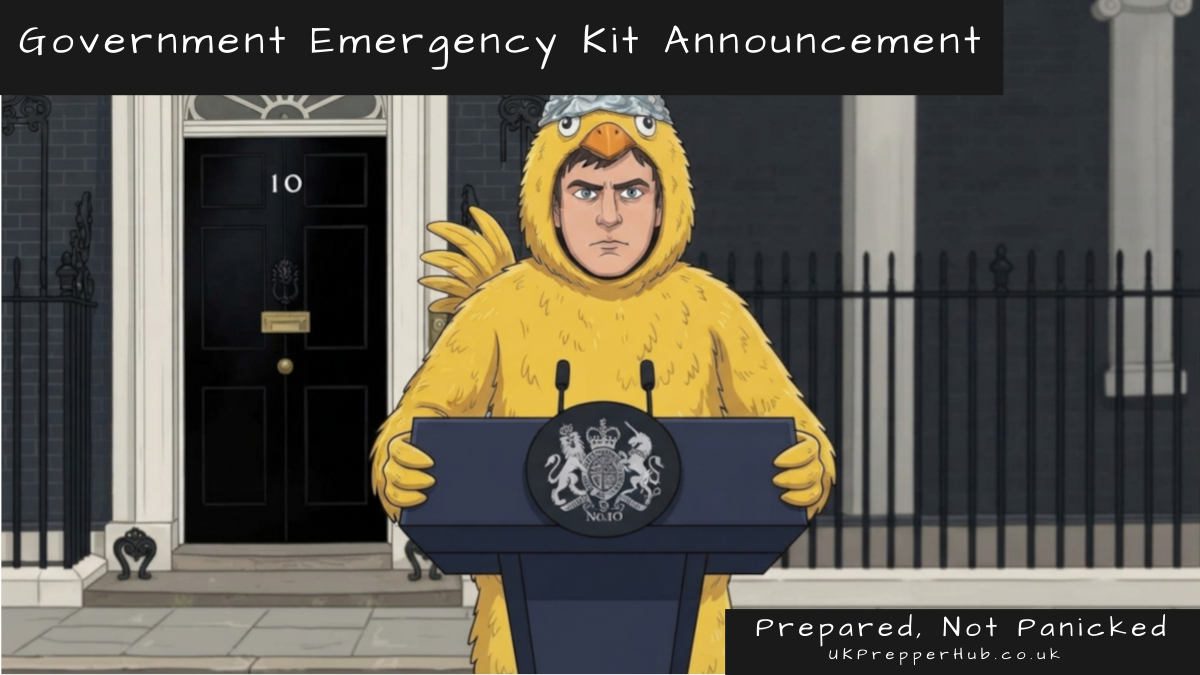
This week, headlines started spreading a striking claim: the UK government is about to tell every household to stock up on food, water, and candles. It’s true, sort of — but the actual story is more interesting, and more useful, than the headlines suggest. There is a real, official government emergency kit already published, a genuine Cabinet Office plan to promote it much harder this autumn, and at least one detail in the popular retelling that’s flatly wrong. Here’s what’s actually going on, sourced straight from the government’s own documents.
What The Government Is Actually Planning
This isn’t a brand-new idea dreamed up this week. The government emergency kit advice already lives on a site called GOV.UK/Prepare, which has quietly existed since May 2024, launched under a previous government with a campaign called “How would you prepare for an emergency?” Nobody much noticed at the time. What’s changed is the ambition behind it. On 14 July 2026, the Cabinet Office published its “UK Government Resilience Action Plan: 2026 Implementation Report” — a real, on-the-record document, not a leak or a rumour. In it, the security minister confirms a much bigger public awareness campaign is “launching later this year,” built with devolved governments, Local Resilience Forums, utilities, and businesses, to push the existing government emergency kit guidance in front of far more households than have ever seen it.
So this is a relaunch, not a debut. The government emergency kit itself hasn’t changed since 2024 — what’s changing is the volume of the megaphone pointed at it.
Chief Secretary to the Prime Minister Darren Jones put the reasoning plainly: “Being prepared not only helps people keep themselves and their family safe, but also means the emergency services can focus on helping the most vulnerable.” That’s the whole pitch — not panic, just a household that can look after itself for the first few days of a disruption.
What’s Actually In The Government Emergency Kit (And What Isn’t)
Here’s where the reporting gets it wrong. Several outlets have described the advice as including candles. It doesn’t. The real, live GOV.UK/Prepare guidance is explicit: “battery or wind-up torch — torches are safer than candles.” That’s not a new addition either — it’s been the standing line since the site launched in 2024. If you’ve read that this government emergency kit includes candles, you’ve read a summary of a summary, not the primary source.
Lepro 2000lm Rechargeable Camping Lantern
Charges by USB, then runs on AA batteries when the power’s been off too long. Up to 2,000 lumens, warm white and red modes, IPX4.
Our Full Review: Lepro 2000lm Rechargeable Camping Lantern →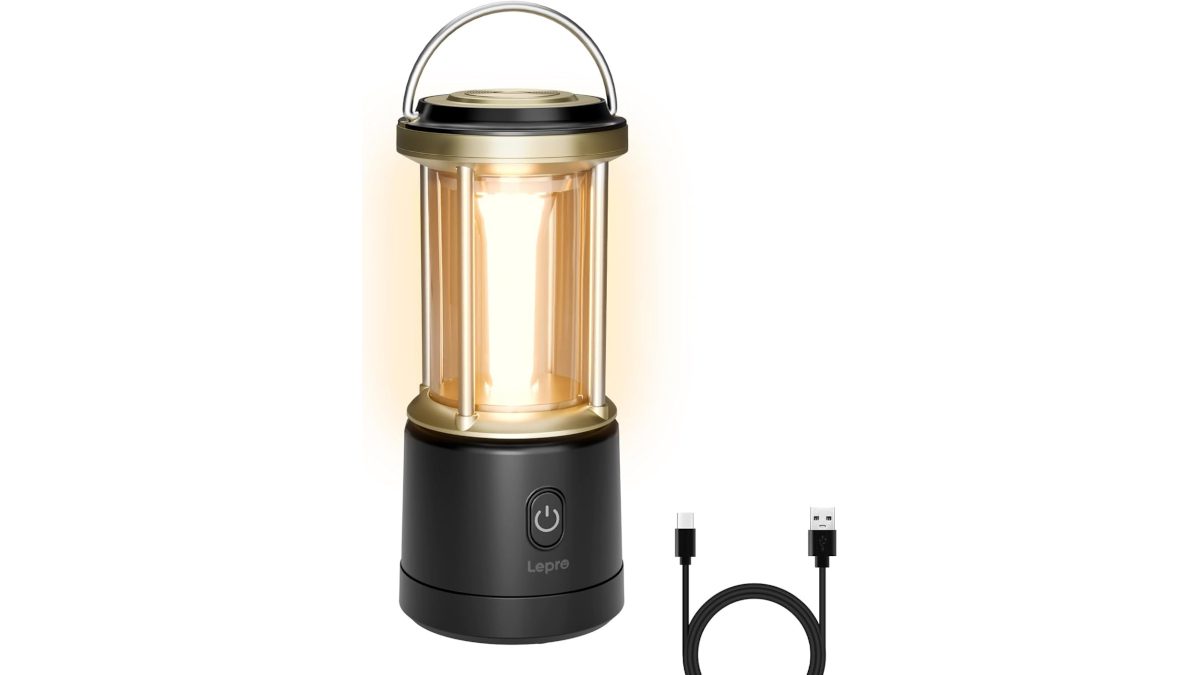
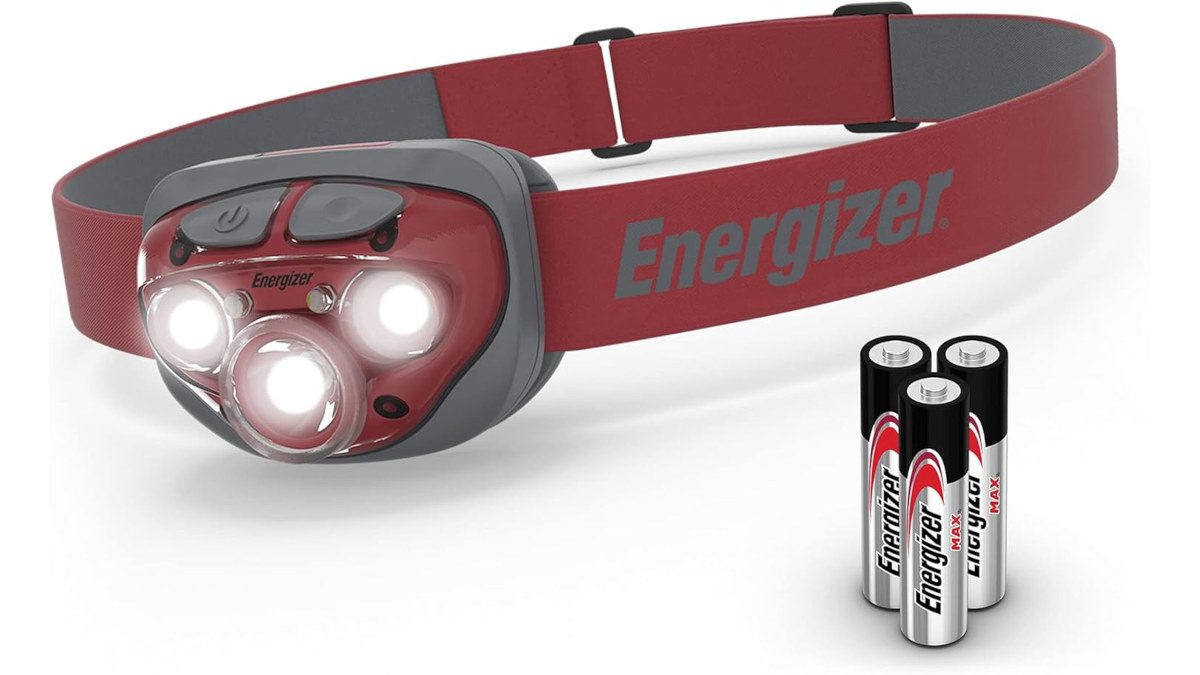
Energizer Vision HD+ Head Torch
Is this the most versatile head torch for your kit? Does it deliver what it promises? Does it have longevity?
The genuine list is short and sensible: bottled water (the page gives no standard figure, but cites the WHO minimum of 2.5–3 litres per person per day for drinking, with around 10 litres a day covering basic cooking and hygiene too), non-perishable food that needs no cooking, a manual tin opener, a battery or wind-up torch with spare batteries, a battery or wind-up radio, a portable power bank, a basic first aid kit, baby supplies and pet food if you need them, several days of any essential medication, hand sanitiser and wet wipes, and a paper list of key phone numbers and insurance details. The government emergency kit is built for an emergency lasting “a few days”, not a bunker inventory.
None of it is arbitrary. The water figure is the one to read carefully: 2.5–3 litres a day is the WHO minimum for drinking alone, and the official page says around 10 litres a day is what covers basic cooking and hygiene as well. A manual tin opener matters because most emergency food is tinned, and an electric one is dead the moment the power goes. Spare batteries matter because a torch with a flat battery is just a torch-shaped ornament. Nothing on the list needs a specialist shop or a four-figure budget — that’s rather the point of a genuinely national government emergency kit.
One thing the headlines have muddled: nobody is posting these out. There’s no free government emergency kit coming through the letterbox — the official advice is a list for each household to put together itself, and most of it is probably already in your cupboards. Think of it as a 3-day emergency kit: enough to get your household through the first few days of a disruption without needing outside help.
We’ve built a full, UK-specific version of exactly this list already — it covers the complete build-out, including the bits GOV.UK/Prepare doesn’t have space to go into, like what actually happens to a fridge full of food after three days with no power.
Complete Guide
Home Emergency Kit
The no-nonsense guide to building a home emergency kit that actually works — eight essentials, realistic costs, and a clear steer on what you don’t need.
Read the Full Guide: Home Emergency Kit →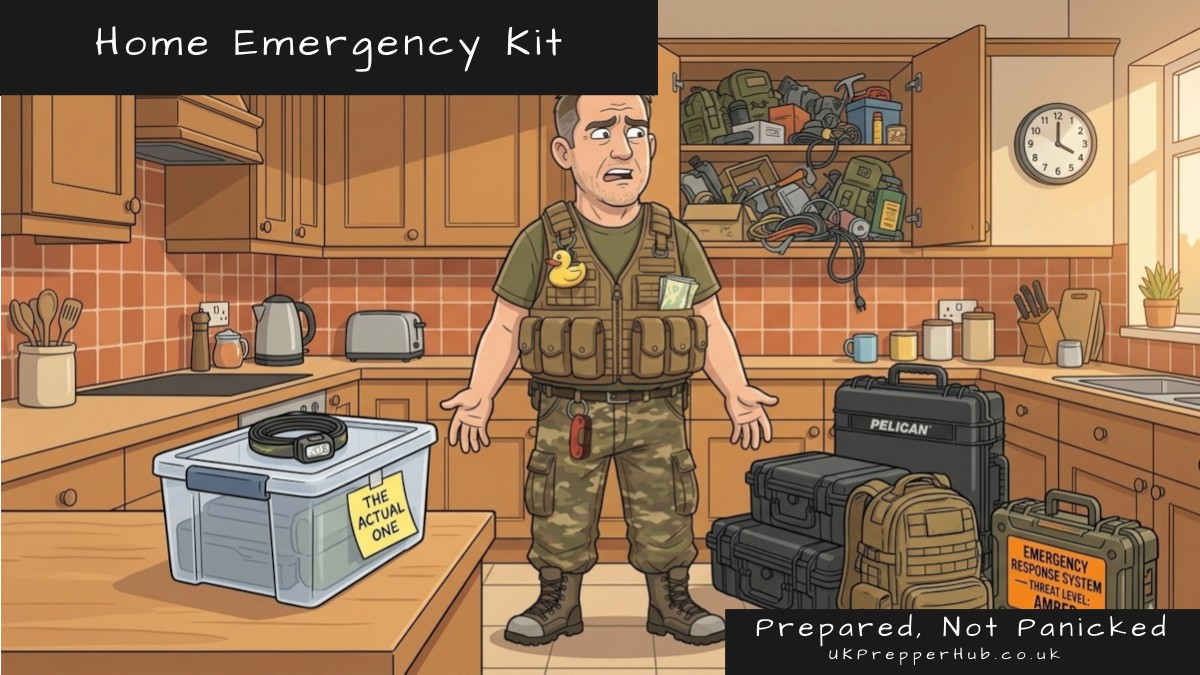
How Other Countries Handle This
Britain treats this as a novelty. Most of Europe doesn’t. Sweden’s Civil Contingencies Agency posts its “If Crisis or War Comes” booklet to every one of the country’s 5.2 million households, covering food, water, warm clothing, cash, and a battery radio for when the banks and the broadband both go quiet. Norway’s Directorate for Civil Protection asks households to be self-sufficient for a full week, not three days, and recommends keeping iodine tablets in the house for children, under-40s, and pregnant or breastfeeding women, to be taken only if the authorities specifically say so. Germany has long encouraged households to keep an adapted cellar stocked as a matter of course. In March 2025, the EU’s own Preparedness Union Strategy asked all 450 million citizens across the bloc to hold 72 hours of food, water, torches, ID documents, medicine, and a radio — a three-day benchmark that’s now common across Europe, though the UK’s own government emergency kit guidance talks about an emergency “lasting a few days” rather than a fixed number.
None of those countries treat this as fringe behaviour. It sits on the same shelf as car insurance or a spare tyre — boring, ordinary household admin, not a personality trait. In Britain, three days of stored water still reads to a lot of people as “a bit much.” We’d argue the opposite is true: it’s simply being an adult about the fact that pipes burst, grids fail, and supermarkets run short sometimes. Prepared, not panicked.
Why Is The Government Telling Us To Stockpile Now?
The Cabinet Office’s own report is refreshingly specific about why this is happening now. It cites a growing number of “sub-threshold” attacks attributed to Russia, major cyberattacks on infrastructure, the ongoing Middle East conflict, and increasingly severe weather — England and Wales had already passed 2025’s entire wildfire total before the summer was out. Alongside the public awareness campaign, the Cabinet Office has also been told to accelerate the wider “home defence programme” — joint military and civilian planning, including an update to the government’s “war book,” with part of the original 2035 target now brought forward to 2030. A full national home defence exercise is planned for 2027 to test all of it.
These aren’t abstract categories on a policy document. Iran has already successfully knocked the power out at a British power station for four days — a real, publicly reported incident, not a hypothetical dreamed up for a planning exercise. The government’s own Strategic Defence Review assessment puts a possible Russian move against NATO as early as 2030 — which happens to be exactly the year the home defence programme’s own timeline was just moved up to match.
None of this is a claim that a specific attack is imminent. The government has been explicit on that point: this is about resilience to a range of threats, evaluated and planned for, not a warning about one particular event. It’s also worth saying plainly: none of this is unprecedented. Cold War-era Britain issued households a “Protect and Survive” booklet with a lot more black humour and a lot less nuance than a modern government emergency kit list gets. This is a quieter, calmer version of a very old idea — a few days of water and a torch, not a fallout shelter.
Is The Government Emergency Kit Enough On Its Own?
Here’s the honest answer: the government emergency kit is a solid floor, not a ceiling. It’s a genuinely good starting point for a household with nothing — but it’s deliberately generic, written for every kind of household in the country at once, and it shows. A few days of water is a reasonable minimum, not a comfortable margin, if a genuine supply disruption runs longer than expected. To its credit, the government emergency kit does cover the basics for babies (nappies, ready-to-feed formula), pet food and a backup battery for medical equipment. What it doesn’t cover is flats with no outside tap for a water butt, medication that needs refrigeration, mobility needs, or how much more water a baby, a pet or a medical device actually uses (the page only says “additional water might be needed”) — all things we’ve built entire guides around because the official version simply doesn’t have room. We’ve gone deeper on this exact gap before, in our piece on the UK’s official preparedness guide most people don’t know exists — including why some regional councils, Bedfordshire and Nottinghamshire among them, suggest aiming for seven days of supplies even though the current official page only says “a few days”. Our follow-up list, Government Emergency Kit List: What’s Missing and What Else You Need, sets out the gaps with a pick for each.

🐔 Chicken Licken
Did You Know?
The UK government is finally catching up to advice this site’s been giving for years
That’s not a dig at the official advice — it’s the point of it. A national list has to be short enough for everyone to read. Building your own version of the government emergency kit, tailored to your actual household rather than the average one, is gradual work — and that’s exactly what the rest of our guides on this site are for.
What Happens Next
The government’s Prepare campaign is now being actively promoted: on 19 September several outlets reported it as newly launched, though the advice itself is the same GOV.UK/Prepare guidance that has stood since 2024. Expect more of it, including a formal campaign name and paid advertising, as the autumn push the Cabinet Office confirmed in July rolls out. Until then, the practical answer doesn’t change: build the same government emergency kit the Cabinet Office is recommending, then go further where your own household actually needs it.
Frequently Asked Questions
Is the government’s emergency kit campaign live yet?
It’s being promoted now. Coverage on 19 September reported the government’s Prepare campaign as newly launched, but the guidance itself has existed on GOV.UK/Prepare since 2024. The wider autumn 2026 push confirmed in the
Cabinet Office’s July report is still rolling out.
Does the government actually recommend stockpiling candles?
No. The official GOV.UK/Prepare guidance recommends a battery or wind-up torch instead, stating explicitly that torches are safer than candles. Some media coverage has blurred this detail.
Does this mean an attack on the UK is imminent?
No. The Cabinet Office has said clearly that the aim isn’t to warn of one specific emergency, but to build general household resilience so people can cope independently for the first few days of any disruption.
What should I actually buy first if I’m starting from nothing?
Bottled water (aim for three days’ worth per person), a battery or wind-up torch, a portable power bank, and non-perishable food that needs no cooking. Our Home Emergency Kit guide covers the complete build-out from there.
Does the UK government give out free emergency kits?
No. GOV.UK/Prepare publishes a checklist for each household to build its own kit — there’s no scheme sending free kits out. Most of the list is ordinary household items, and our Home Emergency Kit guide walks through the full build.
Build Your Resilience
Further Reading: Related Guides
- Home Emergency Kit
- Emergency Water Storage
- Long-Term Food Storage
- Blackout Box
- Emergency Lighting Guide
- 72-Hour UK Grab Bag
All our guides can be found listed on our resilience hub.
Gear We've Tested & Reviewed
All our reviews can be found on our reviews and resources page.
📡 Find Us Everywhere
Daily briefings, prep guides, and real-time updates across every platform. Pick yours.
Free. No commitment. Stay anonymous on WhatsApp & Telegram.
Stay Informed on UK Preparedness
Join our newsletter for UK-specific preparedness tips, product recommendations, and real-world advice for households.
Subscribe to Our Newsletter