
Fuel storage at home is one of those subjects most people only think about when the news starts using the word “rationing”. Then the questions come all at once. How much petrol am I allowed to keep? Can I put it in the garage? How long can diesel be stored before it turns to treacle? Is that old green can in the shed still legal?
This fuel storage guide answers all of it, with the actual UK rules linked so you can check them yourself. It covers petrol, diesel, camping gas and LPG bottles, and paraffin. It’s written for households: a generator for power cuts, a mower, a spare can for the car. If you’re thinking of a 1,000 litre tank at the bottom of the garden, that’s a different conversation.
Why Bother With Fuel Storage at Home?
There are three sensible reasons to keep a little fuel at home:
- A petrol generator for power cuts. It’s no use without fuel, and the forecourt pumps need electricity too.
- Garden and workshop kit: mowers, strimmers, chainsaws after a storm.
- A small reserve for the car, so one bad week at the pumps doesn’t stop you getting to work or to a hospital appointment.
Note what isn’t on the list: filling every container you own the moment a fuel story hits the headlines. During the 2021 forecourt queues, the RAC pointed out that stockpiling while deliveries are disrupted only makes it harder for everyone else to get fuel, and adds a real fire risk to your street. The best fuel store you’ll ever own is the tank of your car. Keep it above half full as a habit and you’ll rarely need anything else.
Complete Guide
Winter Driving Tips
Everything you need to do before winter hits the roads: tyres, battery, visibility kit, and what to keep in the boot in case you don’t make it home.
Read the Full Guide: Winter Driving Tips →
How Much Petrol Can I Store at Home?
The rules on fuel storage at home are strictest for petrol, which is governed by the Petroleum (Consolidation) Regulations 2014, and the Health and Safety Executive explains them here. The short version:
- Up to 30 litres: you can keep this at home without telling anyone, in suitable portable containers, in one demountable fuel tank (like a detachable outboard motor tank), or a mix of both, as long as the total stays at 30 litres or under.
- 30 to 275 litres: allowed, but you must notify your local Petroleum Enforcement Authority (PEA) in writing first, with your name and the address where it’s kept. The PEA is usually your council’s trading standards team or your fire and rescue service.
- Over 275 litres: you need a licence from the PEA.
For almost every household, the answer to “how much petrol can I store at home” is 30 litres. That’s enough to refuel a typical small generator several times or keep a mower going all summer. It isn’t enough to run a family car through a fuel crisis, and it was never meant to be.
The 30 Litres Includes More Than You Think
The regulations count “premises” broadly, and HSE’s guidance confirms that includes motor vehicles. A can sitting in the boot of a car parked on your drive counts towards your 30 litres. The fuel in the car’s own tank doesn’t.

🐔 Chicken Licken
Did You Know?
I’ve been telling people for years that the jerry can in the boot counts towards the 30 litre limit. Nobody believes me until they read the HSE page. It’s on the HSE page.
Petrol Containers: What the Law Actually Requires
You can’t legally keep petrol in any old bottle. Schedule 3 of the regulations sets out what a portable petrol container must be:
- Plastic containers: 10 litres maximum each.
- Metal containers: 20 litres maximum each.
- Marked with the words “PETROL” and “HIGHLY FLAMMABLE”, a hazard warning sign, the capacity in litres, and the manufacturer’s name and month and year of manufacture.
- In good repair, not leaking, not degraded by sunlight or chemicals, and stable when stood on a flat surface.
So a legal 30 litres looks like three 10 litre plastic cans, or one 20 litre metal jerry can plus one 10 litre plastic can. Two 20 litre metal cans is 40 litres, which takes you into PEA notification territory.
Metal is the better choice for long-term fuel storage. It doesn’t degrade in sunlight, it takes a knock, and a properly certified 20 litre steel jerry can with a sealed cap will outlast every plastic can in the shed.
Faithfull Jerry Can
The maximum legal amount of petrol in a single metal container — UN certified, TUV/GS approved, carbon steel, from a UK trade brand with a five-year guarantee.
Our Full Review: Faithfull Jerry Can →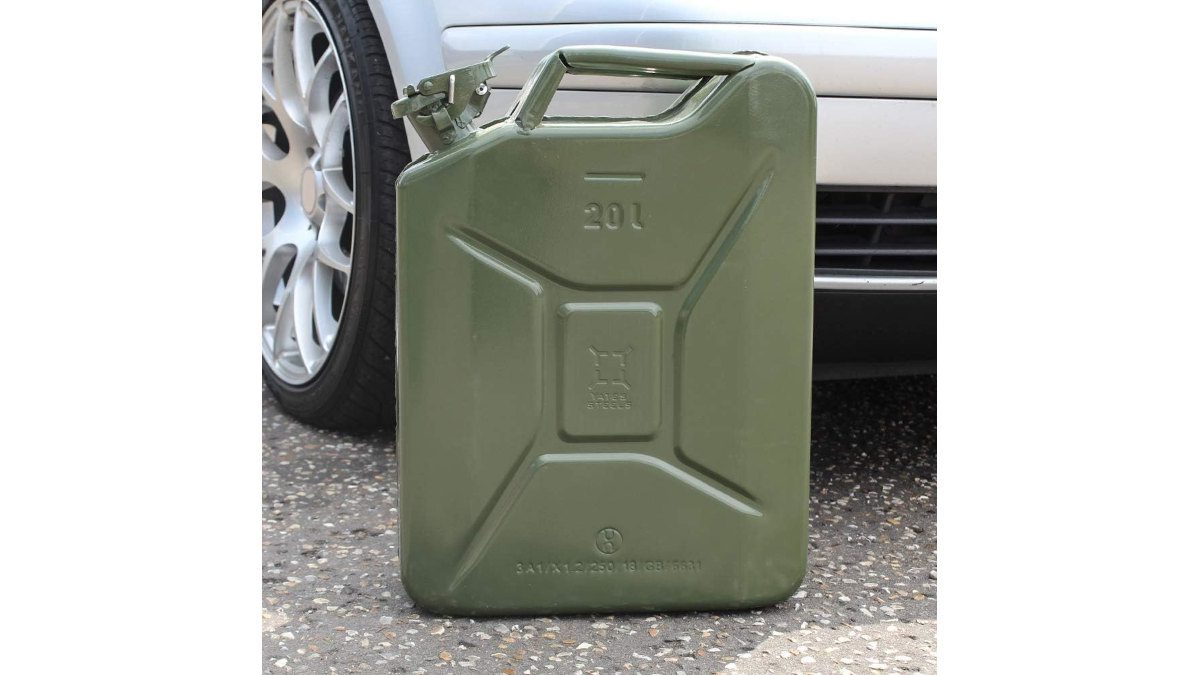
One more rule from the forecourt: HSE says containers must be placed on the ground when you fill them. Not in the boot, not on the back seat, not held in your hand while you chat.

🦆 Keith
Don’t Be Keith
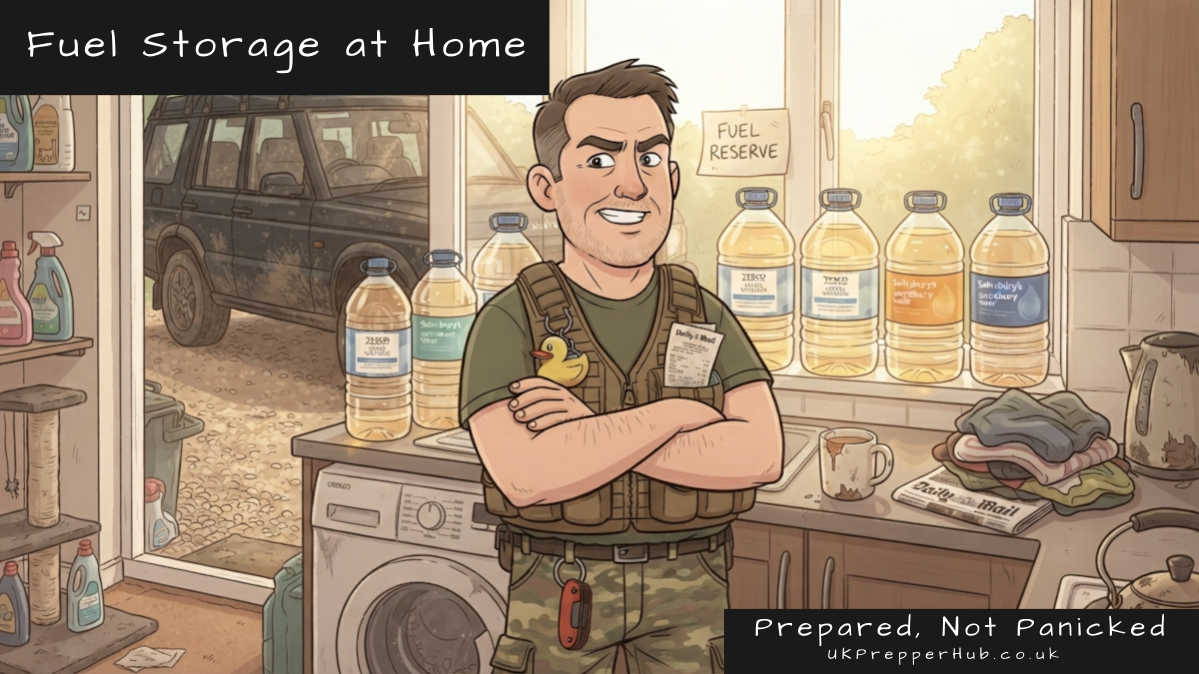
Keith heard the word “rationing” on the radio, drove his Land Rover Discovery to the services and filled six old five litre water bottles with petrol, then lined them up on the utility room windowsill “where he can keep an eye on them”. Wrong containers, wrong quantity, inside the house, in direct sunlight. Don’t be Keith.
Where to Store Fuel at Home (and Where Not To)
With fuel storage, where you keep it matters as much as how much you keep. For petrol, the regulations and HSE’s staying safe guidance are clear:
- Never in living accommodation. Not in the house, not in a flat, not in the hallway, not under the stairs. HSE puts it plainly: do not take petrol into any house, flat, or anywhere people live.
- A garage or outbuilding is the right place, and if the storage place isn’t in the open air it needs a direct exit to the open air, with ventilation to that exit.
- No sources of ignition nearby: boilers, freezers and fridges with sparking thermostats, power tools, bench grinders, anyone’s crafty cigarette.
- Out of direct sunlight and out of reach of children.
- Integral garages with a room above have extra fire-resistance requirements for the ceiling under the 2014 regulations. HSE’s page explains how older garages that met the previous rules are treated.
If you live in a flat with no garage or shed, the honest answer is that you have nowhere legal to keep petrol. Your fuel reserve is your car’s tank, and that’s fine.
The same fuel storage principles are sensible for diesel and paraffin too, even though the petrol regulations don’t cover them: a cool, ventilated outbuilding, away from heat and anything that sparks, on a hard surface where a spill can’t soak into the ground or run into a drain.
How Long Does Petrol Last in a Can?
Not as long as most people assume. According to the RAC, petrol in a sealed container lasts about six months at 20°C, and only about three months at 30°C. The warmer it’s kept, the faster it goes off. A can that isn’t tightly sealed loses quality even faster as the lighter parts of the fuel evaporate, and those escaping vapours add to the fire risk.
Standard unleaded in the UK has been E10 since 2021, so the petrol you’re storing has ethanol in it. Treat six months as a ceiling, not a target.
The practical answer is rotation:
- Write the fill date on the can with a marker pen.
- Every three months or so, tip it into the car and refill the can with fresh fuel.
- If you need it to last longer, a fuel stabiliser added at the time of filling slows the deterioration. Follow the dose on the bottle.
Stale petrol won’t necessarily stop an engine, but it’s the classic reason a generator that’s sat in the shed for a year refuses to start on the one night you need it.
Storing Diesel at Home
Storing diesel at home is a different picture to petrol. As the RAC sets out, there’s no specific legal limit on how much diesel you can keep at home. The petrol regulations simply don’t apply to it. Diesel is also much harder to ignite than petrol, which is why it’s the fuel people tend to prefer for storage.
That doesn’t make diesel fuel storage harmless. Diesel still burns, and a spill is a pollution problem: it soaks into soil, gets into drains and watercourses, and is expensive to clean up. Large fixed tanks, the kind farms and heating oil customers have, come with their own oil storage rules. For household quantities in cans:
- Use containers made for fuel, and label them clearly as diesel. A splash of diesel in a petrol mower, or petrol in a diesel engine, is an expensive mistake.
- Keep them in a cool, ventilated outbuilding, away from ignition sources.
- Stand them on a drip tray or a hard surface, never bare soil, and well away from drains.
- Keep caps tight. Water getting in is diesel’s main enemy.
How Long Can Diesel Be Stored?
The RAC puts diesel’s usable life at between six and 12 months before it starts to go “gummy”, so in a jerry can it lasts roughly twice as long as petrol. Cool, dark, sealed and full is the best-case storage. A half-empty can has more air and more room for condensation.
The same rotation habit applies: date the can, use it in the vehicle within the year, refill. A diesel stabiliser can extend the life if you genuinely need fuel to sit longer, and it’s cheap insurance for a standby generator.
Camping Gas Canisters and LPG Bottles
Gas is the fuel storage most households already have without thinking about it, whether it’s camping stove canisters, a barbecue bottle, or a patio heater. LPG behaves differently to liquid fuels in one important way: it’s heavier than air, so a leak sinks and pools at the lowest point instead of drifting away. Calor’s storage guidance sets out the rules:
- Always upright, both in storage and in use. Never lying down.
- Outside, in a well-ventilated place, away from doors, other ways in and out, and drains.
- Never below ground level. No cellars, basements, or pits, because leaking gas collects there.
- Away from heat and ignition sources.
- Butane indoors is limited: Calor’s guidance allows up to 30kg (two 15kg bottles) indoors in a home, for example for a portable gas heater. Propane should always be stored outdoors.
- Not in high-rise flats, where bottled gas is commonly prohibited.
The same logic applies to small camping canisters: upright, somewhere cool, never left in a hot car, and never punctured or burnt when empty. Take empties to a recycling point that accepts them.
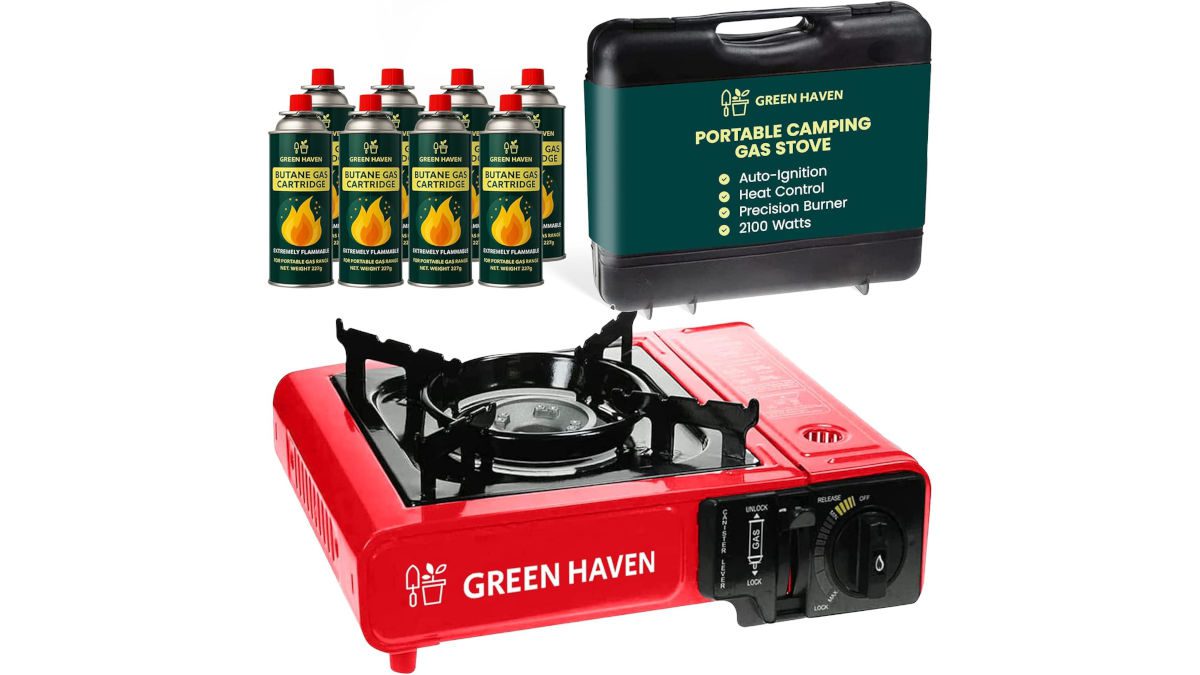
Portable Gas Stove with Carry Case & 8 Butane Cartridges
Boils the kettle and cooks a proper meal on top of your hob when the power goes, with no electricity at all.
Paraffin
Paraffin (kerosene) is used in some heaters and lamps. It isn’t covered by the petrol storage regulations, but the same fuel storage principles apply. Use a container sold for paraffin and label it clearly. Store it in a cool outbuilding away from heat, out of sunlight and out of reach of children. Only ever use paraffin heaters in a ventilated room, with a working carbon monoxide alarm nearby.
A Sensible Fuel Storage Plan for a UK Household
Put together, a realistic plan for fuel storage at home looks like this:
- Keep the car above half a tank at all times. This is your main fuel reserve and it costs nothing extra.
- If you have a petrol generator or garden kit, keep up to 30 litres of petrol in certified containers, in a garage or shed with a direct exit to fresh air.
- Date every can, and rotate petrol every three months, diesel within the year.
- Keep gas bottles upright, outside, and never below ground.
- Keep fuel well away from boilers, freezers, power tools and anything else that sparks.
- When the news says “shortage”, don’t join the queue with a car full of water bottles. If you’ve followed the above, you’re already sorted.
Frequently Asked Questions
Can I store petrol in my garage?
Yes, as long as the garage isn’t part of your living space and has a direct exit to the open air with ventilation. Keep it away from boilers, freezers and anything that sparks, and out of direct sunlight. Integral garages with a room above have extra ceiling fire-resistance requirements.
Do I need a licence to store petrol at home?
Not for up to 30 litres. Between 30 and 275 litres you must notify your local Petroleum Enforcement Authority in writing. Above 275 litres you need a licence.
Is there a legal limit on storing diesel at home?
There’s no specific legal limit on diesel in cans at home, as the petrol regulations don’t cover it. It should still be stored in proper fuel containers, in a ventilated outbuilding, on a hard surface away from drains.
Can I store petrol in a plastic container?
Yes, if it’s a proper petrol container of no more than 10 litres, marked “PETROL” and “HIGHLY FLAMMABLE”. Metal containers can hold up to 20 litres.
Can I keep a gas bottle indoors?
Calor’s guidance allows up to 30kg of butane (two 15kg bottles) indoors in a home, for example for a portable heater. Propane should always be stored outside. Never store any gas bottle below ground level, because LPG is heavier than air and pools if it leaks.
Build Your Resilience
Further Reading: Related Guides
- Winter Driving Tips
- The Two-Wheeled Contingency
- Power Cut Survival Guide
- Cooking Without Power
- Heating Without Electricity
All our guides can be found listed on our resilience hub.
Gear We've Tested & Reviewed
- Faithfull 20 Litre Metal Jerry Can
- FireAngel Combination Smoke and Carbon Monoxide Alarm
- Camping Gas Stove
All our reviews can be found on our reviews and resources page.