
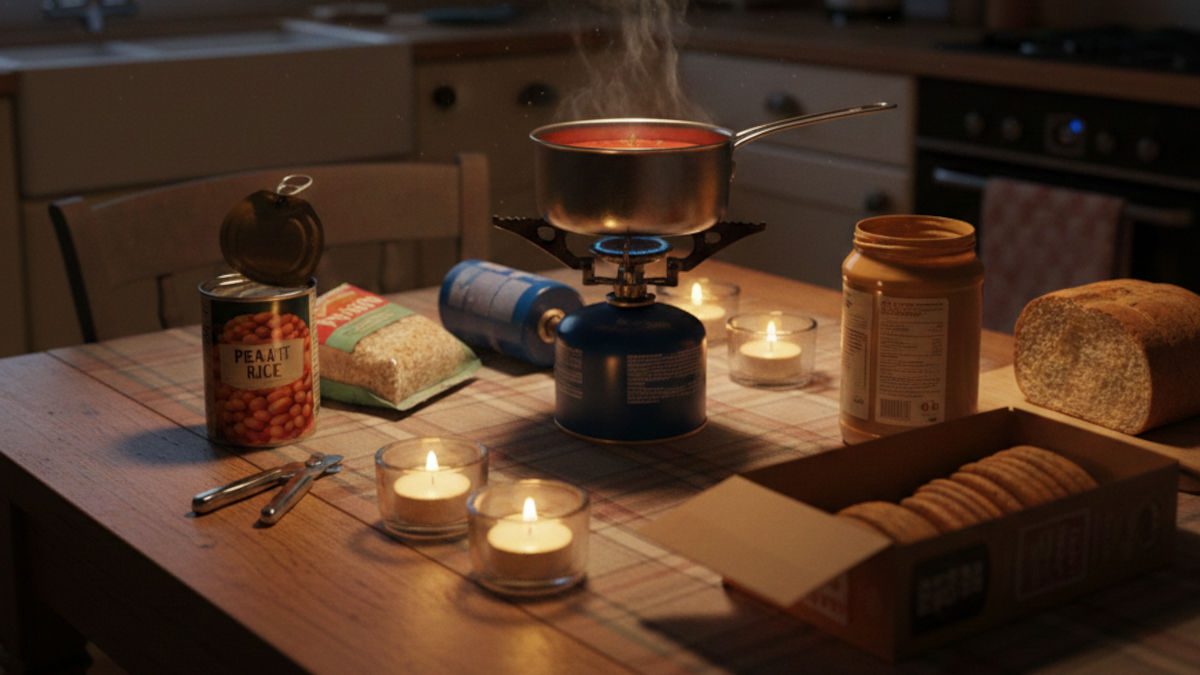
Emergency meal planning is essential before a power cut. A power cut lasting more than a day changes your relationship with food fast. The fridge becomes a countdown clock. The freezer buys you 24–48 hours if you keep the door shut. After that, you’re entirely dependent on what’s in your cupboards — and whether you’ve got a way to heat it.
This guide gives you a complete 7-day emergency meal plan built around foods you can already buy at any UK supermarket: tinned soups, stews, beans, tinned veg, tinned potatoes, and pre-cooked rice and grain pouches. No specialist survival food. No expensive freeze-dried rations. Just practical, affordable meals that work when the power’s gone.
If you haven’t already built your emergency pantry, start with our 3-Day Emergency Pantry guide — it covers exactly what to buy and how to store it. This guide picks up from there and extends your planning to a full week.
Complete Guide
3-Day Emergency Pantry
The low-barrier start: A shopping list of shelf-stable meals that require zero refrigeration.
This page isn’t so much of a “menu sheet”, think of it as a primer to give you ideas on what to eat and how to cook it to reduce your water and fuel requirements.
The Core Principles of No-Power Cooking
Before diving into the menus, it’s worth understanding the constraints you’re working within. Emergency cooking isn’t just about having food — it’s about managing fuel, water, and safety at the same time.
Fuel is finite. Whether you’re using a camping gas stove, a disposable butane burner, or a Kelly kettle, your heat source has limits. The plan below is designed to minimise cooking time: mostly heating rather than cooking, using pre-cooked pouches and tinned foods that just need warming through.
Water is precious. Boiling pasta or dried rice uses significant water and fuel. Pre-cooked rice pouches (Tilda, Uncle Ben’s, Merchant Gourmet) can be eaten at room temperature or warmed in the tin for a few minutes — no boiling water required. Tinned potatoes, tinned pulses, and tinned veg are already cooked. You’re reheating, not cooking from scratch.
Complete Guide
Emergency Water Storage
How much to store, how to store it in small spaces, and the reality of UK water rotation.
One-pot is your friend. Every extra pan is more washing up requiring more water. Aim for one vessel per meal wherever possible.
Cold meals are fine. Not every meal needs to be hot. Tinned sardines on crackers, a spoonful of peanut butter, a handful of nuts — these are valid emergency meals. Save your fuel for the meals that genuinely benefit from heat.
What You Need to Cook Without Power
This entire plan assumes you have a portable gas camping stove or similar heat source. Without one, you’re limited to cold food only — workable for a few days but not sustainable for a week, especially in cold weather.
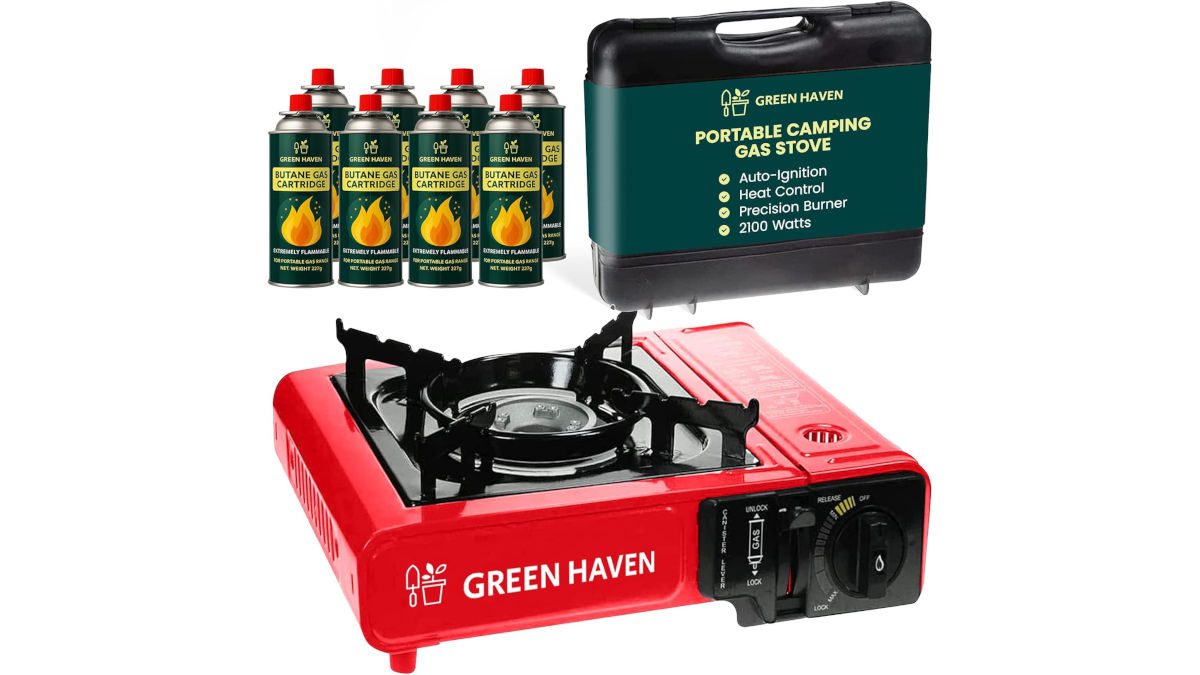
A single-burner camping gas stove is one of the most important pieces of kit any UK household can own. Our portable camping gas stove review covers what to look for, and which model we suggest as it works best for home emergency use, and how many gas canisters to stock. If you don’t have one yet, it’s the single most impactful purchase you can make for food resilience.
Portable Gas Stove with Carry Case & 8 Butane Cartridges
Boils the kettle and cooks a proper meal on top of your hob when the power goes, with no electricity at all.
For safety, always use your stove in a ventilated space — a doorway, an open window, or outside. Also consider a battery operated Carbon Monoxide Alarm. Never use a gas stove in an enclosed room. Carbon monoxide is invisible and odourless. See our Cooking Without Electricity guide for full ventilation and safety guidance.
FireAngel Combination Smoke and Carbon Monoxide Alarm
One sealed unit covering smoke and CO detection — with a 10-year battery that keeps it running during a power cut, when emergency stoves and heaters are out and a mains-wired alarm would already have gone dark.
Our Full Review: FireAngel Combination Smoke and Carbon Monoxide Alarm →
Building Your 7-Day Food Store
The menus below are built around a core shopping list. Most of this can be bought in a single supermarket run and stored without refrigeration. Aim to rotate stock regularly — eat from your emergency supply and replace as you go, rather than letting it sit untouched for years.

🤡 Camping Clown
He Has The £4,000 Version
Spends £400 on special “prepper” freeze-dried meals expiring in 2028, has never tasted one, while £40 of long-life staples from the supermarket would serve the family for two weeks
For a household of two adults, stock roughly:
- 14 tins of soup (variety: tomato, lentil, minestrone, chunky vegetable, chicken)
- 7 tins of stewed steak, casserole, or pulled pork
- 7 tins of baked beans or mixed beans
- 7 pre-cooked rice or grain pouches (Tilda, Uncle Ben’s, Merchant Gourmet quinoa/lentil)
- 4–6 tins of tinned potatoes
- 6–8 tins of tinned veg (sweetcorn, peas, carrots, tomatoes)
- 2–3 tins of tinned fish (sardines, mackerel, tuna)
- 1–2 jars of pasta sauce or curry sauce
- Crackers, oatcakes, or crispbreads (several packs)
- Peanut butter (2 jars)
- Porridge oats (rolled, not instant — cook in less water)
- UHT milk or oat milk (6–8 cartons)
- Instant coffee or tea bags
- Sugar and salt
- A small bottle of cooking oil
This shopping list costs roughly £40–60 for two people at standard UK supermarket prices. Spread across seven days, that’s less than £5 per person per day — cheaper than a normal weekly shop.
Our Long-Term Food Storage guide covers how to store this properly — damp, temperature, rotation schedules, and container choices — especially important if you’re keeping stocks in a garage, shed, or cold spare room.
Complete Guide
Long-term food storage
Most households have a few days of food at best, but real disruptions in the UK can last far longer and quickly expose that gap. This guide shows you how to build a practical, affordable food reserve that actually works in the real world—not just on paper.
Read the Full Guide: Long-term food storage →
The 7-Day No-Power Menu
Each day includes three meals and a snack. Fuel use is noted where relevant. Cold options are included wherever the meal works without heat — these save gas for mornings and evenings when warm food matters most.
Day 1
Breakfast: Porridge made with UHT milk on the camp stove. Add sugar, dried fruit, or peanut butter. Takes about 5 minutes. One small gas canister will last well beyond a single breakfast — this is an efficient use of fuel.
Lunch: Tinned soup (tomato or lentil) heated through, served with crackers or oatcakes. No bread needed. Takes under 5 minutes.
Dinner: Tinned stewed steak with tinned potatoes and tinned peas, all heated in one pan. Stir together, season with salt and pepper. Filling, high-calorie, no prep beyond opening tins.
Snack: Peanut butter on crackers.
Day 2
Breakfast: Overnight oats (no cooking required). Combine porridge oats and UHT milk in a container the night before. By morning they’re soft and ready to eat cold. Add peanut butter or a tin of fruit.
Lunch: Tinned sardines or mackerel on crackers with tinned sweetcorn on the side. Cold meal — no fuel used.
Dinner: Baked beans with a pre-cooked rice pouch. Heat the beans, stir the rice through at the end — it warms from the residual heat. One pan, two minutes of gas. If you have an egg left (eat refrigerated items first in any outage), scramble it in the same pan before adding beans.
Snack: Handful of nuts or dried fruit.
Day 3
Breakfast: Porridge with UHT milk and peanut butter.
Lunch: Chunky vegetable or minestrone soup, heated and served with crackers. Cold soup is also acceptable if fuel is running low — many tinned soups work at room temperature.
Dinner: Tinned curry or casserole over a pre-cooked rice pouch. Many supermarkets stock tinned curry (Princes, Stagg, own-brand). Heat in the tin’s liquid, serve over rice. Add tinned chickpeas or kidney beans to bulk it out and add protein.
Snack: Peanut butter on crackers or oatcakes.
Day 4
Breakfast: Overnight oats (prepared night before, eaten cold).
Lunch: Tinned tuna stirred into a pouch of pre-cooked quinoa or lentils (Merchant Gourmet do good ones). Season with salt. Cold meal, no fuel. Surprisingly filling and nutritious.
Dinner: Tinned tomatoes with tinned white beans, heated together with a splash of oil and salt. Serve with crackers or crushed oatcakes. Rustic but genuinely satisfying — a basic Italian-style bean stew.
Snack: Nuts, dried fruit, or a small tin of fruit in juice.
Day 5
Breakfast: Porridge with UHT milk.
Lunch: Lentil or chicken soup, heated. Serve with crackers. Simple, warming, fuel-efficient.
Dinner: Tinned pulled pork or corned beef with tinned potatoes and tinned carrots. Heat everything together in one pan, season well. This is a proper filling meal — high calorie, which matters if you’re in a cold environment or have been physically active.
Snack: Peanut butter on crackers.
Day 6
Breakfast: Overnight oats, cold.
Lunch: Cold meal: crackers, peanut butter, tinned fruit, and any remaining nuts or dried snacks. Day 6 is a good point to have a lower-fuel day — save gas for the evening.
Dinner: Tinned stewed steak or casserole with a pre-cooked rice pouch and tinned sweetcorn. One pan, all heated together. Season with salt, pepper, or a dash of Worcestershire sauce (store a small bottle — it keeps for years and transforms tinned meat).
Snack: Small tin of fruit in juice.
Day 7
Breakfast: Porridge with UHT milk and peanut butter. At this point you’re probably hoping power returns today — but you’ve got what you need to continue if not.
Lunch: Tinned mixed bean soup or chunky vegetable soup, heated. With crackers.
Dinner: A slightly more varied meal to mark the week: tinned curry or pasta sauce heated and poured over a rice or grain pouch, with tinned veg stirred through. If you’ve still got any condiments, hot sauce, or dried herbs, use them here — morale matters on Day 7.
Snack: Whatever’s left — peanut butter, crackers, tinned fruit.
Managing Water Alongside Food
Every meal above uses some water — for drinking, for minimal cooking, and for basic hygiene. If your tap water supply is also interrupted (which can happen alongside power cuts, particularly in rural areas or during freeze events), your drinking water store becomes critical.
The rule of thumb is 2 litres per person per day for drinking alone, plus extra for food preparation and washing up. A seven-day store for two adults means at least 28 litres of drinking water, plus a reserve for hygiene.
Our Emergency Water Storage guide covers containers, rotation, and sourcing. Our Water Purification and Safety guide covers what to do if your stored supply runs low and you need to treat tap or collected water.
Complete Guide
Water Purification & Safety
When the taps run dry—whether from burst mains, contamination alerts, or prolonged power cuts—knowing how to make water safe becomes critical. But here’s what most survival guides won’t tell you straight
Read the Full Guide: Water Purification & Safety →
Complete Guide
Emergency Water Storage
How much to store, how to store it in small spaces, and the reality of UK water rotation.
Pre-cooked pouches and tinned foods are deliberately chosen throughout this plan because they require minimal water. Compare that to cooking dried pasta (significant boiling water, then discard) or dried rice (two parts water per part rice, plus cooking time). Every gram of water saved is meaningful when supply is uncertain.
Nutrition Over Seven Days
This isn’t a plan optimised for nutritional perfection — it’s optimised for reality. That said, the menus above are reasonably balanced across the week:
Protein comes from tinned meat and fish, baked beans, pulses, eggs used early, peanut butter, and grain pouches. You won’t be protein-deficient across seven days on this plan.
Carbohydrates — energy — come from rice pouches, oats, crackers, tinned potatoes, and beans. Emergency situations often mean physical activity (moving sandbags, carrying water, managing children without screens) so energy intake matters.
Fat comes from peanut butter, tinned fish, cooking oil, and nuts. Fat is calorie-dense and important for maintaining body temperature in cold conditions — relevant in a UK winter power cut.
Vegetables and fibre are covered by tinned tomatoes, tinned peas, carrots, sweetcorn, and the bean-heavy days. It’s not a five-a-day situation but it’s far from deficient.
Vitamins decline over a week on tinned food, but not to dangerous levels in the short term. If you have vitamin supplements in your household, a seven-day outage is the time to use them.
People with specific dietary requirements — coeliac, diabetes, renal diet, severe allergies — need to adapt this plan accordingly. See our Managing Essential Medication guide for guidance on health conditions during emergencies.
Complete Guide
Managing Essential Medication
This guide covers more detail on being prepared with essential medication for all emergency situations.
Children and Fussy Eaters
Emergency food planning with children requires some thought. Beans on rice may be refused by a six-year-old who’s already upset about the power being out. A few specific tips:
Keep a small stash of foods your children will definitely eat: pasta shapes in sauce (Heinz Kids, own-brand), tinned spaghetti hoops, tinned fruit, breakfast cereals that can be eaten with UHT milk, cereal bars. These aren’t the most nutritious options but they matter enormously for managing stress and maintaining a degree of normality.
Involve children in “camping meals” framing where possible. Eating by torchlight from a camping mug can be an adventure at age seven if you frame it right. That psychological framing won’t work with every child or every situation, but it’s worth attempting.
For infants on formula, never assume UHT milk substitutes — stock your usual formula brand and rotate it into your emergency supply. Water safety for formula preparation is covered in our Emergency Water Storage guide.
Complete Guide
Emergency Water Storage
How much to store, how to store it in small spaces, and the reality of UK water rotation.
Morale and Variety
A week of identical tinned food in cold, dark conditions is genuinely hard. A few additions that cost almost nothing but make a significant difference:
Condiments: Worcestershire sauce, soy sauce, hot sauce, salt, pepper, dried herbs. These transform tinned stew from functional into something approaching pleasant. Store a small collection alongside your emergency food.
Drinks: Tea and coffee matter enormously to most UK adults under stress. Make sure your camp stove can boil water for a brew — this may be the single most important morale factor in a UK power cut. UHT milk keeps without refrigeration. Include instant coffee, teabags, and enough sugar.
Sweet items: A bar of chocolate, tinned rice pudding, tinned custard, biscuits. Not essential. Absolutely worth having. Food provides calories and warmth; it also provides comfort.
Treats for children: Keep a small sealed supply of familiar treats — cereal bars, squash (no water needed if you have bottled), a packet of favourite biscuits. These are disproportionately effective for maintaining calm.
When Power Returns
When electricity comes back, don’t immediately assume everything in the fridge and freezer is safe. The NHS food safety guidance on power cuts recommends:
Fridge food is generally safe if the power was out for fewer than four hours and the door was kept closed. Freezer food remains safe for 24–48 hours in a full freezer (half-full: 24 hours) if the door wasn’t opened. When in doubt, use your nose — but note that some bacterial contamination has no smell. If it’s been out a long time and you’re unsure, throw it out. Food poisoning on top of an emergency situation is the last thing you need.
Restock your emergency supply as soon as possible after the event. It’s tempting to treat it as a one-time thing, but the weather patterns, infrastructure pressures, and industrial situations affecting the UK in recent years suggest another extended outage is a case of when, not if.
Action Checklists
✅ Before an Emergency: Preparation
- Buy and store the 7-day food list above (one supermarket run, roughly £40–60 for two adults)
- Check you have a working portable gas stove with at least 2–3 gas canisters in reserve
- Store a manual tin opener — electric ones are useless without power
- Add condiments: salt, pepper, Worcestershire sauce, dried herbs, hot sauce
- Stock UHT milk, teabags, instant coffee, and sugar
- Store 2 litres of water per person per day minimum (see Emergency Water Storage guide)
- Include child-friendly foods and treats if relevant to your household
- Check dietary requirements: diabetes, coeliac, allergies — adapt the plan accordingly
✅ During a Power Cut: Daily Food Routine
- Eat refrigerated food first (first 4–12 hours), then frozen (up to 24–48 hours), then tinned
- Plan each day’s meals in advance to manage gas use efficiently
- Default to cold meals for lunch where possible — save gas for hot breakfast and dinner
- Keep the stove outside or in a well-ventilated doorway — never indoors unventilated
- One-pot meals only: fewer pans, less washing up, less water
- Monitor water supply: 2 litres per person per day minimum for drinking alone
- Maintain morale: hot drinks, treats, variety where possible
✅ After the Emergency: Restocking
- Check fridge and freezer contents against NHS food safety guidance before eating
- When in doubt about food safety, discard — don’t risk food poisoning
- Replace all emergency food stores used within 2–4 weeks
- Note what worked and what didn’t — update your plan accordingly
- Check gas canister levels and replace if low
- Review your water storage — refill and rotate
Build Your Resilience
Further Reading: Related Guides
- 3-Day Emergency Pantry
- Long-Term Food Storage
- Cooking Without Power
- Emergency Water Storage
- How to Prepare for a Power Cut
- Managing Essential Medication
- Emergency Preparedness with a Baby
All our guides can be found listed on our resilience hub.
Gear We’ve Tested & Reviewed
All our reviews can be found on our reviews and resources page.