
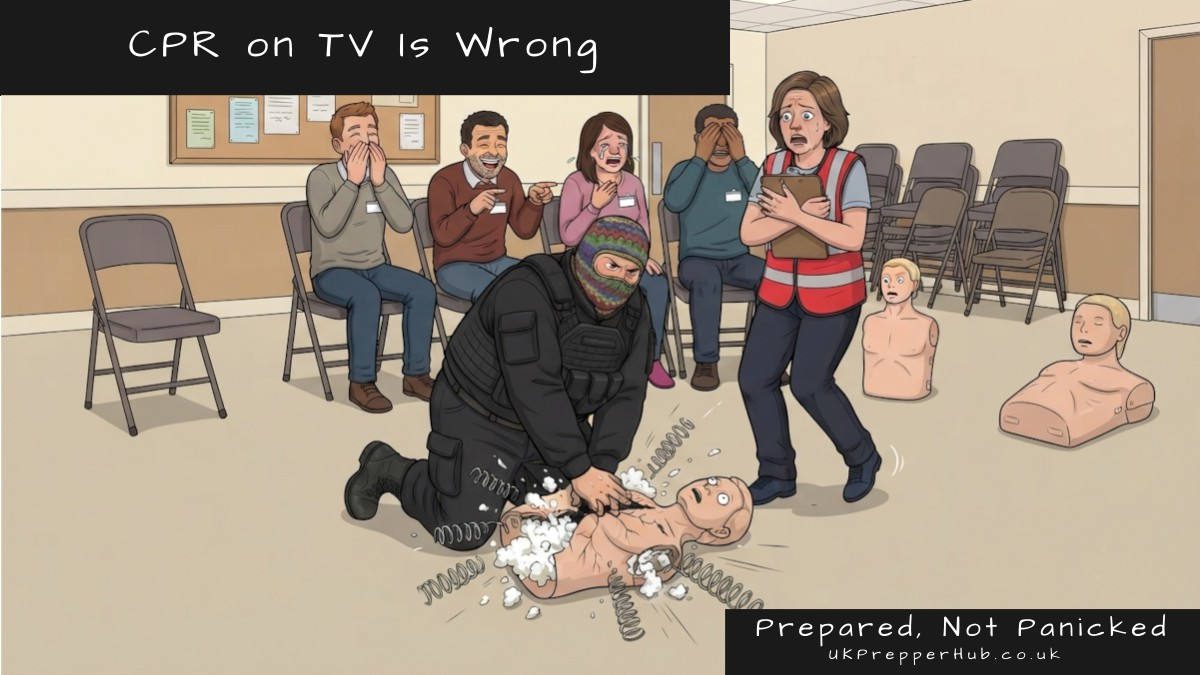
Every time a character collapses on Casualty, EastEnders, or Grey’s Anatomy, someone rushes in and delivers a few gentle chest presses. The patient gasps back to life. The scene moves on in under a minute.
This is fiction. And the gap between what television shows about CPR and what it actually involves may be more dangerous than most people realise.
What TV Gets Wrong About CPR
Medical professionals who watch fictional CPR on screen tend to wince — and for good reason. The most consistent complaints:
- The compressions look nothing like the real thing. Effective chest compressions require significant force. Television shows gentle, rhythmic pushes that would barely pump a beach ball, let alone a human heart. The physical reality is considerably more confronting than any drama has ever depicted.
- The rescuer never gets tired. Real CPR is physically exhausting. A bystander with no training is likely to fatigue significantly within minutes, reducing the effectiveness of compressions at exactly the moment they matter most.
- It almost always works on screen. Survival rates in fictional medical dramas are dramatically inflated compared to real-world outcomes. Research comparing shows like Baywatch, ER, and Chicago Hope to actual resuscitation data found the on-screen success rates were, in the words of one study, astronomical compared to reality. British shows fared somewhat better — but still showed survival rates well above what happens in practice.
Speaking from experience: I spent years working in Leisure Centres where annual CPR recertification was mandatory — adult, junior, and infant techniques, each a separate course, because each is meaningfully different. Even training on a mannequin has a physical cost. Add Pool Lifeguard Bronze Medallion CPR and First Aid at Work CPR on top of that, and I was about as well-drilled as a civilian gets. I still found sustained compressions genuinely hard to maintain.
When I performed CPR for real — in the days before ambulances routinely carried AEDs — the paramedics who arrived made no rush to take over. They let me continue while they prepared. They knew exactly what they’d be taking on.
🐔 Chicken Licken
Did You Know?
CPR survival rates in real life are far lower than TV suggests — and most people have no idea
The Dangerous Result: False Confidence and Paralysis
Here is where the fiction starts to cost lives. A survey by the American Heart Association found that the majority of people understood that CPR should be started immediately — but only 25% said they would actually attempt it. More than half cited uncertainty about whether they were doing it correctly as a major barrier.
Television creates two problems at once: it gives some people misplaced confidence that they already know what to do, and it leaves others so aware of the gap that they freeze entirely. Neither response helps the person on the floor.
The Conversation Most Families Aren’t Having
There is a second reason understanding CPR reality matters: end-of-life decisions.
Most people assume resuscitation looks like the television version — a brief, dignified intervention that either works or doesn’t. Knowing what it actually involves is relevant context when families are asked about Do Not Resuscitate orders for elderly relatives or loved ones with serious illness. It is a conversation worth having before the moment arrives, not during it.
Public AEDs: The Device Most People Walk Past Every Day
Automated External Defibrillators — AEDs — are installed in shopping centres, train stations, gyms, community centres, and public buildings across the UK. Most people have never noticed them.
They are designed specifically for untrained bystanders. When switched on, they talk you through everything step by step. They will not deliver a shock unless one is needed. Knowing they exist — and knowing to look for one — is arguably more useful preparation than anything television has ever shown about resuscitation.
You can find your nearest registered AED at defibfinder.uk.
What To Actually Do About It
This article does not teach CPR — and it shouldn’t. The right place to learn is from qualified instructors who can watch your technique, correct your form, and give you the hands-on practice that makes the difference under pressure.
Both St John Ambulance and the British Red Cross run first aid courses across the UK, including CPR-specific sessions. Many are free or low cost. Some are available online as an introduction, though nothing replaces hands-on training with a mannequin.
If you want a comprehensive reference to sit alongside your training — covering the full range of emergencies you might actually face at home — the First Aid Manual is the standard UK household resource.
First Aid Manual 11th Edition
The updated 11th Edition covers first aid in pandemic conditions, what to do in a terrorist incident, and delivering first aid for patients in a mental health crisis.
Our Full Review: First Aid Manual 11th Edition →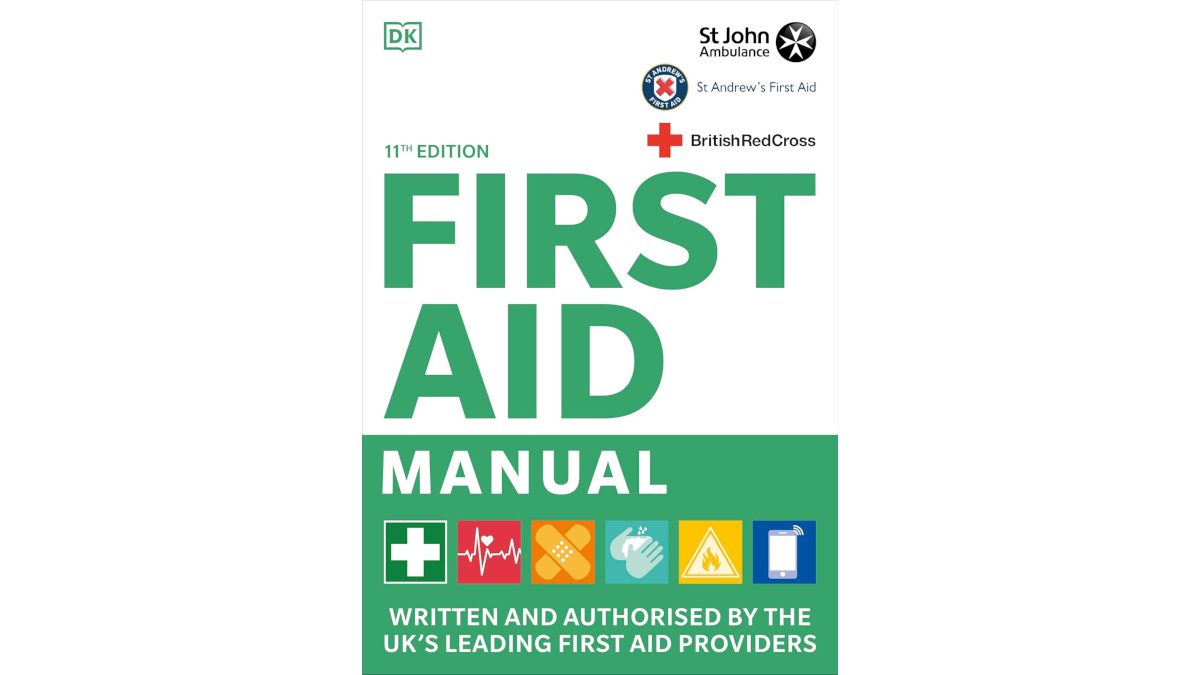
Build Your Resilience
Further Reading: Related Guides
All our guides can be found listed on our resilience hub.
Gear We've Tested & Reviewed
- First Aid Manual 11th Edition: The Book That Belongs in Every UK Home
- General Medi First Aid Kit Review: 309 Pieces, ISO Certified, Actually Complete
All our reviews can be found on our reviews and resources page.
📲 Stay Informed — Free Daily UK Household Briefing
Every day we publish a free briefing covering fuel prices, energy costs, food supply, infrastructure, and anything else that affects UK households. No fluff. No politics. Just the practical stuff.
Your number stays private. WhatsApp and Telegram channels are broadcast-only. You receive updates — nobody, including us, can see your number, and other subscribers cannot contact you.
Free. No commitment. Unsubscribe any time. Stay anonymous.
📡 Find Us Everywhere
Daily briefings, prep guides, and real-time updates across every platform. Pick yours.
Free. No commitment. Stay anonymous on WhatsApp & Telegram.
Stay Informed on UK Preparedness
Join our newsletter for UK-specific preparedness tips, product recommendations, and real-world advice for households.
Subscribe to Our Newsletter