
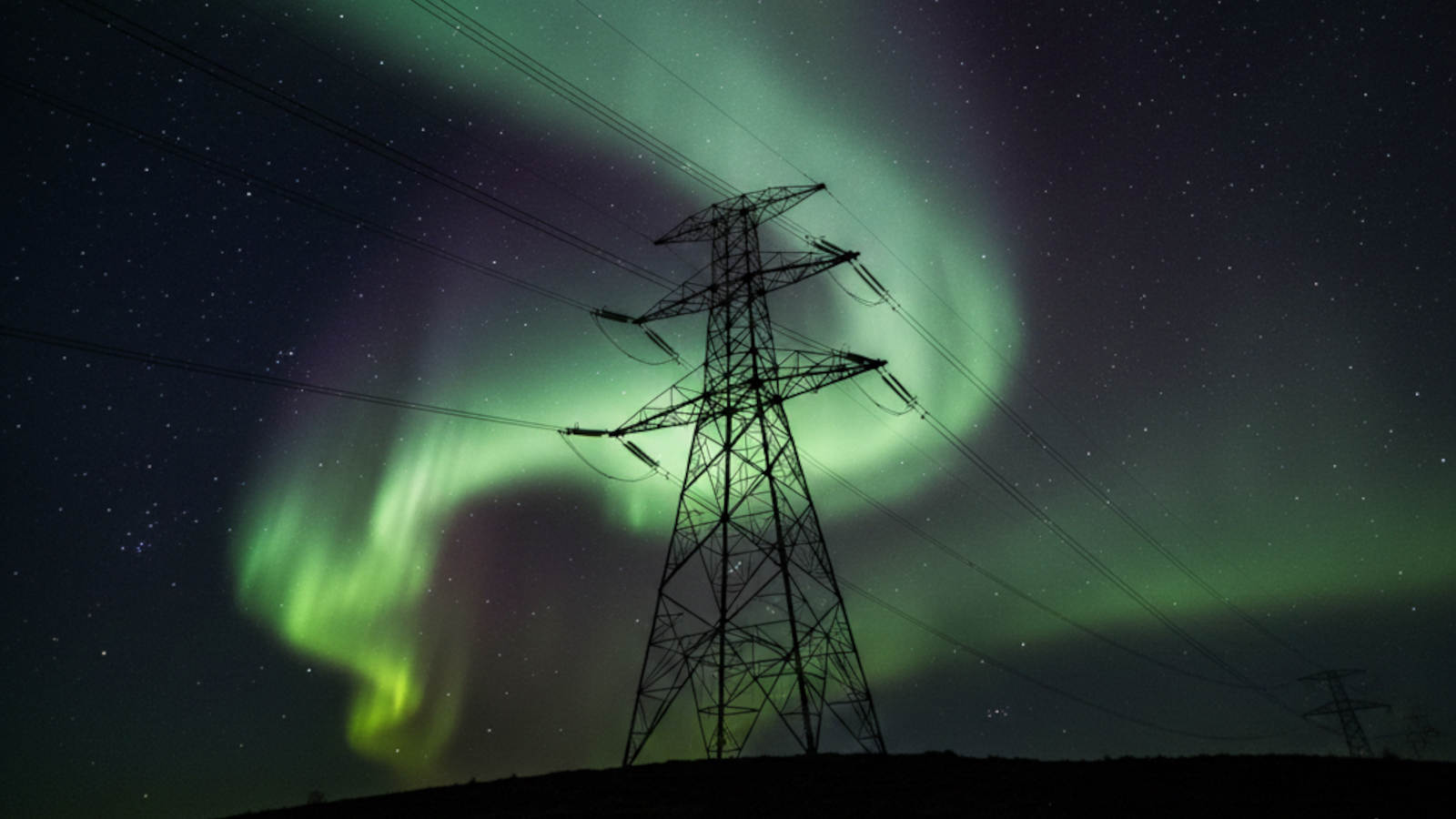
If you’ve been scrolling through social media lately, you’ve probably seen them: vibrant curtains of green, pink, and purple light dancing across British skies. The Northern Lights—once the exclusive domain of Iceland and northern Scotland—have been putting on regular performances as far south as Cornwall. What was once a once-in-a-lifetime event for most of us has become almost routine in January 2026.
But here’s the thing: whilst everyone’s reaching for their phones to capture the spectacle, there’s a far more important conversation happening in the background. These beautiful displays are symptoms of something much bigger. Solar activity is ramping up, and whilst the aurora borealis makes for stunning photographs, the same forces creating them pose genuine risks to the infrastructure we depend on every single day.
Let’s dig into what’s actually happening, why we’re seeing the Northern Lights so frequently, and what it means beyond the pretty colours in the sky.
Table of Contents
What Exactly Are the Northern Lights?
The Northern Lights—officially known as Aurora Borealis—are nature’s light show, created when charged particles from the sun collide with gases in Earth’s atmosphere. When these solar particles slam into oxygen and nitrogen molecules roughly 100 to 300 kilometres above our heads, they release energy in the form of light. Oxygen creates those signature green hues (and occasionally red at higher altitudes), whilst nitrogen produces blue and purple tones.
The key player here is our planet’s magnetic field. Earth essentially acts like a giant bar magnet, with field lines looping from the North Pole to the South Pole. When solar particles reach us—travelling at speeds up to several million miles per hour—they’re channelled by this magnetic field towards the polar regions. That’s why auroras are typically confined to high latitudes, creating the “auroral oval” that sits between roughly 60 and 75 degrees north.
Under normal circumstances, if you want to see the Northern Lights, you head to places like northern Scotland, Iceland, or Scandinavia. But 2024 and 2025 haven’t been normal circumstances.
Why Are We Seeing Them So Much More Often?
The sun isn’t a constant, unchanging ball of fire. It goes through an 11-year cycle of activity, swinging from quiet periods (solar minimum) to highly active phases (solar maximum). We’re currently in Solar Cycle 25, and contrary to initial predictions that it would be relatively weak, it’s turned out to be significantly more active than expected.
When scientists first forecast Solar Cycle 25 back in 2019, they predicted it would peak around July 2025 with approximately 115 sunspots. However, by late 2023, it became clear the sun had other ideas. Activity ramped up much faster than anticipated, and by October 2024, NASA and NOAA officially declared we’d reached solar maximum. The actual peak saw sunspot counts exceeding 160—well above the original forecast.
Sunspots are dark patches on the sun’s surface where intense magnetic activity occurs. Think of them as pressure points where the sun’s magnetic field becomes twisted and concentrated. These regions are prone to releasing enormous bursts of energy in the form of solar flares and coronal mass ejections (CMEs).
A solar flare is essentially a massive explosion of electromagnetic radiation—X-rays, ultraviolet light, and more—that reaches Earth in about eight minutes, travelling at the speed of light. Whilst dramatic, flares primarily affect radio communications and GPS accuracy.
The real heavyweight is the CME: a billion-tonne bubble of superheated plasma hurled into space, carrying with it a powerful magnetic field. When a CME is aimed directly at Earth, it can reach us in as little as 17 hours (though most take a few days). When it slams into our magnetosphere, it can trigger a geomagnetic storm—a major disturbance in Earth’s magnetic field.
The intensity of these storms is measured on the NOAA scale from G1 (minor) to G5 (extreme). During a strong geomagnetic storm, the auroral oval expands dramatically southward. Whilst a G1 storm might produce aurora visible in northern Scotland, a G4 or G5 event can push them as far south as the Midlands or even Cornwall.
That’s exactly what we saw in May 2024, when a G5 storm—the first of its magnitude in over two decades—lit up skies across the entire UK. Reports poured in from as far south as Lewes in East Sussex and across Wales. It wasn’t a one-off, either. Throughout late 2024 and into 2026, multiple G4 and G5 events occurred, making aurora sightings relatively common across much of Britain.
The increased frequency isn’t just chance. We’re in the sweet spot of the solar cycle where activity peaks. More sunspots mean more opportunities for powerful CMEs aimed our way. Scientists expect elevated solar activity to continue into 2025 and potentially beyond, meaning the Northern Lights could remain visible from the UK with reasonable frequency for at least another year or two.
The Southward Shift: Why London Saw the Lights
Traditionally, you’d need to be in the northern reaches of Scotland to have a realistic chance of seeing aurora from the UK. So what changed?
The answer lies in the strength of the geomagnetic storms. The intensity of a storm determines how far south the auroral oval expands. During quiet solar conditions, the oval sits comfortably around the Arctic Circle. But during a G5 storm, it can stretch down to latitudes as low as 50 degrees north—or even further.
The UK sits between roughly 50 and 59 degrees north latitude. London is at about 51.5 degrees, Manchester at 53.5, and Edinburgh at 56. During a typical G1 or G2 storm, only the Scottish Highlands might catch a faint glow on the northern horizon. But a G4 or G5 storm brings the entire country into play.
The May 2024 event was exceptional not just because of its strength, but because multiple CMEs arrived in quick succession—what’s known as a “cannibal CME.” When one CME catches up with and overtakes a slower one, they merge, creating a combined disturbance far more powerful than either would have been alone. The result? Aurora visible from Panama in Central America, with reports from as far south as Mexico and the Caribbean.
For the UK, this meant even heavily light-polluted cities like London experienced visible aurora. The light show was strong enough to overcome urban sky glow, appearing as eerie red and green tinges to the naked eye and exploding into full technicolour when photographed with long exposures.
Since then, we’ve had several more significant events. In November 2024, another G4 storm painted the skies, and in January 2026, multiple moderate-to-severe storms continued the trend. British skywatchers have been treated to more auroral displays in the past 18 months than many would have seen in a lifetime.
The 1859 Carrington Event: When the Sky Caught Fire
To understand just how powerful these solar events can be, we need to look back to 1 September 1859. That morning, British amateur astronomer Richard Carrington was observing a cluster of enormous sunspots when he witnessed something extraordinary: an intensely bright white flash erupting from the sun’s surface. He’d just observed the first recorded solar flare in history.
Within hours, telegraph systems around the world began to fail catastrophically. Operators reported receiving severe electric shocks, telegraph paper catching fire, and equipment sparking even when disconnected from batteries. Some operators discovered they could send messages without batteries at all, powered purely by the electrical currents induced in the wires by the geomagnetic storm.
That night, the entire world witnessed aurora displays unlike anything seen before or since. The lights were visible from as far south as the Caribbean, with reports from Colombia and Panama. In the Rocky Mountains of North America, the aurora was so bright it woke gold miners, who thought it was morning and began preparing breakfast. People across the northeastern United States read newspapers by auroral light alone.
The Carrington Event remains the most intense geomagnetic storm in recorded history. Ice core analysis suggests it was twice as powerful as any other solar storm in the past 500 years. The CME that caused it travelled from the sun to Earth in just 17 hours and 40 minutes—exceptionally fast even by modern standards.
Here’s the critical point: in 1859, our technology consisted primarily of telegraph wires. The global telegraph network comprised roughly 200,000 kilometres of cable. Impressive for the time, certainly, but a far cry from what we depend on today.
Modern society runs on electricity, satellites, GPS, and digital communications. We’ve built a civilisation on a foundation of technologies that are exquisitely vulnerable to geomagnetic disturbances. If a Carrington-scale event occurred today, the consequences would be orders of magnitude more severe than what Victorian telegraph operators experienced.
Real-World Impact: What Happens When the Grid Gets Hit
Let’s be clear: we’re not talking about Hollywood disaster scenarios here. This is documented, observed reality. Solar storms have caused genuine, measurable damage to infrastructure within living memory, and the risks are only increasing as our dependence on technology deepens.
Power Grids: The Transformer Problem
When a geomagnetic storm hits Earth, it doesn’t just create pretty lights. It induces powerful electrical currents in any long conductor—power lines, pipelines, railway tracks. These are called geomagnetically induced currents (GICs), and they can be devastating to electrical infrastructure.
The most vulnerable components are high-voltage transformers. These massive pieces of equipment step electricity up or down between different voltage levels, and they’re the backbone of the grid. When GICs flow through a transformer, they can saturate the magnetic core, causing it to overheat and potentially fail. Transformers aren’t like fuses you can pop down to Screwfix and replace. They’re custom-built, extraordinarily expensive, and can take months or even years to manufacture and install.
The classic example is the March 1989 geomagnetic storm that hit Quebec, Canada. In just 90 seconds, cascading failures knocked out the entire Hydro-Québec grid, leaving 6 million people without power for nine hours. The storm caused transformer damage across North America, with some effects lasting months.
The UK’s National Grid has taken steps to harden infrastructure against space weather, but we’re not immune. During the May 2024 storm, the grid experienced increased stress, though it held. The British Geological Survey recorded the largest geoelectric field since monitoring began in 2012. Had the storm been slightly more intense, or had it arrived during peak demand, the outcome could have been very different.
The 2025 National Risk Register lists severe space weather as having a 5-25% likelihood over a 10-year period, with potential impacts including power outages affecting multiple regions. Recovery from a Carrington-scale event could take years, with estimated costs ranging from hundreds of billions to several trillion pounds globally.
Satellites: Our Eyes in the Sky Go Dark
Low Earth orbit satellites—the ones providing communications, weather monitoring, GPS, and Earth observation—typically enjoy some protection from Earth’s atmosphere and magnetic field. But during a major geomagnetic storm, even they’re at risk.
Solar radiation degrades solar panels, reducing their efficiency and shortening satellite lifespans. High-energy particles can cause “single-event upsets”—essentially, cosmic rays flipping bits in computer memory, potentially causing satellites to malfunction or even fail entirely. The atmosphere expands during solar storms, increasing drag on satellites and accelerating their orbital decay.
During the May 2024 event, several satellites experienced temporary disruptions. GPS accuracy degraded significantly—enough to throw off precision agriculture equipment, grounding tractors in the middle of planting season. Commercial airlines reported navigation difficulties. Amateur radio operators found their usual frequencies jammed with solar noise.
A Carrington-scale event would be far worse. Recent simulations by the European Space Agency suggest such a storm could damage or destroy a significant portion of our satellite constellation. Communications, navigation, weather forecasting, military coordination—all could be severely compromised or entirely offline.
GPS and Navigation: When North Isn’t Where You Think
GPS works by triangulating signals from multiple satellites. The signals travel through the ionosphere—that layer of the atmosphere where solar particles interact to create aurora. During geomagnetic storms, the ionosphere becomes turbulent and unpredictable, causing signal delays, refraction, and scintillation (rapid fluctuations in signal strength).
The result? GPS can be off by metres or even tens of metres instead of the usual centimetre-level accuracy. For a hiker using their phone, that’s annoying. For aviation, maritime navigation, emergency services, or military operations, it’s potentially catastrophic.
Modern precision agriculture relies on GPS-guided equipment accurate to within centimetres. The May 2024 storm disrupted this enough that farmers couldn’t plant crops properly, resulting in an estimated $500 million impact on US agriculture alone.
Communications: Radio Goes Silent
High-frequency (HF) radio—the backbone of long-distance aviation communications, maritime safety systems, and emergency services—propagates by bouncing off the ionosphere. When a solar flare hits, it ionises the lower atmosphere, causing radio waves to be absorbed instead of reflected. The result is called a radio blackout, and it can last from minutes to hours.
During the solar storms of 2024, transatlantic flights experienced communications blackouts. Pilots had to reroute to maintain contact with air traffic control. Emergency HF frequencies used by coastal rescue services and maritime distress calls were disrupted.
For preppers and resilience planners, this matters because HF radio is often considered a robust backup when other systems fail. But during a major solar event, it’s not a backup—it’s down along with everything else.
UK-Specific Considerations: How Resilient Are We Really?
The United Kingdom occupies a middle ground in terms of solar storm vulnerability. We’re far enough north that we experience stronger geomagnetic effects than southern Europe, but we’re not as exposed as Scandinavia or Canada. Our electrical grid is modern and relatively well-maintained, with redundancy built in. But that doesn’t mean we’re immune.
The National Grid has implemented protective measures based on space weather forecasting. When NOAA or the Met Office issues warnings of elevated solar activity, grid operators can take precautionary steps: adjusting load distribution, deferring maintenance on critical equipment, and preparing for potential disruptions.
The Met Office Space Weather Operations Centre provides forecasts and warnings specifically for UK infrastructure. They monitor solar activity, CME trajectories, and real-time geomagnetic conditions. Their Space Weather forecasting helps energy companies, satellite operators, and aviation authorities prepare.
The British Geological Survey operates a network of magnetometers across the UK, continuously measuring geomagnetic field strength. This data feeds into models that predict where and how severely GICs will affect the grid. It’s not perfect—space weather forecasting is still a developing science—but it’s far better than flying blind.
Despite these efforts, we remain vulnerable. The transformers in our grid weren’t designed with Carrington-level events in mind. Our satellite-dependent systems lack sufficient redundancy. And crucially, public awareness of space weather risks remains low. Most people have never heard of GICs or understand that the Northern Lights, beautiful as they are, indicate our infrastructure is under stress.
Monitoring Solar Activity: Keeping an Eye on the Sun
If there’s a silver lining to increased solar activity, it’s that we have far better monitoring and warning systems than ever before. Multiple satellites constantly observe the sun, tracking sunspots, flares, and CMEs. When a CME launches, scientists can predict its arrival time and intensity with reasonable accuracy—usually anywhere from a few hours to a few days of advance warning.
NOAA’s Space Weather Prediction Center is the authoritative source for global space weather forecasting. They issue alerts ranging from minor geomagnetic activity to severe storm warnings. For UK audiences, the Met Office translates these into localised forecasts, including aurora visibility predictions.
Here at UK Prepper Hub, our Situation Room provides real-time monitoring of solar activity status directly from NOAA. It’s designed to give you at-a-glance awareness of space weather conditions without needing to wade through technical jargon or multiple sources.
For aurora chasers, apps like Aurora Watch UK or My Aurora Forecast provide smartphone alerts when geomagnetic activity spikes. But from a preparedness standpoint, these tools serve a more important function: they give you advance warning when conditions could stress infrastructure.
If you see a G4 or G5 warning, it’s worth taking simple precautions. Charge your devices. Top up your vehicle. Make sure your emergency power communications setup is ready to go. Check your blackout box. These aren’t dramatic bug-out measures—they’re sensible steps you’d take before any potential disruption.
The Preparedness Angle: Practical Steps Without the Drama
Let’s bring this back to earth. The vast majority of solar storms will not cause widespread power outages or knock satellites from the sky. Most pass with nothing more than spectacular aurora and perhaps minor GPS wobbles. The daily risk is low.
But the cumulative risk over time is real, and the consequences of a major event are severe enough that dismissing them entirely would be foolish. This is exactly the kind of scenario where basic preparedness makes sense: low-probability, high-impact events that require no specialist knowledge or expensive gear to mitigate.
Power Outages
If a solar storm does cause grid disruption, it’s unlikely to be a permanent apocalypse. More likely, it would manifest as rolling blackouts, localised outages, or brief interruptions whilst grid operators stabilise the system. Your power cut guide is your friend here.
The basics remain the same whether the cause is a fallen tree or a geomagnetic storm:
- Lighting that doesn’t rely on mains power
- Heating options if the outage occurs in winter
- Cooking capability without electricity
- Charged power banks for essential communications
- Battery-powered or hand-crank radio for information
None of this is exotic. It’s the same gear you’d want for a winter storm or a local transformer failure. The only difference is understanding that space weather can cause these disruptions across wider areas simultaneously.
Communications Backup
If radio communications are disrupted and mobile networks are strained, having alternatives becomes valuable. An emergency radio capable of receiving FM, AM, and ideally shortwave bands can keep you informed when digital systems falter.
Your offline communications strategy should account for scenarios where GPS is unreliable and mobile networks are congested. Simple things like knowing rally points, having physical maps, and establishing check-in times with family become more important when you can’t rely on instant digital connectivity.
Financial Resilience
If payment systems experience GPS-related disruptions (yes, even card terminals rely on satellite timing), having some cash on hand makes sense. This isn’t about hoarding gold bars in your garden shed—it’s about having £100-200 in notes tucked away so you can still buy essentials if digital payments go wonky for a day or two.
Situational Awareness
Perhaps most importantly, develop the habit of paying attention to space weather forecasts alongside regular weather. If you’re planning critical activities—a long drive, an important appointment, travel—check whether a solar storm is expected. It might not change your plans, but it makes you less vulnerable to disruption.
The Situation Room dashboard is designed exactly for this: a quick check of multiple risk factors, including solar activity, so you can make informed decisions.
Looking Forward: Living with an Active Sun
Solar Cycle 25 is expected to remain elevated into late 2025 and, as we are seeing into 2026 before gradually declining toward solar minimum. That means we’ve got at least another year, probably two, of increased solar activity and regular opportunities to see the Northern Lights from the UK.
From a pure spectacle standpoint, that’s fantastic. The aurora is genuinely beautiful, and the fact that people across Britain can now witness it regularly is a rare treat.
From a resilience standpoint, it’s a timely reminder. Our modern world runs on infrastructure that’s vulnerable to forces we can’t control. Solar storms aren’t hypothetical future risks—they’re happening now, and they will happen again. The May 2024 event was a wake-up call. The November 2024 “cannibal storm” was another. We’ve been fortunate so far, but fortune isn’t a strategy.
The good news is that preparing for space weather risks requires no special knowledge or expensive equipment. The same basic preparedness that serves you well for winter storms, power cuts, or supply chain hiccups also makes you more resilient to solar-induced disruptions.
Have backup power. Keep communications options redundant. Store some essentials. Stay informed. None of this requires a bunker or a lifetime supply of tinned beans. It just requires accepting that our infrastructure, robust as it is, isn’t invincible.
The Northern Lights will continue to dazzle us over the coming months. Enjoy them. Photograph them. Share them on social media. But also remember what they represent: a beautiful, powerful, and occasionally disruptive reminder that we live on a planet bathed in the radiation and magnetic storms of an active star.
Understanding that reality—and taking sensible steps to prepare for it—doesn’t make you paranoid. It makes you informed. And in a world increasingly dependent on fragile, interconnected systems, being informed is half the battle.
Stay prepared. Stay aware. And if you get the chance, go outside and watch the lights dance. Just make sure your grab bag is packed first.
For real-time solar activity monitoring and alerts tailored to UK resilience planning, visit the Situation Room. To ensure you’re ready for power disruptions regardless of cause, check out our guides on building a blackout box and emergency power communications.
📡 Find Us Everywhere
Daily briefings, prep guides, and real-time updates across every platform. Pick yours.
Free. No commitment. Stay anonymous on WhatsApp & Telegram.
Stay Informed on UK Preparedness
Join our newsletter for UK-specific preparedness tips, product recommendations, and real-world advice for households.
Subscribe to Our Newsletter