
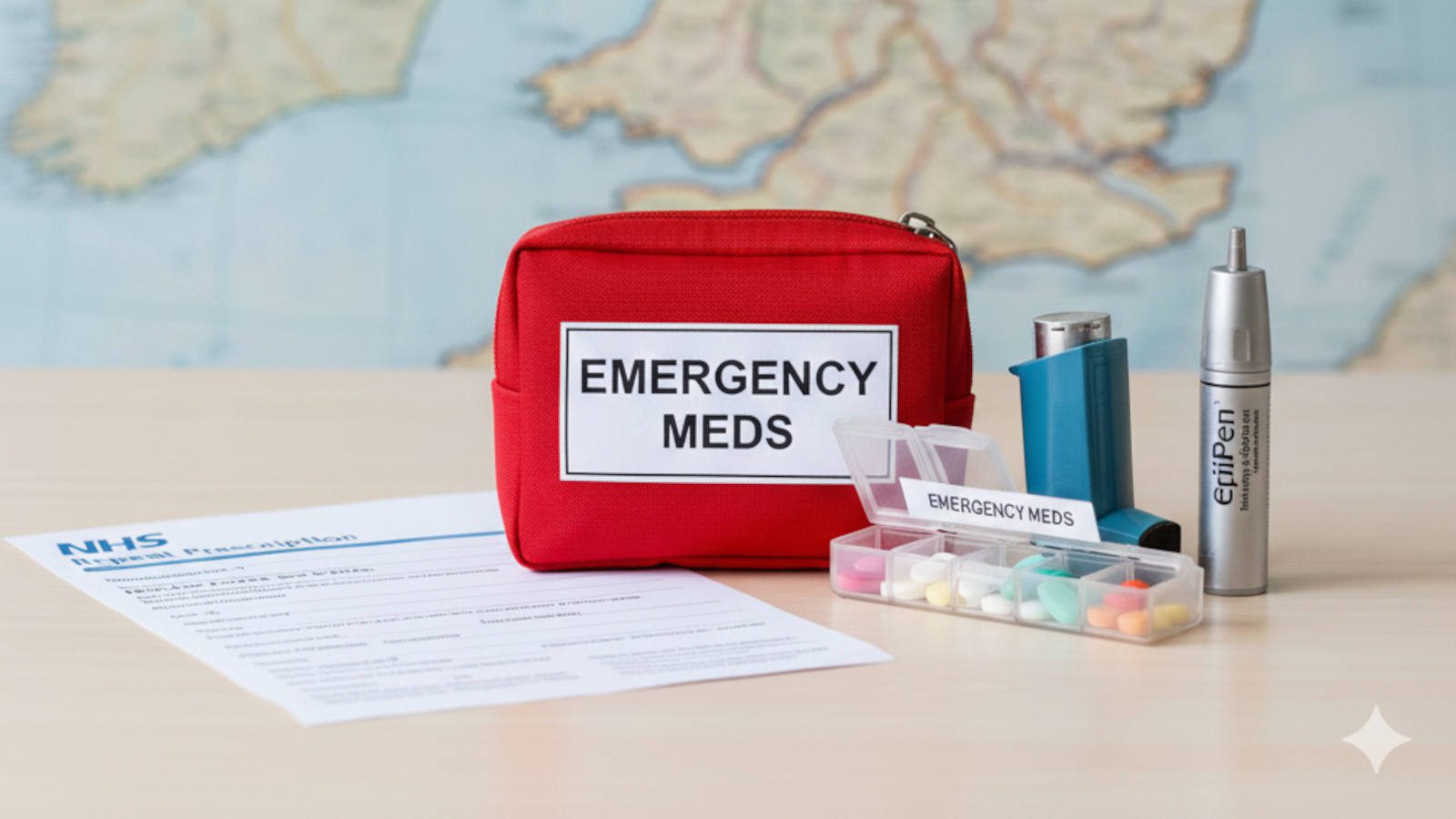
When you’re evacuated to an emergency shelter, the council provides warmth, water, and simple food. They’ll have a basic first aid kit on the wall. What they won’t have is your prescription medication, your insulin, your inhaler, or your heart tablets.
If you rely on daily medication, an emergency evacuation isn’t just inconvenient—it’s potentially dangerous. Missing doses of critical medication can lead to withdrawal symptoms, medical emergencies, or serious health complications.
This guide covers what medications to pack, how to store them safely, and how to legally build an emergency medication buffer without breaking any rules. Ensure your medication kit is added to your “Grab Bag” so everything is ready to go in an emergency.
Why Medication Planning Is Critical
The reality of emergency evacuations:
Emergency shelters have basic first aid supplies: plasters, bandages, etc. They don’t stock prescription medications. Local pharmacies might be closed, inaccessible, or unable to access your prescription records if systems are down.
If you need it daily, you need it in an emergency.
Heart medication, insulin, inhalers, mental health medication, thyroid tablets, epilepsy medication—these aren’t optional. Missing even a few doses can trigger withdrawal symptoms, medical crises, or serious complications.
Your grab bag needs to cover you for at least 7 days, ideally 14 days.
The 7-14 Day Supply Rule
Minimum: 7 days
Most emergency evacuations resolve within a week. Your home becomes accessible, alternative accommodation is arranged, or services restore enough for you to collect prescriptions.
Better: 14 days
Extended disruptions (major flooding, structural damage, widespread incidents) can delay prescription access. Two weeks gives you breathing room while pharmacies reopen and systems recover.
How to rotate stock:
Don’t just pack medication and forget it. Use the oldest medication in your daily routine, replace it with fresh prescriptions. This keeps your emergency supply current and prevents expiry waste.
Set a reminder: Check expiry dates every 3 months (March, June, September, December). Rotate out anything nearing expiry.
Essential Documentation: Your Medical “Life on Paper”
Medication is useless if you can’t prove what you take or access replacements. Pack these documents in a waterproof A4 document folder (same one as your IDs and insurance):
Prescription copies:
- Photocopies or photos of your repeat prescription slips
- Shows medication names, dosages, prescriber details
- Proof for emergency doctors if you need replacements
Medication list:
A single-page document listing:
- Medication name (both brand and generic)
- Dosage and frequency (e.g., “10mg once daily, morning”)
- What it treats (e.g., “hypertension”)
- Prescribing GP name
Allergy list:
Critical for emergency treatment. List:
- Medication allergies (e.g., penicillin, codeine)
- Food allergies (especially severe ones like nuts, shellfish)
- Reaction type (rash, anaphylaxis, etc.)
GP and pharmacy contact details:
- GP surgery name, phone number, address
- Usual pharmacy name and location
- NHS number
Keep digital copies too: Photo on your phone, email to yourself, cloud storage. If your bag is lost, you still have access.
Storage Solutions: Keeping Medication Safe
Waterproof medication case:
Your basic medication storage. Hard-shell cases (around £8-£15) protect tablets from crushing and moisture. Look for:
- Hard plastic or metal exterior
- Foam padding inside
- Waterproof seal or gasket
- Compact size (A5 or smaller)
Cool bag for temperature-sensitive medication:
Some medications must be kept cool (insulin, certain biologics, some eye drops). You cannot store these in your grab bag long-term.
The insulin example:
- Store a small cool bag with ice packs in your grab bag
- When evacuating, grab insulin from fridge, place in cool bag
- Cool bag is already in your grab bag, ready to use
Check your medication labels. If it says “refrigerate” or “store between 2-8°C,” you need a cool bag strategy.
Pill organizer (optional):
If you take multiple medications daily, a 7-day pill organizer helps maintain routine in chaotic shelter environments. Pre-fill it when you pack your bag, replace weekly.
What Medications to Pack
This isn’t a complete medical guide—it’s a prompt to think about your specific needs.
Daily Prescription Medications
If you take it every day, pack 7-14 days supply:
Heart and blood pressure:
- Beta blockers, ACE inhibitors, statins, anticoagulants (warfarin, DOACs)
- These cannot be stopped suddenly without medical supervision
Diabetes:
- Insulin (with cool bag, glucose testing kit, lancets, test strips)
- Metformin, gliclazide, or other oral diabetes medication
- Hypo treatment (glucose tablets, sugary drink)
Asthma and COPD:
- Preventer inhalers (daily use)
- Reliever inhalers (emergency use)
- Spacer device
- Nebuliser medication if prescribed
Mental health:
- Antidepressants (SSRIs, SNRIs, tricyclics)
- Anxiety medication (benzodiazepines if prescribed)
- Antipsychotics, mood stabilizers
- Cannot stop suddenly—withdrawal symptoms are serious
Thyroid:
- Levothyroxine (hypothyroid)
- Carbimazole (hyperthyroid)
Epilepsy:
- Anti-seizure medication (missing doses = seizure risk)
Pain management:
- Prescription pain medication (tramadol, codeine, etc.) – Remember that in the UK, First Aid boxes do NOT contain pain medication of any variety! If you need any pain medication, even if just paracetamol, you need to pack it.
- Patches, gels, or other pain relief
Hormone replacement:
- HRT, contraceptive pills, testosterone
Any other daily medication:
If you take it regularly, it goes in the kit.
Emergency Medications
These aren’t daily medications but are life-critical in emergencies:
EpiPens (anaphylaxis):
- Pack 2 if prescribed (one may fail or be insufficient)
- Check expiry dates every 3 months
- Include allergy information card
Emergency inhalers:
- Salbutamol or other reliever inhalers
- Even if asthma is well-controlled, stress can trigger attacks
Angina medication:
- GTN spray or tablets
Over-the-Counter Essentials
These aren’t prescription medications but are vital for managing minor health issues in shelters and are NOT included in an official First Aid box:
Pain relief:
- Paracetamol (16 tablets minimum)
- Ibuprofen (16 tablets minimum)
- Check you’re not duplicating prescription pain meds
Antihistamines:
- Cetirizine, loratadine, or chlorphenamine
- For allergic reactions, hay fever, insect bites
Anti-diarrhoea:
- Loperamide (stress, unfamiliar food, or contaminated water can cause diarrhoea)
Rehydration sachets:
- Dioralyte or similar
- Useful for vomiting, diarrhoea, or dehydration
Indigestion relief:
- Antacids (Gaviscon, Rennie) or omeprazole if you use it regularly
Oral rehydration for diabetics:
- If diabetic, rehydration sachets are critical during illness
Special Considerations
Glasses and contact lenses:
- Spare pair of glasses (prescription up to date)
- Contact lens solution and spare lenses (if you wear them)
- Contact lens case
Hearing aid batteries:
- Pack at least 1-2 weeks’ worth
- Check battery size and pack spares
Medical devices:
- CPAP machines require power (shelters may have limited plug access—bring extension lead and spare mask)
- Catheters, stoma supplies, mobility aids—pack spares where possible
Pregnancy and postnatal:
- Prenatal vitamins
- Any prescribed pregnancy medication
- Breastfeeding supplies if applicable
Building Your Emergency Medication Buffer (Legally)
One of the biggest challenges is having enough medication to set aside for emergencies without running out of your daily supply.
Here’s how to build a buffer legally:
The 10-Day Postal Buffer Method
If you order prescriptions online (Pharmacy2U, LloydsDirect, Pharmacy4U, etc.), most services encourage ordering 10 days before you run out to allow for postal delays.
How it works:
- Order your prescription 10 days early (as the pharmacy recommends)
- When your medication arrives, put what’s left from those 10 buffer days aside in your emergency kit
- Use your previous month’s supply for daily medication
- Repeat every month
After 6 months: You’ll have built up a 2-month emergency buffer without breaking any rules or lying to your GP.
Reality check: Some months, postal delays mean you use part of the buffer. Other months, medication arrives quickly and you save the full 10 days. Over time, it accumulates.
Other Legal Ways to Build a Buffer
Request early repeat prescriptions:
Most GPs allow collection 7 days early. If you explain you’re building an emergency supply, many will approve it.
Ask for longer prescriptions:
Some GPs will prescribe 8-12 weeks at a time instead of 4 weeks, especially for stable long-term conditions. Ask if this is possible.
Use leftover medication safely:
If your dose is reduced (e.g., 20mg to 10mg), you’ll have leftover tablets. Check with your GP if it’s safe to keep these as backup.
What’s NOT Legal
Don’t:
- Buy prescription medication online without a prescription
- Use someone else’s medication
- Lie to your GP to get extra prescriptions
- Hoard medication by claiming you “lost” prescriptions repeatedly
Mental Health Medications: Why Buffers Matter
If you take antidepressants, anti-anxiety medication, or other mental health prescriptions, missing doses isn’t just unpleasant—it can trigger:
- Withdrawal symptoms (brain zaps, dizziness, nausea, mood crashes)
- Return of symptoms (depression, panic attacks, intrusive thoughts)
- Physical symptoms that worsen stress
Emergency shelters won’t stock your specific SSRI, SNRI, or other mental health medication. Your emergency buffer is as critical as insulin for a diabetic.
Building a buffer slowly (10-day postal method) ensures you’re never caught without medication during a crisis.
Storage Tips
Keep emergency medication separate from daily medication:
Avoid confusion. Use a dedicated waterproof case labelled “Emergency Meds.”
Store in a cool, dry, dark place:
Avoid heat, moisture, and direct sunlight. A cupboard or drawer near your grab bag is ideal (not the bathroom—too humid).
Check expiry dates every 3 months:
Set phone reminders for March, June, September, December. Rotate out anything expiring soon.
Don’t store insulin or temperature-sensitive meds in the bag:
Keep the cool bag ready, but grab refrigerated medication only when evacuating.
Label everything clearly:
If someone else needs to grab your bag, they should know what’s inside.
What NOT to Include
❌ Sharps bins:
Not practical for grab bags. Emergency shelters have sharps disposal facilities.
❌ Months of medication:
Too much to carry, rotation becomes a nightmare. Stick to 7-14 days.
❌ Expired medication:
Effectiveness degrades over time. Replace regularly.
❌ Unlabelled medication:
If it’s not in original packaging or clearly labelled, emergency medical staff won’t know what it is.
Maintenance: Keep It Current
Your medication kit isn’t “set and forget.” Check it every 3 months:
- Replace any medication nearing expiry
- Update prescription copies if medications change
- Refresh documentation with new GP/pharmacy details
- Check waterproof case seals and cool bag ice packs
Set reminders: March, June, September, December. Takes 10 minutes.
Common Mistakes to Avoid
❌ Assuming shelters have your medication:
They don’t. They have bandages and plasters, not your heart tablets.
❌ Only packing 2-3 days’ worth:
Evacuations can last longer than expected. Pack at least 7 days.
❌ Not documenting allergies:
If you’re unconscious or unable to communicate, medical staff need to know.
❌ Storing insulin in the grab bag:
Temperature-sensitive medication needs a cool bag strategy, not long-term storage.
❌ Forgetting to rotate medication:
Use the oldest, replace with fresh. Expired medication is useless.
Final Thoughts: Your Health Can’t Wait
When your home is inaccessible and you’re sleeping in a church hall, running out of critical medication isn’t just inconvenient—it’s dangerous.
A well-planned medication kit costs £10-£20 for storage, takes up minimal space, and could prevent a medical emergency during an already stressful situation.
If you need it daily, pack it. If it keeps you alive, don’t leave it behind.
Related Guides
The Realistic UK Grab Bag: What You Actually Need – The complete overview of your emergency evacuation bag
UK Emergency Grab Bag Toiletries Kit – Personal hygiene essentials for rest centres
UK Emergency Pet Preparedness – Keeping your pets safe during evacuations
Quick Checklist
☑️ 7-14 days of all daily prescription medications
☑️ Prescription copies (printed + digital)
☑️ Medication list with dosages and prescriber details
☑️ Allergy list (medications, foods, reactions)
☑️ GP and pharmacy contact details
☑️ NHS number
☑️ Emergency medications (EpiPens, emergency inhalers, etc.)
☑️ OTC essentials (pain relief, antihistamines, anti-diarrhoea, rehydration)
☑️ Spare glasses or contact lenses + solution
☑️ Hearing aid batteries (if applicable)
☑️ Waterproof medication case
☑️ Cool bag (for temperature-sensitive meds)
☑️ Pill organizer (optional)
☑️ 3-month expiry check reminder set
Total weight: Under 1kg (depending on medication quantity)
Total cost: £10-£20 for storage solutions
Total space: Small medication case (A5 size or smaller)
For complete medication management including storage, refrigeration during power cuts, and carer considerations, see our Managing Essential Medication guide.
Stay prepared. Stay safe. Stay medicated.
Build Your Resilience
Further Reading: Related Guides
All our guides can be found listed on our resilience hub.
Gear We've Tested & Reviewed
All our reviews can be found on our reviews and resources page.
📡 Find Us Everywhere
Daily briefings, prep guides, and real-time updates across every platform. Pick yours.
Free. No commitment. Stay anonymous on WhatsApp & Telegram.
Stay Informed on UK Preparedness
Join our newsletter for UK-specific preparedness tips, product recommendations, and real-world advice for households.
Subscribe to Our Newsletter