
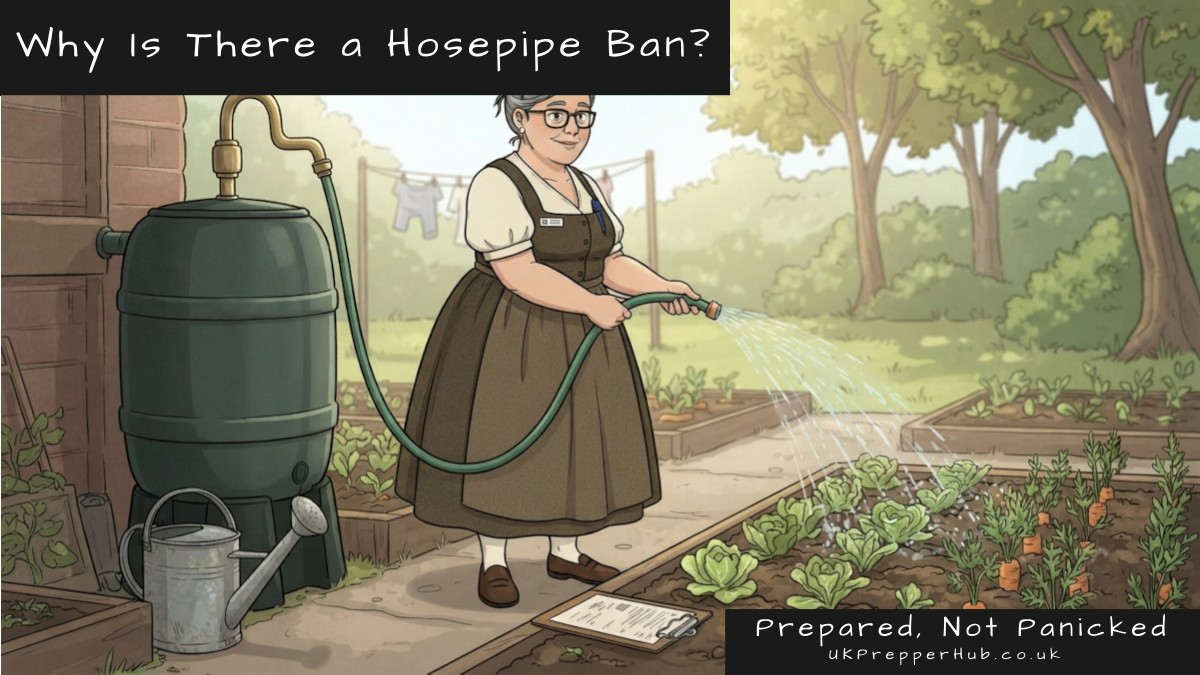
Why is there a hosepipe ban? It’s the most common question of the summer, and also the most misunderstood one. A hosepipe ban doesn’t stop you using water — it stops you connecting a hosepipe to the mains supply. You can still fill a bucket from the kitchen tap or use a watering can for anything in the garden — that’s never been restricted.
Providing water for livestock, pets and fish, topping up a wildlife or fish pond, and watering food crops are genuine hosepipe exemptions in their own right in most areas, not just bucket-only workarounds. And any water you’ve already collected off the mains — a water butt, an IBC tank — can go through a hosepipe however you like. What you can’t do is attach a hose to the mains tap and leave a sprinkler running on the lawn.
Nine water companies across England and Wales currently have restrictions in place, covering tens of millions of households, and the Environment Agency has already declared drought across half of England. This isn’t a freak one-off. We are entering a fifth heatwave of the year landing on rivers and reservoirs that were already running low before it arrived. Here’s what’s actually banned, why it keeps happening, and how the current situation compares to the last time Britain properly ran dry — 1976.
Why Is There a Hosepipe Ban This Summer?
England and Wales have just had their driest July on record, according to the Met Office. Three heatwaves in as many months have pushed temperatures as high as 37.7°C, and the ground and rivers have paid for it. Only 13% of rivers are currently classed as normal for this time of year — the River Test in Hampshire, one of the country’s best-known chalk streams, has lost a third of its flow in a matter of weeks.
On 29 July 2026 the Environment Agency moved half of England into official drought status. Seven areas are affected, covering 51.4% of the country: East Anglia, the West Midlands, Devon, Cornwall and the Isles of Scilly, Lincolnshire and Northamptonshire, Hertfordshire and London, Wessex, and the Thames, Solent and South Downs regions.
Heat alone doesn’t explain the whole picture. Demand for water has risen by up to a third at some companies during the hottest spells — gardens, paddling pools, extra showers, cooling — on top of rivers and groundwater that were already depleted from a dry spring. That combination is what tips a company from “keeping an eye on it” to issuing a formal restriction.
And it’s worth being honest about the trend: this isn’t the first hot, dry summer the UK has had recently, and it won’t be the last. Water security is becoming a genuine seasonal reality to plan a household around, the same as flooding, power cuts or winter freezes — not a once-in-a-generation event to shrug off once the rain returns.
Every Water Company Currently Under a Hosepipe Ban
Restrictions follow the water company that supplies you, not your postcode or local council — two houses on the same street can be under different rules if they’re served by different suppliers. As of today, nine companies have Temporary Use Bans (TUBs) in force:
- Thames Water — around 10 million customers across Greater London, Luton, the Thames Valley, Surrey, Gloucestershire, north Wiltshire and far west Kent (from 23 July)
- South East Water — around 2.4 million customers across Kent (from 3 July), Sussex, Surrey, Hampshire and Berkshire (from 25 July)
- Anglian Water — over 5 million customers across its whole supply region (from 11 July)
- Southern Water — around 1 million customers in Hampshire and the Isle of Wight (from 10 July)
- Affinity Water — around 3.9 million people across its Central region: Bedfordshire, Berkshire, Buckinghamshire, Hertfordshire, Surrey and parts of London and Essex (from 10 July)
- Cambridge Water — around 350,000 households across its whole supply region (from 17 July)
- South West Water — Mid Devon and parts of East Devon since 14 July, expanding to all of Devon, Cornwall, parts of Dorset and Somerset, and the Isles of Scilly from today, 8 August
- Essex & Suffolk Water — all household customers across its supply area (from 3 August — its first hosepipe ban since 1997)
- Welsh Water (Dŵr Cymru) — around 33,000 properties across mid and south Ceredigion, parts of north Pembrokeshire and north Carmarthenshire (from 19 July)
That’s comfortably north of 20 million people between just the largest handful of companies on this list — this is not a niche, isolated event.
Two things worth flagging. South West Water’s expansion to full county coverage takes effect today, 8 August, which shows how fast these restrictions can widen once a region tips into drought. And Southern Water has now gone a step further, opening a public consultation on a Drought Order for Hampshire and the Isle of Wight — a more serious measure than a TUB, and one that can bring additional restrictions beyond the hosepipe ban itself.
If your supplier isn’t on this list yet, that’s genuinely just where things stand today — check with them directly rather than assuming it’ll never happen, because several companies on this list weren’t restricted a month ago either.
History: How We Got Here — From 1976 to Now
The reference point everyone reaches for is 1976 — genuinely Britain’s worst modern drought, and the one summer where restrictions went further than anything since. Reservoirs ran so low that standpipes were installed in streets across parts of the country, water was rationed to a few hours a day in places, and the government appointed an actual Minister for Drought — Denis Howell, whose first act in the job was widely credited with bringing the rain, which tells you a lot about how desperate the situation had got.
Reservoirs across the country dropped to a fraction of capacity, some rivers stopped flowing entirely, and standing in a street queue with a bucket became a genuinely normal part of daily life for weeks in the worst-hit areas. It’s the benchmark every dry summer since gets measured against, including this one.
We covered the 1976 comparison properly in one of our YouTube Shorts, which has become one of our best-performing videos precisely because people want to know how worried they should actually be:
The legal power behind every hosepipe ban since actually comes from a bit later — Section 76 of the Water Industry Act 1991, which gives water companies the statutory authority to impose Temporary Use Bans on their own customers whenever they judge it necessary.
That’s the crucial difference from 1976: a TUB isn’t a national emergency measure declared by government, it’s a routine tool an individual water company can reach for itself, and companies now do this in some part of the country most dry summers. A Drought Order — like the one Southern Water has just applied for — is a bigger step again, needing sign-off from the Environment Agency or the courts, and can bring restrictions well beyond hosepipes.
So the honest answer to “are we heading back to 1976” is: not yet, and standpipes in the street remain a genuinely extreme last resort that hasn’t been seriously threatened this summer. But the tool that stops short of that — the TUB — is being used earlier, more widely, and more often than it used to be, and that’s the part worth actually paying attention to.
What a Hosepipe Ban Actually Bans (And What It Doesn’t)
Why is there a hosepipe ban on some jobs and not others? Because a Temporary Use Ban targets one specific thing: a hosepipe connected to the mains supply, used for watering the garden, filling a paddling pool or hot tub, cleaning a car, patio or decking, or filling a domestic swimming pool.
Buckets and watering cans are unaffected because they’re not the mains connection the ban targets, and there are genuine exemptions — for disabled and vulnerable customers, for watering newly laid turf or food crops in some cases, and for specific business uses.
That’s the summary. The full rules, company-by-company exemptions, and what kit actually works within them are covered properly in our dedicated guide rather than repeated here:
Complete Guide
Hosepipe Ban Exemptions
Most people think a hosepipe ban means no hosepipes, full stop. It doesn’t. Not everything’s banned — livestock, ponds, food crops and stored rainwater are all still fair game. Our full guide breaks down exactly what you can and can’t do, water company by water company, so you’re not left guessing.
Read the Full Guide: Hosepipe Ban Exemptions →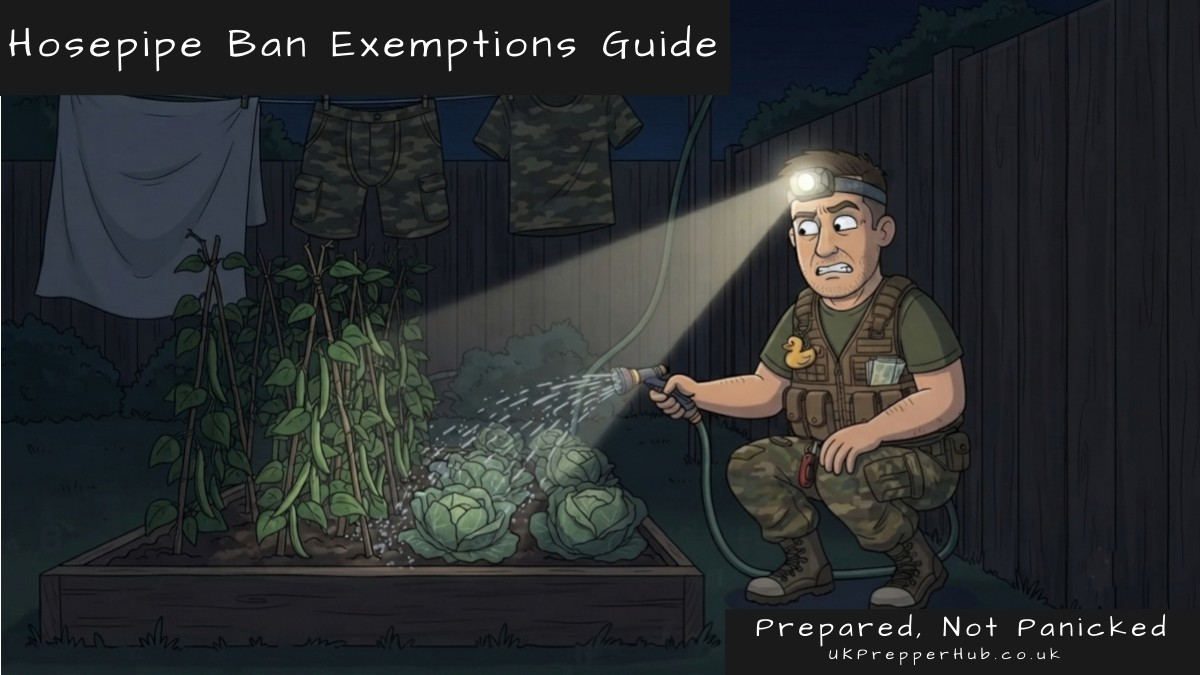
What Happens If You Break a Hosepipe Ban?
A Temporary Use Ban isn’t just a request — breaching one is a genuine criminal offence under the Water Industry Act 1991, carrying a fine of up to £1,000. It’s worth understanding how that’s actually enforced, though, because it’s not what most people picture.
Water companies enforce their own bans — there’s no police involvement, and nobody is patrolling streets looking for sprinklers. In practice, breaches usually come to light because a neighbour reports it, or a company employee spots it while out on other work. For a first, one-off breach, most companies will simply issue a warning and ask you to stop, rather than pursue a fine or prosecution.
Companies also can’t cut off your water supply as a penalty — that’s a separate, much stricter legal process reserved for genuine non-payment, not for using a hosepipe. Actual prosecutions under Section 76 are rare; the ban relies far more on visibility and self-policing than on catching people out.
None of that is an argument for ignoring it. It’s still a real offence, the fine is real if it does get pursued, and every litre saved genuinely reduces the pressure on a system that’s already stretched. It’s simply worth knowing the ban is enforced through reasonableness first, not a fine-first approach — which makes the sensible legal alternatives below even more worth using properly, rather than testing how closely you can skirt the rules.
Doing the Responsible Thing — Working With the Ban, Not Around It
None of this is about finding a loophole to beat the system. The reason buckets, watering cans and stored rainwater aren’t covered by a hosepipe ban isn’t an oversight — it’s because that water either isn’t putting extra strain on the mains supply, or it was never part of it in the first place. Using it properly is the responsible option, not a workaround. Here’s what that actually looks like in practice.
Washing the Car and Cleaning Outside Without a Hosepipe
A hosepipe ban covers exactly the kind of job people usually reach for a hose for — washing the car, blasting down a patio, rinsing off decking. A battery-powered pressure washer that draws from a bucket instead of the mains sidesteps the ban entirely while still doing the job properly.
Blucky Pressure Washer
Runs from a bucket, a water butt, or even a weak mains tap, and turns it all into the same strong spray. The fix for low water pressure at home all year round, and just as handy the moment a hosepipe ban kicks in.
Our Full Review: Blucky Pressure Washer →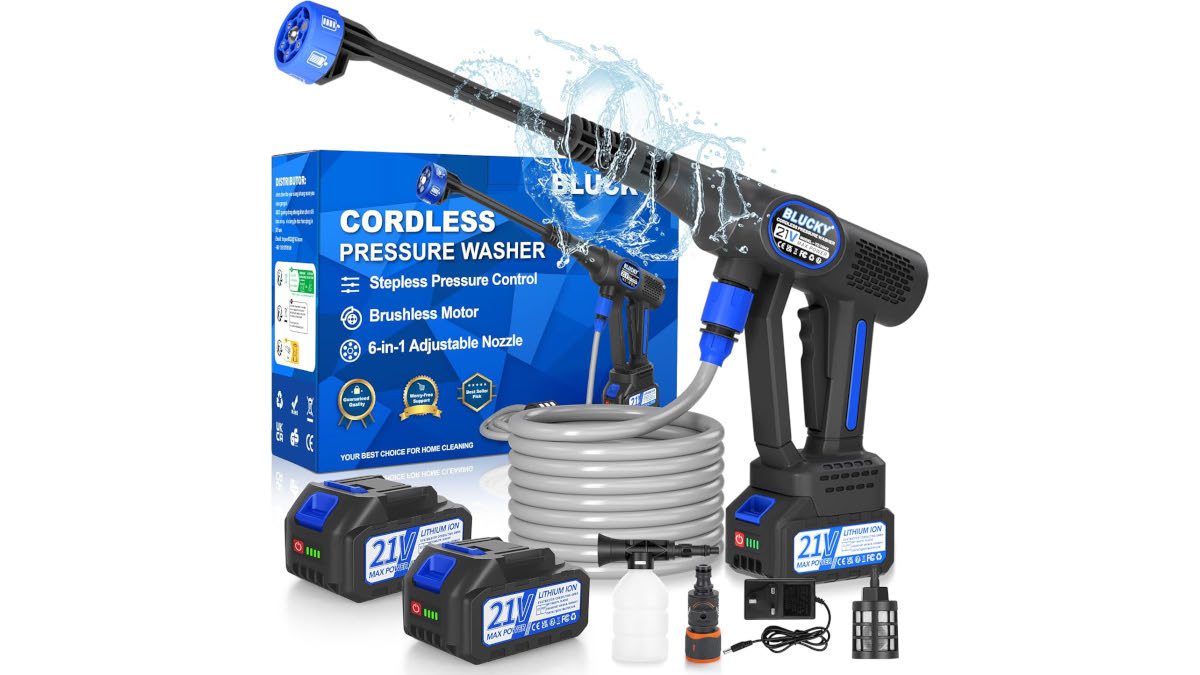
Making the Most of Rainwater You’ve Already Collected
Water sat in a butt is already off the mains, so there’s no restriction on how you use it — the problem is usually getting it out efficiently, especially for anything beyond a watering can’s reach. A dedicated rain barrel pump turns a static butt into something that can actually run a hosepipe or soaker line at proper pressure, legally.
Gardena Rain Barrel Pump
Turns stored rainwater into real hose pressure — no more hauling watering cans, and it keeps working through a hosepipe ban since it never touches the mains.
Our Full Review: Gardena Rain Barrel Pump →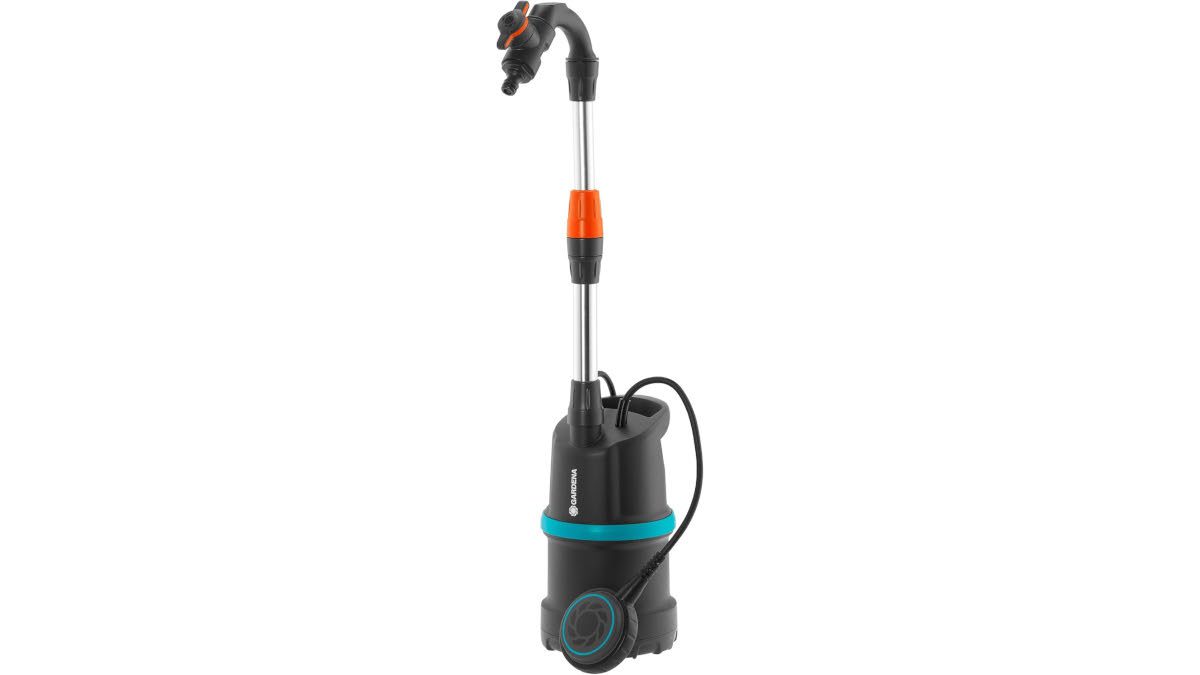
One Pump, Two Jobs — Irrigation Now, Flood Pump-Out Later
Worth having kit that earns its keep outside of drought season too. A submersible pump can move stored water for the garden in summer and just as easily clear a flooded cellar or garden after the next heavy downpour — genuinely dual-purpose, not a single-season purchase.
VonHaus Submersible Water Pump
Clears a flooded cellar or garage at up to 7,500 litres an hour, and moves water from the rain barrel the rest of the time — one pump, two jobs.
Our Full Review: VonHaus Submersible Water Pump →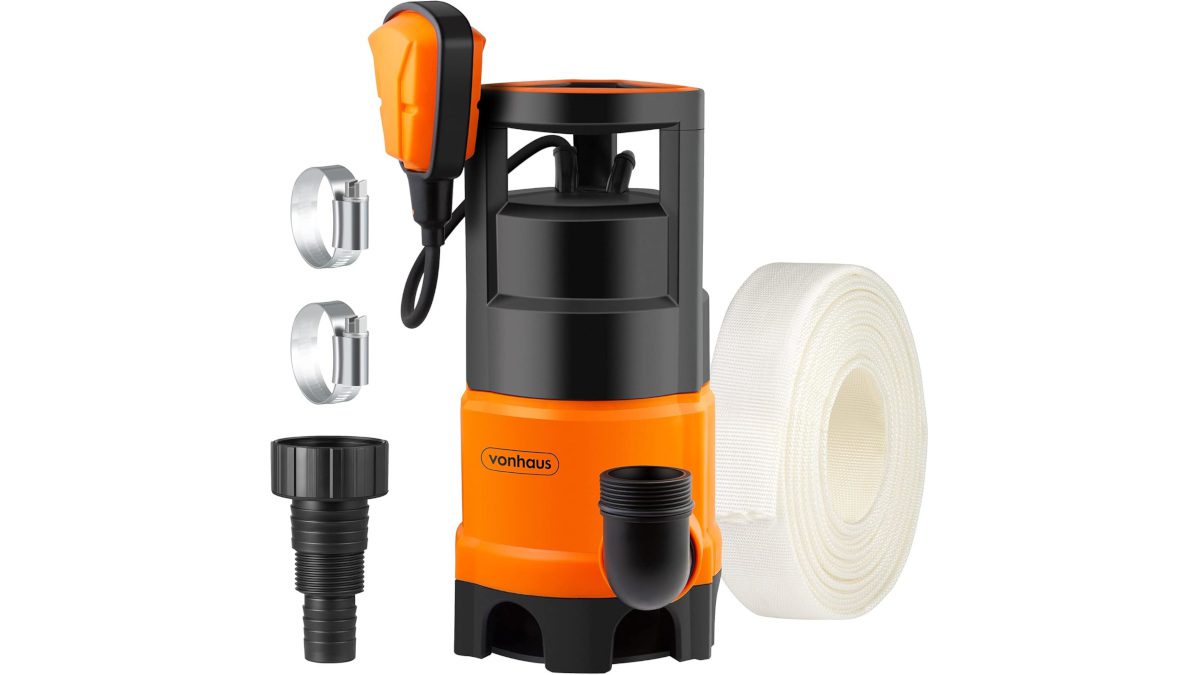
Are We Heading for a 1976-Style Water Crisis?
Not this summer, on the evidence so far — nine TUBs and one Drought Order application is serious, but it’s still a long way short of street standpipes and rationed hours. What’s changed is the frequency.
Why is there a hosepipe ban in nine areas at once this year rather than the usual one or two? The same combination each time — a dry spring compounding into a hot, demanding summer, faster than reservoirs and rivers can recover between them.
Water companies are investing £5 billion between now and 2030 in new supply, including ten new reservoirs (the first already under construction at Havant Thicket in Hampshire), new transfer schemes moving water between regions, and the rollout of 10 million smart meters — all of it aimed at making sure this isn’t a permanent yearly pattern.
Until that infrastructure actually lands, though, a dry spring followed by a hot summer is going to keep tipping more of the country into restrictions, earlier in the year, more often than it used to.

🦆 Keith
Don’t Be Keith
Keith panics the moment he hears “hosepipe ban” and stops watering everything in the garden entirely, including the food crops he grew specifically to be self-sufficient, because he never actually checked which parts of the ban apply to him
That’s really the practical takeaway. Being prepared for a hosepipe ban isn’t about hoarding drinking water for some imagined doomsday, although a sensible water storage plan is worthwhile — it’s understanding what your own household actually uses a hosepipe for, knowing which of those uses are still perfectly legal, and having the right kit ready before the restriction lands rather than scrambling for it once it has.
Think about it the same way you’d think about any other seasonal risk. Nobody waits until the first hard frost to check their car’s antifreeze, or until a storm warning to find the torch.
A water butt costs nothing to fill from every rain shower between now and next spring, and a bucket-fed pressure washer or a decent pump sits in the shed doing nothing until the day it’s the only legal option left — at which point it’s exactly the kind of small, cheap preparation that makes the whole thing a non-event instead of a scramble.
Prepared, not panicked, applies just as well to a dry August as it does to anything else.
Build Your Resilience
Further Reading: Related Guides
All our guides can be found listed on our resilience hub.
Gear We've Tested & Reviewed
All our reviews can be found on our reviews and resources page.
📡 Find Us Everywhere
Daily briefings, prep guides, and real-time updates across every platform. Pick yours.
Free. No commitment. Stay anonymous on WhatsApp & Telegram.
Stay Informed on UK Preparedness
Join our newsletter for UK-specific preparedness tips, product recommendations, and real-world advice for households.
Subscribe to Our Newsletter