
Preparedness isn’t a fringe activity in most of Europe — it’s mainstream public policy. Governments actively communicate with their citizens about what to do when things go wrong. France issues household survival manuals. Germany has a long tradition of civil defence messaging. Both countries treat the question of what families should do during a power cut, a supply disruption, or a severe weather event as something the state has a responsibility to answer clearly.
The UK government preparedness advice that exists is genuinely useful. The problem is that almost nobody knows it’s there.
France: Survival Manuals for Every Household
In 2025, the French government began issuing survival manuals to all households — physical, posted documents providing guidance on coping with emergencies including power cuts, severe weather, and supply shortages. The manuals cover maintaining a basic emergency supply of food and water, ensuring heat and lighting during short-term outages, and planning for communication and safety during unexpected events.
The approach is notable not just for what it says but for how it’s delivered. It doesn’t assume every French citizen is online, reads government websites, or knows which department to look at. It goes through the letterbox. (Source: Sky News)
This is proactive, clear, and designed to ensure that preparedness information reaches everyone — not just people who already think about these things.
Germany: Civil Defence as Standard Policy
Germany’s approach to European preparedness advice has deep roots. Civil defence messaging has been part of government communication for decades — households are encouraged to maintain emergency food and water supplies, official channels for crisis updates are well-publicised, and community preparedness initiatives are actively promoted.
None of this is treated as alarmist. It’s treated as responsible. The German government’s position is essentially: disruptions happen, infrastructure fails occasionally, here is what you should have at home and here is who to listen to when things go wrong. It’s communicated plainly and regularly, not buried in a crisis or delivered in a panic.
The UK’s Quiet Approach
The UK does have an official preparedness campaign. The Prepare campaign covers hazards, emergency planning, and practical advice for households. It’s genuinely decent guidance. The issue is that it lives entirely online, is buried within government infrastructure most people would never think to visit, and has received minimal active promotion.
Most UK households have never heard of it. That’s not a reflection of the content — it’s a reflection of the approach. Unlike France’s letterbox manual or Germany’s regularised civil defence messaging, the UK’s preparedness communication relies on people who are already looking for this information to find it themselves.

🐔 Chicken Licken
Did You Know?
The UK government actually has an official preparedness campaign — I’ve been pointing people at it for years and almost nobody has ever heard of it
Why the UK government has taken this quieter approach is a question without a fully satisfying answer. Possible factors include a historical preference for not alarming the public, institutional reluctance to acknowledge infrastructure vulnerability, and the political awkwardness of telling people that the state cannot guarantee uninterrupted services. Whatever the reason, the practical result is the same: UK households are less informed about preparedness than their French or German counterparts, and the gap is widening as risks increase.
Why This Matters Now
The question of whether prepping is becoming mainstream in the UK is partly answered by looking at what’s happening to the risks that drive it. Near-blackouts in 2024 and 2025, supply chain disruptions, fuel shortages, and the growing frequency of severe weather events have all made the conversation more urgent. France and Germany didn’t start issuing preparedness guidance in a vacuum — they did it because European governments are increasingly aware that supply chains are fragile, grids are under pressure, and households that aren’t prepared become a burden on emergency services that are already stretched.
The UK’s reticence to communicate this directly doesn’t mean the risks don’t exist. It just means that UK households are less likely to have thought about them.
Practical Steps for UK Households
The French survival manual covers much the same ground as UK Prepper Hub’s resilience guides — because the fundamentals of household preparedness don’t change much by country. Food and water for a few days. Lighting that works without mains power. A way to stay warm if the heating fails. A battery or hand-crank radio. A charged power bank. None of it is complicated, expensive, or alarming. It’s just sensible.
The UK government isn’t going to post a manual through your door. But the information exists, and acting on it takes an afternoon.
Complete Guide
How to Make a Blackout Box
Most households aren’t prepared for even a short power cut, and the stress comes from small, avoidable problems like lack of light, heat, or a way to cook. This guide shows you exactly how to fix that with a simple, practical setup so a blackout becomes manageable rather than disruptive.
Read the Full Guide: How to Make a Blackout Box →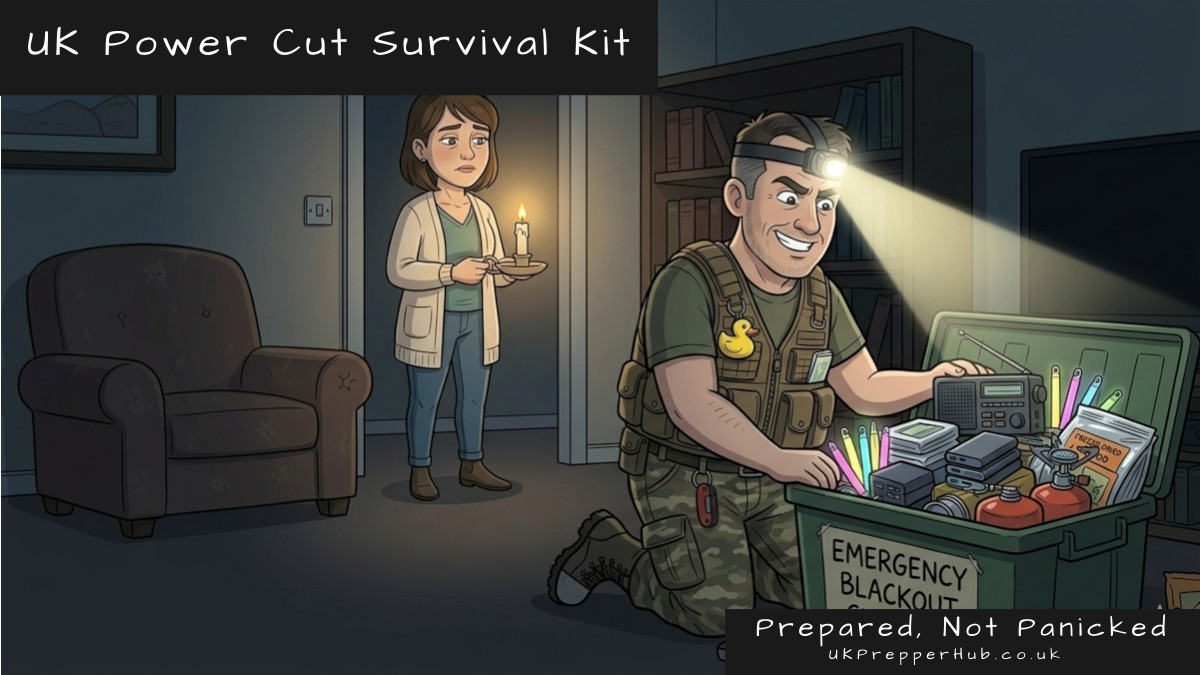
Complete Guide
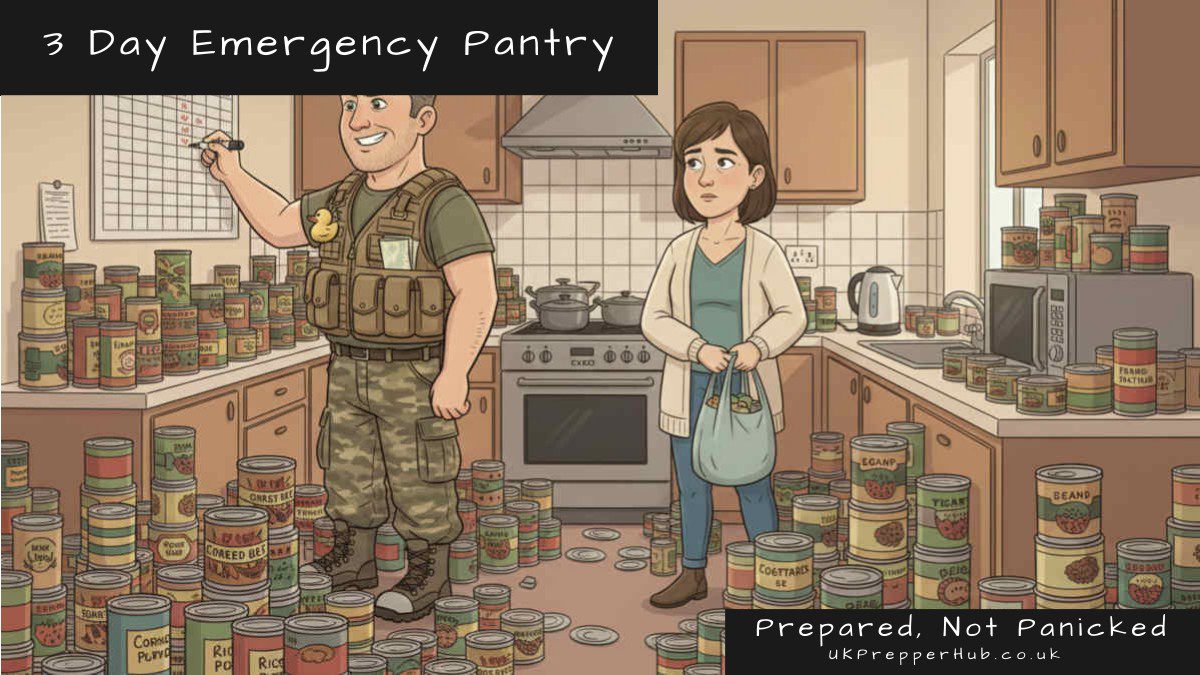
3-Day Emergency Pantry
The low-barrier start: A shopping list of shelf-stable meals that require zero refrigeration.
Complete Guide
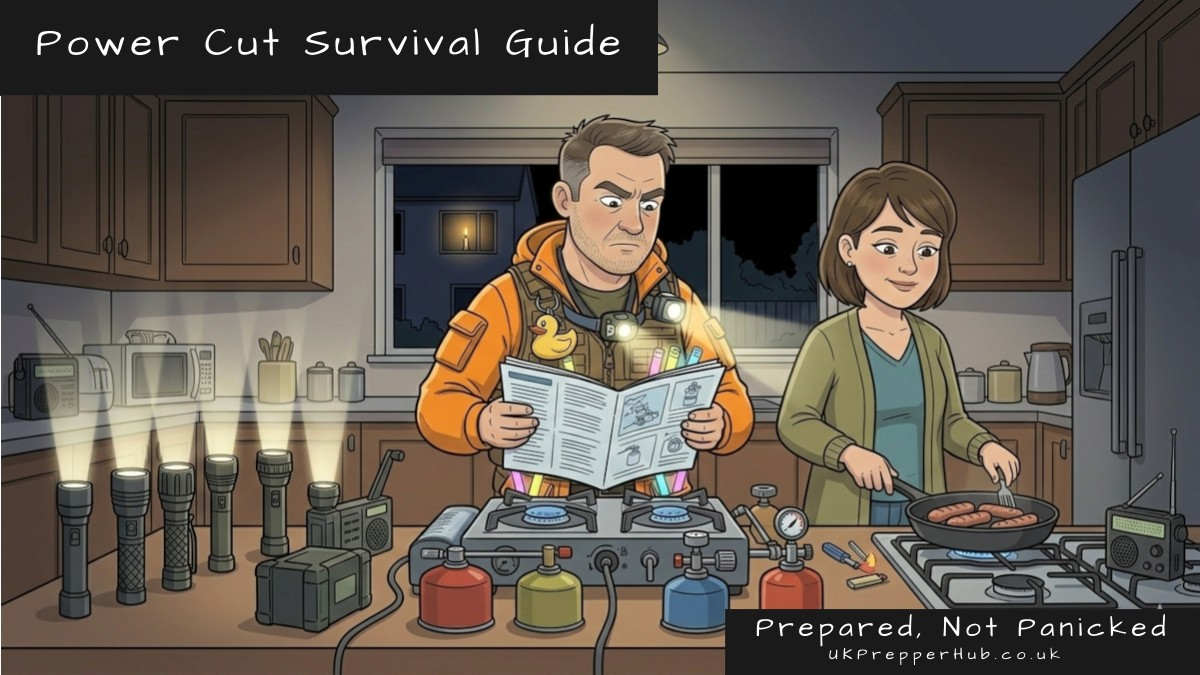
How to Prepare for a Power Cut
The 12 things to sort before the lights go out: lighting, heating, food, water and keeping phones charged, plus what to do in the first few minutes.
Complete Guide
Emergency Radio Guide
When the power fails, your phone signal goes with it. This guide covers which radio frequencies actually matter in a UK emergency, what to look for before you buy, and how to make sure it works when you need it.
Read the Full Guide: Emergency Radio Guide →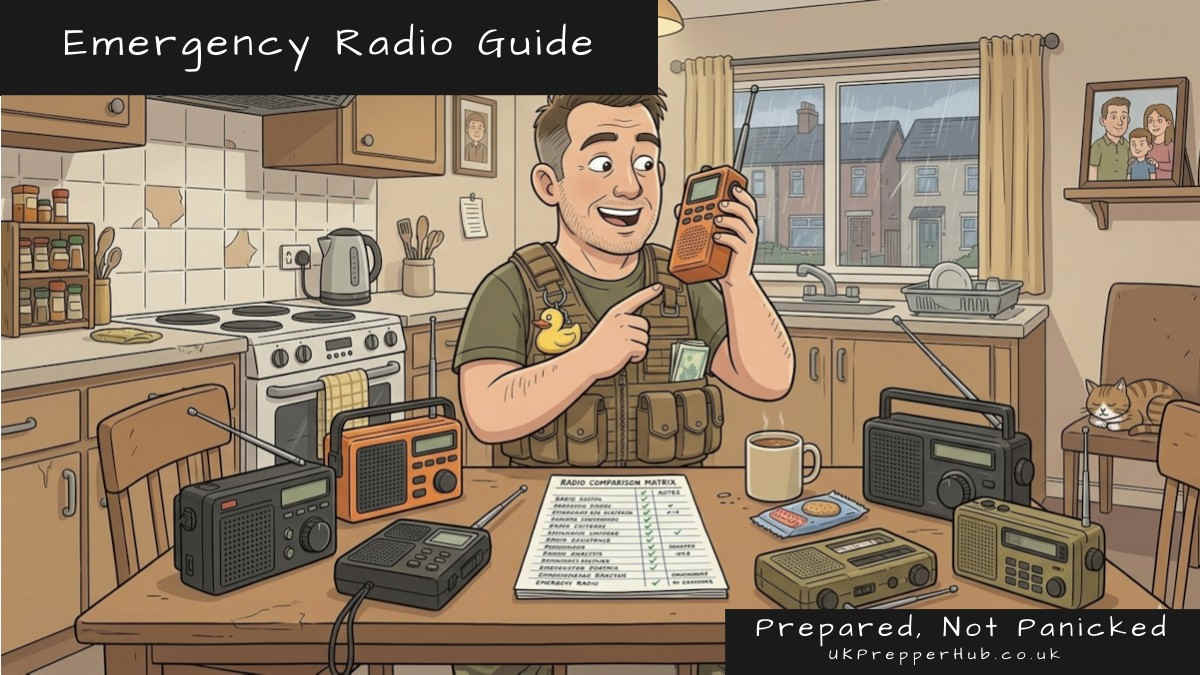
Frequently Asked Questions
Does the UK government have preparedness advice for households?
Yes — the Prepare campaign covers hazards, emergency planning, and practical steps for UK households. It’s genuinely useful guidance. The problem is that it’s online only, minimally promoted, and most UK households have never heard of it.
Why isn’t the UK telling people to prepare like France and Germany are?
There’s no single official explanation. Likely factors include a long-standing preference for not alarming the public, political reluctance to suggest the state can’t guarantee uninterrupted services, and institutional inertia. The result is that UK household preparedness lags behind comparable European countries, despite facing similar risks.
Is prepping becoming mainstream in the UK?
Gradually, yes — driven by real events rather than government messaging. Power disruptions, supply chain shortages, extreme weather events, and increasing media coverage of European preparedness campaigns have all pushed the conversation into the mainstream. The interest is there. The official backing isn’t.
What does France’s survival manual actually recommend?
The French manual covers the same core areas that appear in most serious household preparedness guides: a basic food and water supply for short-term disruptions, lighting and heating options that don’t depend on mains power, communication plans for emergencies, and guidance on staying informed through official channels. The content isn’t dramatically different from what good UK preparedness resources recommend — the difference is in the delivery.
Build Your Resilience
Further Reading: Related Guides
All our guides can be found listed on our resilience hub.
Gear We’ve Tested & Reviewed
All our reviews can be found on our reviews and resources page.
📡 Find Us Everywhere
Daily briefings, prep guides, and real-time updates across every platform. Pick yours.
Free. No commitment. Stay anonymous on WhatsApp & Telegram.
Stay Informed on UK Preparedness
Join our newsletter for UK-specific preparedness tips, product recommendations, and real-world advice for households.
Subscribe to Our Newsletter