
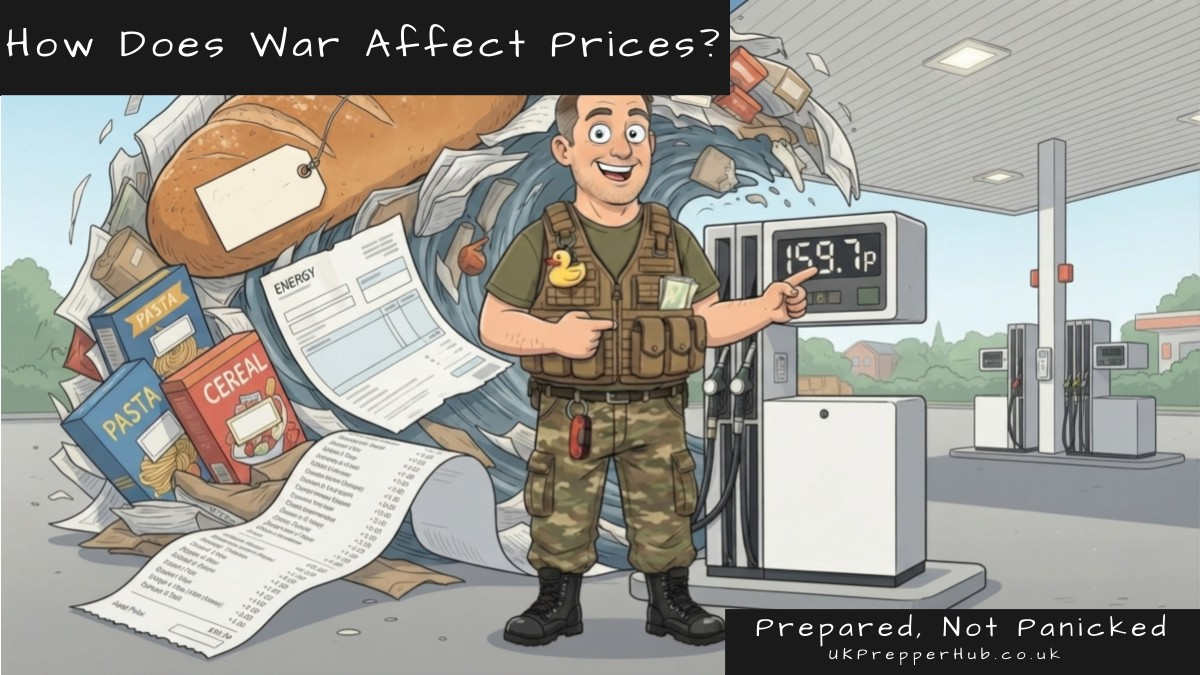
The question comes up every time there’s a conflict somewhere in the world. Petrol has dropped a couple of pence. The supermarket shelves are full. Food prices are creeping rather than soaring. So when is any of this actually going to matter? Understanding how does war affect prices requires thinking differently about timing — because the impact never arrives all at once, and most people only realise they were being squeezed long after it started.
This isn’t pessimism. It’s just how supply chains and markets work. The cliff edge moment you’re waiting for probably isn’t coming. What comes instead is a slow squeeze — and the uncomfortable truth is that by the time you notice it, you’re already in it.
How Does War Affect Prices? The Transmission Chain
Oil and conflict are linked in a way that shapes everything downstream. When fighting breaks out in a major oil-producing or transit region — the Middle East, the Strait of Hormuz, the Red Sea — it creates uncertainty in global energy markets before a single barrel of oil changes hands.
Here’s how the impact moves through the economy:
- Oil markets react within days. Futures prices spike on risk, even if actual supply isn’t disrupted yet. Traders price in the possibility of disruption, not just the reality.
- Petrol and diesel follow within 2–4 weeks. UK retailers track wholesale costs closely and adjust at the pump quickly — in both directions.
- Energy bills lag by months. The Ofgem price cap adjusts quarterly. A conflict that escalates in February won’t show up in your energy bill until July or October, depending on where you are in the cycle.
- Food prices take longest. The commodity price spike works its way through farm gate, processor, manufacturer, distributor, and retailer before it reaches your shelf. That journey takes 6 to 18 months.
The further down the chain, the longer the delay. The petrol price feels calm because it’s at the top of the chain — it moves first and it moves fast. Food is at the bottom. It moves last, and quietly.
Complete Guide
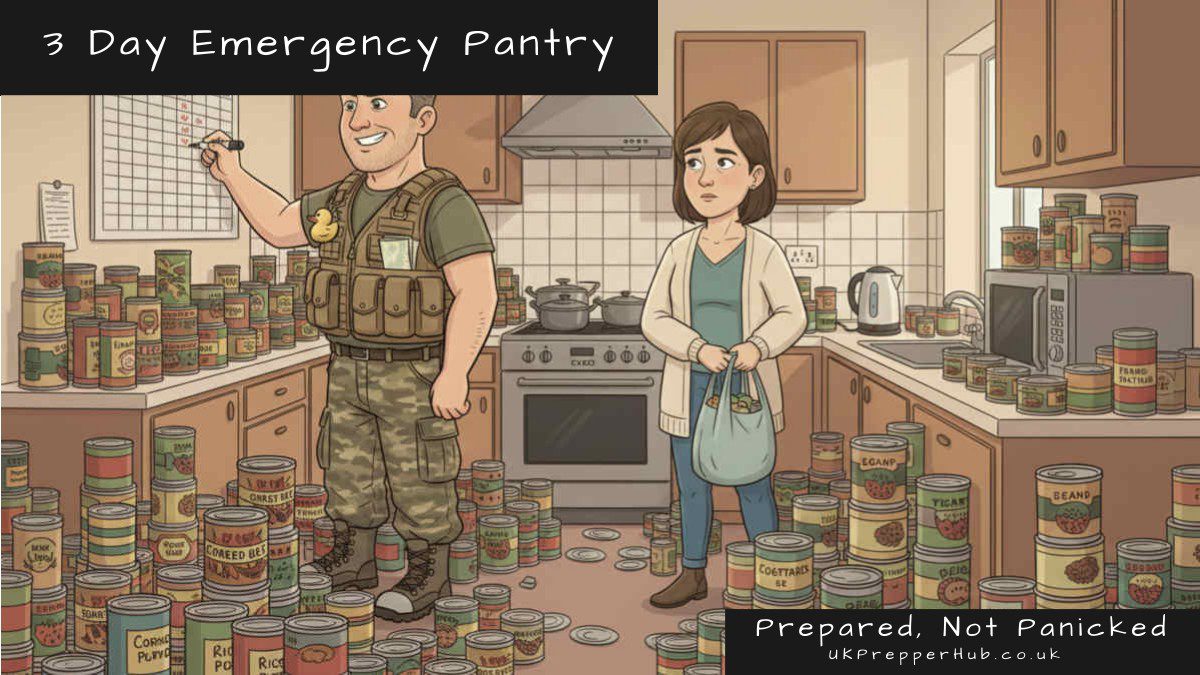
3-Day Emergency Pantry
The low-barrier start: A shopping list of shelf-stable meals that require zero refrigeration.
Why Petrol Going Down Is the Wrong Signal to Watch
Oil prices are volatile for reasons that have nothing to do with the conflict itself. Demand fears, OPEC+ supply decisions, recession expectations, and currency movements can all push the crude price down even while tensions are still escalating.
Here’s the part people miss: every manufacturer, food processor, and logistics company that locked in contracts over the past 6–12 months is still paying those costs. They won’t pass on any windfall from today’s lower crude price — they’re still absorbing the higher prices they agreed to months ago. The drop at the pump doesn’t travel back up the supply chain. Only the rises do.
A falling petrol price is also frequently a signal that markets are worried about economic slowdown — which is its own kind of pressure on household finances. So the pump going down is, at best, neutral. At worst, it’s masking something worse.

🐔 Chicken Licken
Did You Know?
I’ve been saying for years that the petrol price is a lagging indicator — by the time it drops again, the food price damage upstream is already locked in and heading your way
So How Does War Affect Prices on Your Supermarket Shelf?
Slowly. Quietly. In ways you adapt to without noticing.
It doesn’t look like empty shelves — that’s a film set version of a crisis. What it actually looks like is narrower choice. Three pasta sauces become one, at a price you don’t quite remember. The branded cereal disappears and the own-brand version remains. Pack sizes shrink by 15% while the price holds steady. Promotional offers that used to run every other week quietly stop running. You keep shopping. You keep adapting. You don’t notice until you look back.
This process has a name in economics: cost-push inflation. External shocks — like a surge in oil prices caused by conflict — push up the costs of producing and distributing goods, which eventually feeds through into the prices consumers pay. The ONS tracks food price inflation monthly; the trends are visible well before most households register the change in their weekly shop.
Complete Guide
Long-term food storage
Most households have a few days of food at best, but real disruptions in the UK can last far longer and quickly expose that gap. This guide shows you how to build a practical, affordable food reserve that actually works in the real world—not just on paper.
Read the Full Guide: Long-term food storage →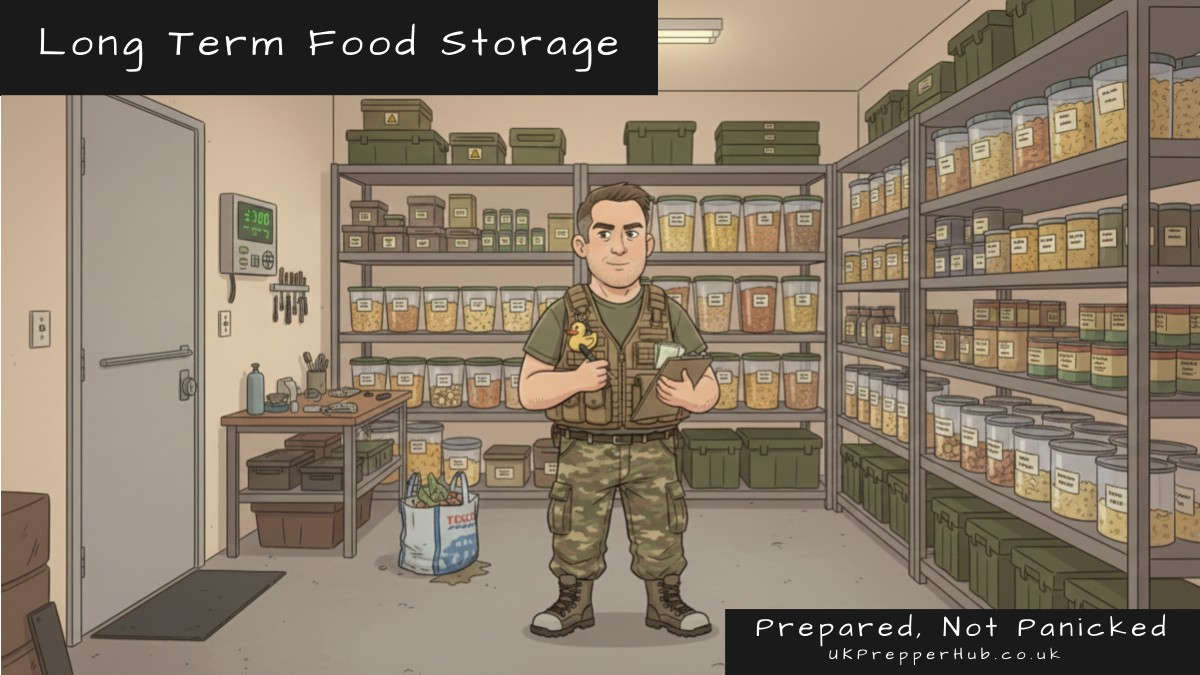
The Signals That Actually Tell You Where Prices Are Heading
If you want a realistic picture of what’s coming for your household finances, stop watching the petrol pump and start watching these:
- Ofgem price cap announcements — quarterly, and the forward pricing data is usually available months ahead. Energy analysts publish forecasts based on wholesale futures well before the announcement is made.
- The ONS food price index — published monthly. Less dramatic than a daily price check, but the cumulative picture over six months is telling.
- Wholesale energy futures — publicly available. A rising futures curve means higher bills are already decided; the announcement is just the formal confirmation.
- Our Middle East Conflict Tracker — updated as the situation develops, with direct household impact notes for each significant escalation.
The conflict doesn’t have to get worse for prices to keep rising. It just has to stay unresolved long enough for the costs already in the pipeline to arrive. That pipeline is already full.
British Army 24-Hour Ration Packs
The actual rations British soldiers eat in the field — 24 hours of complete nutrition built for when normal food supply isn’t an option.
Our Full Review: British Army 24-Hour Ration Packs →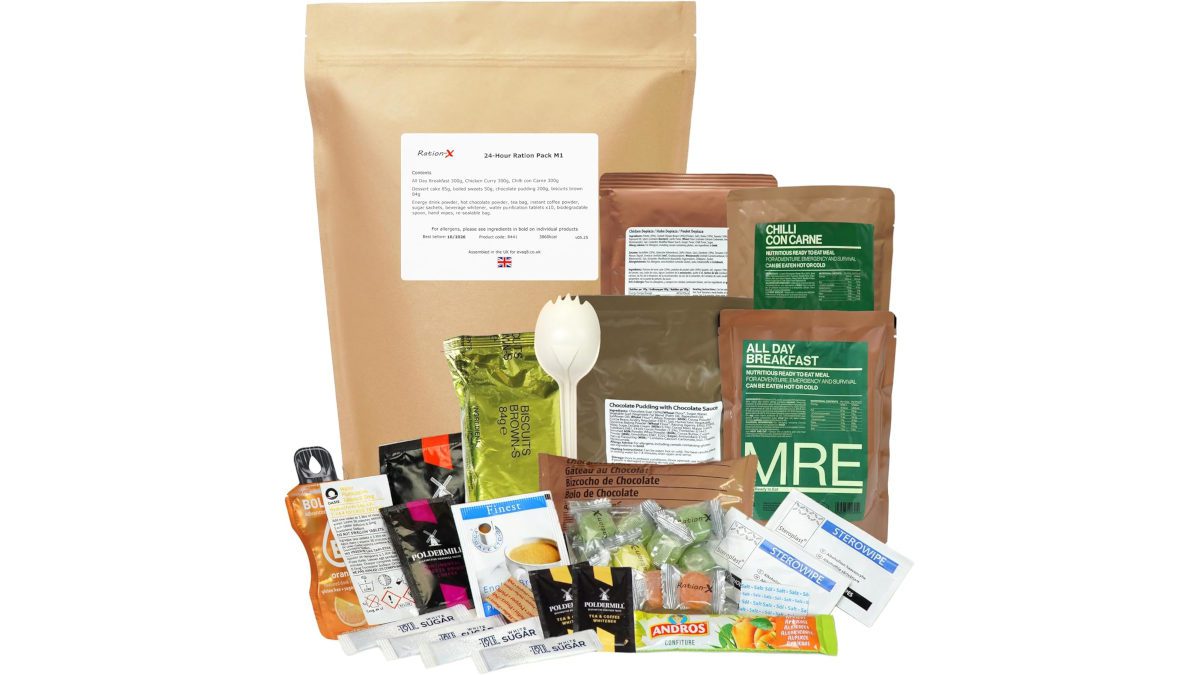
What You Can Actually Do About It
The honest answer is that you can’t stop global commodity markets doing what they do. But you can reduce how much the delayed squeeze matters to your household — by building a buffer before it arrives rather than scrambling once it has.
Buying food you’ll eat anyway, at today’s prices, before tomorrow’s costs work their way to the shelf is one of the most boring and effective financial hedges available to an ordinary household. It’s not hoarding. It’s shopping slightly ahead of the curve rather than directly behind it.
It also means that when the price rise does land — and it will — you’re not adjusting your weekly shop under pressure. You’re drawing down stock you already bought at last month’s prices, and you’re doing it calmly.
Frequently Asked Questions
How does war in the Middle East affect UK food prices?
Through the supply chain — conflict pushes up oil prices, which raises the cost of producing, processing, and transporting food. The full effect takes 6–18 months to reach supermarket shelves, which is why prices can seem stable for months after a conflict begins.
Why hasn’t my shopping bill gone up yet even though there’s a war?
Because food is at the end of the supply chain. Fuel moves first (weeks), energy bills follow (months), and food prices come last. The costs are already working their way through the system — they just haven’t arrived on the shelf yet.
How long does it take for oil prices to affect supermarket prices?
Between 6 and 18 months, depending on the product. Items with complex supply chains or long-term supplier contracts take longest. Basic staples like bread and cooking oil tend to move faster than processed foods.
Will energy bills go up because of the Iran conflict?
Possibly, depending on how long the situation stays unresolved. The Ofgem price cap adjusts quarterly based on wholesale energy futures. If wholesale prices remain elevated for two or more quarters, household bills will follow.
What’s the best way to protect my household against price rises?
Build a modest food buffer now, while prices are lower. Buying food you’ll eat anyway at today’s prices is one of the most practical hedges available. A 3-day or 3-week emergency pantry costs nothing extra over time — you rotate through it and restock.
Build Your Resilience
Further Reading: Related Guides
Gear We've Tested & Reviewed
📡 Find Us Everywhere
Daily briefings, prep guides, and real-time updates across every platform. Pick yours.
Free. No commitment. Stay anonymous on WhatsApp & Telegram.
Stay Informed on UK Preparedness
Join our newsletter for UK-specific preparedness tips, product recommendations, and real-world advice for households.
Subscribe to Our Newsletter