
📰 Quick News Brief

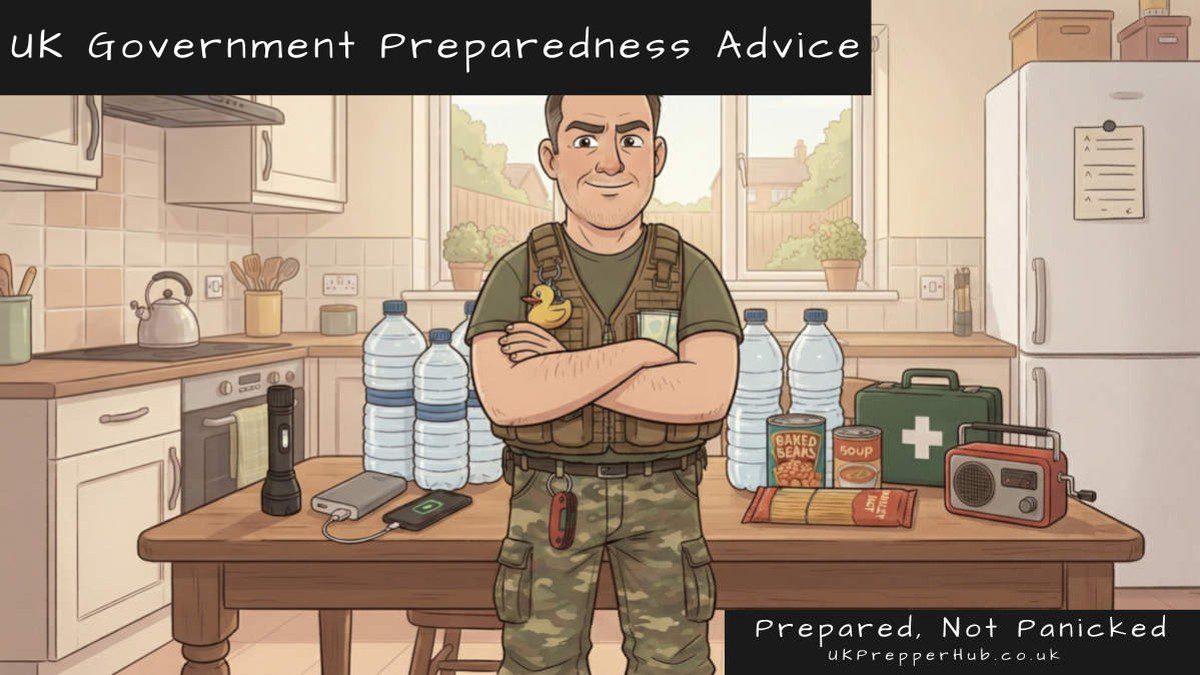
Are you emergency ready? That’s the question the government is asking every household in the UK as it launches the Be Ready campaign, which asks us all to be ready for emergencies by keeping enough supplies to manage on our own for 3 days.
A new website, Be ready for emergencies, replaces the Prepare site launched in 2024, and comes with a downloadable checklist: bottled water, food that needs no cooking, a torch, an FM radio, a power bank, warm bedding, cash, first aid kit and medication.
The campaign is run by the Cabinet Office and is set to last three years. It’s a good list and a big step forward. It still leaves some important gaps, and we cover them below.
🔝 Leading Story
UK — Are You Emergency Ready? Government Launches Be Ready Campaign Asking Every Household to Prepare for 3 Days
Status: Live now. The official Be ready for emergencies page went live today at gov.uk/beready. It opens with the question at the heart of the Be Ready campaign: “Are you emergency ready? From severe weather to cyber attacks, emergencies can disrupt the services you rely on.” Its message is simple: “Being ready for 3 days helps you manage while support reaches those in need.” It also says “You don’t need to do it all at once”, which is exactly how we’d put it.
Defence Secretary Wes Streeting said the government is launching a “national resilience conversation” to raise awareness, speaking in Telford today, the BBC reports. He pointed to this summer’s wildfires, the flooding expected this winter and the risk of cyber attacks on businesses. “How would we cope if the payment systems at the local supermarket went down?” he said.
Security Minister Dan Jarvis said the advice means emergency services can concentrate on the people who need the most help during a crisis, and that similar advice is “a normal part of everyday life” in countries such as France, Ireland and the Netherlands.
The site also covers how to sign up for alerts and warnings, check the flood risk where you live, make a household emergency plan, pack a grab bag, put together a winter car kit, and register for the Priority Services Register, which tells your electricity, gas and water suppliers you need extra help during a supply cut. It says plainly that it “will not be updated with live information during an emergency”, so treat it as a place to prepare from, not a place to check when something has already gone wrong.
📋 Are You Emergency Ready? What’s on the Be Ready Checklist
If you want to know whether you’re emergency ready, this is the government emergency kit for 3 days, in the order the Be Ready checklist gives it:
- ☑️ Bottled water for 3 days: 3 litres per person per day for drinking, with more needed for cooking and washing
- ☑️ Non-perishable food for 3 days that doesn’t need a fridge or cooking, such as tinned meat, fish or vegetables, dried fruit and nuts. Buy food you would normally eat
- ☑️ Hand sanitiser, wet wipes and bathroom products
- ☑️ A torch and spare batteries. The site says torches are safer than candles
- ☑️ Blankets, sleeping bags and warm clothing, because homes get cold quickly when the heating goes off
- ☑️ An FM radio, battery or wind-up, with the frequencies of your national and local stations written down
- ☑️ A charged power bank for phones or compatible medical devices
- ☑️ Cash in a mix of coins and notes, plus your cards, in case card payments or cash machines are down
- ☑️ Copies of ID and important documents, and important phone numbers written on paper, including 105 for power cuts
- ☑️ A first aid kit and your essential medication. Order repeat prescriptions up to 5 working days before you need them
- ☑️ Baby formula (ready-made is best, as you may not be able to boil water), nappies and wipes, if you need them
- ☑️ Pet food and bottled water for your pets
⚠️ What the Be Ready Campaign Still Leaves Out
Credit where it’s due: two of the biggest gaps we flagged in the old government list last month have been filled. Cash is now on it, and so is warm bedding for the home, not just the car. But the list is still built around three days of cold food and bottled water in a house with no other problems, and some things that matter most when the power or water is off are still missing:
- ☑️ A toilet. Wet wipes and sanitiser don’t replace a toilet if the mains water fails or the sewers flood. This is usually the first real problem after a day or so
- ☑️ A way to make a hot drink or a hot meal. No-cook food is fine for a day. By day three, a camping stove used with plenty of ventilation makes a big difference
- ☑️ A carbon monoxide alarm. The kit list doesn’t include one. People improvise with stoves, heaters and generators in an emergency, and carbon monoxide gives no warning. If you add any heat source, add a CO alarm first
- ☑️ Enough water for washing and flushing. 3 litres a day is drinking water only. The site says you’ll need more for cooking and washing, but doesn’t say how much
- ☑️ Light for a whole room. A torch lights one spot. A lantern lets you cook, read and move around
- ☑️ A way to talk when the mobile network is down. The radio lets you hear news, not reach a neighbour. A pair of licence-free walkie-talkies covers a street
- ☑️ A plan for medicines that need a fridge, such as insulin
We go through every one of these gaps, with one sensible pick and a running cost for each, in our Special Report “Government Emergency Kit List: What’s Missing and What Else You Need” first published on 20 September 2026. For the background to the campaign, see our Special Report “Government Emergency Kit: What the UK Is Really Telling You to Stockpile” first published on 26 August 2026.
📋 Clarissa
I’ve Made A Checklist
I’ve already updated my checklist to the new Be Ready list: all fourteen official items in the government’s own order, plus the seven things it still leaves out, with a link for every one. Print it, stick it on the fridge, and tick it off as you go. Free, obviously.
Download: Government Be Ready Emergency Kit Checklist →UK Prepper Hub Tip of the Day
Being emergency ready doesn’t mean buying the whole list this weekend. Start with what you already have: check the cupboards for three days of food you’d actually eat, find the torch and test it, and put a few pounds in coins and small notes somewhere safe. Then write down 105 and your key phone numbers on paper. That’s half the Be Ready checklist done for nothing, and the rest can come a bit at a time. So, are you emergency ready? After an hour with the cupboards, you’ll be a lot closer.
📲 Stay Informed — Free Daily UK Household Briefing
Every day we publish a free briefing covering fuel prices, energy costs, food supply, infrastructure, and anything else that affects UK households. No fluff. No politics. Just the practical stuff.
Your number stays private. WhatsApp and Telegram channels are broadcast-only. You receive updates — nobody, including us, can see your number, and other subscribers cannot contact you.
Free. No commitment. Unsubscribe any time. Stay anonymous.
This report is compiled using official UK government, emergency service, utility provider, and infrastructure operator updates, alongside reputable news agencies. All facts are checked to the best of our ability before publication.
📡 Find Us Everywhere
Daily briefings, prep guides, and real-time updates across every platform. Pick yours.
Free. No commitment. Stay anonymous on WhatsApp & Telegram.
Stay Informed on UK Preparedness
Join our newsletter for UK-specific preparedness tips, product recommendations, and real-world advice for households.
Subscribe to Our Newsletter