
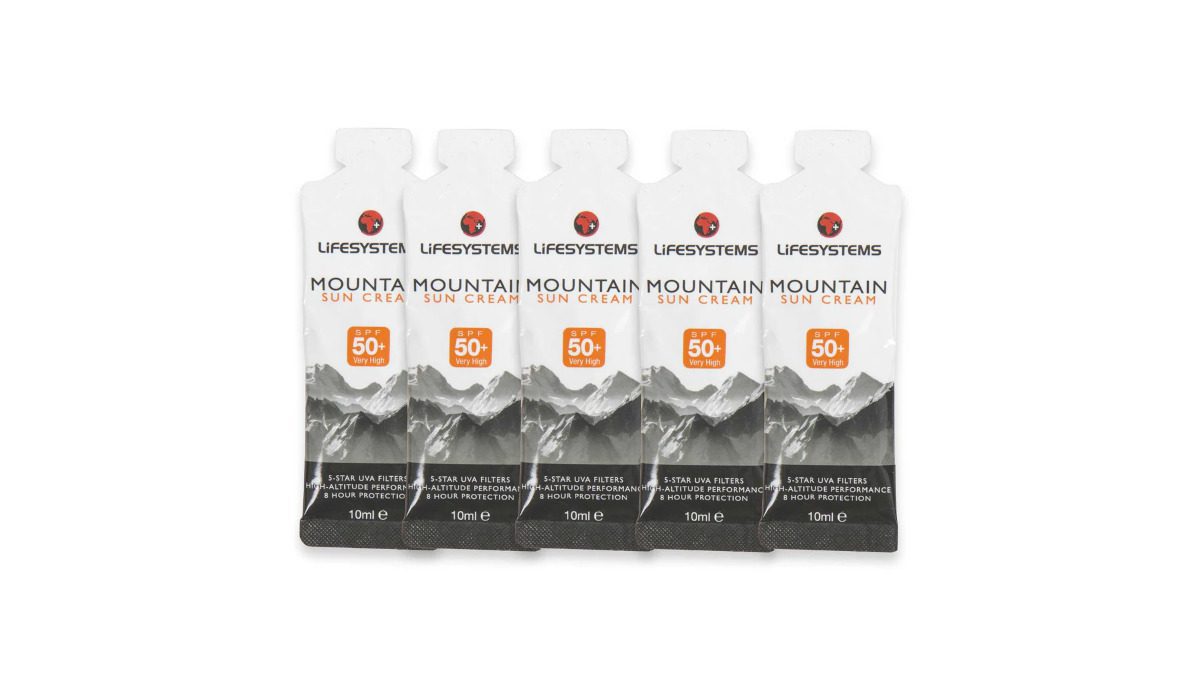
Most first aid kits contain a bottle of sun cream that has been there since the last holiday, is slightly crusty round the cap, and may or may not still be within its use-by date. Most go bags contain the same bottle, or nothing at all. Lifesystems Sun Cream Sachets are the format that fixes this — single-use, SPF50 with 5-star UVA protection, 10ml per sachet, and the right size for a first aid kit pocket, a rucksack belt pocket, or a jacket pocket on the way out the door.
There are no crusty bottles in this review. There is no guessing how much is left, no greasy cap contaminating everything else in the kit, and no weight penalty worth mentioning. One sachet. One application. Done.
Lifesystems Sun Cream Sachets
SPF50 with 5-star UVA in a sealed single-use sachet — the sun cream that actually belongs in your first aid kit, not in a crusty bottle at the back of a drawer.
Current Price at time of writing: £6.49
Rated: 5/5 ⭐ <- our review
What Are the Lifesystems Sun Cream Sachets?
Lifesystems is a UK-based outdoor and first aid brand with a long track record in kit-grade products — their gear turns up in mountain rescue kits, expedition first aid bags, and Scouts rucksacks. These sachets are their sun cream in single-use format: a 10ml foil sachet containing SPF50+ Mountain sun cream with 5-star UVA protection.
They’re sold in packs of five. Each sachet is a single application — enough to cover face, neck, forearms, and the backs of hands. Apply 30 minutes before going out, and one sachet provides up to 8 hours of protection.
The formula is the same as the Lifesystems Mountain SPF50 cream: dermatologically tested, paraben-free, broad-spectrum UVB and UVA filtration with added vitamins E and B, and highly sweat resistant. This is not a generic SPF30 sachet from a bulk supply company. It is the same high-performance product in a different format.
The Format Argument — Why Sachets Beat Bottles in a Kit
The case for sachets over a bottle in any preparedness kit comes down to four things:
No degradation in storage. A bottle of sun cream that sits in a kit bag for two summers will have a dried-out, crusty cap, an uncertain fill level, and a use-by date that’s probably passed. A sachet stays sealed and fresh until the moment you open it. There’s nothing to dry out, nothing to guess about, and the use-by date is printed on each individual sachet.
No mess, no leaks. A half-open bottle in a rucksack or car kit will, eventually, go wrong. A sealed sachet does not. You tear it open when you need it and throw the empty away. Everything else in the kit stays clean.
Weight and space. A pack of five sachets weighs almost nothing and fits flat in a first aid kit inner pocket, a rucksack belt pouch, or the card pocket of a jacket. A 50ml bottle that may or may not have enough left in it does not.
Known quantity. Each sachet is one full application. You know exactly what’s in your kit. You know exactly how many applications you have. There is no “I think there’s enough left” — there either is a sachet or there isn’t.
Lifesystems Sun Cream Sachets
SPF50 with 5-star UVA in a sealed single-use sachet — the sun cream that actually belongs in your first aid kit, not in a crusty bottle at the back of a drawer.
Current Price at time of writing: £6.49
Rated: 5/5 ⭐ <- our review
SPF and UVA — The Numbers
SPF50+ blocks around 98% of UVB rays — the ones responsible for sunburn. The 5-star UVA rating is the maximum on the UK scale and indicates that the UVA protection is proportional to, and high relative to, the SPF level. Both figures are what you want for serious outdoor exposure.
The Lifesystems sachets use the same formulation as the Mountain range — designed for high-altitude skiing and mountaineering, where UV exposure is significantly higher than at sea level due to reduced atmospheric filtration. For use in the UK, from mid-March to mid-October, that’s meaningful headroom.
What Each Sachet Covers
10ml is the right amount for face, neck, forearms, and the backs of hands — the areas most commonly exposed during a working day, a walk, or an outdoor activity. For full-body coverage you would need more than one sachet. For the typical use case — somebody reaching into a kit because they didn’t plan ahead, or adding SPF to exposed areas mid-day — 10ml does exactly what it needs to do.
Apply liberally to dry skin 30 minutes before sun exposure. The formula is highly sweat resistant, so one sachet holds through the activity that prompted you to use it.
Where They Belong in Your Kit
- First aid kit — one or two sachets alongside the plasters and antiseptic. Sun exposure is a health risk, not a cosmetic inconvenience, and the sachet format is exactly right for a kit context
- Go bag / 72-hour kit — extended outdoor exposure during any disruption is more likely than on a normal day. Weight matters in a go bag. Sachets win on both counts
- Rucksack — belt pocket, lid pocket, or top pocket. Four sachets weigh less than any bottle and take up a fraction of the space
- Car kit — heat degrades sunscreen faster than almost anything else in a car, so a full bottle is a poor choice. Sachets stored in a sealed kit bag hold better and don’t contaminate anything if the seal fails
- Day bag or jacket pocket — a sachet survives being flattened under everything else in a bag. A bottle does not
Lifesystems Sun Cream Sachets
SPF50 with 5-star UVA in a sealed single-use sachet — the sun cream that actually belongs in your first aid kit, not in a crusty bottle at the back of a drawer.
Current Price at time of writing: £6.49
Rated: 5/5 ⭐ <- our review
What the Rest of the Team Think
🦆 Keith the Prepper
I had a bottle of sun cream in my kit bag. Been there since 2021. Still half full, I think — hard to tell because the cap had sort of welded itself shut. My wife threw it out. These are what replaced it. I will admit they are better. I will not admit this loudly.
★★★★☆
🪖 Black Panther
In my previous role, field kit was weight-managed and contamination-controlled. A half-used bottle of sun cream has no place in a properly organised kit. Single-use sachets are the correct format — sealed, known quantity, zero cross-contamination. SPF50 with 5-star UVA is the appropriate specification. This is how it should be done.
★★★★★

🤡 Camping Clown
I have a Japanese SPF50 sachet subscription box that costs £34 a month and comes with a little card in Japanese that I can’t read. I also have these now. These are better. The Japanese ones are nicer to look at though, which is why they’re still on the shelf.
★★★★★
🐾 Weekend Warrior
Belt pocket on the rucksack. That’s where these live. A bottle doesn’t fit, weighs too much, and would be disgusting after a hot summer walk. Four sachets weigh almost nothing and I always know exactly how many I’ve got left. Pickle gets a pet-safe SPF for her nose — human sunscreen is toxic to dogs, don’t let that bit slide.
★★★★★

🐕 Pickle
Snorgle!
🐕🐕🐕🐕🐕 (Not for Pickle. Human sunscreen is toxic to dogs. Pickle has his own. He supports the concept of compact sun protection in principle.)

🐔 Chicken Licken
People don’t use the sun cream in their kit because it’s a faff — finding it, checking it’s not expired, working out if there’s enough left, the greasy cap. I’ve been saying for years that the format is the problem, not the intention. A sealed sachet removes every single one of those barriers. SPF50 with 5 stars UVA from a pocket-sized sachet. The excuse list just got a lot shorter.
★★★★★

📋 Calm Clarissa
Two sachets in the family first aid kit, two in the go bag, two in each rucksack. Checked and replaced when we rotate stock. Each sachet has its own use-by date printed on it, which makes the audit genuinely simple. Janet actually suggested the sachets after finding the bottle we’d had since 2022. She was right, as usual.
✅✅✅✅✅
💄 Survivl Gurl
Festival kit, outdoor shoot kit, bum bag kit — a sachet is the right format for all of it. Flat, light, doesn’t leak into my bag. I tear one open before I go on, apply, done. The photography community has absolutely no idea how much UV damage an outdoor shoot day adds up to. These are non-negotiable for me now.
★★★★★
🌿 Aroura
I’ll be honest — I have a small concern about single-use packaging. Each sachet is one foil wrapper that can’t be recycled. A refillable bottle is lower waste per application. That said, if the alternative is a bottle that expires unused or goes off before it’s finished, the sachets arguably produce less total waste. The protection is excellent. Use them mindfully. Namaste 🙏
★★★★☆
Frequently Asked Questions
How much sun cream is in each Lifesystems sachet?
Each sachet contains 10ml — enough for a single application to the face, neck, forearms, and backs of hands. For full-body coverage you would need more than one sachet. For top-up protection on exposed areas mid-activity, one sachet is the right amount.
Are these better than carrying a small bottle?
For kit storage, yes. Each sachet stays sealed until you need it, has its own printed use-by date, weighs almost nothing, and won’t leak or contaminate other kit. A small bottle can dry out around the cap, is harder to gauge how much is left, and can leak in a bag. The format advantage is the point of the product.
How long does the protection last from one sachet?
Up to 8 hours from a single application. Reapply if you’ve been heavily sweating or have been swimming and towelled off. For a normal day of outdoor activity, one sachet in the morning handles it.
Why SPF50 specifically?
SPF50 blocks around 98% of UVB rays and the 5-star UVA rating means the UVA protection is proportionally high. SPF30 (which some cheaper sachets use) offers 97% UVB protection and rarely any UVA protection— the difference is marginal but SPF50 with 5-star UVA gives you the ceiling of practical protection without compromise. It matters particularly at altitude or during prolonged exposure.
Are Lifesystems sun cream sachets on Amazon?
Not currently — they’re available direct from Lifesystems. Use the link below. If you have a prime habit, the format and specs are genuinely worth the direct order.
Build Your Resilience
Further Reading: Related Guides
All our guides can be found listed on our resilience hub.
📡 Find Us Everywhere
Daily briefings, prep guides, and real-time updates across every platform. Pick yours.
Free. No commitment. Stay anonymous on WhatsApp & Telegram.
Stay Informed on UK Preparedness
Join our newsletter for UK-specific preparedness tips, product recommendations, and real-world advice for households.
Subscribe to Our NewsletterLifesystems Sun Cream Sachets SPF50 — Pack of 5
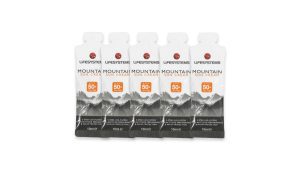
SPF50 with 5-star UVA in a sealed single-use sachet — the sun cream that actually belongs in your first aid kit, not in a crusty bottle at the back of a drawer.
Product SKU: 20367
Product Brand: Lifesystems
Product Currency: GBP
Product Price: 6.49
Product In-Stock: InStock
5
Pros
- SPF50+ with 5-star UVA — maximum protection ratings on both scales
- Single-use — no crusty caps, no degraded formula, no guessing what's left
- Stays sealed until needed — no leaks or spills in kit storage
- Lightweight and flat — fits in a first aid kit pocket or rucksack belt pouch without bulk
- Known quantity per sachet — kit inventory is simple and accurate
- Same formula as the Lifesystems Mountain range — not a downgraded bulk filler product
- Dermatologically tested, paraben-free
- Up to 8 hours protection per sachet
- Highly sweat resistant
Cons
- 10ml covers face and exposed areas only — full-body coverage needs multiple sachets
- Pack of 5 — restocking more frequently than a large bottle if used regularly
- More packaging waste per application than a refillable bottle (the trade-off for single-use)
- Not currently available "next day" on Amazon — available direct from Lifesystems
- Requires 30 minutes before sun exposure — plan ahead, not last-second