
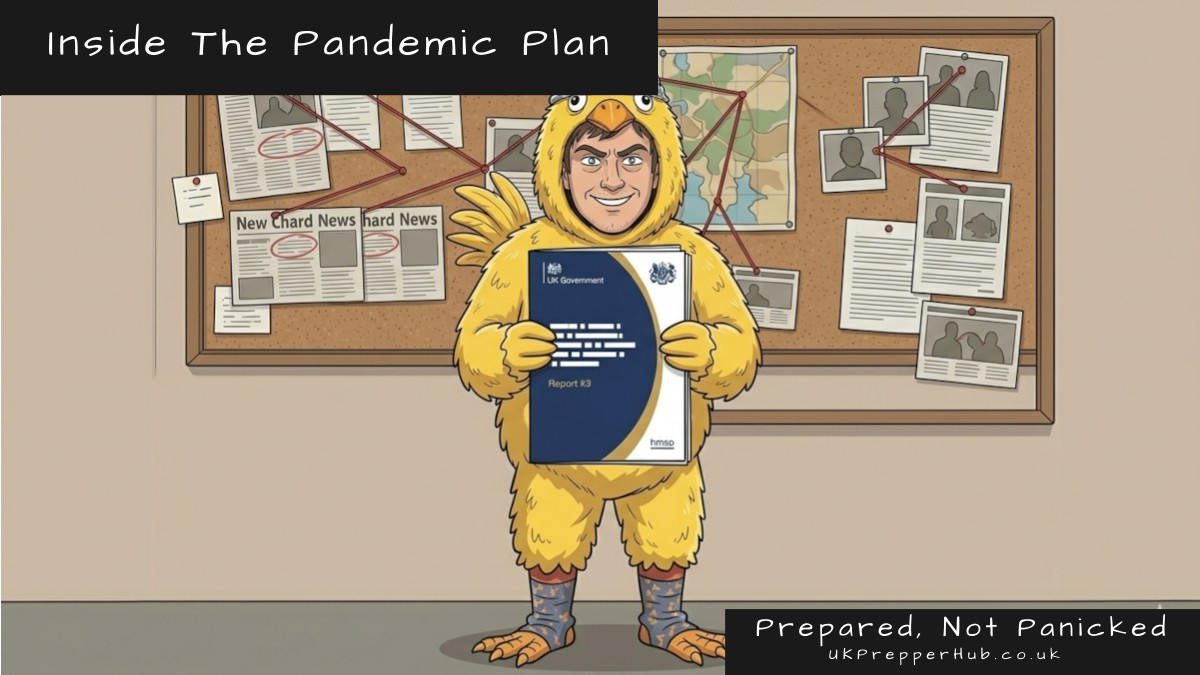
The Department of Health and Social Care published its Pandemic Preparedness Strategy in March 2026. It runs to 68 pages, commits around £1 billion to health protection during this parliament, and outlines a programme of institutional preparation designed to make Britain’s response to the next outbreak faster, better-resourced, and more legally robust than anything seen during Covid.
In those 68 pages, you will not find a single line telling you — the household — what to do.
What the Government Is Actually Building
The strategy is explicit on one point: another pandemic is not a possibility. It is a certainty. The question is when, and how ready the systems are when it arrives.
On that basis, the plan is serious and substantial:
- A new biosecurity centre in Harlow, Essex — described as the largest of its kind in Europe, with the full site scheduled to be operational by 2038.
- Expanded genomic sequencing capacity, with hospital-based pathogen detection rolling out from 10 to 30 NHS trusts, plus wastewater surveillance capable of detecting outbreak signals weeks before clinical cases emerge.
- A dynamic PPE stockpile model — rather than storing vast quantities of PPE in warehouses, stock cycles through NHS routine use, with annual testing of deployment plans built in.
- A £1 billion-plus vaccine partnership with Moderna, plus up to £520 million through the Life Sciences Innovative Manufacturing Fund to 2030.
- £160 million pledged to epidemic preparedness innovation partnerships globally.
This is, by any measure, a serious institutional response. The problem is that it is entirely institutional.
The Part That Deserves a Closer Look
Buried in the England-specific implementation section of the strategy is a passage that has received almost no mainstream coverage.
The UKHSA will, according to the government’s own document, “explore options to work with ‘big tech’ to use live location data and artificial intelligence (AI) for a more rapid, large-scale detection and alert system during pandemics.” The target for deployment is 2030.
This is not speculation and it is not advocacy framing — it is verbatim government policy, published on GOV.UK and freely available to read.
In plain terms: the government is building the architecture for a system that can track population movement in real time using data held by the companies that run your phone’s operating system, your mapping apps, and your social media platforms. It is designed to activate rapidly. The document does not name which companies. It does not describe what data-sharing agreements would look like. It does not say what happens to your location history once a pandemic is declared over.
None of that detail has been published. The commitment to build it has.
This Has Already Happened
The reason this warrants attention is that a version of it has already been done — covertly, without legislation, and without the knowledge of the people involved.
In February 2021, government-funded researchers working with the Scientific Pandemic Influenza Group on Behaviours (SPI-B) used mobile phone location data to track the movements of people who had recently been vaccinated. The study monitored whether vaccinated individuals travelled further from home, visited businesses, or went straight back afterwards. It was designed to assess whether getting a vaccine changed behaviour in ways that might increase transmission risk.
The people being tracked were not told.
When the programme came to light, the government’s defence was that the data was “GDPR-compliant,” obtained from a private company that had already anonymised it, and collected at cell tower level rather than individual GPS precision. Cell tower level, in practice, means accuracy to around 300 metres in urban areas and one to two kilometres in rural areas. The data could identify where people live, where they work, and what they do on a given day — it simply did so without attaching a name directly to the record.
Big Brother Watch described it as “deeply chilling,” noting that no one expects to be tracked and subjected to behavioural analysis by their own government as a consequence of getting a vaccine.
What changed between 2021 and 2026 is not the principle. It is the formality. What was done covertly using purchased commercial data during Covid is now written into official peacetime policy, with big tech explicitly named as the delivery mechanism and a specific deployment target attached.
Complete Guide
Household OPSEC Guide
OPSEC is a military term that’s filtered down to civilian life. OPSEC is short for “OPerational SECurity”. At its core, it means protecting information that could be used to harm you.
The Emergency Powers Being Built in Advance
Alongside the surveillance infrastructure, the government is pre-drafting emergency legislation. By March 2027, DHSC will complete an “All Pandemic Hazards Bill” — a modular legislative framework designed to be adaptable to whichever pathogen emerges next.
It is worth understanding what this means. The Coronavirus Act 2020 was drafted and passed in emergency conditions in a matter of days. It gave police powers to detain individuals, closed venues, restricted movement, and suspended a range of civil liberties — all under powers that parliament renewed every six months, with limited opportunity for opposition or meaningful amendment during the acute phase of the crisis.
The new strategy builds the legal equivalent in advance: emergency powers ready to be activated and customised before the next pathogen is even identified. The stated aim is speed and adaptability. Whether you regard pre-built emergency legislation as sensible crisis management or as something worth monitoring carefully, the fact is that the legal infrastructure for the next pandemic response is being designed in peacetime, with deliberate speed as its primary requirement.
What the Strategy Doesn’t Cover
The Pandemic Preparedness Strategy contains no household preparedness guidance. None. No recommended stockpile levels. No advice on medication buffers. No guidance on what to do if schools close, supply chains tighten, or GP appointments become unavailable at scale. The assumption throughout is that households will present themselves to the institutional system when required and comply with whatever framework is in place.
The last pandemic showed clearly what happens when that assumption meets reality.
In the early weeks of the first lockdown, supermarket shelves were stripped. Online delivery slots disappeared for months. GP surgeries moved to telephone-only overnight. Cancer screening was paused. Elective surgery was cancelled at scale. Hundreds of thousands of people on repeat prescriptions found themselves unable to get a review appointment, with pharmacies running short of specific drugs and NHS online access unreliable.
None of that was the direct result of the virus. It was the result of millions of households — simultaneously unprepared — making the same reactive decisions at the same time. The supply chains did not fail. They were overwhelmed. The health system did not collapse. It was asked to absorb an unmanageable spike of simultaneous demand on top of an active pandemic response.
The government’s new plan does not address this. The £1 billion goes to genomic sequencing, vaccine manufacturing capacity, and biosecurity infrastructure. Your pantry remains your responsibility.

🦆 Keith
Don’t Be Keith
Keith bought £400 of military-grade respirators and a full chemical decontamination kit during the first lockdown. FFP2 masks were £1.50 each and provided exactly the protection a household needs.
ADESTE – FFP2 Masks – UKCA Certified
BSI-certified FFP2 protection at 28p a mask — 50 individually sealed, long-term storage ready, and exactly what disappeared from shelves in March 2020.
Our Full Review: ADESTE – FFP2 Masks →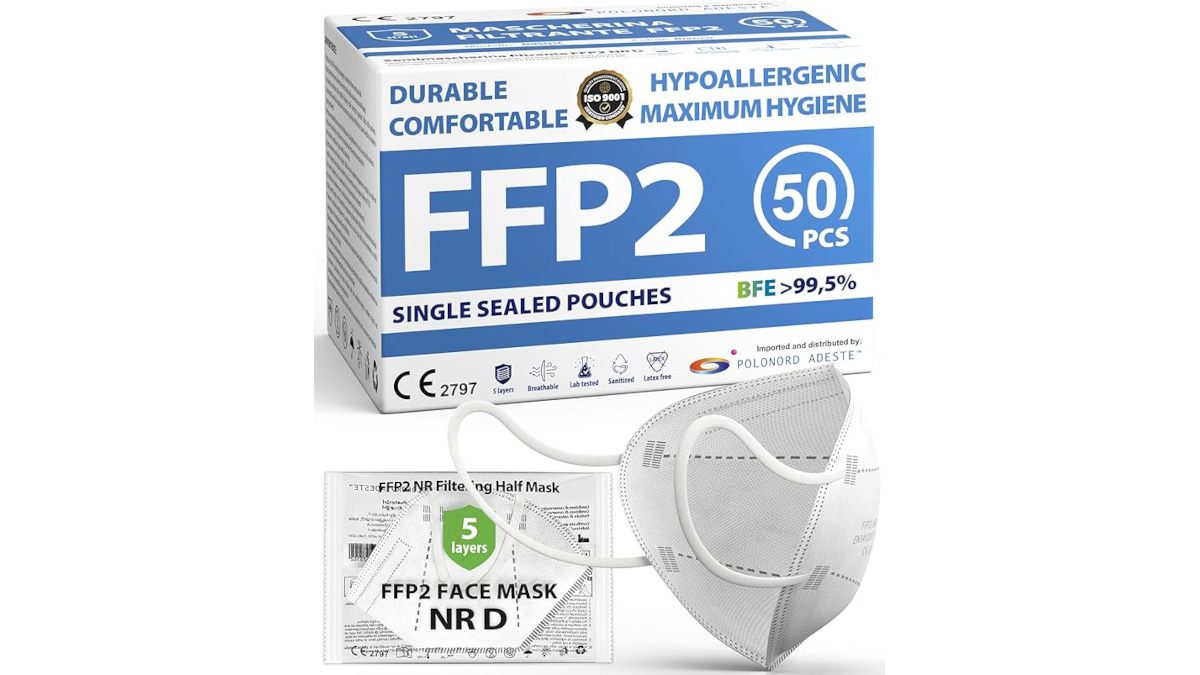
What You Should Actually Do
The practical lesson from Covid is not “build a bunker.” It is that modest, proportionate preparation made in advance is almost invisible to daily life and genuinely transformative in the first weeks of a crisis. The households that coped best were not the ones with the most kit — they were the ones who had already made a handful of sensible decisions before they needed to.

🐔 Chicken Licken
Did You Know?
The biggest single killer in the last pandemic wasn’t the virus itself — it was everything that stopped around it. Cancelled cancer screenings. Missed cardiac events. Untreated infections. Eighteen months of suppressed NHS access produced excess deaths that are still being counted. The most important pandemic preparation for most households isn’t masks or stockpiles — it’s making sure a routine health crisis doesn’t become a life-threatening one because the system is unavailable.
Medication — The One Most People Miss
If anyone in your household is on regular medication — blood pressure, thyroid, diabetes, asthma, antidepressants, anything prescribed on a repeat basis — this is where to start. During the first lockdown, repeat prescriptions that required a GP review before renewal hit a wall. Surgeries were emergency-only. Certain drugs ran short nationally. If you are managing a long-term condition, do not run your prescription to the last week. Know the renewal process. Request early before supply runs low. This is not stockpiling — it is a sensible buffer that costs nothing and could matter enormously.
Complete Guide
Managing Essential Medication
This guide covers more detail on being prepared with essential medication for all emergency situations.
Food
Not panic buying. A rolling buffer. Four weeks of food your household actually eats, cycled through and replaced as you use it, requires almost no active management once established. In the first weeks of a supply disruption, it is the difference between sitting out the chaos and joining it.
Complete Guide
Long-term food storage
Most households have a few days of food at best, but real disruptions in the UK can last far longer and quickly expose that gap. This guide shows you how to build a practical, affordable food reserve that actually works in the real world—not just on paper.
Read the Full Guide: Long-term food storage →
Water
Water treatment infrastructure runs on staffing levels that a pandemic can reduce quickly, and civil disruption has historically put pressure on supply in ways that are hard to predict. A minimum of three litres per person per day for at least three days is the baseline. A week is significantly better. This is not difficult or expensive to maintain once it is in place.
Complete Guide
Emergency Water Storage
How much to store, how to store it in small spaces, and the reality of UK water rotation.
Communications
In 2020, mobile networks held up. In a more severe or differently-structured crisis, they may not. Know how you would contact family if mobile data is saturated or unavailable. Know where you would go if your area became inaccessible or a household member needed to reach you from elsewhere. Have that conversation with elderly relatives before there is any urgency to it.
Basic PPE
A supply of FFP2 masks costs around £8 for ten. They store well, they are effective against respiratory pathogens, and they require no specialist training to use correctly. That is the level of PPE preparation a household needs. Leave the industrial respirators to Keith.
ADESTE – FFP2 Masks – UKCA Certified
BSI-certified FFP2 protection at 28p a mask — 50 individually sealed, long-term storage ready, and exactly what disappeared from shelves in March 2020.
Our Full Review: ADESTE – FFP2 Masks →Frequently Asked Questions
Is another pandemic really likely?
The government’s own strategy treats it as a certainty rather than a risk to be managed. The document does not frame pandemic as a possibility — it frames it as an event that will happen, with the question being when and how well the systems hold when it does. That is the official position of the Department of Health and Social Care, published in March 2026.
What emergency powers could come back?
The All Pandemic Hazards Bill, due for completion by March 2027, will give the government pre-drafted modular powers adaptable to any pathogen. The specifics will depend entirely on the nature of the outbreak. During Covid: movement restrictions, venue closures, school closures, mandatory self-isolation, and police enforcement powers. A pre-built legal framework is designed for speed — which means restrictions in the next pandemic could be deployed faster and more comprehensively than in 2020, not slower.
Should I stockpile PPE at home?
A modest supply of FFP2 masks is sensible, cheap, and takes up almost no space. Industrial-grade respirators are unnecessary for household use and expensive enough to become a distraction from more important preparations. Masks, basic hand hygiene supplies, and a stocked first aid kit are proportionate and practical for most households.
What does the location tracking actually mean for me?
Nothing immediate — the system is planned for 2030 and the operational detail has not been published. What it means is that the infrastructure for large-scale population movement tracking, using data from the devices and platforms most people use daily, is being formally built into the government’s permanent pandemic response toolkit. The 2021 SPI-B precedent established that this type of tracking has already been carried out without public notification, defended as anonymised and GDPR-compliant. Whether that is reassuring is a question each household needs to answer for itself — but it is worth understanding clearly that it is government policy, not a fringe concern.
Is the government hiding this?
No. The strategy is published in full on GOV.UK and is freely available to read(Link below in sources section). The location tracking proposal, the pre-drafted legislation, the biosecurity investment, and the absence of any household guidance are all in the document. The issue is not secrecy — it is that very little of the mainstream coverage has reflected what is actually in the plan, and none of it is directed at you.
Sources
All claims in this report are drawn from primary government sources. The pandemic preparedness strategy is publicly available and we encourage you to read it in full.
- Pandemic Preparedness Strategy: building our capabilities — Department of Health and Social Care, March 2026. Full publication including all chapters and the 68-page PDF: www.gov.uk
- UK government approach to implementing the strategy (England only) — The chapter containing the UKHSA big tech and live location data commitment, verbatim: www.gov.uk
- £1 billion invested in health protection as new Pandemic Strategy published — DHSC press release, March 2026: www.gov.uk
- SPI-B: Behavioural considerations for vaccine uptake in Phase 2 and beyond — The 42-page Scientific Pandemic Influenza Group on Behaviours report (March 2021) from which the covert mobile phone tracking research originated: www.gov.uk
- The Telegraph — Original mainstream reporting that brought the SPI-B mobile phone tracking programme to public attention.
Build Your Resilience
Further Reading: Related Guides
All our guides can be found listed on our resilience hub.
Gear We’ve Tested & Reviewed
- OxiPro OX2 Pulse Oximeter
- British Army 24-Hour Ration Pack
- Aquatabs 8.5mg Water Purification Tablets
- ADESTE FFP2 NR D face masks
All our reviews can be found on our reviews and resources page.
📡 Find Us Everywhere
Daily briefings, prep guides, and real-time updates across every platform. Pick yours.
Free. No commitment. Stay anonymous on WhatsApp & Telegram.
Stay Informed on UK Preparedness
Join our newsletter for UK-specific preparedness tips, product recommendations, and real-world advice for households.
Subscribe to Our Newsletter