

When a flood warning lands, most people think sandbags. In reality, sandbags are heavy, hard to source in time, and useless if the water’s already coming in through your airbricks. The right barrier depends on your property, your flood risk, and how much warning time you’re realistically going to get.
This guide covers every practical option — from £10 airbrick covers to £2,000 permanent threshold barriers — and helps you work out which combination makes sense for where you live. For the full picture on preparing your home for flooding, read our UK Home Flood Defence guide first.
Complete Guide
UK Home Flood Defense
Even small floods can damage flooring, walls, furniture, and utilities. Knowing how to act fast and prepare your home makes recovery faster and safer.

The Weak Points Most People Miss
Before spending a penny on barriers, understand where flood water actually enters a UK home. The answer surprises most people.
Airbricks are ground-level ventilation bricks built into the external walls of most UK homes — typically 215mm × 65mm. In a flood, water pours straight through them into the void beneath your floor and into ground-floor rooms. Most homes have several. Most people have never thought about them.
Letterboxes sit around 600–700mm off the ground. In shallow flooding, above the waterline. In deeper flooding, a direct route inside.
Cat flaps, airvents, and extractor fan outlets follow the same logic. Any opening at or near ground level is a potential entry point once water levels rise.
Around door frames — water will find gaps around worn seals long before it comes over the threshold itself.
The practical takeaway: walk the full perimeter of your ground floor right now, count every airbrick, and note every ground-level opening. That survey is worth more than any barrier product.

🐔 Chicken Licken
Did You Know?
Most UK homes flood through the airbricks before a single drop comes under the door — a fact he has been pointing out for years and nobody ever listens to
Airbrick Covers
Airbrick covers are the most cost-effective flood defence you can buy, and almost nobody bothers with them.
A pack of plastic snap-fit covers costs around £10–£20 and fits standard UK airbrick sizes. Deployment is pressing them over the brick — no tools, no installation, ten seconds per brick. Done.
The catch: you need to fit them before water arrives, and you need to know where every airbrick is. That survey you just did — this is why.
For permanent protection, terracotta or powder-coated steel covers are available with hinged or magnetic seals that don’t require manual deployment. These are worth considering if your property is in a confirmed flood risk zone and you want one less thing to remember during a warning.
What to look for: Covers rated for at least 300mm water depth. Measure your airbricks before ordering — most UK homes use 215 × 65mm or 215 × 140mm. Don’t guess and order the wrong size.
Manthorpe Airbrick Flood Defence
The only UK-made flood-specific airbrick cover from an established manufacturer — permanent terracotta frame, bright yellow clip-on cover, fits standard 9″×3″ airbricks..
Our Full Review: Manthorpe Airbrick Flood Defence →
Letterbox Seals, Cat Flap Covers, and Other Gaps
Small gaps, small cost. These are the things that get forgotten in every flood prep guide and then noticed when the carpet is soaked.
Letterbox flood seals are rubber or neoprene covers that fit inside the letterbox housing and block water ingress. Most are under £10. If your letterbox is anywhere near flood water height, fit one.
Cat flap covers — temporary foam inserts or covers. Not elegant, but a cat flap is a 200mm × 170mm hole in your door. Block it.
Air vents and extractor outlets at ground level — foam bungs or waterproof tape during a flood warning. Temporary, effective, cheap. Note where yours are now so you’re not crawling around outside in the dark during a warning.
Self Amalgamating Tape
A roll of black silicone tape that fuses to itself into solid rubber: stop a leaking pipe tonight, waterproof a cable gland tomorrow.
Our Full Review: Self Amalgamating Tape →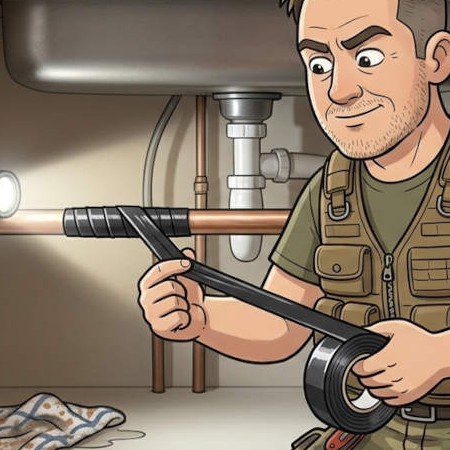
Polymer Flood Bags and Water-Activated Products
The modern sandbag replacement. Dry and flat, they store in a cupboard without effort. On contact with water, a superabsorbent polymer inside the material locks liquid in and the product swells to form a seal.
A single polymer flood sock can absorb 20–25 litres of water and hold it. Stack several across a doorway and you have meaningful shallow flood protection that one person can deploy alone, without sand, without lifting 15kg bags.
Key advantages over sandbags:
- Store dry for years without degradation
- Activate on contact with water — no preparation needed
- Lightweight until deployed (one person can carry a full kit)
- Some are reusable once thoroughly dried out
The honest limitation: polymer products work well against shallow flooding up to around 300mm at the threshold. In deeper, sustained flooding they’re a first line of defence, not the whole answer.
Floodshield Flood Sock
A 1.5m flood sock that stores flat in a drawer, then swells into a water-tight seal across your door minutes after you wet it.
Our Full Review: Floodshield Flood Sock →
Door Flood Boards and Threshold Barriers
For properties with known flood risk or repeat exposure, a dedicated door flood board provides significantly better protection than polymer products alone.
Removable flood boards slot into aluminium channels fixed either side of the door frame. The board stores flat when not needed and drops back in when required, sealing against a rubber gasket. Rated depths typically run from 600mm to 1m depending on the model and installation quality.
The important caveat: installation requires fixing bracket channels to your door frame. On a rented property that needs landlord permission. On a council home, contact your housing officer — some local authorities will fund installation for properties in high flood risk areas. Check what your council offers before paying for it yourself.
Permanent threshold barriers are built into the door frame itself. No deployment, no action required — the seal is always in place. Cost runs from £800 to £2,000 installed. Right for a property that floods regularly; significant overkill for a property that might flood once in fifteen years.

🦆 Keith
Don’t Be Keith
Keith ordered a premium aluminium door flood board, fitted the bracket channels on the wrong side of the door frame — it now opens outward directly into the barrier, so neither the door nor the barrier functions at the same time.
Sandbags — The Traditional Option
Sandbags work. The problems are logistics, not performance.
A filled sandbag weighs around 15kg. Protecting a standard front door needs 12–15 bags. Filling them requires sand, shovels, and time — none of which you’re likely to have in abundance when a flood warning comes through at 11pm.
Many councils have reduced or stopped free sandbag distribution. Check your local council’s current policy now, not during a flood. The answer may surprise you.
If sandbags are your plan:
- Pre-fill them and store sealed in heavy-duty bags — they’ll degrade outdoors within a couple of seasons
- Polypropylene bags outlast hessian in storage
- Lay a plastic sheet under the sandbag line to reduce seepage from below
- Stack in a staggered brick pattern for stability
The honest assessment: for most households, polymer flood products are now a more practical first choice. Sandbags work well as a supplement where volume matters, not as the primary defence you buy and fill on the day.
Matching Your Barrier to Your Property
Terraced house: Multiple entry points — front door, rear door, side access, airbricks running the length of the ground floor. Focus on airbrick covers first (they’re cheap and often have the biggest impact), then door barriers front and rear. Don’t forget the back of the house. Many people defend the front door and watch the rear garden gate act as a funnel for their neighbours’ runoff.
Ground-floor flat: The shared entrance is the challenge. You cannot install flood boards on a communal door without building management agreement. Focus on your own flat entrance, airbrick covers where accessible, and letterbox or threshold seals. Contact your building management now about flood response procedures — you want that conversation in writing before a warning is issued, not during one.
Semi-detached or detached: More perimeter to cover, including the garage. Double garage doors are a significant weak point and almost impossible to seal with standard off-the-shelf products. Purpose-built garage flood barriers exist for properties where this is a known risk.
Properties with basements or cellars: Basement flooding is a separate problem. External drains and inlet pipes can back-surge under flood conditions regardless of what you do to the doors. You need a qualified drainage engineer’s assessment — barrier products won’t solve this on their own.
Complete Guide
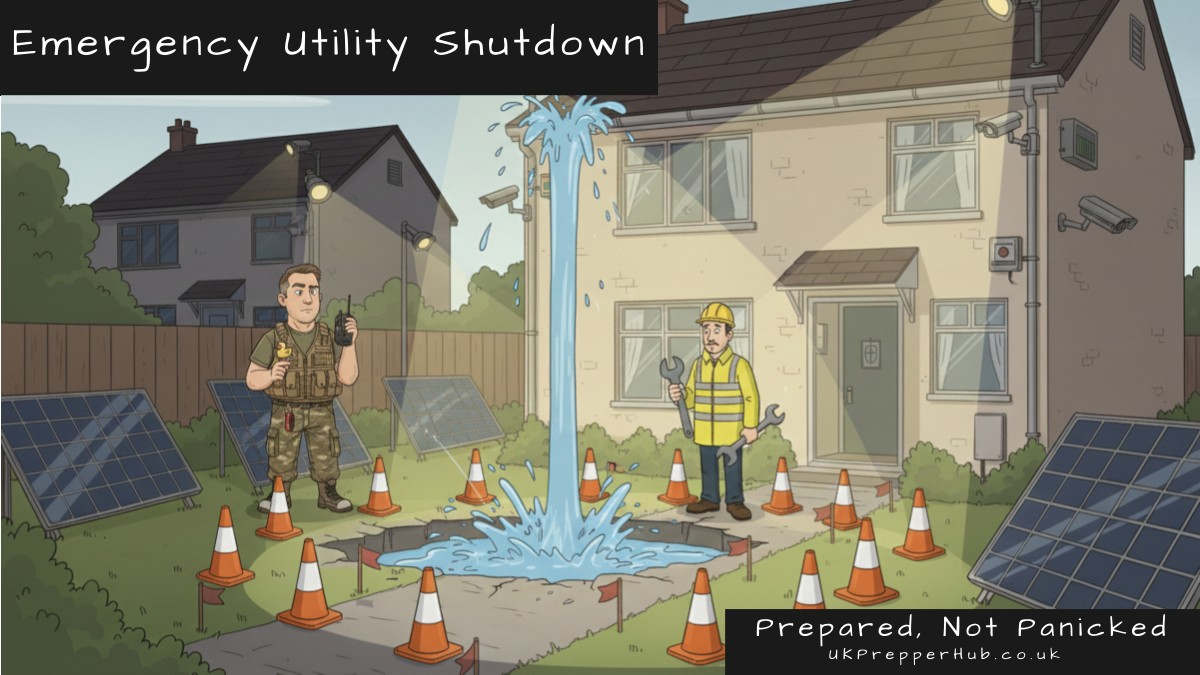
Emergency Utility Shutdown
When something goes wrong in the home — flooding, fire risk, storm damage, or a major leak — knowing when to shut off your utilities is just as important as knowing how.
Complete Guide
Home Evacuation Plan
Most households freeze during an evacuation — not from fear, but from making fifteen decisions simultaneously under pressure for the first time. This guide walks you through the five decisions to make now, calmly, before you ever need them.
Read the Full Guide: Home Evacuation Plan →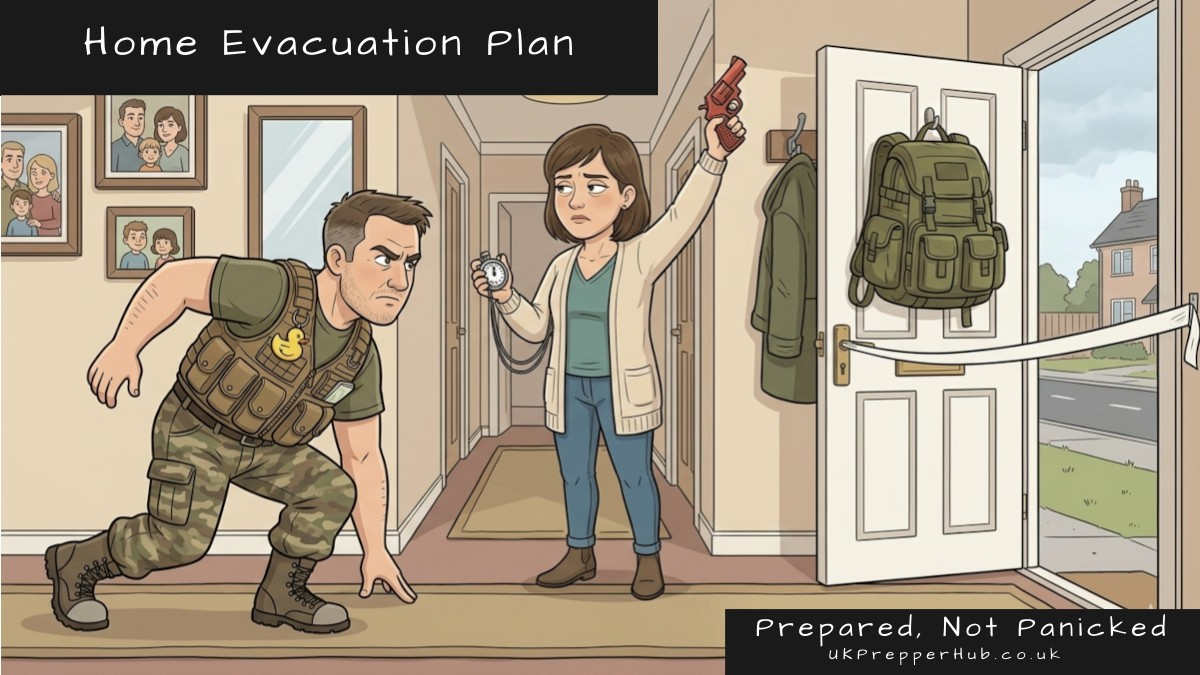
📡 Find Us Everywhere
Daily briefings, prep guides, and real-time updates across every platform. Pick yours.
Free. No commitment. Stay anonymous on WhatsApp & Telegram.
Frequently Asked Questions
Do I need to tell my home insurer I’ve fitted flood barriers?
Yes — and it’s worth doing, because many insurers will reduce your flood excess or premium if you have accredited flood resilience measures in place. Take photos of installed barriers and keep receipts. Check whether your insurer recognises products certified under the PAS 1188 flood product standard.
Can my landlord refuse to let me install flood barriers?
For removable products (polymer bags, snap-fit airbrick covers) — no landlord permission needed, nothing is permanently fixed. For anything requiring screws or bracket channels fixed to the door frame, you do need permission. If your property is in a confirmed flood risk area, it’s worth making the request in writing — some landlords and housing associations will fund installation.
Are airbrick covers safe to leave on permanently?
No. Airbricks exist to ventilate the void beneath your floor and prevent moisture build-up. Blocking them permanently risks damp and rot in the floor structure. Snap-fit covers should go on during a flood warning and come off once the risk has passed.
How long do polymer flood products last in storage?
Most manufacturers quote 5 years stored dry and sealed. Keep them away from direct sunlight and damp. Check the packaging for the specific product’s stated shelf life — it varies.
How effective are flood barriers against sewage flooding?
Surface water barriers won’t prevent sewage back-surge through drains and toilets. If your property has previously experienced sewage flooding, you need non-return valves fitted to drain outlets — that’s a job for a drainage engineer, not a DIY product.
Build Your Resilience
Further Reading: Related Guides
- UK Home Flood Defence
- Home Evacuation Plan
- Emergency Utility Shutdown
- Preventing Indoor Mould & Damp
- 72-Hour Grab Bag
All our guides can be found listed on our resilience hub.
Gear We’ve Tested & Reviewed
All our reviews can be found on our reviews and resources page.
Stay Informed on UK Preparedness
Join our newsletter for UK-specific preparedness tips, product recommendations, and real-world advice for households.
Subscribe to Our Newsletter