
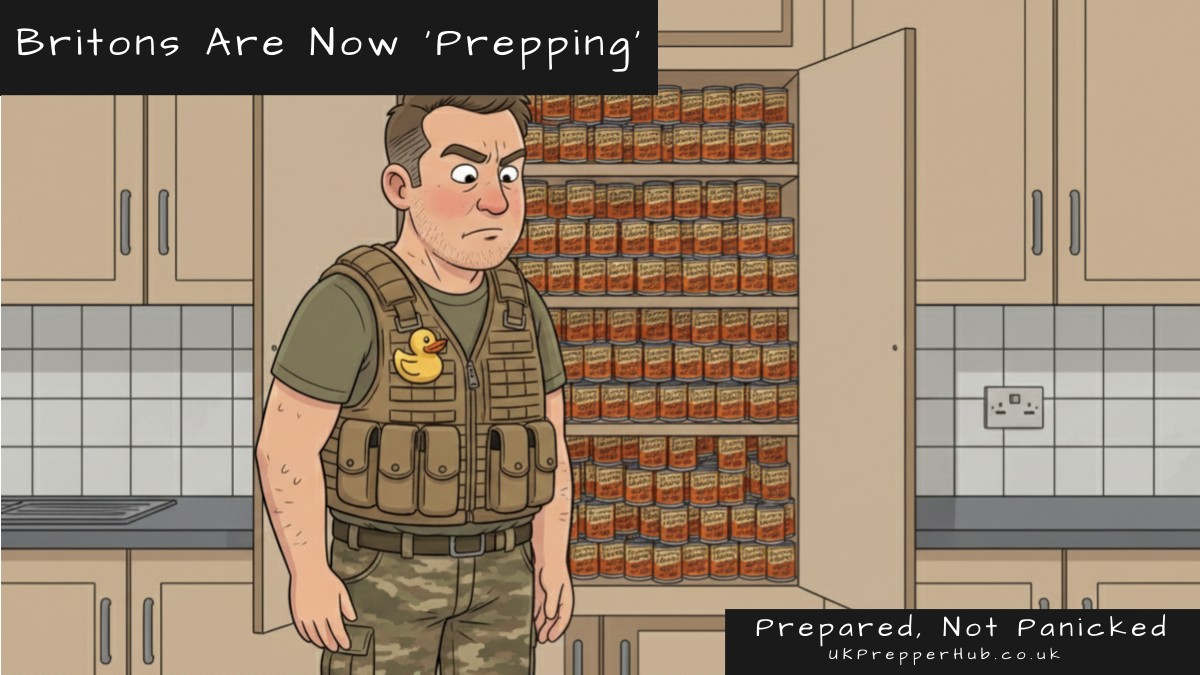
New data from Link Group — the UK’s ATM network — reveals that millions of British households are now actively preparing for major disruptions to normal services. Cash stashes, tinned food stockpiles, battery-powered torches: what was once the territory of dedicated preppers is now mainstream behaviour. This is what the numbers say — and what to do next.
Millions of Britons are now “prepping” — and for once that’s not a dramatic overstatement. A new survey by Link, the organisation that runs the UK’s cash machine network, has found that a significant proportion of UK households are taking tangible steps to prepare for events that would cause “major disruption to normal services.” Power outages, bank IT failures, natural disasters, cyber-attacks: these are no longer abstract threats in the public mind. They are things people are quietly, practically, getting ready for.
The Numbers Behind the Shift
Link’s research asked respondents what they had already done — or were now doing — to prepare for a major disruptive event. The results are striking:
- 49% have battery-powered items at home, such as a torch
- 47% have a supply of tinned goods such as baked beans and canned fruit
- 37% keep a power bank at home to keep their mobile phone charged
- 20% have access to a portable gas hob, such as a camping stove
- 17% have a stash of cash at home specifically for emergencies
- 15% have an analogue radio
Notably, 23% of those who had taken action had done so within the last three months — a direct reflection of the current threat landscape. Only 27% of respondents said they had done nothing at all to prepare.
“With rising public concern about threats like power outages, cyber-attacks and disruption to card payments, more people are prepping by keeping some emergency cash at home,” said Graham Mott, Link’s Director of Strategy.
What Is Driving This?
The survey’s timing is no accident. The drivers cited by respondents map almost exactly onto the threat environment that has been building since 2022:
- The Middle East conflict — ongoing instability affecting global energy markets and supply chains
- The war in Ukraine — prolonged disruption to energy supply and European security
- Extreme weather — flooding and severe storms becoming more frequent across the UK
- Cyber-attack risk — repeated high-profile incidents targeting UK infrastructure, including the NHS
- Power outage risk — public awareness of grid vulnerability has grown significantly since 2022
The UK government’s own Prepare website recommends households stockpile tinned food, bottled water, a first aid kit, a battery torch, a wind-up or battery radio, and a power bank — almost identical to what Link’s data shows people are actually doing. For perhaps the first time, government guidance and public behaviour are broadly aligned.
This Is Good News — But Is It Enough?
A torch and a few tins of beans is a start. It is emphatically not a plan. The difference between someone who has “done a bit of prepping” and someone who is genuinely resilient in a three-day power cut or supply disruption is preparation depth: knowing how much food, what kind of cash, and what to actually do when the situation unfolds.
The good news: none of this is complicated. The Resilience Hub covers each of these areas in detail — practical, no-nonsense guides built for UK households, not American bunker enthusiasts.
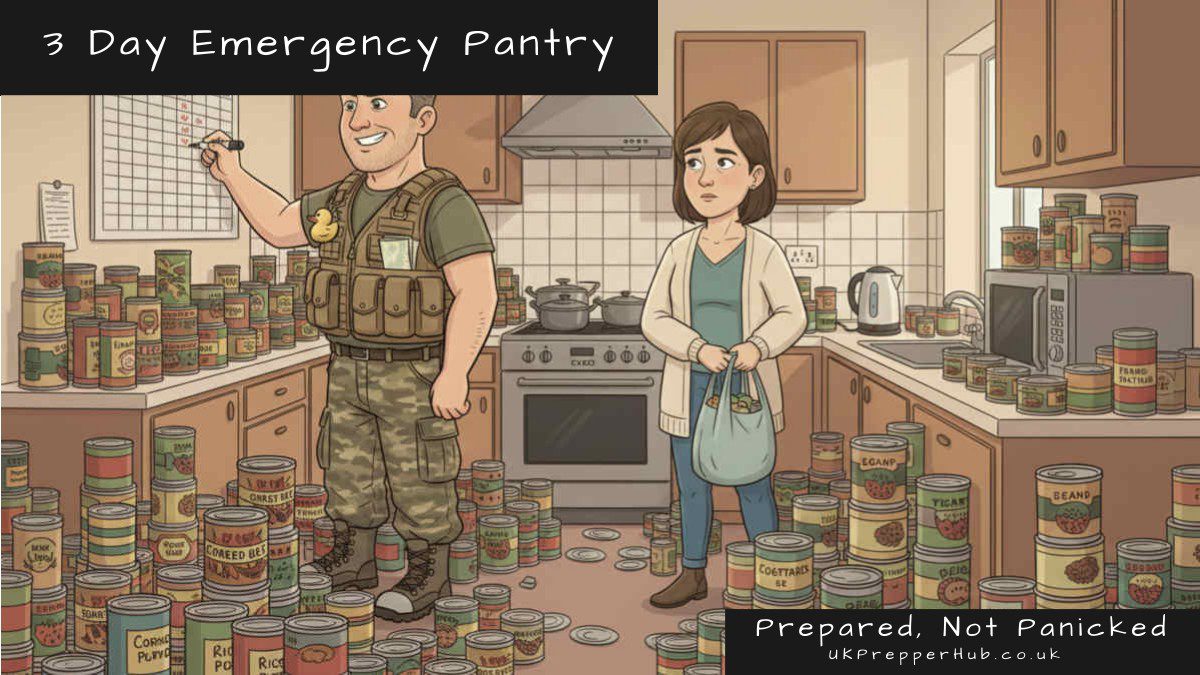
If you are one of the 47% who has tinned goods at home, here is how to do that properly:
Complete Guide
3-Day Emergency Pantry
The low-barrier start: A shopping list of shelf-stable meals that require zero refrigeration.
If you are among the 49% with a battery torch, the next step is to build it out into a full blackout kit — everything in one place, ready to grab:
Complete Guide
How to Make a Blackout Box
Most households aren’t prepared for even a short power cut, and the stress comes from small, avoidable problems like lack of light, heat, or a way to cook. This guide shows you exactly how to fix that with a simple, practical setup so a blackout becomes manageable rather than disruptive.
Read the Full Guide: How to Make a Blackout Box →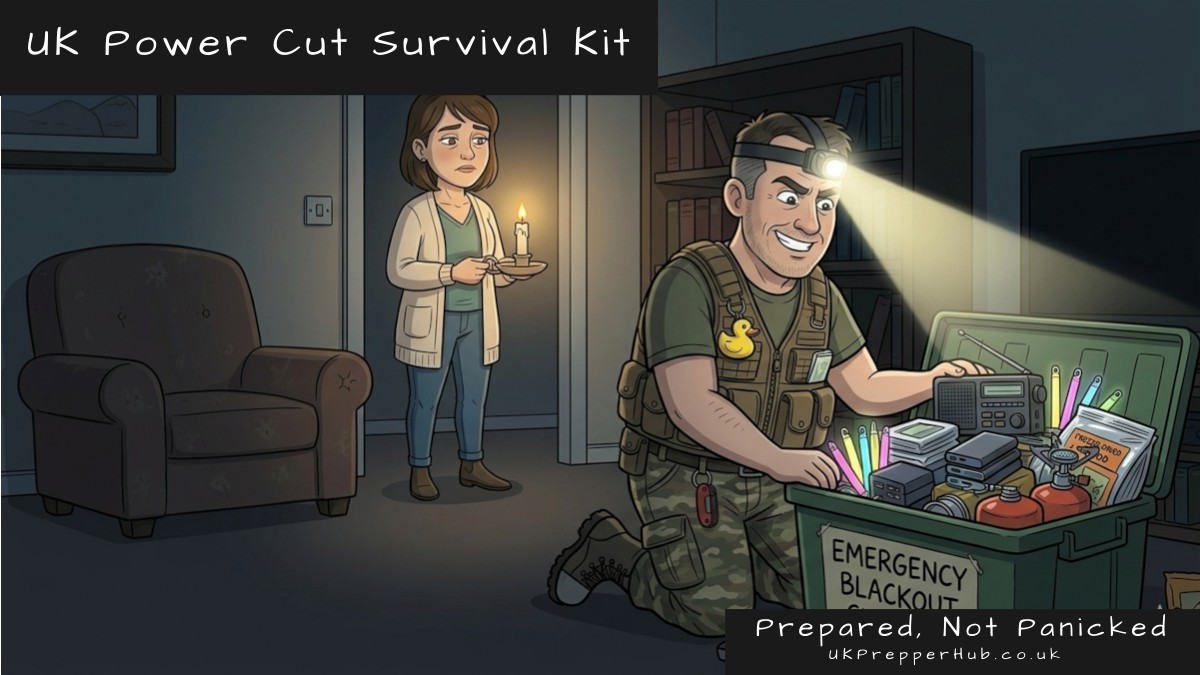
Your power bank (37% of you already have one) is only as useful as your charging strategy. Here is how to think about it for a multi-day outage:
Complete Guide
Rechargeable vs Alkaline Batteries
Rechargeable batteries seem like the sensible choice — until you can’t charge them. This guide makes the case for alkaline AA and AAA as the backbone of any emergency kit.
Read the Full Guide: Rechargeable vs Alkaline Batteries →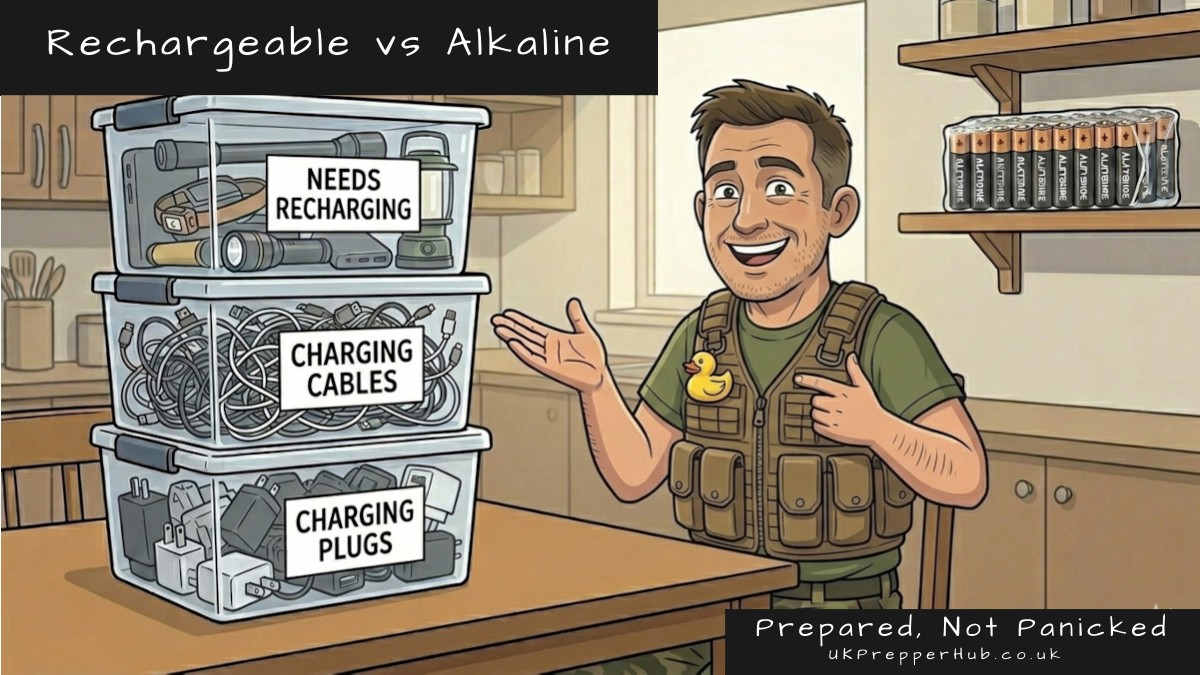
And for the 15% who have an analogue radio — good instinct. Here is how to use it, and which stations to tune to when normal communications fail:
Complete Guide
Emergency Radio Guide
When the power fails, your phone signal goes with it. This guide covers which radio frequencies actually matter in a UK emergency, what to look for before you buy, and how to make sure it works when you need it.
Read the Full Guide: Emergency Radio Guide →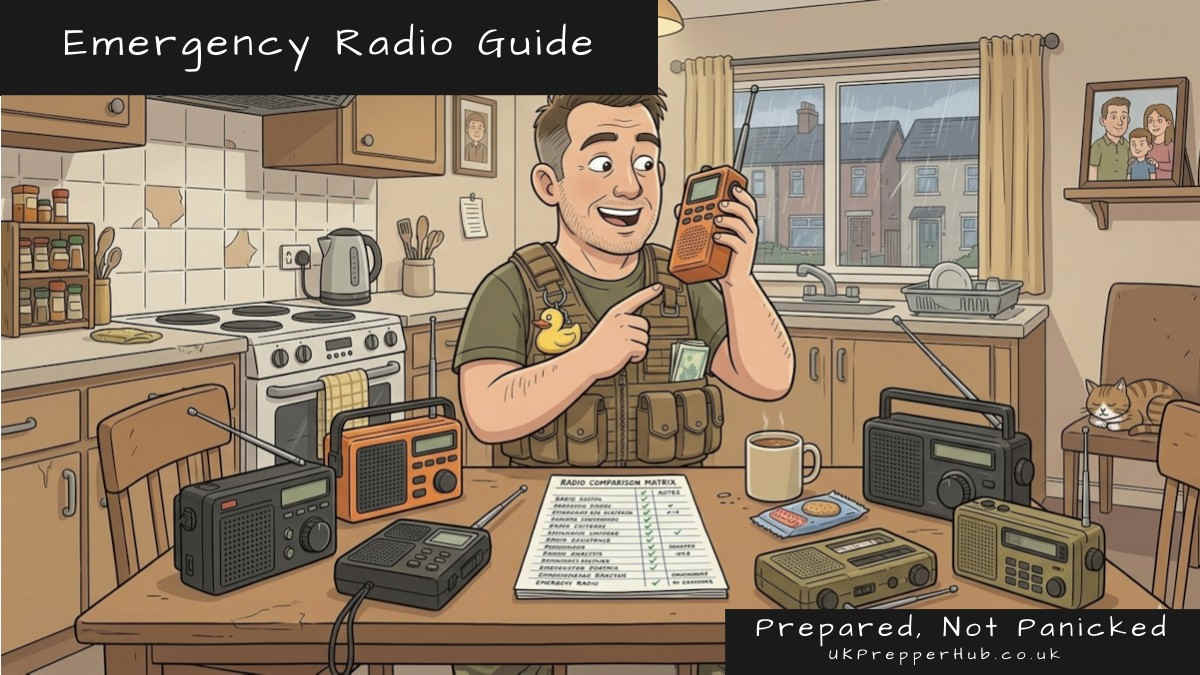
The Shift Is Real — And It Matters
Link’s data is the first of its kind in the UK: a major financial network formally tracking household resilience behaviour as part of its strategic research. The fact that it exists at all tells you something about how the conversation has changed.
UK household preparedness awareness is now at its highest point since the Covid-19 pandemic. The difference this time is that the threat is not a single event — it is a sustained, multi-source risk environment that most analysts expect to persist for years.
The question is no longer whether to prepare. The question is how well.
Frequently Asked Questions
What did the Link survey actually find?
Link’s survey found that millions of UK households are taking active preparedness steps. 49% have battery-powered items at home, 47% have tinned food stockpiles, 37% have a power bank, and 17% have a specific emergency cash stash. Only 27% had done nothing to prepare. The data was published in May 2026.
Is this level of “prepping” normal in the UK?
Increasingly, yes. UK household preparedness awareness is at its highest level since the Covid-19 pandemic, driven by ongoing conflicts, extreme weather events, and high-profile cyber-attacks on UK infrastructure. The UK government’s own Prepare website now actively encourages households to stockpile food, water, and emergency supplies.
What is the minimum a UK household should have?
A three-day supply of food and water, a battery torch, a power bank, an analogue or wind-up radio, and a small amount of cash at home. This is broadly in line with what both the UK government’s Prepare website and Link’s own guidance recommends. Beyond that, building out each category — food storage, power, communications — improves your resilience significantly.
Why is cash specifically recommended?
Card and mobile payment systems depend on power and network connectivity. In a power outage, bank IT failure, or cyber-attack, card machines can stop working entirely. Keeping a modest amount of cash at home means you can still buy essentials even when digital payments are unavailable. Link, which operates the UK’s ATM network, specifically flags this as a key resilience measure.
Is prepping the same as survivalism?
No. Survivalism is about extreme, long-term, off-grid scenarios. Preparedness — as understood by the UK government, emergency services, and sites like this one — is about being able to look after your household for 72 hours to two weeks during a disruption. Tinned food, a torch, and some cash is preparedness. A bunker and six months of freeze-dried meals is survivalism. Most UK households should aim for the former.
Build Your Resilience
Further Reading: Related Guides
- 3-Day Emergency Pantry
- Long-Term Food Storage
- How to Make a Blackout Box
- Power Bank & Battery Strategy
- Emergency Radio Guide
All our guides can be found listed on our resilience hub.
Gear We’ve Tested & Reviewed
- Energizer Vision HD+ Head Torch
- Lepro 2000lm Rechargeable Camping Lantern
- INIU 20,000mAh Power Bank
- FosPower Emergency Radio
- Portable Camping Stove with Cary Case & 8 Butane Gas
All our reviews can be found on our reviews and resources page.
📡 Find Us Everywhere
Daily briefings, prep guides, and real-time updates across every platform. Pick yours.
Free. No commitment. Stay anonymous on WhatsApp & Telegram.
Stay Informed on UK Preparedness
Join our newsletter for UK-specific preparedness tips, product recommendations, and real-world advice for households.
Subscribe to Our Newsletter