
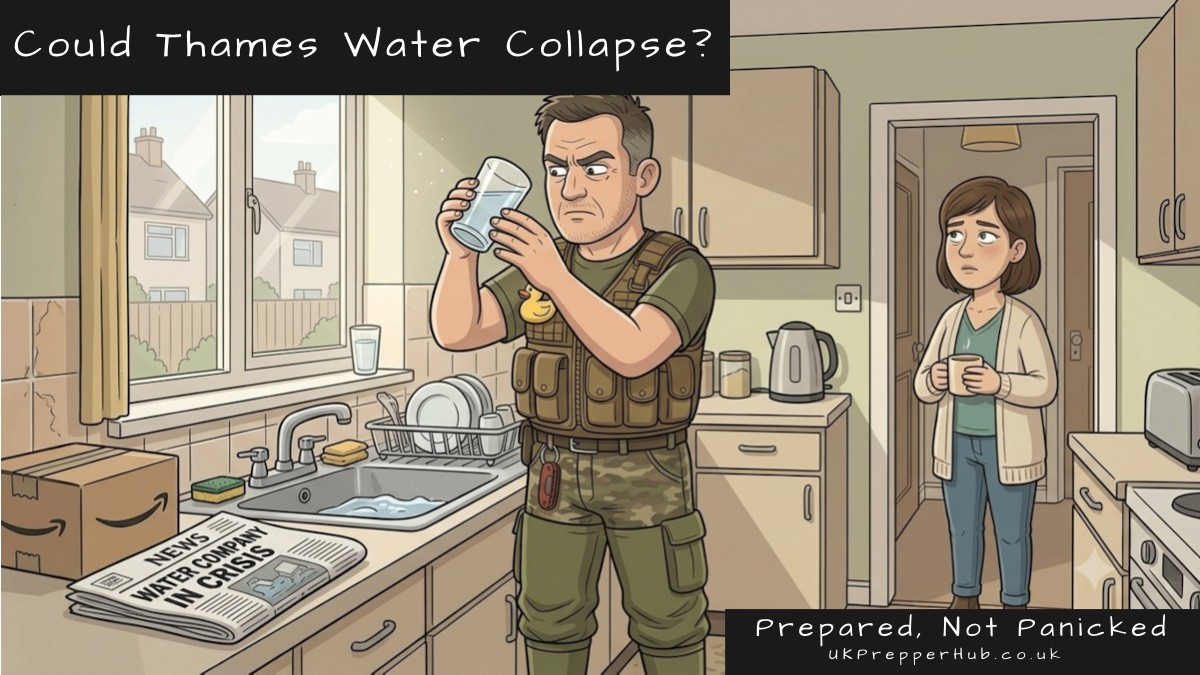
Could Thames Water Collapse? Thames Water is heading towards administration. Fifteen million households — most of London and the Thames Valley — are watching a company with £16 billion in debt try to negotiate its way out of a crisis it has been quietly building for a decade. The government has now objected to the latest rescue deal. The operator of Britain’s biggest water network may have run out of road.
The response from most commentators has been the same: “Don’t worry, your water won’t be cut off.” That’s technically true. But it leaves out the more interesting question — what does the financial collapse of UK water infrastructure actually mean for your household, and what should you be doing about it?
What Happens to Your Water When a Water Company Enters Administration?
In most company collapses, the answer to “what happens to my service?” is simple: it stops. A restaurant goes into administration — it closes. A retailer fails — the shops shut. Water is different.
The government long ago recognised that a water company failure couldn’t be allowed to follow normal insolvency rules. The result is a legal instrument called the Special Administration Regime (SAR). Under SAR, the government appoints a special administrator whose sole job is to keep water flowing while a longer-term solution — new ownership, nationalisation, or a creditor deal — is worked out. The taps keep running. Wastewater services continue. The Thames Water collapse is not the same as Thames Water disappearing.
This is genuinely reassuring, and it’s worth knowing.

🐔 Chicken Licken
Did You Know?
The law actually stops water companies from going bust like a normal business — a Special Administration Regime legally forces water to keep flowing even through the financial collapse, and most people have never heard of it]
The Real Risks Are Already Happening — They Just Don’t Make the Headlines
Here’s where the “your water won’t be cut off” reassurance runs out.
Water infrastructure doesn’t fail like a light switch — it declines slowly and invisibly, until something gives. And the conditions that cause it to decline are already in place.
Deferred maintenance is the first risk. Thames Water has been rationing investment for years. Old pipes get patched rather than replaced. Pressure monitoring systems run on ageing software. Treatment works operate closer to capacity. None of this is dramatic — until a February freeze hits a network of Victorian pipe joints that haven’t been properly assessed in fifteen years. Then you get burst mains, local outages, and repair times that stretch from hours into days.
Water quality is the second risk. Treated water in the UK is safe — but treatment is a continuous, chemical process. Reservoirs need dosing. Monitoring needs to be staffed. When cost-cutting bites into operational headcount and maintenance budgets, margins get thinner. Water companies are still legally required to deliver safe water, but legal obligation and operational reality can quietly diverge when a company is running on fumes. Boil water notices are issued in England and Wales more often than most people realise — and they’re almost never the result of a dramatic event. They’re the result of incremental system stress.
Chemical supply chains are a third risk. Treatment chemicals — chlorine for disinfection, aluminium sulphate for coagulation, fluoride for public health — arrive on regular supply contracts. A company in financial distress may face delayed payments. Suppliers start watching their exposure. None of this necessarily results in a supply problem, but it is a dependency most households have never thought about.
Aquatabs 3.5mg Water Purification Tablets
The compact emergency backup that weighs nothing and takes up no space — each tablet treats one litre of water in 30 minutes, killing bacteria and viruses with no equipment required.
Our Full Review: Aquatabs 3.5mg Water Purification Tablets →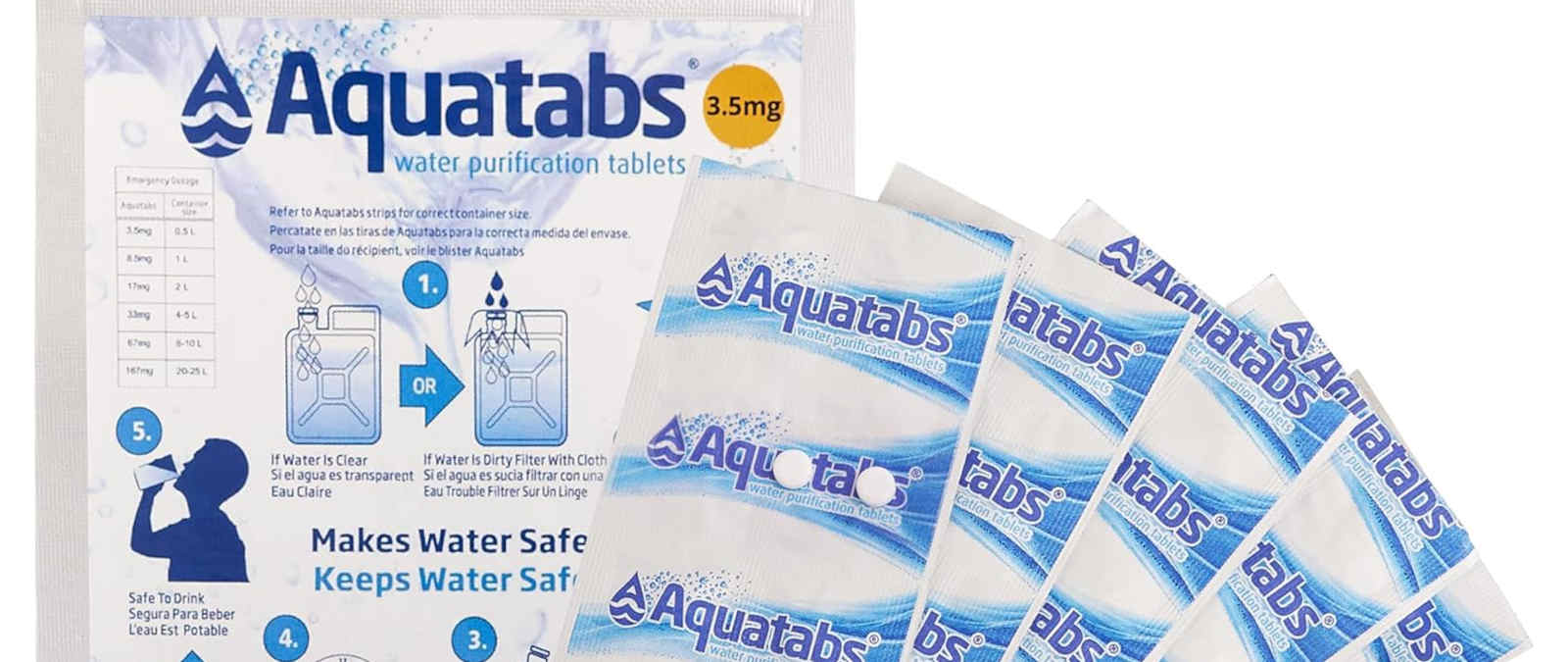
It’s Not Just a Thames Water Problem
Thames Water is the crisis in front of us. But the financial architecture it exemplifies runs through all nine regional water companies in England and Wales.
The water industry was privatised in 1989 with a specific expectation: private capital would fund the infrastructure investment that the public sector hadn’t managed. Decades later, the balance sheet tells a different story. UK water companies collectively carry over £60 billion in debt. Dividends have flowed to shareholders. Infrastructure investment has been patchy. Sewage discharge notices have been issued in numbers that would have been unthinkable at privatisation.
Thames Water is not an outlier. It is the loudest canary.
Southern Water entered a debt restructuring in 2021. Yorkshire Water, Anglian Water, and others carry significant leveraged debt. Ofwat’s regulatory model — capping bills, setting investment targets — has never fully resolved the tension between investor returns and long-term infrastructure adequacy.
For households outside London, the implication is straightforward: water infrastructure risk is not confined to the M25. If you’re in the South West, the Midlands, the North West, or anywhere in between — your water company is operating under the same financial pressures that brought Thames Water to this point. The question isn’t whether this only affects Thames Water customers. The question is which company shows the same cracks next.
Complete Guide
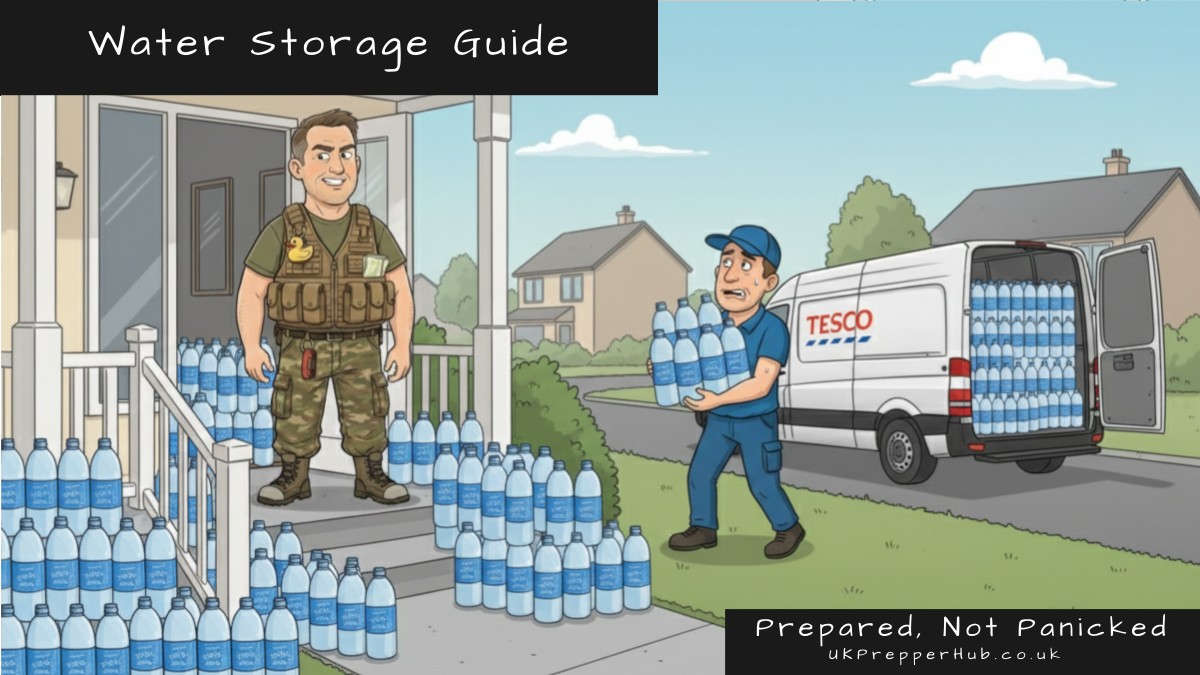
Emergency Water Storage
How much to store, how to store it in small spaces, and the reality of UK water rotation.
What UK Households Should Do Right Now
None of this means taps are about to run dry tomorrow. Preparedness doesn’t require imminent catastrophe — it requires a realistic assessment of risk. The Thames Water situation is a reasonable moment to ask whether your household is ready for even a short supply disruption.
These are practical, low-cost steps:
- Store 3 days of drinking water. The standard recommendation is 2 litres per person per day. A family of four needs 24 litres for 3 days — two large containers under the sink. This isn’t a bunker. It’s the same logic as keeping a spare bulb in the drawer.
- Sign up for your water company’s outage alerts. Every major UK water company has a service interruption notification system. Register your address and you’ll get a text or email when a local supply issue is detected — before it reaches you, not after.
- Know where your stopcock is and check it moves. A seized stopcock is useless in a burst pipe emergency. Find it, note the location, give it a turn. If it won’t move, get it attended to now — not when the kitchen floor is under water.
- Have a small supply of water purification tablets. Boil water notices are issued after supply interruptions more often than most people realise. A packet of Aquatabs costs under £4, lasts years in storage, and means you’re not boiling water in the dark with a camping stove while also trying to find the cat.
LifeStraw Go Series Water Filter Bottle
Filters 99.999% of bacteria and parasites from any freshwater source — tap, stream, or puddle. If your water supply runs out, this turns almost any source you can find into something you can safely drink.
Our Full Review: LifeStraw Go Series Water Filter Bottle →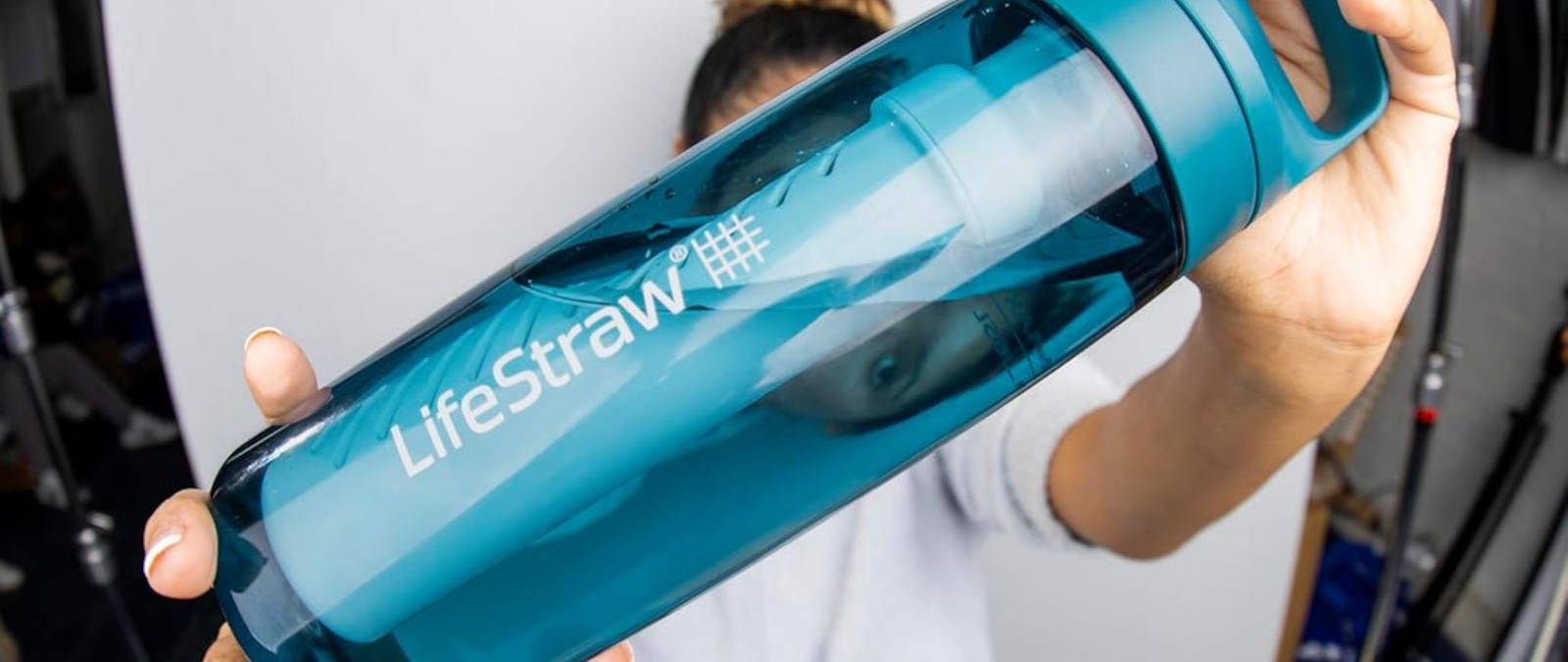

🦆 Keith
Don’t Be Keith
Keith bought a 500-litre IBC tank and spent a full Bank Holiday weekend installing a gravity-fed water storage system in his garage to “get off Thames Water’s grid entirely” — he lives in Harrogate, which is served by Yorkshire Water, which has absolutely nothing to do with Thames Water
The Bigger Picture: UK Water Infrastructure Has a Long-Standing Problem
The Thames Water collapse is a loud version of a quiet problem that has been building for decades. The Special Administration Regime protects households from the most acute consequence — a sudden cutoff — but it doesn’t fix the pipes. It doesn’t replenish the deferred maintenance backlog. It doesn’t make the chemical supply chains more resilient or the ageing infrastructure more reliable.
What it actually does is buy time. Time for a creditor deal, a nationalisation, or a new private owner. During that time, the infrastructure continues to age, the operational margins stay thin, and the boil water notices keep coming — quietly, locally, without making national news.
The right response for households isn’t panic. It’s calibration. Build a modest water reserve. Sign up for outage alerts. Know what a boil water notice means and how to respond. Understand that the tap in your kitchen connects to decades of underfunded infrastructure — and that a little preparation on your side is worth rather more than waiting to see how the Thames Water debt negotiations land.
Build Your Resilience
Further Reading: Related Guides
📡 Find Us Everywhere
Daily briefings, prep guides, and real-time updates across every platform. Pick yours.
Free. No commitment. Stay anonymous on WhatsApp & Telegram.
Stay Informed on UK Preparedness
Join our newsletter for UK-specific preparedness tips, product recommendations, and real-world advice for households.
Subscribe to Our Newsletter