
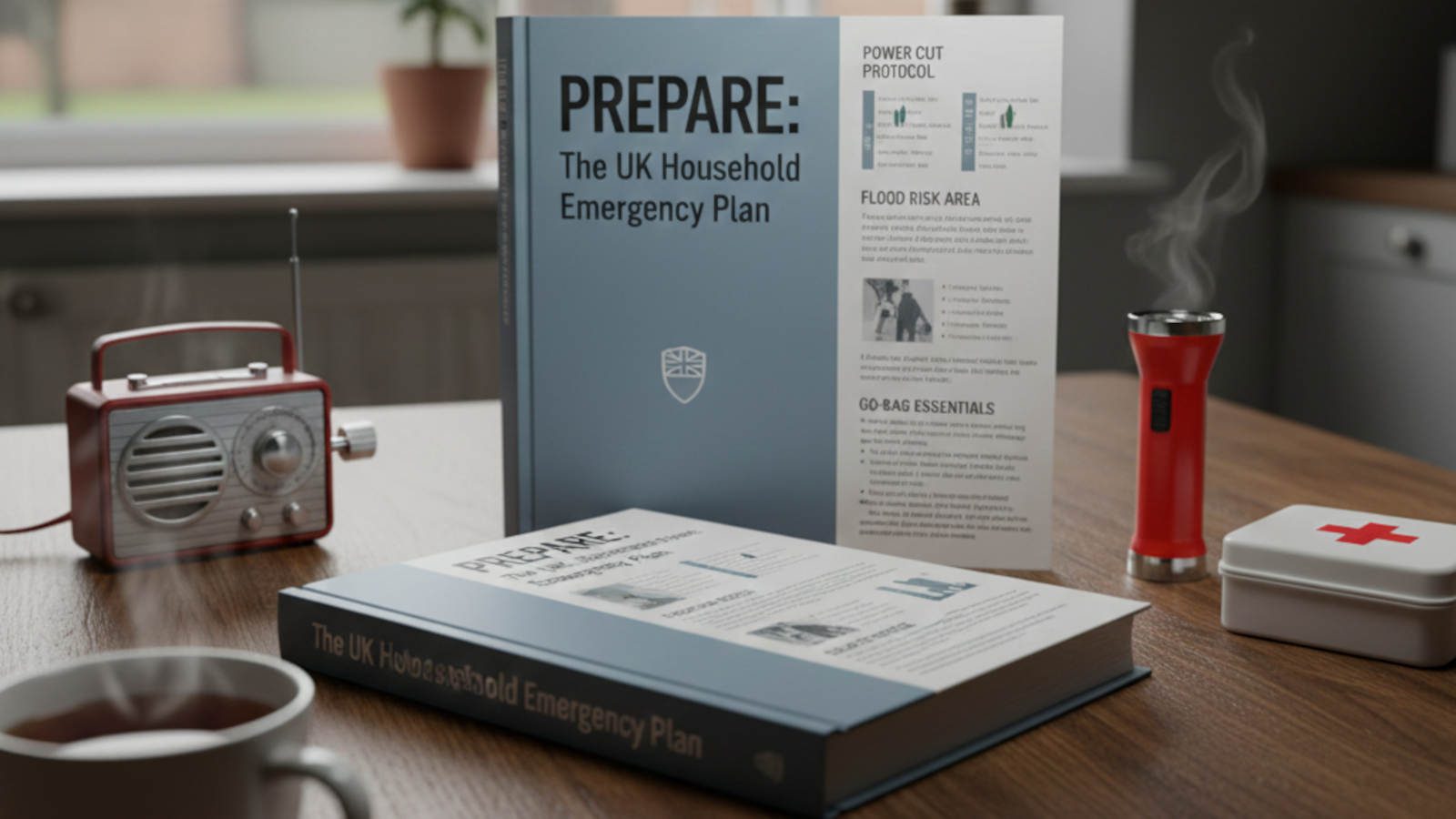
The UK government has an official preparedness guide. Most people have never heard of it. That sentence is the entire argument for this page — because if you’re not aware the guide exists, you can’t benefit from it, and the gap between what the government has quietly published and what UK households actually know is significant.
This is a look at the UK government preparedness guide — what it says, what it leaves out, and why the UK has always taken a quieter approach to emergency communications than most of our European neighbours.
The UK Has Been Telling People to Prepare Since 1939
The current Prepare campaign isn’t the first time the UK government has issued official preparedness guidance. It’s just the latest in a long line of them — and the pattern repeats every generation: a crisis arrives, the government publishes guidance, most people ignore it, the crisis passes, the guidance is forgotten.
During the Second World War, campaigns like Dig for Victory and Make Do and Mend asked households to grow food, reduce waste, and become more self-sufficient. In 1980, the government published Protect and Survive — a civil defence booklet advising households on what to do in the event of a nuclear attack. It was distributed to every home in the country and was largely treated as alarmist. By the 1990s it had been quietly shelved.
The Prepare campaign, launched in 2024 by the Cabinet Office, is the current iteration: updated for modern hazards, digital-first in delivery, and — following an 80-year tradition — almost entirely unknown to the people it’s aimed at.

🐔 Chicken Licken
Did You Know?
The UK government has been issuing official preparedness guidance since the 1940s — Dig for Victory, Protect and Survive, and now the Prepare campaign — and almost nobody has ever acted on any of it. I’ve been saying this for years.
What the UK Government Preparedness Guide Actually Covers
The Prepare campaign lives at prepare.campaign.gov.uk. It covers:
- Hazards — floods, severe weather, power cuts, and other risks relevant to UK households
- Household emergency planning — communication plans, family meeting points, safety procedures
- Essential supplies — food, water, medical items, and basic tools
- Staying informed — official channels to monitor during a crisis
It’s a practical resource. The problem isn’t what it says — it’s that almost nobody knows it’s there.
The Government’s Recommended Emergency Kit
The official Cabinet Office guidance keeps the recommended kit list deliberately accessible. If you’re starting from nothing, these are the items the government considers non-negotiable:
- Battery or wind-up radio — for receiving official broadcasts if internet and mobile networks are down. Your car radio is a useful backup.
- Torch with spare batteries — candles are officially discouraged due to fire risk during power cuts. Glow sticks are worth considering as a safe, flameless alternative.
- First aid kit — sterile dressings, bandages, plasters, antiseptic wipes.
- Bottled water — three litres per person per day for at least three days.
- Non-perishable food — tinned meats, fruits, and vegetables that don’t require cooking or extra water.
- Emergency plan — a physical list of phone numbers and a household meeting point. Written down, not on your phone.
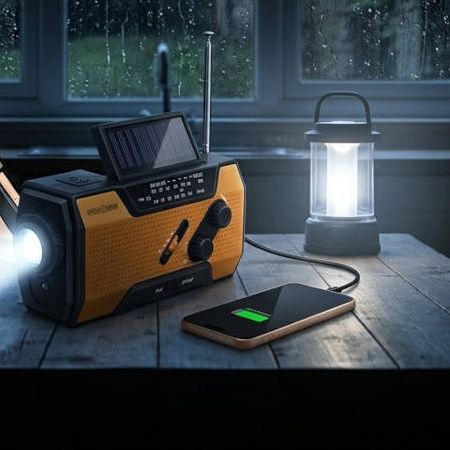
FosPower Emergency Radio
Most emergency radios have one or two power options. The FosPower has four, and that redundancy is the single most important feature for preparedness use.
Complete Guide
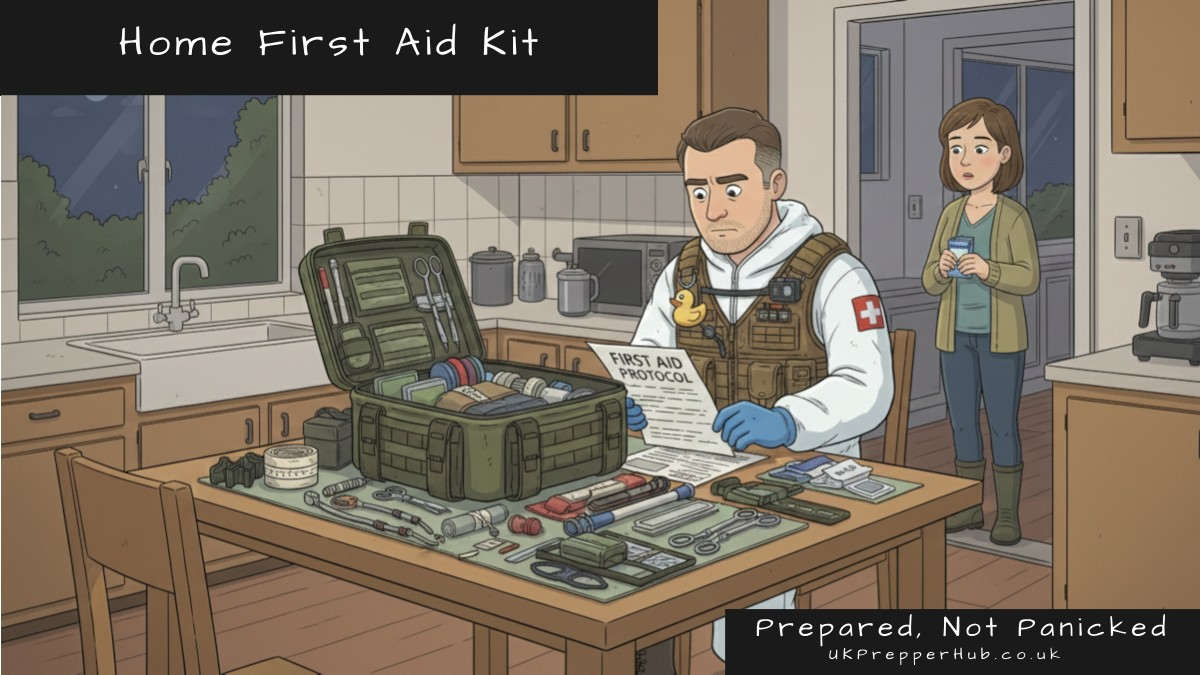
UK Home First Aid Kit
This guide covers comprehensive first aid supplies needed in the home to cover almost all emergencies.
Complete Guide
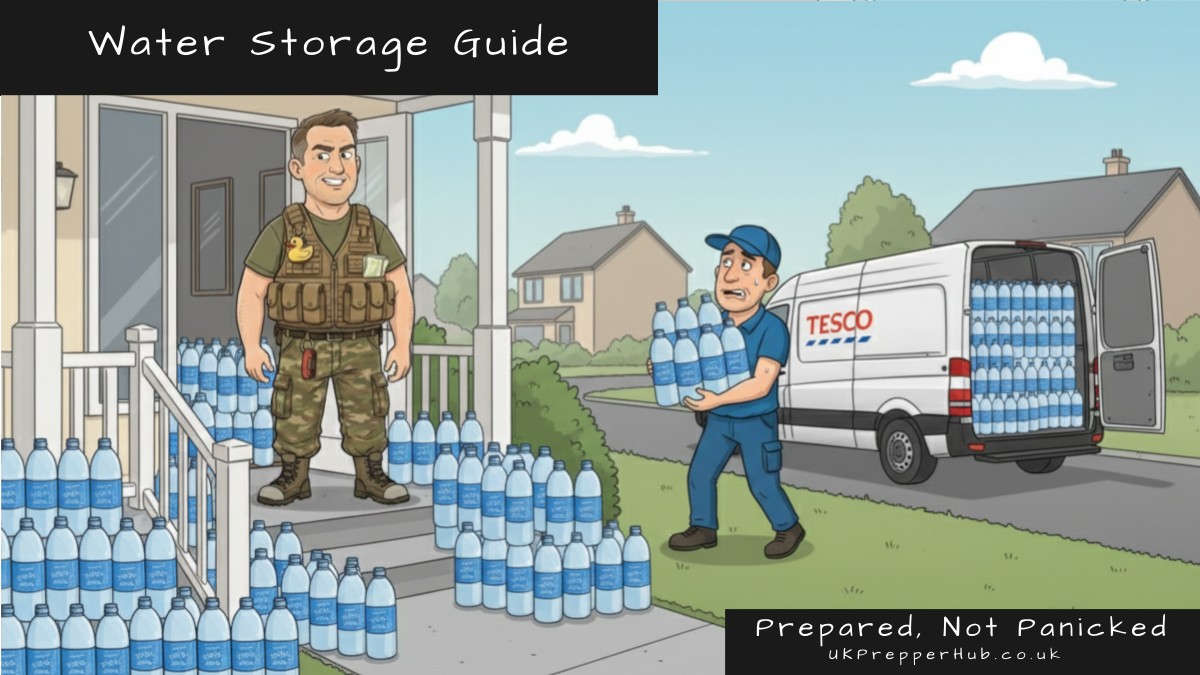
Emergency Water Storage
How much to store, how to store it in small spaces, and the reality of UK water rotation.
Where the Official Guidance Falls Short
The government list is a sensible starting point. It is not a complete preparedness plan. Three days of supplies is adequate for a local burst water main or a short power cut — it is not adequate for the kind of supply chain disruption that emptied supermarket shelves in 2020 and 2021. A minimum of two weeks is a more realistic target.
The guidance also says little about cooking. Non-perishable food is recommended, but how you heat it if both gas and electricity are out is left unaddressed. And the guide being hosted online is its own problem — if a major disruption takes down the grid or the networks, the instructions you need become inaccessible.
The same blind spot extends beyond power cuts and flooding. The UK government also has a detailed pandemic preparedness plan — a full strategy for the next major outbreak, including powers the state can invoke and resources it can deploy. Most UK households have never heard of that either. Our special report on the government’s pandemic plan covers what’s in it and what it means for your household.
Complete Guide
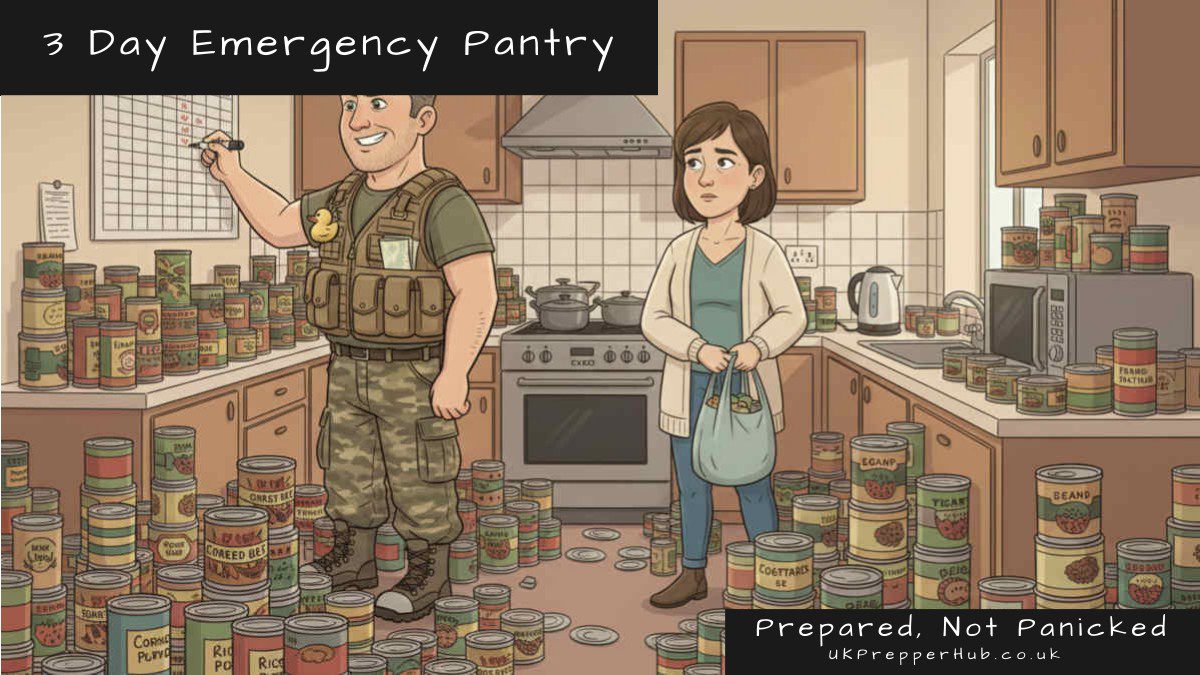
3-Day Emergency Pantry
The low-barrier start: A shopping list of shelf-stable meals that require zero refrigeration.
Comparison: UK vs Sweden
If the UK’s approach feels quiet, it is. Compare it to Sweden’s equivalent guidance:
| Feature | UK ‘Prepare’ Campaign | Sweden ‘If Crisis or War Comes’ |
| Delivery | Online-only (digital first) | Physical booklet sent to every home |
| Messaging | Focused on natural hazards | Focused on Total Defence and war |
| Scope | Voluntary personal planning | Mandatory Total Defence duty |
| History | Latest in a long line since WWII | Dates back to WWII; updated 2024 |
While the initial Prepare campaign suggested three days of supplies, some regional councils — including Bedfordshire and Nottinghamshire — now recommend aiming for seven days of self-sufficiency.
Why Is the UK So Quiet About Preparedness?
While Sweden and Finland treat household preparedness as a matter of national defence — where every citizen has a duty to the state — the UK has historically preferred what it calls a “Whole Society Resilience” model. This relies on the public being informed rather than mobilised. By keeping guidance digital-only and avoiding active promotion, the government sidesteps accusations of alarmism but risks leaving the most vulnerable households — those without reliable internet access — entirely in the dark.
It’s a consistent pattern. Protect and Survive was criticised in 1980 for being alarmist. The Prepare campaign has been criticised for being invisible. The UK government appears to have concluded that there is no politically comfortable way to tell people that the state cannot guarantee uninterrupted services — so it publishes the guidance quietly and hopes people find it.
Complete Guide
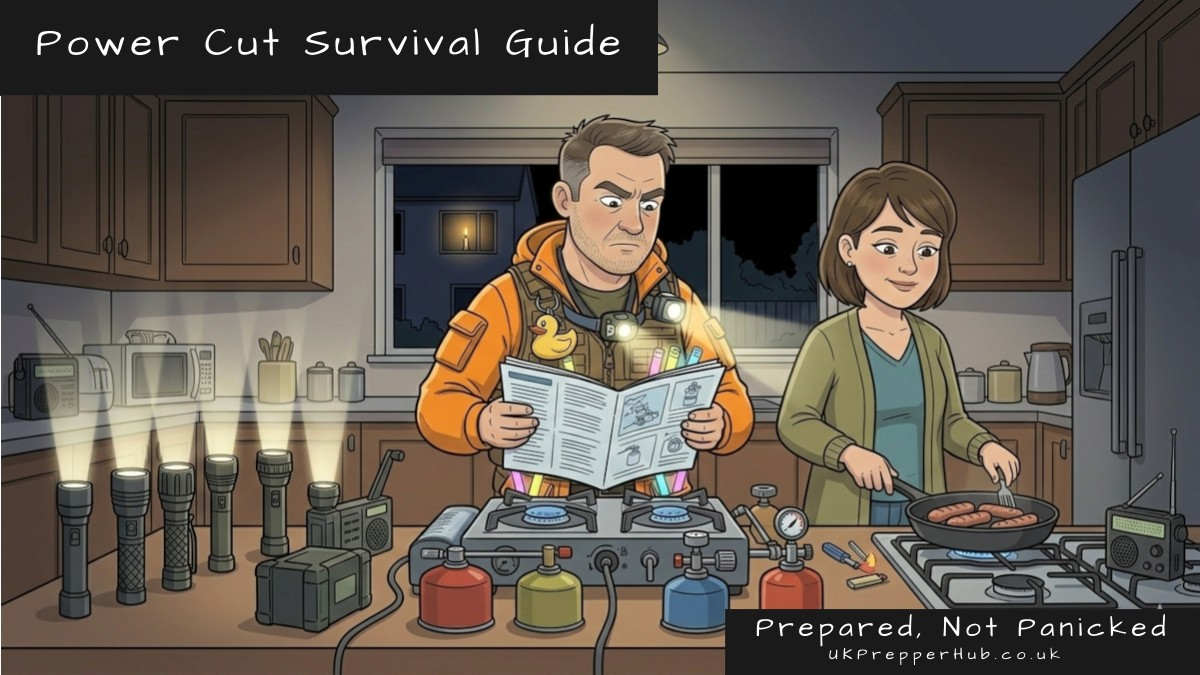
How to Prepare for a Power Cut
The 12 things to sort before the lights go out: lighting, heating, food, water and keeping phones charged, plus what to do in the first few minutes.
Practical Steps for UK Households
Even without active government promotion, the guidance is there and worth acting on:
- Visit prepare.campaign.gov.uk and note the hazards relevant to your area.
- Write a household emergency plan — communication routes, family meeting point, key phone numbers on paper.
- Stock essential supplies: non-perishable food, water, torch, batteries, first aid kit, power bank, hand-crank radio.
- Know where your stopcock is, how to turn off the gas, and where your fuse box is.
- Act before a crisis forces the issue. A few hours of preparation now is worth significantly more than the same preparation under pressure.
Complete Guide
How to Make a Blackout Box
Most households aren’t prepared for even a short power cut, and the stress comes from small, avoidable problems like lack of light, heat, or a way to cook. This guide shows you exactly how to fix that with a simple, practical setup so a blackout becomes manageable rather than disruptive.
Read the Full Guide: How to Make a Blackout Box →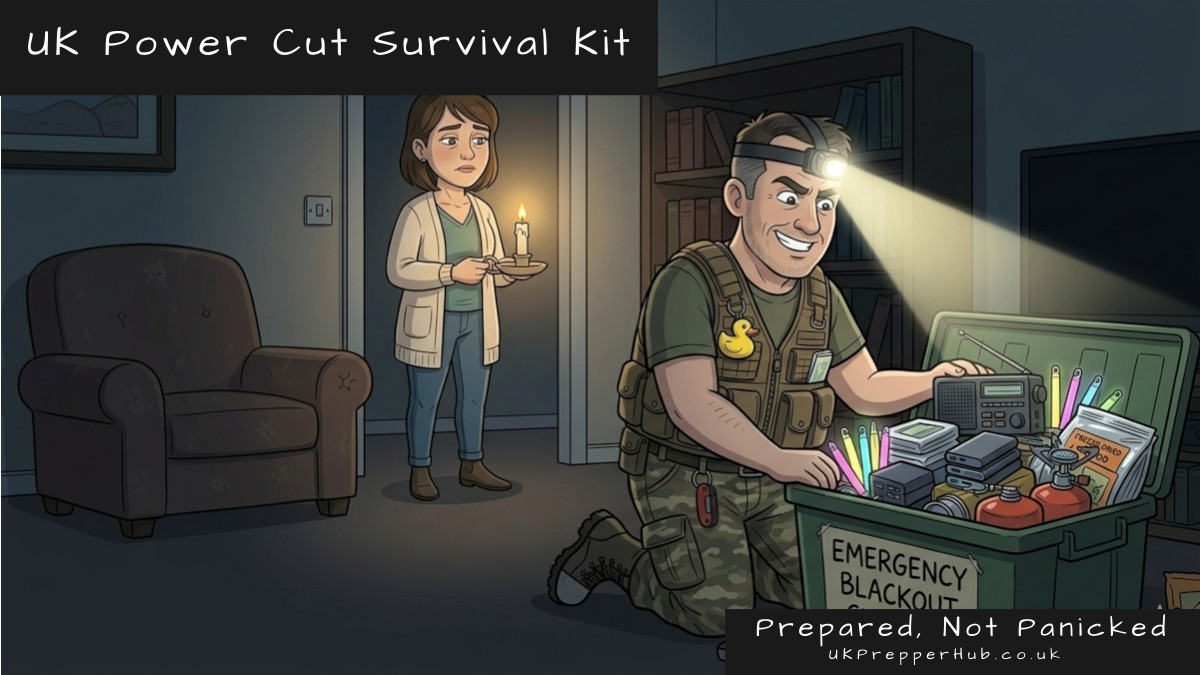
Frequently Asked Questions
Does the UK have an official preparedness guide?
Yes. The government’s Prepare campaign at prepare.campaign.gov.uk provides guidance on hazards, household emergency planning, and essential supplies. It was launched in 2024 by the Cabinet Office. Most UK households have never heard of it.
Has the UK government always issued preparedness guidance?
Yes — the Prepare campaign is the latest in a long line going back to the Second World War. Dig for Victory and Make Do and Mend encouraged self-sufficiency during WWII. Protect and Survive, published in 1980, advised households on surviving a nuclear attack. Each iteration follows the same pattern: guidance is issued, most people ignore it, the crisis passes, and the guidance is forgotten until the next one.
What does the UK government recommend for a household emergency kit?
The official guidance focuses on six essentials: a battery or wind-up radio, a torch with spare batteries, a basic first aid kit, three litres of water per person per day for at least three days, non-perishable food, and a written emergency plan with key phone numbers and a household meeting point.
Why doesn’t the UK promote preparedness more actively?
There’s no single official explanation. The UK has historically taken a “Whole Society Resilience” approach — informing rather than mobilising the public. Keeping guidance digital-only avoids accusations of alarmism but leaves households without reliable internet access in the dark. The same tension existed with Protect and Survive in 1980, which was criticised for being alarmist. The Prepare campaign has faced the opposite criticism — that nobody knows it exists.
Is three days of supplies enough?
It’s a starting point, not a target. Three days covers short local disruptions — a burst water main, a brief power cut. The supply chain shocks of 2020 and 2021 demonstrated that a significant disruption can last considerably longer. Some regional councils now recommend seven days. Two weeks is a more realistic minimum for households that want genuine resilience rather than a token gesture.
Build Your Resilience
Further Reading: Related Guides
- How to Prepare for a Power Cut
- The 3-Day Emergency Pantry
- Blackout Box
- Emergency Radio Guide
- 72-Hour Grab Bag
All our guides can be found listed on our resilience hub.
Gear We’ve Tested & Reviewed
All our reviews can be found on our reviews and resources page.
📡 Find Us Everywhere
Daily briefings, prep guides, and real-time updates across every platform. Pick yours.
Free. No commitment. Stay anonymous on WhatsApp & Telegram.
Stay Informed on UK Preparedness
Join our newsletter for UK-specific preparedness tips, product recommendations, and real-world advice for households.
Subscribe to Our Newsletter