
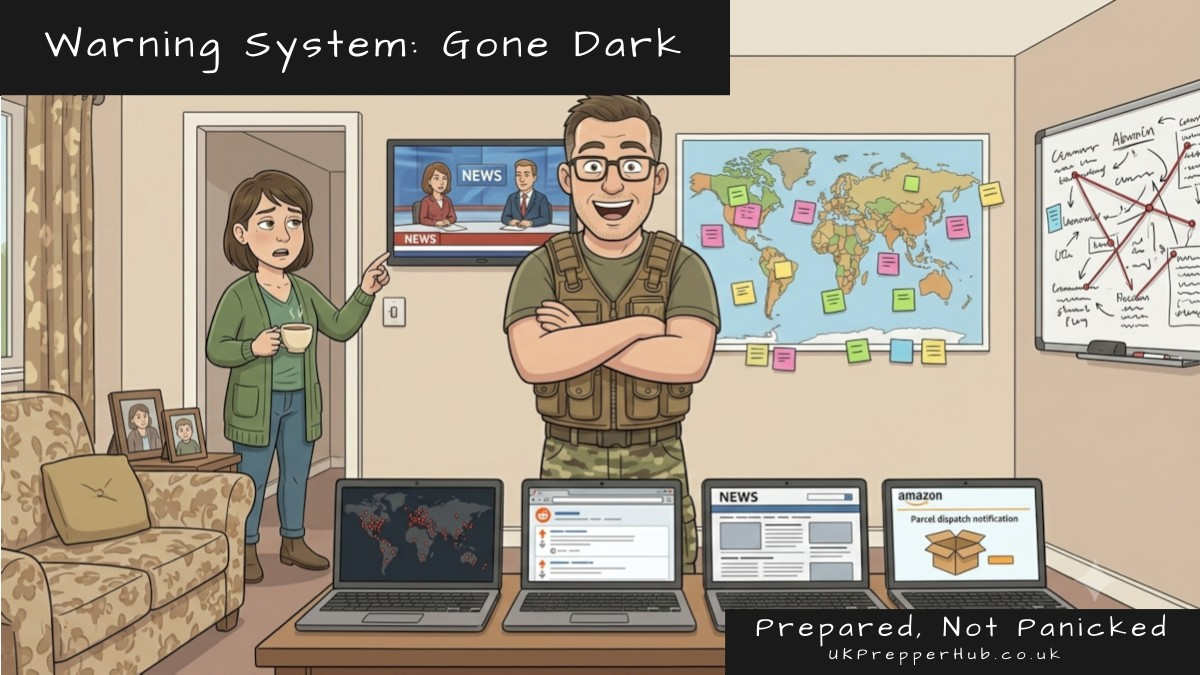
The global network of disease detectives that spotted COVID-19 weeks before it had a name is being switched off. The next pandemic is still coming — that part has not changed — but the early warning system that gave the UK months of notice last time has been defunded, restructured, and in several cases simply closed. For UK households, this means shorter warning windows, faster supply chain disruption, and considerably less time to act before everyone else does.
This is not a story about politics. It is a story about infrastructure — and what happens when critical infrastructure is quietly removed.
What the Next Pandemic Early Warning System Actually Did
Most people imagine pandemic warnings arrive via a scientist peering down a microscope who then rings the government. The reality is a layered global network, much of it US-funded, that monitors disease emergence across more than 150 countries simultaneously.
Three programmes did most of the heavy lifting:
- PREDICT (USAID) — operated in 31 countries, monitoring wildlife-human interfaces where new diseases are most likely to emerge. It identified over 900 novel viruses, including bat coronaviruses structurally similar to SARS-CoV-2, before COVID existed as a known threat. The programme ended in 2020 and was not renewed.
- Global Disease Detection (CDC) — maintained specialist outposts in more than ten countries, specifically to detect outbreaks at source before international spread occurred. Funding cuts in 2025 have significantly reduced this capacity, with multiple field offices scaled back or closed.
- WHO Global Outbreak Alert and Response Network (GOARN) — the coordination layer that turns local outbreak data into international action. Dependent on US contributions that have been substantially reduced or withdrawn following the formal US exit from the WHO in 2025.
ProMED — the open-source disease monitoring programme that first flagged the Wuhan pneumonia cluster on 30 December 2019 — continues to operate. But it does so with reduced resources and the loss of upstream intelligence sources that once fed it data from the field.
Why This Matters to a UK Household
The UK does not maintain its own global disease detection network. The UK Health Security Agency is excellent at responding once a threat is identified — but that is rather like saying the fire brigade is excellent at responding once the house is on fire. The UKHSA’s early warning intelligence for novel emerging threats comes primarily from the international systems described above, particularly US sources shared through bilateral health security agreements.
When ProMED published its first Wuhan alert on 30 December 2019, UKHSA analysts had a starting point. When CDC Global Disease Detection teams in Southeast Asia flagged unusual pneumonia patterns, that data fed into UK threat assessments. The UK did not independently detect COVID-19 — it received intelligence from a global network and used it to prepare a response.
With that network degraded, UK early warning becomes later warning. Not absent — later. The distinction matters practically to households.
🐔 Chicken Licken
Did You Know?
In March 2020, UK supermarket shelves were stripped of pasta, flour, tinned goods, and hand sanitiser within 72 hours of the lockdown announcement — not 72 days. Most households had three days of food. I’ve been saying this for years. Three days. Nobody listened until they’re standing in front of an empty shelf on a Tuesday morning.
How Much Warning Did We Get Last Time — and How Much Would We Get Now?
The 2019 to 2020 sequence looked like this:
- 30 December 2019 — ProMED publishes the first Wuhan cluster alert
- 10 January 2020 — the COVID-19 genome is published publicly
- 30 January 2020 — WHO declares a Public Health Emergency of International Concern
- 23 March 2020 — the UK enters its first national lockdown
That is roughly twelve weeks from first public signal to lockdown. For households paying attention, it was eight to ten weeks of quiet preparation time: topping up the pantry gradually, reviewing prescriptions, ordering a few extra basics. That window is what sensible household preparedness is designed to exploit — not heroic stockpiling, just a calm head start while everyone else is still convinced it will not come here.
No one can say precisely how much shorter the next warning window will be. That depends on what disease emerges, where, and how quickly it spreads. What we can say is that the detection infrastructure that drove the twelve-week window in 2020 has been materially reduced. Outbreaks that would previously have been flagged by in-country CDC teams in week two may not surface internationally until week five or six — by which point containment is almost always already lost.
The window compresses. The margin for a relaxed, gradual response shrinks with it.
Complete Guide
Long-term food storage
Most households have a few days of food at best, but real disruptions in the UK can last far longer and quickly expose that gap. This guide shows you how to build a practical, affordable food reserve that actually works in the real world—not just on paper.
Read the Full Guide: Long-term food storage →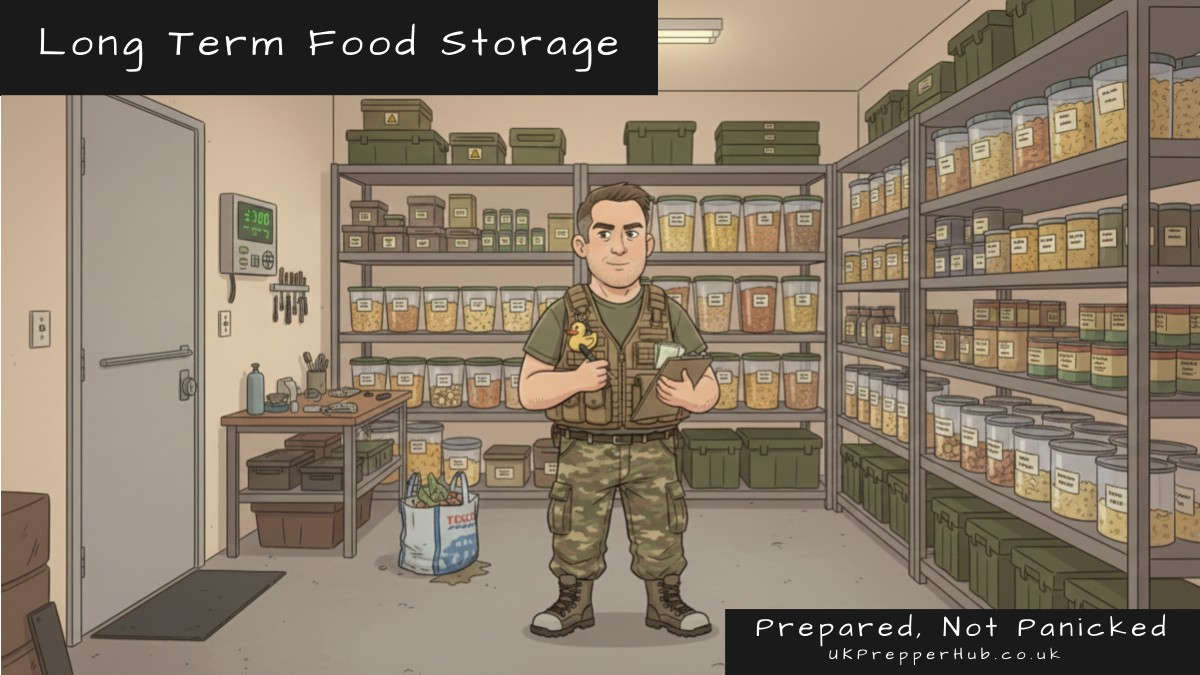
What Has Actually Been Cut
For clarity, and without embellishment, here is what has changed since early 2025:
- USAID — effectively dismantled as an independent agency in early 2025. Pandemic preparedness programmes, including successor work to PREDICT monitoring animal-human disease spillover, have ended.
- CDC global health programmes — significant reductions including to the Global Disease Detection division, which maintained the early warning outposts in high-risk countries. Field capacity is substantially reduced.
- US-WHO relationship — the United States formally exited the WHO in 2025. As the historically largest single donor, accounting for roughly 15 to 22 per cent of assessed contributions, the funding gap has not been filled by other members.
- Global health security funding broadly — across PEPFAR and other programmes, reduced US spending on global health diminishes the capacity of partner countries to detect and report outbreaks at source — precisely where early detection matters most.
To be clear: the WHO continues to operate, UKHSA continues to function well, and the UK retains domestic disease surveillance capability. This is not a claim that the entire global health architecture has collapsed overnight. It is a claim that a significant layer of it has been removed — and that layer provided the earliest possible warning of novel emerging threats.
ADESTE – FFP2 Masks – UKCA Certified
BSI-certified FFP2 protection at 28p a mask — 50 individually sealed, long-term storage ready, and exactly what disappeared from shelves in March 2020.
Our Full Review: ADESTE – FFP2 Masks →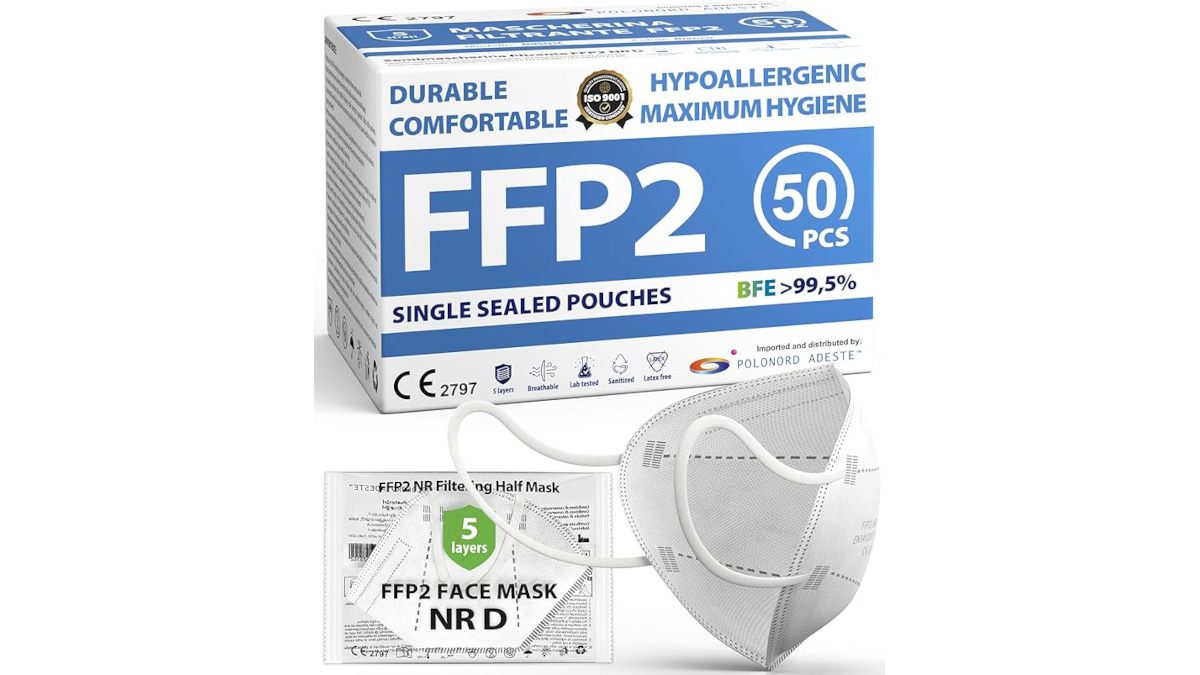
What Your Household Should Actually Do
The honest answer is: the same things sensible households have always been advised to do — but with rather less margin for delay.
The preparedness gap has not changed. A two-week food supply, proactively managed medications, basic hygiene stocks, and a household plan have always been the right baseline. The argument here is not for panic buying or dramatic action. It is for stopping putting off the things that were always worth doing.
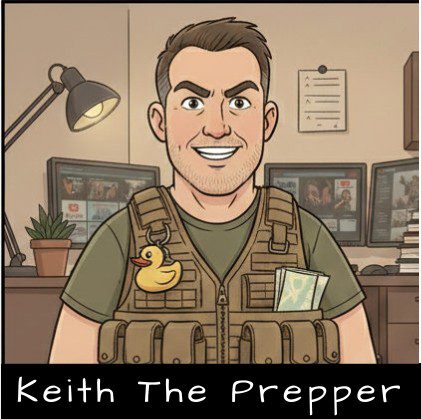
🦆 Keith
Don’t Be Keith
Keith has a 17-step laminated pandemic response plan stored in the glovebox of his Land Rover Discovery. It covers decontamination protocols, supply zone mapping, and field-grade water treatment. When asked whether he had paracetamol in the house, he admitted he used the last of it in January 2021 and never replaced it. His household pandemic plan does not cover the bathroom cabinet.
Practically, for a UK household in 2026:
- Build a two-week rotating pantry, not a three-day one. The gap between “this looks serious” and “supermarkets are stripped” has historically been measured in days. A three-day buffer provides essentially no decision-making time. Two weeks gives you the option to wait, assess, and act calmly rather than compete with panicking neighbours for the last bag of pasta.
- Manage prescription medications proactively. During COVID, supply chain pressure hit medication stocks within weeks. If anyone in your household depends on regular medication — particularly anything imported or manufactured abroad — understand your repeat prescription cycle and never let supply fall below two weeks.
- Know where early signals actually appear. ProMED (promedmail.org), the UKHSA weekly national influenza and acute respiratory illness report, and the WHO Disease Outbreak News page will show emerging signals two to three weeks before mainstream news coverage. Knowing where to look is free and takes about five minutes a week. It is currently the most effective substitute for the surveillance infrastructure that has been reduced.
- Have basic protective equipment on hand. FFP2 masks, hand sanitiser, and hygiene basics had a three to four week delivery backlog at the COVID peak. They are available today, at normal prices, with next-day delivery. The time to have them is before you need them.
Complete Guide
3-Day Emergency Pantry
The low-barrier start: A shopping list of shelf-stable meals that require zero refrigeration.
Complete Guide
Managing Essential Medication
This guide covers more detail on being prepared with essential medication for all emergency situations.
Complete Guide
Emergency Hygiene Guide
This guide covers water-scarce washing techniques in detail, but for grab bags the focus is having enough supplies to maintain basic hygiene without relying on rest centre provisions.

If you have already read our earlier report on the UK government’s pandemic plan and what it does — and does not — cover for individual households, this report sits alongside it rather than replacing it. The government plan addresses the national response. This report addresses the early warning system that feeds into that response, and what happens when it is degraded. Both matter.
Frequently Asked Questions
Is the WHO still operating?
Yes. The WHO continues to operate and most member states remain participants, including the UK. The US withdrawal creates a significant funding gap and removes a key intelligence-sharing partner, but the organisation itself has not collapsed. UK contributions continue and the UK retains its seat at the table.
Does the UK have its own pandemic early warning system?
The UKHSA conducts domestic disease surveillance and participates in European monitoring through the ECDC. For domestic threats — a hospital outbreak, a food contamination event — the UK’s own systems are robust. For novel emerging diseases originating outside the UK, early detection has historically depended heavily on the US-funded global programmes that have been reduced. That upstream layer is what has changed.
Should I be buying pandemic supplies right now?
No — and that is not what this report recommends. The argument here is for a sensible maintained household baseline: a rotating two-week food store, proactively managed medications, and basic hygiene stocks already in the house. These are useful for power cuts, severe weather, supply disruptions, and disease events alike. You should have them regardless. This is simply a reason to stop postponing it.
How would I know if a new outbreak was emerging?
Reliable early signals appear on ProMED (promedmail.org), the UKHSA’s weekly flu and acute respiratory illness report, and the WHO’s Disease Outbreak News page — all free, all public, all updated regularly. These sources will show meaningful signals weeks before mainstream media coverage, provided the surveillance infrastructure feeding them remains intact. Bookmarking them takes thirty seconds.
Is this the same as the UK government’s pandemic plan?
Related but different. The government’s pandemic plan covers national response — what the NHS, local authorities, and central government do when a pandemic is declared. This report covers the global surveillance infrastructure that provides early warning upstream of any national plan. Both matter. The national plan cannot operate faster than the warning system that feeds it.
Build Your Resilience
Further Reading: Related Guides
Gear We've Tested & Reviewed
📡 Find Us Everywhere
Daily briefings, prep guides, and real-time updates across every platform. Pick yours.
Free. No commitment. Stay anonymous on WhatsApp & Telegram.
Stay Informed on UK Preparedness
Join our newsletter for UK-specific preparedness tips, product recommendations, and real-world advice for households.
Subscribe to Our Newsletter
Sounds like the UK needs to learn to take care of itself. All of those organizations you mentioned were funded by AMERICAN taxpayers. We are kind of sick of our money being used for people who need to take care of themselves.
You are giving your people good advice.
WE here in America also know WE cannot trust our own government to help out after emergencies. Long documented. FEMA shows up with pens and applications, but no help- for example.
So, if WE cannot trust our own government….well, neither should UK citizens trust theirs, either!
It’s just reality.
You’re not wrong — and honestly, that’s exactly the message of the report. The funding source isn’t really the issue; the lesson is that early warning infrastructure gets switched off when political priorities change, and households shouldn’t bank on any government — ours or anyone else’s — having it covered.
The FEMA point is well made. The documented gap between what emergency agencies promise and what they actually deliver in the moment is pretty consistent across Western governments. We say the same thing here: the cavalry isn’t coming in the first 72 hours, so you’d better have a plan.
Thanks for reading and taking the time to comment — and for the solidarity. Prepared households on both sides of the Atlantic is the right outcome regardless of who was paying for what.