
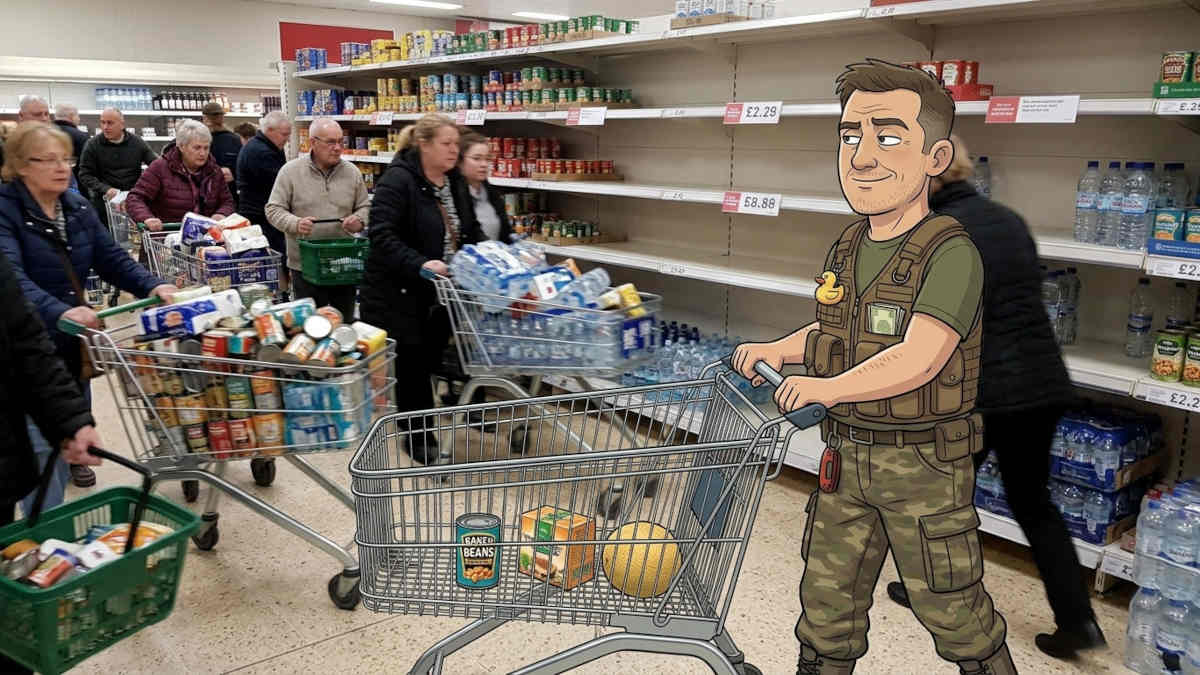
A week after the government’s Be Ready campaign asked every household to cope on its own for three days, the headlines have settled on two words: panic buying. Toilet roll, tins, torches and radios are flying off the shelves, we’re told, and we’re heading for a repeat of 2020. Walk round a supermarket, though, and it doesn’t look like 2020. There are no fights over pasta. There are a few gaps, some busier aisles and a lot of people quietly putting an extra pack of something in the trolley.
So is it panic buying? Mostly, no. But what’s happening this week is still worth paying attention to, because it shows something important about how much is actually on the shelves, and why the time to get ready is before everyone else decides to.
What’s Actually Being Bought Since Be Ready
The Be Ready campaign launched on 22 October with a simple checklist: water, food that doesn’t need cooking, a torch and spare batteries, a radio, a power bank, a first aid kit, hygiene supplies, cash and copies of your documents. Within days, retailers were reporting the jump in sales you’d expect when millions of people read the same list on the same day.
According to The Independent, Maplin saw sales of torches rise 284%, radios 92% and power banks 106% compared with the same time the month before. Cheeky Panda reported toilet roll sales up 43% on last year, Serious Tissues 36%, and B&M 19%. Several bottled water brands and the Heinz and Baxters soup ranges showed as unavailable on Ocado. WalesOnline reported Iceland’s tinned food sales up 40% over a single weekend.
We’ve seen it from our side too. Several of the products we’ve reviewed, from the emergency radio to the camping stove and the first aid kit, sold out on Amazon within days of the launch. Every one of them is on the government’s list.
Big percentages make good headlines. But a 284% rise in torch sales doesn’t mean people are filling the spare room with torches. It means that a lot of households, many for the first time, went looking for a torch and found they didn’t have one that worked.
Is It Panic Buying, or Just Buying?
Panic buying is people buying far more than they need, out of fear, all at once. What the government asked for is three days of essentials. Buying a torch, a radio and a few days of food and water isn’t panic. It’s exactly what the list says to do.
The same thing happened in March 2020, and the numbers from then are worth knowing. When Which? looked at Kantar’s shopping data, only 3% of dry pasta shoppers were taking home “extraordinary” quantities, and only 6% of people buying liquid soap. Everyone else was adding a few extra items to each shop. The average household spent an extra £62.92 over four weeks, roughly five days’ worth of groceries. That’s not a stockpile. That’s about the size of the kit Be Ready is asking for now.

🐔 Chicken Licken
Did You Know?
In March 2020, only 3 in every 100 people buying pasta were actually stockpiling it. The other 97 bought a bag or two extra, and the shelves still went empty. I’ve been saying for years that the shop only holds what it expects to sell tomorrow. Nobody listens. Then everybody wants pasta on the same Tuesday.
So the people being blamed for panic buying this week are, mostly, doing what they were told. And that’s where the real lesson is.
Why a Small Rise Still Empties the Shelves
UK supermarkets run on what’s called just-in-time supply. Stock arrives at the store shortly before it’s expected to sell, based on what sold last week and last year. There’s very little sitting in the back room. It’s efficient and it keeps prices down, but, as the Which? analysis put it, it means there is less resilience in the system.
That’s why the shelves can empty without anyone behaving badly. If everyone buys one extra pack of toilet roll in the same week, the shop runs out, because it was never stocked for one extra pack each. In 2020, a modest rise across almost every household, not a small group of hoarders, was enough to clear the pasta aisle.
Now think about what this week tells us. This is the calm version. Nothing has actually gone wrong: the power is on, the taps work, the lorries are running. People are buying a few extra things because they were asked to, and some items have still sold out.
In a real emergency, a long power cut, a water outage or a major storm, everyone needs the same things on the same day, and real panic buying sets in. The shelves won’t hold enough for everyone. They were never meant to. The household that already has water, food, light and a radio at home doesn’t need to be in that queue at all.
🦆 Keith
Don’t Be Keith
Keith bought 240 toilet rolls in March 2020, in one trip, in the Land Rover. Six years later there are still 96 of them in the loft, slightly damp, and his wife has asked him, in writing, not to do it again. Three days’ worth means three days’ worth.
Why Preparing Now Is the Opposite of Panic Buying
Panic buying happens when everyone tries to get ready in the same hour. The cure is getting ready slowly, before you need to. A few extra items on each normal shop, spread over three or four weeks, costs little more than you’d spend anyway, takes up a cupboard rather than a spare room, and never strips a shelf, because the shop has time to restock behind you.
That also deals with the fair point many people have made this week: not everyone can afford a big shop or has room to store it. You don’t need either. You need three days, built a bit at a time, and a lot of it is probably in the house already.

📋 Clarissa
I’ve Made A Checklist
Here’s my checklist of the government’s Be Ready list. Tick off what you already have first. Janet found two torches, a radio and eleven tins of chickpeas before we’d spent a penny. Then add one or two things to each weekly shop until it’s done. Calmly. Obviously.
Download: Government Emergency Kit Checklist →What to Use When It’s Sold Out
If the thing you went for has gone, don’t chase it round five shops or pay a reseller double. For almost everything on the list there’s a simple stand-in that does the job now, and you can upgrade later when the shelves have settled.
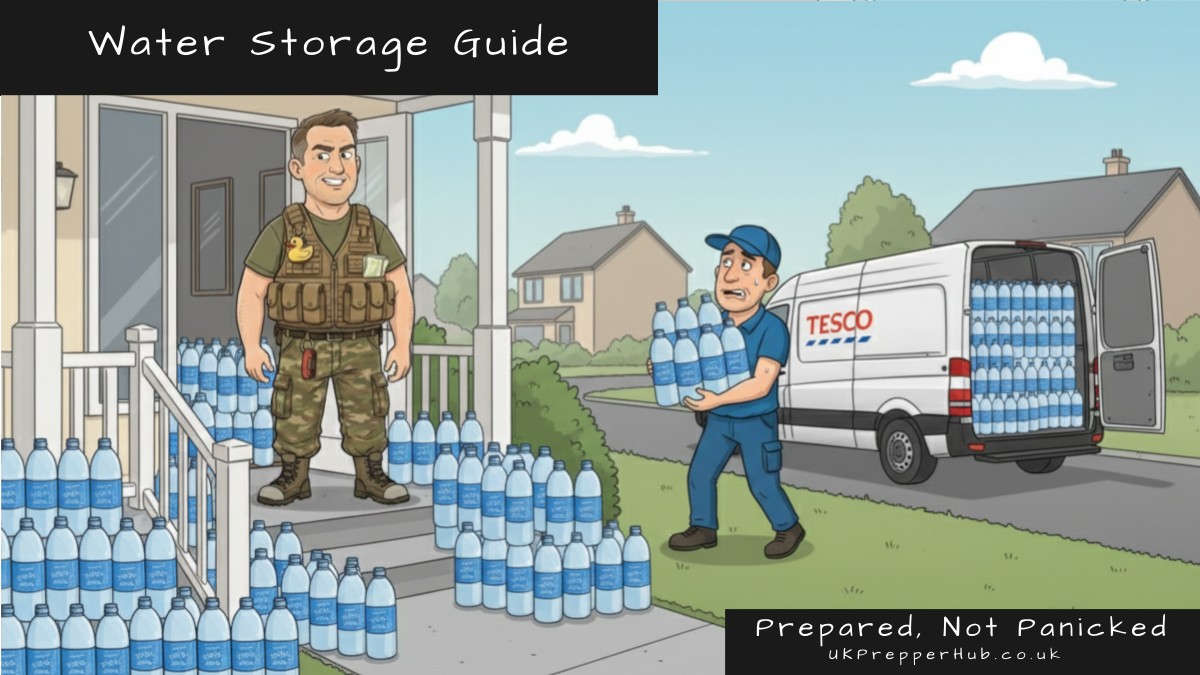
Bottled water: fill your own from the tap
The Be Ready list says about 3 litres of drinking water per person per day, and bottled water is what’s selling out. You don’t need it. UK tap water is already treated, and stored in a clean container it’s just as good. Bristol Water’s own advice before a supply cut is plain: “There’s no need to buy bottled water; simply fill up water bottles or containers from the tap while it’s still available.”
Use food-safe containers with a screw lid, never one that’s held chemicals, and keep them somewhere cool and dark. Swap the water every six months. A family of four needs 36 litres for three days just for drinking, so a few large food-grade water containers do the job of a car boot full of bottles, and you can refill them for nothing.
Complete Guide
Emergency Water Storage
How much to store, how to store it in small spaces, and the reality of UK water rotation.
Torch: a cheap pocket torch, or a light that’s already on
Torches had the biggest jump of anything, up 284% at Maplin. If the rechargeable one you wanted has gone, that’s no great loss for a kit that sits in a drawer. A rechargeable torch slowly loses its charge while it waits, and the one time you need it is the one time you can’t plug it in. A cheap plastic pocket torch that takes AA or AAA batteries, with a spare set still in the packet, will see you through until the shelves fill up again.
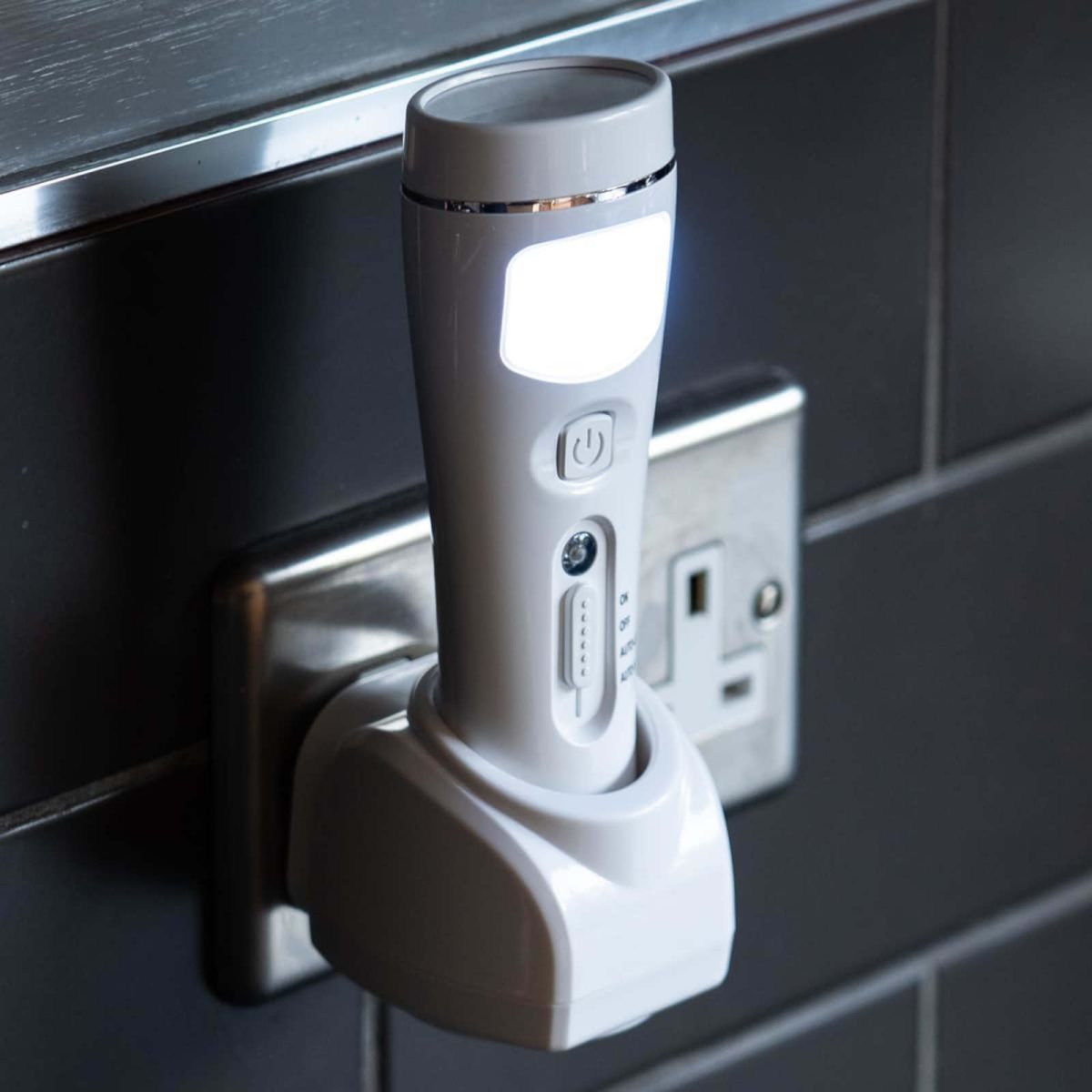
The other option most people miss is a plug-in emergency light. The Xtralite NiteSafe lives in a wall socket, stays charged because it’s plugged in, and switches itself on the moment the power goes, so there’s light before you’ve found anything. It then lifts out and works as a torch. It doesn’t look like a torch on the shelf, so it tends to get overlooked.
XtraLite NiteSafe
The NiteSafe is a dual-function device that works as both a plug-in nightlight and an emergency torch. It sits in a standard UK plug socket, charges continuously, and the moment mains power fails, it automatically illuminates.
Ration packs: tins, a few at a time
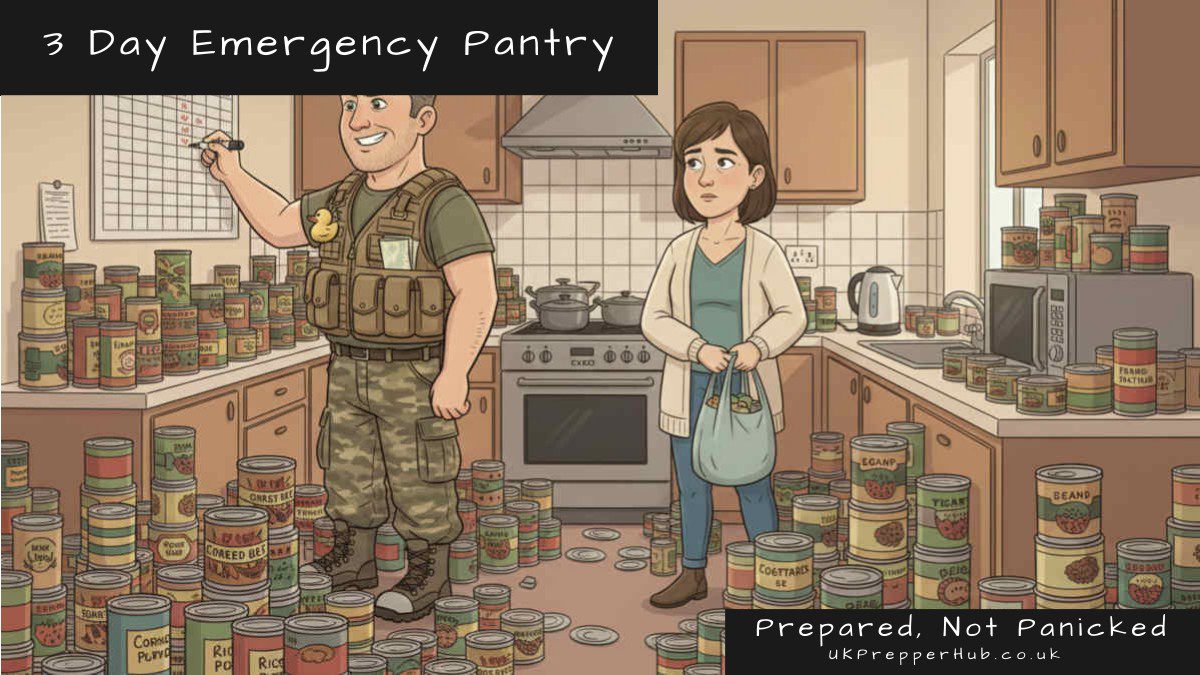
Ration packs and self-heating meals sold out early. Ordinary tins are the obvious answer, and they’re cheaper, but tins are in the panic buying headlines too, so how you buy them matters more than what you buy. Add two or three extra tins to each normal shop for a few weeks rather than clearing a shelf in one go. Pick things that can be eaten cold if needed, like soup, beans, tinned fish and fruit, buy what your household actually eats so it gets used and replaced, and put a tin opener in the cupboard with them.
Complete Guide
3-Day Emergency Pantry
The low-barrier start: A shopping list of shelf-stable meals that require zero refrigeration.
Toilet roll: one extra pack, not a loft full
Toilet roll is the item every panic buying story eventually reaches, and it’s the easiest one on the list. You don’t need months of it. One extra pack on your next shop covers three days comfortably for most households. Even the toilet roll companies selling more of it this week are asking people not to buy hundreds at once.
First aid kit: build your own
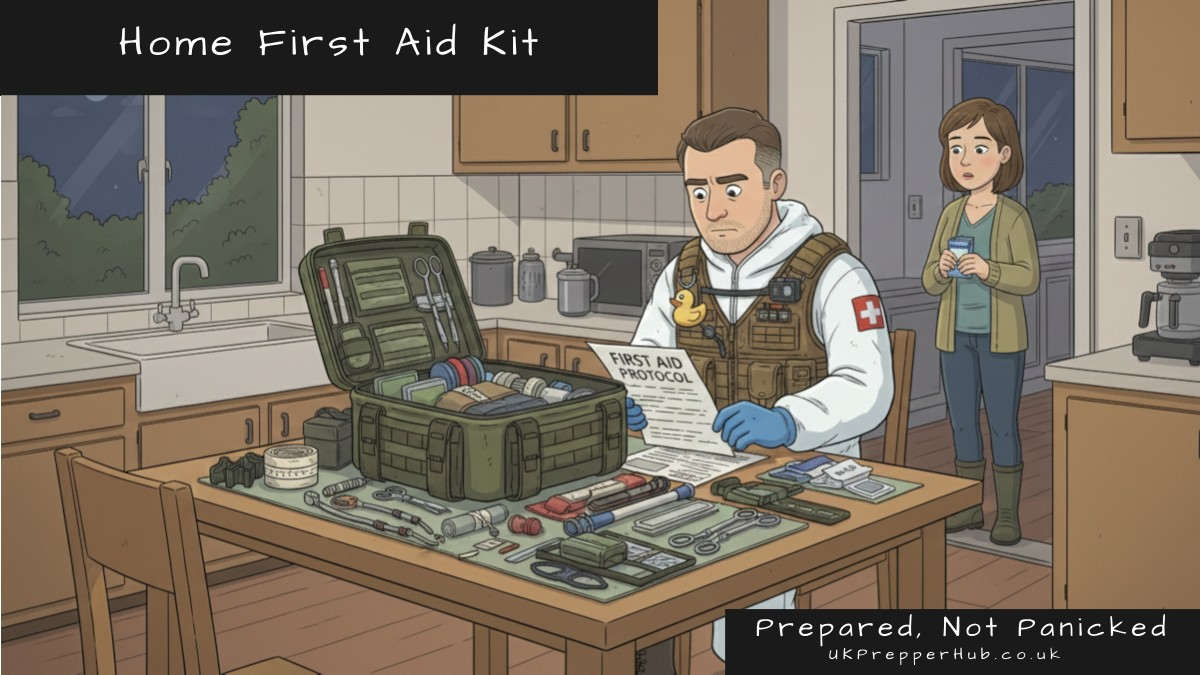
Some of the popular ready-made kits have sold out, but the government’s own list says “a first aid kit (or some first aid items)”. Plasters, bandages, sterile dressings, gloves, tape, antiseptic, tweezers and a thermometer are all on a chemist’s or supermarket’s shelves, and you can add them over a couple of shops. Put them in one box with a lid, and you’ve got a kit that holds what your household actually uses.
Complete Guide
UK Home First Aid Kit
This guide covers comprehensive first aid supplies needed in the home to cover almost all emergencies.
Wind-up radio: any radio that takes batteries
Everyone went for a wind-up radio at once, and radio sales nearly doubled. Any FM radio that runs on batteries does the same job in a power cut, as long as you’ve got batteries for it. Check the battery compartment: a lot of older radios take the big C or D cells, which are heavier and harder to find. A small pocket radio that takes AA or AAA batteries is ideal.
Use it at home now, and if you buy a wind-up radio later, the pocket one moves into your grab bag. Nothing is wasted.
Complete Guide
Emergency Radio Guide
When the power fails, your phone signal goes with it. This guide covers which radio frequencies actually matter in a UK emergency, what to look for before you buy, and how to make sure it works when you need it.
Read the Full Guide: Emergency Radio Guide →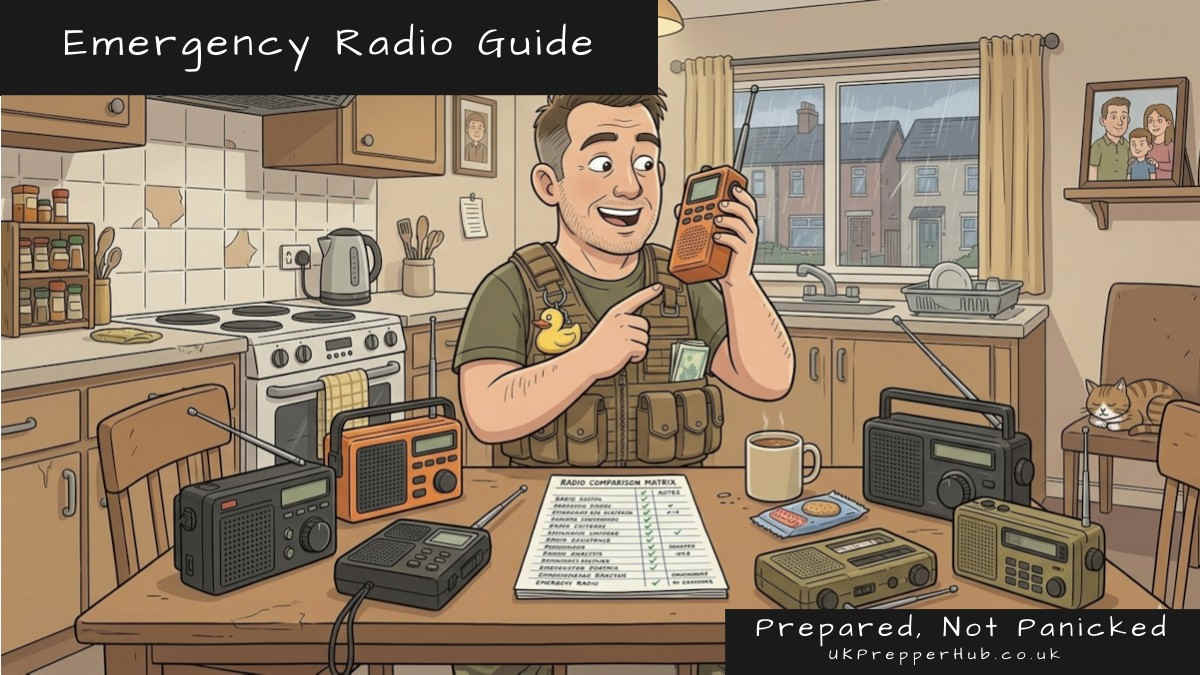
Frequently Asked Questions
Is it panic buying?
Mostly not. Sales of torches, radios, tins and toilet roll have jumped since the Be Ready campaign launched, but most people are buying the few days of essentials the government asked for, not stockpiling. In 2020, Kantar found only around 3% of pasta shoppers were truly stockpiling, while everyone else bought a little extra.
Do I need to panic buy?
No. You need three days of essentials, and the calmest way to get them is a few extra items on each normal shop over the next few weeks. Check what you already have first: most homes are closer than they think.
Why are people stockpiling?
Because the government’s Be Ready campaign, launched on 22 October 2026, asked every household to be able to cope for three days on its own in an emergency such as a power cut, storm or water outage. Millions of people read the same checklist in the same week.
Should I stockpile food?
Keep a small store rather than a stockpile: three days of food your household actually eats, ideally things that can be eaten cold. Build it two or three tins at a time, use the oldest first and replace as you go.
Is stored tap water safe to drink?
Yes, if it’s stored properly. Fill clean, food-safe containers with a screw lid straight from the tap, keep them cool and out of the light, and replace the water every six months. Never use a container that’s held chemicals.
Why are there supermarket shortages if most people aren’t panic buying?
Supermarkets run on just-in-time supply, holding only what they expect to sell in the next few days. Even a small rise across lots of households is enough to empty a shelf until the next delivery, which is exactly why it pays to get ready before an emergency rather than during one.
Build Your Resilience
Further Reading: Related Guides
- Home Emergency Kit
- Emergency Water Storage
- The 3-Day Emergency Pantry
- Emergency Lighting Guide
- Rechargeable vs Alkaline: Batteries for Emergency Kits
- Emergency Radio Guide
- UK Home First Aid Kit
- How to Prepare for a Power Cut
All our guides can be found listed on our resilience hub.
Gear We've Tested & Reviewed
All our reviews can be found on our reviews and resources page.


📡 Find Us Everywhere
Daily briefings, prep guides, and real-time updates across every platform. Pick yours.
Free. No commitment. Stay anonymous on WhatsApp & Telegram.
Stay Informed on UK Preparedness
Join our newsletter for UK-specific preparedness tips, product recommendations, and real-world advice for households.
Subscribe to Our Newsletter