
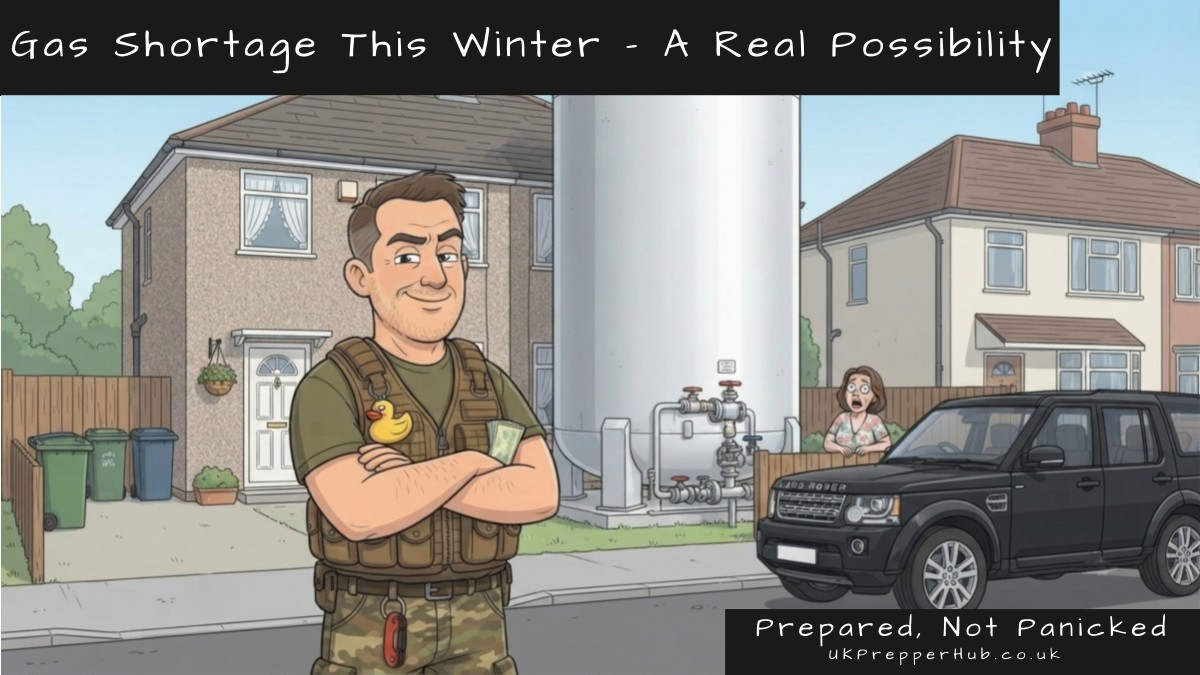
In March 2026, the UK had two days of gas left in storage. Not two weeks. Not two months. Two days. The story made a brief appearance in the weekend papers before other news buried it, but the number is worth sitting with: two days between the nation’s heating, cooking, and hot water — and nothing.
That near-miss happened during a relatively mild late winter. A gas shortage this winter could land in very different conditions: a proper cold snap in January, a fortnight of still, overcast weather that simultaneously cuts wind and solar output, and a North Sea supply chain producing significantly less than it did five years ago. The margin for error is thinner than it looks — and one key piece of supply infrastructure is currently waiting on an approval decision that may or may not come in time.
Why a Gas Shortage This Winter Is a Real Possibility
The UK’s gas storage capacity is, to put it charitably, modest. At maximum, the system holds around 12 days’ worth of supply — falling to roughly 7.5 days at peak winter demand. Germany maintains over 89 days of storage. France isn’t far behind. The UK compensates by relying on continuous, real-time imports: pipeline gas from Norway, tanker deliveries of liquefied natural gas (LNG), and domestic North Sea production. When all three are flowing reliably, the system works. When any of them falters — or when demand spikes faster than the pipelines can compensate — the buffer disappears fast. March 2026 showed exactly how fast.
The signal that moved this back into the headlines this week came not from a politician or a pressure group, but from the operator of the Jackdaw gas field, roughly 150 miles off the coast of Aberdeen. The wells are drilled, the systems are hooked up, and the operator has stated it could be supplying around 6% of the UK’s gas needs from 1 October. The problem is it hasn’t been approved. A court ruling last year found the original consent process was flawed, and a revised application is currently under assessment. If approval doesn’t come in time, that 6% buffer simply isn’t there — and this winter’s supply system will be operating on noticeably thinner headroom than planned.
The vulnerability runs deeper than any single decision, too. North Sea production peaked in 1999 at around 4.5 million barrels of oil equivalent per day. By 2024, that had fallen to roughly 1 million. That structural decline means the system has considerably less domestic flex than it once did, regardless of what happens with individual field approvals. For a broader picture of where UK gas actually comes from — and why some of it has a complicated history — see our related report: Does the UK Get Gas From Russia?

🐔 Chicken Licken
Did You Know?
The UK’s maximum gas storage is about 12 days. In March 2026 it fell to two. Not two weeks — two days. I’ve been saying this for years, and people look at me like I’m making it up.
The Risk Scenario — Why a Still, Cold Winter Is the Danger
Nobody is predicting the heating goes off and stays off. What the Jackdaw operator specifically described is a more contained, and more plausible, scenario: a prolonged period of still, overcast weather. The UK now generates a significant share of its electricity from wind and solar. In most conditions, that is broadly a good thing. But a calm, grey January fortnight simultaneously reduces wind output, eliminates solar contribution, and drives up gas demand for heating. The grid reaches for gas from multiple directions at once — electricity generation, domestic heating, and industrial use, all competing for the same constrained supply at the same time.
Add a cold snap on top — the kind that extends boiler run times, brings out the electric fan heater that’s been in the loft since 2019, and sends gas demand well above seasonal averages — and the system has very little room to absorb the spike. The UK went to two days of storage in March under relatively ordinary conditions. A disruption to Norwegian pipeline supply, or reduced LNG tanker availability, arriving simultaneously with a demand spike: that is the scenario worth understanding, not panicking about.
Scotland Faces a Double Exposure
For Scottish households, this sits alongside a separate but compounding risk covered in our recent special report: Could Scotland Lose Power in the Next 5 Years?
The overlap is straightforward. Power grid pressure removes the electric heating fallback. Gas supply pressure reduces boiler output. A cold, still January — entirely routine for much of Scotland — could place simultaneous strain on both systems, leaving households with fewer fallback options than those further south. The Jackdaw field itself sits 150 miles off Aberdeen. There is a certain irony in the fact that the supply buffer most directly relevant to Scottish households is precisely the one currently awaiting a decision.
What to Do Now Before Winter Arrives
The window is now. Not because a shortage is certain, but because the actions that reduce a household’s exposure to gas supply pressure are exactly the same actions that make any hard winter more manageable — and they are considerably easier to take in July than in January when the problem has already arrived.
Sort backup heating before you need it
A gas boiler that cannot run is not a heating system. Know what your household would do for warmth if the boiler was off for 24, 48, or 72 hours. Options that rely on neither mains gas nor grid electricity include high-quality self-heating throws, wood-burning or multi-fuel stoves if you have one, and the unglamorous but genuinely effective step of draught-proofing your home so it holds heat long enough for the pressure to ease.
Complete Guide
Heating Without Electricity
Maintaining core body temperature is your absolute priority. However, desperation often leads to dangerous choices. This guide outlines how to heat your home—and yourself—safely when the radiators go cold.

Carbon monoxide awareness — do not skip this
The moment households start improvising heating — portable gas heaters, camping stoves used indoors, anything with a flame in an enclosed space — CO risk rises sharply. A working combination smoke and carbon monoxide alarm should be in place before you find yourself improvising in January. A boiler outage that ends with someone using a patio heater in the kitchen is a considerably more serious problem than a cold night.
FireAngel Combination Smoke and Carbon Monoxide Alarm
One sealed unit covering smoke and CO detection — with a 10-year battery that keeps it running during a power cut, when emergency stoves and heaters are out and a mains-wired alarm would already have gone dark.
Our Full Review: FireAngel Combination Smoke and Carbon Monoxide Alarm →
Reduce your gas dependency before winter, not during it
Draught-proofing. Bleeding radiators. Getting the boiler serviced. Checking loft insulation. None of this is dramatic. All of it reduces how hard your heating system has to work. A house that holds heat well needs less gas to stay warm. That is the single most effective thing most households can do, and it costs far less than any emergency kit purchased in a panic in November.

🦆 Keith
Don’t Be Keith
Keith has his boiler serviced in February. After it breaks down in January. He has been doing it in exactly that order for three consecutive winters now. Book a boiler service now before you need it.
Know your cold snap plan before you need one
Know which room in your home holds heat best — usually a smaller, internal room away from external walls. Know where the extra blankets are. Know whether anyone in your household is particularly vulnerable to cold. The households that struggle in a heating emergency are rarely the ones who over-prepared. They are the ones who had nothing in place and had to make decisions in the dark, in January, with no options left.
Complete Guide
Keep Warm Without Heating
When a cold snap hits and the boiler gives up, the house loses heat fast. How to keep warm without heating, fix a frozen condensate pipe, protect your pipes, and spot hypothermia in someone vulnerable before it gets serious.
Read the Full Guide: Keep Warm Without Heating →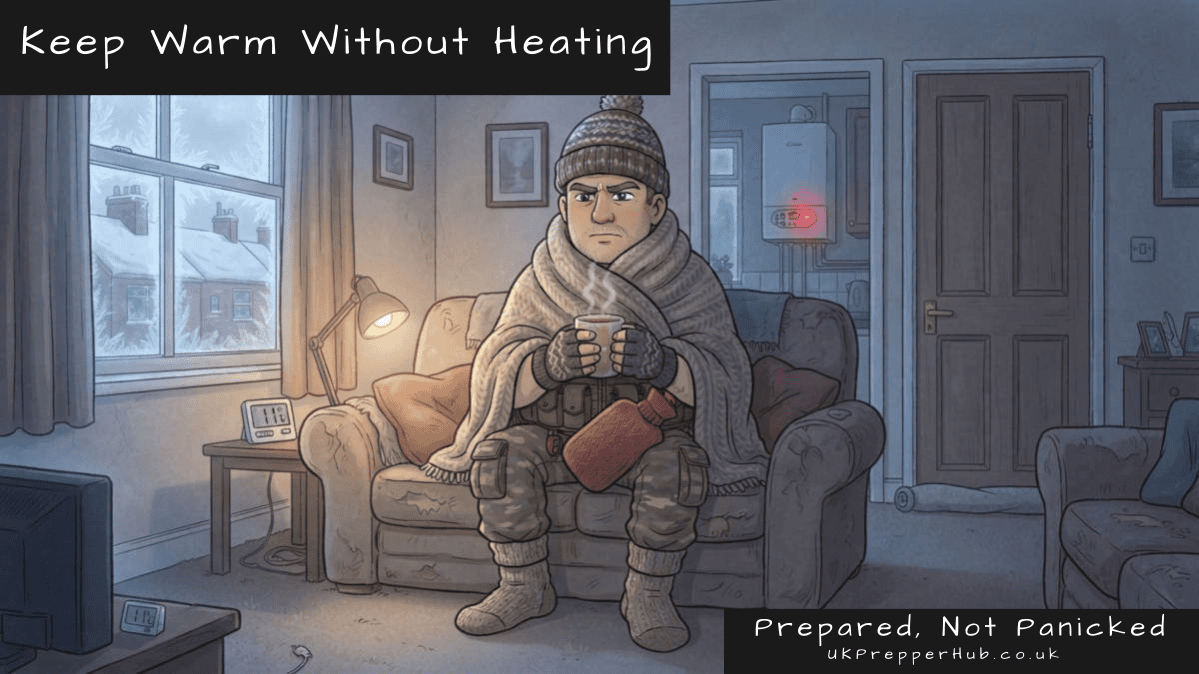
The Bigger Picture on Gas Shortage This Winter
A gas shortage this winter is not inevitable. The Jackdaw decision may come through. The winter may be mild. Norwegian imports may hold steady throughout. Any one of those outcomes — or all three — could mean the margin holds and nothing particularly dramatic happens.
But the margin is thin. It was thin enough to reach two days in March 2026, under conditions that were not especially unusual. It is structurally thinner than it was a decade ago. And the actions that reduce your household’s exposure to a cold, gas-constrained winter have zero downside if nothing goes wrong. You still have a CO alarm. You still know where the blankets are. You still had the boiler serviced before December for once. You still have a house that holds heat.
It is also worth being clear about what supply pressure actually means in practice for most households. Historical periods of low UK gas storage — including early 2023, when European reserves were critically depleted after the first winter of the Ukraine war — did not result in domestic heating being switched off. What typically happens is price pressure, demand-side signals to large industrial users, and in more severe cases, reduced pressure in parts of the distribution network. For households that have already reduced their gas dependency and have a backup heating option in place, those conditions are manageable. That is what “prepare for a gas shortage this winter” actually looks like for most households. It is not dramatic, and it shouldn’t be.
Frequently Asked Questions
How many days of gas storage does the UK have?
At maximum capacity, around 12 days on average — falling to about 7.5 days at peak winter demand. In March 2026, actual storage fell to approximately two days. The UK relies primarily on real-time pipeline imports from Norway, LNG tanker deliveries, and domestic North Sea production rather than large strategic reserves.
What is the Jackdaw gas field?
A North Sea gas field around 150 miles off Aberdeen, operated by a Shell/Equinor joint venture. It is drilled and ready to produce but its approval was overturned by a court ruling last year on environmental grounds. A revised application is currently under assessment. The operator says it could supply around 6% of UK gas needs from 1 October 2026.
Could the UK actually run out of gas this winter?
A complete cut-off is extremely unlikely — the UK has multiple import routes and automatic demand management systems. The realistic risk is constrained supply during a period of high demand: reduced pressure, potential interruptions, and significantly higher prices as import demand rises. For most households, the practical concern is a heating system that underperforms during a prolonged cold snap, not a complete shutoff.
What is the most important thing a household can do to prepare?
Reduce your gas dependency before winter: draught-proof your home, get your boiler serviced, and know what you would do for warmth if heating was unavailable for 48–72 hours. A self-heating throw, a usable wood-burning stove, or a well-insulated home will serve you far better than expensive emergency kit bought in a panic in January.
Is Scotland at greater risk?
Scotland faces a specific compound risk — its power grid has its own capacity pressures this winter (see our Scotland special report), and its gas supply relies on the same constrained North Sea pipeline network. A cold, still January could place simultaneous pressure on both electricity and gas, leaving fewer fallback options than households further south.
Build Your Resilience
Further Reading: Related Guides
Gear We've Tested & Reviewed
📡 Find Us Everywhere
Daily briefings, prep guides, and real-time updates across every platform. Pick yours.
Free. No commitment. Stay anonymous on WhatsApp & Telegram.
Stay Informed on UK Preparedness
Join our newsletter for UK-specific preparedness tips, product recommendations, and real-world advice for households.
Subscribe to Our Newsletter