
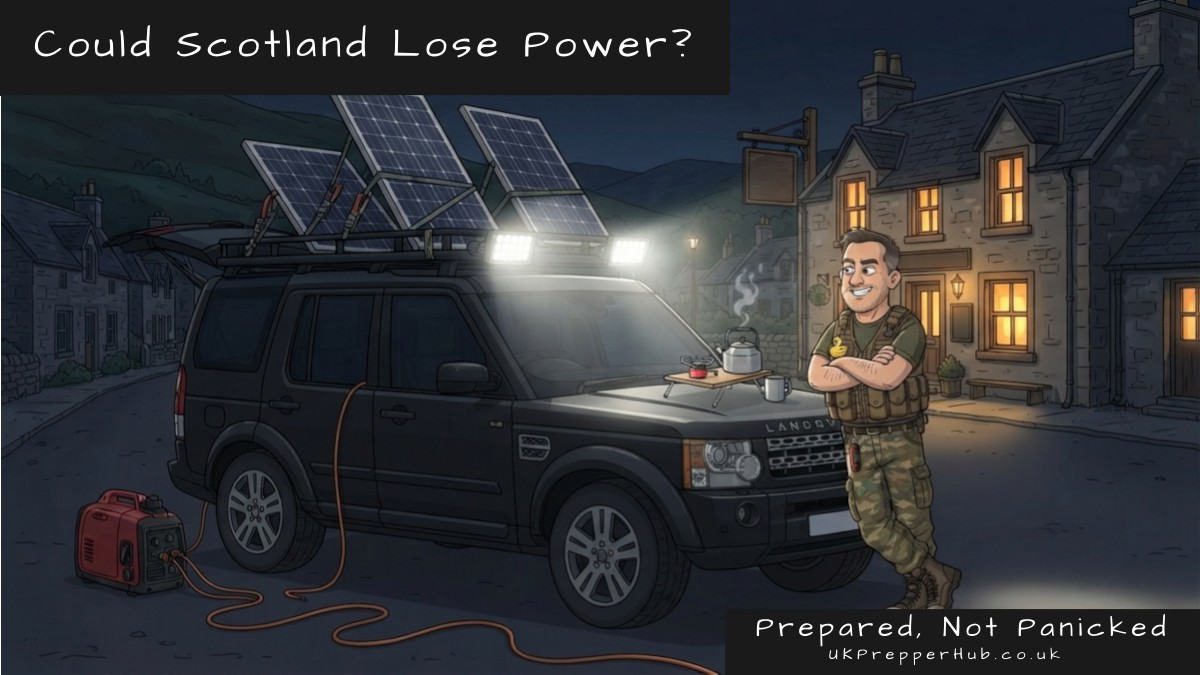
Could Scotland lose power in the next five years? The country’s electricity grid runs on two power stations. Just two. And both of them are closing.
Whether Scotland could lose power in the next five to ten years is a question being quietly asked inside the engineering and energy policy community — and not as a fringe concern. The timelines are public. The technical challenge is documented. The backup plan is untested. This is what the data shows, stripped of politics, and what it means for households living north of the border right now.
Scotland’s Grid Is Held Together by Two Power Stations
The Scottish electricity grid — the physical infrastructure that maintains stable current and voltage for homes, hospitals, and businesses — currently depends on two facilities to function as a grid rather than just a collection of wires:
Torness Nuclear Power Station, near Dunbar in East Lothian, is scheduled to close in 2030. Short extensions of one to two years are technically possible, but the engineering consensus is that it won’t operate much beyond 2032. It currently accounts for around 17% of Scotland’s total electricity production.
Peterhead Power Station, a large gas-fired plant in Aberdeenshire, was built in 2000 and is approaching the end of its designed operational life. A bid for a refurbishment contract through the UK capacity market was unsuccessful. Even if a new contract were awarded today, replacement gas turbines take approximately seven to eight years to source and install. The lead time problem is not solvable in the near term.
When Torness closes, the next nearest conventional power station capable of supporting the Scottish grid is Salt End in Hull. For electricity networks, that distance is significant — and it matters for reasons that go beyond simple geography.
What ‘Turning the Rope’ Actually Means
To understand why losing these stations is more serious than simply losing their output, it helps to know how a grid maintains stability — not at the plug, but at the level of frequency and voltage.
Large conventional generators — gas turbines, nuclear reactors — spin physical machinery. That spinning creates what engineers call synchronous generation: a stabilising anchor that keeps the grid’s voltage and frequency within the narrow tolerances that every connected device expects. Deviate too far from those tolerances and equipment automatically disconnects to protect itself. If enough equipment disconnects at once, the cascade failure accelerates. The grid collapses.
Think of it as a skipping rope at school. If the rope turns in a steady, predictable rhythm, children can jump in safely. If the rope becomes erratic — speeding up, slowing down, jerking unpredictably — children stop jumping in, or jump out to avoid being hit. That is essentially how the grid works. Renewable generators — wind turbines and solar panels — connect to the grid through inverters and are sensitive to instability. When the rope isn’t turning predictably, they disconnect. Which is sensible behaviour for a wind farm’s electronics. It is catastrophic for grid stability when wind is providing a significant share of supply.
Scotland has substantial renewable generation capacity. What it currently has, to keep the rope turning, is Peterhead and Torness.
The Experiment Nobody Has Tried Before
The National Energy System Operator (NESO) — the body responsible for managing the GB electricity system — is aware of the problem and has a proposed solution: synchronous condensers. These are machines that spin and maintain grid frequency without actually generating electricity. They act as stabilisers, keeping the rope turning in a grid that’s running primarily on renewables.
The technology is not theoretical. Synchronous condensers exist and have been used in smaller grid applications for decades.
What has not been done before — anywhere in the world — is using them as the primary stability mechanism for a grid of Scotland’s scale and complexity, replacing conventional synchronous generation entirely. This is, by the assessment of senior engineers within the industry, a live experiment. On a real grid. Serving real households.
The risk is not that Scotland runs out of electricity. Wind farms may be turning perfectly well. The risk is that they are producing electricity in a form the grid cannot absorb — because without the synchronous anchor to maintain frequency, the renewable output cannot be used. The lights could go out while the turbines keep spinning.

🐔 Chicken Licken
Did You Know?
I’ve been saying this for years — the risk isn’t the renewable generation itself, it’s the grid stability underneath it. Remove the anchor and the whole thing becomes unpredictable. I’ve been saying it for years.
Could Scotland Lose Power — What It Would Look Like
Grid instability does not necessarily mean permanent darkness. In practice, it is more likely to mean:
- Extended, unplanned outages lasting hours or days rather than minutes — far beyond what most homes’ equipment and food stores are designed to handle
- Rolling disconnections as operators attempt to balance load across an unstable network
- Slow restoration — when a large grid section fails, bringing it back is a careful, sequential process. The April 2025 Spain and Portugal blackout, caused by a cascade failure in a renewables-heavy grid, attributed 165 excess deaths to just two days without power. The most vulnerable were elderly people living alone
Priority Services customers — households registered as needing extra support, including those dependent on medical equipment — receive advance warning of planned outages and priority reconnection. If you or anyone in your household relies on electrically powered medical equipment and you are not already registered, contact your electricity network operator now. In Scotland, that is SP Energy Networks (south) or SSEN (north). Registration is free.
What Scottish Households Should Do Now
The timeline is not certain. Torness may get extensions. NESO’s synchronous condenser programme may work better than sceptics expect. But the prudent position — the one that costs nothing to take while the situation is still unclear — is to prepare modestly now.
The basics, which apply to all UK households but are particularly relevant in Scotland given the grid profile:
- Build a blackout box. Torch, a battery-powered or hand-crank radio, power bank for phones, some cash, any essential medication that needs to stay accessible. Takes an afternoon to put together and needs testing once a year
- Register for Priority Services if anyone in your household is on electrically powered medical equipment, is elderly, or is disabled. It gets you advance warning and priority reconnection
- Know your heating fallback. If your home uses a heat pump or electric storage heaters, a prolonged outage in winter is more serious than for gas-heated homes. A self-heating throw buys time. Know where your local community warmth spaces are
- Consider a portable power station if you work from home, have medical equipment, or have young children. A 300–500Wh unit will run a laptop, phone charging, and basic LED lighting for a day or two. Larger units cover CPAP machines and small fridges
- Have a plan for food. A two to three day emergency pantry — tinned food, a camping stove, water — costs under £30 to put together and has nothing to do with politics
For Scottish households, there is a second layer to this. Our special report — Gas Shortage This Winter: What Every Household Needs to Know — covers the North Sea supply risk in detail. A cold, still January could put simultaneous pressure on both electricity and gas, which is a different exposure than most of the UK faces.

🦆 Keith
Don’t Be Keith
Keith has a 5kW generator in the garage, a full solar array on the roof, and a bank of lithium batteries. He hasn’t tested any of it since the winter of 2022. The generator needs a new pull cord. Don’t be Keith — test your backup power before you need it.
Complete Guide
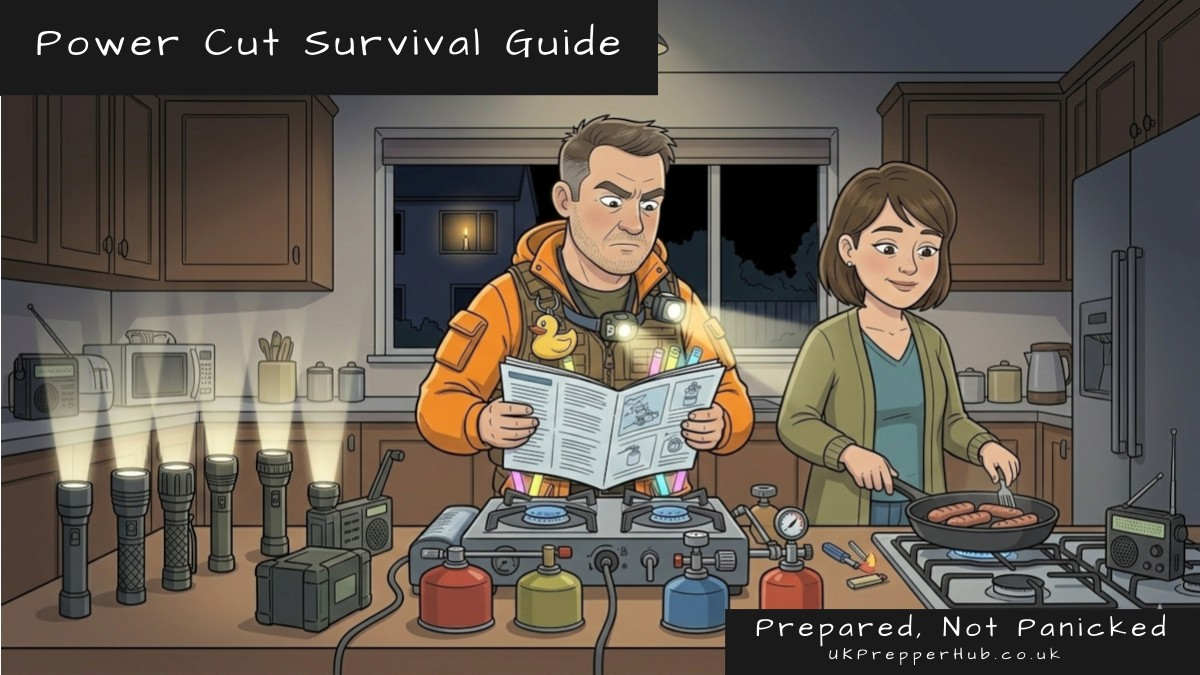
Power Cut Survival Guide
The master 72-hour blueprint. Vital steps for staying warm, connected, and safe when the UK grid fails during extreme weather.
Anker SOLIX C300X
Two proper plug sockets, 288Wh of long-life LiFePO4 and 80% recharged in 50 minutes: the essentials kept running through a power cut.
Our Full Review: Anker SOLIX C300X →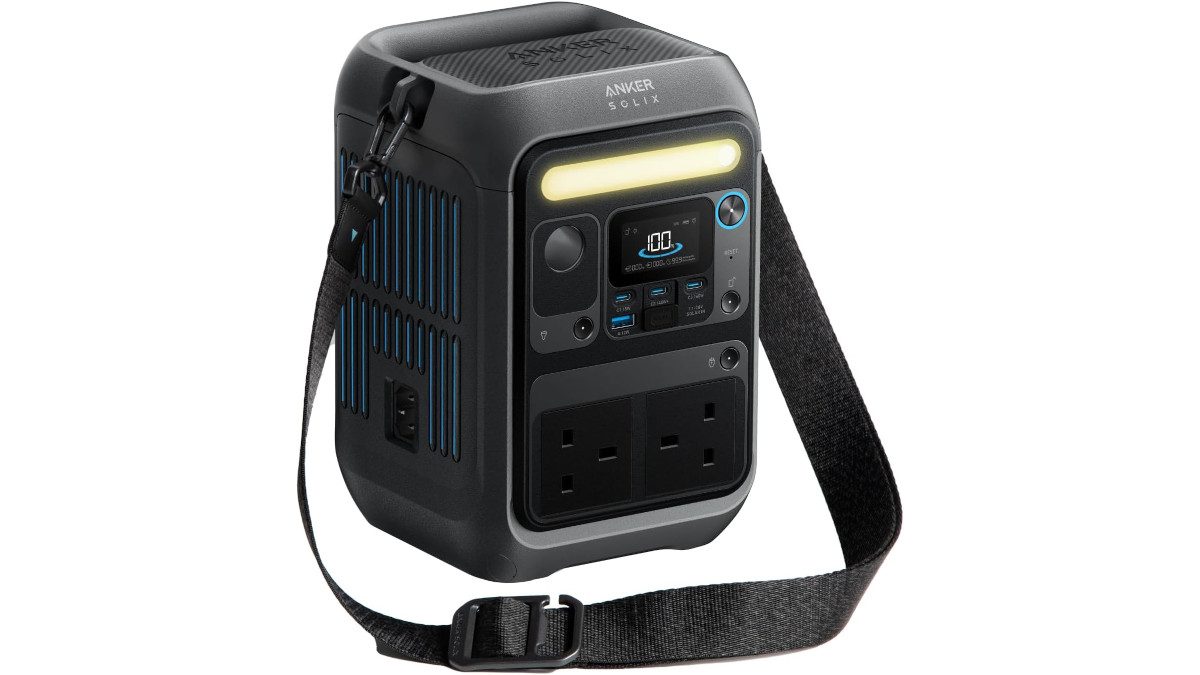
EcoFlow Delta 3 Max
The 2kWh EcoFlow Delta 3 Max charges to 80% in 51 minutes, runs every UK appliance via its 3,200W X-Boost, and switches to battery in under 10ms — the step up for households where 1kWh was never quite enough.
Our Full Review: EcoFlow Delta 3 Max →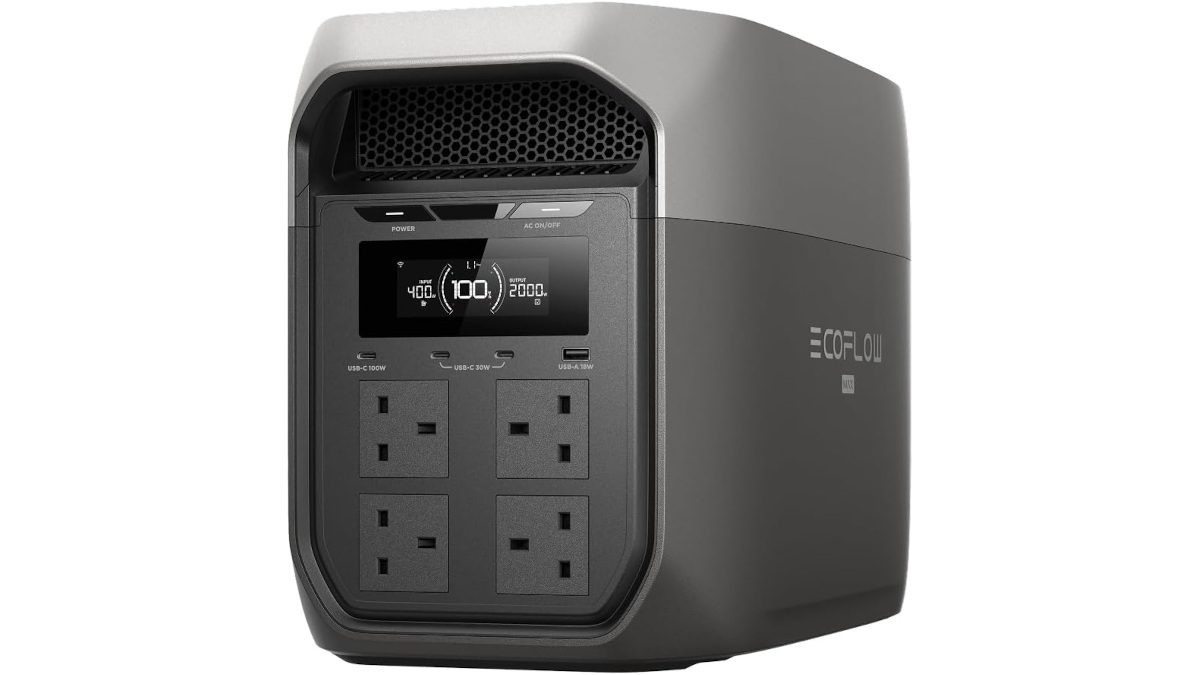
Frequently Asked Questions
Could Scotland really lose power completely?
Not necessarily completely or permanently, but the risk of extended, serious outages is real and is being actively discussed within the engineering community and by NESO itself. The concern is not about Scotland lacking electricity generation — wind farms produce substantial power. The risk is grid instability caused by the loss of the two conventional power stations that currently maintain voltage and frequency stability across the network.
When is Torness power station closing?
Torness is currently scheduled to close in 2030. Short extensions of one to two years are possible but not considered likely to extend much beyond 2032. It is located near Dunbar in East Lothian and currently generates around 17% of Scotland’s electricity.
What is Peterhead power station’s status?
Peterhead is a gas-fired power station in Aberdeenshire, built in 2000 and approaching the end of its designed operational life. A bid for a refurbishment contract through the UK capacity market was unsuccessful. Even if a new contract were awarded today, replacement turbines take 7–8 years to procure and install — meaning any replacement would come after Torness has already closed.
What are synchronous condensers and will they work?
Synchronous condensers are machines that spin to maintain grid frequency and voltage stability without generating electricity. NESO is planning to use them to stabilise the Scottish grid as it transitions toward near-100% renewable generation. The technology is proven at smaller scale. What hasn’t been done before, anywhere in the world, is using synchronous condensers as the primary stability mechanism for a grid of Scotland’s size and complexity.
What is Priority Services and how do I register?
Priority Services is a free scheme run by electricity network operators for households that need extra support during power cuts — including people dependent on medical equipment, elderly people living alone, and those with disabilities. In Scotland, contact SP Energy Networks (south and central Scotland) or SSEN (north Scotland and Scottish islands). Registration is free and takes a few minutes by phone or online.
Is a generator better than a portable power station?
Depends on what you need to run. Portable power stations (also called power banks for appliances) are safer indoors, quieter, require no fuel storage, and need minimal maintenance. They’re well suited to phones, laptops, CPAP machines, and lighting. Generators produce more power for longer, making them better for running fridges, heating systems, or power tools — but they require ventilation, fuel, and regular maintenance. For most households, a mid-range portable power station covers the realistic needs.
Build Your Resilience
Further Reading: Related Guides
Gear We've Tested & Reviewed
📡 Find Us Everywhere
Daily briefings, prep guides, and real-time updates across every platform. Pick yours.
Free. No commitment. Stay anonymous on WhatsApp & Telegram.
Stay Informed on UK Preparedness
Join our newsletter for UK-specific preparedness tips, product recommendations, and real-world advice for households.
Subscribe to Our Newsletter